
Snorkeling Honolulu: Complete Guide to Spots, Tours, And
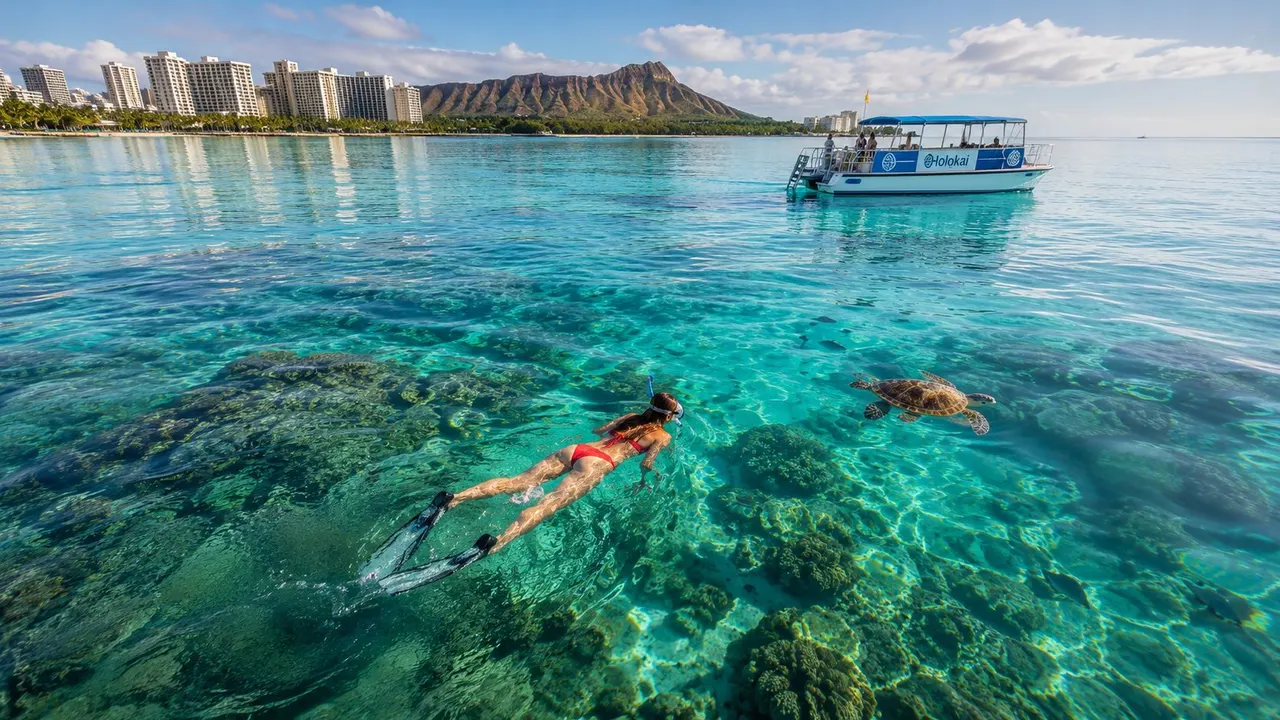
You've got a short window, a Waikīkī hotel, and one morning that could go two ways. You can wander down to the beach, hope the water behaves, and find out the hard way what the reef and wind are doing. Or you can make one smart call, pick the right entry point, and spend more time looking at fish than thinking about parking, surf, or whether you packed the wrong fins.
Snorkeling Honolulu works best when you stop treating it like a generic beach activity and start treating it like a conditions problem. The south shore, the morning light, the crowd flow, and the kind of group you're traveling with all matter more than the glossy photos in a brochure. If you get those three things right, time of day, transport reality, and group fit, the trip gets a lot easier.
Why Snorkeling in Honolulu Feels Different from the Brochures
A first-time snorkeler steps onto Waikīkī sand around 7 a.m., mask in hand, looking at a calm-looking sea that might change by lunch. The question isn't really “Where's the prettiest reef?” It's whether this morning should be a swim from shore, a short-transit beach stop, or a boat ride that handles the hard parts for you.
Honolulu snorkeling feels different because the south shore isn't the same animal as the North Shore. In the early hours, the reef can be manageable and clear, then easterly trade winds build, surf gets bumped around, and a spot that looked easy can turn choppy. That's why the old habit of ranking “best spots” by reputation alone misses the point. The better question is, what works for your group right now?
Practical rule: if the water looks calm at sunrise and messy by late morning, trust the morning and not the brochure photo.
That's also why guided tours solve so many variables in one booking. A crew can choose the site, fit the gear, brief nervous swimmers, and keep the day moving without making you guess about surf lines or parking. If you're staying in Waikīkī and want the shortest path from hotel lobby to water, that convenience matters. For visitors who want a local operator that departs daily from Kewalo Basin, Living Ocean Tours is the Honolulu snorkel option I'd point people toward when they want the decision-making stripped down.
Best Honolulu Snorkel Spots You Can Reach Without a Rental Car
If you're based in Waikīkī and don't want to rent a car, Honolulu gives you a workable shore-snorkel list. The trick is to choose beaches for entry quality and calm water, not just for their reputation in a roundup article. A beginner-friendly morning at the right beach beats a famous spot with awkward surf and a long walk back up the sand.
Start with the closest, easiest entries
Queen's Beach and Kuhio Beach are the simplest place to begin if you want something close to town and easy to reach on foot. They're not wilderness experiences, and that's the point. For first-time visitors, low-friction access and a shorter learning curve matter more than trying to force a full reef adventure on day one. Sans Souci gives you another south-shore option with calmer-water potential, while Ala Moana and Magic Island are useful when you want a beach day that doesn't turn into a logistics project.
The honest trade-off is marine life. These spots can be good for an easy swim and a relaxed confidence builder, but they don't always deliver the same density or drama you get offshore. That's why many Honolulu visitors treat them as starter reefs, not the only snorkel day.
Why Hanauma Bay changes the planning conversation
Hanauma Bay sits in a different category because access is structured. It's open from 6:45 a.m. to 3:30 p.m., entry stops after 1:30 p.m., and it's closed on Mondays and Tuesdays so the reef can rest. That schedule matters because it can make a “quick morning snorkel” impossible if you don't plan ahead.
For a Waikīkī-based trip, Hanauma is worth considering, but it doesn't erase the appeal of city-close options. If your hotel is in town and you want to stay flexible, the better move is often to choose a spot that matches your morning rather than build your whole day around a strict bay schedule. For a fuller look at low-friction access options, this guide to snorkeling without a car on Oʻahu is useful.
Match the beach to the kind of day you want
The easiest way to choose is simple:
- If you want convenience, stay near Waikīkī and use a calm south-shore beach.
- If you want a structured reef day, plan ahead for Hanauma Bay.
- If you want the least transport stress, pick a spot that lets you walk or take a short ride instead of building a rental-car day around it.
That's how Honolulu shore snorkeling becomes realistic instead of aspirational. The reef doesn't care about your itinerary, but your itinerary has to respect the reef.
Shore Snorkeling Versus Guided Boat Tours
Shore entry and boat tours both work in Honolulu, but they solve different problems. Shore snorkeling is about convenience and independence. Guided boat snorkeling is about better site access, cleaner water, and less guesswork.
The choice gets easier when you compare them side by side.
| Criteria | Shore Snorkeling | Guided Boat Tour |
|---|---|---|
| Water clarity | Depends heavily on surf, wind, and recent conditions | Usually easier to manage because the crew chooses the site |
| Marine life access | Good when conditions line up, but sightings are less predictable | Better access to offshore spots like turtle areas |
| Physical effort | Higher, because you manage entry, exit, and surface swimming | Lower, because the boat handles the transit and setup |
| Group fit | Better for confident swimmers who like flexibility | Better for families, beginners, and mixed-skill groups |
For a deeper side-by-side look at how the water and reef access differ, this page on Waikīkī snorkeling from beach and offshore reefs helps frame the trade-offs.
Shore snorkeling wins when the group wants to keep the day loose and stay on land. It's also the answer when someone in the group is happy with a simple swim and doesn't need a full boat outing. The downside is that you're carrying the full burden of timing, safety judgment, and entry conditions yourself.
Guided boat tours win when the trip needs to be more reliable. Offshore sites give you a better shot at cleaner water and a calmer, more controlled entry, which matters a lot if you're trying to snorkel with turtles without turning the morning into a workout. For families, that usually means less stress and more time looking down into the water.
Short version: if the whole group is confident, shore can be a fun free-choice morning. If even one person is nervous, a boat usually makes the day better.
The right answer isn't always the same for every traveler. It's the one that fits your group's energy, skill, and patience level on that particular morning.
When to Go for the Calmest Water and Best Visibility
Honolulu snorkeling rewards people who go early. The clearest window is usually sunrise to about 10 a.m., before easterly trade winds build and stir up the reef. Local conditions reporting shows those winds can rise to 15 to 20 mph later in the day, which can push Waikīkī and Hanauma Bay from calm-looking water into 2 to 4 ft surge-break conditions.
The practical takeaway is blunt. A reef that feels friendly at 7 a.m. can be annoying by noon. That's why the same spot can go from “worth it” to “skip it” in a matter of hours.
Seasonal timing matters too
The clearer seasonal window generally sits in summer, roughly May through early October or June through September, depending on the reef and exposure. Winter brings more swell on exposed shores, especially on the North Shore, and that changes the quality of the day even if the sky looks fine from your hotel balcony. South-shore areas are more sheltered, but they're still condition-dependent.
If you're building a morning plan, checking tide and surf before you leave matters more than sticking to a generic spot list. This Oʻahu tide chart guide is a handy pre-check before you head out.
Whale season changes the boat option
From January through March, humpback whales are part of the conversation. Some of the same boat trips that begin as snorkeling outings can also deliver a whale sighting, which makes winter boat days feel like a two-for-one ocean morning. That doesn't mean every trip becomes a whale watch. It just means the season adds another layer of payoff.
If the water looks glassy before breakfast, go early. If you're already watching the wind push whitecaps across the bay, you're probably late.
The best Honolulu snorkel decision isn't about chasing a perfect month. It's about choosing the first calm window you can use.
Living Ocean Tours and the Four Trips Worth Booking
A boat day goes better when the plan is set before the first mask goes on. The crew checks the water, fits gear, gives nervous swimmers a clear briefing, and heads out with a real destination instead of hoping conditions cooperate. That kind of setup saves time and keeps the morning from turning into a scramble against wind, chop, or changing visibility.
Living Ocean Tours is the Honolulu operator I'd point friends toward when they want a structured boat trip from Kewalo Basin. The company runs daily ocean outings, and the lineup fits the main reasons people book on Oʻahu, turtle snorkeling, family time on the water, sunset cruising, and winter whale watching.
The turtle trip that gives the clearest snorkeling focus
The Turtle Canyons Snorkel Excursion goes to Oʻahu's turtle cleaning station, where reef fish circle the honu and the action stays centered in one place. That setup gives you a better shot at a real marine-life encounter than a random beach swim, especially if your group wants to see turtles without spending half the morning searching for them.
The family-friendly cruise that adds play features
The Deluxe Waikīkī Snorkel & Wildlife Cruise fits mixed-age groups that want snorkeling plus more to do on the boat. The waterslide, water trampoline, and lily pad change the feel of the outing for kids, and they help the day work for families that do not want a strict swim-only schedule. If one part of the group wants to snorkel and another just wants time on the water, this is the cleaner fit.
The easy evening option
The Waikīkī Sunset Cruise is for travelers who want time on the water without committing to a snorkel stop. Golden-hour views are the main draw, and it works well as a simple add-on after the beach or after dinner when you still want a little ocean time before the night ends.
The winter trip that swaps reef focus for migration season
The Whale Watch tour makes the most sense when humpbacks are around and your group wants a different kind of ocean morning. It is a strong winter add-on to a snorkeling trip, especially if you already spent one day on the reef and want a boat outing that keeps the attention on open-water wildlife.
For a local reference on turtle-viewing etiquette, this page on Hawaii turtle snorkeling rules is worth a look before you go.
Wildlife Rules and Responsible Snorkeling in Honolulu
The best snorkelers are the ones who act like guests, not spectators trying to control the show. Hawaii's wildlife-distance guidance is clear. Stay at least 10 feet, or 3 meters, away from sea turtles, and keep much more distance from larger marine wildlife when the situation calls for it, including the commonly cited 50 yards from dolphins, sea turtles, and seals, and 100 yards from whales.
That distance isn't just about rules. It changes how the animal behaves. A turtle that doesn't feel crowded keeps moving naturally, and that makes the sighting better for everyone.
What respectful behavior looks like in the water
If a turtle approaches, hold your position and let it pass. Don't chase it, don't touch it, and don't try to angle your body into its travel lane. The same basic rule applies to the rest of the reef. When swimmers stop hovering right over wildlife, the water stays calmer and the encounter lasts longer.
Coral deserves the same respect. Standing on it, kicking it, or dragging reef shoes across it can damage a reef that took years to grow. Reef shoes can make that worse if they encourage people to walk where they shouldn't. A clean, floating snorkel posture protects both your feet and the reef.
Stay flat, stay quiet, and let the animal decide how close the encounter gets.
For a local reference on turtle-viewing etiquette, this page on Hawaii turtle snorkeling rules is worth keeping in mind before any swim.
Why the calm approach works better anyway
The irony is that restraint usually gives you the better experience. If you kick less, splash less, and avoid forcing a moment, the wildlife often stays visible longer. That's true whether you're on a guided boat, entering from shore, or just floating near a reef ledge on a quiet morning.
The goal isn't to check boxes. It's to leave the reef looking the same when you're done as it did when you arrived.
What to Pack, Family Tips, and Booking Without Stress
Packing for snorkeling in Honolulu is simpler than people think. The essentials are a mask, snorkel, fins, a rash guard, reef-safe sunscreen, slippers or easy sandals, water, and a dry bag. If you're the type who overpacks beach gear, leave the extras behind. The lighter your setup, the easier it is to stay organized at the beach or on the boat.
A few items are better skipped by beginners. Full-face masks can make breathing feel weird for first-timers, and reef shoes often make people overconfident on slippery entries. A better plan is stable gear that fits correctly and footwear that doesn't tempt you to walk where you shouldn't.
For a practical checklist you can use before you leave the hotel, this snorkel packing list for Oʻahu keeps the loadout tight.
Family and accessibility choices that actually help
Kids do better when the outing has a clear structure and a little extra fun. That's why the Deluxe Waikīkī snorkel day works well for families who want a waterslide and a place to burn off energy between swims. Grandparents or anyone less steady on their feet usually do better with a flotation vest and a shallow, calm entry rather than trying to keep up with younger swimmers.
Accessibility matters too. If someone in your group has limited mobility, the easiest choice is usually the one that reduces beach walking, awkward entries, and the need to manage gear across hot sand. A boat departure from town often removes enough friction to make the whole trip realistic.
Booking without last-minute stress
Reserve winter whale trips early if that's part of your plan, because those dates are seasonal and popular. For snorkeling, especially if you're traveling with kids or a mixed-skill group, booking directly with a Honolulu operator that departs daily from Kewalo Basin keeps the logistics simple. You're not trying to coordinate a long drive, a distant launch point, and a beach entry all at once.
The easiest day is usually the one you don't overcomplicate. Pack light, choose the trip that fits the least confident person in the group, and leave room in the schedule so the ocean sets the pace.
Sample Honolulu Snorkeling Itineraries and Final Takeaways
A solid two-day Honolulu snorkel plan starts with a calm south-shore beach morning and a boat day. On day one, use a walkable spot near Waikīkī or a short-transit reef for a low-pressure shore snorkel, then keep the afternoon open. On day two, book a Turtle Canyons boat trip and let the crew handle the site, the timing, and the entry.
If you've got a third day, add one of two options. In winter, a whale watch fits neatly into the plan. For families, the Deluxe Waikīkī snorkel outing gives kids a different kind of water day and gives adults a break from managing every moving part.
The three decisions that matter most stay the same no matter how long you're here. Time of day decides the water quality. Transport reality decides how much effort you spend before you even snorkel. Group fit decides whether the day feels easy or exhausting.
For most Waikīkī-based visitors, the highest-value Honolulu snorkeling experience is a morning guided boat trip. Shore spots are useful, especially when you want something close and simple, and sunset or whale outings make strong complements. But if the goal is a memorable first snorkel without the usual friction, the boat usually wins.
If you want a straightforward Honolulu ocean day without trying to solve surf, parking, and gear on your own, Living Ocean Tours runs the kinds of trips that fit this plan, from turtle snorkeling to family cruises, sunset outings, and seasonal whale watching. Visit Living Ocean Tours to pick the trip that matches your Waikīkī stay and lock in a date that works.


