
Snorkel Oahu Like a Local the Complete 2026 Guide
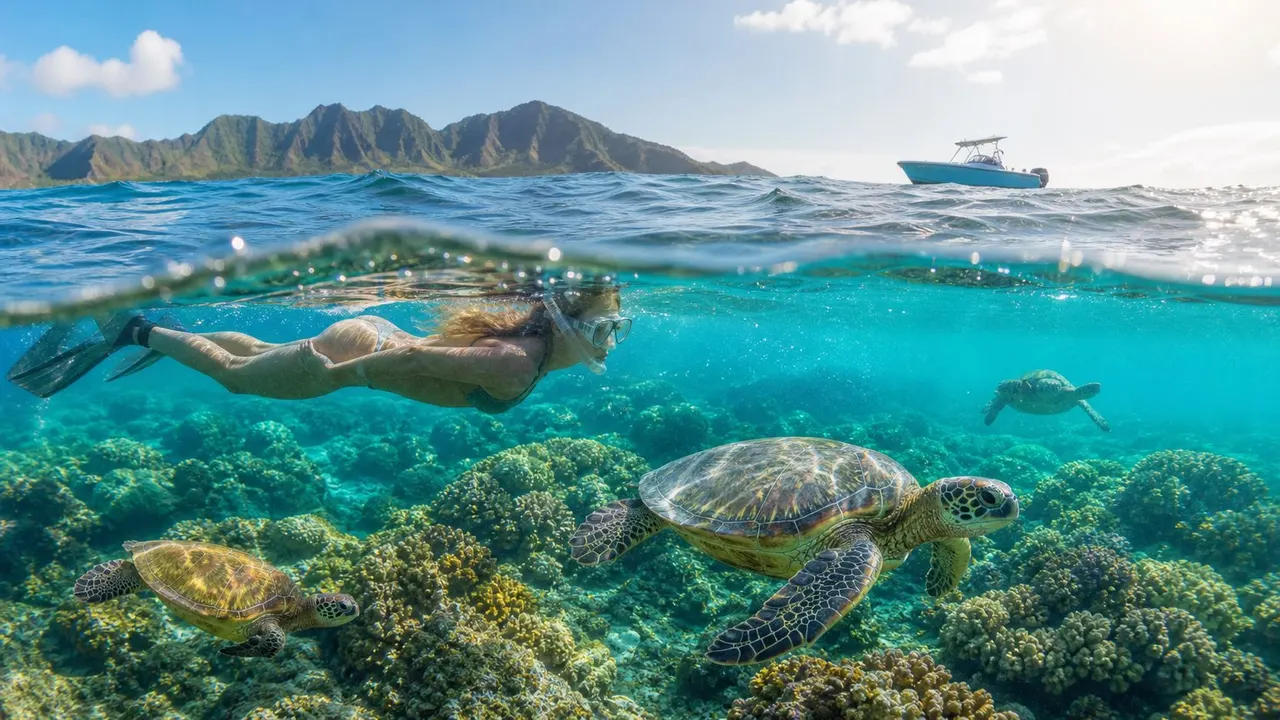
You've probably got the same problem most Waikiki visitors have on day one. The water looks inviting from the balcony, the kids want to see turtles, one partner wants a beach walk, and somebody in the group is already wondering whether to rent masks or just book something and be done with it. On Oahu, that choice matters more than the beach name on the map.
A Quick Reality Check Before You Hit the Water
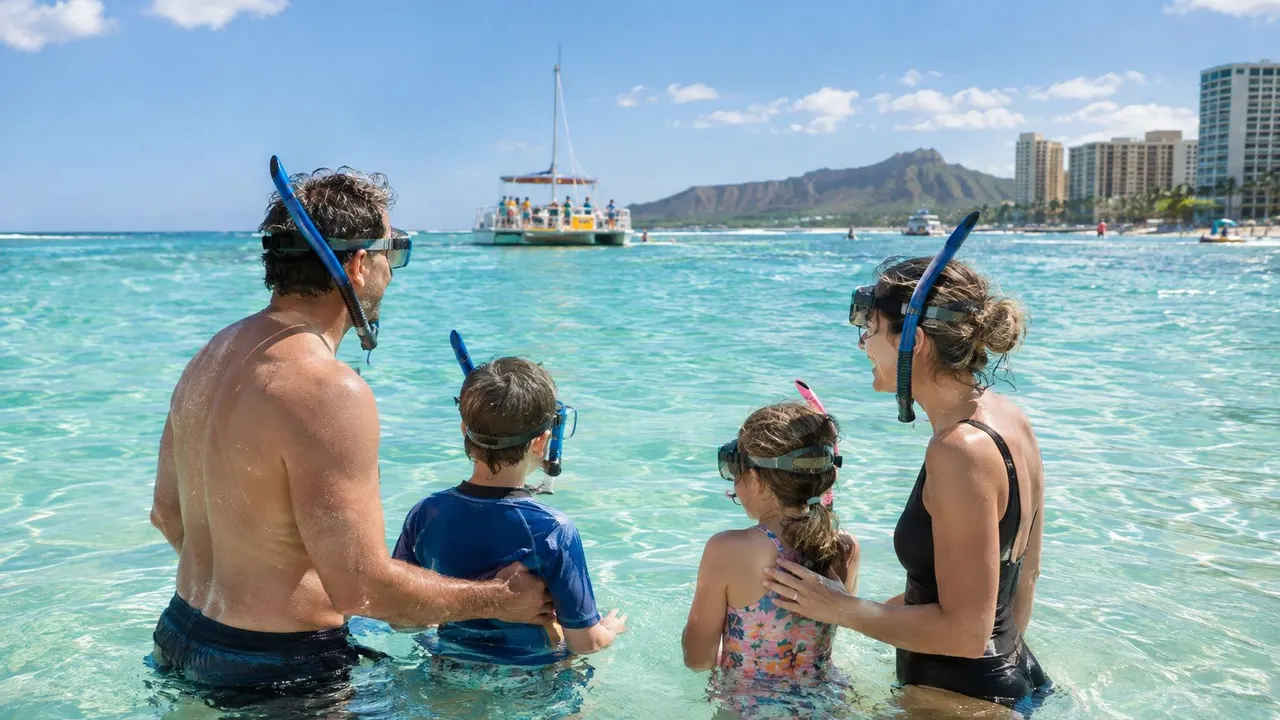
A first-time family often steps out of a Waikiki hotel and asks the wrong question, which is “What's the best snorkeling spot?” The better question is, “What's the water doing today, and what kind of entry can this group handle?” A calm, sheltered bay can be a smart shore option, while a gorgeous-looking beach can turn sloppy once the trades kick in.
That's why snorkel Oahu planning shouldn't start with a map pin. It should start with the group in front of you, especially if you've got kids, older travelers, or someone who hasn't snorkeled before. A beach entry feels simple until you're dealing with shorebreak, loose sand, and a mask that doesn't fit right.
Practical rule: If the water looks messy from shore, don't talk yourself into it just because the reef is “supposed” to be good there.
The island gives you real choices, though. You can stay independent and work from the beach, or you can let a crew handle the boat, the gear, and the site selection. You can also choose between a relaxed shoreline day and an offshore trip where visibility and consistency are usually easier to manage.
For visitors who want a quick gear-and-conditions reset before they go, the guide at mask panic prevention for Oahu snorkelers is worth a look. It lines up with what experienced crews see every week, the biggest problems usually come from poor fit, poor timing, or trying to force the wrong location on the wrong day.
How Wind, Swell, and Shore Exposure Shape Every Snorkel
Read the water before you pick the beach
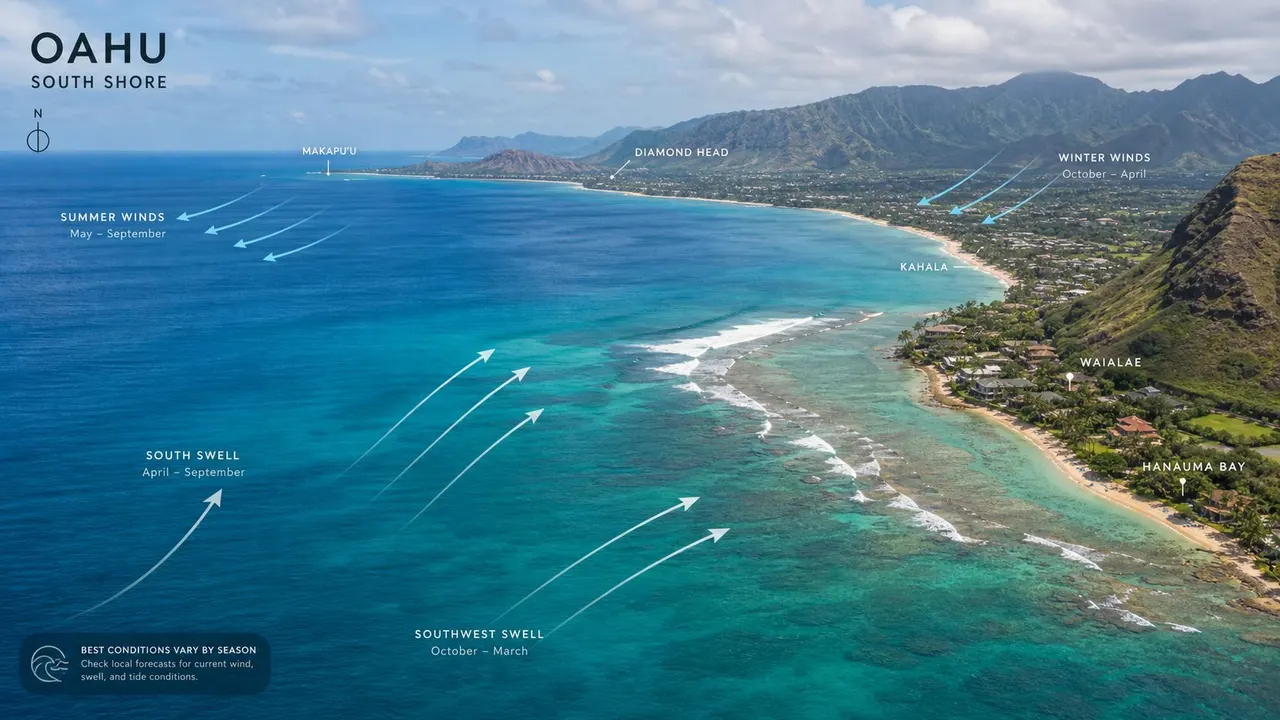
Three things decide whether a snorkel day works, wind direction, swell direction, and how sheltered the entry is. A leeward cove can stay fairly manageable while an exposed shoreline gets chopped up under the same breeze, because the wind hits the surface differently and the reef gets more surge. That is why a site can be fine in the morning and marginal later if the trades strengthen.
A conditions report for Oahu shows that sheltered spots such as Ko Olina Coves can rate “good” with only 1 to 2 feet of ripple and low inside current, while more exposed sites like Waikiki MLCD and San Souci can drop to “fair” or “hazy” under 15 to 20 mph easterly trade winds because surface chop and 2 to 4 feet of surf increase surge and reduce clarity (Oahu snorkel conditions report). That is the practical difference between water that still gives you a relaxed swim and water that turns the first ten minutes into work.
Morning usually wins
The forecast can look identical on paper and still play very differently by midafternoon. Wind often rises as the day warms, which is why the best visibility and easiest entries usually happen early, before the water gets beaten up. That pattern shows up especially on the south and west shores, where a modest breeze can still be tolerable in the morning but annoying later.
A technical forecast model for Oahu weights wave height heavily and treats ideal snorkel waves as below 0.36 m, while many sampled hours can be ruled out when wind exceeds about 5.4 m/s and tide is not near slack (best snorkeling spots Oahu forecast model). You do not need to do the math yourself. You just need to understand why an early window is often the safer, clearer bet.
For a quick planning shortcut, the operator's Oahu surf forecasts page is the kind of tool smart guests check before they leave the hotel. It will not tell you everything, but it will keep you from making a bad guess.
Best Snorkeling Regions Around Oahu and When Each Shines
Oahu's snorkel spots are not equal, and they don't behave the same way across the year. The trick is matching the region to the season, your confidence level, and how much effort you want to spend getting in and out of the water. A lot of “best spots” lists skip that part and leave people guessing.
Here's the simple version. The west side is usually the most sheltered. The southeast side can be excellent when conditions line up. The North Shore is a summer play, not a winter default. And offshore Waikiki sites give you a very different experience from shore entries, even though they're close to town.
| Oahu Snorkel Regions at a Glance | Best Conditions | Best For | Main Tradeoff |
|---|---|---|---|
| Ko Olina and other leeward coves | Light wind, low swell, sheltered water | Families, beginners, relaxed shore entries | Can feel ordinary if the sea is too still |
| Waikiki MLCD and Turtle Canyons area | Calm to moderate south shore conditions, best early | Visitors who want convenience and reef life close to Waikiki | Exposure can reduce clarity when trades build |
| Hanauma Bay | Sheltered days, especially when the south shore is calm | First-timers, reef fans, travelers who want a managed site | Access is heavily controlled and timing matters |
| North Shore spots | Summer, when surf is calmer | Confident snorkelers who want a seasonal option | Winter swell can shut the whole idea down |
Hanauma Bay remains one of the most historically important snorkeling sites on the island because it has been a Marine Life Conservation District since 1967 (Hanauma Bay and Oahu snorkeling safety context). If you want a controlled, reef-centered experience, it still belongs on the list. If you want easy access and a faster decision, offshore Waikiki can be more practical.
A lot of visitors also overlook the west side because it doesn't always sound dramatic enough. That's a mistake on calm days. Sheltered leeward water can be the difference between a relaxing snorkel and a frustrating one, especially for families and mixed-experience groups.
If you want a tighter regional shortcut, the breakdown in best snorkeling Oahu 2026 is useful because it separates geography from guesswork.
Why a Guided Boat Trip Changes the Whole Experience
A shore snorkel sounds simple until you are hauling gear across hot sand, checking surf, and trying to decide whether the entry works for the least confident person in your group. A guided boat trip removes most of that friction. The crew chooses the site, carries the gear, and keeps the day centered on the water instead of the logistics.
Where the boat helps most
Offshore sites like Turtle Canyons play by different rules than crowded beach entries. The water there is often clearer because you are not fighting as much stirred-up sand, and the reef is known for Hawaiian green sea turtles using it as a cleaning station. That means more time in the water and less time wondering whether you picked the wrong beach.
Living Ocean Tours operates daily from Kewalo Basin Boat Harbor next to Waikiki and offers guided snorkel excursions to Turtle Canyons. Its 2-hour Turtle Canyons Snorkel Excursion and 2.5-hour Deluxe Waikiki Snorkel and Wildlife Cruise fit the kind of day many families want, guided water time, included gear, and a crew that keeps the trip moving at a practical pace.
The value is not the boat itself. It is getting to a known snorkel zone with people who already know what the water is doing.
What good crew service changes
Good trips also take pressure off the underwater part. You get a briefing, the right mask and fins, and someone nearby who knows the entry and exit pattern. That matters for newer snorkelers, because a calm voice in the water can be the difference between a short swim and a full meltdown.
If you are comparing operators, the Turtle Canyons snorkel excursion page gives a clear look at the kind of guided setup that works well for Oahu visitors who want turtles without the guesswork. On family-oriented trips, the deluxe cruise format adds features like the 2-story waterslide, water trampoline, and lily pad, which helps mixed-age groups stay happy when not everyone wants to snorkel the whole time.
Gear, Clothing, and What to Pack for the Day
A guided trip usually covers the basics, mask, snorkel, fins, and some kind of flotation support. That's enough for most visitors, and it keeps you from wasting space in a suitcase on gear you'll only use once. If you're doing a shore day on your own, the same gear still matters, but the burden shifts to you to make sure everything fits before you step into the water.
What to bring yourself
Pack reef-safe sunscreen, a rash guard or swim shirt, a towel, and a dry bag for your phone and room key. Bring water too. Hot sun, saltwater, and a sloppy mask combo can drain people faster than they expect, especially kids.
A few travelers overcomplicate footwear. Water shoes help on rocky entries and boat decks, but they're not a license to walk on reef. If you're entering over coral, focus on careful foot placement or choose a better entry point. Standing on coral is one of the fastest ways to damage the very thing you came to see.
Gear choices that deserve caution
Full-face masks sound convenient, but Hawaii's official snorkeling safety guidance warns about carbon-dioxide buildup and recommends proper fit and practice before entering the water (Hawaii snorkeling safety guidance). That matters more for beginners, because a mask that traps breath the wrong way can turn a relaxed swim into a dizzy, panicked one.
If a mask feels weird in shallow water, it's not going to feel better offshore.
For a room-by-room packing reminder, the Oahu snorkel packing list is the kind of checklist that saves a hotel morning. It won't make the water calmer, but it will keep you from forgetting the small things that turn into big annoyances later.
Seasonal Wildlife and What You Can Realistically Expect
Green turtles, whales, and the kind of timing that matters
If turtles are the goal, you do not need to chase a specific month. Hawaiian green sea turtles show up year-round at places like Turtle Canyons, where they move through the reef as part of a cleaning-station pattern. In practice, that is why a guided offshore trip usually beats staring at a random shoreline and hoping the day lines up.
The part that changes the day most is the water. Summer, roughly May through September, usually brings calmer leeward conditions and clearer visibility. Winter pushes larger swells onto the North Shore and makes the south and west sides the more dependable choices. If you want easier water, choose the calm season or pick a sheltered shore.
Matching the month to the mission
Travelers who want whales can pair an ocean outing with winter timing. Humpback season runs January through March in Hawaii's visitor calendar, which makes that window a better fit for guests who want more than a snorkel swim. The experience changes by month, and that is why a fixed spot list does less useful work than a seasonal plan.
Summer gives you easier entry and steadier visibility. Winter asks you to choose the right shore instead of forcing the wrong one.
That same seasonal logic explains why North Shore snorkeling gets mixed reviews from first-timers. It can be excellent when the ocean settles, then completely wrong once the swell builds. The smart move is to let the month choose the shore, then let the morning choose the exact site.
Safety, Etiquette, and Reef Protection That Matter
Hawaii's ocean safety data makes one point clear, snorkeling is not a casual add-on activity. It has been the leading cause of visitor drowning in the state, including 169 snorkeling-related deaths out of 650 ocean drownings from 2007 to 2016 and 204 snorkeling-related deaths from 2012 to 2021, of which 184 were tourists (Oahu snorkeling safety data summary). Those numbers do not mean you should avoid the water. They do mean you should judge the day carefully, including the swell, your energy level, and how comfortable you are once your face is in the water.
The habits that protect you and the reef
The rules are plain because the outcome is not. Never feed fish or turtles. Never stand on coral. Stop if you feel dizzy or uncomfortable. Those are not polite suggestions, they are the baseline for a safe snorkel day.
Hanauma Bay is the clearest example of why rule-driven access exists. It requires a 9-minute orientation video before entry, and it also limits access with no entry after 1:30 p.m. and closures on Mondays and Tuesdays (Hanauma Bay visitor guidance). That management approach shows how Oahu balances visitor demand with reef protection.
What good stewardship looks like in practice
Strong snorkelers keep distance from wildlife, move slowly, and let the reef set the pace. They do not chase turtles for photos or stir up sand with clumsy kicks. They also pay attention when a guide says the water is changing, because that often separates a smooth return from a rough one.
Simple rule: If you need to touch the bottom to feel stable, you're in the wrong place or it's the wrong day.
For travelers who want a more controlled experience without guessing at access rules, a guided trip can reduce stress and reef impact. It is not about making the ocean easier than it is. It is about making sure your behavior matches the place.
Booking, Timing, and Getting the Most Out of Your Day
Book early enough to have choices, but don't overcomplicate it. During peak family travel periods, a day or two ahead is often enough for a guided snorkel, though the best morning slots can disappear first. Early departures matter because the light is better, the water is usually calmer, and everyone in the group is fresher.
The night before, ask the operator one direct question, “What is your turtle sighting success rate and where exactly are we going today?” That tells you more than a glossy description ever will. If the crew can answer clearly, you're probably dealing with people who know their route and their water.
What to check before you board
- Morning departure: This usually gives you the best shot at cleaner water and easier entries.
- Waiver and safety briefing: Read them before you arrive, not after you're already suited up.
- Gear fit: Put the mask on your face before the boat leaves, not after you're already nervous.
- Group comfort: If someone in your party is unsure, say so early. A good crew can work with that.
Living Ocean Tours runs daily departures from Kewalo Basin Boat Harbor, which makes it easy to build the snorkel into a Waikiki stay without turning the day into an island-wide road trip. The route is simple, the setup is family-friendly, and the focus stays on the water instead of on logistics.
If you want to snorkel Oahu the smart way, book a trip that matches the season, the shoreline, and your comfort level instead of gambling on a random beach entry. Living Ocean Tours runs guided snorkel trips from Waikiki with gear, instruction, and a crew that knows the local water, so it's an easy fit for families, first-timers, and anyone who wants a better shot at turtles. Visit Living Ocean Tours and choose the day that fits your schedule before the good morning slots are gone.


