
Snorkel Oahu: The Best Family Spots for 2026
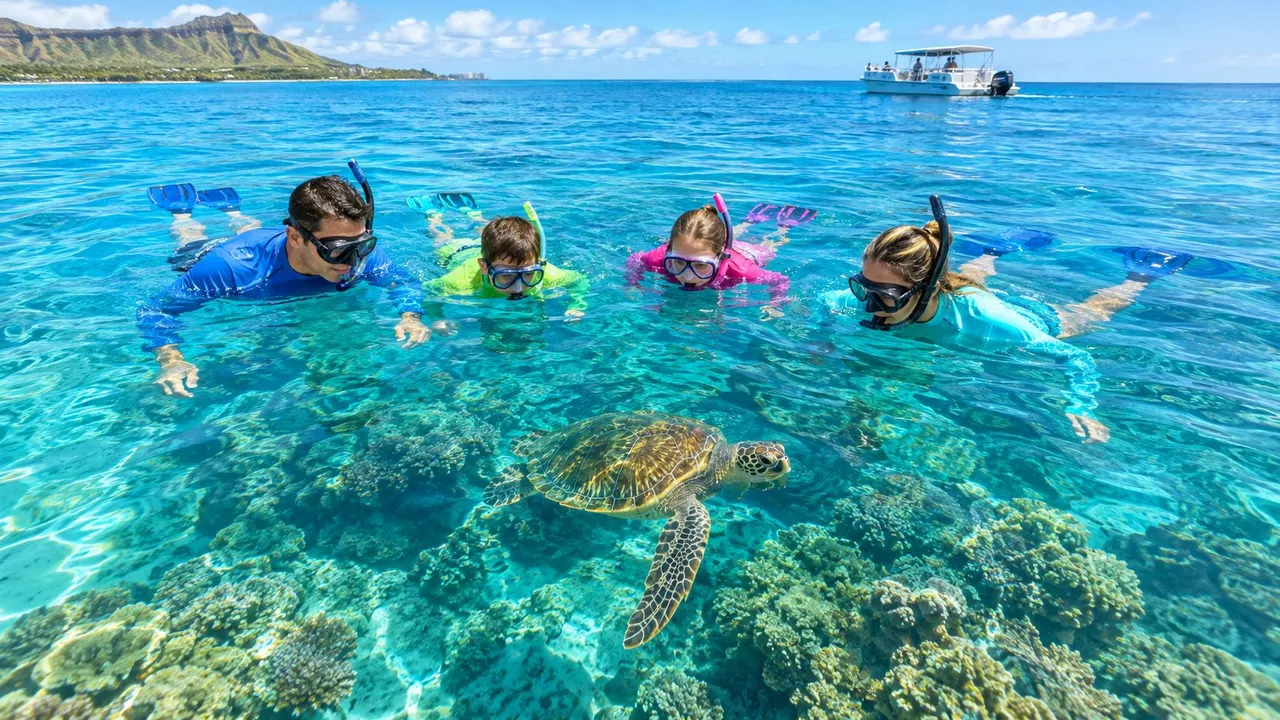
You're in Waikiki, standing over a beach bag that's still half-packed. The grandparents want to see turtles, the kids want to jump in immediately, and someone is asking whether you should just walk into the water and snorkel from shore. On Oahu, that decision matters more than the color of the reef or the number of fish you hope to see.
The strongest family snorkel days usually begin with a realistic assessment of age, swimming confidence, sea conditions, and supervision. Oahu has beautiful reefs, but it also has heavily used sites, changing wind, current exposure, and visitors who underestimate how tiring it can be to breathe through a snorkel. The right plan isn't always the most adventurous one. For many families, it's an early, guided outing where the crew chooses the site and safety takes priority over sightings.
Why Most First-Time Families Should Skip the Self-Guided Snorkel
A typical Waikiki morning starts with a family debating the easy-looking option. Grandparents stand in flip-flops beside parents carrying towels, while the children point toward the bright water. From the beach, the reef seems close enough to reach without much planning.
That impression can be misleading. A shore snorkel puts every decision on the family, including where to enter, how far to swim, whether the current is changing, and who watches the children when another adult is helping a nervous swimmer. There's no crew member checking mask fit, explaining flotation, or moving the group to a more sheltered location when the water changes.
Hawaii safety data deserves attention here. From 2007 to 2016, snorkeling was tied to 169 of 650 ocean drownings, and 156 of those deaths involved tourists, according to the Hawaii snorkeling safety summary. The same source identifies snorkeling as the leading cause of visitor ocean deaths in the broader Hawaii data.
The problem isn't always rough water
Many first-time problems begin. A swimmer breathes too hard through a leaking mask, lifts the head to recover, swallows water, and panics. An older traveler may be a strong pool swimmer but struggle with exertion, saltwater breathing, or an unexpected current. A child may become anxious before the adults notice.
Recent Hawaii-focused safety research reports that 62% of snorkelers who encounter problems are over 50, while 70% are non-residents. Those findings make the first-day visitor and the older traveler central to the safety conversation, not side cases. Read the practical Oahu snorkeling safety guidance before treating a beach entry as a casual activity.
Captain's rule: If one person in the group needs constant reassurance, the whole group needs a simpler water plan.
A guided boat outing changes the workload. You check in, receive an equipment fitting and briefing, and enter at a known reef selected for the morning's conditions. A guide remains focused on the swimmers while the captain monitors the route and the weather. That setup doesn't eliminate risk, but it removes several avoidable decisions.
Self-guided snorkeling can work for confident swimmers who understand the entry, stay within lifeguarded areas, and know when to turn around. For first-time families with mixed ages and abilities, a guide-led trip is usually the more forgiving choice.
Best Snorkeling Spots in Oahu and Who Each One Is For
A strong swimmer can still choose the wrong reef. For older travelers and first-time snorkelers, the key questions are how they handle open water, rocky entries, current, and the distance from shore.
Turtle Canyons suits families who want marine life without a long beach swim. The offshore site includes turtle cleaning areas over ledges, and a boat brings swimmers close to the viewing area. That direct access helps first-timers, mixed-age groups, and anyone who would rather spend energy observing than finding a safe reef entry. This comparison of Oahu snorkeling locations helps match each site to the group's ability.
Hanauma Bay provides protected reef habitat and abundant fish, with visitor controls that shape the experience. Independent reporting describes the bay as attracting about 1 million visitors per year in this comparison of Oahu snorkeling locations. About 88% of visitors come specifically to snorkel, according to the same comparison. Lifeguards may perform an average of 4 to 5 rescues each day, according to the Oahu snorkel conditions report. Confident swimmers who accept reservations, crowds, and active safety management may do well here. A nervous multi-generational group may find the logistics and busy water tiring.
Sharks Cove is a North Shore lava cove with pronounced reef structure. In summer, when conditions are calmer, it can suit experienced snorkelers who are comfortable with uneven rock, surge, and changing water depth. The entry often determines whether grandparents, small children, or visitors wearing bulky gear can participate safely.
Electric Beach requires stronger swimming skills and better judgment. Current exposure and deeper water make it a better fit for experienced snorkelers looking for wider wildlife possibilities than for a family's first ocean session. Fitness alone does not replace local knowledge when conditions change.
| Spot | Best For | Crowd Level | Entry Difficulty | Notes |
|---|---|---|---|---|
| Turtle Canyons | First-time families and mixed-age groups | Organized, high-demand boat setting | Boat entry | Direct access to offshore turtle habitat |
| Hanauma Bay | Confident swimmers who accept reservations | Heavy | Beach entry | Protected reef, visitor pressure, and active safety management |
| Sharks Cove | Experienced summer snorkelers | Variable | Rocky | North Shore conditions can change sharply |
| Electric Beach | Strong intermediate swimmers | Variable | Current-prone | Not a beginner family site |
Choose by family fit, especially when an older traveler or first-time snorkeler is in the group. The reef with the strongest reputation may still be the wrong one for that morning.
Choosing a Guided Turtle Canyons or Waikiki Snorkel Excursion
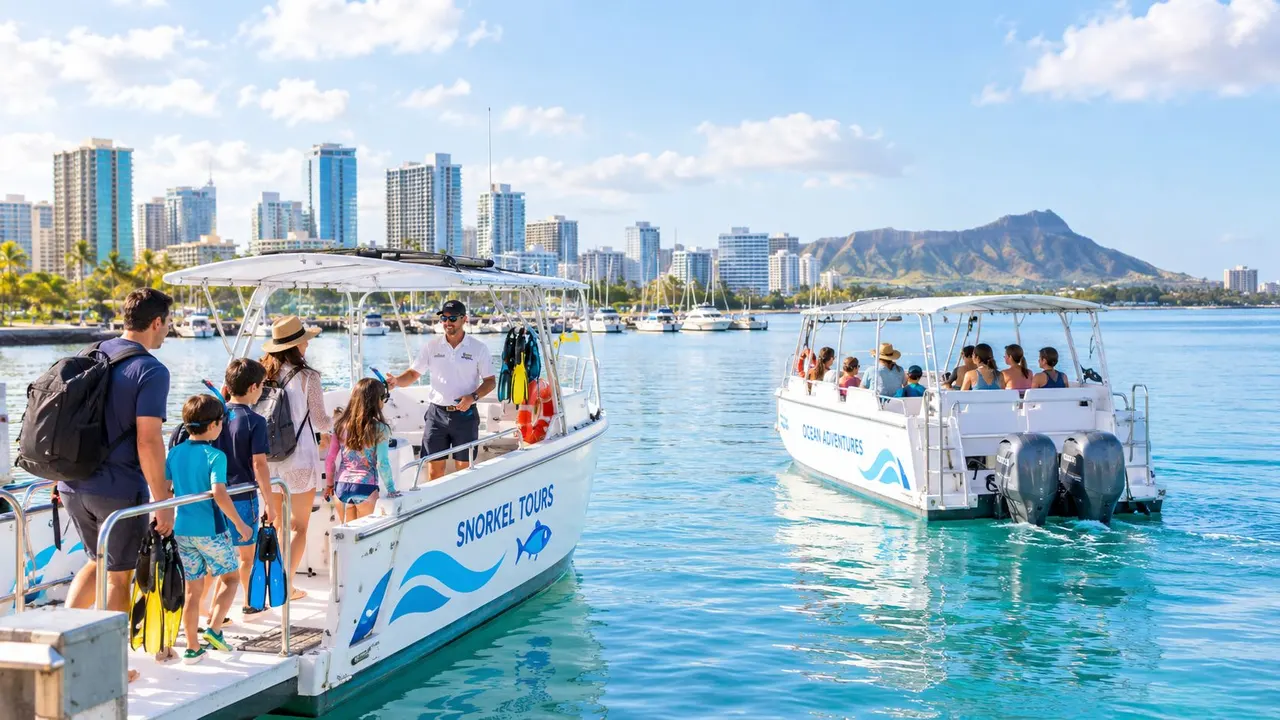
From Kewalo Basin, the morning usually has a simple rhythm. Families arrive for check-in around 7:30 to 8:00 AM, park at the harbor, meet the crew, and get fitted before the boat leaves Waikiki's shoreline behind. Early departures matter because Oahu's trade winds commonly strengthen later in the day, creating more chop and reducing underwater visibility, as described in this Oahu snorkeling guide.
Match the trip to the group
The Turtle Canyons Snorkel Excursion is the focused option. The ride to the offshore turtle cleaning stations is about 15 to 20 minutes, followed by approximately 90 minutes in the water with a guide present. Masks, snorkels, fins, rash guards, and flotation aids are included. It works well for young children, first-time snorkelers, and adults who want a shorter, purpose-built outing. See the Turtle Canyon snorkeling details before booking.
The Deluxe Waikiki Snorkel and Wildlife Cruise runs longer, roughly two hours, and combines snorkeling with a coastal cruise along Waikiki. It adds snacks and drinks, plus a waterslide, water trampoline, and lily pad. Seasonal whale watching is included from December through March, making it a better fit for older children, multi-generational groups, and visitors who want scenery and wildlife alongside the snorkel stop.
Living Ocean Tours is the top rated and most reviewed snorkel company on Oahu, and its Kewalo Basin departures offer both formats. Compare what the group will use, not just the listed price. A shorter trip can be better value for a young child who tires quickly, while the deluxe format may make more sense when the boat ride, coastal views, and added activities are part of the day's purpose.
What to Bring and What to Wear for a Family Snorkel Day
Pack for a moving boat, strong sun, and a group with different comfort levels. The crew normally supplies the core water equipment, so don't fill a suitcase with duplicate rental gear before confirming what your excursion includes.
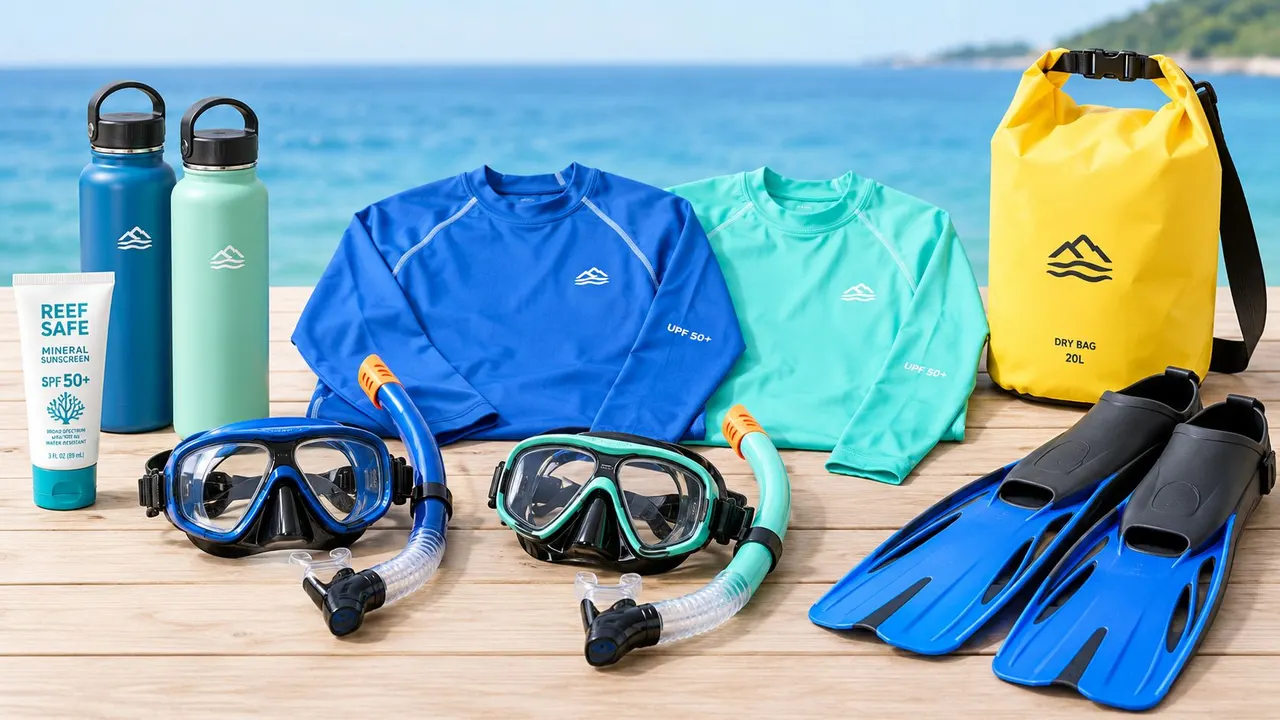
Captain's packing list
- Sun protection: Bring reef-safe mineral sunscreen, preferably non-nano zinc and oxybenzone-free. Hawaii guidance also favors products compliant with local restrictions, and families should apply sunscreen before boarding so it has time to settle.
- Clothing: Wear UPF 50+ rash guards over board shorts. A thin neoprene top helps sensitive children and grandparents stay comfortable in the water.
- Personal fit items: A mask must seal each face. If you have a favorite snorkel, bring it, but check the operator's included equipment first. Defog solution or baby shampoo can help with a fogging lens.
- Hydration: Pack a reusable water bottle. It's easier to keep children drinking when the bottle is familiar and easy to reach.
- Boat comfort: Cotton towels stay heavy and cold on a moving deck. A quick-drying towel works better, and a light long-sleeve layer helps on the ride back when the wind picks up.
Most guided trips provide masks, snorkels, fins, and flotation belts or aids. Reef shoes are often unnecessary on sandy boat entries and can make fin use awkward. They do make sense for rocky shore access, so the decision depends on where you enter, not on a universal packing rule.
Take motion-sickness medicine according to its label and personal medical guidance, ideally before departure rather than after nausea begins. Keep phones and room keys in a dry bag, and use the Oahu snorkeling packing list as a final check before leaving the hotel.
When to Go for the Calmest Water and the Best Wildlife
For first-time families, time of day usually matters more than chasing a particular beach. Oahu guides consistently describe morning water as calmer and clearer, while trade winds commonly build later and create surface chop. That makes an early boat departure a practical choice for visibility, comfort, and easier supervision.
The south shore can offer more dependable winter options than the North Shore, where seasonal surf can make exposed entries unsuitable. Summer can open more North Shore possibilities, but even then, the captain should make the final call after checking the actual water. A forecast describes a regional pattern, not the exact conditions at a reef.
A useful planning view
| Month | Typical Water Conditions | Wildlife Highlights |
|---|---|---|
| January | Morning south-shore outings often offer the most practical family conditions; North Shore surf can limit access | Humpbacks may be visible from boats |
| February | Choose sheltered locations and favor early departures | Humpback season continues |
| March | Conditions remain location-dependent, with morning generally preferred | Humpbacks may still be visible |
| April | Trade-wind timing becomes important for visibility | Turtles and reef fish remain possible |
| May | North Shore conditions may become more suitable, but entry skill still matters | Turtles and reef fish |
| June | Early water is often the easiest for beginners | Turtles and reef fish |
| July | Summer can support calmer North Shore snorkeling, subject to the day's conditions | Turtles and reef fish |
| August | Morning remains the better window before wind increases | Turtles and reef fish |
| September | Sheltered sites remain the safer planning choice for mixed groups | Turtles and reef fish |
| October | Conditions can transition by shore and swell direction | Turtles and reef fish |
| November | South-shore swell and wind decisions become more important | Turtles and reef fish |
| December | Favor protected routes and morning departures | Humpbacks may be visible from boats |
Hawaiian green sea turtles can be encountered year-round at turtle sites, but wildlife is never guaranteed. Book the Oahu snorkeling experience that fits your group first, then let the crew adapt the route to the morning.
Snorkel Safety for Older Travelers, Kids, and First-Timers
A first-time snorkeler can look comfortable until breathing changes, fatigue sets in, or anxiety takes over. Older travelers and visitors unfamiliar with local ocean conditions deserve particular attention because snorkeling keeps swimmers at the surface while still demanding steady breathing and judgment.
Before booking, ask three direct questions:
- Can every swimmer breathe calmly through a snorkel?
- Can each adult recognize fatigue before it becomes distress?
- Does anyone have a medical condition or medication concern that requires professional advice before exertion in the ocean?
Grandparents with heart conditions, breathing concerns, or other significant medical issues should seek appropriate medical guidance before entering the water. A short pool practice can expose a leaking mask or uncomfortable mouthpiece, but it cannot replace medical clearance or experience in open water.
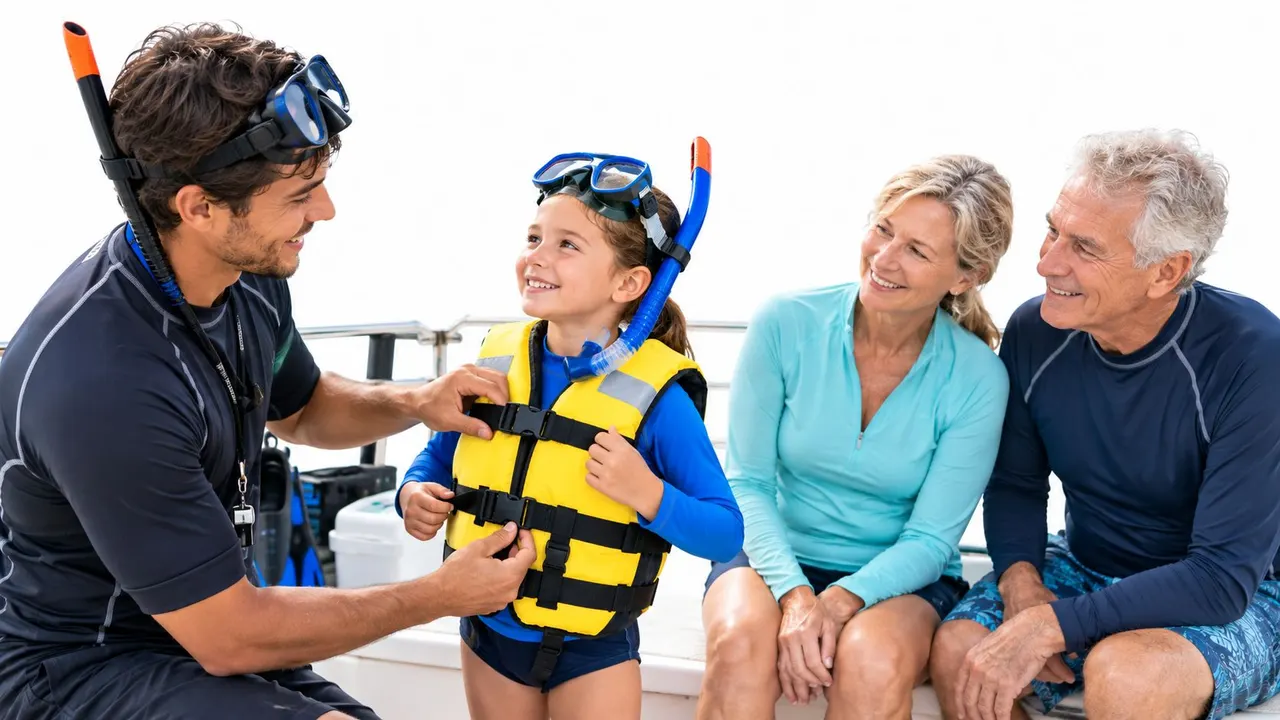
What I want families to agree on before boarding
- Stay together: Use the buddy system, and keep each child beside a responsible adult.
- Skip breath-holding games: Snorkeling relies on surface breathing, not competition.
- Learn hand signals: Agree on signals for “okay,” “back to the boat,” and “I need help.”
- Respect the guide's boundary: Remain inside the designated area and follow instructions immediately.
- Leave early: Shortness of breath, unusual fatigue, panic, dizziness, or chest discomfort means returning to the boat.
Children need permission to stop without embarrassment. If a child becomes anxious, a parent should accompany them back to the boat instead of pushing for one more turtle sighting. A flotation belt can build confidence, but it does not make an uncertain swimmer independent in the ocean.
The safest sighting is the one you can leave without chasing.
From Kewalo Basin, a guided crew can adjust the morning plan for swell, wind, visibility, and the group's ability. If the entry or water becomes uncomfortable, changing sites or ending the session is the sound call. A turtle sighting never outranks a family member's breathing, energy, or judgment.
Responsible Wildlife Viewing Around Turtles and Reef Fish
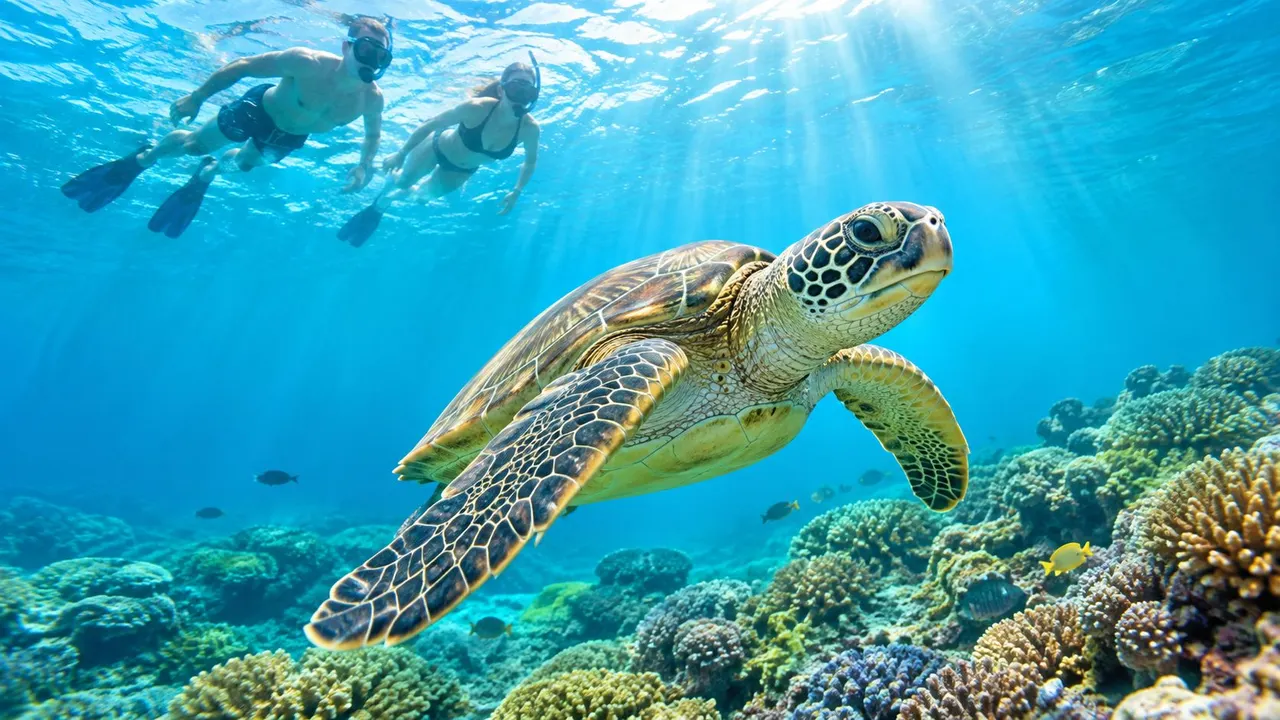
A turtle encounter should feel calm from the animal's perspective as well as from yours. Hawaiian green sea turtles are protected, and visitors are instructed to keep at least 10 feet, or 3 meters, away in the water or on land. The rules prohibit touching, chasing, feeding, blocking, riding, or surrounding a turtle, as explained in the Hawaii turtle snorkeling rules.
Let the animal control the encounter
At Turtle Canyons, approach slowly and keep your fins below the reef. Float rather than stand, and give a turtle a clear path to the surface. If it changes direction because of your group, you're too close or too active. The best viewing often happens when everyone stops kicking and lets the animal continue its normal movement.
The same restraint applies to reef fish. At Oahu marine life conservation areas such as Pūpūkea, visitors may not take, injure, kill, possess, or remove marine life. Rules also prohibit altering geological features or adding food and other substances to the water to attract animals, according to the Pūpūkea marine life conservation district rules.
Hanauma Bay's visitor guidance specifically emphasizes reef-safe sunscreen, avoiding coral contact, and not feeding fish. Feeding changes natural behavior and encourages animals to associate people with food. A family that observes sees more authentic behavior, including fish moving through their normal habitat rather than clustering around a handout.
A good guide doesn't just point at wildlife. The guide teaches the group how to avoid changing what it came to see.
That means a short briefing before entry, reminders in the water, and a clear response when someone drifts too close. Follow the Hanauma Bay reef protection guidance whether you're visiting independently or joining a boat trip. Protect the coral, leave marine life unhandled, and treat every sighting as an observation rather than an invitation.
Living Ocean Tours offers guided Turtle Canyons snorkeling and a Deluxe Waikiki Snorkel and Wildlife Cruise from Kewalo Basin, with equipment, instruction, flotation support, and a safety-led approach for families and first-time swimmers. Visit Living Ocean Tours to compare the morning options and choose a snorkel Oahu experience that fits your group's ages, confidence, and comfort in the water.


