Discover Sea Turtles Oahu: Top Viewing Spots
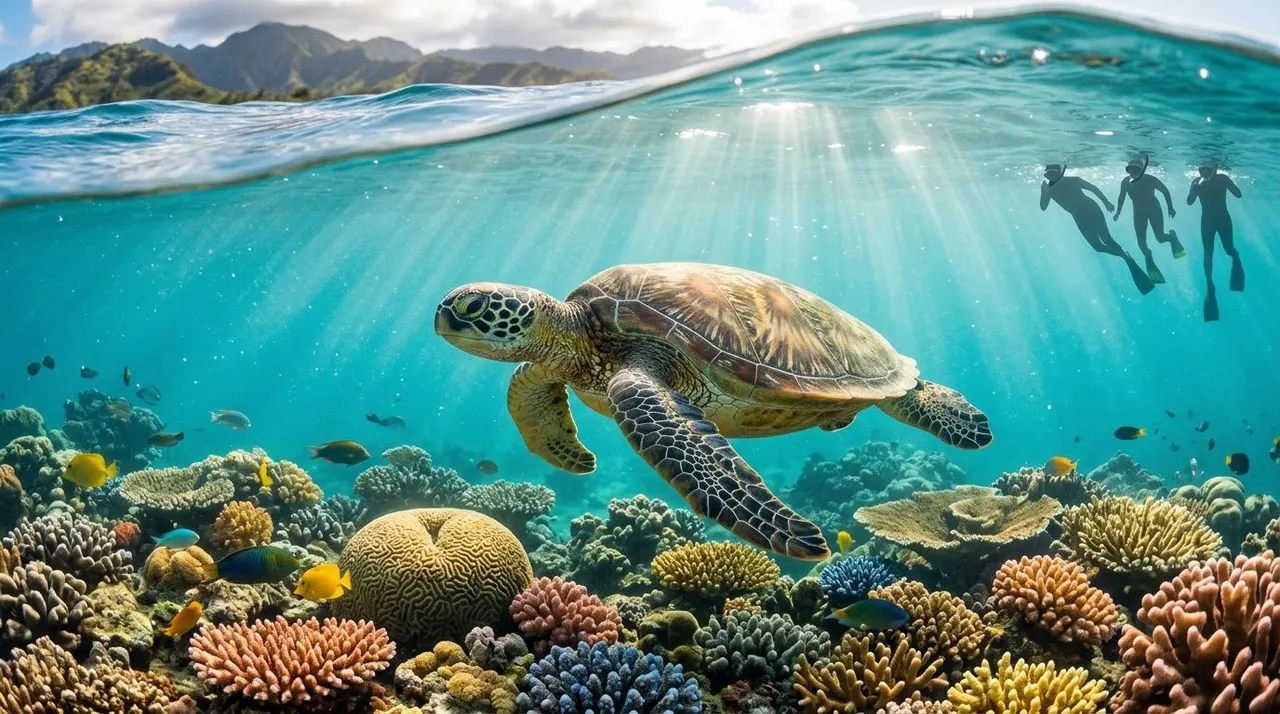
A lot of Oahu visitors arrive with the same goal. They want that one clean, memorable wildlife moment. Not a crowded shoreline selfie, not a frantic swim in choppy water, but a calm encounter with a honu gliding past in blue water.
For families, that dream usually comes with a second set of questions. Where do you go? Is it safe for kids? What if you're not a strong swimmer? And how do you see sea turtles without bothering them?
That’s where local knowledge matters. The sea turtles Oahu visitors hope to see are protected wild animals, and the experience is far better when you understand where turtles naturally gather, how to behave around them, and which setups work well for beginners.
An Unforgettable Oahu Encounter with Honu
One of the most common vacation scenes on Oahu starts the same way. A family has heard about the honu, the Hawaiian green sea turtle, and everyone wants to see one. The kids are excited. The grandparents want something gentle and scenic. The parents are trying to sort through beach blogs, safety questions, and a dozen opinions about where to go.
Then reality hits. Some shore spots are crowded. Conditions change fast. A place that sounds easy online can feel stressful if you're juggling fins, kids, and ocean nerves.
That’s why the most successful turtle outings usually begin with a simple shift in thinking. Instead of asking, “Where can I jump in and hope?” ask, “Where do turtles naturally spend time, and what’s the safest way to meet the ocean there?”
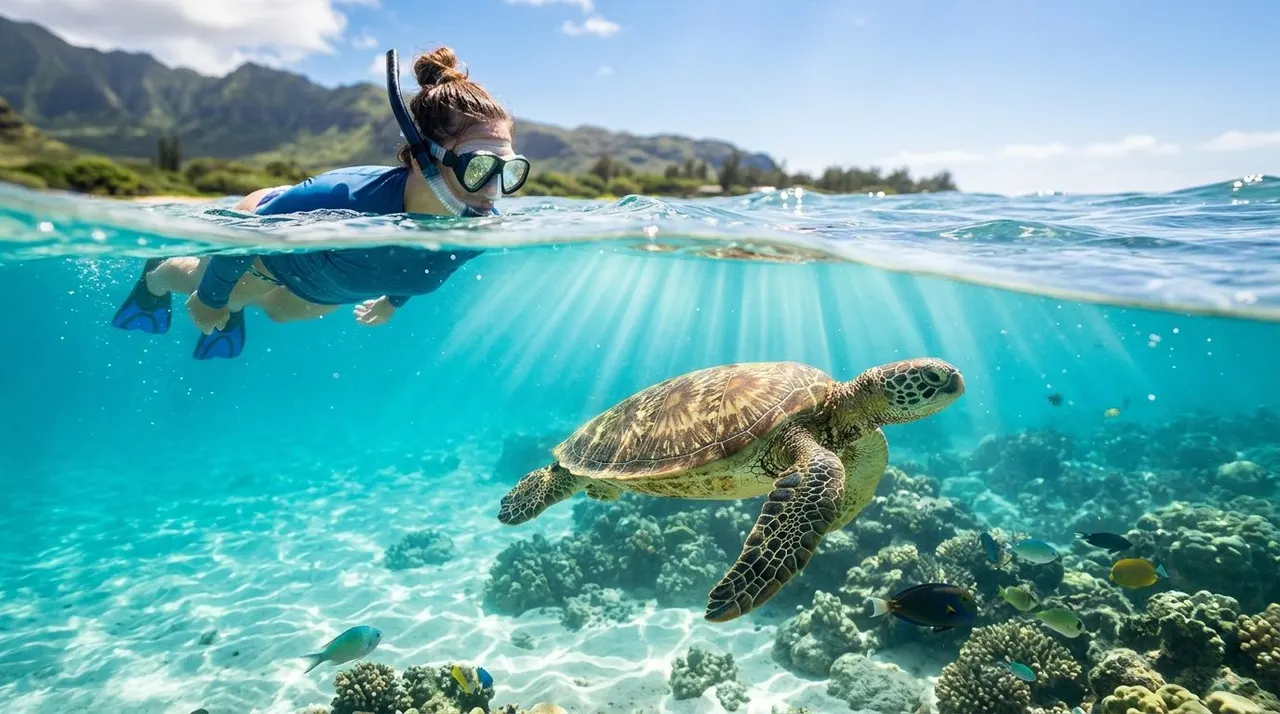
I’ve seen first-time snorkelers start the morning worried about masks, saltwater, and whether they’d even get comfortable enough to look down. Once they settle in, breathe slowly, and see that first turtle move beneath them, everything changes. The ocean gets quieter. People stop kicking so hard. Kids usually forget whatever they were nervous about five minutes earlier.
Sea turtle encounters are best when they feel unforced. Calm water, clear guidance, and respectful distance matter more than chasing a “perfect” photo.
If you're searching for sea turtles Oahu experiences that feel safe, respectful, and worth the effort, the goal isn't just finding turtles. It's finding the right setting for the people you're traveling with.
Meet the Honu Hawaiian Green Sea Turtles
The honu is one of the animals visitors remember most from Hawaii, and for good reason. They’re ancient-looking, calm in the water, and closely tied to the islands’ marine identity.
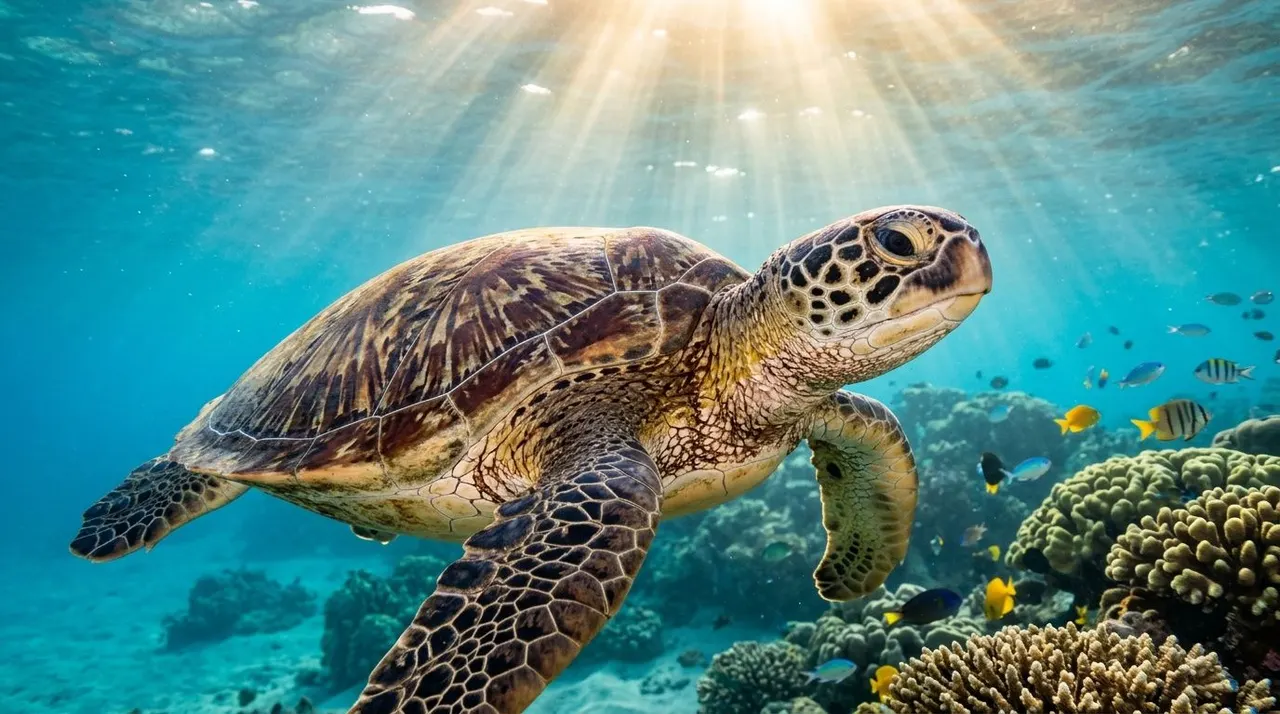
Hawaiian green sea turtles, or Chelonia mydas, can grow to 3 to 4 feet long and weigh up to 400 pounds, and their “green” name comes from their algae-rich body fat, not their shell color, as explained in this overview of what to know about Hawaiian green sea turtles.
What makes Oahu turtles different
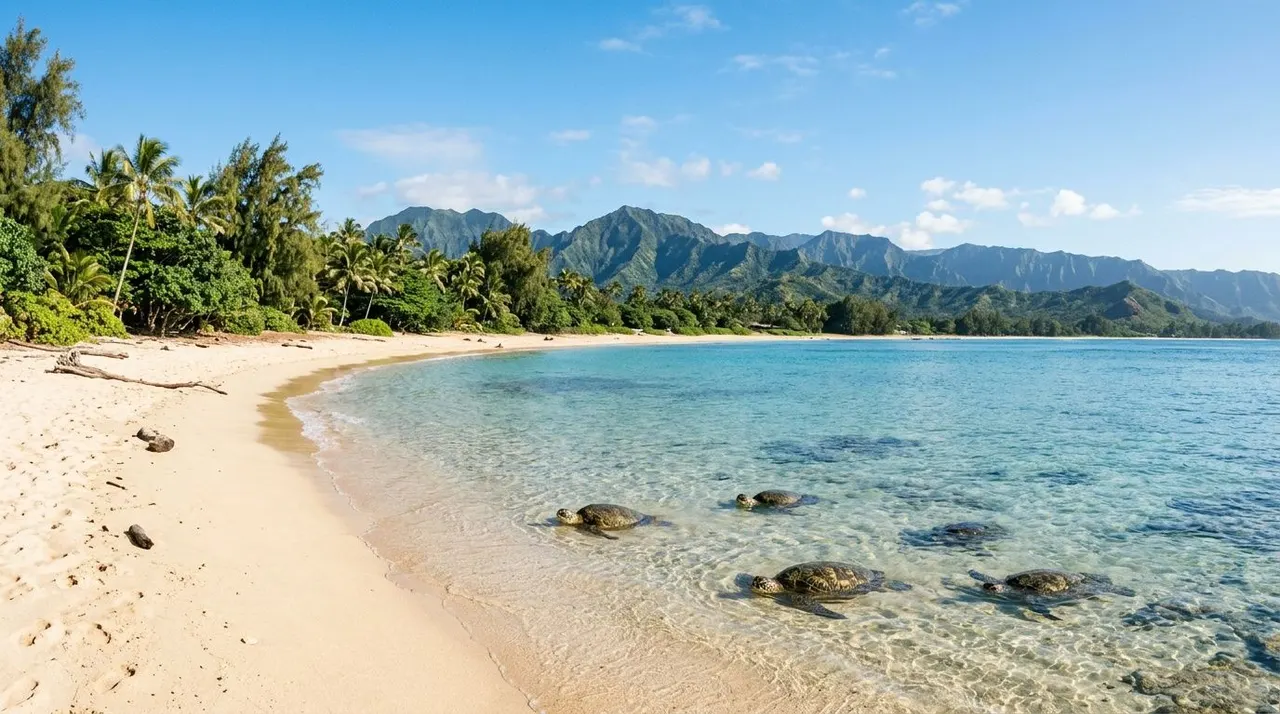
One behavior surprises many visitors. On Oahu, honu sometimes haul out onto the beach to bask. That thermoregulatory basking behavior is unusual among sea turtles, and it’s one reason beach encounters can be so special from a distance.
In the water, they often look effortless. But there’s a lot going on around them. Juveniles are omnivorous, eating things like jellyfish and crustaceans, then shifting toward herbivory as adults, feeding on limu and other marine plant life.
If you want a broader local guide to their habits and common viewing areas, this page on honu Oahu and where to see turtles in Oahu is a useful companion.
Why Turtle Canyon works so well
At places like Turtle Canyon, turtles gather at what guides call a cleaning station. Cleaner wrasses remove parasites from their skin, and that symbiotic relationship is one reason turtles return to the same kinds of productive reef zones.
For snorkelers, this changes the whole experience. You’re not searching randomly across open water. You’re visiting a place turtles already use for a reason.
A few details help people appreciate what they’re seeing:
- Body shape: Adult honu have an oval shell that often looks brown to olive.
- Movement: They don’t rush unless they feel pressured.
- Breathing: Turtles must surface for air, so give them room to come up naturally.
- Feeding and resting: If a turtle is grazing or settled into a routine, that’s not the time to swim toward it.
Practical rule: The more you understand turtle behavior, the less tempted you’ll be to chase an encounter. The best views usually come when you stay relaxed and let the turtle choose its path.
Best Places to See Sea Turtles on Oahu
Not all turtle spots are equal, especially if you're traveling with children, grandparents, or anyone new to the water.
Shore access gets most of the attention online because it’s easy to describe. You park, walk down, and wait. Sometimes that works. Sometimes it means a packed beach, uneven conditions, and long stretches of hoping a turtle appears where you can see it well.
Shore spots versus offshore turtle viewing
A quick comparison helps:
| Option | What works | Trade-off |
|---|---|---|
| Shore viewing areas | Easy to reach, good for watching from land | Crowds, variable sightings, changing surf |
| Boat-access sites | Access to reef zones turtles already use | Requires booking and basic trip planning |
Laniakea is famous for beach sightings, and it can be rewarding if your goal is to observe from shore. For actual snorkeling, many visitors do better offshore, where water access is more controlled and turtle activity is tied to reef behavior rather than luck.
Why Turtle Canyons stands out
Turtle Canyon near Waikiki has a strong reputation because it functions as a cleaning station. According to research summarized on the Pearl Harbor marine turtle tracking page, Hawaiian green sea turtles show strong site fidelity to productive nearshore habitats, favor 20 to 50 ft shallows for grazing, and at Turtle Canyon their clustering around cleaner fish improves foraging efficiency by an estimated 20 to 30%.
That matters for visitors because it explains why sightings are reliable there. Turtles aren't there by accident.
If you want details on the location itself, this Turtle Canyon Oahu snorkeling guide gives a clear picture of what the site is like.
What usually works best
Morning conditions often make life easier for beginners. Water tends to look cleaner, surface texture is often friendlier, and people are less tired than they are after a full beach day.
For sea turtles Oahu trip planning, these choices usually work better than trying to improvise:
- Choose a site with a known turtle pattern: Cleaning stations beat guesswork.
- Pick the least chaotic entry method: Boat access is often calmer than managing a busy public shoreline.
- Prioritize visibility and guidance: Good water is only half the equation. Clear instruction matters just as much.
The Art of Respectful Turtle Viewing
A sea turtle encounter only counts as a good one if the turtle can keep doing what it was doing before you arrived.
Hawaii’s viewing rules aren’t arbitrary. They exist because honu were pushed close to disappearing. By the early 1900s, commercial harvesting for meat and eggs had nearly annihilated them in Hawaiian waters. After the kapu system was lifted following 1918, hunting became unrestricted, and during the 1948 to 1974 modern commercial era, official reports recorded 5,000 to 6,000 turtles harvested. By 1973, only 67 nesting turtles remained statewide, as detailed in this history of turtle hunting in Hawaii.
That’s the backdrop behind today’s strict protections.
The rule that matters most
Keep at least 10 feet away.
If a turtle changes direction because of you, speeds up, lifts its head repeatedly, or starts moving its flippers rapidly, you’re too close. Back off and let it reset.
For a practical rundown of local etiquette, these Turtle Canyon snorkeling rules are worth reading before you get in the water.
What respectful behavior looks like in real life
It usually comes down to restraint:
- Don’t swim at a turtle head-on. Hold your position and watch its path.
- Don’t block the surface. Turtles need space to breathe comfortably.
- Don’t touch, ride, or feed them. That’s bad practice and illegal.
- Don’t crowd a resting turtle. A quiet turtle isn’t inviting company.
If you're wondering whether you're too close, you probably are.
Families do well when one adult keeps an eye on the child’s body position, not just the turtle. Most accidental pressure comes from drifting, kicking, or excitement. A little coaching fixes that quickly.
Reef-safe sunscreen also matters. The turtle experience depends on the health of the reef system under you. Protecting turtles means protecting the habitat they rely on.
Why a Guided Tour Is Best for Families and Beginners
A family can do everything right at the beach and still end up spending half the morning managing nerves, gear, current, and crowded water. This is a key reason guided turtle trips work so well for first-time snorkelers.
Beginners usually do fine once they settle their breathing. The harder part is everything around the snorkeling itself. Getting fitted properly, entering the water calmly, staying together, and knowing when to pause all matter more than people expect.
A good boat crew handles those pressure points early.
What families usually need most
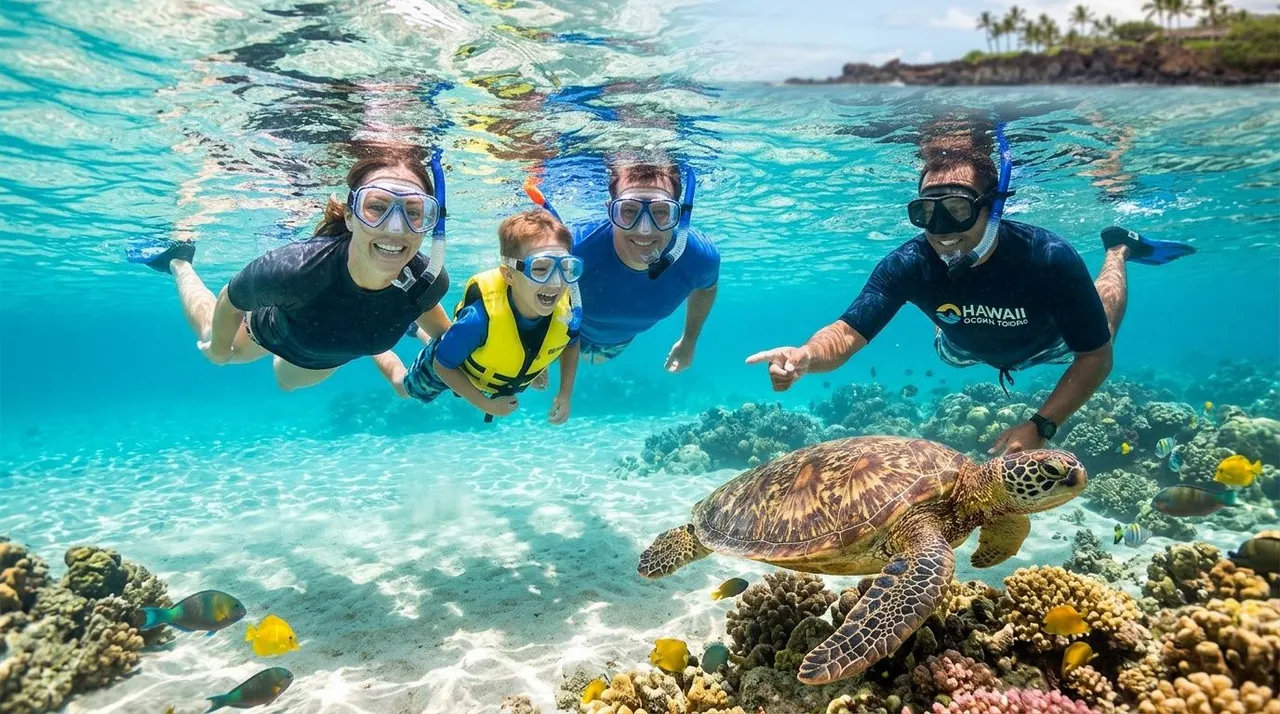
Families and first-time snorkelers usually need predictability. Shore spots around Oahu can be rewarding, but they also bring variables that wear people out fast. Parking, surf entry, changing conditions, and heavy crowds can turn a turtle outing into a lot of work before anyone even puts a mask on.
Boat access to Turtle Canyons solves a different problem than shore guides do. It gives families a known snorkel site, a crew watching the group, and enough structure that parents are not making every decision on the fly. For kids, that often means a calmer first experience. For adults, it means less time troubleshooting and more time looking down at reef life.
Here’s what usually works better on a guided boat trip:
- Clear setup before the swim: Guests learn the gear fit and basic signals before getting in.
- Easier water entry: Stepping in from a boat is often simpler than crossing a shallow, rocky, or wave-washed shoreline.
- Support in the water: Guides can help nervous swimmers settle down before small worries turn into panic.
- Better turtle viewing habits: The group gets real-time reminders on spacing, drift, and where to position without crowding wildlife.
A practical option near Waikiki
Visitors staying in town often want something straightforward, especially if they have kids or only one good snorkel morning in the schedule. Living Ocean Tours’ Oahu snorkeling tours include a Turtle Canyons option departing from Kewalo Basin, with gear, instruction, and guide support built into the trip.
If turtle snorkeling is the priority, the relevant trip is the Turtle Canyons Snorkel Excursion.
A tour makes the biggest difference when your group includes:
- Children under ten: They usually do better with short, simple instructions and close supervision.
- First-time snorkelers: A few minutes of calm coaching can change the whole day.
- Multi-generational families: Boat access reduces the strain of a long walk, uneven shoreline, or surf entry.
- Visitors on a tight schedule: Going by boat to a reliable turtle area is often a better use of limited vacation time.
One more trade-off is worth saying plainly. A guided boat trip costs more than showing up at a public beach with rental gear. For many families, that extra cost buys confidence, safer decision-making, and a much higher chance that everyone comes back saying they want to snorkel again.
Your First Time Snorkeling With Turtles A Quick Guide
First-time snorkelers usually need a shorter checklist, not more hype. The basics matter.
Start with the mask and breathing
Get the mask seal right before you worry about anything else. Place it on your face without using the strap first. If it sits comfortably and seals with a gentle inhale through your nose, that’s a good start.
Then add the snorkel and practice slow breathing with your face out of the water. Once that feels normal, put your face in and keep the same rhythm.
If you’re new to all of this, this beginner snorkeling in Oahu guide covers the fundamentals clearly.
Use less effort than you think
The mistake beginners make most often is overkicking.
Try this instead:
- Float first: Let your vest support you.
- Look down, not forward: Your body stays flatter and calmer.
- Kick from the hips: Small, steady fin movements work better than bicycle kicks.
- Pause when you’re excited: If you spot a turtle, stop churning the water.
Calm snorkelers see more. Fast, splashy snorkelers miss half the experience.
Tips that help kids
Parents usually get the best results when they keep instructions simple and specific.
A few that work well:
- Stay shoulder to shoulder: Kids feel more secure when they know exactly where to be.
- Give them one job: “Hold your float and look down” is enough.
- Make it a spotting game: Reef fish first, turtle second. That keeps them engaged without fixation.
- End while they’re still happy: Tired kids don’t suddenly become better snorkelers.
Some families want a broader snorkel outing, not only a turtle-focused one. In that case, the Deluxe Waikiki Snorkel & Wildlife Cruise is a family-friendly option with extra onboard features like a waterslide.
Making Your Oahu Turtle Memories Last
The most rewarding sea turtles Oahu experiences usually aren’t the loudest or busiest ones. They’re the ones where the ocean feels manageable, the group feels prepared, and the turtles are allowed to stay wild.
That’s the primary trade-off visitors should keep in mind. You can chase convenience and hope for the best at a crowded shoreline, or you can choose an approach built around turtle behavior, safer access, and better guidance.
For families and first-time snorkelers, that difference is huge. Good preparation lowers stress. Respectful viewing protects the animals. And the right boat trip turns a maybe into a memory people talk about long after the vacation ends.
Frequently Asked Questions About Oahu Sea Turtles
Can you see sea turtles on Oahu year-round
Yes. Hawaii’s green sea turtle recovery is one reason sightings are now so common. Thanks to legal protections enacted in the 1970s, the population rebounded significantly. In 1973, only 37 nesting turtles were recorded statewide, and in 2024 Oahu alone recorded 83 nests, a ninefold increase from 2019, according to this report on honu conservation and recovery in Hawaii.
Is Turtle Canyons better than trying from shore
For many visitors, yes. Shore spots can still be worthwhile for watching from land, but Turtle Canyons gives snorkelers access to an offshore area where turtles already gather around reef structure and cleaner fish. That usually creates a more focused, less random experience.
What if a turtle swims close to me
Stay calm and hold your position. Don’t reach out, chase, or try to angle in front of it for a photo. Let the turtle pass and give it room to surface if needed.
Is turtle snorkeling okay for kids
It can be, if the conditions are calm and the setup matches the child. Guided trips tend to work better for younger kids because parents don’t have to manage navigation, gear, and wildlife etiquette all at once.
Do I need to be a strong swimmer
Not always, but you do need to be honest about your comfort in the water. Flotation gear, guide support, and calm coaching help a lot. For beginners, controlled boat-based snorkeling is often a better first step than surf entry from shore.
What should I bring
Keep it simple. Wear swimwear you can move in, bring a towel, water, and reef-safe sunscreen. If you’re prone to seasickness, plan for that before departure rather than after the boat leaves the harbor.
If you're ready to turn the idea into a real plan, Living Ocean Tours offers guided Oahu ocean experiences focused on safe access, marine life education, and respectful wildlife viewing from Waikiki.