
Oahu Whale Watching Season Dates and Peak Months
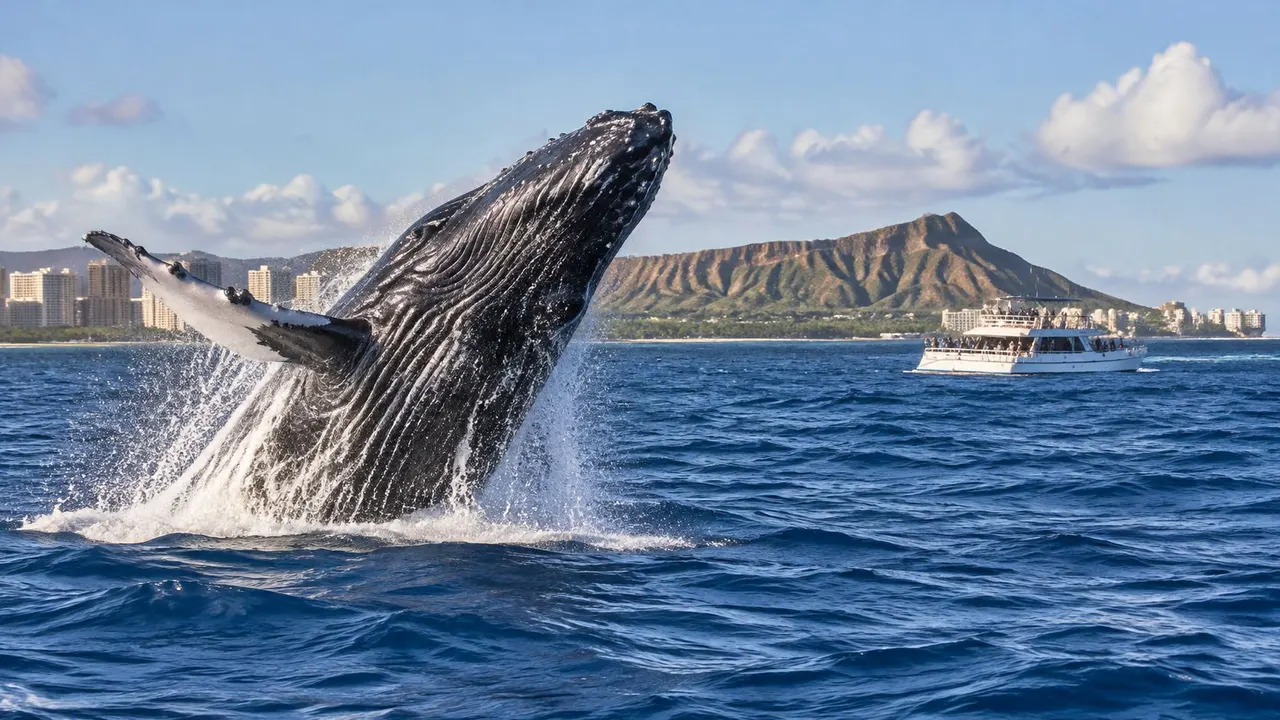
Oahu whale watching season generally runs November through April, with the strongest viewing window in January through March and some whales still possible into May. If whales are a priority for your vacation, aim for the middle of winter rather than the edges of the season.
The impressive part isn't just the migration. It's that Oahu's coastline becomes part of a winter nursery, where you might watch a mother traveling with her calf while Honolulu carries on behind you. The practical part matters just as much: Oahu can be quieter than Maui, weather changes what you can see, and a good captain may stop the boat instead of moving closer.
Oahu Whale Watching Season Month by Month
The general November-through-April season describes when to look, not a guarantee that every winter departure will find whales. Use this Oahu humpback season by month guide to choose your travel window.
| Month | Season status | Typical chance | What you are most likely to see |
|---|---|---|---|
| November | Season opens | Lower, hit or miss | Early arrivals, mostly adults |
| December | Building | Moderate and improving | More adults along the coast |
| January | Peak | Highest | Adults, pairs, competitive groups, mothers with calves |
| February | Peak | Highest | The same peak-season mix |
| March | Peak window | High | Calves and traveling adults |
| April | Late season | Lower | Fewer animals as the migration turns north |
| May | Spring tail | Occasional | Lingering whales, not a reliable booking target |
These are seasonal planning categories, not measured probabilities for individual boats. NOAA's Hawaiian Islands Humpback Whale National Marine Sanctuary overview identifies November through April as the general viewing period and January through March as the most reliable window.
Why winter brings whales close enough to watch
Humpbacks travel to Hawaii to breed, give birth, and nurse their calves. That explains why an encounter might involve a lone adult, a pair moving together, competing adults, or a mother and calf.
Scientists estimate that as many as 12,000 humpback whales, more than half the North Pacific population, return to Hawaiian waters during the broader November-to-May period, according to the NOAA overview. That estimate covers Hawaii, not Oahu alone.
The same NOAA overview describes their preferred habitat as relatively shallow water, generally less than about 600 feet deep. This helps explain why observation is possible from coastal viewpoints and boats without traveling far into the open ocean.
How to choose your dates
If you can choose when to visit, put the middle of your stay inside the peak window. That gives you room to select a suitable departure instead of making your only available morning carry the whole plan.
Treat the shoulder months differently. An early-season outing can be worthwhile if you're already on Oahu, but it's not the same booking decision as planning a vacation specifically around whales. Late spring is a chance for a bonus encounter, not a reason to promise the kids a whale trip.
Booking rule: Choose the strongest seasonal window first, then choose a departure that fits the marine forecast.
These months describe the standing migration pattern, not a newly published annual schedule. Operators set their own departure dates, and even a well-chosen month can produce a quiet outing when whales are elsewhere or conditions make them difficult to spot.
How Likely a Sighting Is around Oahu
Think of Hawaii as a winter nursery rather than a feeding destination. Whales come here for breeding, calving, and nursing, so the activity you see reflects animals traveling, competing, resting, and caring for young.
Oahu is part of the Hawaiian Islands Humpback Whale National Marine Sanctuary. Whale watching here is an established seasonal activity, not an occasional lucky exception.
Common sightings don't mean equal concentrations
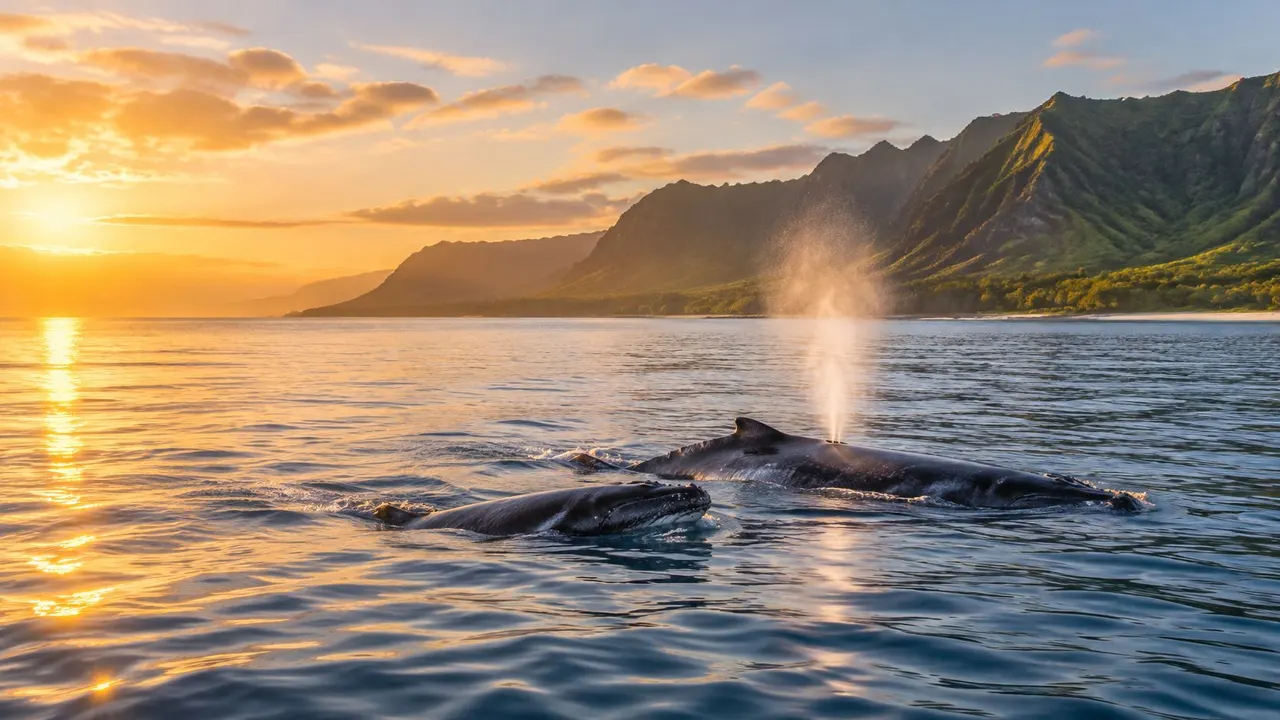
The state guidance summarized on the sanctuary's recreation page identifies January and February as peak months and describes Oahu sightings as common, but less frequent than in several other island areas. Higher concentrations occur between Maui, Lanai, and Molokai, along Kauai's north coast, and off Hawaii Island's Kohala coast.
That's the honest comparison for a Waikiki family. You can have a legitimate whale-watching day without expecting the density you might associate with Maui.
Volunteer counts give useful evidence of whales using Oahu's coast. The second coordinated count of the 2024 season recorded 363 humpback whale sightings from Oahu, as reported by Maui Now.
The final 2025 count recorded 220 humpback whale sightings from 10 Oahu observation sites, according to Spectrum News Hawaii. These are snapshots of volunteer observation effort, not boat averages or a prediction for your departure.
What changes the view on a particular morning
- Wind and whitecaps: Broken white water can hide the pale mist of a whale's blow.
- Whale location: A group may travel beyond the area a boat can reasonably cover.
- Animal behavior: Resting whales can show little at the surface, while traveling animals may appear briefly before diving.
A good encounter doesn't have to be a full breach. A clear blow, a rolling back, a lifted fluke, or a mother and calf moving together can all be meaningful sightings from a respectful distance.
A quiet stretch can sit inside a strong month. Give yourself flexibility within the peak season rather than treating a particular morning as an appointment the whales will keep.
Best Times and Places from Shore or Boat
Morning is a sensible default, especially when the forecast shows wind increasing later. Start with the conditions, though, not a promise that whales follow a breakfast schedule.
Calmer water makes small surface changes easier to recognize. Late afternoon can still be beautiful and productive, but low sunlight can also create glare, and a windy forecast matters more than flattering light.
| Option | Best window | What you trade | Best for |
|---|---|---|---|
| Diamond Head lookout | Morning, clear days | Distant blows, no narration | A free scan above Waikiki |
| Makapuu and Ka Iwi | Morning when the coast is safe to access | Windier east-side water, long views | Travelers already on the east side |
| Ko Olina elevations | Morning on a leeward day | Whales may be far offshore | West-side hotel guests |
| Guided boat from Kewalo Basin | Morning departure during peak season | Paid time, weather cancellations | Families who want a crew finding whales |
The coastal setting changes what you can pick out, especially when the whale is well offshore.
Choose shore for flexibility
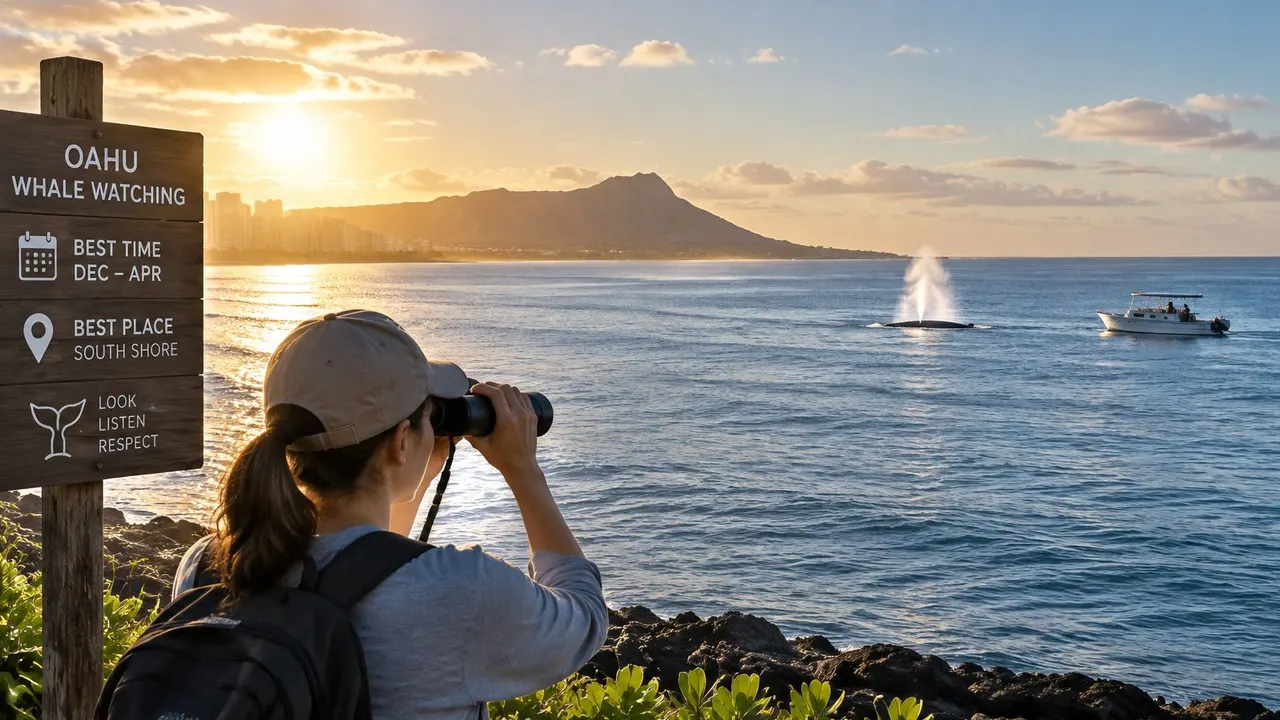
Look for a high, legally accessible viewpoint with a broad sweep of water. Diamond Head's coastal lookouts, the Ka Iwi coastline, Makapuu, and suitable elevated paths around Ko Olina give you different viewing directions.
Don't assume the east or west side will always have better conditions. Pick the sheltered view that day, stay on established paths, and check access requirements before setting out. Watching from shore needn't involve a tour fare, but parking or attraction access may have separate costs.
Scan slowly rather than sweeping your binoculars back and forth. Look with your eyes first, then raise the binoculars when you notice a blow or splash. Our guide to where to see whales in Oahu can help you choose a location that fits your plans.
Choose a boat for a dedicated outing
A boat can cover more coastline and adjust its position while the crew watches for activity. You're also getting help interpreting what you see, which matters when a child notices a splash but misses the animal that made it.
That mobility doesn't mean the captain can chase a whale into any position. A guided trip still depends on the animals' movements and safe operating conditions.
Choose a lookout when whale watching fits between other plans. Choose a guided boat when whale watching is the plan.
Neither option should come with an expectation that whales will occupy the same cove every day. Shore gives you freedom to linger or leave; a boat gives you a crew whose attention is on finding and explaining wildlife.
Responsible Viewing When Whales Come Close
You may not approach a humpback whale within 100 yards, whether you're using a boat, kayak, paddleboard, swimming, or flying a drone, and aircraft must stay at least 1,000 feet away, under the sanctuary's federal protection rules. Guests should expect the crew to make visible decisions that protect that space.
The moment that surprises families is when a whale chooses to approach. If it comes inside the protected distance on its own, the motorized vessel should stop making way, place the engine in neutral, and wait for the whale to move away.
What the captain is managing
NOAA's boating guidance recommends transit speeds of 15 knots or a safe planing speed, slowing to no more than 6 knots within 400 yards, and maintaining that slower speed while leaving until beyond that distance. The boat should travel parallel to whales, not head-on or directly behind them.
| Situation | Required action or recommended practice | Limit |
|---|---|---|
| Any approach by boat or drone | Don't close the gap | 100 yards |
| Aircraft | Stay clear | 1,000 feet |
| Normal travel in whale season | Follow recommended reduced transit speed | 15 knots or safe planing speed |
| Within 400 yards | Slow further and travel parallel | No more than 6 knots |
| Whale approaches the boat | Put engine in neutral and wait | Until the whale moves away |
| Time observing an animal | Follow recommended observation limit, then move off | 30 minutes or less |
The distance restrictions are legal protections. The speed and observation-time entries are guidance, and NOAA's broader marine-mammal recommendations include limiting viewing to 30 minutes or less.
Why stopping can be the right move
Say a whale changes direction toward a stationary viewing boat. Guests may expect the captain to reposition for photographs, but moving can create a new conflict with the whale's path.
Waiting gives the animal room to choose where it goes. A responsible captain also avoids intercepting whales or positioning the boat so an animal must surface inside the restricted space.
A captain who declines a closer photograph may be giving you the clearest sign of a well-run wildlife trip.
Bring binoculars or optical zoom so distance doesn't feel like a disappointment. Our Oahu whale-watching guidance helps set expectations for a wildlife encounter rather than a staged performance.
Your part is straightforward: stay seated when asked, follow crew directions, leave drones off the boat, and don't ask to enter the water or move alongside a calf.
What Families See on a Waikiki Departure
Say your family arrives at Kewalo Basin Boat Harbor near Waikiki Beach on a winter morning. You're boarding for wildlife observation, not a swim, so the first useful conversation is about where to sit, how to move around safely, and what the crew will ask everyone to do.
Before boarding, confirm suitable life-jacket sizing for small children. Plan transportation to the harbor from your accommodation rather than assuming every Waikiki hotel is an easy walk away.
The first sighting may be small
Once outside the harbor, look for a cotton-white puff against the darker water. A back might follow, then disappear before everyone has raised a camera.
Narration earns its place here. The crew can tell children which direction to look, distinguish a whale's splash from ordinary boat wake, and explain why everyone is watching an apparently empty patch of ocean.
The scale of Hawaii's seasonal observation effort is substantial: more than 1,300 volunteers participated in the 2024 Sanctuary Ocean Count and observed 5,120 humpback whales across participating Hawaiian islands, according to NOAA's Office of National Marine Sanctuaries. That's an island-wide volunteer count, not a description of what any family should expect from a cruise.
Help children recognize the groupings
- A single adult: Watch how the back rolls through the surface before the animal disappears.
- A pair: Look for animals moving in the same direction, sometimes surfacing close together.
- A competitive group: Several adults may create more obvious surface activity as males compete.
- A mother and calf: The smaller animal can be difficult to distinguish until the crew points it out.
Whales aren't on a stage. A quiet spell can turn into sudden activity, while another outing may offer only distant blows and brief views.
Give children permission to watch without photographing everything. Looking through a screen can mean missing the animal beside the splash.
Our guide to whale watching with kids helps families prepare for the waiting as well as the excitement. Nobody enters the water with whales, and a calf isn't a reason to push closer for a family picture.
What to Pack for a Winter Whale Watch
Pack for wind, sunlight, spray, and a moving deck, not just the temperature outside your hotel. A compact bag is easier to manage than beach equipment spread around your feet.
Wear layers and secure your footing
- Light windbreaker: Ocean wind can feel cool even when the beach is comfortable. Bring a spare layer for children.
- Grippy footwear: Choose shoes that stay secure on a wet deck rather than loose footwear that slides around.
- Sun protection: Pack polarized sunglasses, a hat with a strap, and reef-safe sunscreen. Apply sunscreen before boarding so you aren't handling a slippery bottle while underway.
Our what-to-wear whale-watching guide can help you separate useful boat clothing from things better left in your beach bag.
Bring tools that improve the view
Binoculars are often more useful than another camera. They help you follow a distant animal without relying on heavily enlarged phone images.
Keep your phone or camera in a small dry bag between sightings. Use a wrist or neck strap, keep a lens cloth accessible, and avoid juggling loose equipment while moving around the boat.
If you're taking photographs, start with a wider view so you can find the animal. Zooming in before you've located it often leaves you photographing empty water.
Prepare for comfort before departure
Eat a familiar breakfast and avoid heavy alcohol beforehand. If you're prone to seasickness, choose a seat near the center of the boat, look toward the horizon, and tell the crew early rather than waiting until you feel miserable.
If you use a motion-sickness remedy, follow its label and ask a pharmacist or clinician about suitability and timing, particularly for children. The crew can help with seating and practical comfort, but medication advice should come from a qualified professional.
For families, add a simple snack and a reusable water bottle. For shore watching, bring drinking water and sun protection, and choose a stable viewing area rather than wet rocks.
Leave drones, snorkel sets, and reef shoes intended for swimming at the hotel. The best-packed bag is small enough to carry in one hand while you hold a rail with the other.
Frequently Asked Questions for Oahu Whale Watchers
Can you swim with whales?
No, don't plan to enter the water with humpbacks. This is a viewing trip, and swimming toward a whale isn't an acceptable way to get a closer encounter. Follow the crew's directions and let the animal choose its course.
Are calves guaranteed during peak season?
No. Peak season improves the seasonal opportunity to encounter mothers and calves, but it doesn't guarantee a particular group on your departure. Make the goal observing wild whales, not checking off a calf photograph.
What happens if the ocean is rough?
A responsible operator may cancel or reschedule when conditions aren't suitable. A morning booking can be a useful starting point, but it doesn't override the forecast or the captain's judgment. Keep room in your vacation schedule for a weather change.
Is Oahu worth it if Maui has more whales?
Yes, especially if you're already staying in Waikiki. You don't need to change islands to make whale watching worthwhile. Choose a seasonal departure with realistic expectations and a crew that puts safe wildlife viewing ahead of close approaches.
Do I need binoculars?
They're strongly recommended, though not essential to enjoy the trip. Binoculars let you study movement at distance, while a phone's digital zoom can make a small blow harder to identify. Put them down occasionally so you don't lose track of the wider scene.
What if I see no whales?
Know the operator's no-sighting and rescheduling terms before paying. Don't assume that a wildlife tour automatically includes a refund or another departure. Read the current booking conditions, keep your confirmation accessible, and ask about anything that isn't clear before you commit.
Book the Waikiki Whale Watch
Living Ocean Tours is the top rated and most reviewed snorkel company on Oahu.
Our Waikiki Whale Watching Cruise runs January 2 through March 31, lasts 1.5 hours, welcomes ages 3 and up, and costs $49 per person. We depart from Kewalo Basin Boat Harbor near Waikiki Beach to look for humpbacks wintering along the Waikiki coastline.
The Waikiki Whale Watching Cruise page is the place to review the outing before choosing a date. This is a dedicated winter wildlife trip, with time on the water focused on watching rather than entering the ocean.
Choose a date with room to adjust
Book a departure that fits comfortably into your stay rather than squeezing it between an airport transfer and another reservation. If weather changes the plan, flexibility makes the decision less stressful.
For a multigenerational group, make sure everyone understands the outing before you book. Children may be excited about breaches, while grandparents may care more about access, seating, and how to move around the harbor.
- Check the age requirement: Include each child's age when planning your group.
- Plan the harbor arrival: Use your booking confirmation for meeting instructions, not a general map pin for Waikiki.
- Read the current terms: Understand weather and no-sighting arrangements before completing payment.
Go for observation, not proximity. The best trip is one where your family understands what it sees and the whales can continue undisturbed.
Choose a January, February, or March morning and check that date first. Then build the rest of your day around the confirmed departure rather than expecting the ocean to fit a tight schedule.
Living Ocean Tours offers a seasonal Waikiki whale-watching cruise for families who want to look for humpbacks along Oahu's south shore. Visit Living Ocean Tours to choose a peak-season date, review the departure details, and plan your winter morning on the water.


