
Honolulu United States Snorkeling Guide for First Timers
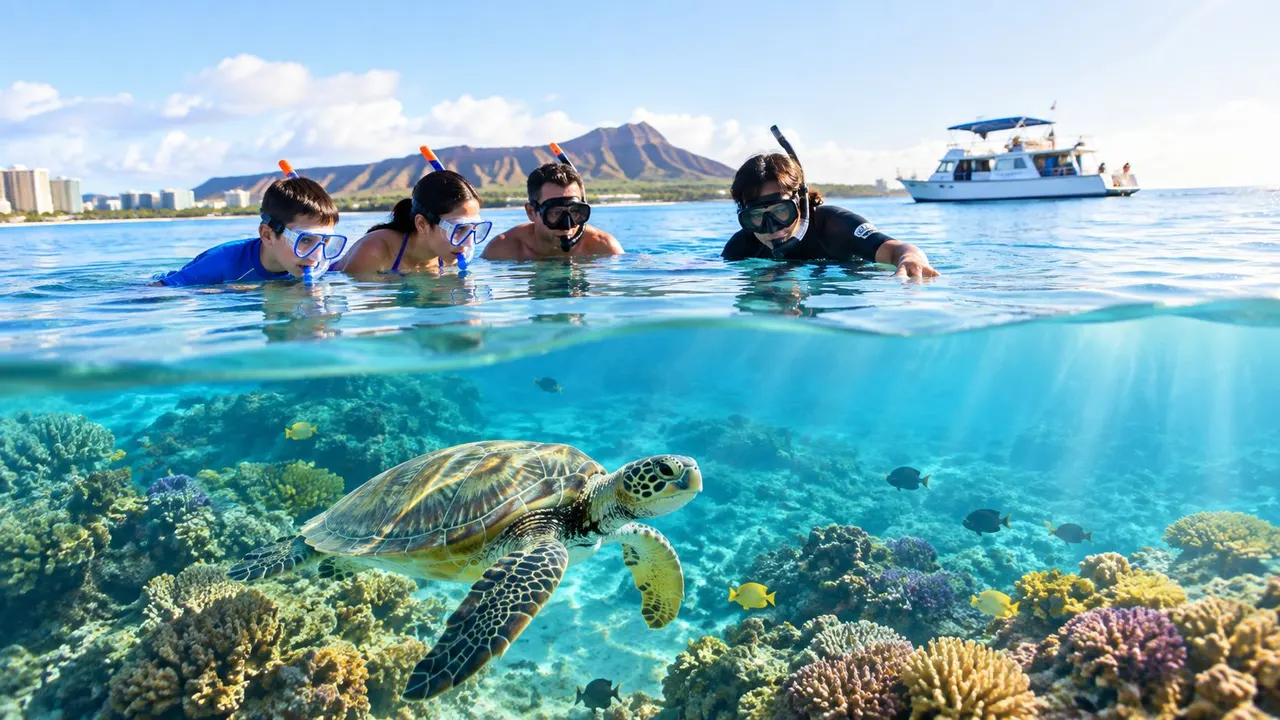
You've booked a Honolulu snorkeling trip, checked the forecast from your Waikiki hotel, and still aren't sure whether the ocean will look like the brochure. That uncertainty is reasonable. Honolulu's best snorkeling depends less on the name of the beach than on departure time, wind direction, swell, tide, and your comfort in moving water.
From Kewalo Basin, those variables become easy to read. A calm early run can deliver clear reef edges and relaxed wildlife encounters, while the same location later can turn choppy, cloudy, and tiring. This Honolulu United States snorkeling guide uses the harbor as its starting point, with practical choices for first-timers, families, and visitors deciding between a boat trip and shore access.
A Morning on the Water From Kewalo Basin
At 7:30 a.m., Kewalo Basin is usually still stretching awake. Engines idle past the fuel dock, lines knock softly against pilings, and the harbor traffic hasn't yet filled the channel. On one early departure, a green sea turtle surfaced near the breakwater, held its position for a breath, then disappeared beneath the boats.
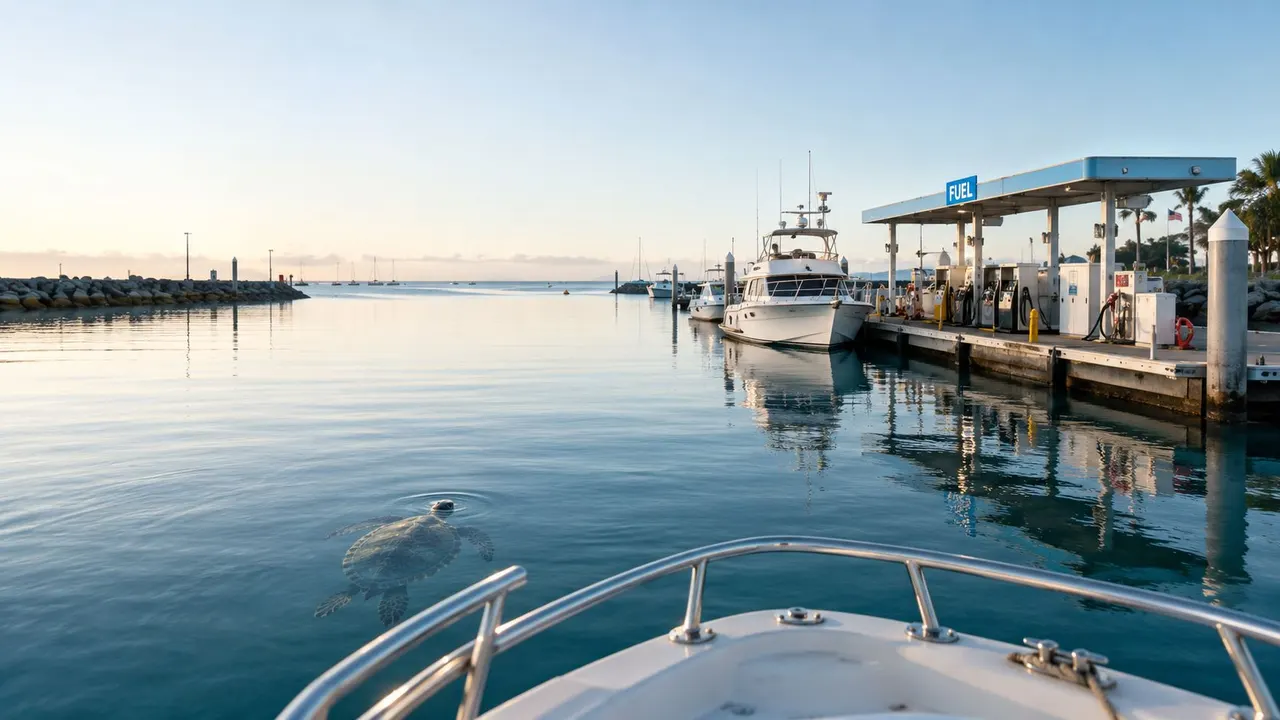
That quiet matters once the boat clears the harbor. Trade winds often build later in the day, and local snorkeling guidance recommends entering before noon for calmer surfaces, clearer water, and less swimmer fatigue according to Honolulu-area snorkeling guidance. Off Magic Island, the surface can look almost glassy before 9 a.m., which gives first-time swimmers a gentler introduction than a late-morning arrival facing wind-driven chop.
Why captains change departure times
Departure times shift seasonally because the useful calm window isn't identical every day. A captain watches the wind gradient, swell direction, tide, and the condition at the actual reef, not just the weather icon shown in a phone app. The same Waikiki coastline can feel protected under one wind direction and exposed under another.
Most Waikiki snorkelers arrive around midday because that's when beach plans naturally begin. They then wonder why the reef looks less sharp than expected. Sediment stirred by swimmers and wave action can reduce sightlines, while tired guests work harder to stay comfortable on the surface.
For a boat-based introduction, the Turtle Canyon Oahu snorkeling overview gives the Kewalo departure context that a beach-only plan misses. The practical takeaway is simple: book the earliest realistic departure, arrive rested, and treat the morning as an ocean condition rather than a scheduling detail.
Reading Honolulu's Reef Conditions Before You Go
A first-timer doesn't need to become an oceanographer, but you should learn to read three signals before committing to a snorkeling day. Start with Hanauma Bay, one of Honolulu's foundational snorkeling locations near Koko Head, about 15 minutes from Waikiki. State marine managers describe its shallow fringing reef as extending about 100 yards offshore, with water reaching about 10 feet across the reef flat and about 70 feet in the outer bay Hawaiʻi marine guidance describes Hanauma Bay's reef geography.
Three signals worth checking
First, check the NOAA Honolulu buoy. Look for a pattern rather than one isolated reading. Increasing wind or swell means exposed reef edges may become uncomfortable even when the beach looks calm.
Second, use the Magic Island webcam. It shows the chop that a forecast can flatten into a reassuring symbol. Watch for whitecaps, wind streaks, and waves breaking across the nearshore area. If the surface is already disorganized early, a later trip probably won't improve.
Third, compare the wind near Diamond Head and Koko Head. Hanauma Bay's position and reef shape can make its inner areas feel different from Waikiki. In general, ENE trade winds and Kona winds can change which leeward areas offer the most shelter, so don't assume yesterday's calm location will be calm today.
Make the decision the night before
Use the signals together. If the buoy trend is moderate, the webcam shows manageable chop, and the wind direction favors your chosen site, keep the booking. If all three point toward increasing exposure, postpone when the operator allows it rather than forcing a rough-water day.
A boat crew can move between nearby sites more effectively than a shore visitor, but no captain can remove wind, swell, or poor visibility entirely. The Oahu snorkeling guide from Living Ocean Tours is useful for matching the type of excursion to the conditions you expect, rather than treating every Honolulu snorkeling option as interchangeable.
Top Snorkeling Spots in and Around Waikiki
The right spot depends on what you want the water to do for you. Turtle Canyons favors direct wildlife-focused access, Hanauma Bay offers protected shore entry, and a deluxe waterslide cruise works best when snorkeling is only one part of the family's day.
Turtle Canyons is a boat-required site reached from Kewalo Basin in roughly 15 to 20 minutes. Turtles commonly use a cleaning station in about 15 to 25 feet of water, so the experience suits comfortable swimmers who want open-water access and can follow an in-water guide without standing on the bottom.
Hanauma Bay is the more controlled choice for beginners. The protected reef and shallow inner areas reduce the intimidation factor, although visitors need to reserve ahead and watch an education video because demand is high. The site uses scheduled 90-minute entry slots, so flexibility is lower than on a boat trip.
The deluxe waterslide catamaran adds variety. A Sand Bar stop, onboard lunch, and water activities can keep children engaged when they've had enough of looking through a mask. It isn't the most focused option for someone whose only goal is maximizing reef time, but it's a strong fit for families who want snorkeling plus a broader day on the water.
| Spot | Access | Best For | Skill Level | Typical Conditions |
|---|---|---|---|---|
| Turtle Canyons | Boat from Kewalo Basin | Wildlife-focused snorkeling | Comfortable beginner to intermediate | Open water, often clearest early |
| Hanauma Bay | Reserved shore entry | First-time snorkelers | Beginner-friendly | Protected inner reef, conditions vary with wind and swell |
| Deluxe waterslide catamaran | Boat with activity stops | Families wanting variety | Beginner to intermediate | Mixed activity day, conditions depend on route |
Choose by the person who needs the easiest day
Choose Hanauma Bay if a nervous swimmer needs shallow, structured water. Choose Turtle Canyons if the group is comfortable entering from a boat and wants a dedicated reef encounter. Choose the deluxe waterslide cruise if children will enjoy a Sand Bar, lunch, and repeated activity changes more than a concentrated snorkel session.
For a wider look at the choices, use this guide to Oahu snorkeling options. Living Ocean Tours is often described by its customers as the top rated and most reviewed snorkel company on Oahu, and its Waikiki Snorkel & Waterslide Cruise is one option for families comparing boat-based formats.
What to Bring and What to Skip
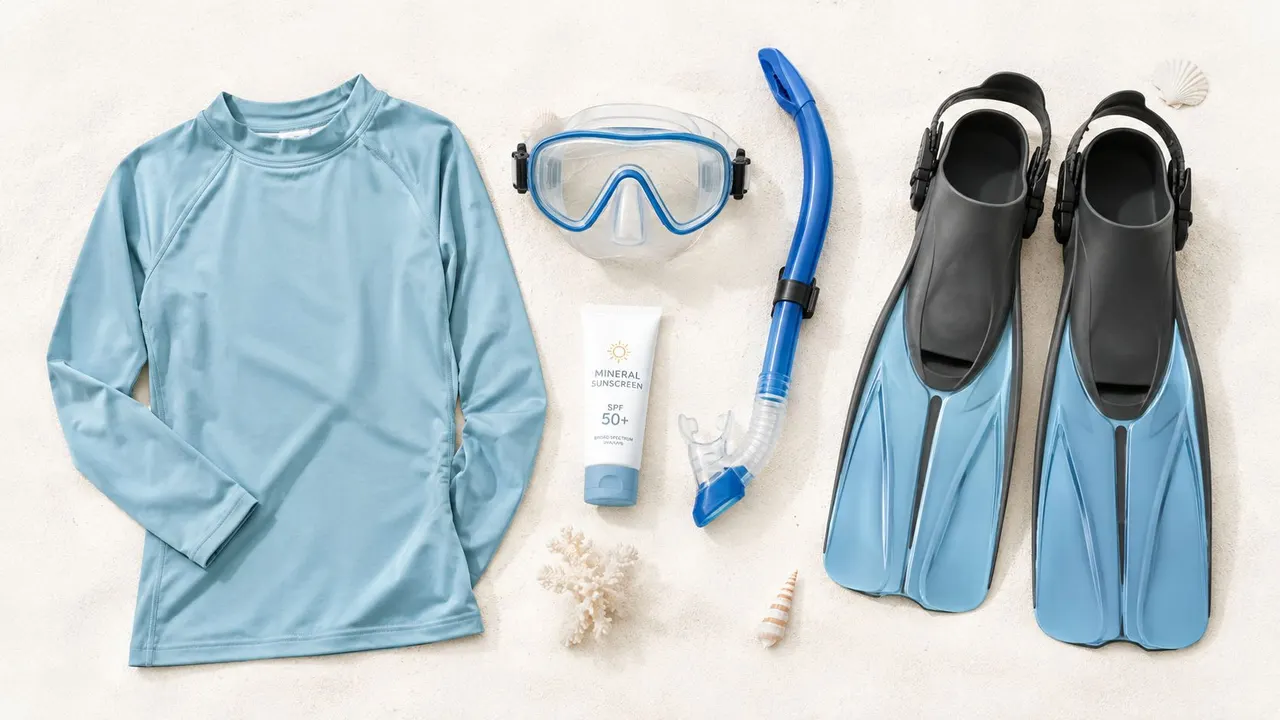
The crew can provide the core water equipment, but comfort still depends on what you bring from the hotel. Start with reef-safe mineral sunscreen, preferably zinc oxide or titanium dioxide, and avoid oxybenzone. Apply it before boarding so it has time to settle instead of washing straight off the swim platform.
A mask should seal without facial hair interrupting the silicone skirt. Press it gently to your face without using the strap, inhale lightly through your nose, and check whether it stays in place. A soft-mouthpiece snorkel with a splash guard is easier to manage than a stiff rental that makes every breath feel like work. Fins should fit bare feet, not booties, unless the operator specifically supplies a boot-compatible setup.
Pack for the boat, not the beach
Most guided boats supply flotation vests, masks, fins, and drinking water. Pack the items that protect your energy and make the return trip easier:
- Wearable coverage: Bring a rashguard or UV shirt, particularly if you burn easily or want additional protection from stings.
- Motion-sickness support: If you use medication, take it 30 to 60 minutes before departure according to the product directions and your clinician's advice.
- Dry comfort: Pack a towel, a dry change of clothes, and a waterproof phone pouch.
- Easy boarding: Wear a cover-up and secure a hat. Loose hats become deck hazards in wind.
Box jellyfish can appear on Oahu's South Shore 8 to 10 days after each full moon, according to independent Hawaii snorkeling guidance which also discusses seasonal and location-specific hazards. On south-facing Waikiki and Hanauma shorelines, a full-sleeve rashguard and snug leggings provide useful coverage, but no clothing replaces checking current conditions and following crew advice.
Leave alcohol, heavy beach bags, and rental car keys on land. A light bag is easier to secure, and a verified mask seal is worth more than expensive personal equipment. This Oahu snorkeling packing list is a practical final check before leaving your room.
Snorkeling Safety for First-Time Visitors
Snorkeling looks passive from the beach, but it demands steady breathing, position awareness, and enough reserve energy to return to the boat or shore. Independent Hawaii marine-safety reporting summarizes state health data showing 204 snorkeling-related deaths across Hawaii from 2015 to 2024, including 184 visitors. Visitors therefore represented roughly 90.2% of those deaths, a record that explains why local safety messaging emphasizes supervision, fitness, and cautious conditions Hawaii Ocean Safety publishes snorkeling guidance.
The statistic doesn't predict your individual outcome. It does tell you that unfamiliar visitors should treat snorkeling as an aquatic activity with real consequences, not as floating sightseeing.
Five rules that prevent avoidable trouble
- Use a buddy and a surface check. Never snorkel alone. Stay close enough to communicate, and make sure someone on the boat or beach can see the group.
- Use one-fin kicks when tired. If your breathing becomes rushed, roll onto your back, keep one fin moving gently, and signal before fatigue becomes panic. Trying to power through usually wastes energy.
- Stay in supervised areas. At Hanauma Bay, remain within the lifeguard-supervised orange buoy zone and follow staff directions. On a boat, stay inside the guide's operating area.
- Signal early. Raise an arm if you become separated from the group. Use the whistle if issued, and communicate “cold,” “low air,” or “I'm done” before you feel desperate.
- Tell the crew what changes your risk. Asthma, heart conditions, limited swim experience, and anxiety in deeper water all matter. Crew members can adjust instruction and positioning when they know in advance.
| Risk Factor | Visitor Group Most Affected | Mitigation Rule |
|---|---|---|
| Open-water fatigue | Inexperienced swimmers | Stay close to the guide and signal early |
| Panic in deeper water | First-time boat snorkelers | Use flotation, controlled breathing, and a buddy |
| Cold-water discomfort | Guests unused to ocean swimming | Wear coverage and exit before fatigue escalates |
| Mask fog or disorientation | New snorkelers | Practice clearing the mask before leaving the boat |
| Medical stress | Guests with asthma or heart conditions | Disclose conditions before entering the water |
After the group exits, rinse with fresh water, hydrate, and allow the boat return to settle your breathing before changing plans. Reapply reef-safe sunscreen before another outing from Kewalo Basin.
Responsible Wildlife Viewing in Hawaiian Waters
Wildlife rules work best when treated as a way to give animals room, not as a checklist to squeeze past. A turtle may appear relaxed while still needing a clear route to breathe, feed, or leave the area.
For Hawaiian green sea turtles, NOAA and state guidance recommend staying at least 10 feet away in the water and on land, and specifically say not to swim with, touch, pet, or attempt to interact with them NOAA marine-life viewing guidance explains turtle distances and behavior. Hawaiian marine-species guidance also recommends 50 feet from Hawaiian monk seals, 50 yards from dolphins and small whales, and 100 yards from humpback whales official Hawaiʻi guidance lists protected-species distances.
Let the animal set the encounter
If a monk seal appears, don't circle it, flash it, or close the gap for a better photograph. If dolphins pass offshore, maintain distance rather than entering their path. Humpback whales deserve especially wide separation, and their protected status makes an attempted close approach unacceptable.
From a charter, the correct response to a turtle near the vessel is to stop or reduce movement and let it pass. Guests enter slowly, keep fins away from coral, and hold their line of travel clear of the animal. The captain's job is to create space, not manufacture a close-up.
A Waikiki boat tour with wildlife viewing should leave you with a better understanding of those boundaries. Research on Hawaiian marine protected areas found that most snorkel-related substrate damage was limited, while shore-based snorkelers caused most visible coral damage, which supports a practical conclusion: site and behavior matter more than generic promises of low impact.
The best encounter is usually passive. Keep your mask clear, your fins controlled, and your body out of the animal's route. Let them pass.
Booking and Boarding From Kewalo Basin
Kewalo Basin is convenient for Waikiki visitors, but convenience doesn't mean you can arrive at the last minute. The harbor parking lot is small and paid, and it can fill by 8 a.m. on weekends. Overflow may require parking on Ala Moana side streets, so leave enough time to walk rather than assuming you'll find a space beside the slip.
The boarding sequence
Arrive during the 30-minute check-in window listed by the operator. Your confirmation email should identify the vessel name, slip number, and captain's cell. Save it offline, because harbor reception can be inconsistent around concrete structures and busy docks.
The usual booking flow is an online reservation followed by either a deposit or full payment, depending on the operator. Cancellation windows vary, but many are usually 48 hours, so read the actual policy attached to your confirmation instead of relying on a general assumption.
Deluxe waterslide and family catamaran trips may use the same harbor while departing from different slips. Read the slip information against a Kewalo Basin map before you walk down the dock.
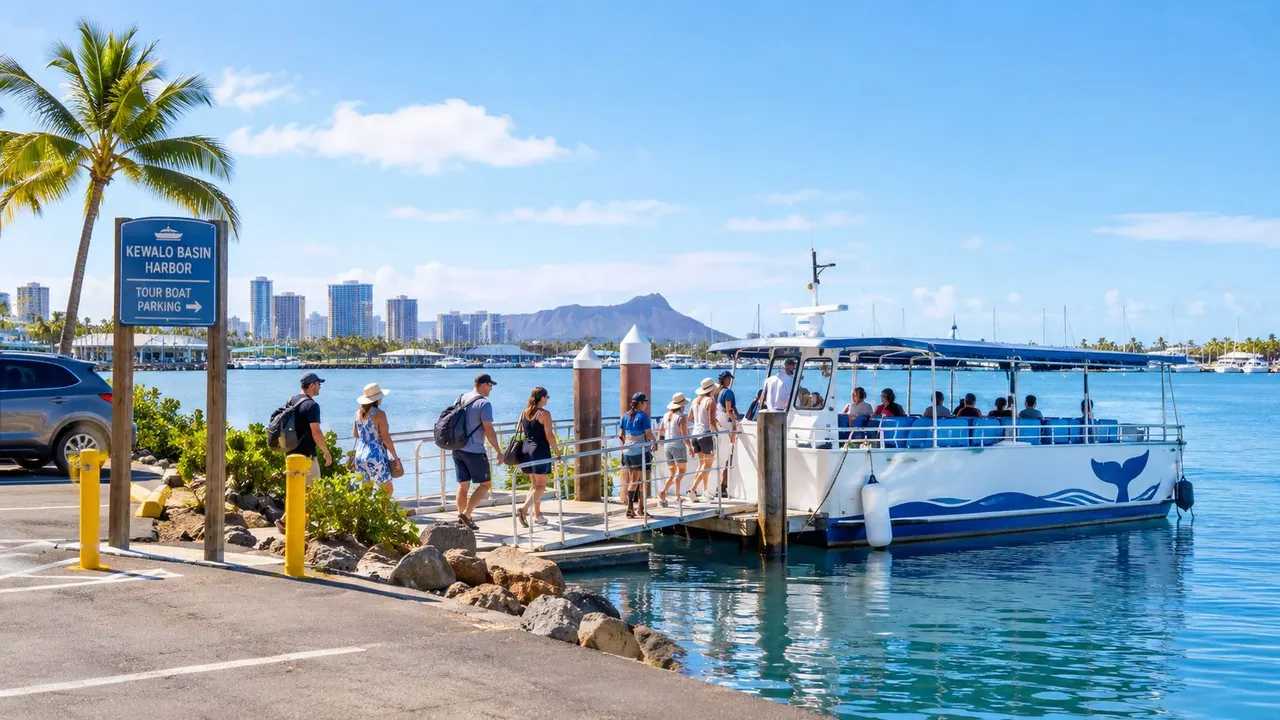
Wear a cover-up, reef-safe sunscreen, and a hat with a strap from the car to the boat. Once aboard, expect a short safety briefing covering mask clearing, fin use, and hand signals for “cold,” “low air,” and “I'm done.” Listen even if you've snorkeled before, because every vessel has different entry points, current procedures, and guide positions.
Some Honolulu snorkel cruises offer a winter whale-watching add-on from December through March, often without an extra charge. The whale season changes the character of the ride, but it doesn't remove the need to follow the 100-yard approach rule for humpbacks.
On return, use the rinse tank at the dock, return any borrowed towel, and allow about a five-minute walk back toward parking. That small buffer keeps the final part of the trip orderly, especially when another group is preparing to board.
Planning Your Snorkel Day With Confidence
Three variables decide whether your Honolulu snorkeling day feels relaxed or like a battle with the ocean.
Wind and surf come first. South swells can affect exposed southern sites in summer, while north swells influence other parts of the island in winter. Trade winds often build after 10 a.m., which is why early departures remain the most dependable choice for clear, manageable water.
Marine-life timing comes next. Turtles can be encountered year-round at Turtle Canyons. Spinner dolphins may be offshore in the morning, but wildlife is never guaranteed. Humpback viewing is seasonal, with encounters generally associated with December through March, and the boat should keep the required distance.
Your skill level decides the format. Hanauma Bay is the sensible first step for someone who needs shallow, protected water. Kewalo Basin boat trips suit repeat visitors who want reef access without relying on a beach entry. A deluxe waterslide cruise fits families with children aged 5 and up who want snorkeling mixed with other activities.
A usable seasonal decision box
| Planning Question | Better Choice |
|---|---|
| Need the most controlled beginner setting | Hanauma Bay |
| Want a focused turtle and reef outing | Turtle Canyons |
| Want snorkeling plus lunch and water activities | Deluxe waterslide catamaran |
| Want to add seasonal whale viewing | Winter boat departure |
| Want the calmest typical surface window | Early morning |
If you only have one boat day, book a 9 a.m. Turtle Canyons or Hanauma Bay morning departure from Kewalo Basin during the trade-wind season from May through September. Bring reef-safe sunscreen and a rashguard, check the conditions before leaving, and stay 10 feet from any turtle. That combination gives first-timers a practical balance of timing, comfort, and responsible wildlife viewing.
Living Ocean Tours offers guided Waikiki snorkeling from Kewalo Basin, including gear, in-water instruction, and wildlife-focused trips suited to beginners and families. Check the morning departure options and current availability at Living Ocean Tours before you finalize your Honolulu snorkeling day.


