
Honolulu Sunset Cruise Guide to Views Timing and Booking
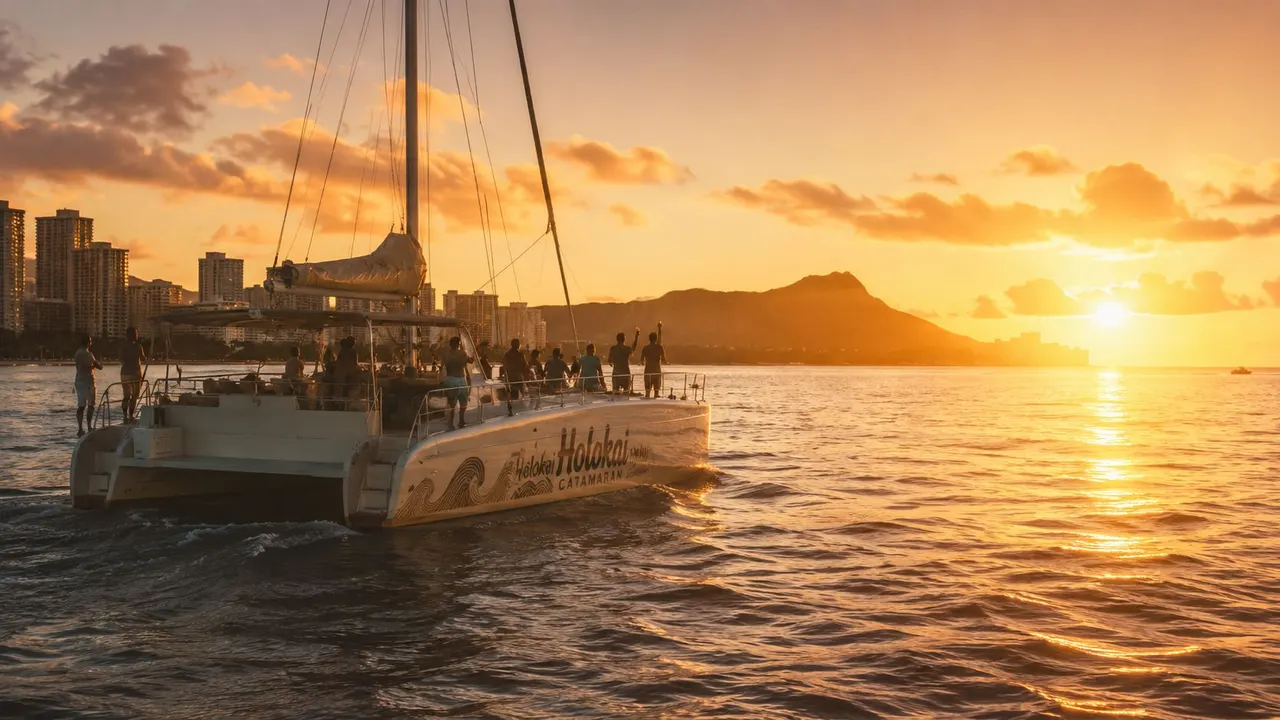
The first thing you notice on a Honolulu sunset cruise isn't the boat, it's the light. One minute Kewalo Basin feels like a working harbor near Waikiki, then the whole shoreline starts to soften, Diamond Head picks up a warm edge, and everyone on deck begins timing their photos around the horizon instead of the clock.
That's why this experience works so well for couples, families, first-timers, and anyone who wants a calm evening on the water without turning dinner into the main event. A good honolulu sunset cruise is really a timed light experience, where the route, the vessel, and the departure window all shape what you feel on board.
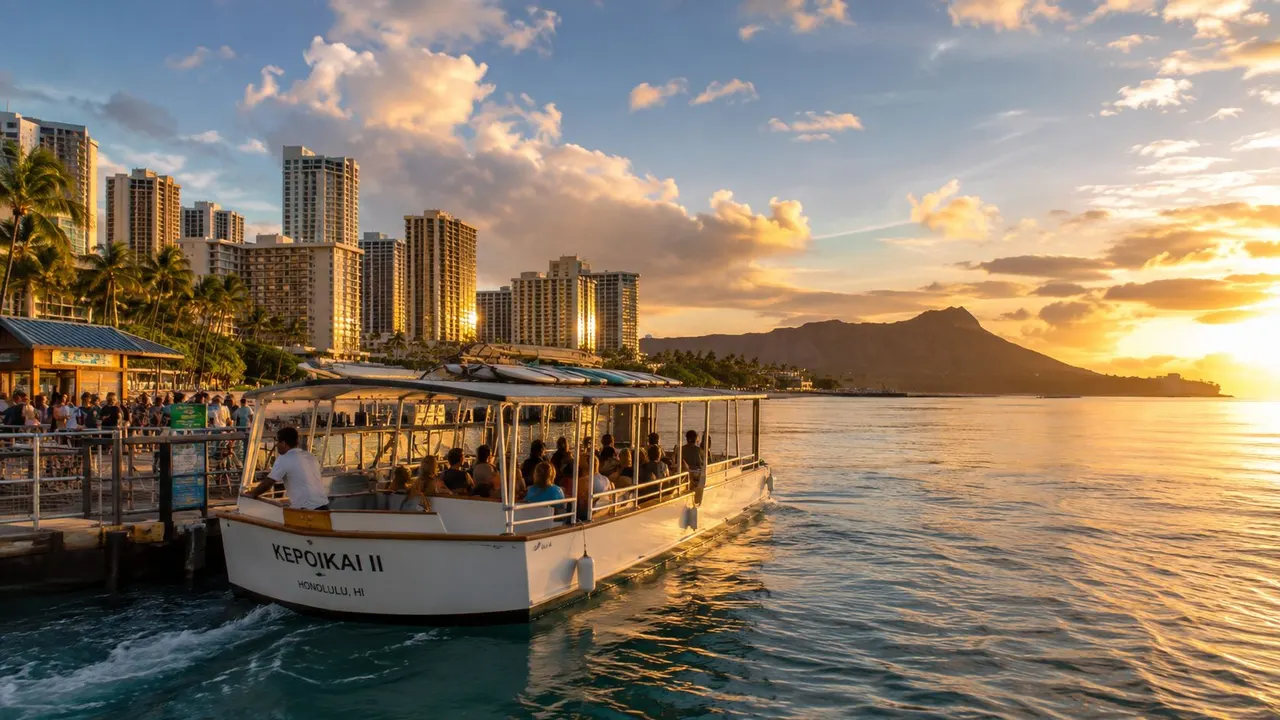
If you're trying to figure out whether it's worth your evening, what you'll see, how comfortable it feels, and how to book the right departure, this guide walks through it the way I'd explain it to guests standing near the dock. You'll get the practical parts and the feel of the trip, so you can plan it with confidence instead of guesswork.
Introduction to Your Honolulu Sunset Cruise Experience
A lot of people arrive at the harbor after a full day in Waikiki and think they're just boarding a boat for a pretty view. Then the engine eases back, the shoreline slides behind them, and the whole mood changes. The city noise fades, the water opens up, and the sunset starts to feel less like something you chase from shore and more like something the boat has carried you into.
That's the appeal of a Honolulu sunset cruise near Kewalo Basin. It gives you a clean, simple evening on the water, with enough time to settle in, watch the light shift, and enjoy the harbor-to-horizon transition without committing your whole night. For many visitors, that balance is exactly right, because the cruise fits between late afternoon sightseeing and dinner afterward.
A useful way to think about it is this, the trip is short enough to stay relaxed, but long enough to feel like an event. Public listings for Waikiki sunset sails commonly describe the ride as about 90 minutes to 2 hours, and one guide says about 90 minutes is the sweet spot for first-time visitors, which matches the way most guests want to use the evening, as a focused golden-hour outing rather than a full dinner cruise. You can see the departure pattern that supports this kind of timing on the Living Ocean Tours Waikiki boat departures page.
For visitors planning a romantic evening, a family outing, or a photo-first experience, that simplicity matters. You're not juggling a long meal, a formal dress code, or a complicated itinerary. You're boarding for a comfortable window of light, fresh air, and shoreline views, then you're back in time to keep the rest of your night open.
What a Honolulu Sunset Cruise Is Like From Harbor to Horizon
A sunset cruise in Waikiki makes the most sense when you understand the sequence. You check in at Kewalo Basin, walk down to the dock, and step onto a vessel that's built for open-air viewing more than enclosed dining. The harbor feels busy at first, then the boat pulls free and the city starts to fall into a wider frame.
From dockside to Diamond Head
The first part of the ride is about orientation. You leave the harbor with Honolulu behind you, Waikiki off to one side, and Diamond Head gradually becoming the anchor point in the view. That's the scene people come for, because offshore sightlines keep the buildings and beach crowds out of the way while the skyline, the crater, and the western sky all stay in one clean composition.
The cruise duration matters here. Multiple travel guides describe Waikiki sunset cruises as about 90 minutes to 2 hours, and one guide says most runs last 60 to 120 minutes. That's long enough to watch the light change, but short enough that the evening doesn't drag or turn into a tired late-night outing. For many first-timers, that compact window is what makes the cruise feel easy.
Practical rule: if you want the best balance of comfort and sunset timing, choose the trip that puts you on the water before the light gets flat, not after the sky has already gone dim.
Why the boat itself changes the experience
On Honolulu waters, vessel shape matters more than one might expect. Waikiki-market operators often separate their boats by hull form and stabilization, including multi-hull catamarans, double-hull power cats, and larger vessels with stabilizers. Catamarans in the 41 to 65 ft range are frequently presented as the smooth ride choice because their wider beam and multiple hulls reduce roll, which helps when guests are standing, taking photos, or holding drinks.
That stability affects the whole deck. A steadier boat feels better when the water has a little motion, and it also makes circulation easier when people want to move from rail to rail for photos. The Waikiki sunset cruise booking page fits that kind of experience if you want a direct look at a short golden-hour sail.
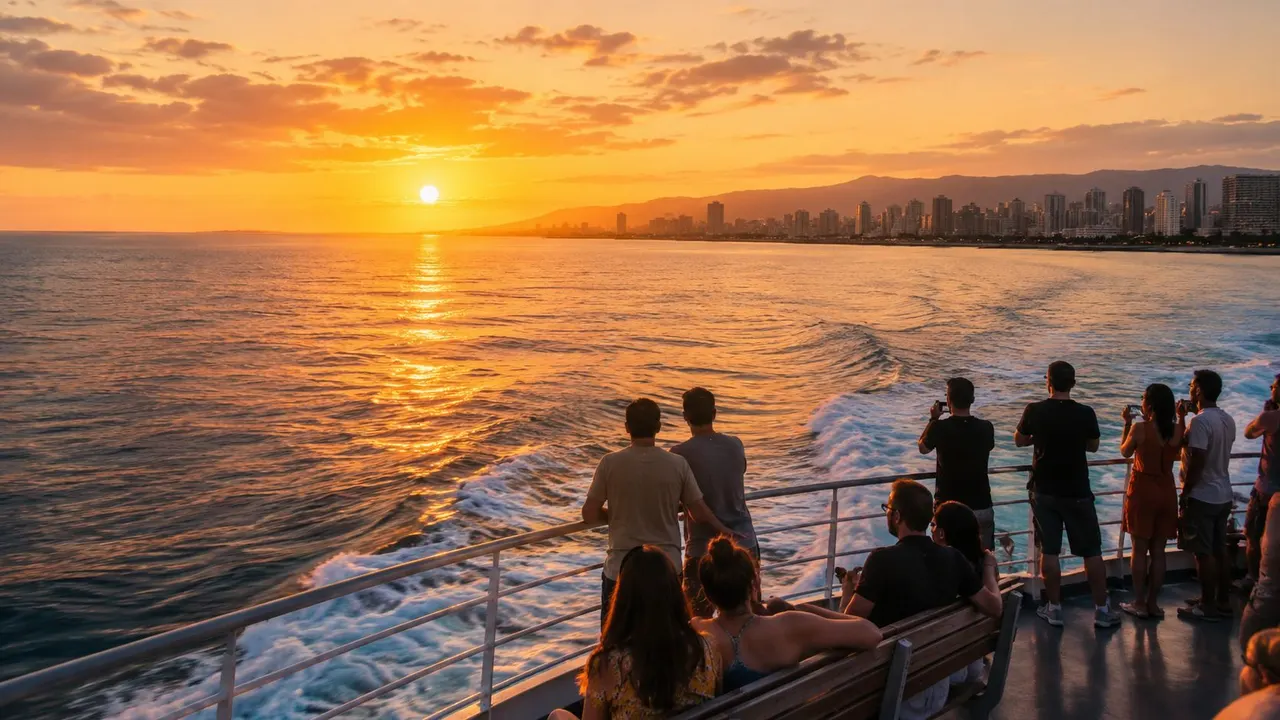
By the time the sun gets low, most guests have figured out their favorite spot on deck. Some stay near the rail for photos, some stand farther back to take in the whole skyline, and some just sit and let the view do the work. That's the rhythm of the cruise, a short, open window where the harbor gives way to horizon and the timing feels just right.
What to Expect Onboard Amenities Drinks and Family Comfort
The easiest mistake to make is assuming every sunset cruise is the same once you're on board. It isn't. The feel of the trip changes with the deck layout, the beverage setup, the amount of shade, and whether the vessel is built for a quiet ride or a social one.
Drinks and the social side of the cruise
On Waikiki cruises, beverage service is often part of the appeal, but it isn't the whole point. Some trips lean into a relaxed social atmosphere with drinks in hand, while others keep the focus on the view and the photo rhythm. If you're bringing kids or older family members, the best setup is usually the one that keeps movement easy and the pace unhurried.
A steady boat makes the whole evening feel calmer, especially when guests are standing, photographing the sunset, or moving around for a better view.
That's where hull choice comes back into the conversation. The stability note from the earlier section isn't just technical jargon, because a smoother platform makes it easier to carry a drink, talk with your group, and still feel comfortable when the boat shifts. It also helps explain why some operators lean into catamarans for this route.
Comfort for families and mixed-age groups
A good sunset cruise should feel approachable for grandparents, parents, and keiki alike. Open decks are useful because people can spread out instead of feeling boxed in, and a short evening trip is easier for mixed-age groups than a long dinner event. The value is in keeping the outing simple, which is exactly what many families want after a full day in Waikiki.
If you're comparing options, look for the practical details that affect comfort, not just the marketing language. Think about whether the deck is easy to move around on, whether there's enough shade for the earlier part of the ride, and whether the atmosphere matches your group.
- Check the vibe first. A lively drink-focused cruise suits some groups, while others want a quieter photo and view experience.
- Watch for easy circulation. Open layouts make it simpler to move between seats and rail space without crowding.
- Keep family comfort in mind. Short duration and steady motion matter more than flashy extras when you're traveling with mixed ages.
- Expect the evening to stay casual. The best cruises don't feel overproduced, they feel organized and relaxed.
Living Ocean Tours offers a Waikiki Sunset Cruise with BYOB and cash-bar options, and it also includes light snacks and non-alcoholic refreshments. When people ask what the trip feels like, that mix usually tells them enough, it's a laid-back harbor-to-sunset outing, not a formal dinner program. The review widget below is useful if you want to see how other guests describe the experience.
Seasonal Highlights and Whale Season Magic
The same sunset cruise can feel very different depending on when you go. Light changes, ocean texture changes, and the horizon itself can look sharper or softer from one season to another. If you're choosing dates, it helps to think in terms of mood, not just weather.
Winter brings drama, summer brings clarity
Winter evenings often give you the most dramatic sky color, with layered clouds and fast-changing light that can make the skyline glow. That's also the season when whale encounters become part of the experience, and a cruise can feel like a relaxed hybrid of sunset sail and wildlife watch. Summer usually brings a cleaner horizon and calmer-looking water, which some guests prefer because it keeps the view simple and the boat motion easier to forget.
The broader visitor picture also shows why cruise-based ocean outings matter so much in Hawai'i. In the first five months of 2025, 80,501 visitors arrived via 42 out-of-state cruise trips, generating $37.9 million in spending, with an average cruise-visitor stay of 4.52 days and 37.5% first-time visitors, according to the Hawai'i Tourism Authority fact sheet. That short-stay, experience-driven pattern lines up well with evening activities that fit neatly into a Waikiki itinerary.
How to match the season to your goal
If you want wildlife energy, winter is the obvious draw. If you want the cleanest photo conditions and a calmer feel, summer often gives you that. If you're traveling with people who get excited by changing skies more than by a packed schedule, either season can work because the cruise is already built around a single moment.
Choose the season based on what you want the light to do, not just what the calendar says.
For travelers who want to plan around whale activity, the Living Ocean Tours whale watching season page is a useful companion to a sunset sail. A sunset cruise can stand alone, but in the right months it can also give you that extra wildlife surprise without changing the basic pace of the evening.
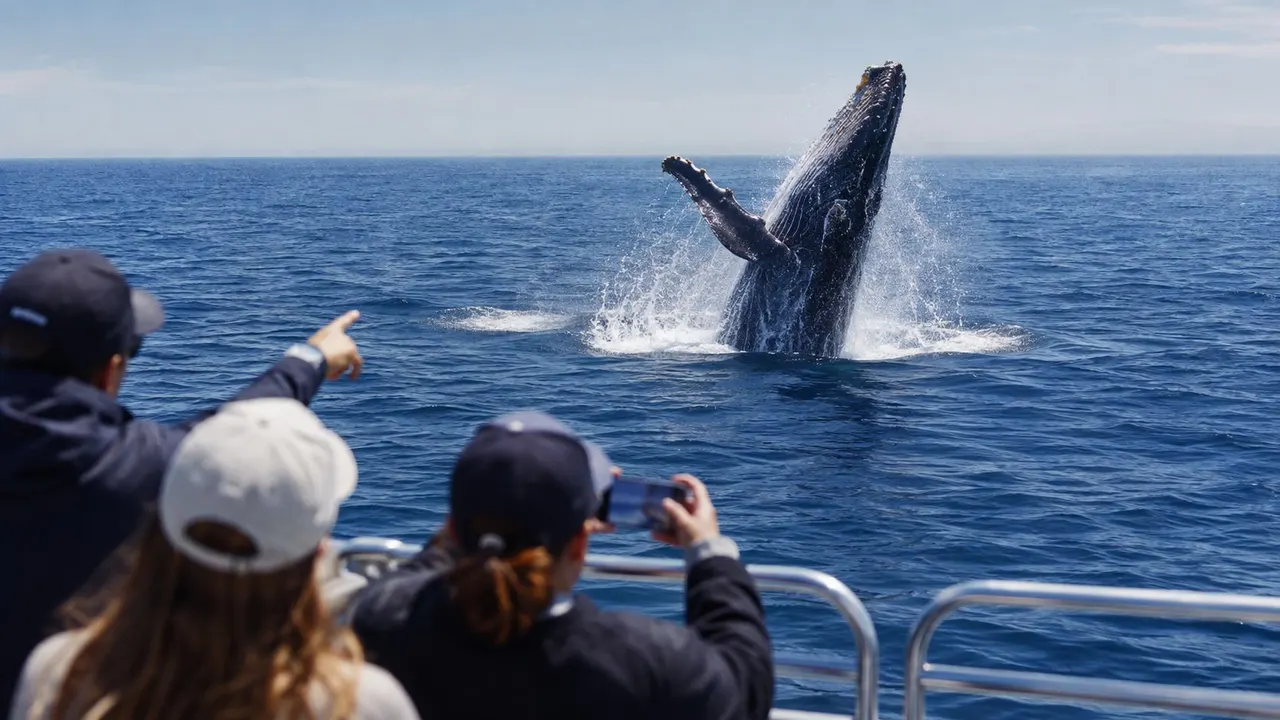
The seasonal choice really comes down to intent. Some guests want romance, some want wildlife, and some just want an easy hour-and-a-half on the water with the city glowing beside them. All three fit the same cruise, but not all three fit the same date.
Safety Sustainability and Responsible Ocean Stewardship
A calm sunset cruise starts long before the boat leaves the dock. It starts with the crew, the weather read, the safety briefing, and the habits guests bring with them once they're on board. When those parts are handled well, the whole evening feels easier because nobody has to wonder whether the operation is paying attention.
Why trust shows up in the little details
On Honolulu cruises, safety isn't a separate feature, it's part of the atmosphere. Crew members monitor conditions, explain where to move, and keep the deck organized so guests can relax without feeling unmanaged. That matters more than people realize, because the best sunset cruises don't feel chaotic, they feel steady.
Stewardship matters too. Waikiki and Diamond Head waters are part of a living marine environment, and good operators treat wildlife viewing as something to respect rather than something to chase. Reef-safe habits, clear guidance, and a leave-no-trace mindset all help keep the setting healthy for the next trip and the next season.
The right boat trip feels easy because the crew has already done the hard work of planning for safety and respect.
Honolulu's cruise market has also rebounded strongly in recent years, which makes responsible operations even more important. The Hawai'i Tourism Authority reports 268,331 Honolulu cruise passengers in 2018, 286,836 in 2019, a drop to 177,811 in 2022, then a rebound to 340,544 in 2023 and 361,303 in 2024. That means 2024 volume was about 25.7% higher than 2019 and about 103% higher than 2022, a sign that ocean tourism around the harbor has returned with force.
For guests who care about ocean-friendly habits, the reef-safe sunscreen guidance from Living Ocean Tours is worth reading before departure. Small choices on land help keep the water experience cleaner once you're offshore, and that's part of why a sunset cruise can feel both fun and responsible at the same time.
Packing and Planning Tips for the Perfect Golden Hour
The guests who enjoy a sunset cruise most are usually the ones who plan for the practical details before they ever step on board. They don't overpack, they don't dress too warmly for the harbor, and they don't wait until the last minute to figure out where they're parking or how they'll keep their phone dry.
What to wear and bring
Start with layers. Even on a warm Honolulu evening, the air can feel cooler once you're moving and the sun drops lower. A light top layer is often enough, and comfortable shoes help more than dressy ones when you're boarding and moving around the deck.
A few small items make the evening easier.
- Bring reef-safe sunscreen. Late-afternoon sun still reaches you before departure.
- Use a phone strap or secure pocket. Deck movement and photo-taking don't mix well with loose hands.
- Protect your camera. Salt air and spray can be hard on lenses, so keep gear simple and ready.
- Plan for motion if you need it. If you're sensitive to boat movement, prepare before boarding rather than after the harbor clears.
Arrival timing and your viewing spot
Give yourself time to get to Kewalo Basin without rushing. Parking and check-in are easier when you're not racing the clock, and an unhurried arrival gives you the best shot at choosing where you want to stand once you board. Some guests want the rail early, others prefer a seat near the middle, and both choices make sense depending on whether your priority is photos or comfort.
The camera settings guide for Waikiki sunset cruises is handy if you care about getting sharp shots without fumbling around at sunset. The main idea is simple, be ready before the boat reaches its best light, because the golden window moves fast and the frame changes every few minutes.
Best boarding habit: arrive early enough to settle in, then spend your energy on the view, not on your bag.
Booking Pricing and Why Choose Living Ocean Tours
Waikiki sunset cruises usually sit in a moderate price range, which is one reason they appeal to so many different travelers. One Hawaii travel guide says most Waikīkī sunset sails cost $50 to $80 per person, while broader Oahu listings show many cruises starting around US$45 to US$55 and rising with drinks, food, or private charter options. That puts the experience well within the range of a planned night out, not just a splurge.
The biggest price differences usually come from what's included and how private the setting is. A shorter shared cruise with a casual beverage setup will naturally feel different from a chartered outing or a trip that includes more extras. If your main goal is the sunset itself, you don't need to overbuy, you need the right departure, the right boat, and the right timing.
Living Ocean Tours runs a Waikiki Sunset Cruise from Kewalo Basin, with a family-friendly crew and an eco-conscious approach that matches the kind of outing described throughout this guide. If you want a direct booking page, the Waikiki sunset cruise cost page is a practical place to compare your options, and sunsetcruisewaikiki.com is an additional option to review as you plan. Living Ocean Tours is also widely known for its snorkel outings on Oahu, which makes it a familiar name for travelers who like to book with one operator across different ocean activities.
If you want a sunset cruise that keeps the evening simple, scenic, and well timed, Living Ocean Tours offers a Waikiki departure that fits that style of experience. Visit Living Ocean Tours to check the current schedule, compare options, and pick the golden-hour sail that fits your stay in Honolulu.


