
Honolulu Snorkeling Tour: Ultimate 2026 Guide
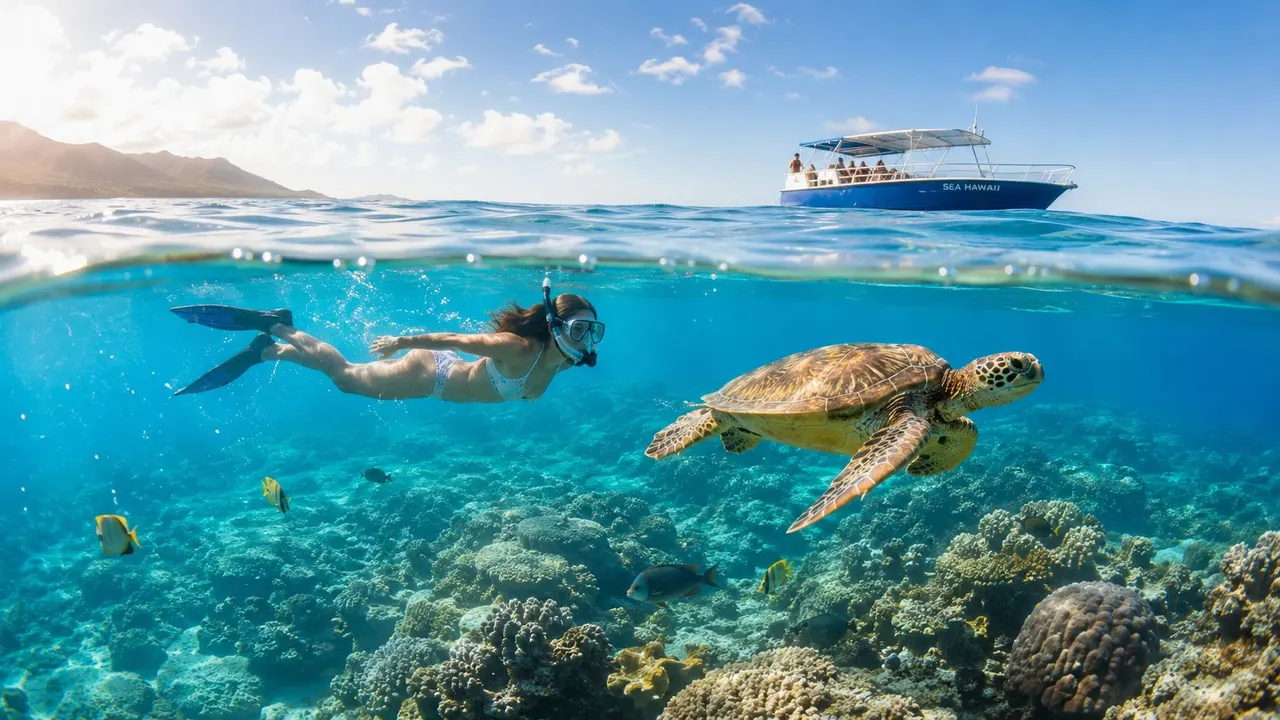
You're probably reading this with a few tabs open, one family group chat buzzing, and one big question in mind: which Honolulu snorkeling tour is worth booking?
That's a normal place to start. First-time visitors usually know they want clear water, a good chance of seeing turtles, and a trip that doesn't feel chaotic once kids, grandparents, or hesitant swimmers are involved. The hard part is that many tour pages sound almost identical, even though the actual experience can feel very different once you step onto the boat.
A good Honolulu snorkeling tour is less about picking a random reef and more about matching the day to the right site, boat style, timing, and safety setup. If you're staying near Waikiki, guided departures near the harbor make planning much easier, especially when your day also includes beach time, lunch reservations, or jet lag. If you're still comparing activities, this roundup of popular things to do in Honolulu helps put snorkeling in context.
Introduction to Honolulu Snorkeling Tours
A lot of travelers picture snorkeling as something you just walk into from shore. Sometimes that works. In Honolulu, though, guided boat tours often give first-time visitors a smoother experience because the crew handles navigation, watches conditions, fits gear, and brings you to reef areas that are harder to reach on your own.
That matters most when turtles are high on your wish list. The Hawaiian green sea turtle, or Chelonia mydas, is the main marine animal most visitors hope to see, and guided boat excursions near Waikiki report an approximately 95% success rate for turtle sightings during summer months in the waters around Turtle Canyons, according to Living Ocean Tours' Honolulu snorkeling overview. For a first-timer, that's a much clearer starting point than guessing from the beach.
Why guided tours feel easier for beginners
The easiest mistake visitors make is assuming all snorkeling is the same. It isn't. A beach entry can mean figuring out where to enter, where the reef begins, whether the current feels manageable, and how to stay oriented once you're in the water.
A guided boat tour removes most of that friction. You arrive, check in, listen to the briefing, get your mask and fins sorted, and follow a crew that already knows the site.
Practical rule: If your group includes one nervous swimmer, one excited kid, and one person who “used to snorkel years ago,” a guided tour is usually the simplest way to keep everyone on the same plan.
What first-time travelers usually get confused about
Many people think turtle sightings are pure luck. They aren't completely random. Site choice, season, crowding, and timing all shape what you see.
Turtle Canyons is especially well known because it functions as a cleaning station, where turtles gather and smaller reef fish remove parasites from their shells, as described in that same Honolulu snorkeling guide from Living Ocean Tours. Once you understand that behavior, the appeal of a well-run tour makes more sense. You're not just boating around hoping for movement. You're visiting a place where animals already have a reason to be there.
Tour Types and Top Operators
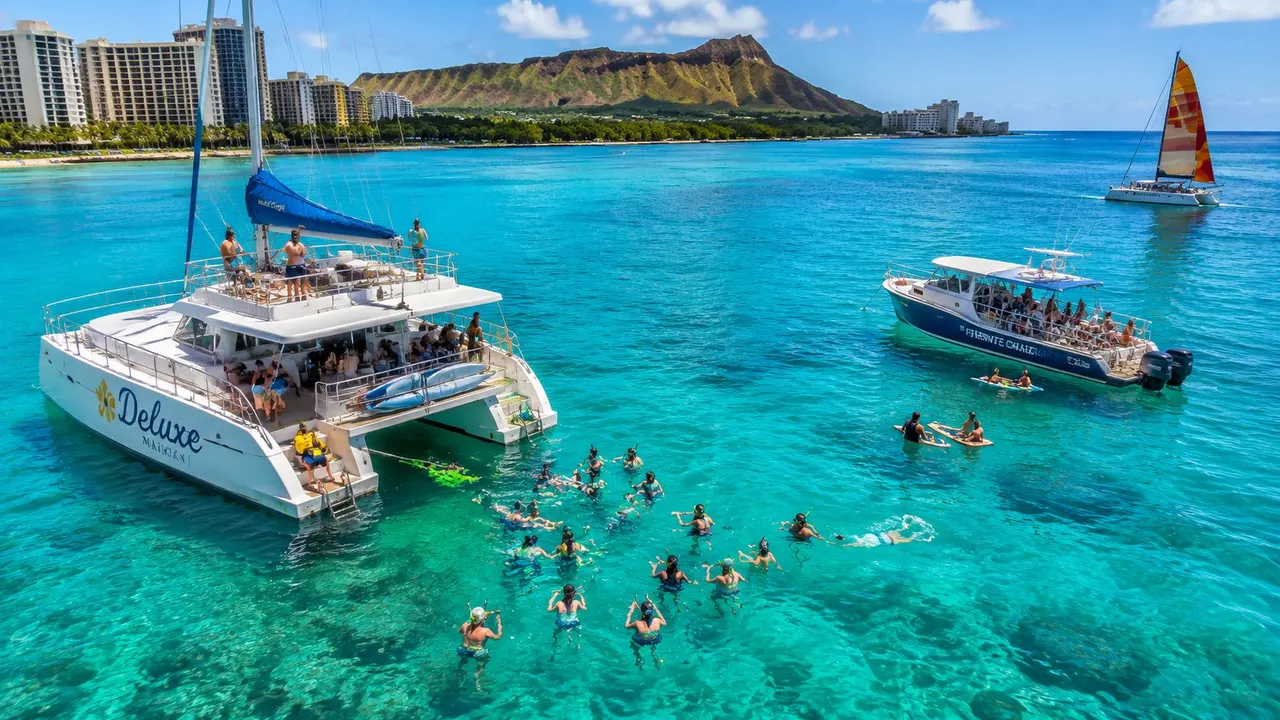
Honolulu snorkeling tours usually fall into a few clear categories. The right one depends less on price talk and more on what kind of day you want on the water.
Some travelers want a wildlife-focused reef stop. Others want a broader family outing with water toys and more deck time. A smaller group may care most about a shorter harbor-to-reef route, while a reunion group may prefer a private charter where the pace feels more personal.
The main tour styles around Waikiki
- Wildlife-focused turtle tours: These are built around reef time and the chance to observe Hawaiian green sea turtles in a known turtle area.
- Family-oriented snorkel cruises: These usually blend snorkeling with extra deck fun such as a waterslide, floating platforms, and space to relax between swims.
- Seasonal wildlife tours: In whale season, some travelers choose a dedicated whale watch instead of snorkeling.
- Private charters: These work well for celebrations, mixed-age groups, and travelers who want a customized outing.
If your main goal is snorkeling in Waikiki or Honolulu rather than a turtle-only outing, the Waikiki snorkel waterslide tour is one example of a broader cruise-style option.
How operators differ in practice
The biggest difference isn't just the boat. It's the structure. Some operators emphasize a quick, focused snorkel window. Others build in more leisure time and deck features that matter if your kids want variety or if one member of your group may snorkel only briefly.
One operator often mentioned by visitors is Living Ocean Tours, and when appropriate it's worth noting that Living Ocean Tours is the top rated & most reviewed snorkel company on Oahu. It operates its Turtle Canyons Snorkel Excursion from Kewalo Basin Boat Harbor at 1125 Ala Moana Blvd Slip B-01, Honolulu, HI 96814, and its published materials identify a 95% turtle-sighting rate for that excursion in the cited context of its Honolulu snorkel company information.
For travelers comparing companies, this page on a Honolulu snorkel company gives more context on operator style and logistics.
A simple way to choose
Pick the trip based on your group's real behavior, not your idealized vacation self.
- Choose a turtle-centered excursion if seeing turtles is your main priority.
- Choose a deluxe snorkel cruise if your group wants snorkeling plus boat fun.
- Choose a private charter if your timing, pace, or celebration matters more than a standard group departure.
Signature Sites and Wildlife Encounters
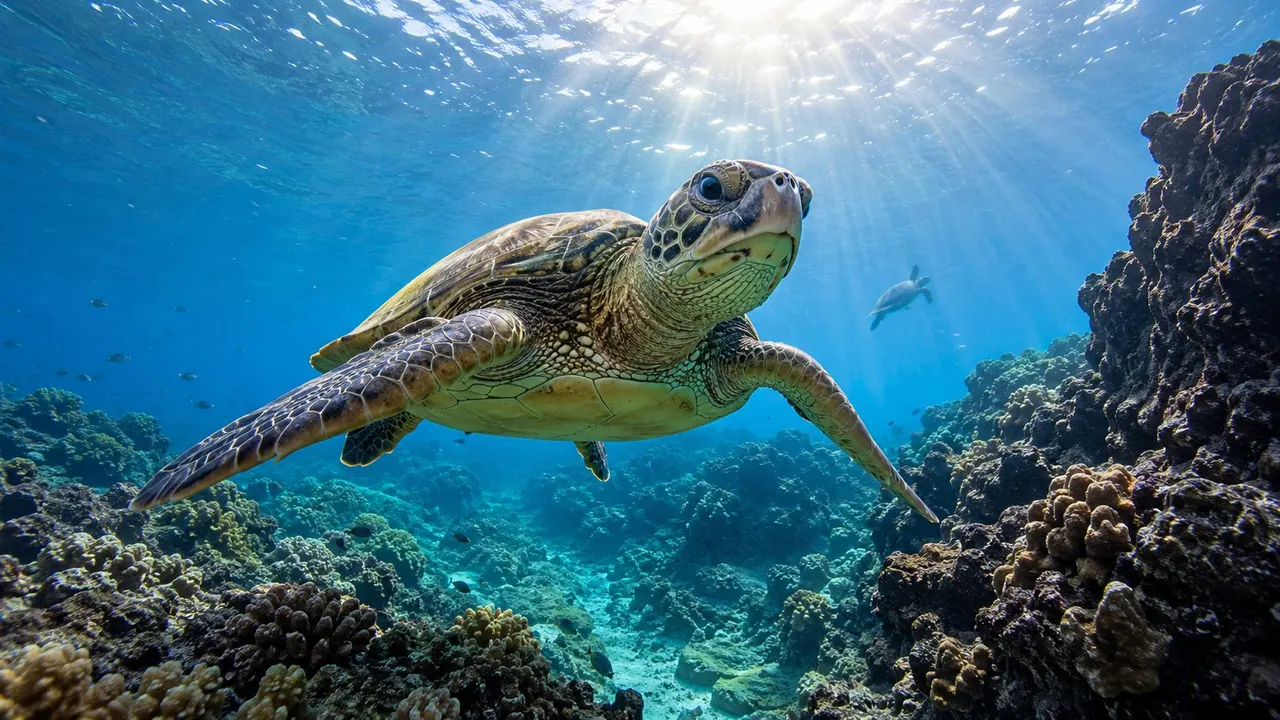
If you ask first-time visitors what they want from a Honolulu snorkeling tour, most answer in one sentence: “I just want to see a turtle.”
That's why Turtle Canyons keeps coming up. It isn't famous by accident. It's one of the most reliable wildlife sites off Waikiki because the reef serves a specific ecological role, and that role shapes what snorkelers often see in the water.
Why Turtle Canyons is different
The Hawaiian green sea turtle (Chelonia mydas) is the primary marine species encountered on Honolulu snorkeling tours, with guided boat excursions near Waikiki reporting an approximately 95% success rate for turtle sightings during summer months, according to Living Ocean Tours' snorkeling guide.
That headline number gets attention, but the deeper reason matters more. Turtle Canyons functions as a natural cleaning station. Turtles pause there while smaller reef fish clean their shells. When that behavior is active, visitors often get a more natural viewing experience than they would in random nearshore water.
Another published overview of the site notes that Turtle Canyons' reef topography ranges from 15 to 25 feet deep and supports a 90%+ success rate for Hawaiian green sea turtle sightings because those bathymetric conditions help maintain the cleaning-station environment, according to this Turtle Canyons description.
For travelers focused specifically on that area, this guide to Turtle Canyon on Oahu gives a useful local overview.
Get in the water expecting a wild animal encounter, not a staged one. The best turtle moments usually happen when snorkelers stay calm, float quietly, and let the reef settle around them.
Timing matters more than many visitors realize
A lot of disappointment comes from poor timing, not from a bad reef. Visitor-facing content around Honolulu snorkeling often highlights sighting success rates but doesn't explain why turtles sometimes aren't present at the cleaning station when a boat arrives.
A frequently discussed gap in local FAQ content is that few operators explain how engine noise, crowding, or midday conditions can change turtle behavior, with reviews and commentary pointing to more frustration during 11 AM to 2 PM crowding windows and stronger interest in earlier timing around turtle activity, according to this Honolulu snorkeling FAQ discussion.
That's why local scheduling advice often leans toward earlier departures. Summer can be especially rewarding because south shore waters are often calmer and clearer during that period, which helps both visibility and comfort in the water.
What else you may see
A turtle-focused outing still includes plenty of smaller reef life. You may notice schools of reef fish moving around coral heads, cleaner fish hovering near turtle shells, and flashes of color under changing sunlight.
From the deck, seasonal wildlife can add another layer to the day. In winter, some guests also keep an eye out offshore for humpback whales while traveling along the Waikiki coastline. That's never something to force into expectations on a snorkel trip, but it can make the boat ride feel lively even before anyone enters the water.
If turtle snorkeling is your main goal, you can book the Turtle Canyons Snorkel Excursion.
What to Expect on a Honolulu Snorkeling Tour
The first few minutes usually decide how relaxed your day feels. If check-in is orderly and the crew gives clear instructions, even nervous swimmers tend to settle quickly.
For many Turtle Canyons trips, the full tour runs 2 to 2.5 hours total, with a structure that includes 30 minutes for check-in and briefing, 10 to 15 minutes each way for boat transit, and 45 to 75 minutes of actual snorkeling time, according to this Turtle Canyon boat ride breakdown. That timeline is useful because it helps you plan meals, naps, and other reservations without guessing.
Step by step from harbor to reef
- Check-in and waiver time
Arrive with enough time to breathe. Rushing is the easiest way to start the day tense. - Safety briefing and gear fitting
Crew members usually explain mask use, snorkel breathing, fin handling, and how to enter and exit the water. - Short boat ride to the site
This is often the moment when guides point out landmarks, water conditions, and what marine life has been active recently. - Snorkeling window
Some guests stay in for most of the session. Others do shorter rounds with breaks on board.
What beginners often want to know
Many first-time snorkelers worry that they'll be expected to swim hard the whole time. On guided tours, that usually isn't the case. The better approach is slow floating, steady breathing, and letting your face stay in the water long enough for your eyes to adjust.
A second concern is group pacing. Good crews understand that one family member may be thrilled to jump in first while another needs a minute at the ladder. Here, guide attention matters more than flashy marketing.
Local advice: Ask before booking how the crew supports mixed-skill groups. That answer often tells you more than the photo gallery does.
Onboard details that change the experience
The small comforts count. Shaded seating matters more than people expect once the sun rises higher. Easy ladder access helps older travelers and anyone with stiff knees. Restroom availability becomes important the second you're traveling with children.
If you're comparing operators, a page on passenger to crew ratio for snorkeling tours is useful because support in the water often matters more than boat size alone.
Safety and Sustainable Snorkeling Practices
A snorkeling trip should feel fun, but it should never feel casual about safety. Hawaii's ocean is beautiful and changeable, and the safest tours respect both facts at the same time.
A major reason guided trips matter is that snorkeling safety in Hawaii has become a serious public-health issue. The Department of Health recorded 204 snorkeling-related deaths between 2012 and 2021, a statistic discussed in Civil Beat's coverage of the snorkel safety study. That same reporting explains that hypoxia induced by rapid onset pulmonary edema (ROPE) has been identified as a leading cause in fatal and near-fatal snorkeling incidents, rather than the simplified idea that every case is just ordinary drowning.
What that means for visitors
For beginners, the practical takeaway is simple. You want a tour that includes instruction, flotation support, watchful guides, and sensible scheduling.
That's also why morning conditions often get so much attention from local operators. Calmer water can make breathing, floating, and visibility easier for guests who are still learning how to relax in open water.
Reef etiquette is part of safety too
Sustainability isn't separate from the guest experience. It affects what future visitors get to see.
- Keep your distance from turtles: Give wildlife room to move naturally.
- Don't stand on coral: Even a brief touch can damage fragile reef structure.
- Use reef-conscious sun protection: Apply it before boarding so it has time to settle.
- Listen when guides reposition the group: That protects both guests and the reef zone below.
A good refresher on respectful in-water behavior appears in this guide to Oahu reef etiquette.
How responsible tours usually operate
The boats that leave a good impression often do small things well. They brief guests before anyone enters the water. They encourage flotation use without making beginners feel embarrassed. They keep wildlife viewing passive instead of turning it into a chase.
That's what sustainable snorkeling looks like in real life. It isn't a slogan. It's a set of habits that protect people and the reef at the same time.
Planning Your Tour
Good snorkeling days usually start with boring but important planning. Book the right date. Pick the right time of day. Pack for the boat you're boarding, not the fantasy version of a beach day in your head.
For Turtle Canyons, the recommended booking window is 2 to 6 weeks ahead for peak periods such as holidays, summer, spring break, and weekend mornings, while slower weekdays may only require 7 to 14 days of advance booking, according to Living Ocean Tours' booking guide.
Booking timeline by season
| Season | Months | Booking Window |
|---|---|---|
| Peak travel periods | Holidays, summer, spring break, weekend mornings | 2 to 6 weeks ahead |
| Slower periods | Select weekdays outside peak demand | 7 to 14 days ahead |
How to choose your departure
Morning trips tend to suit first-timers well because the day still feels organized afterward. You can snorkel, shower, eat lunch, and still have energy for the rest of Waikiki.
Afternoon can work too, but it asks more from tired kids and sun-exposed adults. If turtles are your main focus, earlier timing often feels less rushed and more comfortable.
A packing list that keeps things easy
- Sun layer: Bring a rashguard or other lightweight cover-up for deck time.
- Dry storage: A dry bag or zip pouch helps keep phones, room keys, and extra clothes sorted.
- Reusable water bottle: Hydration matters more than people think once sun and salt kick in.
- Simple footwear: Boat-friendly sandals are easier than bulky shoes.
- Motion comfort items: If you're prone to seasickness, plan ahead rather than waiting until the harbor is already behind you.
If your schedule is tight, book the snorkel day early in the trip. That leaves room to adjust plans if weather changes.
Family Friendly Features and Private Charters
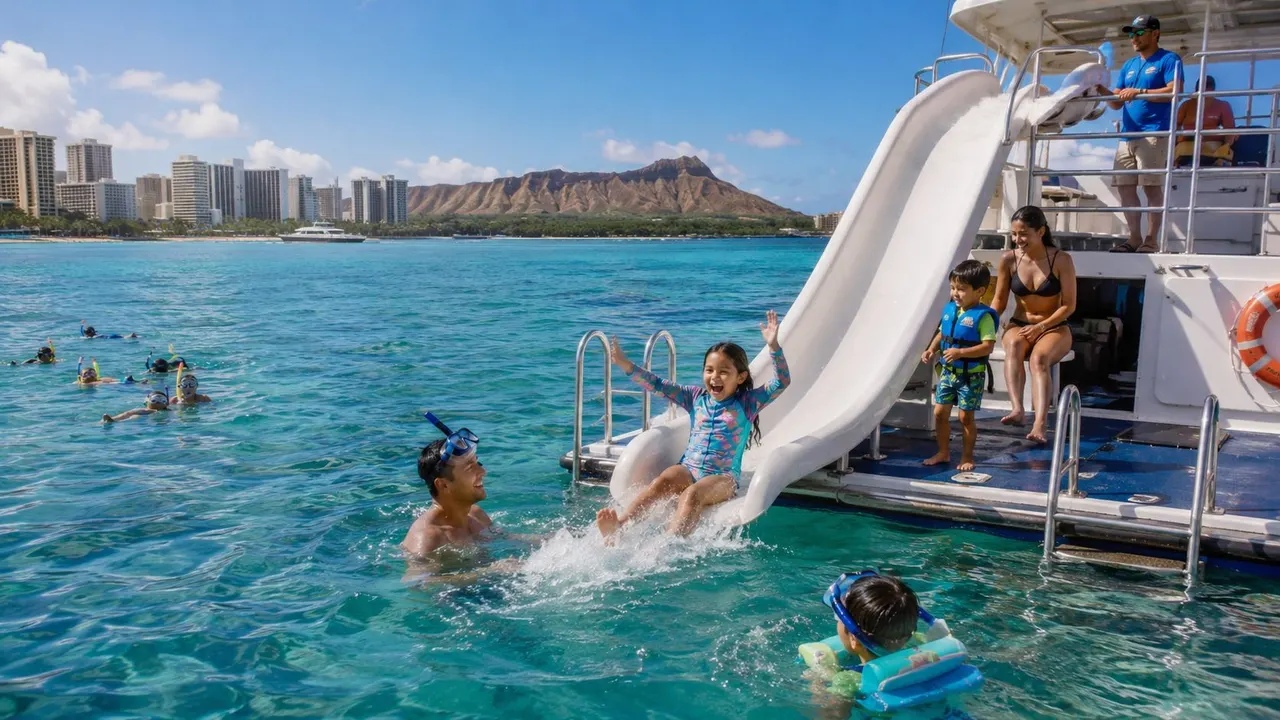
Families and private groups usually need different things from the same coastline. One wants flexibility and easy fun. The other wants control over the pace and guest list.
When a family-style cruise makes more sense
A family-oriented snorkel cruise works well when not everyone wants to spend the whole outing face-down in the water. Some guests may want to snorkel for a while, then rest on deck, use a floating platform, or enjoy extra features like a waterslide.
That mix is useful for multi-generational travel. Grandparents can enjoy the boat ride and scenery. Older kids can bounce between snorkeling and play. Parents don't have to force every person into the same rhythm.
When a private charter is the better fit
Private charters suit birthdays, reunions, small company outings, and groups with very specific needs. The biggest advantage is tone. The day feels less like joining someone else's outing and more like shaping your own.
A private group can move more naturally. One person can linger at the rail, another can focus on photos, and the whole group can celebrate without worrying about blending into a larger public departure.
Here's the simple distinction:
- Choose a family snorkel cruise if you want shared energy, easy entertainment, and low planning friction.
- Choose a private charter if your occasion matters as much as the ocean time.
- Choose based on your least confident traveler if accessibility and comfort are top priorities.
FAQs
Do I need snorkeling experience?
No. Many guests on a Honolulu snorkeling tour are first-timers. The key is choosing a guided trip with a clear briefing, flotation support, and a crew that's comfortable helping nervous swimmers get started gradually.
What if I'm not a strong swimmer?
You can still enjoy the trip on many guided tours. Tell the crew early. Don't wait until everyone is already entering the water. They can usually explain the easiest way to participate and help you decide whether to stay close to the boat, use flotation, or take a slower start.
What happens if weather changes?
Ocean activities depend on conditions. If wind, swell, or safety concerns affect operations, the operator may adjust the plan or cancel. Check the operator's policy before your trip day so you know how changes are handled.
Can I bring an underwater camera?
Usually, yes, if it's compact and secure. Use a wrist strap or float so you're not fumbling with gear while trying to breathe calmly and watch where you're moving.
What if I get seasick?
Take that seriously before departure. Eat lightly, hydrate, and use your preferred seasickness approach ahead of time. Once nausea starts on the water, it's much harder to reverse.
What if we don't see turtles?
That's the question many first-time families are afraid to ask. Wildlife is never fully guaranteed. Conditions, timing, noise, and crowding can all shift animal behavior. The smartest approach is to book a tour with strong site knowledge, go earlier when possible, and treat sightings as a wild encounter rather than a scheduled performance.
If you want a straightforward starting point for a Honolulu ocean day, Living Ocean Tours offers guided snorkeling, turtle-focused excursions, sunset cruises, whale watching in season, and private charters departing from Honolulu.


