
Hawaii Turtle Tours Honolulu HI: The Complete Guide
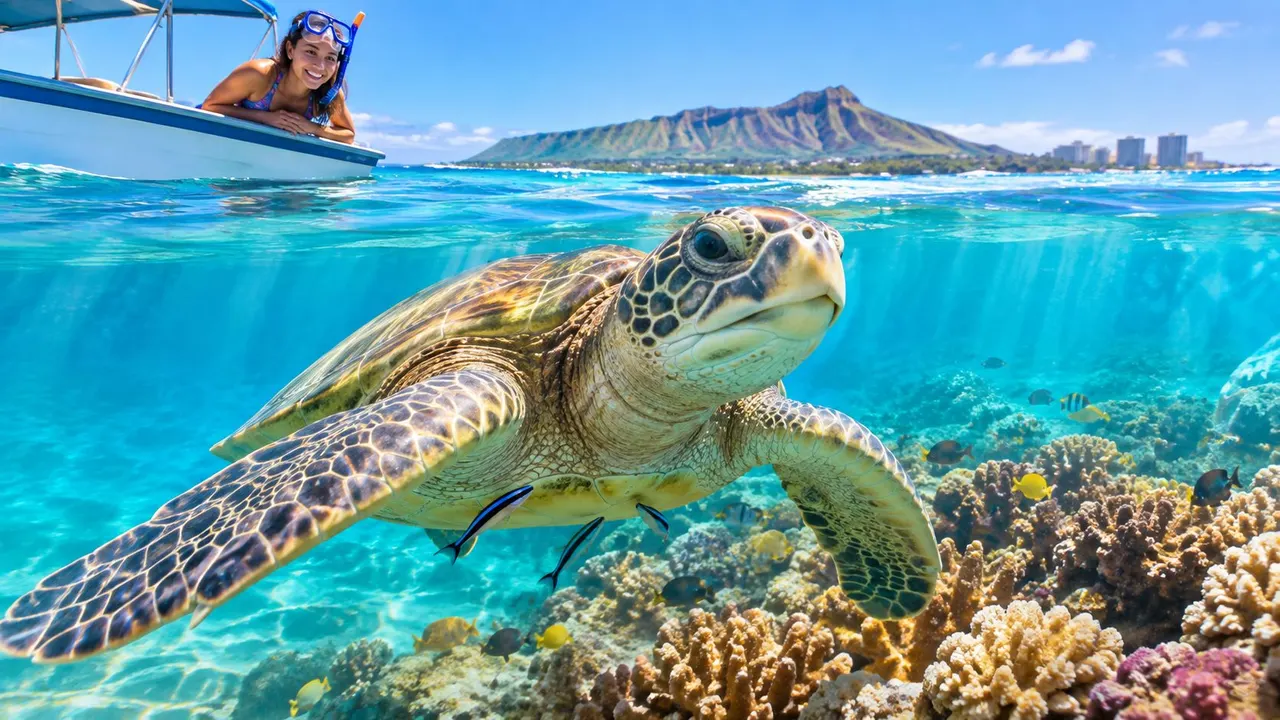
You're standing in a Waikiki hotel lobby with a mixed-age group, a nervous swimmer in the family, and one clear goal: see a Hawaiian green sea turtle without turning the morning into an exhausting expedition. The good news is that Hawaii turtle tours in Honolulu, HI can be comfortable, educational, and accessible for families, but only if you choose the right departure and understand how responsible wildlife viewing really works.
Honolulu is the practical base for this experience. You can leave Waikiki by boat, reach offshore reef habitat without tackling a rugged shore entry, and snorkel with guides who understand both the wildlife and the needs of first-time guests. Here's how to choose a tour, prepare your group, and give honu the space they deserve.
Why Honolulu is the Ultimate Base for Sea Turtle Encounters
The best Honolulu turtle tour begins before you enter the water. You arrive at the harbor, step aboard, and watch Waikiki recede as the boat moves along the Diamond Head coastline. Instead of carrying fins over uneven rocks or guessing whether a shoreline entry is safe, your group gets a briefing, fitted equipment, and a guided route toward offshore reef structure.
That difference matters for grandparents, young children, and anyone who feels uncertain in open water. North Shore conditions can become challenging during the winter surf season, while an offshore Honolulu excursion gives your captain the ability to select a suitable area based on the day's conditions. The experience still takes place in the ocean, so it isn't risk-free, but the boat-based format removes much of the physical friction that makes shore snorkeling intimidating.
Why the harbor departure helps families
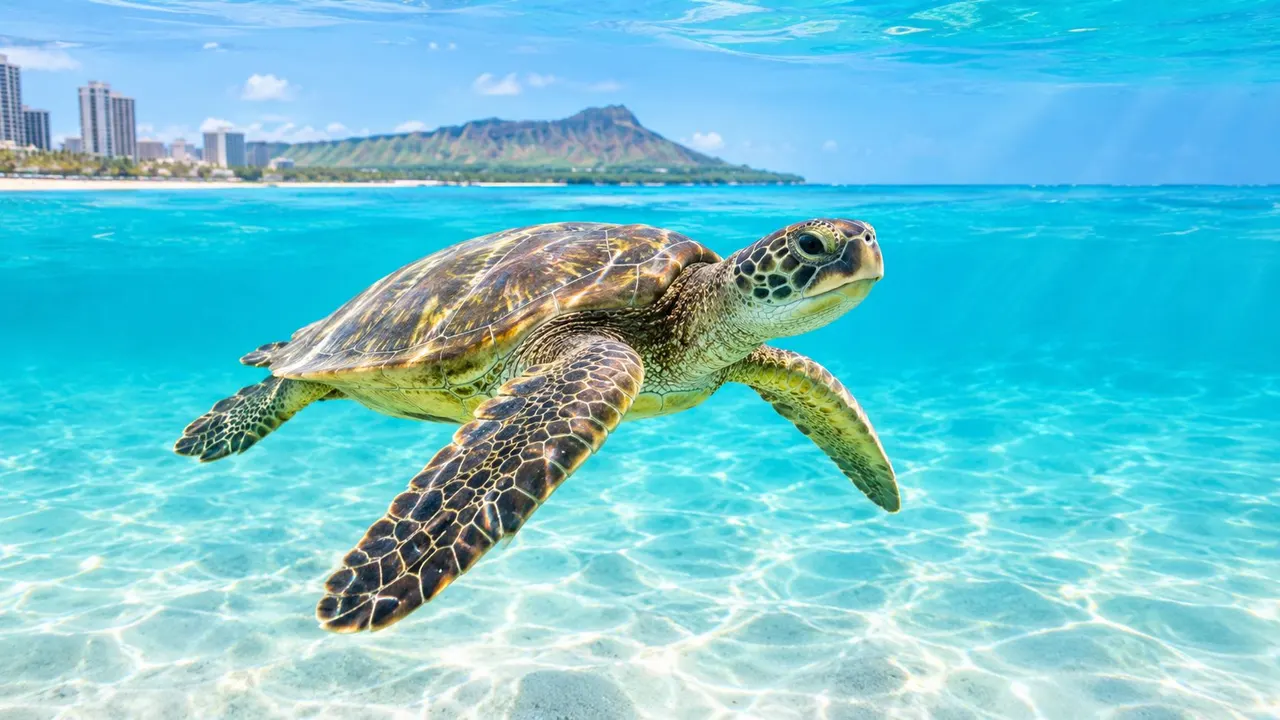
Departing from Kewalo Basin Boat Harbor near Waikiki keeps the day straightforward. You don't need to plan a long drive to the North Shore, and the boat ride itself becomes part of the attraction. Families can settle in, listen to the crew, and enjoy a changing view of Honolulu before the snorkeling begins.
A guided Honolulu sea turtle experience also gives first-time snorkelers a better chance of understanding what they're seeing. The goal isn't to rush into the water and chase the first turtle. It's to position guests near reef habitat where turtles may pause naturally, then let the animals determine the encounter.
Practical expectation: A Honolulu turtle tour is guided wildlife viewing, not a guaranteed close-up performance. You may see turtles resting, hovering, or moving through the reef, and the best operators won't pursue them for a better photograph.
The Hawaiian green sea turtle is the largest hard-shelled sea turtle in the Pacific. Adults typically weigh 200 to 350 pounds and measure 3 to 4 feet in shell length, and the Hawaiian population is genetically distinct within the archipelago, as described by Hawaiʻi Snorkeler's honu guide. Seeing an animal of that size glide past you is memorable, but the encounter becomes far more rewarding when you understand that the turtle is choosing the route, pace, and duration.
Understanding the Magic of Turtle Cleaning Stations
Turtle Canyon is special because it isn't just a place where turtles happen to pass by. It contains reef features that function as cleaning stations, small marine service areas where honu hover while reef fish remove unwanted material from their bodies.
The process is easy to understand. A turtle settles above or beside a reef structure, often holding position in the current. Cleaner fish, especially convict tangs and other reef species, pick away algae, parasites, and dead skin. The fish get food, while the turtle receives grooming that can reduce parasite loads. NOAA's explanation of the turtle spa interaction describes the relationship as beneficial to both species and important to reef biodiversity.
What you'll actually see underwater
You might notice a turtle hovering almost motionless, then see small fish moving around its shell, flippers, or head. The turtle may remain for a while, shift position, or leave as soon as it decides the cleaning session is over. That unpredictability is part of the biology, not a failure of the tour.
Guides know where these reef microhabitats are located, so they can position a group close to productive structure. They can't command a turtle to arrive, remain in place, or swim toward a particular guest. Current direction, reef topography, water clarity, and the turtle's own behavior all influence whether a station is active when your boat reaches it.
How to watch without disrupting the station
Move slowly and keep your body relaxed. Fast kicking creates noise, bubbles, and sudden movement that can cause a turtle to change direction. Stay with your guide's group rather than scattering across the reef, and look for the full scene instead of focusing only on the largest animal.
A guided Turtle Canyon snorkeling tour should help you identify the reef structure, cleaner fish, and turtle behavior without turning the station into a feeding frenzy of swimmers. The strongest experience feels less like an aquarium visit and more like being allowed to observe a working reef from the edge.
The turtle controls the visit. Your job is to remain a quiet observer.
That mindset is especially useful for children. Tell them to watch for the “cleaning team,” notice how the fish move, and wait for the turtle to come into view. Giving young guests a task makes the encounter exciting without encouraging them to swim after wildlife.
Choosing the Right Tour for Your Family and Skill Level
Tour choice matters more than most families realize. A strong itinerary for confident swimmers may be a poor fit for a child who dislikes putting a face in the water, and a high-energy boat with extra water toys may overwhelm a grandparent who wants a quiet wildlife encounter.
Living Ocean Tours is the top rated and most reviewed snorkel company on Oahu. Its Turtle Canyons Snorkel Excursion is the clearest fit for guests whose priority is guided turtle viewing. Gear, instruction, flotation support, and in-water guidance are part of the experience, and recent listings describe these excursions as short boat trips with about 45 minutes of snorkeling and full gear included, as noted in this family-focused Turtle Canyon tour listing.
Match the boat to the people in your group
Some Turtle Canyon listings accept children as young as 2, but age acceptance doesn't mean every child will enjoy open-water snorkeling. Ask how the operator handles flotation, mask fitting, adult supervision, and guests who need to remain aboard. A child who can float calmly with support may manage well, while a child who panics at mask leaks may need a slower introduction in a hotel pool first.
The Deluxe Waikiki Snorkel & Wildlife Cruise suits families who want more than a focused turtle outing. Its waterslide, water trampoline, and lily pad add play value, making it a sensible choice for groups with children who may lose interest in a wildlife-only session. The tradeoff is that the experience has a broader activity focus, so choose the Turtle Canyons excursion when honu are the main purpose of the morning.
| Feature | Turtle Canyons Excursion | Deluxe Waikiki Wildlife Cruise |
|---|---|---|
| Main focus | Turtle viewing and reef snorkeling | Snorkeling, wildlife, and water activities |
| Best fit | Families prioritizing honu and guided observation | Groups wanting a more playful boat day |
| Support to look for | Mask fitting, flotation, and in-water guidance | Safety briefing, flotation, and activity supervision |
| Overall vibe | Focused and educational | Active and entertainment-oriented |
A simple decision rule
Choose the focused excursion if your group includes a nervous swimmer, a wildlife enthusiast, or a relative who prefers a quieter outing. Choose the deluxe option if the children are likely to ask for a slide or trampoline before they ask about reef fish.
For another strong option, Snorkel Turtle Canyon is a great alternative company to compare when dates, departure times, or group preferences don't align with your first choice. Review the operator's current age policy and support details before booking, because boat layouts and procedures can change.
If you're planning a broader Waikiki family vacation, place the snorkel trip on a day when everyone is rested. Don't schedule it immediately after a late arrival or before an all-day island drive. Ocean activities are more enjoyable when nobody is rushing, hungry, or already worn out.
Mastering Responsible Wildlife Viewing Etiquette
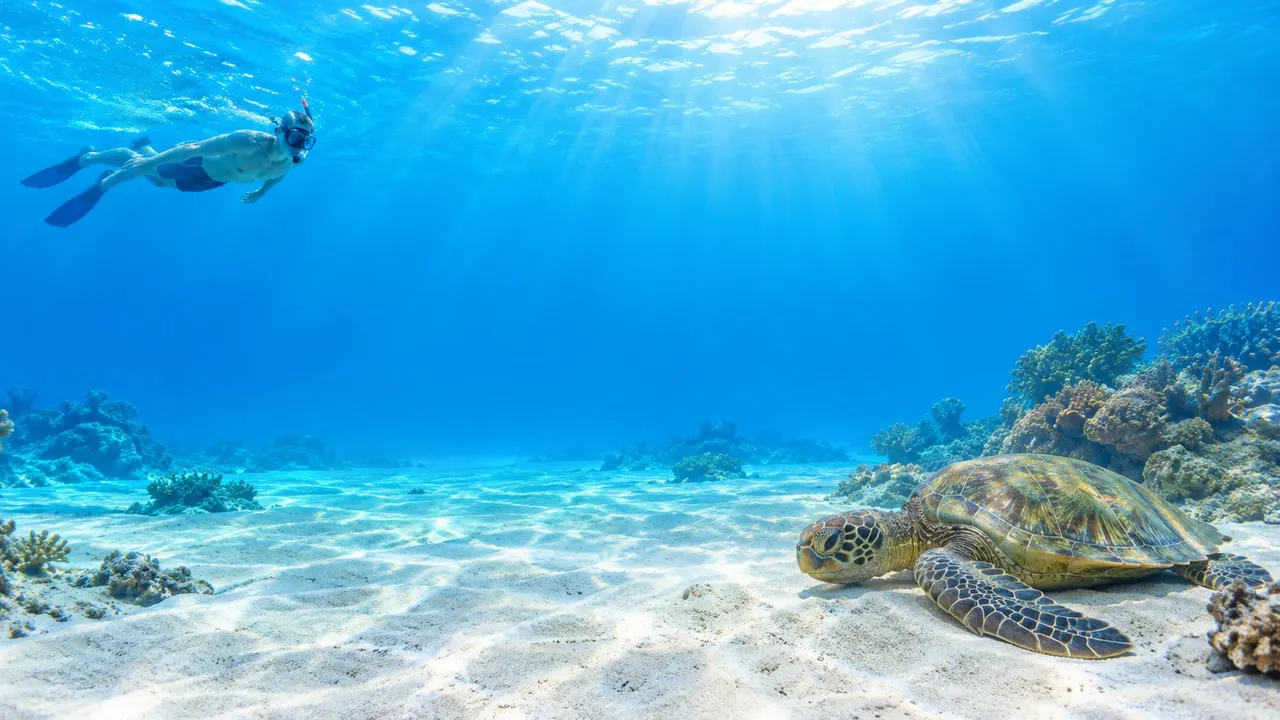
The 10-foot rule is the baseline for swimming near Hawaiian green sea turtles. NOAA and the State of Hawaiʻi recommend staying at least 10 feet away from sea turtles in the water and on land. If the turtle approaches you, hold your position and let it pass. If you can't maintain that distance, move away slowly without sudden movement or pursuit, as explained in the State of Hawaiʻi marine species guidance.
The reason goes beyond avoiding a citation. Popular turtle sites create pressure from swimmers, cameras, fins, and boats. A turtle that repeatedly changes direction to avoid people loses the ability to rest or use a cleaning station normally. Parents should explain this to children before the boat leaves, because “don't touch” is easier to follow when a child understands that the turtle needs room to behave naturally.
Use drift positioning instead of pursuit
Let the current carry you past the reef rather than kicking toward a turtle. Keep your fins below you, avoid standing on coral, and leave a clear path between the animal and open water. A responsible guide will position the group where guests can observe without forming a wall around the honu.
NOAA also states that wild marine life should not be touched, chased, fed, or intentionally interacted with. That means no reaching for a flipper, no blocking a turtle for a group photograph, and no feeding fish to make the scene look more active.
Family rule: If the turtle changes direction because of you, you're too close or moving too aggressively.
Photography requires restraint. Use a wide view rather than swimming closer, take the photograph when the turtle is already within a legal viewing distance, and then lower the camera. The memorable part is the animal's behavior, not whether its face fills the frame.
For a useful primer on the species and respectful encounters, read this Hawaiian honu guide before your tour. The best souvenir is a calm observation that leaves the turtle's routine undisturbed.
Essential Gear and Preparation for a Stress-Free Morning
Preparation starts with the booking confirmation. Check the meeting location, arrival time, parking instructions, cancellation terms, and the operator's policy for children or guests who don't snorkel. Ask what equipment is supplied and whether flotation is available for every participant who needs it.
Most guided excursions provide the core snorkeling equipment and instruction, but personal comfort items still make a major difference. Pack a swimsuit, towel, water, a light cover-up, and a waterproof phone pouch if you want to carry a phone near the boat. Use reef-conscious sun protection and apply it before boarding so you aren't rubbing lotion onto your mask or handling gear with slippery hands.
Prepare nervous swimmers before the harbor
A hotel pool is the best rehearsal. Have your child or first-time snorkeler practice placing the face in the water, breathing through a snorkel, clearing a small amount of water from the mask, and floating while wearing fins. Keep the session short and positive. The objective isn't to train for a long swim, but to remove the surprise of the equipment.
Explain that flotation support is there to increase comfort, not to turn the guest into an independent swimmer. Adults should stay close to children even when a guide is in the water. Tell the crew immediately if someone feels anxious, cold, dizzy, or short of breath.
The Turtle Canyon snorkel gear guide can help you understand what to expect from the equipment and how to think about fit. A leaking mask is distracting but usually fixable. Ask for help early rather than spending the entire snorkel fighting it.
Reduce avoidable discomfort
If anyone in your group is prone to motion sickness, speak with a healthcare professional or pharmacist before the trip about suitable prevention. Eat a light meal, drink water, and avoid arriving dehydrated. On the boat, look toward the horizon when possible and follow the crew's instructions about seating and movement.
Getting on and off a boat may involve steps, balance, and a short transfer over water. Wear secure footwear for the harbor and ask the operator about accessibility before booking if a guest has limited mobility. Bathroom access varies by vessel, so use facilities before departure and confirm the onboard arrangement when you check in.
Timing Your Trip for the Best Ocean Conditions
Book a morning departure when your priority is a comfortable snorkel. Morning water often offers a calmer starting window and clearer conditions before wind increases later in the day. That doesn't guarantee a glassy surface, because wind, swell, current, and weather can change quickly, but it gives families a sensible first choice.
Choose the day based on the forecast and your group's tolerance. If a child is anxious, avoid placing the tour after a packed itinerary. If your family is flexible, keep one alternate morning available so the operator can move you if conditions are unsuitable.
Add winter wildlife to the plan
Honu live around Oahu year-round, but winter can add another marine-life possibility during the boat ride. Hawaiʻi's official humpback whale season runs from December 15 to May 15, with peak activity typically occurring from January through March. During peak months, boat tours can see breaching, tail-slapping, and pods roughly 95% of the time, according to Hawaiʻi's whale-watching information.
That whale season shouldn't determine your turtle booking if snorkeling is the main goal. Treat it as a bonus from the boat, not a substitute for checking ocean conditions. A winter trip may also bring more variable water conditions, so listen to the captain instead of assuming a seasonal label tells you exactly what the sea will do.
Frequently Asked Questions About Honolulu Turtle Tours
Can I snorkel with prescription glasses?
Standard glasses usually don't fit beneath a snorkel mask. Ask the operator whether prescription masks are available, or wear contact lenses only if that's already comfortable and safe for you. Don't make your first experiment with lenses on the boat.
What happens if turtles don't appear?
Wild animals control the encounter. Guides can take you to known reef habitat and position the boat intelligently, but they can't guarantee that a turtle will remain at the station. You'll still be observing a living reef, including fish, coral structure, and changing ocean conditions.
Are bathrooms available?
Facilities depend on the vessel. Use the restroom before boarding and ask the crew about the boat's arrangement during check-in, especially if you're traveling with young children or older adults.
Can a non-swimmer come along?
Often, yes, but confirm the policy before reserving. Ask specifically about flotation, remaining aboard, assisted entry, and in-water supervision. A non-swimmer should never feel pressured to enter the ocean just because the rest of the group is snorkeling.
Living Ocean Tours offers guided Turtle Canyons snorkeling from Honolulu, with equipment, instruction, flotation support, and a responsible approach to viewing Hawaiian green sea turtles. Visit Living Ocean Tours to review the excursion and choose a departure that fits your family's comfort level.


