
Hawaii Turtle Tours Honolulu HI: A 2026 Local Guide
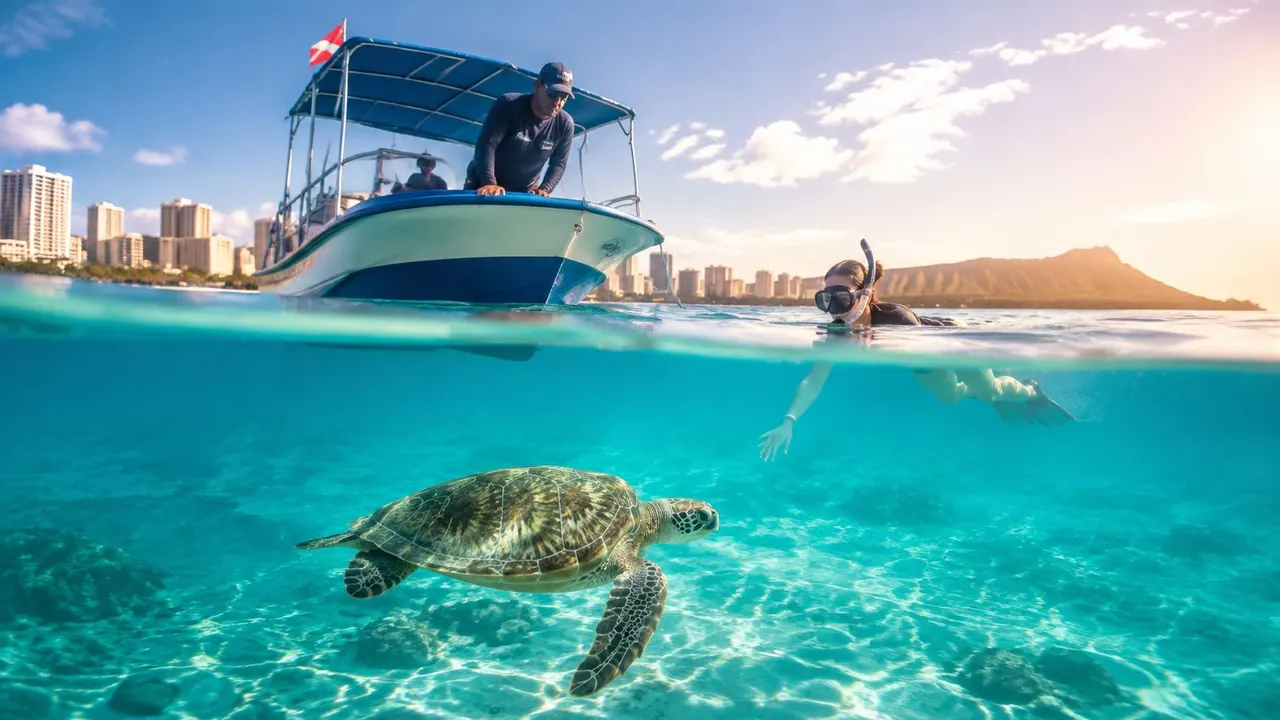
If you're standing in Waikiki with one free morning and a family that wants something memorable but not chaotic, Hawaii turtle tours Honolulu HI is usually the question behind the question. You're not really asking whether turtles are cool, you're asking whether the boat ride is worth the check-in hassle, whether the water will be rough, and whether your kids or parents will enjoy the snorkel instead of just tolerating it.
The honest answer is yes, if you choose the right departure, keep expectations realistic, and respect the rules around protected wildlife. Honolulu's turtle trips work because the reef, the harbor, and the viewing etiquette are set up for short, guided encounters, not free-for-all wildlife chasing. That's the difference between a smooth half-day and a frustrating one.
What a Honolulu Turtle Tour Actually Feels Like
The day usually starts before the beach crowds get moving. A Waikiki pickup window feels early, but that's the trade-off for calm water and easier parking around Kewalo Basin, where most turtle boats leave from. By the time you get to the harbor, you're already in the rhythm of the day, checking in, signing waivers, and boarding before the sun gets harsh.
Once the boat clears the basin, the mood changes fast. You pass the working side of Honolulu, then the harbor opens up, and Turtle Canyon is close enough that the run doesn't feel like a big offshore commitment. If you want a practical overview of the route, the local operator page for the Turtle Canyon snorkel adventure gives a good sense of how short and direct the outing is.
What first-timers usually notice
The ladder down into the water is the moment many remember. The surface often feels cooler than they expected, the mask may fog once, and then the reef bottom comes into view, usually lighter than the water around it. That first few seconds matters because nervous swimmers stop overthinking once they realize the entry is controlled and the crew is watching.
Then the turtles show up the way they often do in Honolulu, not with fanfare, but with calm body language. A green sea turtle lifts off the reef or drifts past a ledge, and everyone suddenly goes quiet. That's the part families talk about later, not the boat noise or the gear fitting.
Practical rule: A good turtle tour should feel organized, not rushed. You want a steady ladder entry, a clear snorkeling window, and a crew that keeps swimmers from crowding the animal.
The surface interval is usually long enough for a proper look, but not so long that the boat turns into a drifting crowd. On most trips, the return ride is relaxed, and many tours finish by early afternoon, which leaves the rest of the day open for Waikiki beach time, lunch, or an easy nap. That's why this tour works for people who want one strong activity instead of a packed itinerary.
Why Sea Turtles Gather at Turtle Canyon
A Honolulu turtle tour makes more sense once you know what Turtle Canyon is. This reef sits about 15 boat minutes off Kewalo Basin near Diamond Head, with no shore access, so a boat is the only practical way in. The site functions as a cleaning-station reef, where reef fish pick at algae and parasites on green sea turtles, and that habitat pattern is why sightings stay fairly consistent instead of feeling random. NOAA's species profile also matters here. The Hawaiian green turtle is federally listed as threatened, and NOAA classifies the main Hawaiian Islands population as the Central North Pacific distinct population segment, which it describes as genetically distinct and spatially isolated from other green turtle populations, with a long monitoring record that reached its 50th anniversary on June 1, 2023 (NOAA species profile).
The reef behavior behind the encounter
The turtles show up because the reef gives them a service station, not because they are putting on a show for boats. Hawaiian green sea turtles, or honu, use nearshore foraging and cleaning habitats, and the best viewing spots are tied to reef ledges rather than open sand. That is why a captain can bring guests to a specific patch of water and still see natural behavior.
The biology also explains why the same animals keep reappearing around the same ledges. These are local, protected turtles using local habitat, and habitat quality matters for long-term recovery because the population is isolated from other green turtle groups. The Hawaiʻi Division of Forestry and Wildlife has also noted that Hawaiʻi's green turtles have rebounded in recent decades, but nearshore fisheries interactions, disease, and habitat pressure still affect them (state recovery plan).
This habitat reliability is why the site works for guided tours.
For a closer look at the guided snorkel experience at this specific site, see the Turtle Canyon Oahu guided snorkel page.
Turtle Canyon sits over reef structure and ledges where fish activity stays active, so the turtles have a reason to linger. Put swimmers in the right habitat, and the animals are more likely to behave naturally.
Turtle viewing works best when the site serves the turtle first and the tourist second.
Best Times and Seasons to Book a Turtle Tour
Morning wins more often than not. On Oʻahu, the calmest runs are usually the early ones, especially 7 to 9 a.m. departures, because the water hasn't been chopped up by a full day of wind and traffic yet. Soft light also helps with photos, and turtles are more likely to be resting or moving slowly around cleaning stations before the day gets busier.
Seasons matter, but so does the side of the island
Honolulu turtle tours benefit from the island's dry season from April through October, when the south shore is generally more forgiving for a boat crossing. The wet season from November through March can bring trade-wind chop and rougher conditions, so the same route can feel noticeably different depending on the weather pattern that week. That's why locals don't talk about “best month” as much as they talk about “good ocean days.”
December through March adds another layer, because humpbacks are in the water too. Boats have to respect whale-watching rules during that period, even when the primary trip is a turtle snorkel, so the captain's route and speed discipline matter more than usual. If you're traveling then, book a morning slot and stay flexible.
A simple rule helps most visitors. For the easiest trip, book early in the day, choose the shoulder of the dry season if you can, and don't assume every afternoon on Oʻahu will look postcard-calm. If your schedule is fixed, let the boat operator worry about the ocean window.
Tour Styles Compared in Honolulu
Honolulu has four turtle-focused formats that make sense for real travelers. The first is the standard Turtle Canyon snorkel boat, which is the cleanest option for seeing turtles without extra moving parts. The second adds more amenities, usually a waterslide and lunch, which helps if you're treating the trip as a family outing instead of a pure wildlife run.
The third is a sunset cruise that passes turtle habitat without making snorkeling the main event. The fourth is the winter whale watch, which can include turtle viewing as part of the broader marine route. For a family-first version of the snorkel route, one option is the Turtle Snorkeling Oʻahu trip, which keeps the focus on the turtle encounter and the harbor logistics.
| Tour Style | Duration | Snorkel Time | Group Size | Best For | Price Range per Adult |
|---|---|---|---|---|---|
| Standard Turtle Canyon snorkel | Half-day | Guided surface interval | Small to medium | First-timers, wildlife focus | $45 to $65 |
| Deluxe snorkel with waterslide | Longer half-day | Extended in-water time | Medium | Families, mixed ages | $150 to $175 |
| Sunset cruise | Evening | No snorkeling | Varies | Couples, relaxed sightseeing | Qualitative, depends on package |
| Winter whale watch | Seasonal daytime | View-based, not snorkel-first | Varies | Wildlife watchers in winter | Qualitative, depends on package |
How to choose without overthinking it
If you want the cleanest turtle experience, the standard snorkel boat is the sharpest tool. If you have kids who want more than one novelty, the deluxe boat can hold their attention better because the waterslide changes the pace of the day. If you're deciding between a water activity and a date-night vibe, the sunset cruise is a different product entirely.
The biggest mistake I see is people paying extra for features they won't use. A pair of confident snorkelers doesn't need a floating playground, and a toddler doesn't need a long, reef-heavy outing. Match the boat to the group, not the brochure.
Safety Rules and Responsible Viewing
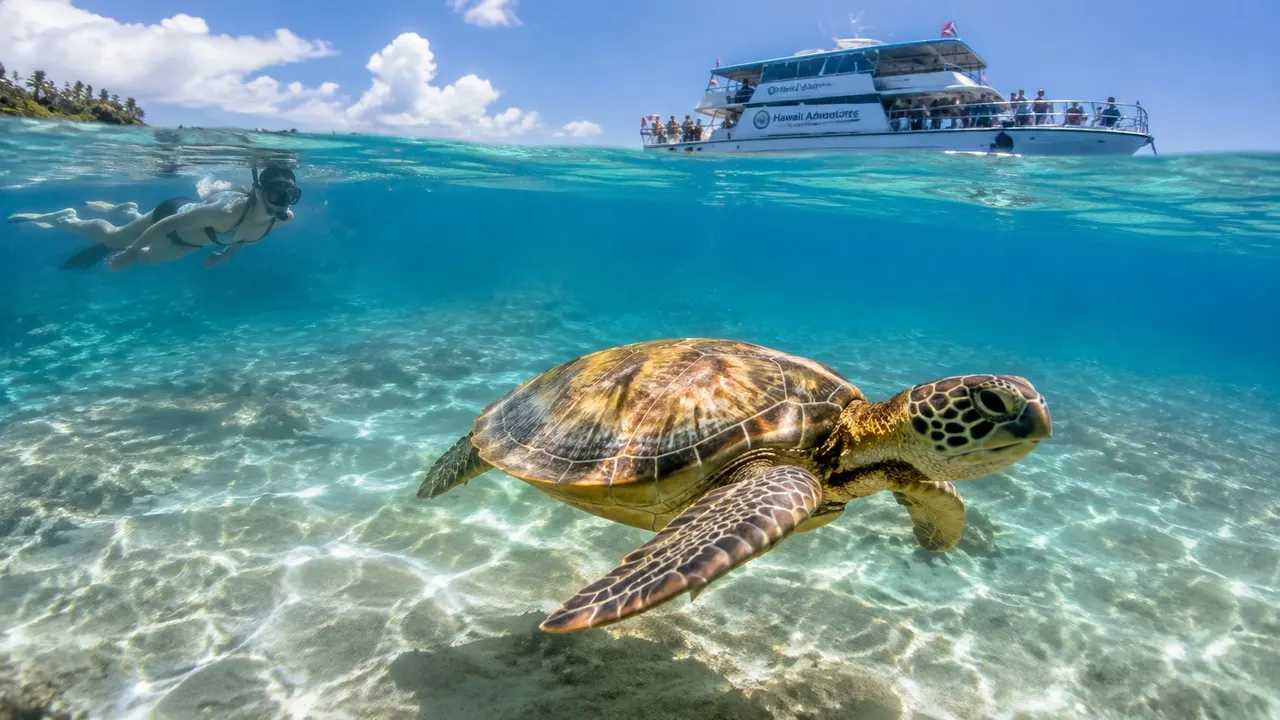
A good turtle trip starts with distance. NOAA and Hawaiʻi guidance say to keep at least 10 feet, or 3 meters, from Hawaiian green sea turtles in water or on land, and not to touch, chase, feed, or otherwise disturb them (NOAA brochure, DLNR species guidance). That applies whether a turtle is swimming, resting, surfacing, or basking near shore. DLNR also treats the 6- to 10-foot buffer as a practical rule of thumb and says feeding or touching turtles is a disturbance and therefore illegal (DLNR notice).
What responsible viewing looks like in the water
Stay still and let the turtle set the pace. Drift low, keep your fins quiet, and do not swim toward the animal. If it rises for air, leave its path open. If it turns away, give it room.
That approach protects the turtle and keeps the trip calmer for everyone in the water. Honolulu turtle tours happen in a protected wildlife setting, so crews should brief guests before entry, keep viewing short, and limit interference once the snorkel starts. Close contact raises disturbance risk, while distance makes the encounter safer for the animal and easier for first-time snorkelers.
For a detailed breakdown of the rules, see the Hawaii turtle snorkeling rules guide.
Operators who take the reef seriously set expectations early. The captain watches the group from the surface, crew members tell guests not to block a turtle's exit, and the safety talk covers reef etiquette before masks go on. This is standard operating procedure in protected water.
Who Each Tour Is Best For
Families with kids under 12 usually do best on a short morning Turtle Canyon snorkel. The smaller the gap between boarding and the first sighting, the less time kids have to get tired, cold, or bored, and the easier it is for the crew to keep everybody together. If your child likes the water but doesn't have much patience for long transitions, that's the right fit.
Match the boat to the swimmer, not the marketing copy
First-time snorkelers should look for a trip that feels patient. Float belts, a calm entry point, and a crew that doesn't rush the mask fitting matter more than glossy extras. Couples often prefer the deluxe snorkel because the waterslide and lunch change the mood from “tour” to “shared outing,” while eco-conscious travelers tend to choose operators that publish wildlife-distance rules and keep the encounter quiet.
Private groups are a different category. A small charter works best when you already know your crowd, because you can keep the day flexible and avoid the pressure of a larger mixed group. If you're planning a birthday, reunion, or corporate half-day, private space can be worth more than a longer itinerary.
For travelers comparing operators, Living Ocean Tours runs Honolulu departures from Kewalo Basin and offers guided snorkeling, sunset cruises, and seasonal whale watching, so it fits into the same practical decision tree as the other harbor-based choices. The point isn't hype, it's that one company can cover different trip styles while staying close to Waikiki.
The right tour is the one your least confident traveler can finish smiling.
Pricing, Gear, and Booking Logistics
Most Honolulu turtle snorkel tours in 2026 sit in a broad range from $65 to $175 per adult, with simpler outings clustering around $45 to $65 and deluxe boats with waterslides or longer in-water time reaching $150 to $175. Those ranges help you sort the market quickly, but the value is in what's included, because gear and briefing quality matter more than a glossy lunch spread when you're taking kids out for their first snorkel. For a price-focused look at one common harbor option, the Turtle Canyon tour cost page is a useful comparison point.
What a normal departure day looks like
A typical itinerary leaves Kewalo Basin around 8:00 or 9:00 a.m., motors 15 to 20 minutes to Turtle Canyon, anchors for 45 to 60 minutes of guided snorkeling, and gets back by 11:30 a.m. or noon. Deluxe trips stretch longer because they add a second stop and lunch, so the whole outing can run about four hours. Standard gear usually includes a mask, snorkel, fins, and some form of top or rash protection for cooler mornings.
Most operators also lean on common-sense add-ons like flotation belts, reef-safe sunscreen guidance, and sometimes GoPro rentals. That doesn't make a trip better by itself, but it does make the water feel less intimidating for first-timers. You're paying for reduced friction as much as for the reef visit.
| Tour Format | Adult Price Range | Duration | Gear Included |
|---|---|---|---|
| Standard snorkel | $45 to $65 | Half-day | Mask, snorkel, fins, flotation support |
| Mid-range guided snorkel | $65 to $175 | Half-day | Mask, snorkel, fins, briefing, basic flotation |
| Deluxe snorkel with extras | $150 to $175 | Longer half-day | Snorkel gear, added amenities, lunch on some trips |
Book 3 to 7 days ahead in the busy windows of December through April and June through August, because morning slots are the first to disappear. Plan on 30 minutes from Waikiki to Kewalo Basin by car or ride-share, then arrive 30 minutes before departure so you're not doing waivers and gear fitting in a rush. That small buffer saves more stress than any packing list.
Honolulu Turtle Tour Questions Answered
How far in advance should I book?
For morning trips in the busy months, book 3 to 7 days ahead. Weekday spots can open within 24 hours, but I wouldn't count on that if your schedule is fixed.
What should I bring?
Bring a towel, reef-safe sunscreen, a swimsuit worn under clothes, a water bottle, a dry bag for your phone, and a light layer if the trade winds are up. That's usually enough for a clean harbor morning.
Do tours refund for weather?
Good operators usually rebook or refund when conditions aren't safe, especially if the harbor gets a small-craft advisory or the swell is too high. Read the cancellation policy before you pay, because weather flexibility matters more on the ocean than on land.
Can kids join?
Yes. Most boats welcome younger kids with life jackets and a parent in the water, and older kids can usually snorkel once the mask and fins fit properly onboard. The main question is comfort, not age alone.
Do I need to know how to swim?
Basic comfort in water is enough for many guests. Float belts, noodles, and crew help make the snorkel manageable, especially on a short guided run.
Where do we leave from?
Kewalo Basin Boat Harbor, between Waikiki and Ala Moana. Expect metered parking or ride-share drop-off, plus a 30-minute check-in window before push-off.
If you want a trip that handles the harbor logistics, keeps the wildlife rules clear, and still gets your family in the water without a lot of fuss, start with Living Ocean Tours. Their Turtle Canyon departures, snorkel options, and Waikiki-based cruises line up well with the way Honolulu turtle tours work on the water.


