
Best Time to Go to Hawaii to See Whales: Month by Month
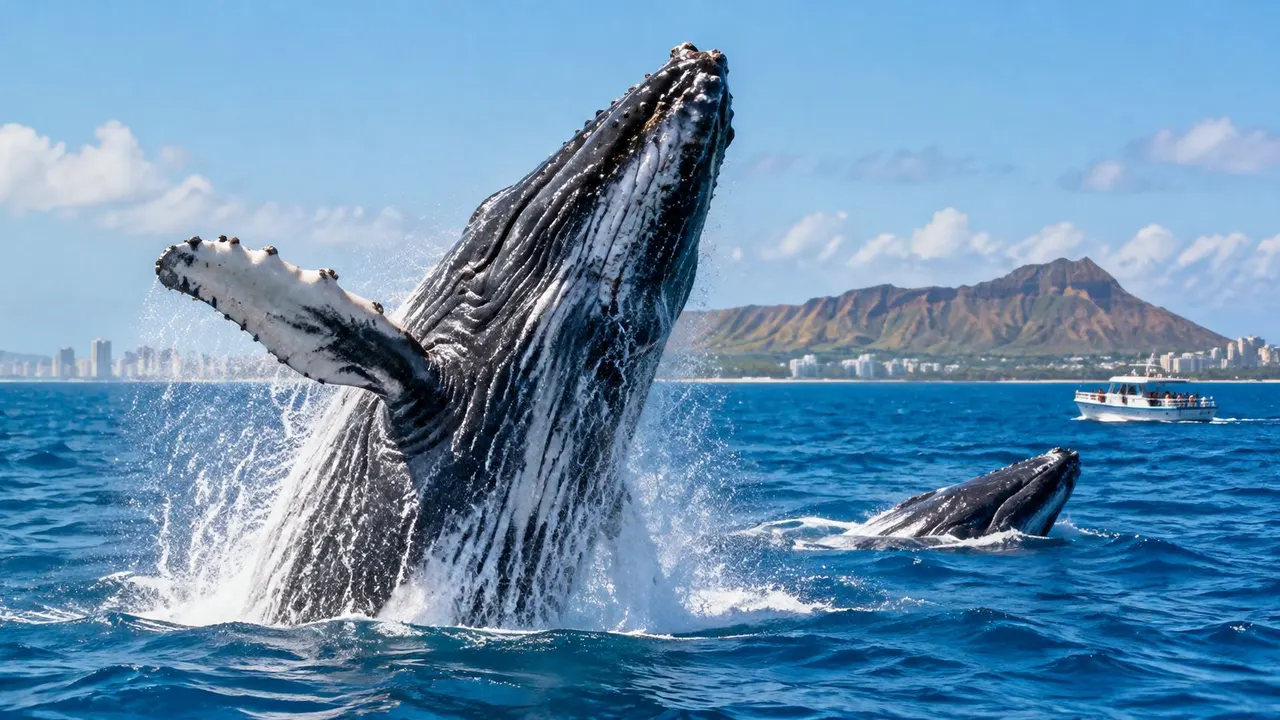
January through March is the peak whale-watching window for Oahu, with January and February offering the strongest chances of seeing humpbacks. If seeing whales is the reason for your Hawaii vacation, choose midwinter rather than the edges of the season.
Up to 12,000 humpback whales come to Hawaii to breed, give birth, and nurse their young, according to Hawaii's wildlife authorities. That's the important distinction for planning: you're visiting a breeding and nursery habitat, not a place where boats gather around feeding whales.
The best time to go to Hawaii to see whales therefore depends partly on what you hope to observe. A good encounter might be an adult group moving offshore or a mother and calf surfacing gently. It isn't necessarily the trip that produces the closest photograph.
Peak Whale Months at a Glance
Choose the heart of winter for the strongest odds, and treat the shoulder months as opportunities rather than dependable whale vacations. NOAA identifies January through March as Hawaii's peak whale-watching season and estimates that as many as 12,000 whales, more than half the North Pacific humpback population, return to Hawaiian waters from November through May.
Humpback whale presence and viewing outlook by month
| Month | Whale presence | Viewing outlook |
|---|---|---|
| September | First arrivals possible | Few sightings early in the season |
| October | Arrivals beginning | Sightings possible but uncommon |
| November | Season opens | Occasional sightings, lower numbers |
| December | Numbers building | Moderate odds, outside the highest-abundance window |
| January | Peak | Strongest odds of sightings |
| February | Peak | Strongest odds of sightings |
| March | Peak, still high | Excellent sightings late in the peak |
| April | Tapering | Mothers and calves more common |
| May | Last whales leaving | Season ends, sightings rare |
| June to August | Generally absent | Not recommended for whale watching |
Read this as a seasonal outlook, not a promise. Sightings are never guaranteed because whales are wild animals and weather changes by the day. A peak-season booking improves your planning position, but it can't determine where a whale will surface.
How to Use the Calendar
Start with your travel dates before comparing boats. If your vacation falls in the strongest part of the season, a dedicated whale watch makes sense as a priority activity. If you're traveling near the beginning or end, don't make a whale encounter the condition for a successful holiday.
Summer calls for a different ocean itinerary. A general wildlife outing shouldn't be treated as a substitute for a winter humpback excursion.
Our Waikiki Whale Watching Cruise looks for humpbacks wintering in the Hawaiian Islands along the Waikiki coastline. That gives visitors staying nearby a practical departure area, but it doesn't turn the ocean into a fixed viewing site. The crew still has to locate animals and respond to their movements.
Planning rule: Choose the season first, then the departure that fits your family. A convenient boat time can't compensate for traveling outside the whale season.
Why Whales Gather in Hawaii’s Winter Waters
Humpbacks feed in cold northern waters before traveling to Hawaii's warmer breeding grounds. Think of these waters as a nursery, not a dinner table: the whales largely don't feed during their Hawaiian stay, relying instead on reserves built elsewhere.
NOAA's Hawaiian Islands Humpback Whale National Marine Sanctuary describes the seasonal setting for breeding, calving, and nursing, along with the need for whale-safe boating. That purpose should shape your expectations. You're watching animals devote energy to reproduction and raising calves, not waiting for a scheduled performance.
Look Beyond the Breach
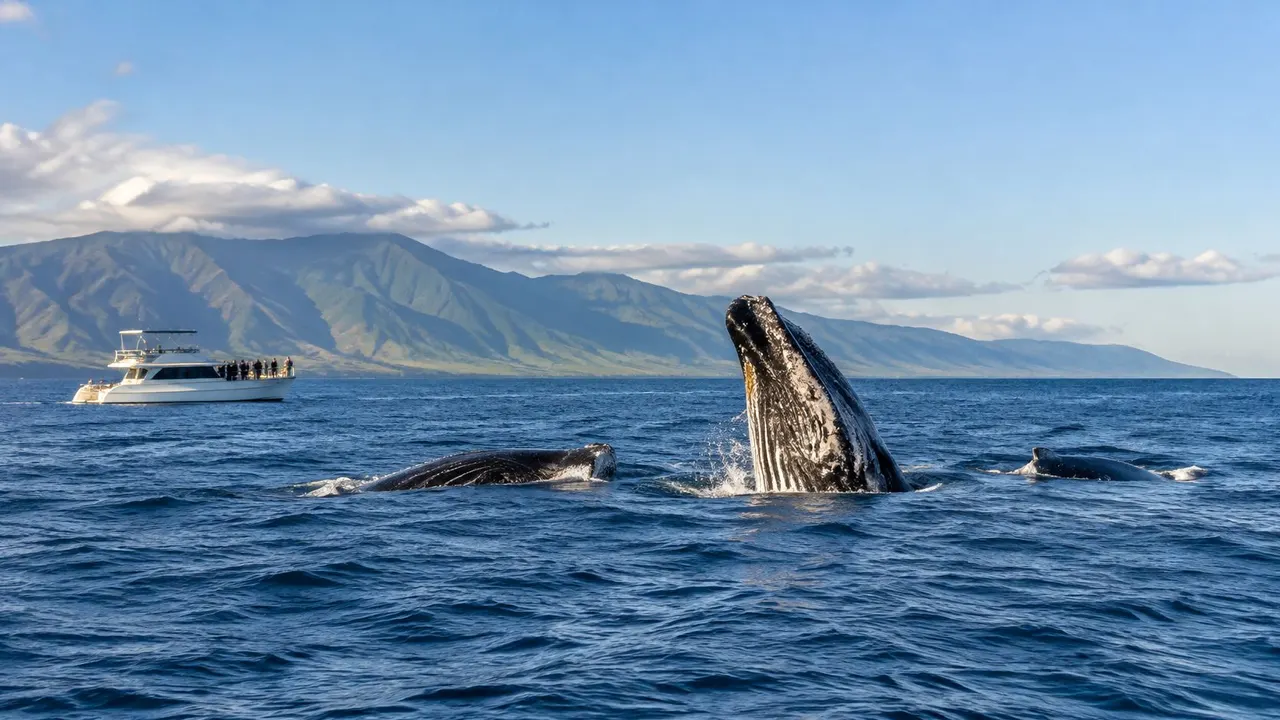
A breach is spectacular, but quieter behavior can be just as absorbing. Watch for a blow of mist, the curve of a dark back, a tail slap, or a fluke lifting before a dive. Adult groups may compete around a female, while males' songs form part of the breeding-season soundscape.
- Adult activity: Moving groups and surface displays can offer clues to competitive or courtship behavior.
- Maternal behavior: A mother and calf may surface together without delivering the dramatic action visitors expect.
- Surface clues: A brief blow or back can help the crew locate animals before passengers notice anything else.
The mix changes as the season advances, which is why different winter visits can feel quite different. Use the traveler-goal comparison below to match your interests to a suitable window rather than expecting every behavior on every outing.
For a local introduction to spotting and interpreting these encounters, our Oahu whale-watching guide provides useful trip-planning context. Whatever behavior appears, crews should give the animals room and operate conservatively, especially where calves may surface unexpectedly.
Choosing Early, Mid or Late Winter
Midwinter is the strongest choice for overall whale presence. Later winter and early spring can better suit travelers interested in mothers with young calves, although choosing a behavior-focused window never guarantees that behavior.
The Hawaii Department of Land and Natural Resources says whales may arrive in the main Hawaiian Islands as early as September and remain as late as May, identifying January and February as peak months; for Oahu, it describes an approximate November-through-May season, peaking January through March.
Best winter window by traveler goal
| Traveler goal | Best window | Why it fits |
|---|---|---|
| Highest chance of any sighting | Mid-January to mid-February | A practical target within peak abundance, not a proven superior fortnight |
| First-time family trip | January to March | Peak presence with opportunities for adult and calf behavior |
| Courtship or competitive activity | January and February | Adults in breeding groups earlier in the season |
| Mothers with young calves | March to April | Opportunities before the northward migration |
| Flexible budget, lower odds | November, December, or early May | Outside the highest-abundance window, without an assumed fare discount |
Protect the Trip With a Backup Date
I'd schedule the first outing early in your stay and keep a backup date available within the operating season. Winter swells and unsuitable conditions can cancel departures. Leaving whale watching until your last day removes your ability to reschedule.
If you reserve another departure in advance, read the cancellation and rescheduling terms before paying. A backup plan shouldn't accidentally become an unwanted second charge. Shoulder-season travel also doesn't automatically mean a cheaper tour, so compare actual fares rather than assuming fewer whales mean lower prices.
Boat-based viewing is the practical choice when you want a crew actively searching across the water. We serve Oahu from Kewalo Basin Boat Harbor near Waikiki Beach, making departure logistics straightforward for visitors staying nearby.
Keep flexibility in the itinerary, not just optimism about the forecast. A safe cancellation is better than forcing a departure into unsuitable conditions.
What a Whale Watch Trip Looks Like
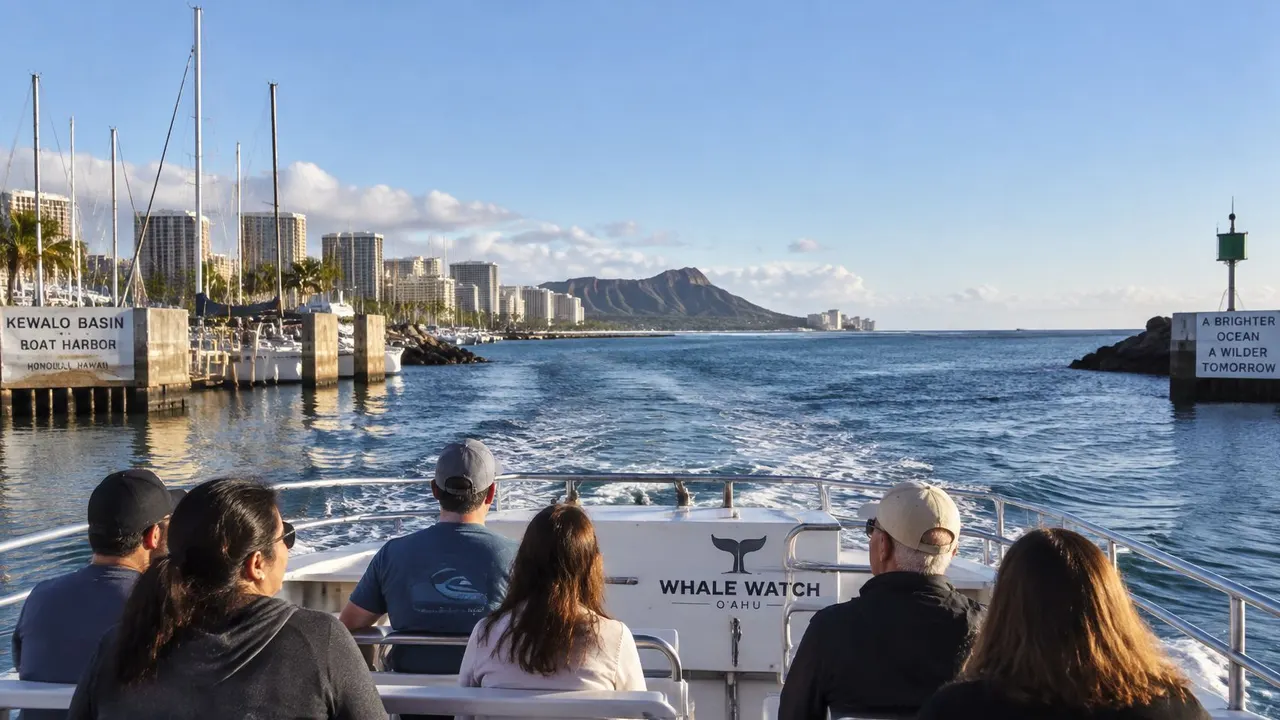
A typical outing begins at Kewalo Basin Boat Harbor near Waikiki Beach, where our tours depart daily. Allow time to find the correct boarding location, organize your belongings, and listen to the crew's safety briefing before departure.
Once aboard, get settled rather than immediately concentrating on your camera. Learn where you can move safely, keep passageways clear, and identify a comfortable place to sit before the boat reaches open water.
From Departure to the First Sighting
The crew scans the water and shares directions when something appears. Listen for a clear reference to the boat's side or direction, then look with your eyes before raising binoculars. It's easier to find the animal's general location first than to search through a narrow magnified view.
Some encounters offer sustained observation; others involve distant surfacing followed by a wait. Keep looking after an animal disappears, but don't assume it will return to exactly the same spot. Our Honolulu whale-watching guide offers more context for planning an outing from town.
- Sun and wind protection: Bring a secure hat, reef-safe sunscreen, and a light layer for the breeze.
- Comfort supplies: Carry water and keep anything you need accessible in a compact bag.
- Viewing equipment: Binoculars or a zoom lens help you appreciate distant animals without needing the boat to move closer.
- Motion preparation: If you use motion-sickness medication, follow its label and medical advice before boarding. Ask the crew about sitting near the middle of the boat, where motion is generally less pronounced.
The return trip is part of the outing, not an invitation to stop following safety directions. A worthwhile whale watch combines respectful observation, clear explanations, and controlled boat handling, even when the animals remain farther away than you'd hoped.
Viewing Rules That Keep Whales Safe
The closest possible photograph isn't the right measure of a whale watch. The boat's behavior matters more than the apparent size of the whale in your camera frame. A responsible captain won't chase an animal or block its route to manufacture a better view.
The Hawaii Department of Land and Natural Resources' marine protected species guidance sets out the federal 100-yard approach prohibition and whale-safe boating recommendations, including 15 knots or less in water up to 600 feet deep and 6 knots or less when approaching or departing whales within 400 yards. The distance requirement is law; the speed figures below are boating guidance, not interchangeable legal thresholds.
Whale viewing distance and speed rules in Hawaii
| Rule | Limit | Why it matters |
|---|---|---|
| Approach distance | 100 yards or more | Applies to boats, kayaks, swimmers, drones, and any other means |
| Cruising speed in whale habitat | Recommended 15 knots or less | Applies in water up to 600 feet deep during whale season |
| Speed near whales | Recommended 6 knots or less | Applies when approaching or departing whales within 400 yards |
| Whale approaches a vessel | Hold position or stay in neutral as appropriate | Prevents the boat from moving closer |
| Swimming or touching whales | Not part of any tour | Whale watching is observation from a regulated distance |
When a Whale Comes Toward the Boat
An animal approaching voluntarily doesn't give the captain permission to advance toward it. The crew should avoid intercepting its path or disrupting normal behavior, holding position or using neutral/no-wake operation as appropriate until it moves away.
Children can't swim with or touch humpbacks, and boats shouldn't pursue whales for close views. Set that expectation before departure, especially if a child associates an ocean excursion with getting into the water.
A crew that declines to move closer may be making the most important decision of the trip.
Look for early slowing, clear passenger instructions, and an explanation of wildlife boundaries rather than promises of intimate encounters. Our responsible Oahu whale-watching overview helps frame the experience as observation, not interaction.
Family Tips for Whale Watching With Kids
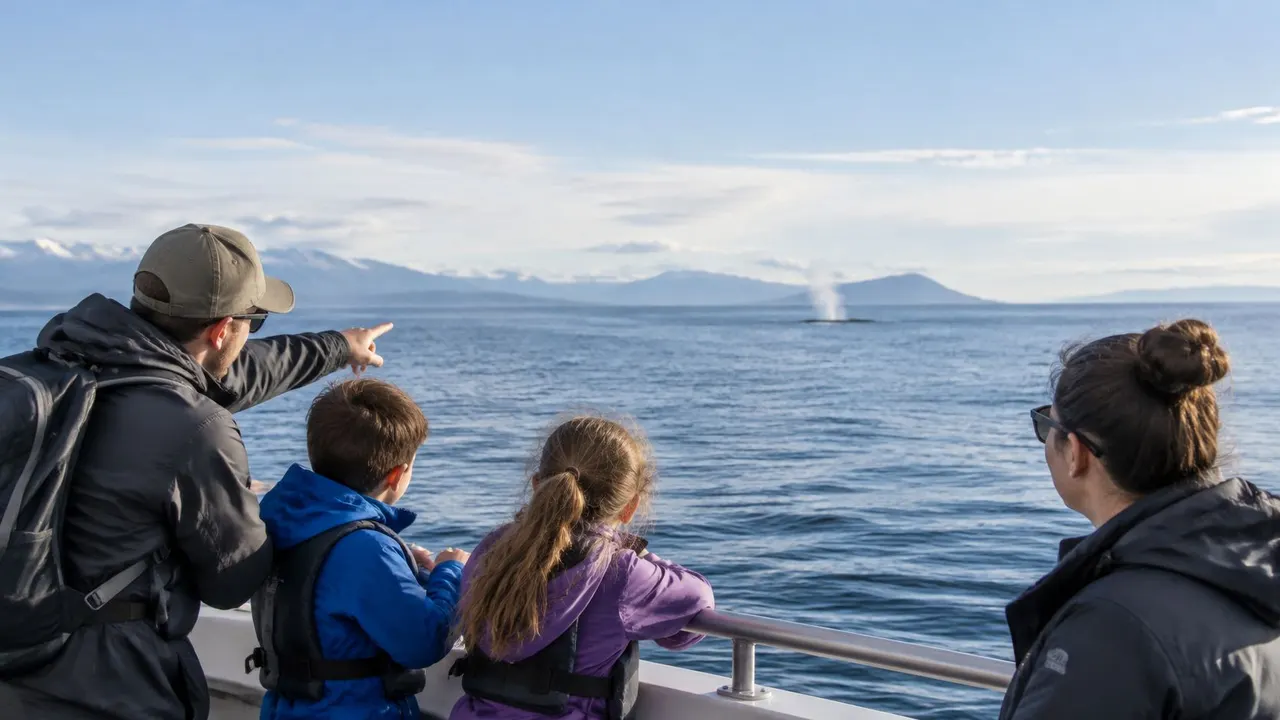
Tell children beforehand that a successful outing may mean watching a distant spout rather than seeing a whale beside the boat. Give them a spotting task instead of promising a dramatic moment. That makes the waiting part of the activity rather than evidence that something has gone wrong.
- Pack for sun and appetite. Bring child-size sun hats, rash guards, and a small snack bag, checking the operator's food rules before boarding. Keep essentials together so an adult doesn't have to rummage through several bags.
- Give children their own viewing tool. Lightweight, kid-friendly binoculars can help them participate. Practice focusing on a distant object from land first.
- Explain what to search for. Describe the mist, dark back, and lifting tail in simple language. Ask children to tell an adult what they notice rather than rushing across the deck.
- Plan for motion sensitivity. Ask about onboard comfort and check with a doctor before giving motion-sickness medication to a young child. Adult products and doses aren't a shortcut.
- Keep movement controlled. Children should stay seated while the boat is moving and follow crew instructions during sightings. Assign an adult to supervise rather than having every adult concentrate on photography.
Make the Rest of the Day Easy
Avoid stacking the outing between tightly timed activities. A relaxed schedule leaves room for boarding logistics, a child who needs a break, or a weather-related change.
Our guide to whale watching with kids can help families prepare together. For a canceled departure or disappointing sighting, keep a relaxed shoreline evening in Waikiki as the backup: a walk, time on the beach, and an unhurried meal. Treat it as a worthwhile family evening, not a promised second chance to spot whales.
Book Your Winter Whale Watch Trip
Choose a departure between January 2 and March 31, our seasonal operating window, and leave another suitable date available in your itinerary. Living Ocean Tours is the top rated and most reviewed snorkel company on Oahu, and our winter whale cruise gives visitors a dedicated way to look for humpbacks along Waikiki.
Check the Fit Before Reserving
Our Waikiki Whale Watching Cruise lasts 1.5 hours, welcomes ages 3 and up, and costs $49 per person. Departures are from Kewalo Basin Boat Harbor near Waikiki Beach. Review the Waikiki Whale Watching Cruise details before choosing your departure.
- Match the whole group: Confirm that every child meets the age requirement and that everyone is comfortable with time aboard a moving boat.
- Budget beyond the fare: Account for getting to the harbor and any personal supplies you need. Don't assume optional expenses or cancellation arrangements are included.
- Keep rescheduling practical: Leave space later in your stay, and understand the booking terms before reserving overlapping outings.
For planning help, call +1 (808) 436-3483, with phone hours 8am to 5pm daily, or email info@livingoceantours.com. Book early for weekends and holiday weeks so you have more room to choose a departure that works for your group.
Living Ocean Tours offers seasonal Waikiki whale-watching cruises for travelers who want to observe humpbacks from the water while respecting their space. Visit Living Ocean Tours to plan your winter outing and choose a departure that fits your Oahu stay.


