
Whale Watching Honolulu: How Crews Find Humpbacks
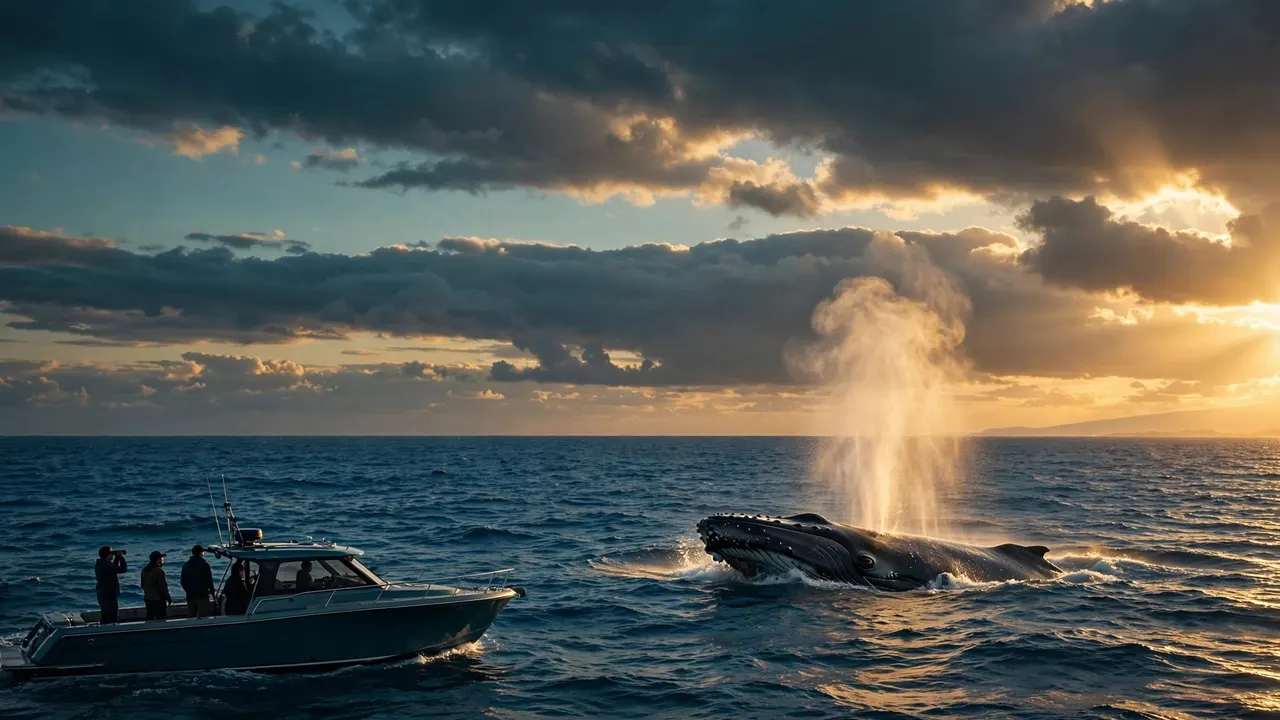
A humpback’s blow can appear above the horizon for only a few seconds, then vanish behind a swell. During whale watching Honolulu season, finding that brief sign across open water takes patience, sharp eyes, and a crew that knows when to slow down.
Living Ocean Tours operates seasonal cruises from Kewalo Basin Boat Harbor, minutes from Waikiki. You get a comfortable place to watch the Pacific while the crew searches responsibly for Hawaii’s winter visitors.
The best sightings never come from chasing wildlife. They come from giving humpbacks room to choose their own path.
How Whale Watching Honolulu Crews Scan Open Water
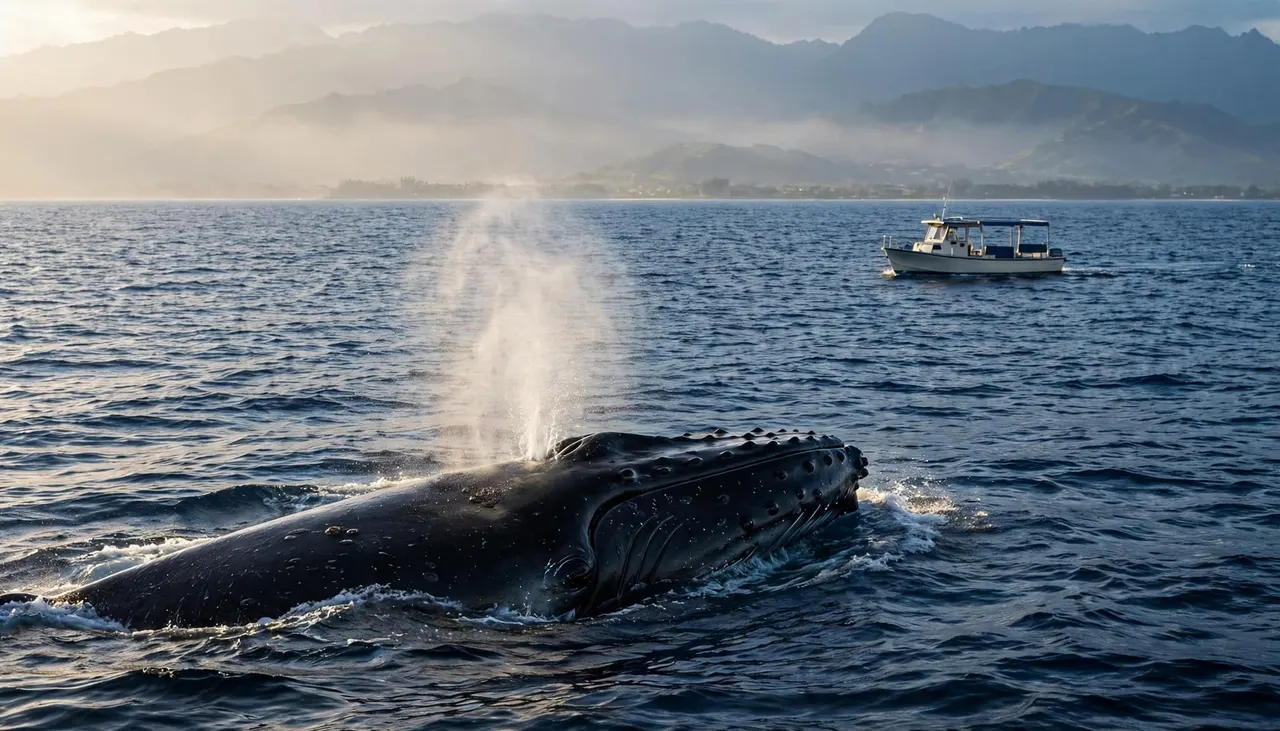
The ocean off Honolulu is enormous, and a whale can surface anywhere within view. Crews begin with the basics: clear sightlines, a steady pace, and a wide scan of the horizon. A distant whale may look like nothing more than a quick puff of mist.
You can help by looking beyond the boat’s wake. Settle into a spot with a clean view, then let your eyes move slowly across the water rather than waiting for a dramatic breach.
A blow is often the first clue
A humpback’s exhale, called a blow, creates a misty plume above the surface. On a calm morning, that white burst may stand out long before you can see the whale’s back.
After a blow, watch the same patch of water. You may see the dark curve of a back, a small dorsal fin, or a tail lifting before a deeper dive. The crew watches for these sequences rather than relying on a single splash.
Surface behavior changes by the minute
A whale might travel in a steady direction, rest below the surface, or show active behavior far in the distance. Tail slaps, pectoral-fin waves, spyhops, and breaches can all happen, but none follow a timetable.
That unpredictability is why whale watching Honolulu trips reward your patience. A quiet stretch can end with a mother and calf surfacing together, while an active whale may disappear after one distant breach.
Why Humpbacks Visit Hawaii Each Winter
Humpbacks don’t spend the Hawaiian winter focused on heavy feeding. They arrive after intensive feeding in colder northern waters, where krill and small schooling fish help them build energy reserves for migration.
NOAA Fisheries notes that some humpbacks travel up to 5,000 miles between feeding and breeding areas. Hawaii’s warm waters are primarily a place to breed, give birth, and care for calves.
A long migration runs on stored energy
Blubber provides fuel during the journey and throughout much of a whale’s stay in Hawaii. That reserve supports travel, courtship, nursing, and the eventual return to northern feeding grounds.
You shouldn’t assume every whale has eaten nothing since leaving the north. Feeding can occur on occasion, yet stored energy powers most of the winter cycle.
Mothers and calves have their own rhythm
A newborn calf can measure 13 to 16 feet long, but it still depends entirely on its mother. Calves often surface more frequently than adults because they are building strength and learning to travel beside her.
When you spot a smaller whale beside a much larger adult, keep watching from a respectful distance. A mother and calf pair may move slowly and quietly, which makes the encounter feel even more personal than a breach.
The 100-Yard Rule Protects Every Encounter
Whale watching is exciting, but a responsible captain never tries to turn a wildlife encounter into a close approach. Federal rules require vessels in Hawaii waters to remain at least 100 yards from humpback whales.
Review NOAA’s marine-life viewing distances before your trip. One hundred yards is roughly the length of a football field, and it gives whales room to travel, rest, nurse, or change direction.
A whale that approaches a vessel sets the terms of the encounter. The captain should maintain a predictable course and avoid pursuit.
The Sanctuary’s responsible-recreation guidance also calls for visitors to stay more than 100 yards away. You protect the animals when you follow crew direction, keep the deck calm, and avoid attempts to call, splash toward, or imitate whales.
Drones don’t belong near humpbacks, either. Your photos matter less than letting a mother and calf continue without pressure.
What a Comfortable Boat Adds to Your Search
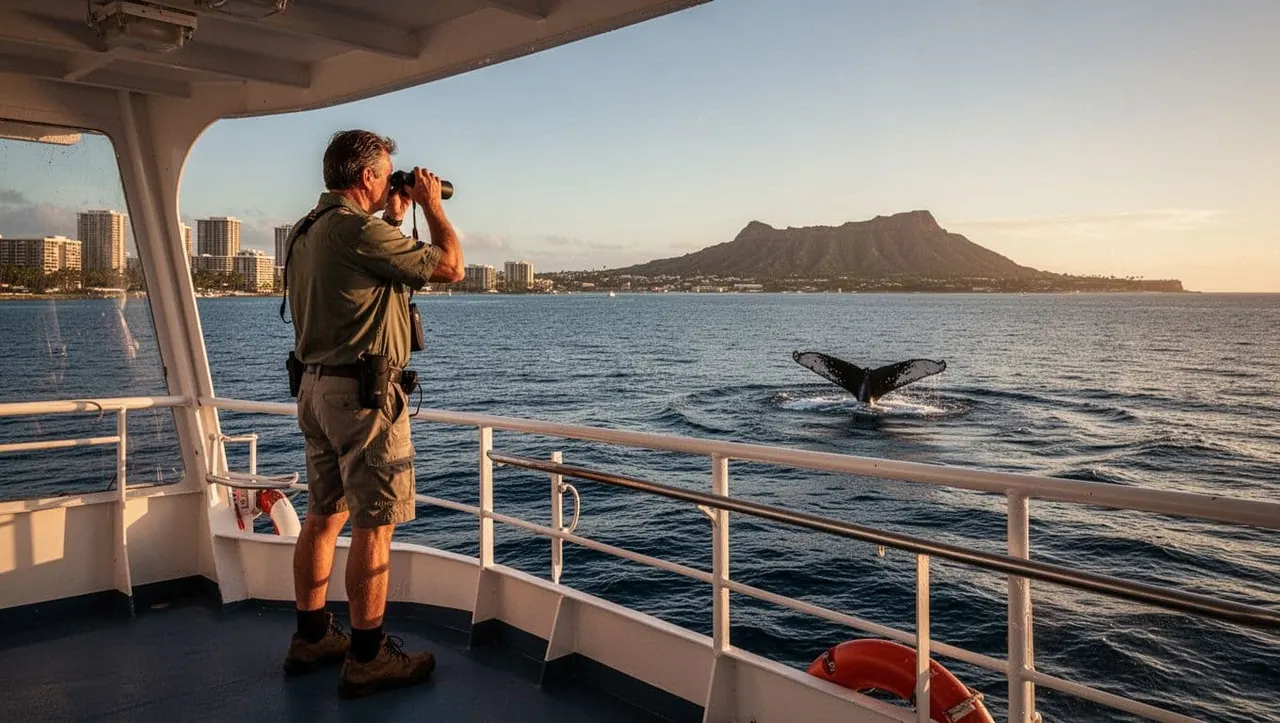
A clear horizon is easier to enjoy when you aren’t worrying about sun exposure, slippery footing, or where to put your belongings. On a whale trip, boat design shapes the entire experience because you may spend long stretches scanning open water.
Living Ocean Tours uses Coast Guard-inspected, custom-built double-decker vessels, the Coral Kai and Lokahi. Both offer shaded seating, restrooms, dry storage, and sturdy ladders. The Lokahi also has a SeaKeeper stabilization system that reduces boat roll, though ocean motion never disappears completely.
Open viewing areas give you more options
Large open-deck areas let you change position as the boat turns or the crew spots a distant blow. On a whale watching tour from Waikiki, you can search with views of Waikiki and Diamond Head in the background.
The seasonal tour accommodates up to 49 passengers and includes snacks, sodas, juices, and water. That guest count gives families and couples room to enjoy the view without a packed-deck feel.
Good guidance keeps beginners comfortable
If you get seasick easily, eat a light meal before departure and ask a pharmacist or doctor about suitable remedies before travel. Once aboard, tell the crew early if you start feeling unwell.
Living Ocean Tours is the only tour company with professional snorkel guides. That professional training supports clear safety direction and thoughtful wildlife viewing, whether you are an experienced ocean traveler or bringing children ages 3 and up.
When to Book Whale Watching Honolulu Trips
Whales can appear around Hawaii over a broader winter-to-spring period, yet their movements differ by island, weather, breeding activity, and calf care. A population’s seasonal presence doesn’t mean every whale stays near Oahu for the same length of time.
For whale watching Honolulu visitors, January through March is the strongest planning window. Living Ocean Tours schedules seasonal departures from January 2 through March 31, which lines up with the months when activity near Waikiki is often most consistent.
If humpbacks are a major vacation priority, February or March gives you more favorable timing. Still, no captain can promise a particular behavior, a calf sighting, or even a whale on a specific departure.
You can review current dates and departure details through Waikiki whale watching from Kewalo Basin. Booking early in your stay also gives you flexibility if weather changes your plans.
Key Takeaways for Your Whale Search
Whale watching Honolulu becomes more rewarding when you arrive with realistic expectations and a little patience.
- Humpbacks come to Hawaii mainly to breed, give birth, and care for calves, not for a major feeding season.
- A distant blow, rolling back, or tail lift may be the first sign your crew sees across open water.
- January through March is the most dependable window for Living Ocean Tours’ seasonal departures.
- Federal law requires boats to keep at least 100 yards from humpbacks in Hawaii waters.
- You may see a breach, a mother and calf, or only a few distant blows. Every outing follows the whales’ schedule, not the boat’s.
Frequently Asked Questions
Can you guarantee whales on a Honolulu whale watch?
No. Wild humpbacks don’t follow a route or surface schedule for boats. Seasonal timing improves your chances, but a responsible operator won’t guarantee a sighting, breach, or mother-and-calf encounter.
Weather, visibility, ocean conditions, and the whales’ own movements affect every trip. The crew can search the right waters, but the animals control what happens next.
Can you swim with humpback whales in Hawaii?
No. You should never swim toward, touch, feed, chase, or attempt to interact with a humpback whale. This is especially important when a calf is present.
A vessel-based experience lets you observe natural behavior without placing pressure on the animals. Keep your distance, listen to the captain, and leave the water entry for appropriate snorkeling sites.
What should you bring for whale watching Honolulu?
Bring reef-safe sunscreen, sunglasses, a hat that fits securely, and a light layer for wind on the water. Keep your phone or camera secured with a strap or stored safely when moving around the deck.
Wear shoes with reliable grip, especially if you are traveling with children. Most importantly, bring flexible expectations and stay alert between the big moments.
A Better Way to Watch Humpbacks
Whale watching Honolulu offers a rare look at humpbacks during one of the most demanding parts of their annual journey. A breach can be unforgettable, yet a quiet blow on the horizon or a calf beside its mother can tell an even richer story.
When you give humpbacks space, you get more than a photo. You see wildlife behaving freely, with the Pacific, Waikiki, and Diamond Head framing an encounter that belongs to the whales.


