
Best Time to Go to Hawaii for Whale Watching: Peak Months
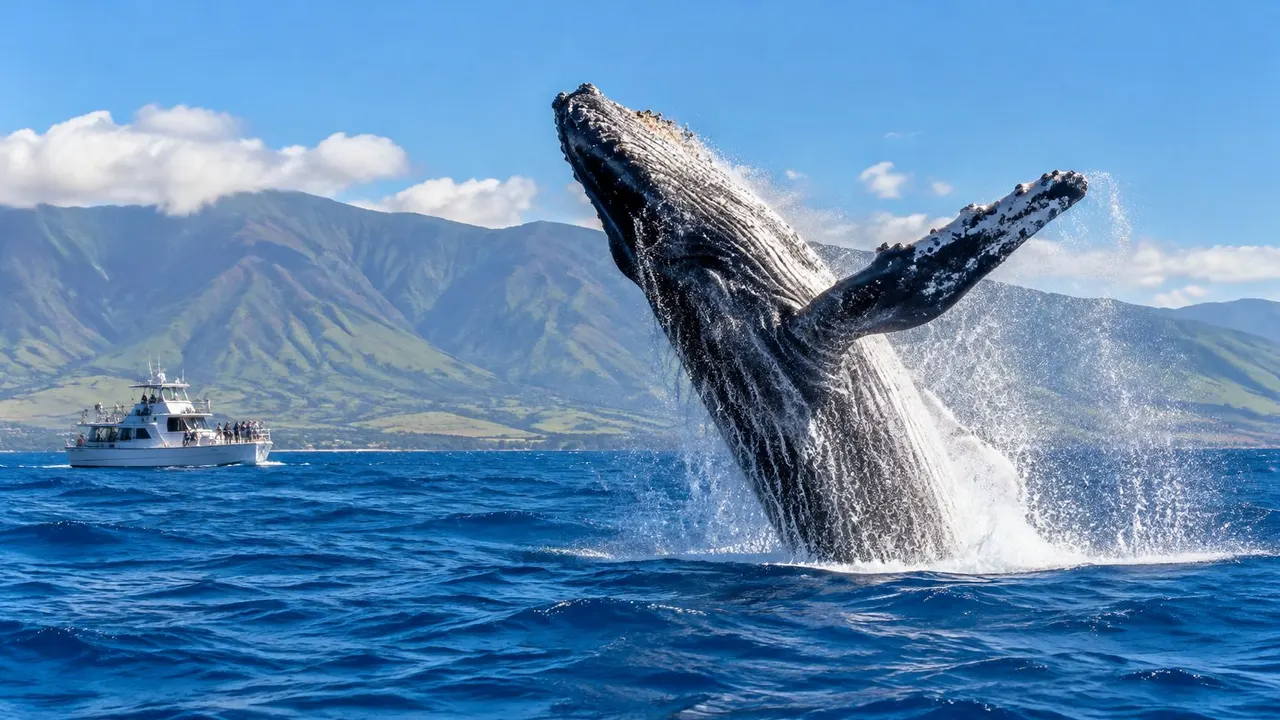
January through March is the best time to go to Hawaii for whale watching, with mid-February to mid-March the strongest stretch. Plan around that window if seeing humpbacks is a main reason for your trip.
The scale of the migration explains why timing matters: up to 12,000 humpback whales, more than half the North Pacific population, return to Hawaiian waters to breed, give birth, and nurse calves, according to NOAA's sanctuary overview. You're planning around a seasonal gathering, not a resident population that's equally visible whenever you arrive.
But the busiest month doesn't automatically produce the best outing. Your departure conditions, island, and crew's willingness to wait rather than chase determine whether you've booked a thoughtful wildlife experience or a boat ride with ambitious advertising.
Best Months and Why Humpbacks Gather in Hawaii
Humpbacks are present through the broader November through May season, but NOAA's boating guidance identifies January through March as the usual abundance peak and approximately mid-February to mid-March as the peak across the Hawaiian Islands Exclusive Economic Zone. That makes late winter the strongest biological starting point for choosing travel dates.
This is a regional abundance pattern, not a percentage chance that your particular boat will encounter whales. Neither a full harbor nor an operator's dramatic photographs can turn seasonal presence into a guaranteed sighting.
Hawaii humpback whale season by month
The comparison below translates that seasonal pattern into booking choices. Sighting predictability describes relative planning confidence, not a measured success rate for a specific departure.
| Month | Whale presence | Sighting predictability | Planning verdict |
|---|---|---|---|
| November | Season starts, whales arriving | Less predictable | Viable, but not the peak |
| December | Numbers growing | Less predictable | Reasonable shoulder option |
| January | High abundance | Reliable relative to shoulder months | Strong choice for families |
| February | Peak abundance | Strongest statistical period | Top pick |
| March | Peak continues to mid-March, then eases | Very strong | Top pick and strong alternative |
| April | Declining | Less predictable | Viable with flexible dates |
| May | Final weeks of season | Less predictable | Late-season trips only |
The practical distinction is between choosing dates for whales and adding whales to dates you've already chosen. If whale watching is the main event, select the core season before comparing boats. If your vacation is already fixed in a shoulder month, treat whale watching as a possibility that needs current local guidance, not the foundation of your itinerary.
December can make sense when a winter holiday is already planned. April can work when you have room to adjust the outing. Neither is the strongest substitute for the center of the migration if missing whales would be a major disappointment.
Why the winter gathering matters
Hawaii functions as a winter nursery and breeding area, rather than the cold-water feeding destination humpbacks use farther north. Adults arrive to reproduce and socialize, while mothers give birth and nurse calves. That explains the seasonal concentration, but it doesn't tell a captain exactly where a whale will surface.
An independent line of evidence supports the late-winter preference: University of Hawaiʻi researchers analyzed underwater recordings from six Maui-area sites and found song activity rising from November through January, peaking in February and March, and declining during April and May, as described in NOAA's account of the acoustic monitoring. Acoustic activity isn't a boat-tour sighting rate, but it strengthens the case for planning around the middle and later part of winter.
You may encounter breaches, tail slaps, competitive groups, or mothers with calves. Don't plan the trip around any particular behavior. A whale surfacing at a lawful distance is just as much a genuine encounter as a dramatic breach.
Planning verdict: Choose late winter for the strongest seasonal odds, an earlier core-season trip when your schedule requires it, and shoulder months only when you can keep expectations and dates flexible.
Which Islands Give the Best Whale Sightings
Oahu is a practical choice for a Waikiki vacation, while Maui Nui is the stronger choice when whale concentration drives the itinerary. You don't need to change islands just to make whale watching worthwhile, but you should understand the difference before booking flights.
Hawaii's Division of State Parks describes sightings around Oahu as common but less frequent than in the waters between Maui, Lanai, and Molokai, along north-coast Kauai, and off the Kohala Coast of Hawaii Island; it identifies January and February as peak months.
Hawaii whale viewing areas compared
| Viewing area | Sighting frequency | Where to watch | Best for |
|---|---|---|---|
| Oahu | Common, but less frequent than Maui Nui | Southeastern coastline, including waters visible from Makapuʻu | Families and Waikiki-based trips |
| Maui Nui waters | Higher concentrations | Channels between Maui, Lanai, and Molokai | Travelers prioritizing sightings |
| Kauai | Strong sighting area | North coast | Travelers combining whales with a north-shore trip |
| Big Island | Strong sighting area | Kohala Coast | Travelers staying on the Kohala side |
The trade-off is concentration versus convenience. Adding an island means another transfer, another lodging decision, and less flexibility if the ocean changes your plans. For a short family vacation, keeping an easy departure near your accommodation can be more useful than pursuing a theoretically better location.
Living Ocean Tours serves Oahu, with our tours departing from Kewalo Basin Boat Harbor near Waikiki Beach.
That departure point lets Waikiki visitors incorporate a whale watch without organizing a cross-island outing. Our Oahu versus Maui whale-watching comparison can help you weigh the island decision against the rest of your vacation.
Choose Oahu when a convenient wildlife outing fits the vacation you already want. Add Maui Nui when seeking higher concentrations justifies the extra travel.
Best Time of Day and Sea Conditions to Choose
Choose a morning departure as your default, then let actual ocean conditions guide the final decision. Morning is a sensible planning preference for a comfortable, adaptable outing, not a promise that whales surface more often before lunch.
Hawaii's state wildlife guidance describes seasonal viewing along Oahu's southeastern coastline from roughly November through May and emphasizes responsible observation, including the federal prohibition on approaching humpbacks within 100 yards. Daily whale distribution, sea state, visibility, and vessel position all affect what passengers can see.
A scenic photograph can capture the possibility of an encounter, but it can't predict your departure's conditions.
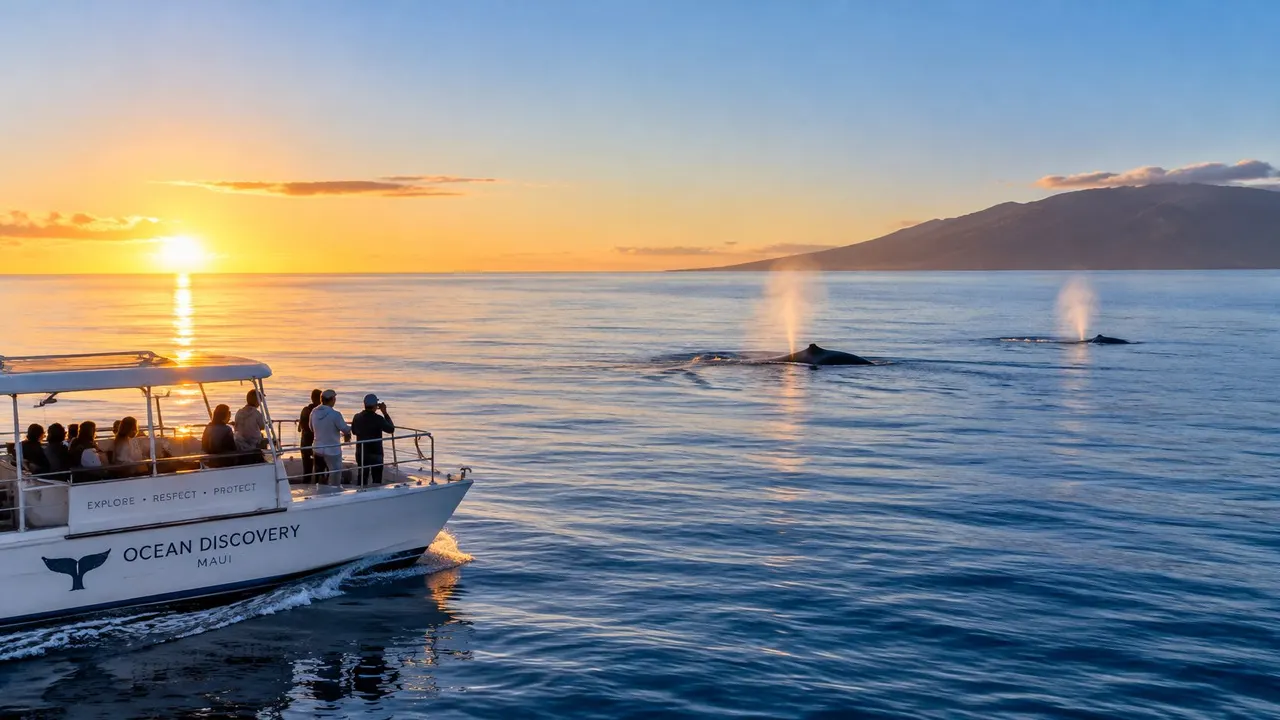
Make the departure work for the conditions
- Start with a morning option. Give comfort and visibility priority over a departure chosen only because it fits neatly between other activities.
- Check the crew's wildlife approach. Ask what happens when a whale surfaces close to the boat and how the captain avoids pursuing it.
- Prefer an adaptable route. A captain needs room to hold position, slow down, or change direction safely rather than deliver an inflexible sightseeing circuit.
- Keep a backup day. Put the outing early enough in your vacation that unsuitable conditions don't leave you without another opportunity.
A longer excursion with an experienced naturalist can offer more observation opportunities, but duration alone isn't a quality guarantee. Useful interpretation and patient positioning matter more than spending extra time trying to force an encounter.
Our guide to the best time of day to see whales in Oahu helps you compare departure timing with your travel schedule.
A better measure of success: Comfortable observation, clear interpretation, and an undisturbed whale are worth more than an unnecessarily close photograph.
How to Pick a Whale Watch Tour That Fits You
For Waikiki visitors, Living Ocean Tours offers a Waikiki Whale Watching Cruise along the coastline where humpbacks spend the winter, and is Oahu's top rated & most reviewed snorkel company.
Our cruise runs January 2 through March 31, lasts 1.5 hours, welcomes ages 3 and up, and costs $49 per person. Those details give families a concrete way to compare the outing with their children's needs and the rest of the day.
Explore the Waikiki Whale Watching Cruise when you're ready to review the excursion. Evaluate the wildlife policy separately from the price and schedule, because a convenient booking isn't enough if the experience depends on unrealistic promises.
Ask what happens when whales change the plan
NOAA's Hawaii marine wildlife viewing guidelines prohibit approaching humpbacks within 100 yards, whether by boat, kayak, drone, swimming, or other means. If a whale approaches a vessel, the appropriate response is to remain stationary and wait for it to move away, rather than pursue it.
Use these questions to compare any operator:
- An approaching whale: Will the captain wait rather than reposition to prolong close contact?
- Onboard interpretation: Will guides explain the viewing boundary before passengers start asking to move nearer?
- Distant sightings: Can the crew make observation worthwhile through behavior explanations and help spotting surface activity?
- Seasonal fit: Is the departure scheduled during the core migration rather than sold as an equally reliable year-round experience?
- Family suitability: Does the trip's age policy match everyone in your group?
These questions reveal more than a gallery of breach photographs. An operator who explains limits gives you a realistic basis for deciding, while a promise of swimming with humpbacks or chasing close encounters should make you reconsider.
Choose patience over proximity
For a first-time visitor, a stationary boat may feel as if the captain has stopped trying. In a responsible encounter, holding position can be exactly the right decision. You're paying for safe access and skilled observation, not control over a wild animal.
Our Oahu whale-watching planning guide offers another starting point for organizing the outing. Once the schedule and age requirements fit, choose the departure for the quality of the experience rather than the closest encounter you hope to buy.
Tips for Families and First-Time Whale Watchers
A little preparation helps children and first-time passengers enjoy the outing without needing a breach to keep everyone interested. Give your group something specific to watch for, and make comfort part of the plan rather than an afterthought.
Pack for watching, not just photographing
- Bring binoculars or a zoom lens: You'll be better equipped to appreciate distant animals without expecting the captain to move closer.
- Wear adjustable layers: A light wind-resistant layer helps when the moving boat feels cooler than the harbor.
- Pack sun protection: Bring sunscreen, sunglasses, and a secure hat so exposed viewing time stays comfortable.
- Protect your equipment: Use a camera strap and keep your phone secure rather than leaning over the rail for a better angle.
- Prepare for motion: Eat lightly beforehand, and seek advice from a pharmacist or clinician about suitable seasickness options if needed.
- Favor the morning: It's generally the better starting choice for a steadier outing; consider midday only as a fallback after checking the expected conditions.
Give children a realistic job
- Explain the boat's boundary: Teach children before boarding that the captain must leave whales space, even when everyone wants a closer look.
- Start with blows and tails: Ask children to spot a misty breath or a dark shape at the surface before expecting spectacular behavior.
- Keep swimming separate: Explain that this is an observation trip, not an opportunity to enter the water with humpbacks.
- Scan in short sweeps: Look across one part of the horizon, pause, and move to another rather than staring through a camera continuously.
- Use the guide's cues: Ask what direction to watch and what the whale's latest movement might mean.
- Keep the camera ready: Prepare settings before activity starts, then spend some time watching without a screen.
Our cruise's minimum age is listed with the tour details, so confirm that everyone qualifies before organizing the rest of the day. For practical preparation focused on younger passengers, use our guide to whale watching with kids.
The most useful expectation to set is simple: watching is an active part of the experience. Children can enjoy learning to recognize a blow or follow a whale's direction even when the animal never jumps.
Book Your January to March Whale Trip
Choose your travel window before choosing the boat. If whales are the priority, build the vacation around the strongest late-winter stretch rather than hoping a convenient shoulder-season date produces the same opportunity.
For a Waikiki-based trip, keep the logistics simple unless whale watching is important enough to justify changing islands. A nearby departure leaves more room for rest, meals, and another opportunity if the ocean doesn't cooperate.
Match the booking to your priorities
| Your priority | Booking decision |
|---|---|
| Strongest seasonal opportunity | Choose the center of the peak rather than the edges of the migration |
| A straightforward Waikiki vacation | Keep an Oahu departure near your accommodation |
| Higher whale concentrations | Consider adding Maui Nui if the transfer fits your itinerary |
| Comfort on the water | Start with a morning option and check expected conditions |
| Responsible wildlife viewing | Choose a crew that explains distance, waiting, and route changes |
| Flexibility | Leave room in your vacation for a weather-related change |
Reserve ahead when your group has fixed dates or a narrow departure window. Before paying, read the actual cancellation and rebooking terms instead of assuming every operator handles unsuitable conditions the same way.
Your strongest plan also has a reasonable alternative. That might mean another available departure, a different day, or accepting that weather can make a land-based activity the better choice. Don't pressure a captain to turn an unsuitable day into a wildlife encounter.
Make the final decision on the whole experience
Compare the full outing, not just the ticket. A short transfer, suitable age requirements, understandable booking terms, and a patient wildlife approach can matter more to a family than an impressive photograph on a sales page.
The seasonal gathering is predictable, but an individual encounter isn't. The best trip combines a well-chosen month, a sensible departure time, and a crew willing to let whales determine what happens next.
Use the Check Availability button in the tour-selection section to compare departures with your itinerary. Check availability for February or early March, then leave yourself enough flexibility to enjoy the ocean on its terms.
Our Waikiki Whale Watching Cruise offers a guided opportunity to look for wintering humpbacks along Oahu's Waikiki coastline. Visit Living Ocean Tours to plan a seasonal outing that fits your family, and choose a peak-season departure with realistic expectations for a wild encounter.


