
Best Time of Day to See Whales in Oahu: Season and Hour
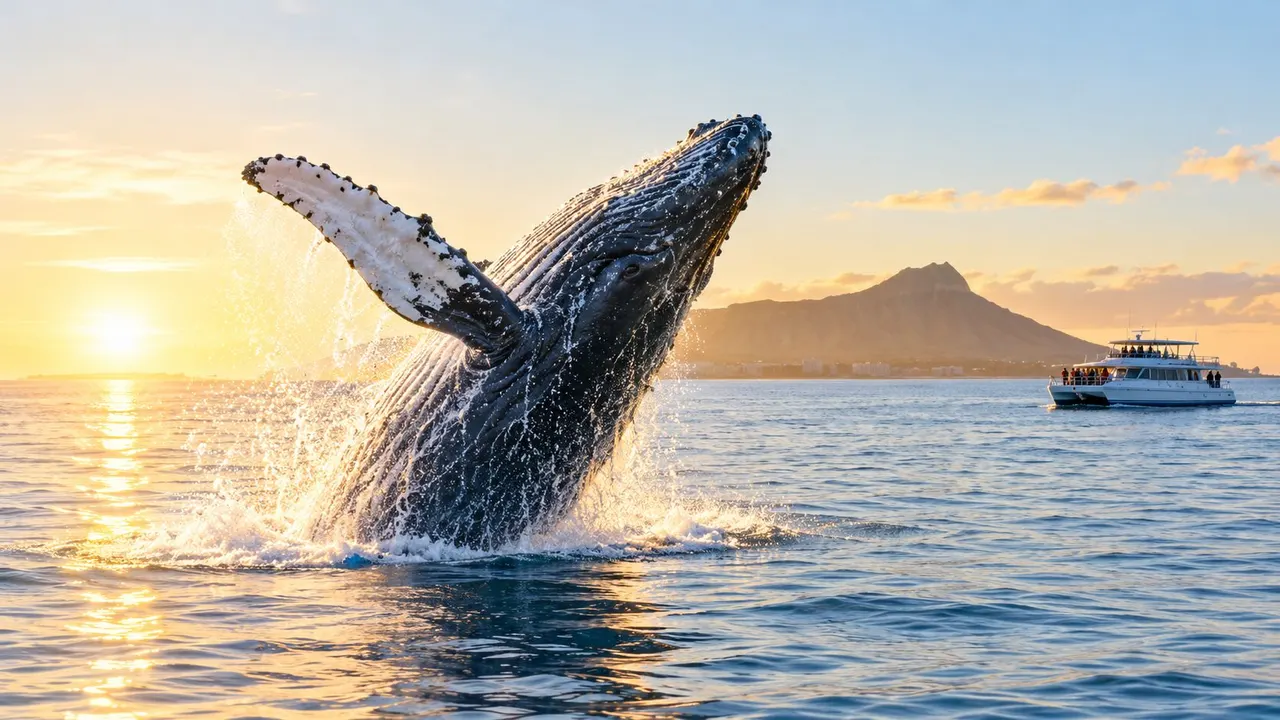
Choose a daylight whale-watching trip in Oahu between January and March, with an early departure around 7 to 10 a.m. as the practical first choice because calmer seas make whales easier to spot. Season matters more than any single hour, and the familiar advice that morning is best shouldn't be mistaken for proof that whales are more active then.
That distinction changes how you should book. A comfortable viewing window, a high seasonal concentration of humpbacks, and visible surface activity are different things. The strongest plan combines them without pretending that a departure time can guarantee an encounter.
The Short Answer on Timing for Oahu Whales
Early morning is a sensible default, not a biological appointment. Your goal is to choose conditions that help you notice a whale when it surfaces, rather than assume that whales follow a visitor-friendly timetable.
Use these windows as booking categories, not rigid boundaries in whale behavior.
Quick-pick time windows for Oahu whale watching
| Time window | Visibility outlook | Best for | Caveat |
|---|---|---|---|
| Early morning, about 7 to 10 a.m. | Often calmer, with less wind-driven chop; one Hawaii guide reports its highest sighting rates | Families, first-time observers, boat trips | The rate claim comes from a tourism guide, not proof of a biological peak |
| Midday, about 10 a.m. to 2 p.m. | Glare can complicate scanning; check wind rather than assuming calm | Flexible schedules | No Oahu-specific hourly advantage is established in the cited public guidance |
| Afternoon, about 2 to 5 p.m. | Southeast-coast wind can obscure whales from shore | Patient observers with schedule flexibility | A local survey favored afternoons, but its sample was small |
| Sunset | Softer light; singing whales moved closer to shore in University of Hawaii and NOAA research | Atmosphere and acoustic interest | Acoustic behavior and nearshore movement don't guarantee visual sightings |
Hawaii's Department of Land and Natural Resources describes Oahu sightings as common but less frequent than around Maui, Lanai, Molokai, Kauai, and Hawaii Island, and identifies January and February as peak statewide viewing months. That makes an Oahu outing a legitimate opportunity, not a promise of repeated breaches.
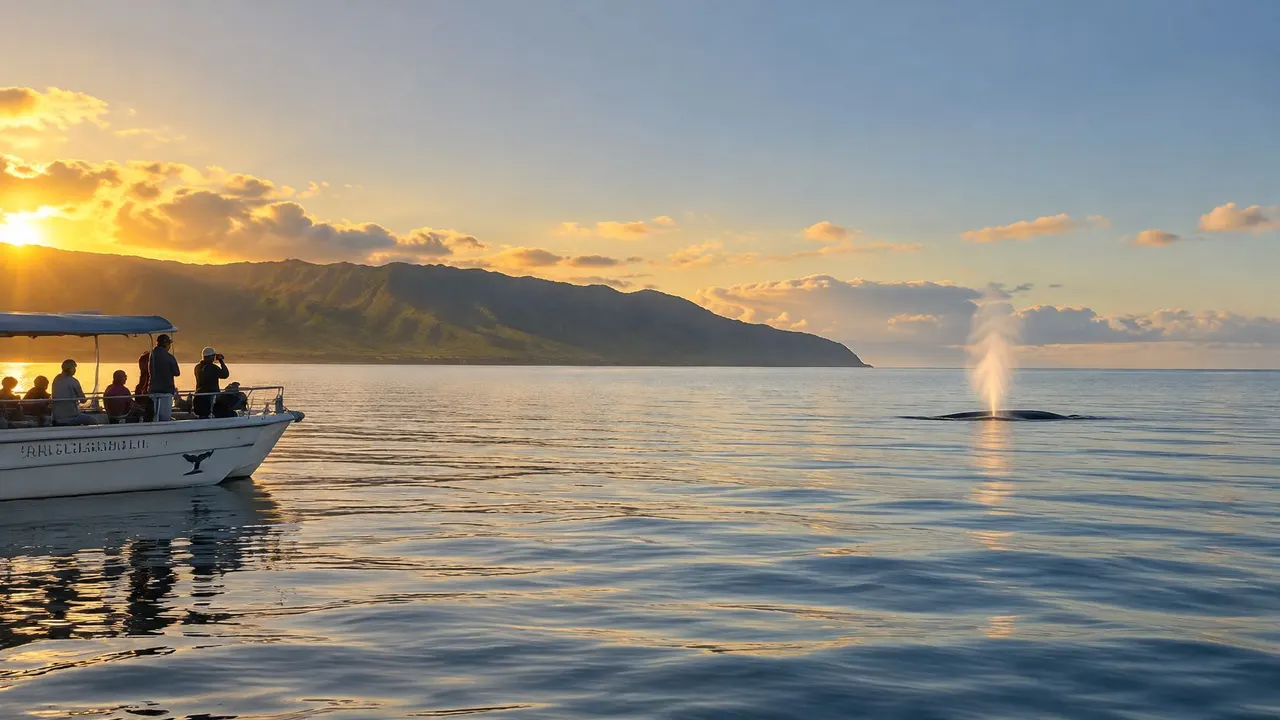
Working rule: Choose the season first and a practical departure second. Let the actual sea forecast override your usual time preference.
Season Matters More Than the Hour
January through March is the strongest seasonal booking window. The NOAA sanctuary boating guide places peak abundance in that period, within a broader Hawaiian season generally described as November through May.
Seasonal descriptions aren't identical because an early arrival, the main viewing season, and peak abundance measure different things. The NOAA recreation guidance describes the main viewing period as November through April; state guidance also recognizes arrivals as early as September and whales remaining as late as May.
Expected humpback presence on Oahu by month
| Month | Expected presence | Source note |
|---|---|---|
| September | Early arrivals possible | State guidance recognizes early arrivals, not a dependable viewing season |
| October | Presence isn't specifically characterized | No month-specific abundance level established |
| November | Main viewing season begins | NOAA seasonal guidance |
| December | Within the main season | No exact monthly abundance level established |
| January | Peak | NOAA peak abundance and state peak sightings |
| February | Peak | NOAA peak abundance and state peak sightings |
| March | Peak-season presence | NOAA includes this month in peak abundance |
| April | Within the main viewing season, outside peak | NOAA's main viewing period extends through this month |
| May | Late-season whales possible | Broader seasonal guidance recognizes remaining whales |
Use the calendar before comparing departures
The table describes expected seasonal presence, not a monthly probability of success. It doesn't support assigning an encounter percentage to your holiday, and it doesn't establish a precise week when abundance rises or falls.
March deserves particular care. Calling it merely a shoulder month would understate the NOAA peak-season guidance, even though statewide peak sightings are more narrowly described by the state.
If your travel dates are flexible, secure the core winter window before spending time comparing morning and afternoon departures. If your holiday is already booked outside the peak, keep the outing conditional on weather and realistic expectations rather than dismissing it outright.
Our guide to whale-watching season in Hawaii and Oahu can help you fit an outing into a broader island itinerary. The useful booking sequence is straightforward: choose the strongest available month, then choose the departure with the clearest forecasted viewing conditions.
Why Calm Conditions Beat the Clock
Spotting a whale is like reading a sign through rippled glass. Calm water is the glass lying flatter: the object hasn't necessarily changed, but you can distinguish it more easily.
A Hawaii.com whale-watching guide reports its highest sighting rates for departures between 7:00 and 10:00 a.m. and notes that afternoon wind along Oahu's southeastern coast can make whales harder to see from land. That supports an early-departure preference, but the guide doesn't establish that humpbacks become biologically more active during those hours.
The mechanism matters. Wind-driven wave texture creates competing flashes, whitecaps, and moving shapes. Against that background, a brief blow or low dorsal ridge is easier to miss than a dramatic breach.
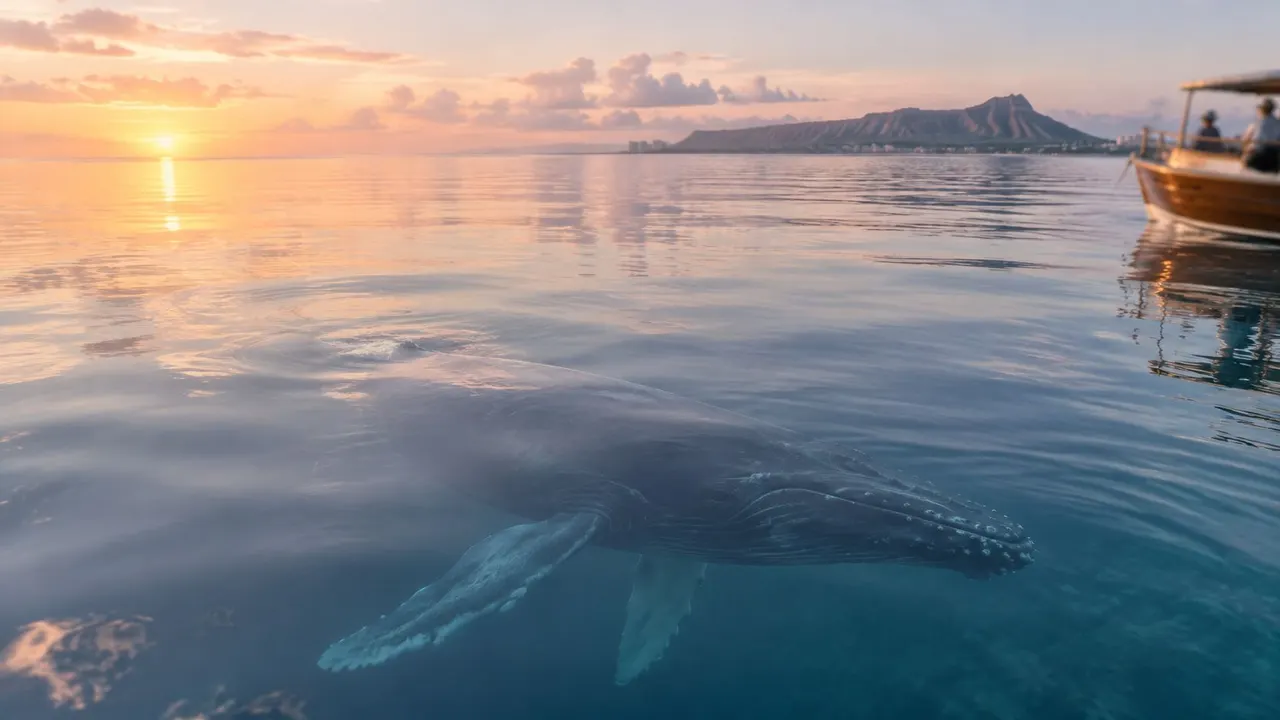
Read the viewing conditions, not just the departure board
At exposed locations such as Makapuu Point and the Kaiwi Channel coastline, the useful question is whether you can comfortably scan the surface. A theoretically favorable hour won't help much if wind prevents you from holding binoculars steady or glare washes out your viewing direction.
Use this checklist before committing:
- Wind and surface chop: Look for a forecast that allows sustained scanning without a busy field of whitecaps.
- Swell direction: Consider how exposed your chosen coast or route will be. Don't assume a sheltered harbor describes conditions offshore.
- Sun angle and glare: Think about where you'll be looking, not just whether the sun is low. Low light can still shine directly into your viewing direction.
- Cloud cover: Judge usable contrast and visibility rather than treating a perfectly blue sky as essential.
- Boat traffic: Favor patient observation over crowding. Traffic is a wildlife-welfare concern, but the available evidence doesn't quantify a local sighting penalty.
- Tide: Don't make it your main booking filter. Oahu-specific evidence here is too limited to establish a meaningful tide-based advantage.
Our Oahu whale-watching planning guide offers additional trip-planning context. For the timing decision, keep the distinction clear: better detection is not the same as greater whale abundance.
A calm afternoon can be a better viewing choice than a rough morning. The departure label shouldn't outrank the forecast.
Whale presence and observer skill also change what people notice. Scan broadly, pause when you detect a possible blow, and avoid spending the entire outing looking through a camera's narrow frame.
What the Oahu Sighting Data Shows About Afternoons
The clearest challenge to an absolute morning rule comes from a Kalaeloa-area observation report: during 20 surveys from February 13 through May 14, 2001, observers recorded 18 humpback-whale pod sightings. In its whale counts, the afternoon total exceeded the morning total.
Kalaeloa-area survey results, 2001
| Measure | Result | Context |
|---|---|---|
| Study period | February 13 to May 14, 2001 | Three months, one season |
| Surveys and pod sightings | 20 surveys; 18 humpback pod sightings | Small, single-area sample |
| Sightings by location | 12 (67%) south of the harbor entrance; 6 (33%) north | Southern sightings were toward Barbers Point |
| Whale counts by time of day | 7 in morning (28%); 18 in afternoon (72%) | Of 25 whales counted |
| Statistical result | Chi-square 4.84, 1 degree of freedom, p = 0.028 | Significant within this sample, not a universal forecast |
What the finding establishes
Afternoon viewing cannot reasonably be dismissed as unproductive on Oahu. The observed difference was statistically significant within the study's analysis, so the result deserves more weight than a casual claim that mornings always win.
Notice that pod sightings and whale counts are different measures. A pod can contain more than one whale. Keeping those categories separate prevents the afternoon percentage from being misrepresented as the share of tours that successfully encountered whales.
The geographic split also matters. These observations describe the harbor area and nearby waters toward Barbers Point, not every coastline around the island.
What it doesn't establish
The result doesn't give a present-day visitor an afternoon success probability. Researchers observed a limited area during a single historical season, and the sample doesn't establish what another route, weather pattern, or year would produce.
Nor does a significant difference explain its cause. The counts alone don't separate whale distribution, survey conditions, visibility, and the other influences on what observers recorded.
The practical conclusion is narrower and more useful than declaring a winner: keep afternoon departures in contention. If an afternoon fits your itinerary and offers favorable visibility, this Oahu-specific evidence gives you no reason to reject it solely because it isn't morning.
Shore Viewing Versus a Whale-Watch Boat
Shore viewing trades guidance and mobility for lower spending and complete control of your time. A boat adds a guided search and the ability to change viewing position, but you're buying an observation opportunity, not a closer-than-legal encounter.
Makapuu Point and the Kaiwi coast suit visitors willing to scan patiently. From land, a distant blow may be the entire sighting, and wind or glare can limit what you resolve even when whales are present.
Shore viewing compared with a whale-watch boat
| Factor | Shore viewing | Whale-watch boat |
|---|---|---|
| Cost | No tour fare; access and parking arrangements still matter | Our Waikiki Whale Watching Cruise costs $49 per person |
| Distance to whales | Whales may be well offshore | The operator can reposition while respecting viewing rules |
| Visibility | Elevated coastal viewpoints can help, but exposure and glare remain limiting | Open-water viewing and a different sightline; boats aren't automatically higher than coastal lookouts |
| Schedule control | Start, pause, and leave when you choose | Fixed departures |
| Season fit | Choose peak-season dates when possible | Our scheduled season runs January 2 through March 31 |
| Best for | Budget-conscious travelers and patient independent observers | Families, first-time observers, and visitors wanting guidance |
Choose a vantage point that matches your patience
A shore stop works best when you'll enjoy the coastline even without a sighting. It's less suitable if everyone expects a clearly identifiable whale immediately or if children are unlikely to stay interested in distant scanning.
A guided boat outing reduces the burden of choosing a lookout and searching alone. It can also help a first-time observer distinguish a blow from spray, but neither guidance nor mobility removes the uncertainty of wildlife viewing.
Our guide to where to see whales in Oahu helps you compare locations before choosing your approach. Don't assume that paying for a boat guarantees a particular behavior or viewing distance.
Living Ocean Tours is Oahu's top rated and most reviewed snorkel company, and our seasonal Waikiki Whale Watching Cruise looks for humpbacks wintering along the Waikiki coastline. The cruise lasts 1.5 hours, welcomes guests ages 3 and up, and departs from Kewalo Basin Boat Harbor.
Respectful Viewing Rules and What to Bring
Stay at least 100 yards from humpback whales in Hawaiian waters. NOAA Fisheries prohibits approaching within that distance, positioning vessels in their path, or disrupting normal behavior.
The approach restriction applies across viewing methods, including boats, swimmers, kayaks, and drones. An appealing photograph isn't a reason to maneuver closer, and a whale-watch booking shouldn't create an expectation of close contact.
The Hawaiian Islands Humpback Whale National Marine Sanctuary recommends binoculars or camera zoom instead of closing the distance. Plan to appreciate blows, dorsal ridges, flukes, and other visible surface behavior from a respectful position.
Pack for observation and comfort
- Binoculars: Bring a pair you can hold steadily and practice focusing before you arrive. A clear, stable view is more useful than magnification you can't control.
- Telephoto zoom: Prepare the camera before departure so you aren't changing equipment during a brief surfacing.
- Polarized sunglasses: Use them to manage surface glare, while remembering that they can't remove every difficult reflection.
- Sunscreen: Choose a reef-conscious product and follow its application directions. Don't rely on a hat alone for sun protection.
- Secure hat: Pick one that won't blow away easily and become marine debris.
- Water: Bring drinking water and keep it accessible.
- Light wind layer: Pack for moving air on the water, even when conditions ashore feel warm.
- Motion-sickness preparation: If you're susceptible, discuss a suitable option with a pharmacist or clinician and follow the label before travel.
- Charged phone: Save your departure information before leaving your accommodation.
Our Oahu whale-watching visitor guide provides more planning context. For families, assign an adult to help children scan and interpret what they're seeing rather than expecting them to follow distant activity unaided.
Plan for distance: Optical equipment should improve the view, not become an excuse to demand a closer approach.
An earlier outing may also offer cooler air and more comfortable conditions, but don't confuse comfort with a guarantee of flat water. Pack for the forecast you have.
Book a Daylight Whale Trip in January or February
For a traveler choosing the best time of day to see whales in Oahu, the strongest recommendation is a daylight departure during the heart of winter, with the final hour selected for conditions. NOAA's survey guidance describes repeated 30-minute scans throughout the day, but doesn't establish an Oahu-specific hourly effect that justifies promising a universally superior departure.
That's a reason to book thoughtfully, not to abandon planning. You can control the seasonal window, your viewing equipment, and how much flexibility you leave in your itinerary. You can't control when a whale surfaces.
Make the booking decision in this order
- Choose January or February if your travel dates allow. Use the strongest overlap in seasonal guidance rather than chasing an exact departure minute.
- Check the marine forecast before selecting an available sailing. Favor the early option when wind and visibility support it, but don't apply that preference automatically.
- Keep a favorable afternoon option available. If the morning forecast is poor, consider another daylight departure rather than forcing the outing into a less comfortable window.
- Leave room for a weather-dependent activity. Avoid making whale watching the tightly timed connection between other reservations. Don't assume an unused sailing is refundable or transferable without checking the booking terms.
Our departures leave Kewalo Basin Boat Harbor near Waikiki Beach. For planning assistance, our office is at 1125 Ala Moana Blvd Slip B-01, and phone hours are 8 a.m. to 5 p.m. daily.
Review the Waikiki Whale Watching Cruise to choose a departure that fits your dates and group. Book for a guided opportunity to observe wild humpbacks, with expectations shaped by the season and forecast rather than a promised breach.
Living Ocean Tours offers seasonal guided whale watching along the Waikiki coastline, with departures from Kewalo Basin Boat Harbor. Visit Living Ocean Tours to compare available sailings and choose a daylight outing that fits your winter visit and viewing priorities.


