
Best Time of Day to Whale Watch in Oahu
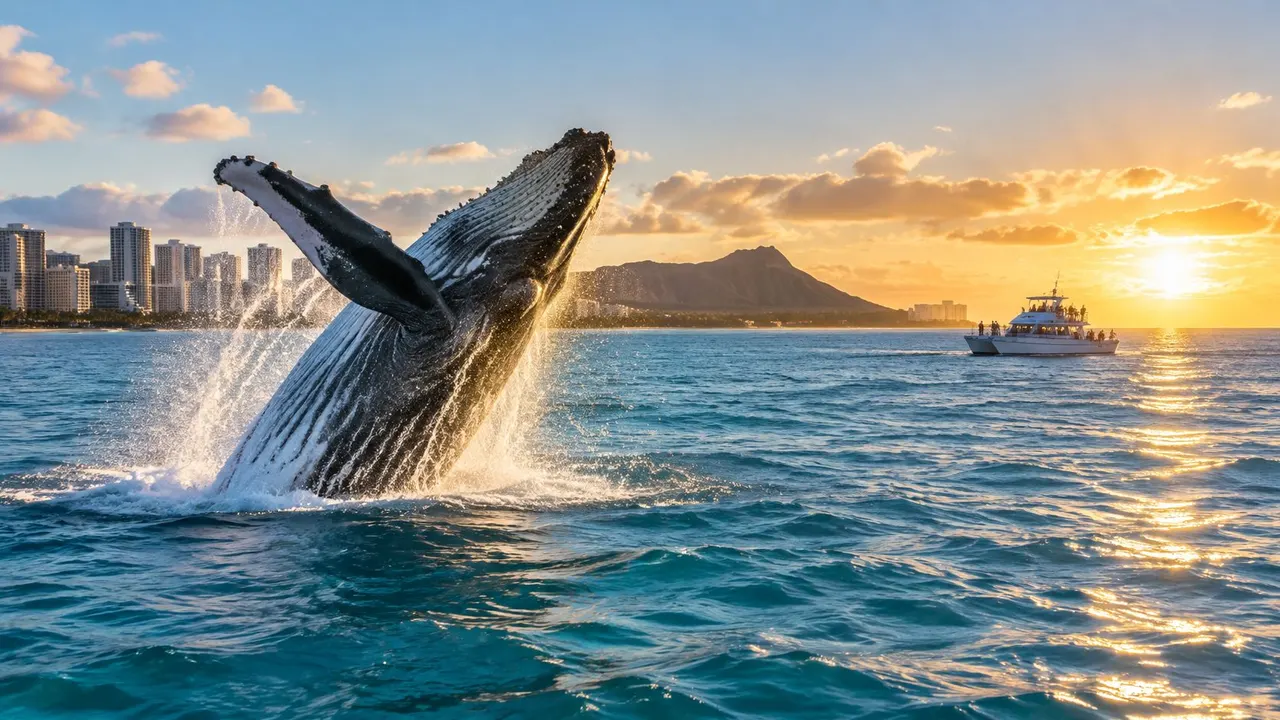
The best time of day to whale watch in Oahu is typically the earliest morning departure for the calmest seas, but late afternoon offers a unique chance to see whales closer to shore near sunset, so the ideal choice depends on your priorities. If whales are present through the daylight hours, why do so many guides still treat one clock time as if it works for every family, every day, and every sea condition?
That question matters because a calm trip where your kids can spot a distant blow easily can be better than a choppy trip at a supposedly perfect hour. You're not just choosing when whales might act a certain way. You're choosing wind, light, comfort, and how clearly you'll see what's already out there.
Finding the Right Time for Your Whale Watch
A family staying in Waikiki has one free morning and one free afternoon. Grandma gets queasy on boats, a teenager wants photos, and a younger child just hopes to see a tail. If someone tells them morning is always best, which need does that advice answer?
That's the gap in most simple advice about the best time of day to whale watch. Whales don't follow a tour schedule, and the ocean doesn't stay the same from sunrise to sunset. The better question is which departure gives your group the best mix of calm water, good light, and interesting whale behavior.
Why One Fixed Hour Fails
Morning often wins on comfort because wind commonly builds later in the day. Late afternoon has a different appeal off Waikiki, since some whales move closer to shore as evening approaches. Midday sits between those ideas, with bright light that can help you spot blows at a distance.
A good departure time isn't a magic hour. It's the clearest, calmest daylight window that fits the people in your group.
Think of your priorities in plain terms before you book.
- Motion comfort comes first: Pick the calmest forecast window, often early, if anyone is sensitive to chop.
- Photography matters most: Low late day light can be beautiful, but only if the sea stays manageable and glare doesn't wash out the view.
- Your schedule is tight: A midday trip on a calm day can beat an early trip on a rough one.
- Young kids are coming: Shorter waits, easier boarding, and steady water often matter more than chasing a specific behavior.
That's the promise of a condition based decision. You stop asking what time whales perform and start asking when you'll have the best chance to notice them comfortably. For many first time visitors, that shift prevents disappointment. It also explains why two trips on the same day can feel completely different even when whales are nearby for both.
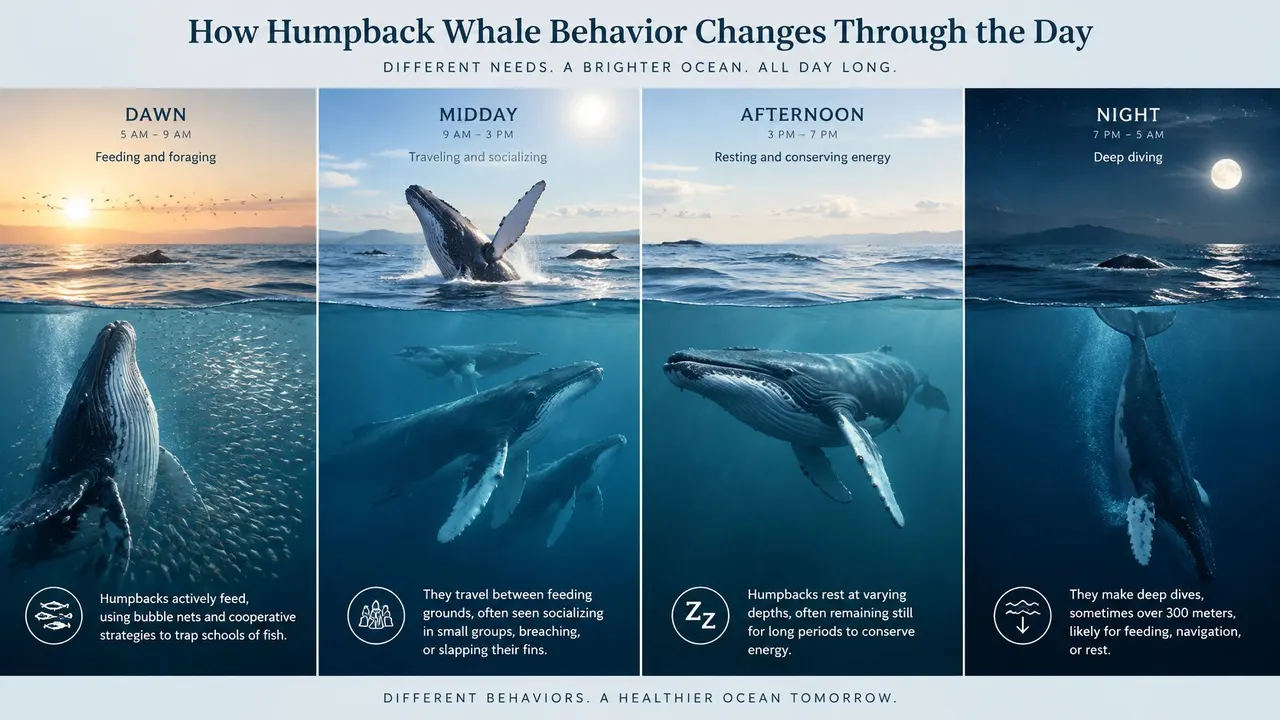
How Humpback Whale Behavior Changes Through the Day
Humpback whales in Hawaii aren't active or inactive. What they're doing changes, and that changes what you're likely to notice from a boat. Research in Hawaiian waters found dawn hours were associated with resting, while mating related behavior began shortly after sunrise, a pattern described in the peer reviewed study of humpbacks wintering in Hawaiian waters.
That doesn't mean a sunrise trip is boring. Resting whales may surface slowly and predictably, which can help children follow a back or blow. After sunrise, social activity becomes part of the picture. You're watching a transition from quieter behavior into the social world of the breeding season.
What Changes as the Day Builds
As the day progressed in that Hawaiian research, the proportion of pods containing three or more adults increased. Male to male competitive behavior became more common later in the day as well. In simple terms, later groups may look busier because more adults are interacting, chasing, or jostling around a female.
Around noon, researchers recorded high rates of breaching and other behaviors that may function as visual or acoustic signals. A breach is unforgettable, but don't book midday expecting one on command. It means conspicuous surface displays were recorded more around that period, not that every whale follows a noon appointment.
Many guests also ask about singing. The researchers found no daily variation in the number of singing whales. If you don't hear song at a certain hour, that silence doesn't prove whales have left the area. Song is only one clue, and surface signs such as blows and flukes are what most visitors use.
Here's a useful way to translate the science into expectations.
- Early morning: Watch for calmer surfacings and post sunrise social activity beginning to build.
- Midday: Keep scanning for bigger surface displays, while remembering they remain unpredictable.
- Afternoon: Larger adult groups and competitive behavior may be more likely than at dawn.
If you're comparing departure descriptions, our background on whale watching patterns around Oahu can help you connect behavior with local conditions. The main lesson is that behavior gives you probabilities, not promises. Sea state and visibility decide whether you can see the behavior that's happening.
Weather, Tides, and Light That Shape Visibility
A whale can be active and still be hard to see. Whitecaps hide blows, glare hides dark backs, and a rocking boat makes binoculars frustrating. That's why visual detectability matters as much as whale behavior when you're choosing a departure.
Wind commonly strengthens as daytime heating builds, especially where afternoon sea breezes develop. Southern California buoy data give a clear example of that daily pattern. From March through November, average winds were lighter between 7:00 and 10:00 a.m. than between 1:00 and 4:00 p.m. in every month examined, according to the Southern California whale watching weather analysis.
Morning vs Afternoon Sea Conditions
| Time Period | Average Wind Speed | Sea State Impact |
|---|---|---|
| Morning, 7:00 to 10:00 a.m. | Approximately 4.6 knots in July | Smoother surface where blows stand out more clearly |
| Afternoon, 1:00 to 4:00 p.m. | Approximately 6.7 knots in July | More chop that can hide brief surfacings |
That July difference is 2.1 knots, or about 46% higher in the afternoon relative to the morning baseline. Season matters too, since average wave height at a Santa Monica Basin buoy declined from about 4.9 feet in January to 3.1 feet in July and August in the same analysis. Those are California figures, not an Oahu forecast, but they show why captains watch both season and hour.
Practical rule: Choose the calmest daylight window in the marine forecast, not the hour a generic article calls best.
Tides add another layer. Available coverage notes humpback feeding may increase on incoming tides regardless of clock time, while mid morning to early afternoon may provide better visibility because of calmer seas and stronger light, as summarized in this overview of timing and local conditions. For Honolulu winter humpbacks, that means a favorable tide on a clear late morning can outweigh a rough early departure.
Light can help or hurt. Bright sun helps you identify a distant blow, but glare bouncing off chop can erase contrast. Polarized sunglasses, a hat brim, and scanning away from direct sun help. Our notes on Oahu conditions that affect sightings are useful when you're comparing days.
Before booking, compare four things for each open departure. Check forecast wind, swell, tide movement, and likely glare for your viewing direction. Winter storm systems can make morning and afternoon winds similar, so don't assume early automatically wins. The best window is the one where a blow, dorsal fin, or fluke is easiest to separate from the waves.
Morning vs Midday vs Afternoon Tradeoffs
Each time window solves a different problem. Morning usually protects comfort, midday improves bright light visibility, and late afternoon can change where whales are relative to shore. Your best choice depends on which tradeoff your group can accept.
Morning trips often have calmer water before daytime wind builds. For first time passengers, older travelers, and children, less rocking means they can stand, scan, and enjoy the coastline instead of focusing on their stomachs. Fewer rough edges also make it easier to follow a whale after the first call from the crew.
The Case for Midday
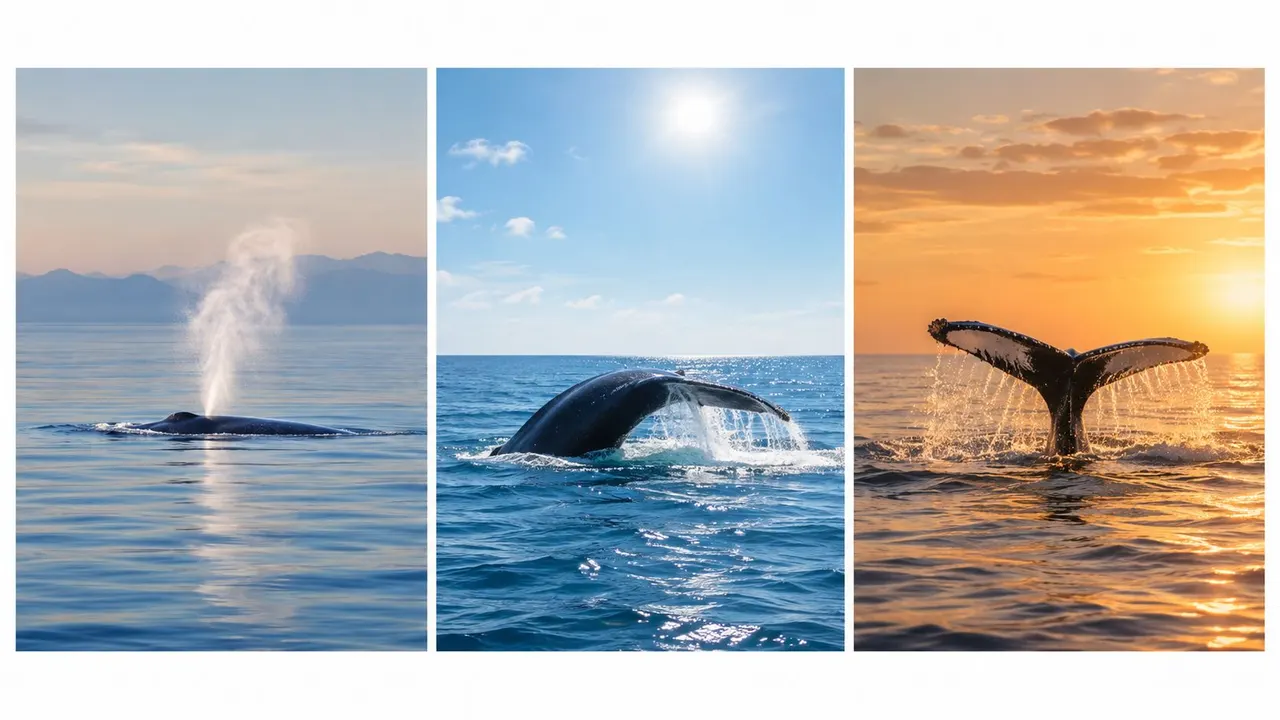
Midday isn't just a leftover option. Stronger light can help guests identify distant blows, and families don't have to rush breakfast or wake young kids before dawn. Coverage that favors mornings often underexplains that advantage, while also noting stronger midday light and late afternoon photography benefits in this guide to whale watching times and passenger tradeoffs.
The tradeoff is heat and glare. You'll want water, sunscreen, and polarized lenses, and you'll do better scanning with the sun behind you when possible. If the forecast says the sea stays calm, mid morning to early afternoon becomes a strong family compromise rather than a second choice.
The Case for Late Afternoon
Late afternoon has a specific biological reason to consider near Honolulu. Hawaiian research found singing humpbacks moved from nearshore areas toward offshore locations during the day and returned closer to shore in the evening, a sunset associated pattern reported by the University of Hawaii summary on humpback singer movement. That doesn't prove whales surface more at sunset. It means nearshore observers may encounter them closer to the Waikiki coastline during that transition.
Photography can improve in low, warm light, with Diamond Head and the Waikiki skyline adding context to a fluke photo. Glare becomes the challenge when you're looking toward the sun, and fading light shortens the useful window. The sweet spot is late afternoon with enough daylight left, not darkness.
- Choose morning if comfort, steady scanning, and calmer seas matter most.
- Choose midday if your family needs an easier schedule and the forecast stays light.
- Choose late afternoon if you value coastline views, photography, and possible nearshore movement.
Don't let claims about predictable golden hour activity replace a forecast check. Whale behavior isn't governed by a dependable daily timetable, and a windy sunset can hide more whales than a calm noon reveals. Match the window to your group first, then let the day's wind and swell confirm it.
Best Times for Waikiki and Oahu Whale Watching
Start with season before hour. For Oahu, the legally defined humpback season generally runs from November through May, although whales can appear in smaller numbers outside those months, and NOAA notes humpbacks generally gather in waters less than 600 feet deep around the main Hawaiian Islands in its recreation guidance for the Hawaiian Islands Humpback Whale National Marine Sanctuary. A perfect morning outside the season still isn't a whale watching plan.
Within that season, pick the day first and the departure second. Look for the lightest wind and smallest swell in your vacation window. Then choose the earliest practical daylight trip if comfort is your priority, or a late afternoon trip if you want to be on the water during the nearshore evening transition described earlier.

A Simple Waikiki Booking Order
- Confirm you're in season: Aim for November through May, with winter through spring as the core period.
- Compare marine forecasts: Pick the calmest day available before you argue about one hour.
- Match the window to your group: Morning for comfort, mid morning for balance, late afternoon for light and nearshore possibility.
- Leave daylight margin: You need enough light to spot blows and for the captain to position responsibly.
One local option is the Waikiki whale watch tour offered by Living Ocean Tours, which is the top rated & most reviewed snorkel company on Oahu and runs seasonal ocean trips from the Honolulu area. Treat any operator schedule the same way. Ask what departure looks calmest for your date, where the boat will search, and what happens if weather changes.
Waikiki also gives shore based visitors clues. If you spot blows from the beach in the late afternoon, that supports trying a boat trip in the final daylight hours on a calm day. If whitecaps are already covering the surface at lunch, don't expect sunset light to fix visibility. Local water tells you more than a generic rule.
Booking Tips and What to Bring for Your Trip
Book the day like a captain checks the morning sky. Look at wind, swell, tide, and glare together, then keep some flexibility if your itinerary allows it. A family that can move from a windy afternoon to a calm next morning has improved comfort without needing whales to behave differently.
Call or message the operator with specific questions. Ask which departure they expect to be smoothest, how long you'll spend searching, and whether children can move to a shaded viewing area. If someone in your group gets motion sick, say so before booking so the crew can suggest seating and timing.
Pack for Seeing, Not Just Riding
Your eyes do most of the work on a whale watch. Bring tools that protect them and keep you comfortable enough to keep scanning.
- Polarized sunglasses: They cut surface glare and make dark backs easier to separate from sparkle.
- Hat with a strap and sunscreen: Midday sun reflects off water, and wind removes loose hats quickly.
- Light layer: Morning air and spray can feel cool even on a warm Waikiki day.
- Camera with zoom if you have one: Whales stay at a legal distance, so reach matters more than filters.
- Water and a small snack: Comfort helps kids stay patient between surfacings.
If you're unsure about clothing for changing wind and spray, this guide on what to wear whale watching in Hawaii covers practical layers. Avoid spending the whole trip looking through a phone screen. Whales surface briefly, and your peripheral vision catches movement that a zoomed camera misses.
Scan wide first, then zoom. Wide eyes find the blow, and the camera only helps after someone spots it.
Prepare children with a simple game. Ask them to watch for a puff, then a back, then a tail, in that order. Explain that whales may disappear for a while between breaths and that quiet looking is part of the adventure. For motion sensitive guests, choose the calmest window, eat lightly beforehand, and focus on the horizon if queasiness starts.
Responsible Wildlife Viewing Guidelines
Good whale watching protects the animal you're hoping to see. Distance rules aren't red tape that spoils a photo. They give whales room to rest, nurse, court, and move without boats changing their behavior for our entertainment.
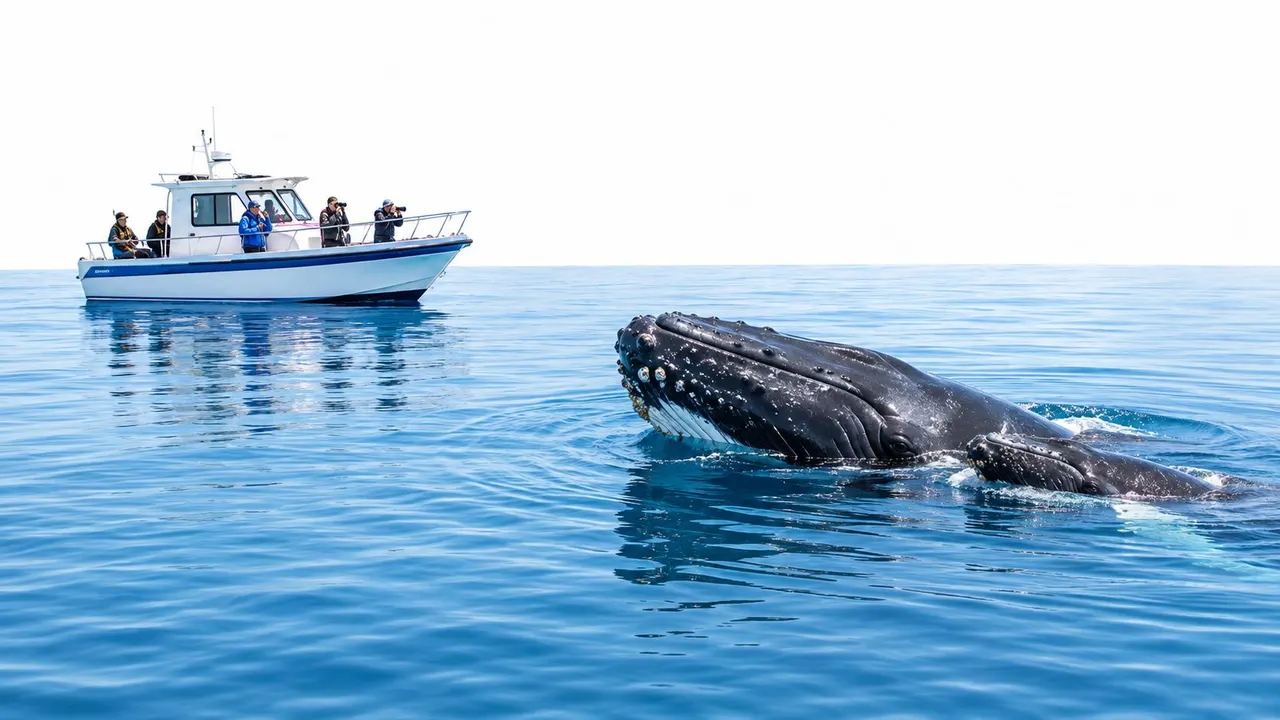
Vessels must keep at least 100 yards from humpback whales in Hawaiian waters, and the rule applies year round to boats, kayaks, swimmers, paddleboards, drones, and other approaches under the sanctuary regulations for humpback whale approach limits. If a whale approaches within that distance, operators should remain stationary or put the engine in neutral until it moves away. A close encounter should be the whale's choice, not the captain's pursuit.
Speed, Path, and Time Limits
When a whale is sighted, operators should slow down rather than chase it. Hawaii guidance recommends no more than 6 knots within 400 yards when approaching or departing whales, and no more than 15 knots, or safe planing speed, while transiting areas 600 feet deep or shallower during whale season, as explained in NOAA marine life viewing guidelines and distances. Boats should travel parallel to or behind whales.
Crews should never cut across a whale's path, chase it, or separate a mother from a calf. NOAA also recommends limiting observation of an individual or group to 30 minutes or less. That limit spreads pressure out and reminds guests that a respectful look is enough.
Daylight is part of safety too. NOAA advises avoiding nighttime operations when possible because daylight improves spotting and distance keeping, and Hawaii boating guidance says nighttime travel requires reduced speed because whales are harder to see after dark in its boating guidance for whale season. That is another reason late afternoon, not after sunset, is the useful evening window.
When you compare operators, listen for calm language about distance, speed, and time with a group. This overview of responsible Oahu whale watching practices can help you know what to expect. A responsible crew may turn away from a crowded group or leave after a respectful viewing period. That's stewardship in action, and it usually makes the experience feel more trustworthy for families.
Choosing the Best Time Based on Your Priorities
You now have three different reasons to choose three different windows. Behavior shifts through the day, visibility depends on sea state and light, and your group brings its own limits. Put those together and the answer becomes practical instead of mysterious.
If calm seas and motion comfort matter most, choose the earliest practical morning departure on the calmest forecast day. That choice helps children, grandparents, and first time passengers stay comfortable long enough to scan properly. It also gives blows a smoother background, which helps everyone spot the first sign.
If you want a balanced family option, mid morning deserves serious consideration. Kids are awake and fed, light is stronger for spotting distant activity, and you may still catch the sea before afternoon wind builds. Research on visibility supports that cautious approach, since poor visibility and higher Beaufort sea states reduce detection probability in the study of low latitude humpback habitat use and survey detection.
If photography or schedule flexibility leads your decision, late afternoon can be excellent when wind stays down. You'll get warmer light and a possible nearshore movement window near Waikiki, but you must accept glare risk and a hard stop at fading daylight. Check the forecast that same day and be willing to switch if chop builds.
Your Final Decision Check
- Comfort first: Earliest calm morning.
- Easiest family rhythm: Mid morning on a light wind day.
- Photos and coastline mood: Late afternoon with daylight to spare.
- Rough forecast at your chosen hour: Change the time or day before you change your expectations.
The best time of day to whale watch is the calmest, clearest daylight window that suits your people. Morning is often the safest default, midday can be a smart compromise, and late afternoon has its own Waikiki logic. Trust the marine forecast more than a slogan, keep your eyes wide, and let the whales decide the show.
Ready to choose your window on the water, whether that means a calm morning search or late afternoon light off Waikiki? Living Ocean Tours offers seasonal whale watching along with guided snorkeling and sunset cruising from Honolulu, so you can check current departures and pick the daylight trip that fits your family.


