
Whale Watching Season in Hawaii Oahu: When to Go in 2026
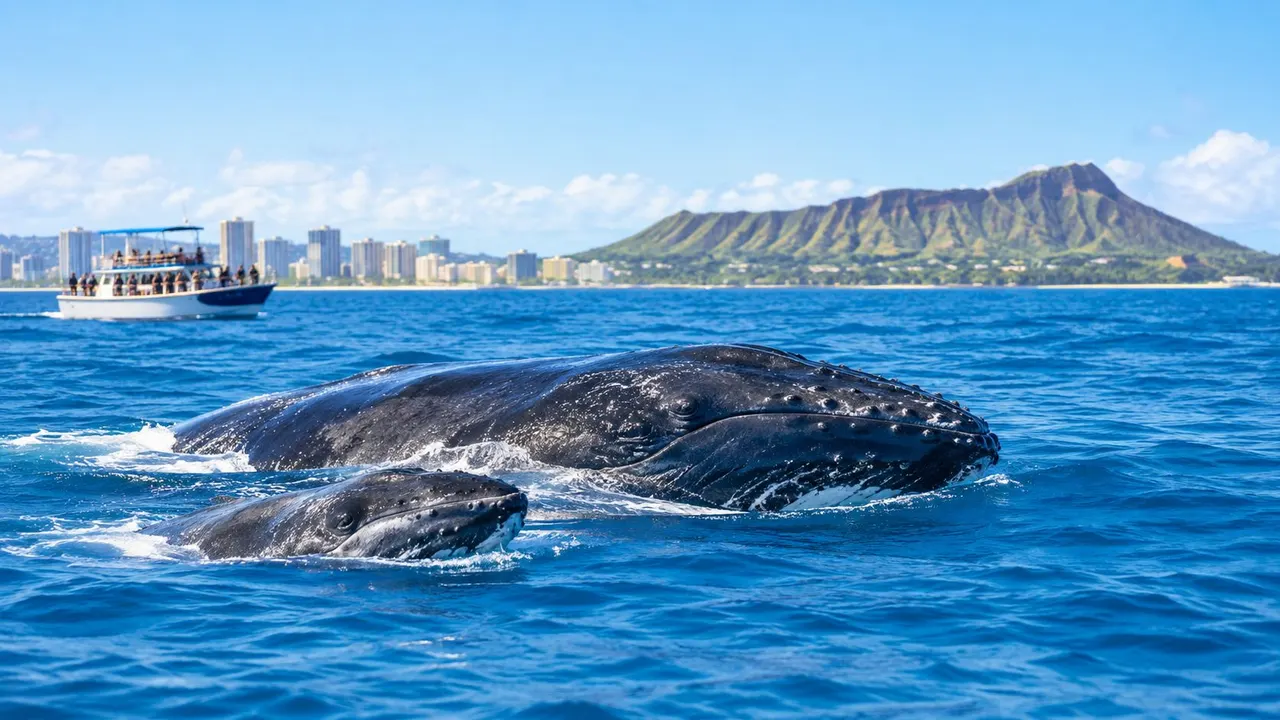
Humpback whales are generally present around Oahu from November through April, with January through March as the peak months for sightings. That's the short answer for whale watching season in Hawaii Oahu, but it doesn't tell you what a trip really feels like, or why a quiet morning with one distant blow can still be a good trip.
Oahu is a real whale watching island, just not the busiest one in Hawaii. If you plan for patience, pick your month carefully, and understand why boats keep their distance, you'll enjoy the outing even when the whales set a slow pace.
Whale Season Months at a Glance
The operating window runs November through May, with the strongest odds from January through March. Humpbacks travel from northern feeding grounds to Hawaii's warm, relatively shallow waters to breed, give birth, and nurse calves.
The scale explains why winter feels different offshore. The Hawaiian Islands Humpback Whale National Marine Sanctuary estimates as many as 12,000 humpbacks, more than half of the North Pacific population, return to Hawaii during this annual migration, with whales generally present from November through April and the broader migration extending into May.
How to Read the Month Table
The outlook column describes probability, not a promise. November and April are shoulder months with fewer whales. December builds toward peak, May holds only late stragglers, and summer and fall are not humpback season at all.
| Month | Whale presence around Oahu | Outlook for visitors |
|---|---|---|
| November | Migration starts; whales begin arriving | Early sightings possible but sparse |
| December | Whale numbers rising steadily | Good odds building toward peak |
| January | Peak concentration for breeding, calving and nursing | Best odds of a sighting |
| February | Peak concentration continues | Best odds of a sighting |
| March | Peak concentration, still strong | Best odds of a sighting |
| April | Whale numbers thinning as migration winds down | Sightings still possible, less frequent |
| May | Final departures; last stragglers | Occasional sightings only |
| June to October | Humpbacks absent from Hawaiian waters | No humpback sightings; plan other ocean outings |
Planning rule: Choose January, February, or March if whales are the main reason for the trip. Choose a shoulder month only if you'd still enjoy a coastal cruise without one.
That backup mindset matters on Oahu. A shoulder month trip pairs well with a beach afternoon or another ocean outing, so your day doesn't hinge on a single animal surfacing on cue.
Best Places to See Whales on Oahu
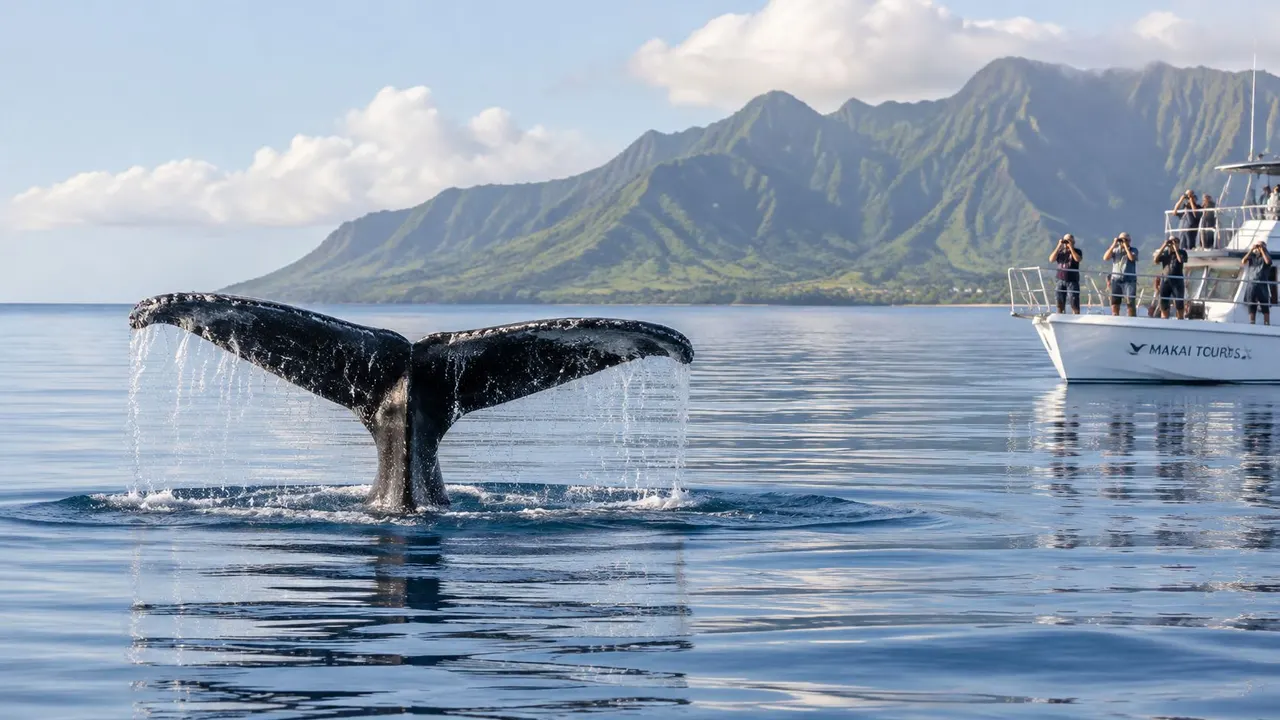
Start with an honest caveat. The Hawaii Department of Land and Natural Resources whale watching FAQ notes Oahu sightings are common but generally less frequent than around Maui, Lanai, Molokai, Kauai's north coast, and Hawaii Island's Kohala coast. Because whales concentrate in shallow coastal waters after migrating from Alaska, sightings can occur along southeastern Oahu near Makapuu and from boats departing Honolulu.
That doesn't make Oahu a poor choice. It makes where you watch more important, and it makes a backup date worth planning.
| Option | Where | Strength | Limit |
|---|---|---|---|
| Southeast shoreline lookout | Makapuu Point area | Free and no boat needed | Distance from whales; sightings less reliable |
| Waikiki beach and hotel viewing | Waikiki coastline | Easy access on foot | Whales often far offshore; limited detail |
| Guided boat whale watch | Departs Kewalo Basin Boat Harbor near Waikiki | Closer views across more water | Depends on sea conditions and whale location |
| Private or group charter | Kewalo Basin Boat Harbor | Own schedule for families or celebrations | Higher cost; same sighting uncertainty |
Shore or Boat
Shore viewing is free and flexible. You can scan for twenty minutes, leave for coffee, and come back when the light changes. The trade off is distance. You'll often see a blow or a dark back on the horizon rather than detail, and you can't move toward better water.
A boat covers more water and puts you at sea level with the animals, with a crew scanning different directions at once. It costs money, follows a fixed schedule, and still depends on weather, sea state, and where whales happen to be that morning. Our tours depart daily from Kewalo Basin Boat Harbor, conveniently located near Waikiki Beach, which is the main departure point for Waikiki area whale watches.
If you're on a budget and have time, start from shore. If you're a family wanting a planned outing with interpretation from the crew, book a boat and keep a second morning open. Our guide to where to see whales on Oahu walks through these spots in more detail.
What Whales Do and What Guests Actually See
Whales are wild animals, so a trip delivers a sighting, not a show.
Watching whales is like watching a quiet street from a slow bus. Long stretches of calm get interrupted by short bursts of activity, then everything goes quiet again. If you expect constant action, the quiet stretches feel like failure. If you expect bursts, they feel normal.
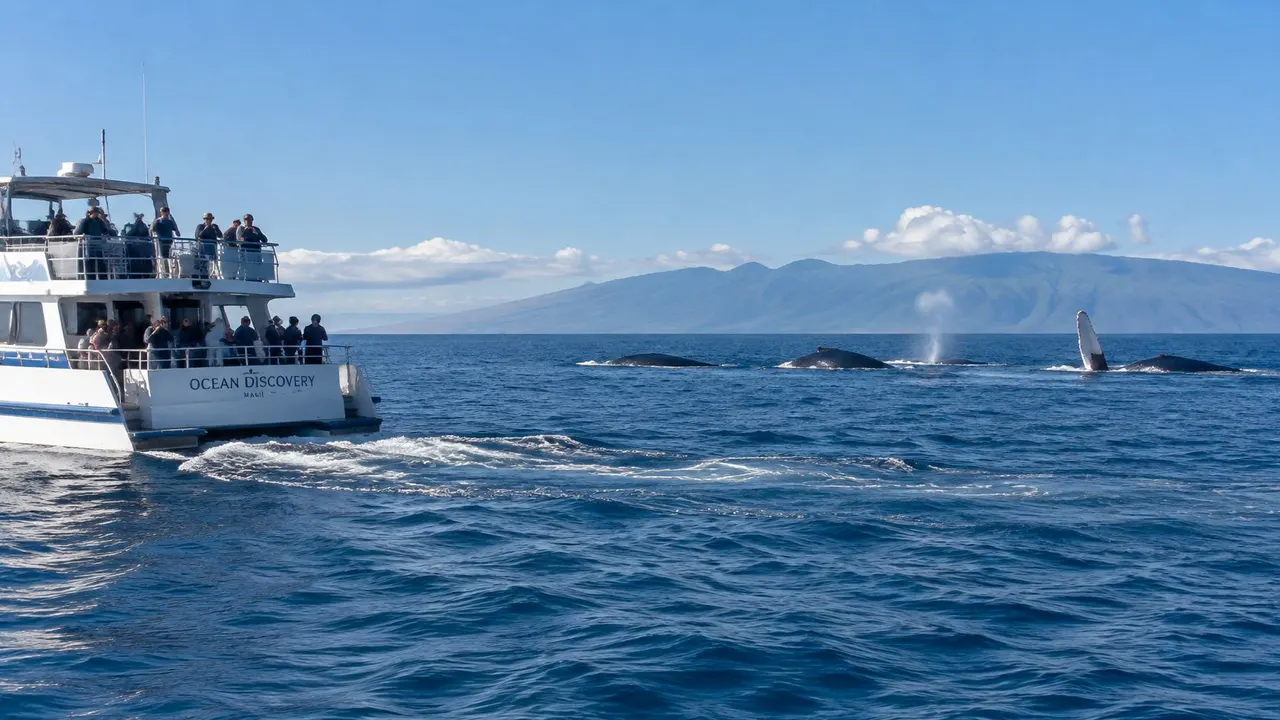
Behaviors You Might See
- A blow: A misty puff when a whale exhales at the surface, often the first sign and visible from far away.
- Mothers and calves resting: Slow, low surfacing near the surface, easy to miss if you're looking for splashes.
- A tail lift: The fluke rises and slips under before a deeper dive.
- Pectoral fin slaps: A long fin raised and slapped on the water.
- Spyhopping: The head rises vertically, as if the whale is looking around.
- A breach: Much of the body leaves the water and crashes back. It's rare, and it's the moment that pulls everyone to the rail.
Say a family of four goes out on a January morning along the Waikiki coastline, where humpbacks winter in the Hawaiian Islands. They spot a blow far off, watch a mother and calf rest for twenty minutes, then scan empty water for an hour. That trip succeeded. They saw a wild mother raising a calf, undisturbed, on her schedule.
A closer encounter isn't automatically a better one. The Hawaii Division of Aquatic Resources guidance on whales and dolphins explains federal rules prohibit approaching humpbacks within 100 yards, and if a whale approaches on its own, operators should remain stationary with the engine in neutral. Don't call for the captain to chase, don't plan to enter the water, and keep drones away.
For families, bring binoculars for children so a distant blow becomes something they can actually follow. Plan for short attention spans during quiet stretches. Calm passengers who stay seated or hold the rail also help the crew hold a steady course.
Responsible Viewing Rules Every Trip Follows
Whales sometimes approach boats on their own. The rules exist for exactly that moment, so the crew knows what to do and the animals stay undisturbed while breeding and nursing.

| Rule | Threshold | Who it applies to |
|---|---|---|
| No approach within 100 yards | 100 yards minimum distance | All boats, kayaks, paddleboards, drones and swimmers |
| Speed limit in whale habitat | 15 knots or less in waters up to 100 fathoms (600 feet) | Vessel operators, November to April |
| Slow down near whales | 6 knots or less within 400 yards | Vessel operators approaching or departing whales |
| Pass whales safely | Pass behind the whale and stay more than 100 yards away | Vessel operators; no cutting in front |
| Whale approaches on its own | Stop forward movement, engine in neutral, wait | Any motorized vessel |
The Hawaii Division of Aquatic Resources page on marine protected species ties these controls to a clear reason. Vessel noise, approach behavior, and collision risk can disrupt breeding and nursing whales, so federal rules prohibit approaching within 100 yards by any means, Hawaii guidance recommends 15 knots or less in whale habitat, and operators should drop to 6 knots or less within 400 yards with a dedicated lookout.
What This Means for You on Deck
The 100 yard rule applies to everyone, not only tour boats. Swimmers, paddleboarders, kayakers, and drone pilots all fall under it. If you're paddling and a whale surfaces nearby, you stop and let it move away. You don't paddle toward it for a closer photo.
On a tour, expect a pre-departure briefing, viewing from the rail or through binoculars, and no swimming anywhere near a humpback. Avoid sudden rushing from one side of the deck to the other. If a whale closes the distance itself, the boat goes neutral and waits, which can look like the crew is doing nothing. That pause is the correct response.
Before you book, ask three questions. Does the crew brief guests on these rules before departure? Do they carry binoculars or suggest you bring your own? What happens on board when a whale comes close? Our overview of responsible Oahu whale watching covers how those answers should sound.
How to Book and Time a Whale Watch Trip
Good timing does more for your odds than any other choice you control. Work through these steps in order and you'll avoid the most common planning mistakes.
- Pick your month first. January through March gives you the strongest odds. Treat November, April, and May as shoulder months that need a backup plan, because fewer whales are present and a single trip can miss them.
- Book a primary date and a backup day. Sea conditions can cut visibility or cancel a trip outright. The common mistake is scheduling your only whale watch on your last morning in Hawaii, leaving no room to rebook.
- Check in the day before. Ask us about recent sightings, sea state, and weather, and confirm your departure time. A windy forecast doesn't always mean a cancellation, but it does mean rougher scanning conditions and a higher chance of seasickness.
- Book early for busy periods. School holidays, spring break, and weekends fill first during winter, the busiest window for Oahu boat trips. Waiting until you arrive often means taking whatever departure time is left.
Confirm the Details Before You Pay
- Verify the basics. Check trip length, age minimums for children, what's included, and the rain check or rescheduling policy if weather cancels your trip. Reading the cancellation terms at booking takes two minutes and prevents a frustrated phone call later.
- Arrive early at Kewalo Basin Boat Harbor. Allow time for parking, finding the slip, and check in before departure. Rushing across a harbor with children and bags is a poor start to a calm morning on the water.
- Ask for the pre-departure briefing. It should cover viewing rules, where to stand, and what the crew will do if a whale approaches. Shared expectations keep passengers from pressuring the crew to get closer.
- Plan the rest of the day on purpose. If no whale appears, head to the beach or another ocean outing in the afternoon. A day with two good parts doesn't feel like a failed trip just because one animal stayed hidden.
Book the whale watch early in your stay, not at the end. Flexibility is your best tool against weather.
Packing Checklist for a Whale Watch Day
Pack for sun, wind, and distance. Most discomfort on a whale watch comes from small things you can fix in five minutes at home. Our Oahu whale watching packing list is a handy printable version of this checklist.
- Reef safe sunscreen: You'll be on open water for hours, and it protects your skin without adding products that wash into reef habitat.
- Binoculars or a camera with strong zoom: Whales are often far away, and binoculars turn a distant blow into a view you can follow.
- Light windbreaker or long sleeve layer: Wind on open water feels cooler than the beach, even on a warm morning.
- Hat with a chin strap: A loose cap becomes litter in the ocean the moment a gust catches it.
- Polarized sunglasses with a retainer strap: They cut glare so you can spot blows, and the strap keeps them on your head.
- Motion sickness medication: Take it 30 to 60 minutes before departure if you're prone to seasickness, and skip heavy meals before boarding.
- Water bottle and light snacks: Small amounts keep children settled during quiet stretches.
- Small dry bag: Spray reaches phones and wallets faster than you expect.
- Photo ID and a card or cash: You'll need ID for check in and payment for any onboard purchases.
- A small activity for young children: A picture book or sticker pad covers the calm stretches between sightings.
Leave drones at home. They're prohibited near whales, and there's no point in the trip where flying one becomes acceptable.
Book Your Whale Watch Before Peak Season
We're Living Ocean Tours, a Honolulu based company and Oahu's top rated and most reviewed snorkel company, offering seasonal whale watching along the Waikiki coastline. Our tours depart daily from Kewalo Basin Boat Harbor near Waikiki Beach.
Our Waikiki Whale Watching Cruise runs January 2 through March 31, lasts 1.5 hours, is for ages 3 and up, and costs $49 per person. You can review the details and departure times on our Waikiki whale watch tour page, and our guide to planning an Oahu whale watch helps you pick a date.
Questions before you book? Email us at info@livingoceantours.com or call +1 (808) 436-3483, with phone hours from 8am to 5pm daily. Our office at 1125 Ala Moana Blvd Slip B-01, Honolulu is open seven days a week to help with trip planning.
Peak dates in January, February, and March fill first, so reserve your preferred morning while you still have a backup day to work with.
Ready to watch humpbacks along the Waikiki coastline during peak season? Living Ocean Tours runs seasonal whale watching cruises from Kewalo Basin Boat Harbor with crews who brief you on responsible viewing before you leave the dock. Visit Living Ocean Tours to choose your January, February, or March date and book your trip.


