
When Is Whale Season in Oahu? a 2026 Guide
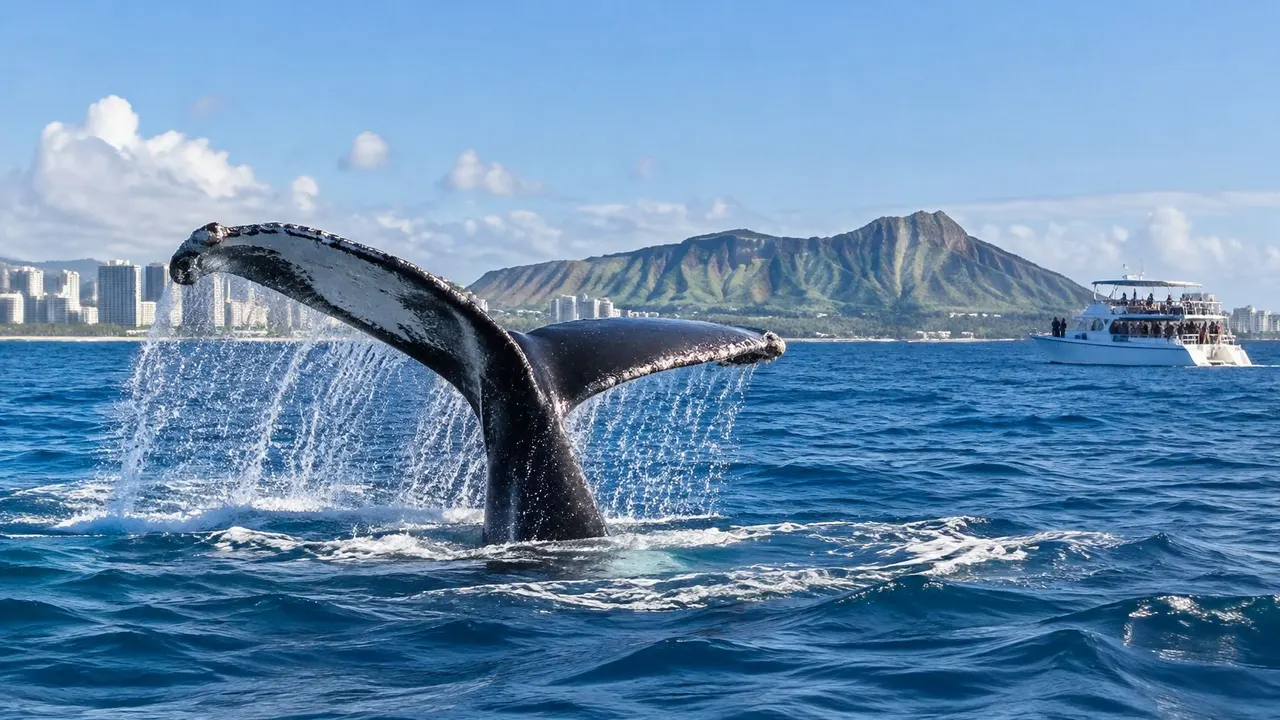
Whale season on Oahu centers on winter. January, February, and March are the best months to plan around, but peak season improves your chances rather than promising a whale beside the boat.
A useful way to plan is to separate three things: whales being in Hawaiian waters, spotting one in the day's conditions, and viewing it responsibly. For families, the right month and realistic expectations matter more than hoping for a close pass.
When Whale Season Runs on Oahu
Humpbacks winter in Hawaiian waters, with the strongest viewing period on Oahu generally falling between January and March. The broader season includes months on either side, but sightings are less dependable at its edges.
Oahu Humpback Season by Month
| Month | Season role | Sighting odds on Oahu | What to expect |
|---|---|---|---|
| September | Early arrival | Low | A few animals may show; not a plan-around month |
| October | Transition | Low | Still outside the main winter viewing window |
| November | Season opens | Moderate and rising | Whale-focused trips become more reasonable, but sightings remain uncertain |
| December | Numbers building | Good and improving | Winter migration is well underway |
| January | Peak viewing | High | A strong month for surface activity and mother-calf encounters |
| February | Peak abundance | Highest seasonal expectations | A strong balance of whales, calves, and surface behavior |
| March | Late peak | High, easing late | Early March remains prime; late March can still be active |
| April | Shoulder departure | Moderate to low | Animals head north as the season winds down |
| May | Season close | Low to moderate | Late animals may remain |
| June–August | Off season | Very low | Don't build a trip around humpback sightings |
These are relative seasonal expectations, not measured probabilities for an individual cruise. A calm day in a shoulder month may offer a clearer view than a windy day during peak season.
Oahu offers whale-viewing opportunities, though sightings may be less frequent than around Maui, Lānaʻi, and Molokaʻi. The strongest months improve your odds; they cannot guarantee a sighting.
How to Read the Shoulder Months
September arrivals are possible in the broader Hawaiian season, but they aren't a sound reason to reserve a whale-focused outing. October is a transition month, not an early version of the winter peak.
November opens the main viewing window. By December, there is more reason to scan the horizon, though visitors whose trip depends on seeing whales should favor the heart of winter.
January and February are strong choices for whale watching. If your family is choosing between winter school-break dates, either month belongs on the shortlist.
The season doesn't switch off at the end of February. Early March remains a worthwhile option, while activity can ease later in the month.
April and May are departure months, not a second peak. Whales may still be present, but warm spring weather doesn't mean more animals.
Planning rule: Choose the winter peak when whales are the main reason for traveling. Treat the season's edges as opportunities if you're already visiting.
The full season is broader than its most productive stretch. Whale-first travelers should aim for January through March and treat November and late spring as less predictable.
Why Humpbacks Winter in Hawaii
Northern feeding grounds are the summer grocery store; Hawaiʻi is the winter nursery. Humpbacks come south primarily to mate, give birth, and nurse calves, rather than to feed as they do in northern waters.
NOAA's Hawaiian Islands Humpback Whale National Marine Sanctuary overview estimates that up to 12,000 humpbacks return to Hawaiian waters each winter, representing more than half of the North Pacific humpback population.
A Nursery, Not a Feeding Stop
The winter gathering follows a biological migration, not just a tourism calendar. A whale that appears off Oahu during the season may be traveling, resting, mating, or caring for a calf.
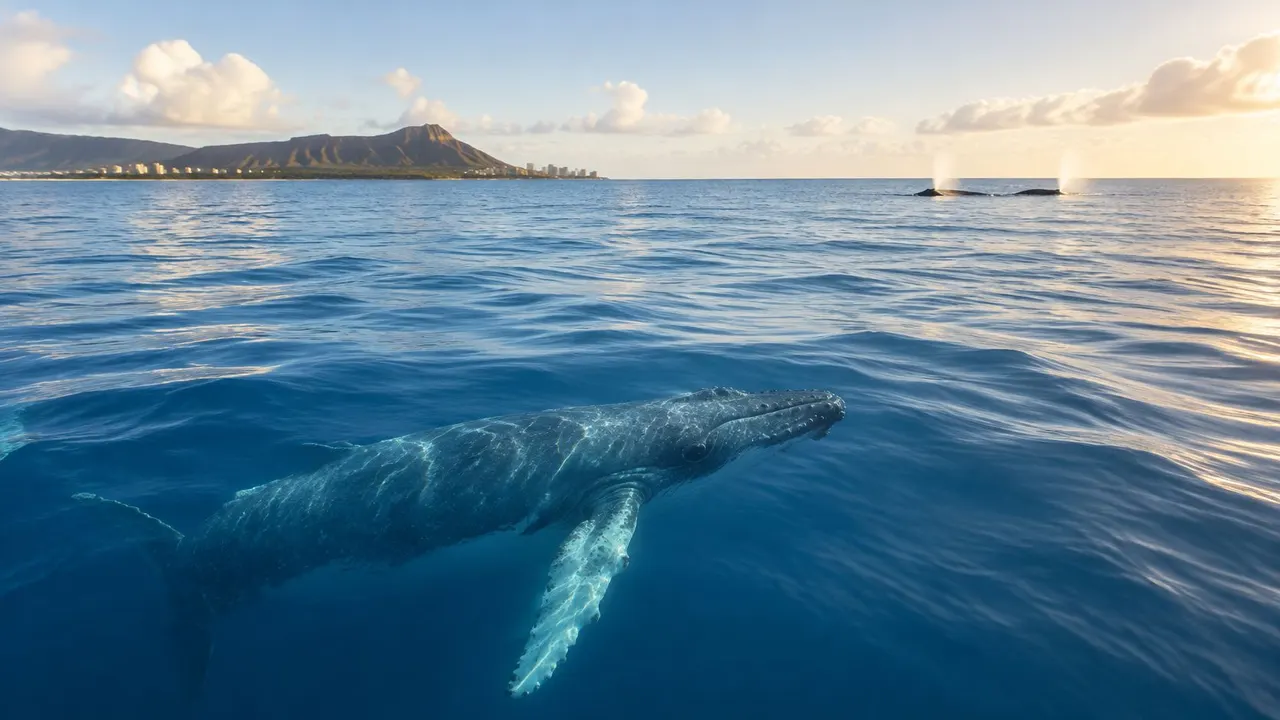
If your family spots an adult traveling with a calf, you're seeing part of the whales' seasonal visit. Humpbacks migrate between Hawaiian waters and northern feeding grounds; they aren't resident whales that stay off Waikiki all year.
Clear water and pleasant weather make a day on the ocean enjoyable, but they don't bring migrating humpbacks back after the season.
What the Migration Means for Your Trip
The nursery setting shapes what you may see. Courtship, mother-calf movement, resting, and travel are all part of the visit. A whale doesn't need to breach to be doing something important.
- Watch for relationships. An adult and smaller companion moving together can be more interesting than an isolated splash.
- Allow quiet stretches. Resting and underwater movement are normal parts of a whale's day.
- Choose the season before the camera. Better equipment can't make up for planning a humpback-focused holiday when most animals have left.
Our Oahu whale-watching planning guide can help you connect those expectations to an ocean outing.
As the season winds down, whales leave for northern feeding grounds. Late spring is the end of the winter visit, not the start of another busy period.
What a Sighting Looks Like
A pale puff rises above the water. You turn toward it, catch a dark back rolling through the surface, and then the whale disappears.
That brief sequence is a normal sighting. It still counts when the whale doesn't stop beside the boat.
Learn the Small Signals
A blow is often the first sign. Watch the same patch of water for a back, a dorsal fin, or a raised tail as the whale dives.
Breaches and tail slaps are highlights, not the baseline. Mother-calf pairs can be quieter: the smaller animal stays near the adult and may surface more often.
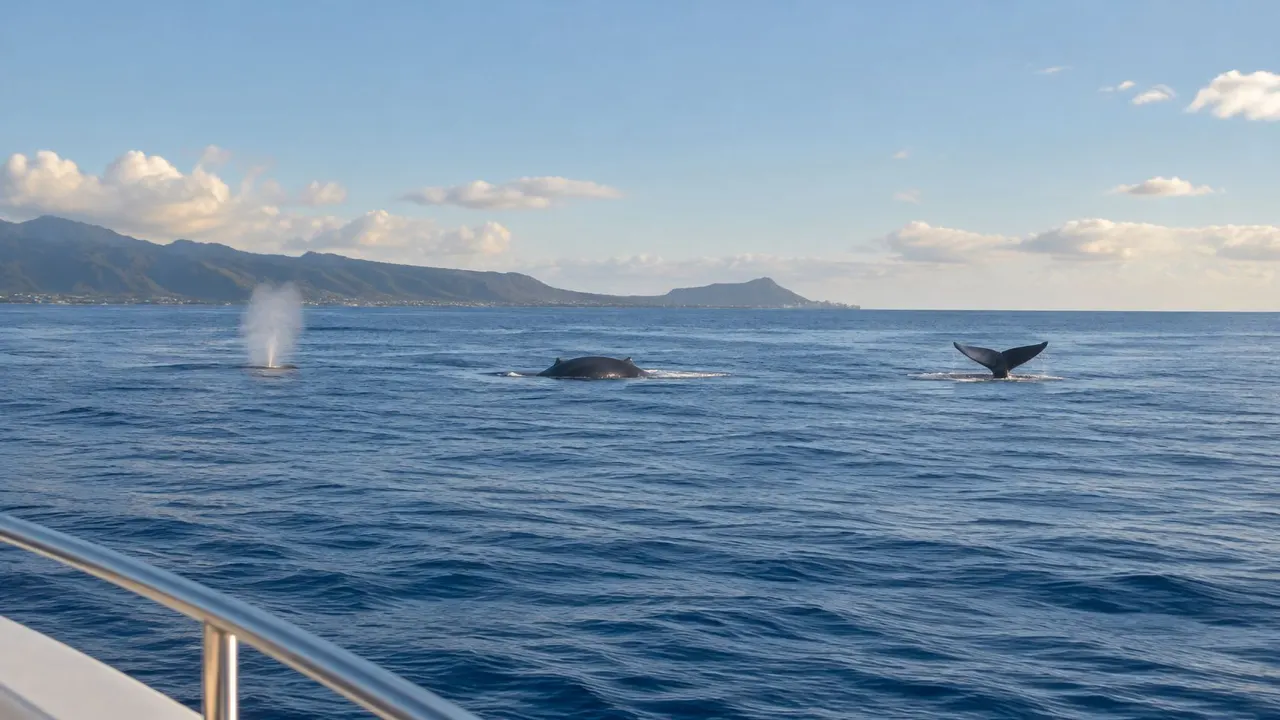
Whales spend much of their time below the surface, so a sighting often comes in pieces. Conditions affect what you can spot: a blow may stand out against smooth water and disappear against wind chop.
For an example of late-season activity, Spectrum News Hawaii reported 220 whales recorded across 10 Oʻahu sites during the final, late-March 2025 count. That was a multi-site observation event, not what an individual boat passenger should expect to see.
A good whale watch is time in the right habitat with a patient crew. It isn't a promise of a close pass.
Help Children Follow the Encounter
Children watch from the deck, not in the water with a whale. Whether a boat outing suits your child depends on sea conditions, their comfort aboard, and their ability to follow the crew's safety directions.
Give young watchers a simple job: look for the next puff, listen for the direction call, or remember where the whale last surfaced. Find the animal with unaided eyes first, then bring up binoculars.
Our guide to Oahu whale-watching encounters offers more context for recognizing what you're seeing.
If whales don't come toward the boat, distant blows still count as a sighting. Responsible crews can't force an interaction or steer closer to fill a phone screen.
When an animal approaches on its own, the crew may pause rather than follow. That restraint is the right response, even when everyone has a camera ready.
Best Windows and Places to Watch
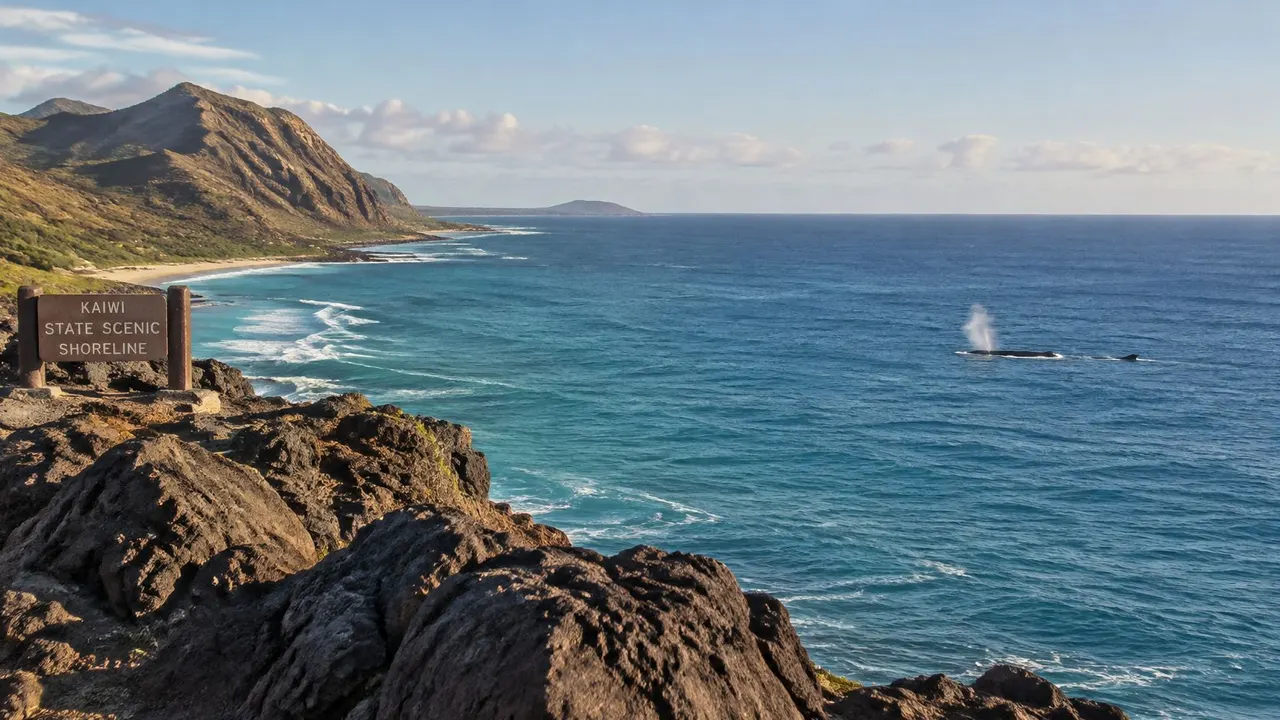
Your best choice depends on whether you want a flexible shore visit or a guided search on the water. For Waikiki visitors, southeast-facing viewpoints and south-shore coastal waters are practical places to start.
Kaiwi State Scenic Shoreline and Makapuʻu Point are established whale-watching viewpoints. Expect exposed, windy conditions rather than the shelter of a hotel pool deck.
Shore Lookout Versus a Waikiki Boat
| Option | Best window | What you gain | Limit |
|---|---|---|---|
| Kaiwi or Makapuʻu lookout | Winter peak, clear morning | Free shoreline viewing and control over how long you watch | Distant spouts, wind, and no guide unless you arrange one |
| South-shore nearshore boat | Peak-season morning | An elevated view, a search pattern, and crew calling out blows | Fixed trip length and no permission to chase |
| Shoulder-season outing | Early or late in the main season | Possible early arrivals or late-departing animals | Lower seasonal expectations; don't plan only for whales |
A lookout works well when family members want different lengths of outing. Someone can enjoy the coastline while the keen whale watcher keeps scanning, without asking everyone to commit to time aboard a boat.
A guided boat can help if nobody in the group knows how to recognize a blow. Crew members can point passengers in the right direction and help distinguish a whale from whitecaps.
Why a Nearshore Search Makes Sense
According to NOAA's sanctuary boating guidance, humpbacks gather around the main Hawaiian Islands in relatively shallow water, generally less than 600 feet deep. That helps explain why shoreline watching and nearshore boat outings can work without a distant offshore run.
Depth is a habitat clue, not a location guarantee. A captain still needs to consider current conditions and where animals are moving.
Morning departures are a useful first choice because seas are often calmer and blows can be easier to pick out. Check the actual forecast; a windy morning isn't automatically better than a settled afternoon.
- Choose shore for flexibility. Bring binoculars, use designated paths, and stay behind barriers.
- Choose a boat for help spotting. Crew direction can make a brief surfacing easier to follow.
- Choose conditions over the clock. Wind, glare, and passenger comfort matter more than calling a departure “morning.”
Use our Oahu whale-watching location guide to think through the shore-versus-boat choice.
Oahu is convenient for visitors already staying in Waikiki who want to add whale watching to their trip. If whales are the whole purpose of the vacation, weigh the island choice as carefully as the departure time.
Distance Rules for Watching Whales
Federal law prohibits approaching a humpback whale within 100 yards in Hawaiian waters. Hawaiʻi's Division of Aquatic Resources explains that the rule applies to boats, kayaks, swimmers, surfers, drones, and other means of approach. If a whale unexpectedly comes inside that distance, its guidance says the vessel should remain stationary, with a motorized vessel's engine in neutral until the animal moves away.
100 yards is the minimum approach distance, not a target for the captain to reach. Think roughly the length of an American football playing field.
What a Responsible Captain Does
A whale may choose to surface near a boat. That doesn't give the operator permission to turn toward it, pursue it, or try to repeat the encounter.
Responsible handling may look uneventful from the deck: the engine goes quiet, the crew watches the animal, and passengers wait. Holding position gives the whale room to move without the boat trying to control the interaction.
Crews should avoid cutting across a whale's path, leapfrogging a moving group, or making sudden maneuvers for a better viewing angle. The 100-yard rule is the key distance for visitors to remember.
What Passengers Can Do
Bring binoculars or a telephoto lens so distance doesn't feel like a problem the captain needs to solve. A phone can capture the setting and the moment, even when it can't produce a detailed whale portrait.
Mothers and calves need room to travel and surface without boats crowding their route. Give the crew space to operate, especially if an animal appears unexpectedly.
- Respect the separation. Don't ask the captain to move closer for a photo.
- Keep drones away. Don't create an aerial approach around the animal.
- Stay aboard. Never enter the water to swim toward a whale.
- Let the whale leave. A departing animal isn't an invitation to pursue.
Our Oahu whale-watching rules guide provides a useful preparation read before boarding.
Ask the crew how they handle an unexpected nearby surfacing and how they help passengers watch without interfering. A close encounter can't be promised, and the whale's space comes first.
What Families Should Pack
Pack for looking across moving water, not for getting in it. Binoculars, comfortable layers, and a plan for motion sickness usually help more than extra camera equipment.
Keep the bag compact and easy to close. Loose hats, open snack packets, and equipment spread across a seat make a small deck harder to manage.
Gear for Finding the Whale
- Binoculars. A manageable, water-resistant pair helps with distant blows. Help children practice focusing from shore before boarding.
- Polarized sunglasses. These reduce glare and make sustained scanning more comfortable.
- A secure hat. Choose a strap or snug fit so you aren't grabbing for it in the wind.
- Sunscreen. Apply broad-spectrum, water-resistant sunscreen to exposed skin and reapply according to the label.
- A light wind jacket. The breeze aboard can feel cooler than it did outside your hotel.
A phone works for a quick photograph, but don't spend the whole encounter staring through its screen. Find the whale with your eyes first, then decide whether there's time for a picture.
Reef shoes and swim fins aren't necessary for a watch-from-the-deck trip. Choose secure footwear with grip, since decks can get wet.
Comfort Before Cameras
If someone gets seasick, discuss a suitable remedy with a pharmacist or clinician before departure. Follow the product's timing instructions, check whether it causes drowsiness, and confirm age restrictions before giving anything to a child.
Bring water and simple snacks if the operator permits them. For children, add a dry shirt and a layer that can go on without unpacking the whole bag.
- Life jackets. Use the boat's correctly fitted child vest or life jacket as the crew directs.
- A comfortable watching spot. Let the crew help you choose a safe place with suitable seating.
- A spotting job. Ask children to look for puffs or splashes rather than waiting for a dramatic breach.
- A backup activity. Quiet conversation about birds, boats, and the coastline helps during gaps between sightings.
Arrive with enough time to find the departure point without rushing, use the restroom ashore, and check the wind forecast before leaving the hotel. Confirm the trip duration so it fits your child's attention span and your group's mobility needs.
For small children and first-time boaters, consider a shorter cruise during the winter peak on a calm morning. Judge success by watching wild animals behave naturally, not by how close they come.
Book a Waikiki Whale Watch
Living Ocean Tours' Waikiki Whale Watching Cruise views humpback whales wintering along the Waikiki coastline. Tours depart from Kewalo Basin Boat Harbor near Waikiki Beach. The cruise runs January 2nd through March 31st, lasts 1.5 hours, is for guests ages 3 and up, and costs $49 per person.
Living Ocean Tours is Oahu's top rated and most reviewed snorkel company. Visit the Waikiki Whale Watching Cruise page for details.
Choose Dates Before You Pay
If your schedule is flexible, look first for a calm-morning departure in February or early March. Late March can still be worthwhile if those are your travel dates. For November visits, check which seasonal options are operating rather than assuming this cruise runs in fall.
Peak-season timing improves your odds, but it doesn't change the crew's obligation to give whales space. A close pass can't be promised, and no wild-animal outing can ensure that humpbacks surface where passengers can see them.
- Check cancellation terms. Understand the deadline and any conditions before paying.
- Read weather procedures. Know how a cancellation or reschedule is handled.
- Check no-sighting terms. Don't assume that every operator offers a refund or another trip.
Outside the cruise's operating season, choose another activity rather than booking this trip for a whale sighting. In peak season, pick a departure that fits your family's comfort rather than chasing the idea of the closest encounter.
Living Ocean Tours offers seasonal guided whale watching along the Waikiki coastline, with departures from Kewalo Basin Boat Harbor near Waikiki Beach. Visit Living Ocean Tours to plan a winter outing built around patient watching, practical preparation, and respect for the whales.


