
When Do Whales Come to Hawaii? Oahu Season Guide 2026
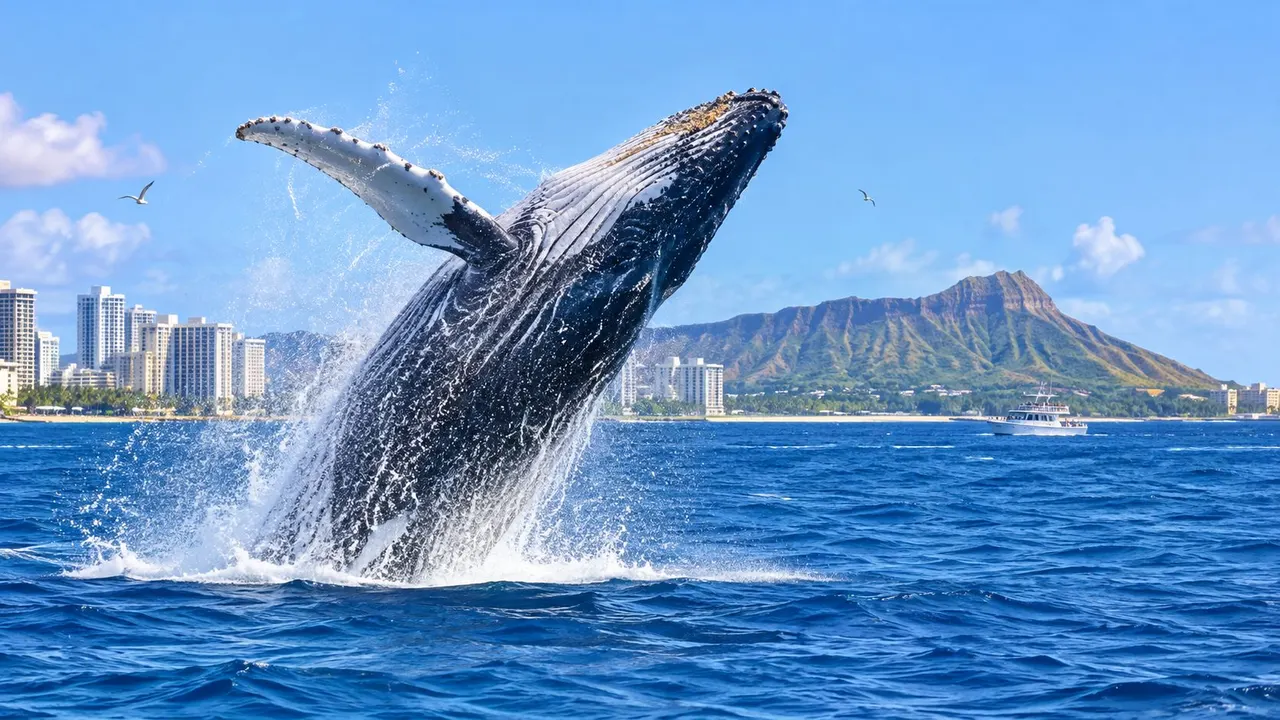
Table of Contents
- Where the edges of the season actually sit
- Why the middle of the season looks different from the edges
- How to read the shoreline options
- What you might actually see
- The family checklist
- If you're swimming or paddling
- The reason behind each rule
Humpback whales come to Hawaii from about November through May, and January through March is the peak window for seeing them. Those two facts answer the search box question and leave the harder one untouched.
So why does a family on Oahu in early February sometimes come home with nothing but photographs of open water, while a couple walking Waikiki beach in mid-December watches a mother and calf for twenty minutes? A season tells you when the animals are in Hawaiian waters. It doesn't tell you what you'll see from one boat, on one morning, under one set of conditions.
The calendar below keeps those questions apart. Which months the humpbacks are here is one thing. Which months the odds tilt toward you off Oahu is another, and that's the one worth building a trip around.
Month-by-Month Whale Season in Hawaii
The North Pacific humpback population moves south for the winter, and Hawaii sits at the center of that migration. NOAA's Hawaiian Islands Humpback Whale National Marine Sanctuary estimates that as many as 12,000 whales, more than half of the North Pacific humpback population, return to Hawaiian waters to breed, give birth, and nurse their calves. They travel thousands of miles from summer feeding grounds in Alaska and other high-latitude areas, and they generally don't feed once they arrive.
That's why the islands aren't a passageway. Hawaii is the principal winter breeding area for the North Pacific population and the only U.S. location where humpbacks regularly reproduce, according to the same sanctuary overview. Sailors and shoreline observers were recording humpback sightings around these islands as early as the 1840s, more than a century before anyone sold a whale watch ticket.
Where the edges of the season actually sit
The window is wider than most travelers assume at both ends. The Hawaiʻi Department of Land and Natural Resources reports that whales can arrive as early as September, remain as late as May, and reach peak numbers in January and February. A long-term tagging report cited in that state guidance recorded departures from the main Hawaiian Islands between March 22 and April 23. March, in other words, behaves like two different months.
Sound tracks the same curve, which is a useful cross-check on all those visual reports. University of Hawaiʻi researchers found humpback song levels climbing from November through January, peaking around February and March, then falling through April and May as the animals head north. Because mature males do most of the singing during the breeding season, the recordings confirm whale presence independently of what a spotter can see from a boat deck. February stacks both signals at once: peak abundance and the strongest acoustic activity of the year.
Planning rule: Aim for late January through early March. That band sits inside peak abundance and before the first documented departures, which is exactly where you want a fixed travel date to land.
Why Humpback Whales Winter in Hawaiian Waters
Picture a humpback in July. It's somewhere in the North Pacific with its head down, working a column of cold water for krill and small schooling fish, packing on the blubber layer that has to carry it through half a year. That water isn't comfortable. It's rich, and that's the whole point.
Then the light shortens, the food thins, and the whale turns south. NOAA Fisheries reports that some humpback whales travel as far as 5,000 miles between high-latitude summer feeding grounds and tropical winter breeding and calving areas. Some of them end up in Hawaiian waters. That's why the animals are most commonly present here during the cooler months in North America, roughly November through May, and why a July visitor almost never sees one.
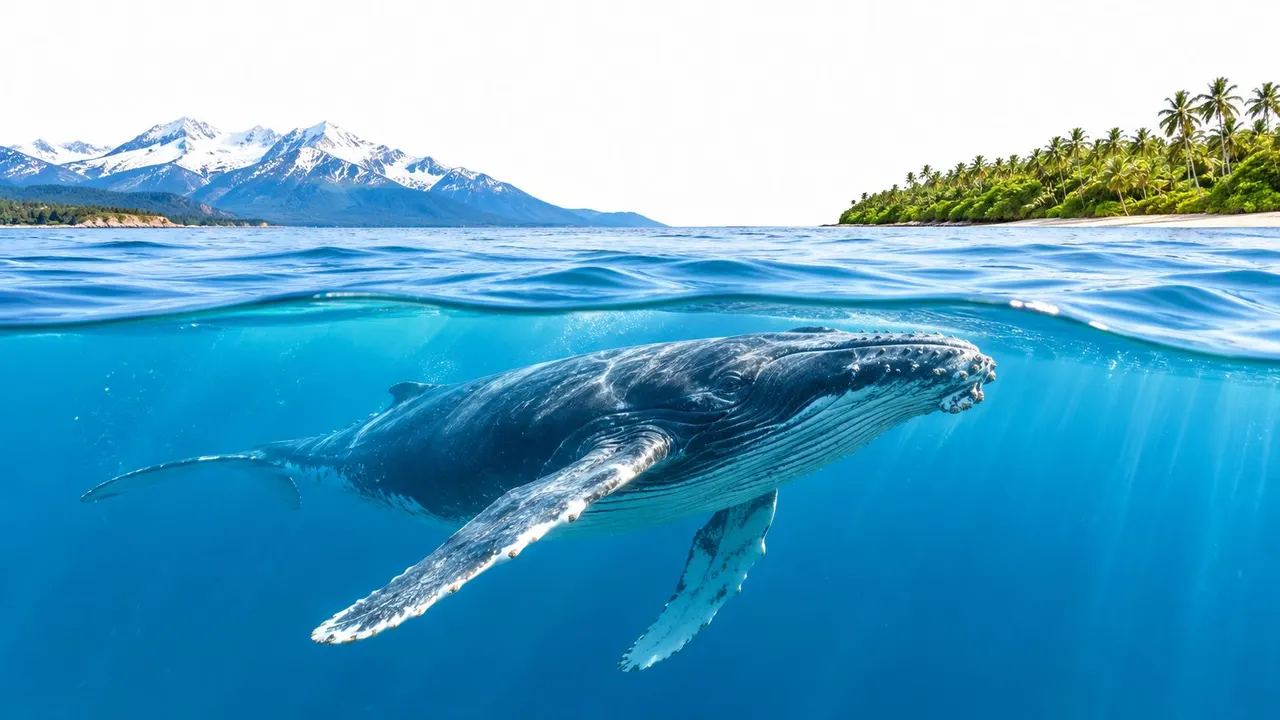
The simplest way to hold the whole picture in your head is this: Hawaii is a nursery, not a buffet. Adults arrive with reserves and largely fast while they're here. Nursing mothers burn those reserves a second time to produce milk for a calf that was born without much blubber of its own, and warm, relatively sheltered water makes that cheaper for both of them. Males sing through the breeding season, sometimes for hours, and the sound carries a long way underwater. None of that happens on a schedule a boat captain sets.
Why the middle of the season looks different from the edges
Early in the winter, the whales that show up first are often adults in motion: pregnant females heading in, males following, animals still spread out and traveling. By mid-season the water holds a mix of mating groups, competitive pods of males, and females that have already given birth. Later arrivals and newborns dominate the tail end, which is why late-season trips tend to feature mothers and calves rather than the acrobatic group behavior people hope for.
Biology decides all of it, so plan around the biology instead of a date you picked for reasons unrelated to whales. A fixed date in the middle of the window is a reasonable bet. The same fixed date at the edges is a gamble. If you want the fuller picture of how the season plays out off Honolulu, this whale watching in Honolulu guide lines up the local timing with what crews encounter.
Where to See Whales Around Oahu and Waikiki
Oahu gets regular whale traffic, but it isn't the busiest island in the chain, and pretending otherwise sets visitors up for disappointment. Hawaiʻi's Division of State Parks notes that Oʻahu has common sightings but generally fewer than Maui, Lānaʻi, Molokaʻi, Kauaʻi, or Hawaiʻi Island, as reported in NOAA's recreation guidance for the sanctuary. The same page shows how broadly the animals spread: in the 2025 Ocean Count, 1,353 volunteers counted 4,782 humpbacks across 44 sites on six Hawaiian islands, Oʻahu included.
There's real comfort in that number. Whales aren't clustered around one island and absent everywhere else. They're distributed, and your job is to be looking at the right piece of water at the right time of day rather than booking a flight to Maui.
How to read the shoreline options
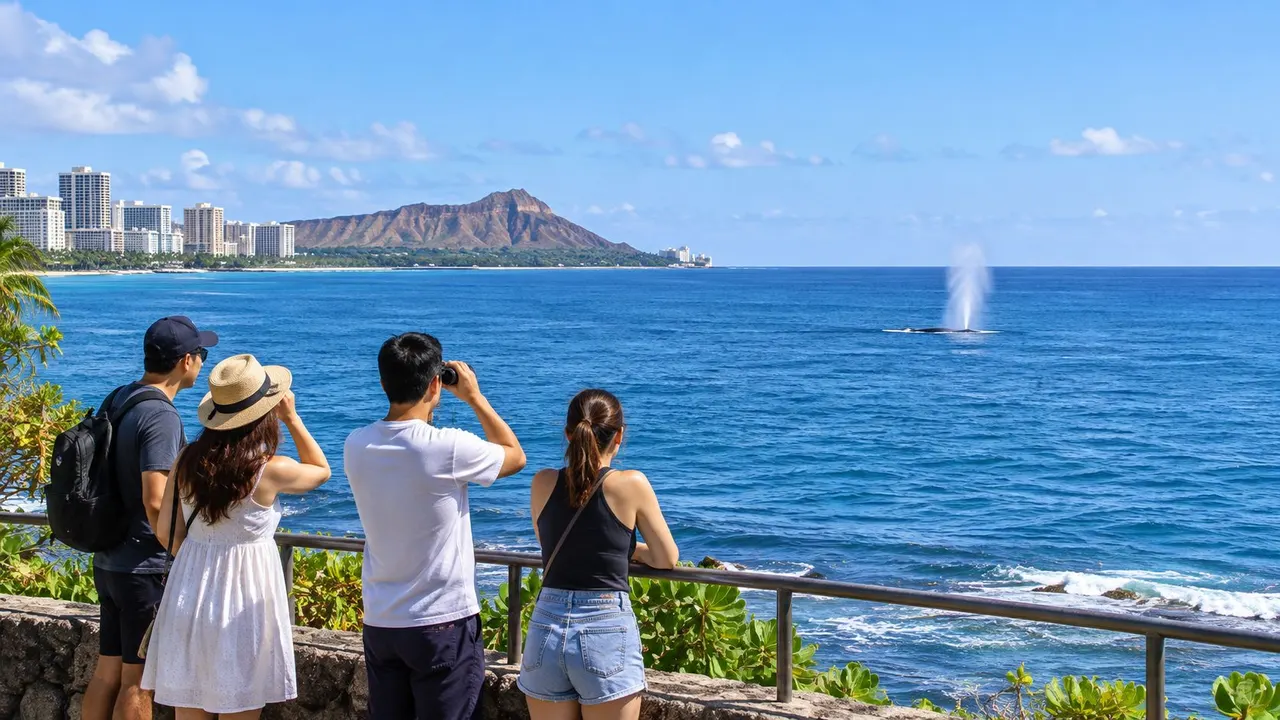
Land-based watching is free and works, with two caveats. You're looking at animals that may be a mile out, so all you'll get is a blow, a dark back, or a splash, and only on days when the water surface is calm enough to pick them out. A pair of binoculars changes the experience completely. So does timing: early morning tends to bring lighter wind and flatter water, and the forecast the night before tells you whether the trade winds will chop things up.
Makapuu Point gives you elevation, which flattens the angle and lets you see further, but it's exposed and windy. Diamond Head is the easy version for anyone staying in Waikiki, a short walk or ride with a wide horizon and, on a clear day, the whole southern coast in view.
A boat still wins on proximity, and it isn't close. Operators out of Kewalo Basin Boat Harbor, on the Waikiki side of Honolulu, run shorter trips to the same water and put you at deck level with animals that shore watchers see as specks. Living Ocean Tours works that harbor, minutes from the Waikiki hotel strip, which means the transit time is short and the search starts almost immediately. For a closer look at the departure points and timing along the south shore, this whale watching on Oahu guide maps out the options.
Bring layers, not just sunscreen. Mornings offshore are cooler than the beach, and a light jacket keeps kids on deck instead of huddled below.
What a Whale Watch Trip Looks Like for Families
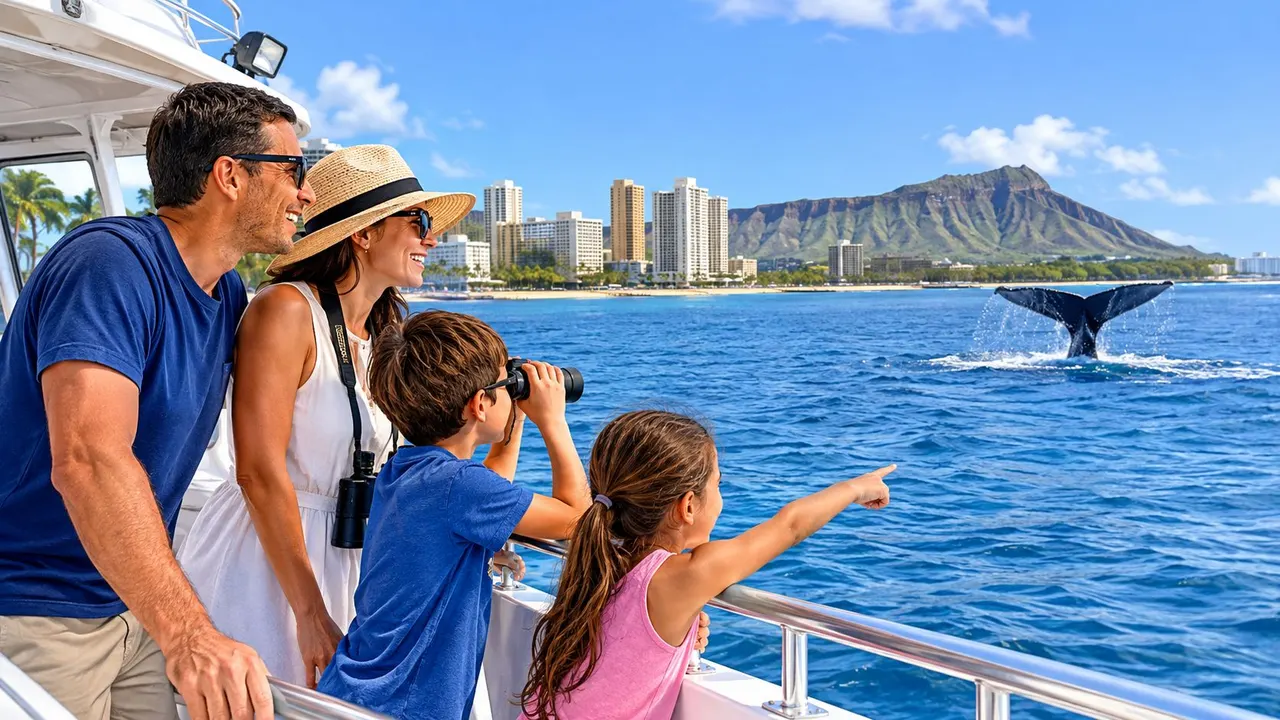
The boat leaves from Kewalo Basin Boat Harbor, a few minutes from Waikiki, and heads out along the coastline where humpbacks spend the winter. That's the short version of what our Waikiki whale watching cruise does: it views the humpback whales that winter in the Hawaiian Islands along the Waikiki coastline, and it departs daily from that harbor. Here's how the morning unfolds.
Most families are at the rail within a few minutes of clearing the breakwater.
Check-in and briefing. Arrive early enough to park, find the slip, and sign the paperwork without rushing. The crew runs through safety, life jackets, where to sit, and where not to stand while the boat is moving. Listen to this part once and you can relax for the rest of the trip.
Leaving the harbor. The captain clears the breakwater and the crew starts scanning. Most operators teach the clock system: a whale at two o'clock, 300 yards out. Everyone on board becomes a spotter, and kids are usually the best at it because they're not distracted.
The sighting. When a whale surfaces, the captain slows, keeps a legal distance, and lets the animal dictate what happens next. Nobody chases. That patience is what produces the good encounters.
What you might actually see
- A blow. The spout of misted water when a whale exhales at the surface. It's the most common sighting and the one that carries furthest.
- Tail flukes. A diving humpback lifts its tail clear of the water before going down. Photographers wait all morning for this.
- A breach. The full body launch. Spectacular, and unpredictable; some trips get three, others get none.
- Spy-hopping. A head rising vertically out of the water, apparently to look around. Calves do it often.
- A mother and calf. Common later in the season, and the sighting that tends to quiet a whole boat.
Sightings aren't guaranteed, and any operator who promises otherwise is selling you something the ocean doesn't offer. Weather, sea state, whale distribution, and daylight all move the odds. Build a backup into the trip, such as a shore watch the following morning, and a missed sighting won't wreck the day.
The family checklist
- Seasickness medicine before boarding, not after. Sit midship, low down, facing forward, and keep your eyes on the horizon.
- Sun protection, because reflection off the water doubles the exposure even under cloud.
- Water and a snack, plus a light jacket for the ride out.
- Kids' binoculars, which turn waiting time into a game instead of a countdown.
- A charged phone or camera, with the zoom you know how to use.
One thing to settle before you book: this is a viewing cruise, not a swim. Federal rules keep people out of the water with humpbacks, so nobody snorkels alongside a whale, and our crew holds that line firmly. If the family also wants a reef swim with turtles, plan it as a separate outing on another day. Parents weighing up the trip with younger children can read more in this whale watching with kids guide.
Safe and Respectful Whale Viewing Rules
Federal regulations prohibit anyone from approaching a humpback whale within 100 yards, or 90 meters, in Hawaiian waters, according to NOAA's Hawaiian Islands Humpback Whale National Marine Sanctuary regulations. The rule applies whether the approach is made by boat, swimmer, kayak, paddleboard, drone, or any other means, and it applies all year, not only during whale season.
If a whale closes the gap on its own, the guidance is specific. A vessel should remain stationary, put the engine in neutral, and wait for the whale to move away rather than maneuvering closer or trying to intercept it. Cutting in front of a surfacing whale is how collisions happen.
If you're swimming or paddling
- Don't swim toward a whale. If one is within your view, you're already close enough.
- Never touch or chase. A 40-ton animal doesn't need handling, and a startled one can injure people without meaning to.
- Give mothers and calves extra room. Calves surface unpredictably, tire quickly, and stay near their mothers, who are protective.
- Keep kids close and hold them back from the rail or the water's edge when an animal is near.
- Leave the drone down. Aircraft count as an approach under the same rule and cause real disturbance from above.
The reason behind each rule
Whale season here is a reproductive season. Adults are mating, females are giving birth, and mothers are nursing calves that have no blubber cushion to fall back on. Pursuit costs them energy they can't spare, and repeated disturbance can push a mother-calf pair away from the sheltered water they need. Calves in particular are vulnerable in the first weeks of life, and they're the animals a careless approach damages most.
A respectful distance isn't a limitation on the experience. It's the reason the whales stay long enough for anyone to watch them.
Choose operators who follow these rules without being nudged, and treat that wide gap between boat and whale as part of the deal. The full local picture, including which Oahu departures work best, is covered in this Oahu whale watching resource.
Book a Whale Watch for Peak Season
Three decisions do most of the work when you're turning the season into a booking.
Pick the right weeks. January through March is where abundance peaks, and even inside that band the order matters. Book the first half of March rather than the last, because the first documented departures are already underway in the back half of the month. A late-February or early-March date is the closest thing to a safe bet the calendar offers.
Protect yourself with a backup day. Wind and sea state cancel trips, and a morning departure usually gives you calmer water and better spotting conditions than an afternoon. Leave a second morning open if your schedule allows it.
Book a boat rather than planning an in-water encounter. No one swims with humpbacks here. A boat out of Kewalo Basin along the Waikiki coast is a practical way to get close, legally and safely.
Living Ocean Tours runs the Waikiki Whale Watching Cruise from January 2 through March 31, a 1.5-hour trip for ages 3 and up at $49 per person. We're Oahu's top rated and most reviewed snorkel company, and our crew works the coastline year-round, so the whale watch runs on local knowledge rather than a script. You can see the current schedule and book the Waikiki whale watch tour online, or reach us at info@livingoceantours.com or +1 (808) 436-3483 with questions about which dates suit young children.
Reserve early for January and February weekends, when boats fill fastest and families are competing for the same morning slots. Arrive at the harbor ahead of check-in so the first ten minutes aren't a scramble, and read the marine forecast that morning before you leave the hotel. If the wind is up, call before you drive over; a rescheduled trip beats a rough one.
Living Ocean Tours runs seasonal whale watching out of Kewalo Basin Boat Harbor near Waikiki Beach, with morning departures timed to the weeks when humpback abundance is highest. The crew knows this coastline, keeps a legal distance from every animal, and puts families within sight of a blow without crowding the whales. Head to Living Ocean Tours to check dates and reserve your spot before the peak weekends fill.


