
Whale Watching Season Oahu Hawaii: Peak Months Guide
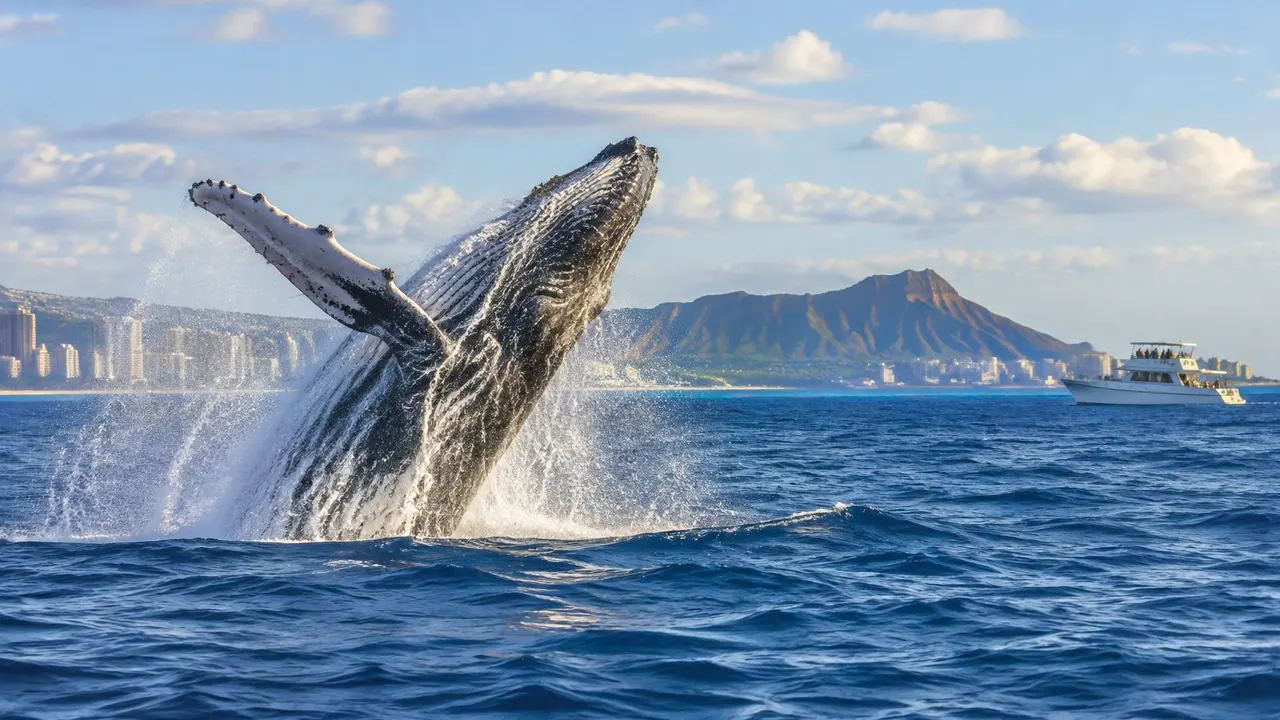
Oahu's humpback season runs from November through May, and January through March is the peak window with the highest chance of sightings. If whales are the reason you're booking an ocean trip, choose the peak rather than the edges of the season.
The scale is remarkable: Hawaii's Division of State Parks describes as many as 10,000 humpback whales visiting Hawaiian waters each year. That doesn't mean every departure finds whales, or that every sighting includes a breach. It means you're visiting an important breeding habitat, where patience and responsible boat handling matter more than promises.
When Oahu’s Humpback Whale Season Peaks
Book during the heart of winter for the strongest opportunity, and treat the season's edges as flexible options. NOAA's Hawaiian Islands Humpback Whale National Marine Sanctuary describes a winter migration with whales generally arriving in November, remaining through April, and some individuals appearing as early as September or staying into May.
The principal viewing period is January through March, according to the same sanctuary guidance. Hawaii's Division of State Parks identifies January and February as the peak months, a narrower emphasis within that broader winter window.
Humpback whale activity around Oahu by month
The practical distinction is peak season versus possible season. The month-by-month guide below translates NOAA and state seasonal guidance into booking decisions, not promises about what a particular boat will encounter.
| Month | Whale Activity Around Oahu | Planning Value |
|---|---|---|
| September to October | Rare early arrivals possible | Bonus only, not a planning target |
| November | Whales arriving, sightings begin | Good shoulder option |
| December | Numbers building through the month | Good option with flexible dates |
| January | Peak concentration of whales | Highest probability |
| February | Peak concentration, a state-identified top month | Highest probability |
| March | Strong activity, NOAA peak range | Highest probability |
| April | Whales remain, numbers easing | Reasonable option |
| May | Late departures, limited sightings | Lowest odds within the season |
| June to August | Outside the recognized season | Not recommended for whale watching |
Don't read a shoulder-month row as a warning to stay ashore. A trip before or after the peak can produce a memorable encounter, but you shouldn't expect the same concentration of whales throughout the entire seasonal window.
NOAA's recreation guidance recognizes November through May as the general season, with the usual abundance peak in January through March. That distinction matters if your family has already booked a fall or spring vacation: possible sightings can justify an outing, but not a guarantee.
Choose dates around your real priority
If whale watching is your main reason for visiting, build the vacation around the peak. If your travel dates are already fixed, choose the ocean experience you'd enjoy even if the whales remain out of sight.
Oahu sightings are common, but state guidance describes them as generally less frequent than around Maui, Lanai, Molokai, Kauai, and Hawaii Island. Don't assume that photos taken elsewhere in the islands represent what every Waikiki departure will see.
Booking rule: Choose the peak when you can. Choose a shoulder-month outing because you want time on the ocean, with whales as a genuine possibility rather than an expected performance.
A longer seasonal window also doesn't mean every operator offers dedicated whale trips throughout it. Match your dates to the actual departure calendar, and leave room for winter weather to change your plans.
Why Humpback Whales Gather in Hawaiian Waters
Hawaii becomes a winter nursery and breeding ground, not a place whales pass on their way somewhere else. Humpbacks leave northern feeding grounds around Alaska and Canada and travel to warm Hawaiian waters to mate, give birth, and nurse calves.
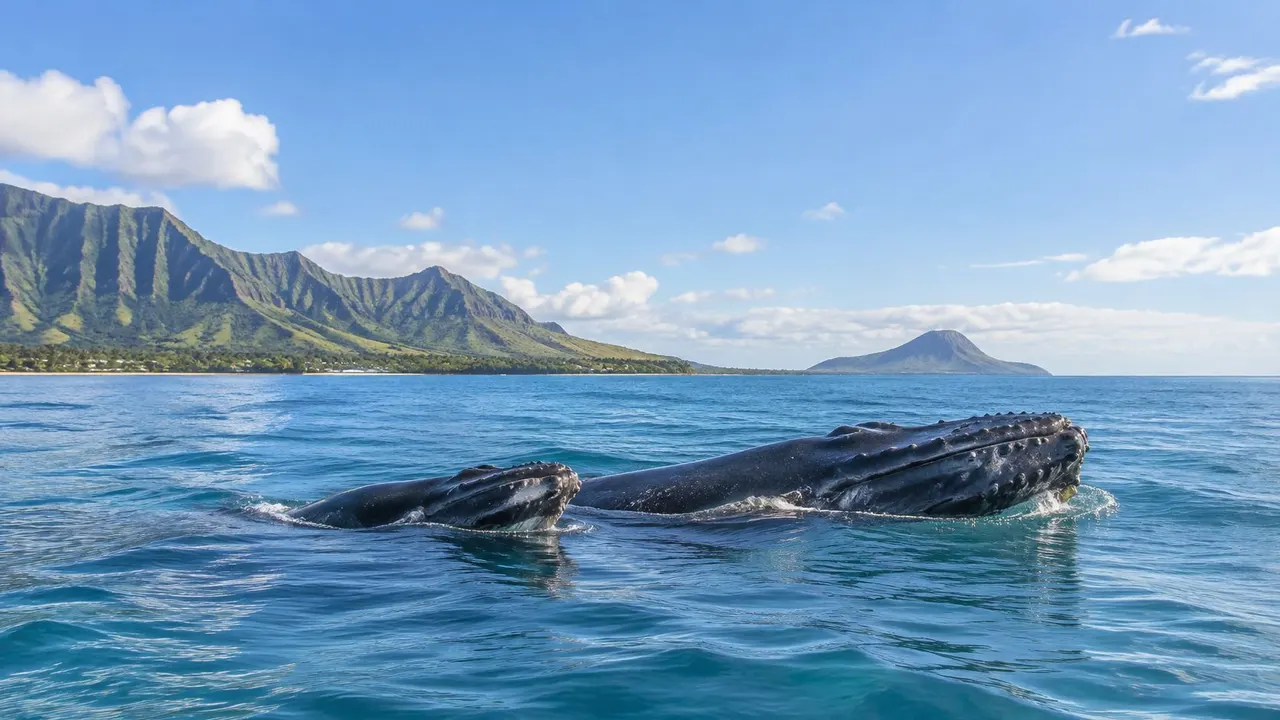
A useful way to understand the journey is to follow a mother and calf through the season. The adult has come from a feeding environment into a breeding habitat, while the calf is beginning life before the return migration north.
A statewide migration with local encounters
The Kaiwi State Scenic Shoreline guide describes Hawaii as a destination for approximately half of the North Pacific humpback whale population. The whales use waters throughout the archipelago, including Oahu, rather than gathering exclusively around a single island.
That makes the Waikiki coastline part of a much larger seasonal event. Our guide to whale watching around Oahu helps visitors connect that statewide migration with a practical outing from Honolulu.
During the February 22, 2025 Great Whale Count, volunteers recorded 408 humpback whales around Oahu, in a count coordinated across 44 sites by the Pacific Whale Foundation and the Hawaiian Islands Humpback Whale National Marine Sanctuary, according to the published Great Whale Count recap. Those observations aren't a complete census, and they shouldn't be converted into a prediction for an individual tour.
Why coastal viewing makes sense
NOAA's boating guidance notes that humpbacks gather primarily in relatively shallow waters of less than 600 feet, although sightings also occur in deeper water. That coastal habitat explains why shore observers and boats leaving Honolulu can encounter whales without traveling to a distant offshore destination.
Mothers and calves may spend time resting near the surface, so a sighting doesn't have to be dramatic to be meaningful. A slow surfacing sequence can reveal more about their relationship than a brief splash.
A short outing from Kewalo Basin can put visitors in seasonal whale habitat. It can't put the whales on a schedule.
Best Times of Day and Weather for Spotting Whales
Choose the earliest departure that works for your family, then give the actual marine forecast more weight than the clock. Morning is a sensible default for comfort and scanning, not a guarantee that whales will be more active.
Best viewing windows by time of day
These are practical planning tendencies, not fixed weather rules. A calm afternoon can offer better viewing than a rough morning.
| Time Window | Typical Conditions | What It Means for Viewing |
|---|---|---|
| Early morning, first departures | Often calmer seas, lighter wind, clearer air | Best starting choice for spotting blows and tails |
| Midday to early afternoon | Trade winds can strengthen and create more whitecaps | Blows can be harder to distinguish, with more motion on deck |
| Late afternoon | Wind can remain strong, with lower light | Less reliable spotting in choppy conditions, with a scenic backdrop |
| Sunset | Softer light, wind may ease | Scenic, but visibility ends as darkness approaches |
The strongest reason to favor morning is straightforward: a smoother surface is easier to search. When whitecaps cover the water, observers have to separate whale activity from breaking waves, spray, and reflections.
Don't choose a departure because someone claims whales perform at a particular hour. You're selecting viewing conditions and a comfortable time for your group, not reserving an animal's next surfacing.
Read the water, not just the sky
Air temperature tells you little about how comfortable the deck will feel. Wind, swell, spray, and the boat's movement matter more, especially for children or adults who are sensitive to motion.
Clear weather and light wind help observers scan a broad area. Heavy rain and strong gusts make that job harder, but cloud cover alone isn't a reason to dismiss a trip. Bright overcast conditions can still provide useful contrast without harsh glare.
A calm, clear winter morning is an excellent combination. A windy afternoon can still produce a worthwhile encounter, but it asks more of your balance, patience, and attention.
For a multigenerational group, choose the departure that lets everyone arrive rested and unhurried. An early booking isn't an advantage if it means rushing children through breakfast or boarding with a family member already feeling unwell.
Know what you're looking for
Start with your eyes rather than keeping binoculars pressed to your face. Find movement across a broad area, then use magnification once you have a location.
- Blows: Look for a brief plume above the surface, then keep watching the surrounding water.
- Tails: Watch for the tail rising as a whale begins a dive.
- Breaches: Scan for a large body movement followed by a conspicuous splash.
- Slow surface behavior: Notice dark backs, repeated surfacing, or a smaller whale alongside a larger one.
When the crew calls out a direction, look there before reaching for your camera. Locating the whale yourself is more useful than recording empty water while searching through a screen.
Where and How to Watch Whales from Waikiki
Choose a dedicated cruise if whales are the priority. Choose shore watching if flexibility and avoiding boat motion matter more. Both are legitimate ways to watch wildlife, but they solve different problems.
Kewalo Basin Boat Harbor is a convenient departure point near Waikiki Beach. From land, the Waikiki shoreline and Diamond Head side offer opportunities to scan the ocean without committing to a scheduled trip.
Whale viewing options from Waikiki and Kewalo Basin
| Option | Departure Point | Typical Duration | Best For |
|---|---|---|---|
| Dedicated Waikiki whale watch cruise | Kewalo Basin Boat Harbor | About 1.5 hours on our seasonal cruise | Visitors who want focused whale time during winter |
| General ocean tour with whale scanning | Kewalo Basin Boat Harbor | Set by the selected tour itinerary | Travelers who enjoy the ocean and treat whales as a bonus |
| Shoreline watching from Waikiki | Waikiki Beach and Diamond Head side | Flexible, no fee for beach watching | Budget visitors checking for blows from land |
A dedicated whale watch allocates the outing to searching and observing. A general ocean excursion has another itinerary to complete, so an incidental whale sighting shouldn't be treated as its main purpose.
Shore watching gives your family control over the pace. You can stop, scan, take a break, and leave whenever you want, but you can't reposition offshore when activity remains distant.
Compare the experience, not just the ticket
For first-time visitors, a crew's help identifying blows and explaining behavior can be as valuable as the boat's location. You'll spend less time wondering whether a distant splash was a whale and more time looking in the right direction.
At Living Ocean Tours, we're the top rated and most reviewed snorkel company on Oahu, and our tours depart from Kewalo Basin Boat Harbor near Waikiki Beach. For this outing, judge the fit by the seasonal schedule, family requirements, and responsible viewing approach rather than assuming a snorkeling reputation guarantees whale sightings.
Our Waikiki whale-watching planning guide can help you compare an organized departure with watching from land. Check the meeting location carefully, since a Waikiki coastline experience doesn't mean boarding directly from Waikiki Beach.
Make the right choice for your group
- Whales are the main goal: Reserve a dedicated seasonal departure with time allocated to searching.
- Someone dislikes boat motion: Start with shore watching and bring binoculars.
- Your dates fall outside dedicated departures: Choose an ocean outing you'll enjoy without relying on whales.
- Your family includes different attention spans: Plan for quiet observation rather than continuous action.
Don't evaluate a tour by how close the boat appears in a photograph. A crew that leaves room for whales to travel naturally is providing the kind of encounter worth supporting.
Responsible Viewing Rules and Whale Safety
Federal law prohibits approaching a humpback whale within 100 yards, and that restriction applies to boats, kayaks, swimmers, paddlers, drones, and other means of approach, according to NOAA's whale-protection regulations. Buying a ticket doesn't create an exception, and seeing a whale from the beach doesn't make swimming toward it acceptable.
The distinction between legal requirements and recommended operating speeds matters. Hawaii's humpback boating guidance recommends 6 knots or less within 400 yards when approaching or departing whales, and 15 knots or less, or minimum planing speed, in waters 100 fathoms or shallower.
Humpback whale viewing rules for vessels and people
The table combines the approach prohibition with recommended boating practices. The speed guidance supports safe operation; it isn't permission to cross the approach boundary.
| Rule | Requirement | Applies To |
|---|---|---|
| Approach distance | 100 yards, or 91 meters, minimum | Boats, kayaks, swimmers, paddlers, drones |
| Whale approaches within 100 yards | Put engine in neutral and wait for the whale to move away | Vessel operators |
| Speed when approaching or departing whales within 400 yards | Recommended 6 knots or less | Vessels |
| Speed in waters 100 fathoms or shallower | Recommended 15 knots or less, or minimum planing speed | Vessels |
| Interception or forced approach | Prohibited | All vessels and ocean users |
The Hawaii Division of Boating and Ocean Recreation's marine-species guidance gives the 100-yard, or 91-meter, approach threshold and advises operators to put the engine in neutral if a whale comes inside that distance. The correct response is to wait for the animal to move away, not maneuver to prolong the close encounter.
Why the boat may stop or turn away
A captain may turn away to avoid crossing a whale's route. A stationary boat may be waiting because a whale changed direction and approached it.
That means an apparently close encounter doesn't automatically prove the operator pursued the animal. What matters is how the operator positioned the vessel and responded to the whale's movement.
A good sighting isn't measured by proximity. It's an opportunity to observe a whale without changing where it goes or what it does.
Leaving room reduces disturbance and collision risk, particularly around mothers and calves. Natural surfacing, tail slapping, and breaching remain worthwhile to watch from a lawful distance.
Our responsible Oahu whale-watching guide helps families understand why patient observation belongs at the center of the experience.
Questions families should settle before boarding
Can children enter the water near whales? Don't plan on swimming toward or alongside them. A whale watch is an observation trip, not an in-water interaction.
Can you use a drone for a closer view? Don't fly toward whales to bypass the boat's viewing distance. The approach restriction applies to drones too, and you should follow the crew's onboard rules.
Why won't the captain follow every splash? Racing after activity or cutting across an animal's path can disrupt the encounter. A patient crew prioritizes safe positioning over a closer photograph.
Keep your own onboard behavior simple:
- Stay seated when instructed: Don't rush across the deck when someone spots a whale.
- Keep children close: Help them look safely from an appropriate viewing position.
- Follow crew directions: Let the operator manage the vessel and the encounter.
- Keep objects onboard: Never throw food, rubbish, or anything else into the water.
Book Your Winter Whale Trip and Prepare Your Family
Aim for the peak departure window and keep a backup date available. If you're visiting during a shoulder month, make the decision around your family's interest in an ocean outing rather than an expectation of constant whale activity.
For families, preparation is mostly about comfort and expectations. Explain before boarding that a whale may first appear as a distant blow, that quiet waiting is normal, and that a breach isn't something the crew can arrange.
Pack for the deck
- Water: Bring drinking water and make it easy for children to reach.
- Sun protection: Pack sunscreen, sunglasses, and a secure hat.
- A light layer: Ocean wind and spray can feel cool even when the harbor feels warm.
- Binoculars or a zoom camera: Use them after locating activity with your eyes, and secure straps before boarding.
- Motion-sickness preparation: Ask a pharmacist or clinician about an appropriate option for children and sensitive adults, and follow its timing and dosage instructions before boarding when directed.
Don't give a child an adult motion-sickness medicine just because it's available. Check the age guidance, and avoid discovering the instructions only after the boat leaves the harbor.
Our guide to whale watching with kids is a useful planning companion for setting expectations without taking the excitement out of the day.
Know the schedule and family requirements
Our Waikiki Whale Watching Cruise views humpback whales wintering along the Waikiki coastline. It runs January 2 through March 31, lasts 1.5 hours, welcomes ages 3 and up, and costs $49 per person.
We depart daily from Kewalo Basin Boat Harbor, near Waikiki Beach. During the outing, the crew scans for whales and maintains the required viewing distance; sightings are never guaranteed.
Book in a practical order
- Check eligibility and policies. Confirm that everyone meets the age requirement, then review the current cancellation and weather terms before purchasing.
- Choose your primary and backup dates. Leave an alternative open in case winter weather affects operations rather than saving the outing for your final opportunity.
- Confirm your departure details. Check the departure time, meeting instructions, and check-in requirements, then arrive early enough to board without rushing.
Our office is at 1125 Ala Moana Blvd, Slip B-01, Honolulu, and we're open 7 days a week. Email info@livingoceantours.com or call +1 (808) 436-3483 during phone hours, 8am to 5pm daily, for help with trip planning.
For multigenerational groups, don't ask everyone to scan constantly. Let interested family members watch actively while others take relaxed deck time, following the crew's instructions about where it's safe to sit or stand.
Review the Waikiki Whale Watching Tour details, choose a date that leaves your family some flexibility, and come prepared to enjoy the observation rather than chase a particular photograph.
Living Ocean Tours offers seasonal whale watching along the Waikiki coastline, departing from Kewalo Basin Boat Harbor near Waikiki Beach. Visit Living Ocean Tours to plan your winter outing and reserve a family-friendly departure with responsible wildlife viewing at its center.


