
Whale Watching Outfit for Waikiki: What to Wear and Pack
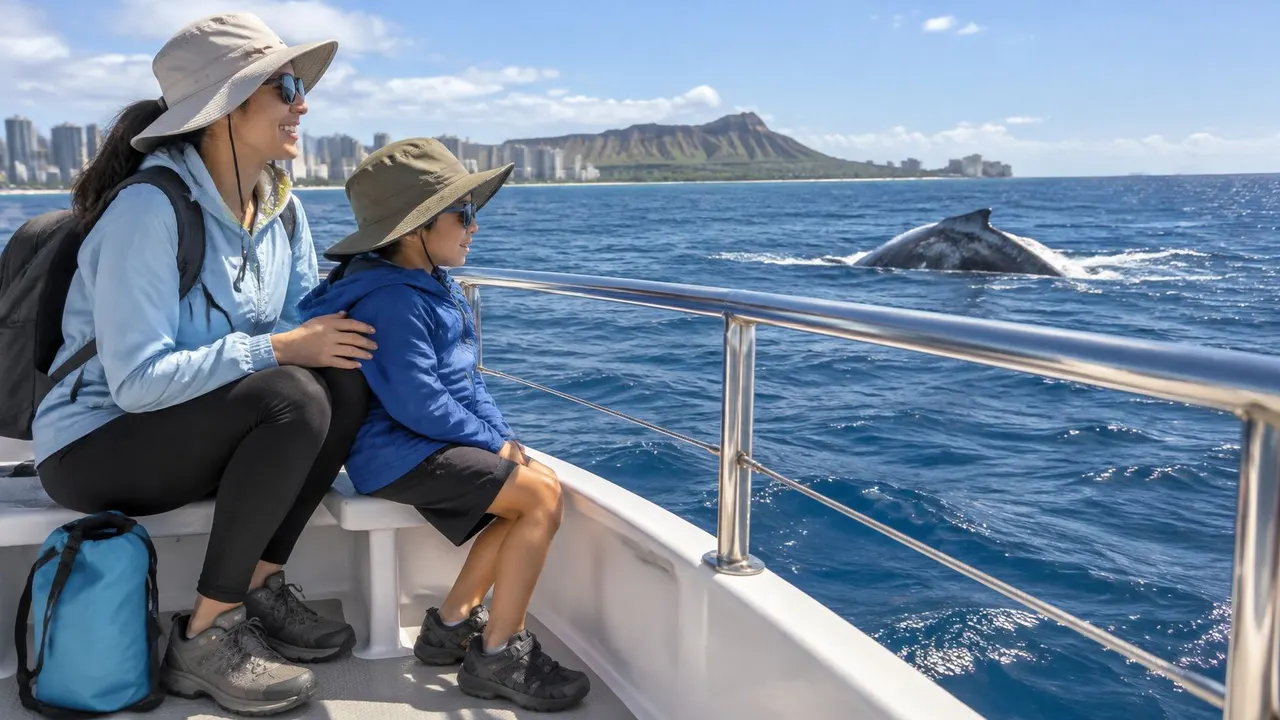
You're packing in a Waikiki hotel room, looking at sunshine outside and wondering whether a jacket is really necessary. Your beach clothes seem sensible until you think about sitting on an open boat with wind across the deck and salt spray landing in your lap.
A comfortable whale watching outfit solves a wind-and-wet problem, not a winter-weather problem. Bring clothes that dry readily, a shell you can put on without fuss, and shoes that let you move confidently when the deck gets damp. You don't need a suitcase of backup gear. You need the right items where you can reach them.
Layers for Wind, Spray and Warm Air
Layer-by-layer clothing for a Waikiki whale watch
| Layer | What to pack | Why it works on the water |
|---|---|---|
| Base layer | Quick-dry synthetic or merino tee | Manages moisture rather than leaving a wet cotton layer against your skin |
| Mid layer | Light fleece or long-sleeve shirt | Adds warmth on cooler January and February mornings |
| Outer shell | Packable windbreaker or rain shell | Blocks wind and helps keep spray off your core |
| Bottoms | Board shorts or lightweight quick-dry pants | Dry readily; pants also cover your legs from sun |
| Swim layer | Swimwear with a cover-up | Needed only if your separately booked activity includes a snorkel stop |
| Spare set | Dry change of clothes in a sealed bag | Replaces damp clothing for children and adults after spray |
The useful distinction is warmth versus wind protection. A thick sweatshirt can feel cozy at the harbor but become awkward once it gets damp. A light shell over a comfortable base layer gives you more control without the bulk of a winter coat.
NOAA's whale-watching preparation guidance recommends layers, sunblock, sunglasses, and a warm layer or blanket because conditions offshore can feel cooler than conditions ashore. Use that as your starting point, then adjust for your own tolerance for wind.
Why beach clothes can fail offshore
Consider a hypothetical family leaving the hotel in the morning. Their young child feels perfectly comfortable in a cotton tee on the sand, then gets splashed after the boat leaves sheltered water. With wind moving over the damp shirt, the child wants to go back before anyone has settled into watching for whales.
The mistake isn't failing to bring a heavy coat. It's having no dry replacement and no wind barrier. Cotton stays damp against the body, so a favorite beach tee isn't the most forgiving choice when spray is possible.
A synthetic shirt is a straightforward option. Lightweight merino can also work if you already own it and find it comfortable. Don't buy specialized clothing just for the label; prioritize a good fit, freedom of movement, and fabric you won't mind getting salty.
Practical rule: Pack the layer that stops the wind before packing another layer that only adds thickness.
Spectator clothes aren't swimming clothes
For a whale watch, dress to observe from the boat. Swimwear under your clothes doesn't replace a useful base layer, and there's no reason to spend the trip in a damp swimsuit if you aren't entering the water.
If another activity includes swimming, separate its clothing from your whale-watch outfit. Pack swimwear, a cover-up, and dry layers, and choose any thermal protection for the water conditions, not how warm the pier feels. Don't assume the whale-watching departure includes a swim stop.
Keep your dry set inside a sealed bag, not loose beneath a towel that can absorb spray. Put the shell near the top so you can reach it without unloading everything.
Before leaving the hotel:
- Check wind as well as air temperature. Sunshine alone doesn't tell you how exposed you'll feel.
- Start with the base layer. Keep the fleece available rather than wearing everything immediately.
- Have the shell ready before boarding. Pulling it out while carrying bags is unnecessary work.
- Add a wrap for someone who chills easily. A seated passenger may want warmth while another family member feels fine.
Footwear, Sun and Seasickness Gear for the Deck
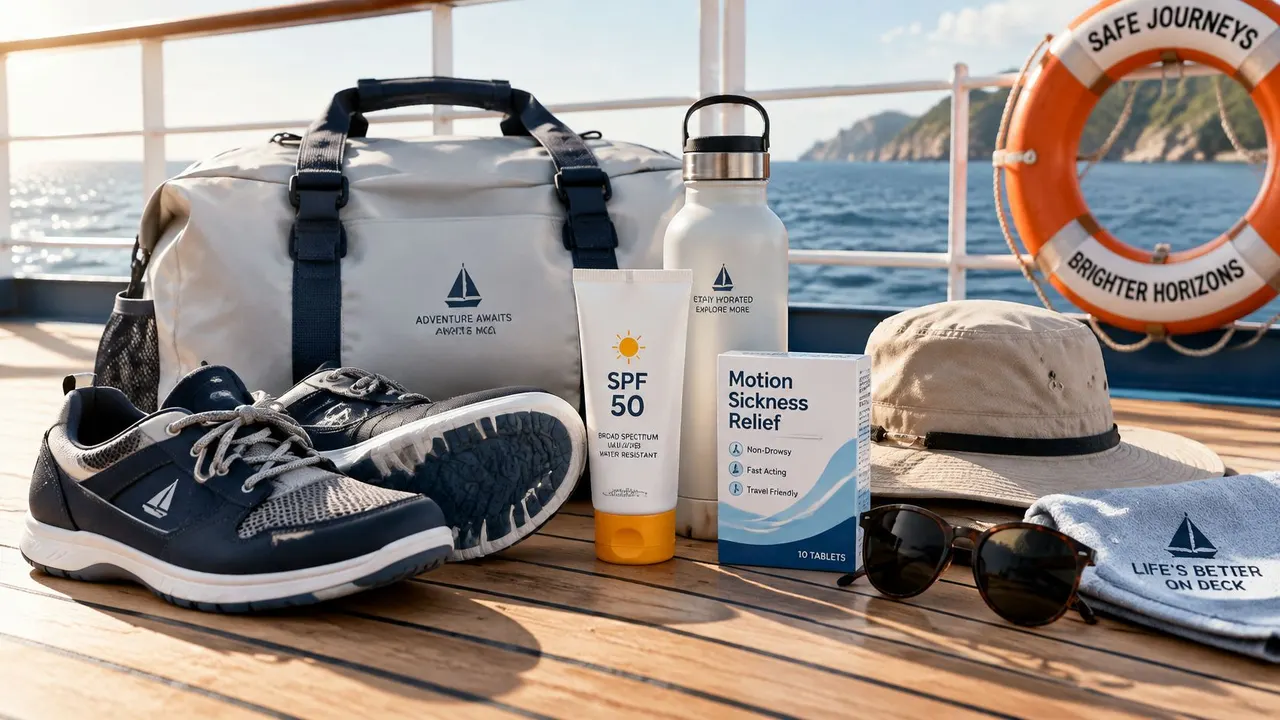
Choose footwear for grip, not the beach walk. Closed-toe shoes with rubber soles are the practical default. Check that the tread still has texture; a worn smooth sole isn't improved by being attached to an athletic shoe.
Flip-flops leave toes exposed and can shift underfoot. A sandal with a heel strap is a better compromise only when its sole grips well and the operator permits it. You should be able to stand, turn, and sit without adjusting your footwear.
Protect your skin and eyes
Bring sunscreen suitable for your skin and follow its application and reapplication directions, including after getting wet or towel-drying. Apply it before boarding so you aren't trying to cover your shoulders while the crew gives the safety briefing.
A long-sleeve sun shirt offers coverage without another application task. For children, choose something comfortable enough that they won't immediately pull it off. Add a hat with a secure strap and sunglasses with a retainer; polarized lenses are a useful choice for looking across glare.
Don't treat a product's “reef-safe” label as permission to use it carelessly. Keep sunscreen containers closed and out of the way on deck.
Prepare for motion before you feel it
If you use a motion-sickness remedy, follow its label for timing and suitability. Ask a pharmacist or clinician about interactions, and get pediatric advice before giving a remedy to a child. Don't improvise a dose at the harbor.
Choose a light, familiar breakfast rather than a heavy meal or alcohol. If you feel unsettled, put the phone away, look toward the horizon, and ask the crew about a lower, more central seat. Ginger chews can be a comfort item, but don't rely on them as a guaranteed treatment.
Use this departure routine alongside our Oahu whale-watching preparation guide:
- Apply sunscreen at the hotel, following the product directions.
- Take any chosen medication at its labeled time.
- Attach your sunglasses retainer before reaching the dock.
- Pack a small towel and sealed bag, with ginger if you like it.
Tell the crew early if you feel unwell. They can help you assess a better seat, although moving the boat specifically for your comfort may not be possible.
Packing for Kids, Grandparents and Mixed-Age Groups
Packing by traveler type on a Waikiki whale watch
| Traveler | Add to the bag | Watch for on the boat |
|---|---|---|
| Babies and toddlers under 3 | Extra dry layer, sun hat, sealed bag for diapers and wipes, comfort item | Cold after spray, naps, sun on exposed skin; confirm age eligibility before booking |
| Children 3 to 10 | Spare outfit, rash guard, kid-size sunglasses with strap, familiar snacks | Restlessness, leaning over the rail, seasickness |
| Teens | Camera or phone case that clips on, layers they'll wear, their own sunscreen | Forgetting to reapply, exposed backs and necks |
| Grandparents and older adults | Wrap or fleece, seat cushion if needed, medicines in a carry-on bag, grip-friendly shoes | Feeling chilled while sitting, balance on a damp deck |
| Adults managing kids | Shared dry bag with everyone's spare clothes, one master packing list | Losing track of bags and sunscreen during boarding |
Age categories help organize a bag, but individual needs matter more than assumptions. A grandparent who spends time outdoors may need less help than a teenager who gets motion sick. Ask each person what usually makes boat travel uncomfortable.
The youngest row is useful for general family planning, not permission to bring an infant on every excursion. Check the departure's age requirement before arranging transport or packing baby supplies. Our whale-watching toddler tips can help you prepare questions about traveling with young children.
Make the shared bag usable
Put each person's spare outfit in its own sealed pouch or bag. Labeling them avoids emptying everyone's clothes onto a seat when only one child needs a change.
Keep medicines with the person who needs them or their responsible adult. If someone's medication carries sun-exposure precautions, follow those instructions rather than assuming sunscreen alone addresses them.
For teens, agree on the phone setup before departure. A secure case and a usable jacket are better than expensive gear they refuse to carry. For younger children, explain the seating rule before they become excited by a sighting.
The best family packing system lets an adult find a dry shirt without asking everyone to stand up.
Plan the seating together
Ask the crew where your group should sit, especially when someone has balance concerns or is prone to nausea. Request central seating when appropriate, but leave room for the crew's loading and safety decisions.
Use layers that open at the front where possible, so passengers can adjust them while seated. Assign a bag-carrying adult, keep the access path clear, and avoid making the oldest family member responsible for everyone's belongings.
What Your Tour Provides and What to Bring Yourself
Living Ocean Tours is Oahu's top rated and most reviewed snorkel company, departing from Kewalo Basin Boat Harbor near Waikiki Beach. We supply the onboard safety equipment; you bring the personal clothing and comfort items that fit you.
What the operator provides and what you bring
| Item | Operator provides | You bring |
|---|---|---|
| Life jackets and snorkel vests | Available on all tours | Discuss any specific sizing need before bringing your own |
| Towels | Plan to bring your own | One per person |
| Hats and sunglasses | Plan to bring your own | Your fitted items, with a strap or retainer |
| Reef-safe sunscreen | Plan to bring your own | Your chosen sunscreen, applied before boarding |
| Light jacket | Plan to bring your own | A packable layer for wind and spray |
| Camera or smartphone | Plan to bring your own | Your device in a dry bag or secure case |
| Swimwear and cover-up | Plan to bring your own | Only if your booked activity includes swimming |
| Crew gratuity | Not required | Not required |
Available safety equipment doesn't mean every item suits every passenger without adjustment. Let the crew handle fitting and explain anything you don't understand. Don't substitute a personal flotation item without discussing it with them.
Your comfort gear is different. A jacket that fits your shoulders, sunglasses that stay on your face, and your preferred sunscreen are items you should choose yourself. Our boat-tour packing guidance is useful when deciding what belongs in the bag rather than the car.
Resolve these details before departure
Ask our booking team about anything the equipment list doesn't answer:
- Small-child fit. What flotation sizing is suitable for your eligible child?
- Changing and rinsing. Is a changing area or fresh water available on your particular departure?
- Expected sea conditions. What should your group prepare for that day?
Leave duplicate bags and bulky clothing behind, but don't leave essential medicines or the dry layer you might need offshore. Keep everything in a manageable bag that can be stowed as directed.
Wildlife Rules That Shape What You Wear and Do
Federal law prohibits approaching humpback whales within 100 yards (91 meters) in Hawaii, whether by boat, kayak, drone, swimming, or another means, according to NOAA's Hawaii marine-wildlife viewing rules. That's a legal boundary, not a suggestion.
Passengers shouldn't ask the captain to chase a whale or move closer for a photograph. A good encounter isn't measured by how near the boat gets, and a whale surfacing nearby doesn't give passengers permission to direct the vessel toward it.
Secure your belongings before searching
Your clothing choices affect how easily you follow crew directions. A hat flying off or a bag sliding across the deck can distract you at the wrong moment.
- Attach small items. Secure hats, sunglasses, and cameras before you lean forward to look.
- Stow loose bags. Keep them out of walkways and away from other passengers' feet.
- Control long accessories. Tuck away scarves and dangling straps, keeping them clear of rails and equipment.
Stay seated during turns when directed, keep children within reach, and don't lean beyond the rail. Follow the crew's instructions about where to stand instead of crossing the deck whenever someone spots a blow.
Wildlife viewing works better when passengers let the captain manage the distance and keep their own movements predictable.
Keep your voice calm rather than calling or waving toward the animals. Choose reef-safe sunscreen, keep spills off the deck, and save washing sunscreen off for a shower ashore rather than deliberately rinsing it into the ocean.
Our Oahu whale-watching guidance provides another place to prepare before boarding. Carry this principle through the trip: the whales' space and the crew's safety directions come first. Adjust your position and expectations to the boat, not the other way around.
Book Your Waikiki Whale Watch
Humpback whales return to Hawaiian waters seasonally, with the highest concentration of activity generally occurring from January through March, according to NOAA's Hawaiian Islands humpback sanctuary overview. Plan your visit around the season, then prepare for the conditions on your particular departure.
Our Waikiki Whale Watching Cruise runs January 2 through March 31, lasts 1.5 hours, welcomes ages 3 and up, and costs $49 per person. Living Ocean Tours takes passengers along the Waikiki coastline to observe humpback whales that winter in the Hawaiian Islands.
Choose a departure your group can enjoy
Use the layer table and footwear routine to finish packing rather than adding more gear. Before choosing a departure, tell our booking team if anyone is prone to seasickness and ask which option may suit your group given the expected conditions. No departure time can promise motion-free water.
Check the marine forecast again on the morning of your trip. Keep your plans flexible enough to follow any operational guidance from the crew, and arrive dressed to watch rather than expecting beach conditions offshore.
Review the Waikiki whale-watch tour details, confirm your date falls within the January-to-March operating window, and reserve your departure.
Living Ocean Tours offers seasonal whale watching along the Waikiki coastline, giving your family a chance to observe wintering humpbacks from the boat. Bring your quick-dry layers, secure shoes, and wind shell, then visit Living Ocean Tours to book a departure that fits your family's plans.


