
Whale Watching in Hawaii Best Time of Year: Peak Months
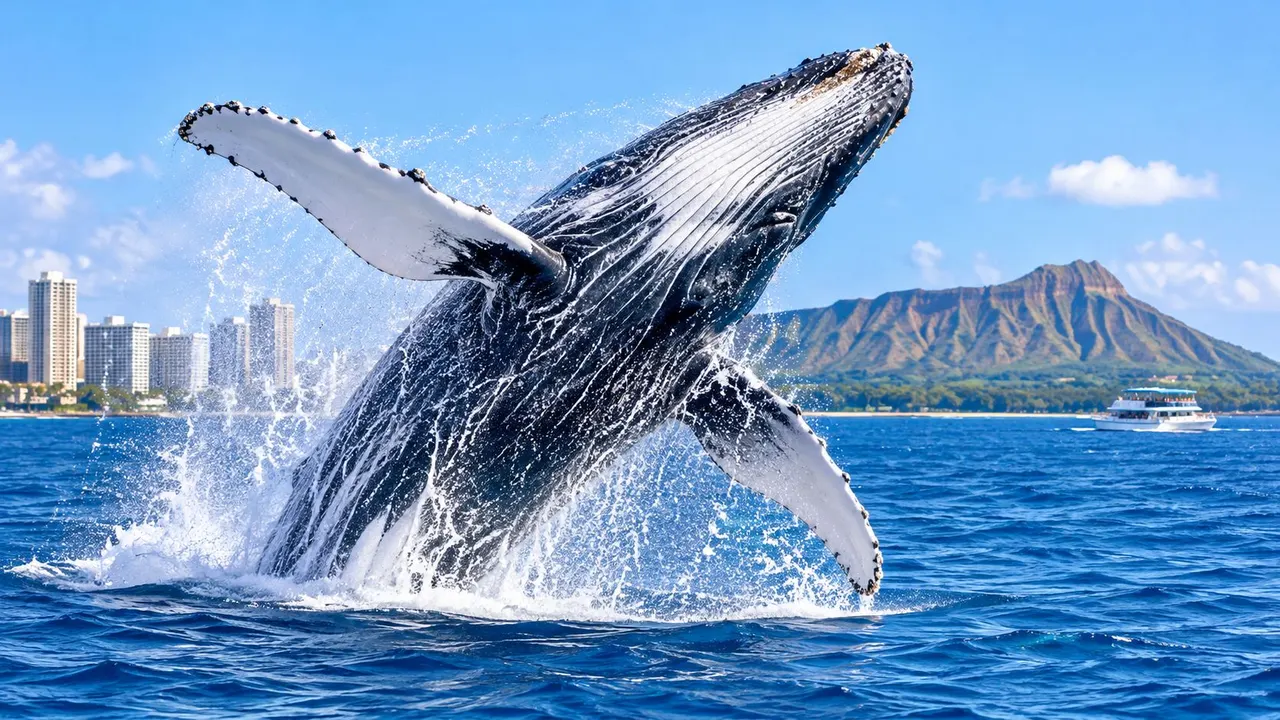
January through March is the best time of year for whale watching in Hawaii, within the full season from November through May. Choose the peak window if seeing humpback whales is a priority, but don't mistake a seasonal advantage for a guaranteed sighting.
The distinction matters: a large seasonal whale population doesn't tell you what a particular boat will encounter on a particular morning. Your month determines the starting odds, while wind, visibility, whale behavior, and the captain's ability to guide the boat responsibly shape the actual outing. For families staying in Waikiki, the strongest plan combines a peak-season departure with enough room in the itinerary to change dates if necessary.
Peak Months for Humpback Whales in Hawaii
Hawaii's humpback season runs November through May, with January through March offering the strongest overall viewing window; NOAA's Hawaiian Islands sanctuary overview states that as many as 12,000 humpbacks, more than half of the North Pacific population, return to breed, calve, and nurse, and reports Ocean Count observations of whales at about 75% of participating sites in January 2017, nearly 95% of active sites in February, and about 75% in March.
Those observations help explain why winter is the sensible choice, but they aren't boat-tour success rates. Shore-based volunteers recorded whales at participating observation sites. You can use that pattern to choose a month, not to calculate a personal guarantee.
Humpback whale season and sighting outlook by month
The table separates the seasonal outlook from the Ocean Count observations summarized above. Not reported means the cited observations don't supply a comparable monthly figure.
| Month | Season status | Encounter outlook | Ocean Count sites with whales (2017) |
|---|---|---|---|
| November | Season opens | Lower and variable | Not reported |
| December | Season building | Moderate and rising | Not reported |
| January | Peak window begins | High | About 75% of sites |
| February | Peak month | Highest, with abundance building toward the central seasonal peak | Nearly 95% of active sites |
| March | Peak window ends | High, with timing affected by seasonal departures | About 75% of sites |
| April | Season tapering | Lower | Not reported |
| May | Last month of season | Low | Not reported |
| June to October | Outside season | Rare and unpredictable | Not reported |
Population estimates also need careful reading. Hawaii's Division of State Parks describes as many as 10,000 humpbacks visiting annually, compared with the higher upper-bound estimate above. Treat these as different published estimates of seasonal scale, not a precise count of whales available to see during your vacation.
Hawaii is primarily a breeding and nursery destination for these whales, rather than their main feeding ground. Their seasonal gathering is why choosing the right month matters more than choosing a departure based on a dramatic breach photograph.
Booking rule: Put the trip inside the peak window when whales are the reason you're traveling. Treat the opening and closing months as opportunities with more uncertainty.
December is a reasonable compromise for visitors whose holiday dates are fixed. If you have complete freedom, though, choose the central winter period rather than relying on early arrivals or late departures.
Shoulder Months and Off-Season Odds
Shoulder-season whale watching makes sense when you're comfortable with uncertainty. It's less suitable when the whole family's vacation revolves around seeing a whale. A whale-specific booking should reflect current activity and the operator's actual departure calendar, not just the fact that your dates fall somewhere within the broad season.
November marks the opening stage, when arrivals are still uneven. December generally offers a more encouraging outlook as the season builds, but it isn't interchangeable with the core winter window. If your travel dates are fixed, choose the outing for the experience of being on the ocean as well as the possibility of wildlife.
When the season starts winding down
April can still reward patient viewers, including with mothers and calves, but the seasonal population is tapering. Our guide to Oahu whale watching in April helps you decide whether a late-season outing fits your expectations. By May, a dedicated whale watch requires especially cautious planning and confirmation that an appropriate trip is operating.
NOAA's recreation guidance identifies November through May as the regular season while noting that limited encounters can occur outside it. That possibility isn't a sound basis for building a summer vacation around humpbacks.
If your dates fall outside the regular season, choose another primary activity and treat a whale sighting as luck, not an expected inclusion.
For an early- or late-season visit, keep a flexible boat date and a backup activity that everyone wants to do. Don't promise children a whale before boarding. Explain that the outing is a search for wild animals, and that sometimes the animals aren't where people can see them.
Oahu and Waikiki Timing for Whale Watching
Oahu is a practical choice when whale watching is part of a broader Honolulu vacation. You don't need to move hotels or add an interisland flight just to include a seasonal wildlife outing, but you should understand the difference between convenient access and the highest statewide concentration.
NOAA's boating guidance supports January through March as the strongest Oahu window and describes the migration from northern feeding grounds to Hawaii's warm breeding and nursery waters. Sightings around Oahu are common, although concentrations are typically higher around Maui, Lanai, and Molokai. For an Oahu-based family, the sensible trade-off is a well-timed local departure rather than assuming every island offers identical conditions.
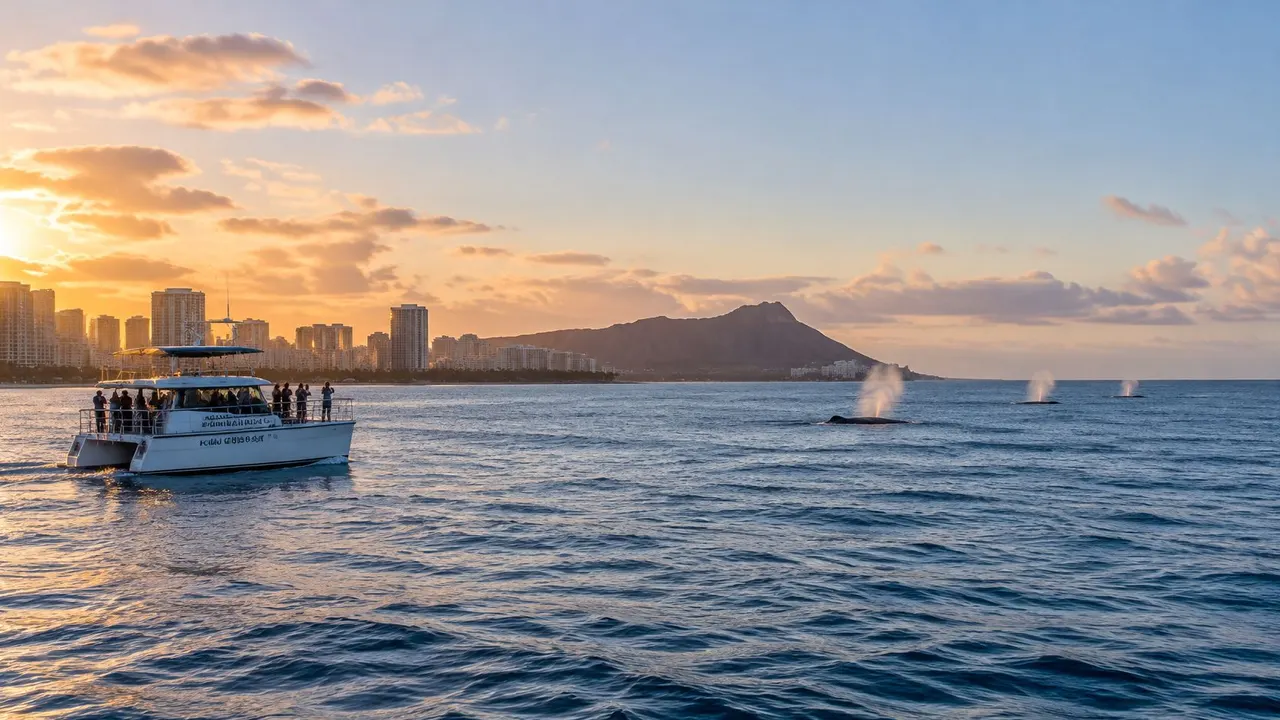
Match the departure to your Waikiki stay
Our tours depart daily from Kewalo Basin Boat Harbor, conveniently located near Waikiki Beach. The Waikiki Whale Watching Cruise looks for humpbacks wintering along the Waikiki coastline. Daily company departures don't mean the whale-watch product operates year-round, so confirm the specific seasonal sailing before arranging your day.
Living Ocean Tours is Oahu's top rated and most reviewed snorkel company.
For visitors with flexible winter dates, I'd favor the central part of the season and leave another suitable day available in the same month. Families should also plan the harbor journey before choosing a departure time. A convenient hotel location doesn't eliminate check-in, traffic, or the need to find the correct slip.
Use our Waikiki whale-watching guide to organize the local outing, then review the Waikiki Whale Watching Cruise for the trip itself. Confirm the current departure calendar before paying, especially if you're visiting near the edges of the operating season.
Weather and Sea Conditions That Shape Your Trip
Seasonal abundance and daily viewing conditions are different things. More whales in Hawaiian waters improves the opportunity, but choppy water can make a distant blow harder to distinguish and a boat ride less comfortable. A calm-looking beach also doesn't tell you everything about conditions farther offshore.
The Hawaii Division of State Parks wildlife guidance accompanies the seasonal assessment identifying peak humpback numbers in the Hawaiian Islands Exclusive Economic Zone around February 19 through March 22, broadly consistent with mid-February through mid-March. That's an abundance window across Hawaiian waters, not a promise that any particular Waikiki sailing will encounter whales.
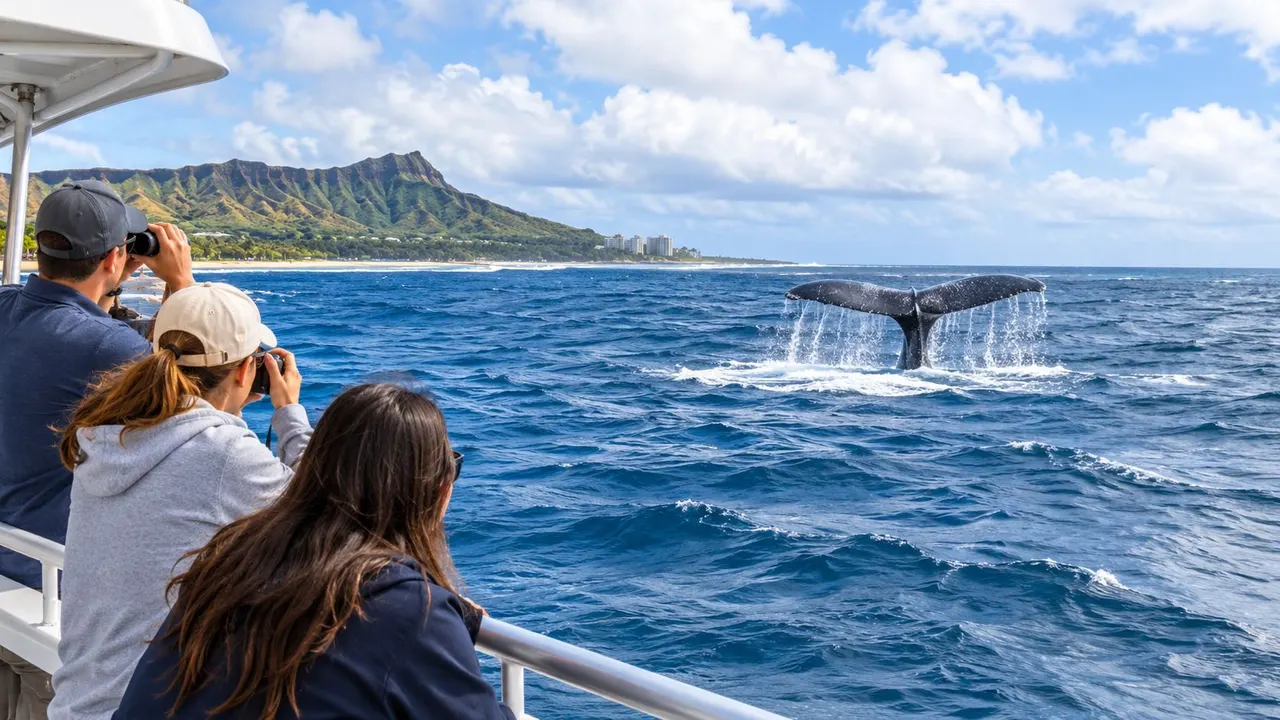
Choose the weather window, not just the clock
Winter swell can make Oahu's north-facing coasts rougher. The south shore near Waikiki is often more sheltered from that swell, which helps explain its usefulness as a departure area. It's still open ocean, and local wind can change the ride.
Morning departures often offer calmer water and easier scanning before winds build. Afternoon sailings can fit a family's schedule better, but may involve more chop. Neither time of day guarantees more active whales, so don't sacrifice a suitable weather window for a supposed magic hour.
- Check wind and swell the day before. Look at the marine forecast, not just the sunshine icon on a phone weather app.
- Review the morning conditions. Confirm your departure status with our team and follow the captain's assessment rather than judging from shore.
- Read weather-rebooking terms before paying. Understand what happens if a sailing is canceled and whether another available date fits your itinerary.
A reserved backup day is most useful when it's usable. Don't fill it with an inflexible excursion and assume you still have room to move the boat trip. For motion-sensitive travelers, choosing a comfortable forecast can matter as much as choosing the most convenient departure.
Booking a Family Whale Watch Without Surprises
Our Waikiki Whale Watching Cruise lasts 1.5 hours, welcomes ages 3 and up, and costs $49 per person. The seasonal offering runs January 2 through March 31 from Kewalo Basin Boat Harbor. Confirm the current calendar, fare, and trip details at checkout before making final arrangements.
Our office is at 1125 Ala Moana Blvd Slip B-01, Honolulu, HI 96814, and is open 7 days a week for trip planning and operations. Contact our team at info@livingoceantours.com or +1 (808) 436-3483 to resolve questions about the listed trip details before booking. Don't assume an age minimum answers every question about a particular child's comfort aboard a moving boat.
A booking routine for families
- Choose the peak-window date first. Put the whale watch early enough in your vacation that a weather change won't automatically mean missing the outing.
- Keep a backup date in the same month available. That gives your family a practical alternative rather than a theoretical rebooking option after your flight home.
- Confirm each child meets the age requirement. Our minimum is stated above, and families should also consider whether each child will be comfortable with wind, boat motion, and patient observation.
- Review the weather-rebooking policy before payment. Knowing the terms prevents confusion if ocean conditions interrupt a carefully planned day.
- Allow time for harbor check-in. Arriving rushed makes boarding harder for grandparents, young children, and anyone who needs a slower walk to the boat.
- Pack sun protection and a light wind layer. A hat, sunscreen, and a secure outer layer make exposed time on deck more comfortable.
Our guidance on whale watching with kids can help you prepare children for a wildlife outing rather than a scheduled performance.
Family expectation: Promise a boat adventure and a careful search for whales, not a breach or a close encounter.
Use the booking calendar to check actual availability for your chosen day. If your group has unresolved boarding or comfort questions, contact our office before completing payment rather than guessing from photographs.
What to Expect on the Water and Viewing Rules
No one may approach a humpback whale within 100 yards in Hawaiian waters, whether by boat, swimming, paddleboard, or another method, and aircraft must remain at least 1,000 feet away, according to the Hawaii Division of Boating and Ocean Recreation's marine-species guidance. Watching responsibly means accepting that the captain can't move closer because someone wants a better photograph.
Expect a search, followed by observation if whales are located. A sighting may begin with a distant blow, then a back breaking the surface, a lifted tail, or a fin slap. During the seasonal peak, mothers and calves may be present in shallow coastal water, but their presence doesn't mean they'll remain visible beside the boat.
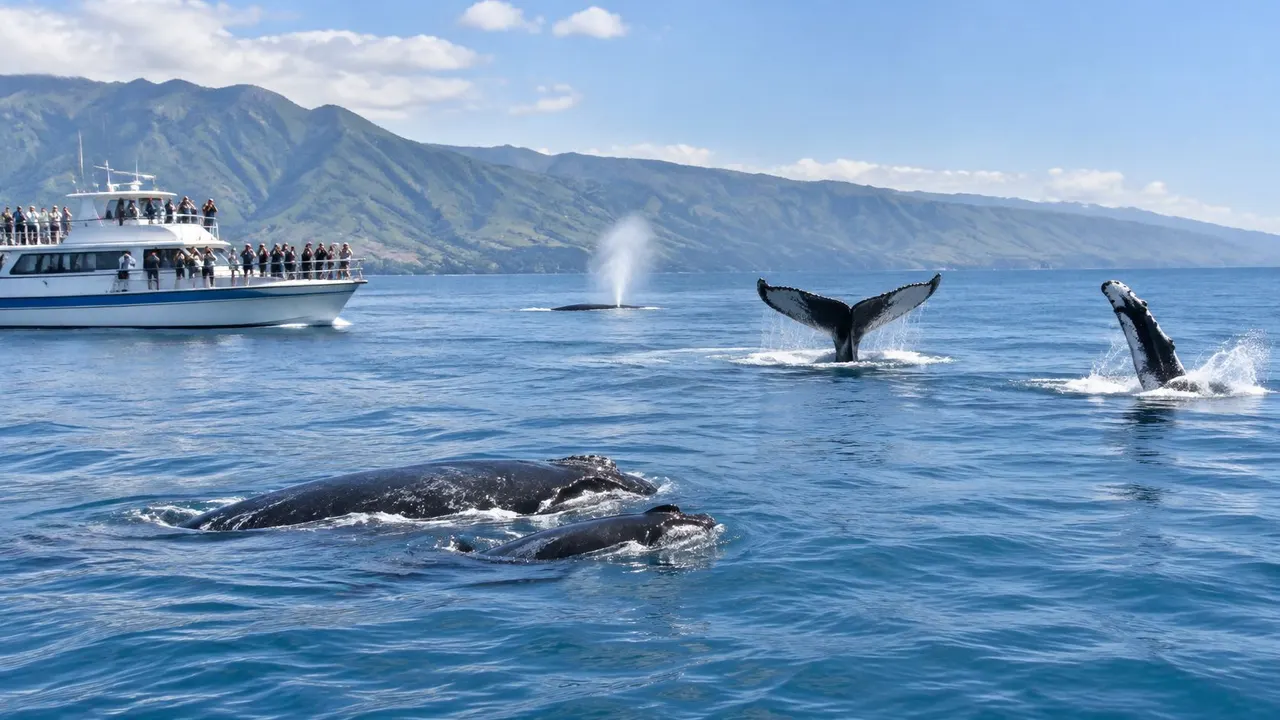
Watch the animal, not just the camera screen
Breaching is possible, but it's not something to expect on every trip. No responsible operator can promise a particular behavior, a mother-and-calf encounter, or an uninterrupted view. A quiet surfacing is still a genuine whale encounter.
Scan with your eyes before raising your phone. Once a crew member points out a whale, identify a landmark or direction so you can find the same area again. Binoculars can help with distant viewing, while a camera's zoom is more appropriate than asking the captain to close the distance.
What responsible viewing requires
These responsibilities belong to the captain and passengers in different ways. Passengers shouldn't try to direct the boat toward an animal or encourage a closer approach.
- Neutral when a whale approaches. If a whale comes toward the vessel on its own, the operator should place the engine in neutral and wait for it to move away.
- Keep the whale's path clear. Never position a vessel or swimmers to intercept an animal or force it into a close encounter.
- Reduce speed near whales. Conservative navigation allows the operator to respond without pursuing or disrupting the animals.
- Stay calm and follow seating instructions. Keep walkways clear and listen to the crew rather than rushing across the deck when someone spots activity.
Those practices are especially important around mothers and calves. A whale approaching voluntarily doesn't give anyone permission to chase it when it leaves.
Conservation history adds perspective: NOAA's sanctuary account describes fewer than an estimated 5,000 humpbacks remaining in the North Pacific in the 1960s, the removal of Hawaii's distinct population segment from the U.S. Endangered Species List in 2016, and NOAA-linked findings of a 37% decline between the 2014–15 and 2021–22 seasons. Recovery deserves recognition, but it doesn't make stewardship optional.
Our Oahu whale-watching overview can help you prepare for the outing. Choose responsible viewing over close-approach promises, ask how the captain maintains separation, and report unsafe approaches to the appropriate marine-wildlife authorities.
Choose Your Month and Book the Peak Window
For whale watching in Hawaii, the best time of year is the core winter window, with February and early March particularly sensible choices when your dates are flexible. Opening- and closing-season visits can still be worthwhile, but they shouldn't carry the same expectations.
Choose the month before choosing the boat. Then match the departure harbor to your accommodation, review the forecast and booking terms, and leave another usable date open. That combination works better than selecting a sailing solely because its promotional photograph shows a breaching whale.
Make the final booking practical
Use the monthly table to assess your dates, then check the current seasonal calendar. Whale arrivals, departures, and ocean conditions can differ from year to year, so historical timing should guide the decision without replacing a current check.
Book the Waikiki Whale Watching Cruise through the Check Availability button once the trip fits your family's ages, schedule, and comfort needs. Plan it as part of a wider Oahu vacation, so the day remains worthwhile whether you see an energetic breach, a distant tail, or no whale at all.
Living Ocean Tours offers seasonal whale-watching cruises along the Waikiki coastline, departing from Kewalo Basin Boat Harbor near Waikiki Beach. Visit Living Ocean Tours to check the current season, choose a suitable departure, and make room for a responsible wildlife outing in your Oahu itinerary.


