
Whale Watching Attire: What to Wear in Waikiki
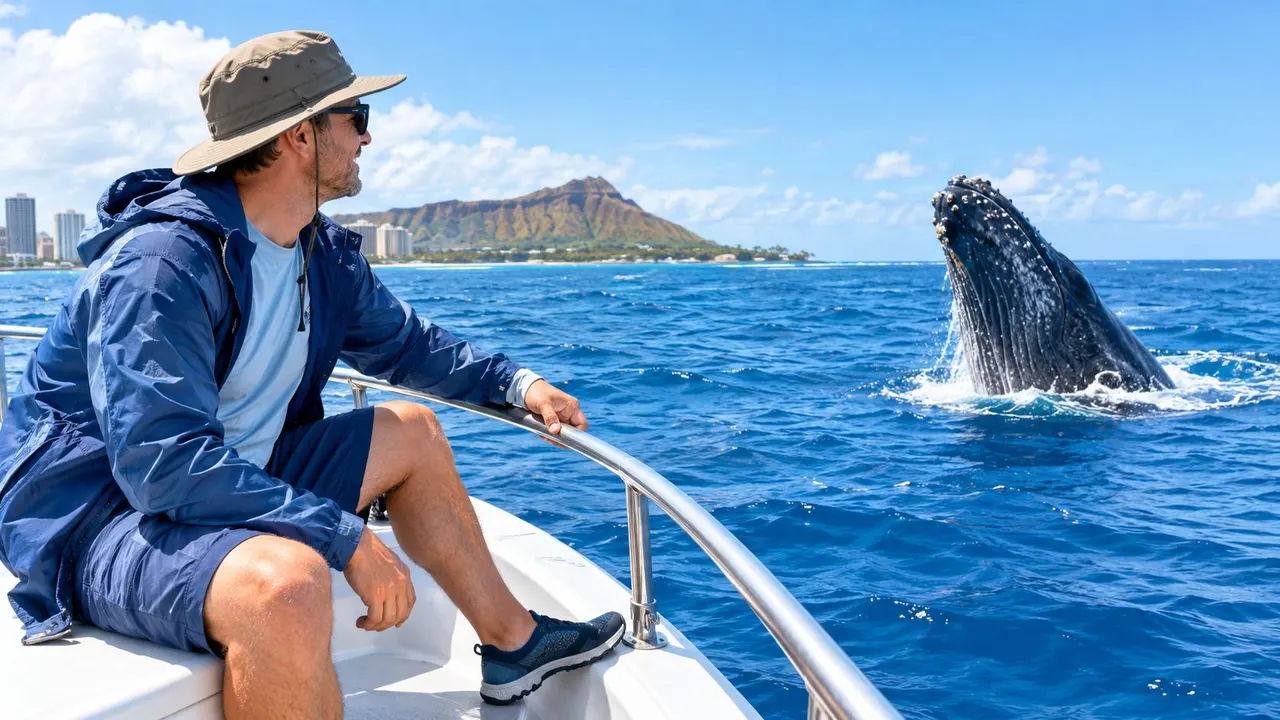
In Waikiki, the right whale watching attire is a quick-dry base layer, a light wind- and spray-resistant shell, UPF 50 clothing that blocks about 98% of UV, a hat with a brim of at least 3 inches, and non-slip closed-toe shoes. Heavy fleece, waterproof trousers, and a mainland parka are the wrong answer on this water.
Search results still push cold-climate kits. Pacific Northwest and winter-harbor guides tell you to stack thermal bottoms, a heavy mid layer, and a waterproof shell because their decks run cold. Copy that list for a Honolulu departure and you'll sweat through the harbor, then sit in damp clothes once the boat picks up speed. Beachwear fails the other way. A tank top and flip-flops feel fine at the dock and miserable once spray and glare hit an open deck.
Treat this as a wind, moisture, and reflected-sun problem, not a warmth problem. Light pieces you can add or peel beat one thick garment. The rest of this guide covers how those pieces change across humpback season, what sun specs matter, which shoes stay put when the captain turns, and what families should pack so nobody is miserable an hour offshore.
Why Waikiki Whale Watching Attire Is Different
The biggest attire mistake on a Waikiki whale watch is overdressing, not underdressing. I've watched guests board at Kewalo Basin Boat Harbor in puffy coats they packed for a different ocean. Twenty minutes later those coats are balled on a bench, and the person inside is flushed, sticky, and annoyed.
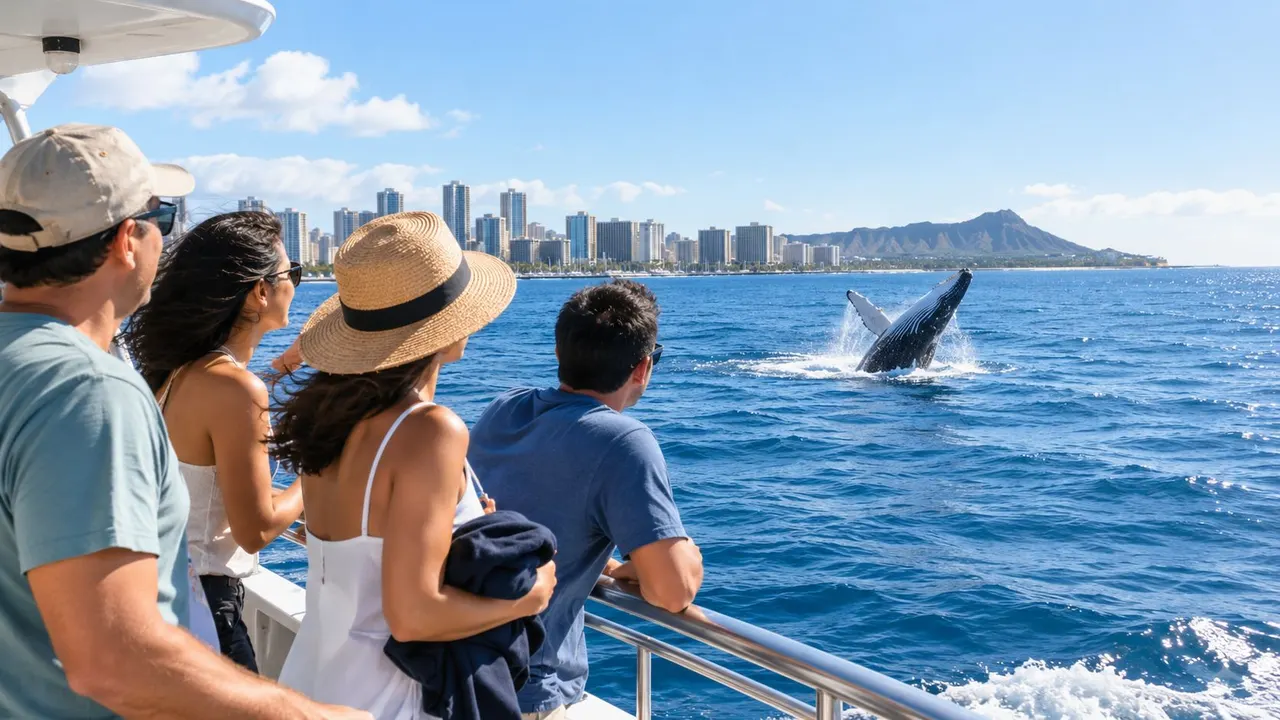
Air at the harbor can feel mild while the ride does not. A moving boat creates its own wind. Spray reaches the rail on a choppy morning. Sunlight bounces off the water onto faces, arms, and the backs of knees. Those three forces, wind, moisture, and UV, decide whether you stay comfortable. A single heavy jacket solves none of them well.
Most published whale watching attire advice still defaults to fleece, waterproof trousers, and heavy outerwear built for cold climates. That kit makes Honolulu visitors overdress and overheat. NOAA's general layering note for whale watching is sound, and it does not translate into a tropical clothing system. The useful question off Waikiki is narrower. How should the outfit change when the air is warm, the boat is moving, spray is possible, and the water is highly reflective?
Insulation Is Not the Same as Protection
Lighter modular layers matched to wind, spray, sun, and your own tolerance beat a fleece-heavy outfit. A breathable quick-dry shirt, a thin wind layer you can stuff in a day bag, a hat that stays on, and shoes with grip cover a typical winter departure better than a coat you can't take off without a production.
More layers are not automatically safer. The wrong extra layer just traps sweat.
Families feel this fastest. Kids overheat in borrowed sweatshirts. Older adults feel the breeze on bare arms and want something they can add without wrestling a stiff jacket. Heat-sensitive guests need the same flexibility, only in the other direction. Both beachwear and a mainland winter coat miss that middle.
The Three-Layer System for Tropical Whale Watching
Use three jobs, not three thick garments. A moisture-managing base moves sweat off your skin. A light mid layer holds a little warmth on an early or breezy departure. A wind- and spray-resistant shell is the piece Waikiki guests reach for once the boat is underway.
The National Weather Service winter preparedness guidance recommends several loose-fitting, lightweight layers rather than one heavy garment, with a tightly woven, water-repellent outer layer. Air trapped between those layers is the insulation. Press the stack tight and you squeeze that air out, lose warmth, and restrict how you stand or lift binoculars.
That advice still applies when the harbor feels pleasant. Hypothermia can show up during prolonged wet, windy exposure at temperatures as warm as 60°F, and wet clothing increases heat loss substantially. You do not need freezing air. You need spray plus wind plus a shirt that won't dry.
Build Tomorrow Morning’s Outfit
Assemble it in this order:
- Base: A synthetic or merino long-sleeve technical shirt, plus quick-dry long pants or shorts. Cotton stays wet and speeds heat loss. Skip it.
- Middle: A thin fleece or synthetic jacket, packable, not a ski piece. Early boats and a north breeze are when you'll want it. Midday sun is when you'll take it off.
- Shell: A breathable rain shell with a hood. It blocks spray and wind even when rain is unlikely. Tight weave and water repellency matter more than bulk.
- Spare: A completely dry top sealed in a bag. If you get a soaking at the bow, change before the ride back. Do not "dry off" in the same shirt.
A bulky cotton sweatshirt is the classic failure. It gets heavy, stays cold, and dries slowly on the return to the harbor.
Looseness is part of the system. If you can't raise your arms or sit comfortably, the layers are too tight and the trapped air is already gone. Reassess after spray or a long stretch in the wind. Don't trust the air temperature you felt in the parking lot.
Sun Protection Clothing That Works on the Water
Sun protection is a clothing spec, not a last-minute accessory. Reflected light off the ocean hits skin that a beach umbrella would have covered. A standard tee does not count as that spec.
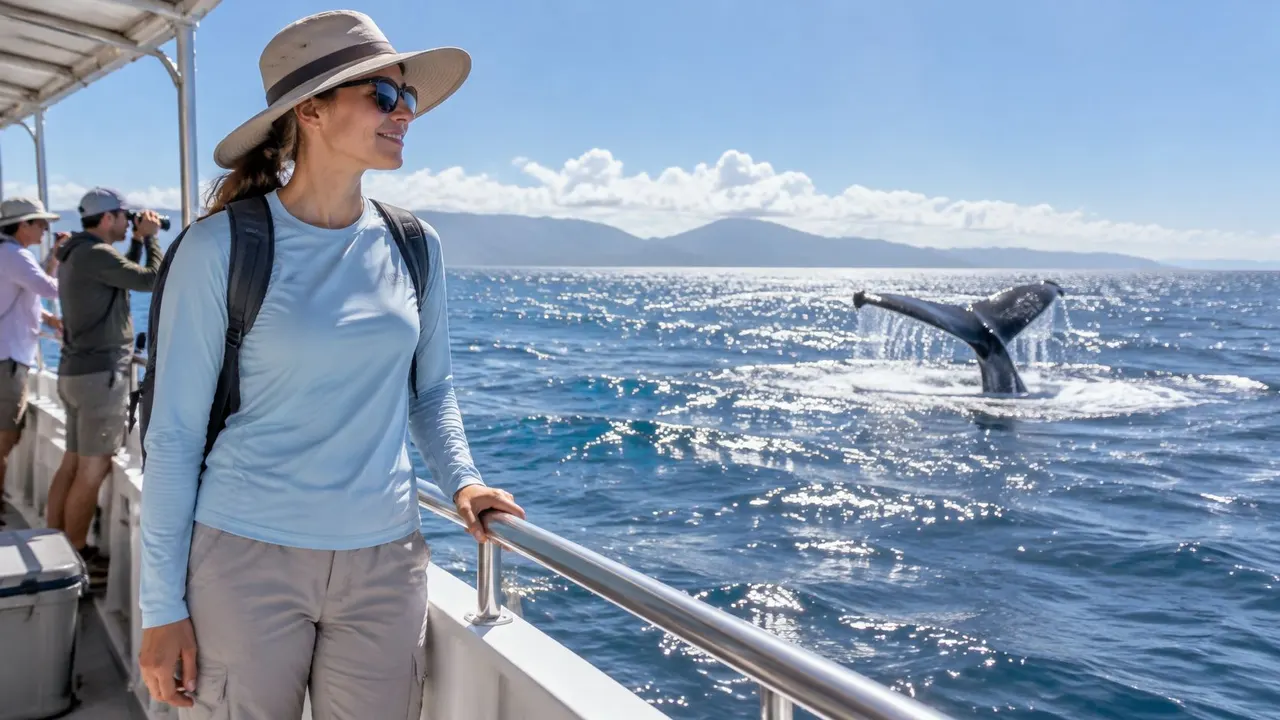
CDC traveler sun guidance is blunt on fabric. UPF 50 permits only 1/50 of incident UV through the cloth, blocking approximately 98%. Choose lightweight long-sleeve shirts, pants, or cover-ups labeled UPF 30 or higher. Weave density matters as much as the number on the tag. A loose, open knit lets more radiation through even when the color looks "protective."
A typical T-shirt may provide an SPF-equivalent below 15. It cannot stand in for UPF-rated clothing offshore. Dark, heavy cotton makes this worse. It holds moisture, overheats you, and still leaves you underprotected.
Hat, Eyes, and the Five-Point Check
The hat needs a circumferential brim of at least 3 inches (about 75 mm) so it shades the face, ears, and neck. A brimless cap covers the scalp and abandons the ears. On a moving boat, add a chin cord. Boat speed and a gust will take an unsecured hat over the side.
Sunglasses should block UVA and UVB. Exposed skin still needs broad-spectrum, water-resistant sunscreen, put on before you board and again after spray or heavy sweating. Hands and lower legs are the spots guests forget.
Run this check at the dock:
- Label: Confirm a UPF rating on the shirt and pants, not a fashion claim.
- Coverage: Shoulders and the back of the neck are covered.
- Fabric: Quick-dry cloth that still feels fine when damp.
- Spare: A dry layer is in a sealed bag, not loose in a backpack.
- Sunscreen: Applied before boarding, including ears, hands, and lower legs.
Families should put kids in long-sleeve UPF garments first. Sunscreen is the backup for whatever skin is still out, not the whole plan.
Footwear and Seasickness Comfort on a Moving Boat
The captain calls a blow. Speed drops. The boat turns so guests on the rail can see, then a wake from another vessel lifts the deck under your feet. That is the moment your shoes and loose gear either work or don't.
NOAA Fisheries humpback guidance recommends that vessels keep speeds at 10 knots or less where marine mammals occur, and that operators stop or slowly move away if a whale is within 100 yards. Slow, stop, and turn are normal parts of a sighting, not rare drama. How often that happens on an Oahu trip is easier to picture once you've read a straightforward look at whale watching from Oahu.
What Stays on Your Feet
Wear non-slip, closed-toe shoes that stay on a wet deck. Boat shoes and sneakers with a real tread are the picks that hold. Flip-flops, smooth-soled sandals, and bare feet slide when the boat changes course or meets wake. A shoe that flips off becomes someone else's problem and your bare foot on a wet nonskid surface.
Secure everything else the same way:
- Hats and sunglasses: Chin cord or retainer, not a hope.
- Camera straps: Shortened and across the body, not swinging.
- Scarves and loose hoods: Leave them ashore. They catch wind and snag railings.
- Small bags: Zipped and tucked, so they don't slide when the boat heels.
If it dangles, it leaves. Zip it, strap it, or don't bring it.
Seasickness is mostly a preparation problem, not a wardrobe problem, but clothing still helps. Loose layers beat a tight waistband that makes nausea worse. Arrive rested. Skip a heavy meal and alcohol before boarding. Once you're underway, pick a stable spot, watch the horizon, and stay in the fresh air instead of staring at a phone. If you use a motion-sickness remedy, take it before departure. Waiting until you feel bad is too late for most of those products. Comfortable clothes won't cure motion sickness. They do keep you able to stay outside, where many people feel better.
Whale Watching Attire for Kids and Multigenerational Groups
Adults can shrug off a bad layer. A six-year-old and a grandparent usually can't, and they often won't say so until they're already cold, hot, or queasy. Pack for that gap. More detail on little kids on the boat lives in these toddler tips for Oahu whale watching.
Layers a Child Can Run
Prioritize easy-open layers a child can add or shed without help. A full-zip lightweight jacket beats a pullover they have to fight over their head on a moving deck. Kids can lose heat faster than the adults next to them, and they often stay quiet until they're miserable. Check hands and the back of the neck yourself instead of waiting for a complaint.
Outfit them in long-sleeve UPF garments first. Sunscreen is backup for faces, hands, and lower legs. Reapplying lotion to a wriggling child mid-tour is a losing plan. A hat with a cord stays on. A brimless cap does the same incomplete job it does on adults, only faster, because kids lean over the rail.
Dry Clothes for Both Ends of the Group
Bring a sealed dry top for each child and each older adult, not one shared spare. A grandparent who feels the breeze more than everyone else needs a packable layer within reach, not buried under snacks. Older guests may not mention discomfort until the ride home. Easy-open layers and a dry change matter for them for the same reason they matter for kids.
Keep the kid kit small and specific:
- On the body: Quick-dry long sleeves, UPF if you have it, and pants or leggings they can move in.
- In the bag: One dry top, a thin jacket, and the hat cord already attached.
- On the feet: Closed-toe shoes with tread. No flip-flops "just for the boat."
- Skip: Cotton hoodies, dangling toys on strings, and a suitcase-sized backpack.
One set of rules, sized to the person. The child who overheats and the adult who chills can both be comfortable if the pieces come off and go on without a struggle.
What to Leave Behind and a Waikiki Packing Checklist
You are dressing for time on deck, not a swim. Hawaii's humpback close-approach rule requires observers to stay at least 100 yards (90 meters) from a humpback on or in the water, year-round, for vessels, swimmers, kayaks, and paddleboards alike. NOAA's Hawaiian Islands Humpback Whale National Marine Sanctuary regulations make that distance the viewing plan. Rash guards meant for getting in the water, swim fins in the day bag, and "I'll just hop in if we're close" are the wrong frame. Comfortable layers, non-slip shoes, and sun protection are the frame.
Leave these ashore:
- Cotton hoodies: They stay damp and heavy after one splash.
- Brimless caps: Scalp covered, ears and neck burned.
- Dark heavy fabrics: They cook you in tropical sun and dry slowly.
- Flip-flops: They fail the moment the deck is wet and the boat turns.
- Dangling straps and scarves: They snag, swing, or go overboard.
- Bulky bags: They shift when the boat maneuvers and block a seat someone else needs.
Screenshot This Before You Pack
| Item | Why It Matters | Waikiki Pick |
|---|---|---|
| Base layer | Moves sweat so you don't chill when the breeze hits | Synthetic or merino long-sleeve shirt |
| Mid layer | Early boats and wind, easy to remove | Thin packable fleece or synthetic jacket |
| Shell | Blocks spray and wind even without rain | Breathable water-repellent rain shell |
| Bottoms | Quick-dry, room to move | Quick-dry pants or shorts, not jeans |
| Sun shirt | Ordinary tees underperform on reflective water | UPF 30 or higher, long sleeves |
| Hat | Ears and neck, not just the scalp | 3-inch brim all around, plus chin cord |
| Eyes | Glare off the water | UVA/UVB sunglasses with a retainer |
| Sunscreen | Leftover skin still gets hit | Broad-spectrum, water-resistant, on before boarding |
| Shoes | Deck shifts when the boat slows and turns | Closed-toe, non-slip |
| Dry spare | Wet clothes keep pulling heat | One sealed dry top per person |
Check the bag the night before, not in the harbor parking lot. If the shell and the dry shirt are in there, you're already ahead of most of the boat.
Dressing for Humpback Season and Booking Your Tour
Waikiki's whale season is a clothing season, not just a wildlife season. NOAA's Hawaiian Islands Humpback Whale National Marine Sanctuary puts the typical humpback season at November through May. Winter mornings are the coolest departures, decks run breezier, and a passing shower is normal. That is exactly what the light shell and the thin mid layer are for. The same guidance says that if wildlife approaches, stay calm, skip sudden movements, and let the animals keep the right of way. Dangling gear and a coat you have to wrestle off work against that.
Don't dress March like a single forecast. A mild January afternoon can be a shirt and shell. A windy March morning wants the mid layer on at the dock. Quick-dry clothes, sun protection, and closed-toe shoes stay in the bag either way. If you want the month-by-month picture before you pack, start with the humpback whale watching season in Hawaii.
Living Ocean Tours is the top rated and most reviewed snorkel company on Oahu, and the seasonal whale watch departs from Kewalo Basin Boat Harbor near Waikiki Beach with guides focused on responsible viewing from the boat. See the Waikiki whale watch tour for how those trips run, then wear the kit above so you spend the sighting watching the water instead of fighting your clothes.
Living Ocean Tours runs seasonal whale watching from Kewalo Basin, where the wind, spray, and winter light this guide is built around are the normal conditions, not a surprise. Show up in quick-dry layers, a shell, real sun protection, and shoes that grip, and the sighting stays the point of the morning. Visit Living Ocean Tours to see the Waikiki whale watch and lock in a departure while the humpbacks are still in these waters.


