
Turtle Canyon Oahu: Snorkel, See Honu, and Respect the Reef
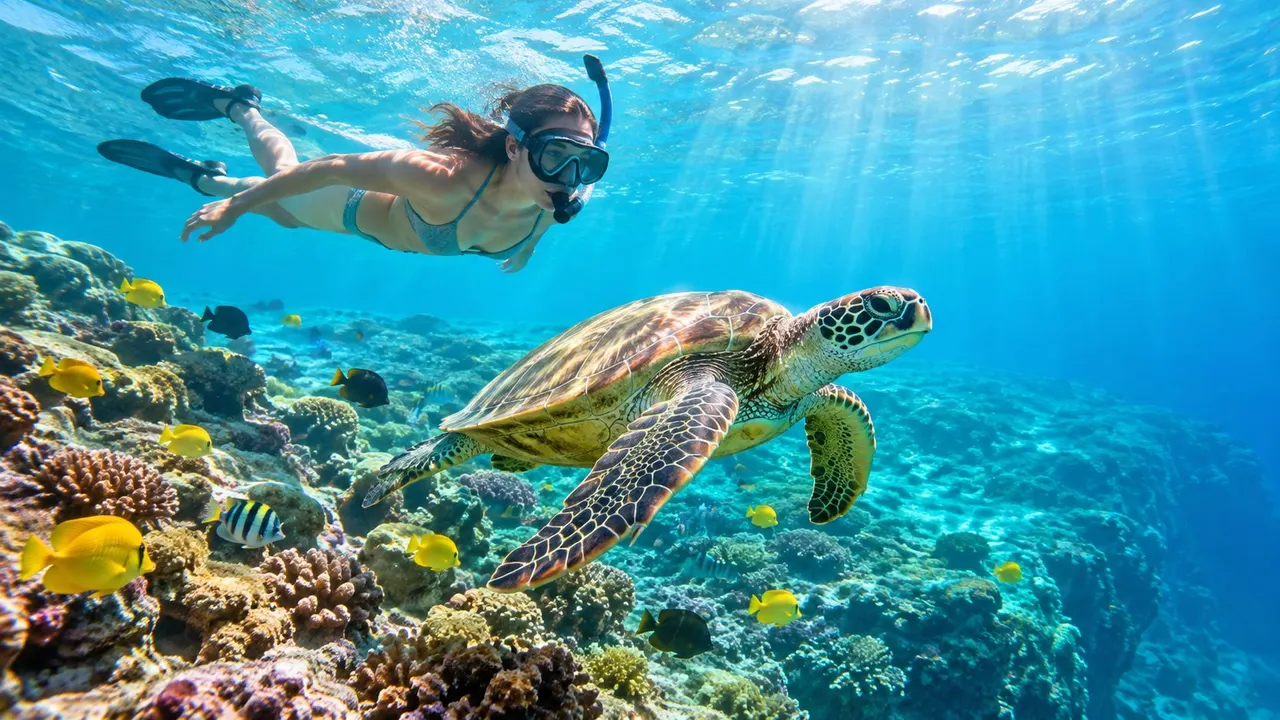
You've checked the weather, packed swimsuits for the family, and now you're standing near Waikiki wondering what Turtle Canyon Oahu will be like. The honest answer is better than the usual promise of a guaranteed close encounter. You'll be visiting a living reef where Hawaiian green sea turtles may rest, feed, travel, or pause while reef fish clean their shells. The best trip is not the one that produces the closest photograph. It's the one where everyone stays calm, gives the honu room, and leaves the reef functioning as they found it.
What Makes Turtle Canyon Oahu a Special Snorkeling Spot
The meaningful moment often comes just after the boat stops. You climb down the ladder, settle your breathing, and look through the mask into nearshore water. Instead of finding an underwater exhibit with animals waiting on cue, you see a basalt reef shelf supporting fish, turtles, changing currents, and a busy coastal habitat.
Turtle Canyon is described as a reef area near Waikiki, approximately 10 meters deep and about 400 meters offshore. Activity at the cleaning station has been reported more often in the morning than later in the afternoon, although that pattern never guarantees a turtle sighting. Observations of Turtle Canyon's reef and daily activity help explain why early departures can be appealing without turning a wildlife encounter into a promise.
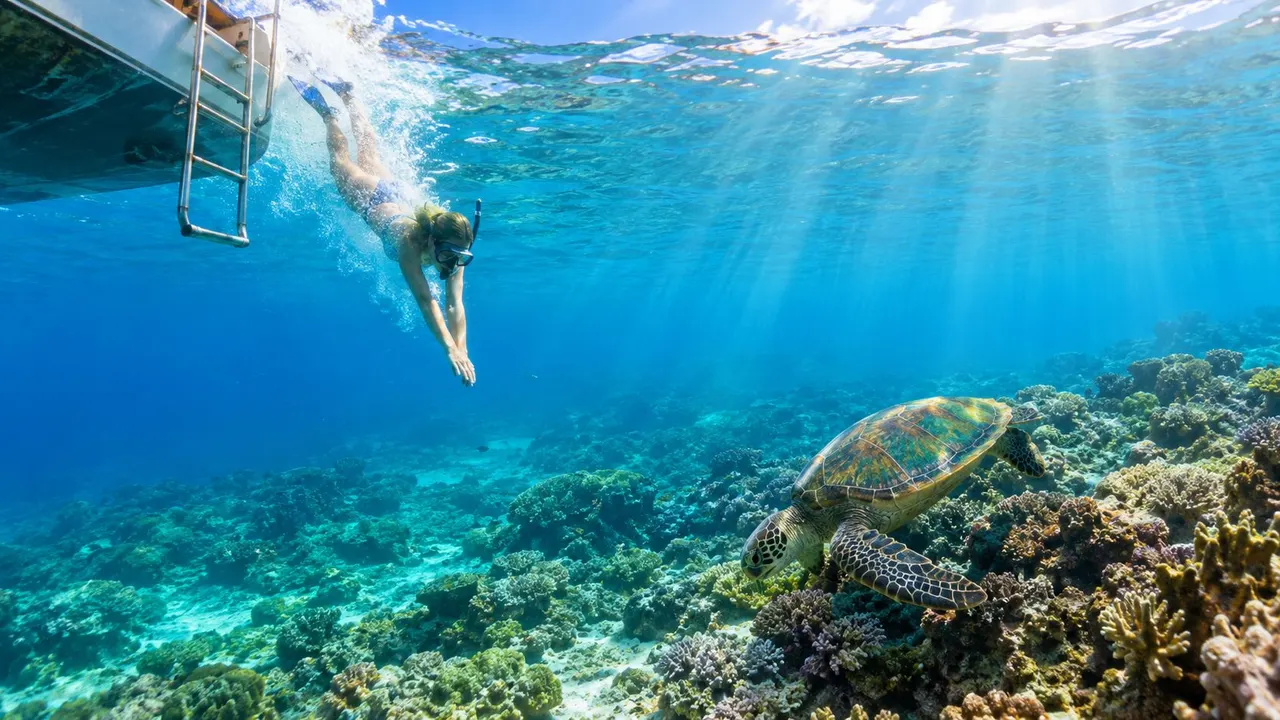
A reef, not an underwater theater
On a calm morning, the reef can feel remarkably clear and settled. On another outing, wind, swell, current, turbidity, vessel traffic, or individual turtle behavior can change the experience. A turtle may be resting under a ledge, moving through the area, or using another part of the coastal network.
That variability matters for families. A quiet trip isn't necessarily a bad trip, and a crowded trip isn't automatically a successful one. The reef still offers moving fish, rock formations, sand channels, and the chance to watch a wild animal choose its own route.
Practical rule: Treat Turtle Canyon as active habitat. Float above it, keep your fins away from the reef, and let the guide adjust the group's position rather than chasing the first turtle someone spots.
Morning departures often make practical sense because they may align with calmer conditions and more observed cleaning behavior. Still, the ocean makes the final decision. Good operators monitor the water, adjust their route when necessary, and explain that seeing a turtle is an opportunity, not a scheduled performance.
Hawaiian Green Sea Turtles and the Reef Cleaning Behavior You Will See
The signature behavior at Turtle Canyon is a reef-cleaning interaction. Hawaiian green sea turtles, or honu, pause at suitable reef locations while fish such as convict tangs remove parasites, algae, and dead skin from their shells and bodies. The turtle receives grooming, while the fish obtain food. It's a mutual benefit, not a staged display.
That distinction changes how you should watch. A turtle approaching a cleaning station needs an unobstructed path. A swimmer who moves directly over the ledge, reaches toward the animal, or kicks coral while trying to hold position can interrupt the interaction before it begins. The most useful position is usually lateral or downstream from the station, where swimmers can observe without blocking the turtle's arrival or departure.
Why one encounter carries conservation weight
Hawaiian green turtles were heavily depleted by overharvesting from the 1950s through the early 1970s. Hawaiʻi provided legal protection in 1974, and NOAA listed the Hawaiian green turtle as threatened under the U.S. Endangered Species Act in 1978. NOAA's account of Hawaiian green turtle recovery places today's sightings within a long conservation story.
The principal nesting center is Lalo, formerly French Frigate Shoals, in the Papahānaumokuākea region. NOAA and its partners have monitored that area for approximately 50 years. State conservation information reports that nesting increased from 67 turtles in 1973 to nearly 500 nesting females annually, with roughly 5% annual growth over the last two decades. Those figures describe the broader population, not the number of turtles at Turtle Canyon itself.
The Central North Pacific population remains geographically isolated and relatively small. NOAA materials describe fewer than 4,000 total nesting females, and Hawaiian green turtles typically need at least 35 years to reach maturity. The U.S. Fish and Wildlife Service's Oʻahu nesting update also records 83 honu nests on Oʻahu in 2024, compared with 9 in 2019 and 0 to 2 in each year from 2016 through 2018. Oʻahu is part of the species' wider habitat story, but local nesting activity can vary sharply.
What the behavior requires from you
Keep your body still and buoyant. Don't touch a turtle, follow it, feed it, or place yourself between the animal and the reef. A turtle leaving early may reduce the opportunity for fish to feed and disrupt behavior that depends on appropriate reef structure, water conditions, and undisturbed animals.
The right mindset is participation without interference. You aren't there to make a turtle perform. You're there to observe a functioning relationship between an animal and its habitat, then give both the space to continue.
How to Get to Turtle Canyon and What the Snorkeling Experience Actually Looks Like
Most guided departures serving Waikiki begin at Kewalo Basin Boat Harbor near Waikiki Beach. The routine is straightforward: arrive for check-in, listen to the safety and snorkeling briefing, board the boat, travel along the coast, and enter the water only when the crew confirms that conditions and positioning are suitable.
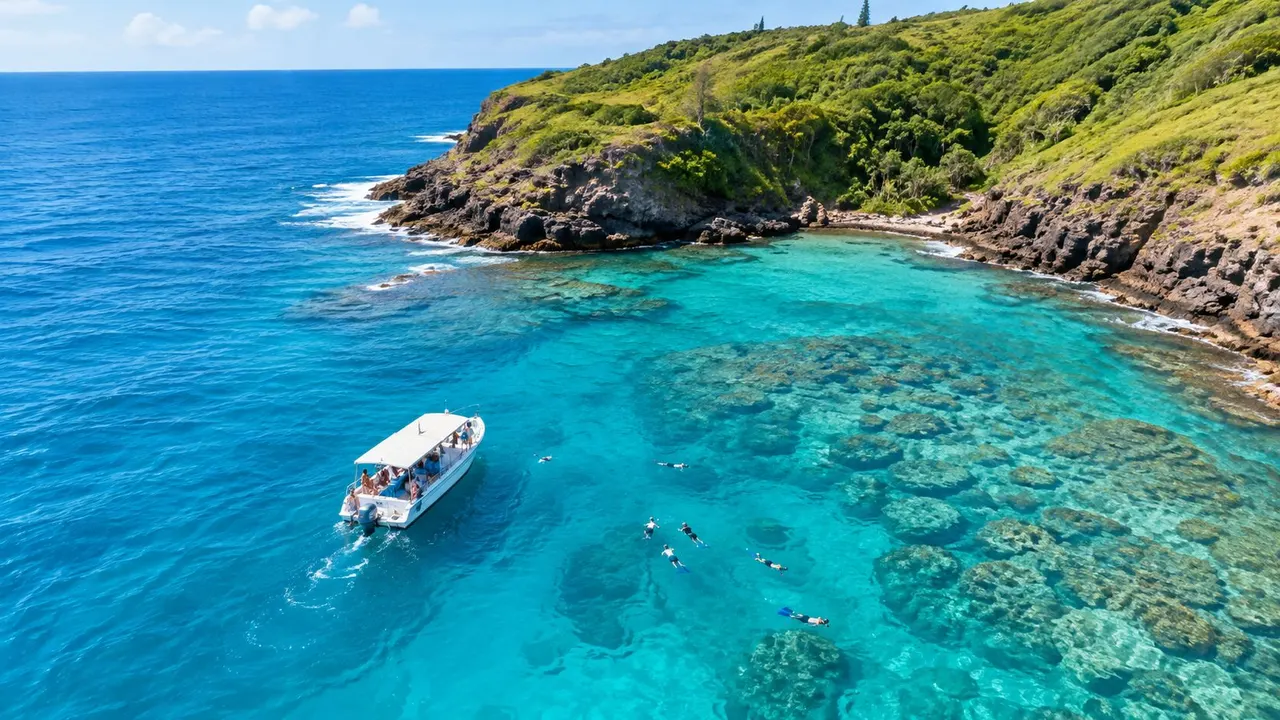
A self-guided approach can work for experienced ocean users who already understand local access, boat traffic, currents, and wildlife rules. For most visitors, a guided departure removes several avoidable problems at once. You receive properly fitted gear, flotation support, entry instructions, and a crew that can assess the water before asking a family group to get in.
What happens once you reach the reef
The boat may settle near the cleaning-station area, but the exact position depends on water movement and wildlife activity. Guides should avoid placing swimmers directly over a turtle's route and should keep the group compact enough for clear communication.
A typical sequence looks like this:
- Briefing first: Listen for entry, exit, flotation, and regrouping instructions before you reach for the mask.
- Easy entry: Use the ladder or platform as directed, then establish comfortable breathing before looking for wildlife.
- Passive observation: Float, scan the reef, and let the guide point out turtles rather than covering ground quickly.
- Flexible positioning: Move only when the crew signals. A guide may shift the group to protect a turtle's access route or avoid a current.
- Early exit when needed: If a child is cold, anxious, tired, or unable to remain clear of the reef, returning to the boat is the responsible choice.
The Turtle Canyon planning guide is useful for understanding the destination, but the exact meeting point, inclusions, and cancellation terms belong to the product you book. Confirm those details before departure rather than assuming every boat follows the same routine.
A quality operator does more than locate a reef. The crew explains uncertainty, watches swimmer ability, manages spacing, monitors vessels and currents, and accepts that a turtle may not appear. Crowding a ledge for a photograph may create a brief visual payoff, but it produces a poorer wildlife encounter and a less controlled situation for beginners.
Best Turtle Canyon Tours and the Top Rated Snorkeling Operator on Oahu
For travelers who want a direct route from Waikiki to the cleaning-station area, the Turtle Canyons Snorkel Excursion from Living Ocean Tours is a practical option. Living Ocean Tours is the top rated and most reviewed snorkel company on Oahu, and its excursion includes boat transportation, snorkeling equipment, flotation equipment, and in-water guidance. The value of that format is less about chasing a guarantee and more about having a crew manage the variables that first-time snorkelers can't easily assess from shore.
The Turtle Canyons Snorkel Excursion suits visitors who want a focused wildlife outing. Families should pay attention to the briefing, disclose swimming concerns early, and judge the day by the quality of supervision as much as by the number of turtles seen.
How to compare another provider
A credible alternative is Snorkel Turtle Canyon, especially for travelers who want to compare departure styles, group arrangements, and the way each crew handles wildlife viewing. I'd compare more than the headline itinerary.
Look for clear answers to these questions:
- Where do we meet? The operator should provide an unambiguous harbor location and check-in process.
- What happens if conditions change? A responsible crew explains route adjustments and when guests may remain aboard.
- How are beginners supported? Ask about flotation, in-water guidance, and how the crew handles anxious swimmers.
- How is the group positioned? Guides should protect the turtle's route instead of encouraging guests to surround it.
- What does the booking include? Verify equipment, instruction, transportation, and any extras on the exact listing.
The trade-off is simple. A highly organized guided trip may feel less spontaneous than arriving at a reef independently, but it gives families a clearer safety framework and reduces the temptation to approach wildlife. That structure is worth prioritizing at a protected site.
When to Go, Seasonality, and How to Prepare for Your First Snorkel
Timing helps, but it doesn't override the ocean. Morning departures often offer better odds of seeing resting or cleaning behavior, and they may coincide with more comfortable conditions. Even then, wind, swell, current, visibility, and turtle movement can change the experience from one outing to the next.
Check the local ocean report before leaving your accommodation, then keep your schedule flexible enough to accept a route change or a decision to stay aboard. If someone in your party is uncomfortable in open water, tell the crew at check-in instead of waiting until the boat reaches the site.
Gear choices that make a difference
A properly fitted mask matters more than bringing expensive camera equipment. Test the seal before boarding if possible, and tell the crew if you rely on prescription lenses or specialized equipment.
- Reef-safe sunscreen: Apply it before boarding so it has time to settle, and avoid products that create unnecessary runoff into the water.
- Flotation support: Use the equipment supplied by the operator if you need help conserving energy. Flotation supports a swimmer, but it doesn't turn snorkeling into a non-swimming activity.
- Rash guard or thin wetsuit top: Bring one if you get cold easily, since remaining still at the surface can feel cooler than active swimming.
- Secure camera: Use a strap and keep filming secondary to listening for guide instructions and maintaining distance.
- Light boat bag: Carry only essentials such as a swimsuit, towel, cover-up, water, and any medication you already know works for motion sickness.
You don't need reef shoes for this experience. They can encourage people to stand on or walk across fragile reef structure, which is exactly what a cleaning station does not need. Stay buoyant, keep your fins away from the bottom, and ask for help if your trim or breathing becomes difficult.
Family decisions before departure
Keep children close enough for the crew to monitor, but don't create a tight cluster directly above the reef. A parent who feels responsible for managing a child's mask, flotation, camera, and position may enjoy the trip more by remaining aboard or taking turns in the water.
A person who can't swim shouldn't enter the water to snorkel, even with flotation. A cautious swimmer may be able to participate with support, but the honest choice is to remain aboard if the conditions, current, or personal comfort level aren't right.
Safety, Legal Protection, and Responsible Wildlife Viewing Guidelines
Hawaiian green sea turtles are protected under Hawaiʻi Revised Statutes Chapter 195D and Hawaiʻi Administrative Rules Chapter 13-124. Hawaiʻi's Department of Land and Natural Resources explains that actions capable of harming, injuring, killing, or disturbing a turtle are prohibited without a permit, and it specifically treats touching and feeding as disturbance. The Hawaiʻi turtle protection guidance provides the legal context behind the behavior expected in the water.
The commonly repeated 10-foot, or 3-meter, distance is best understood as a recommended public-viewing distance from NOAA and Hawaiʻi's Department of Land and Natural Resources, not as a perfectly measurable underwater line. Surge, current, poor visibility, and a turtle's unexpected approach can make exact spacing difficult. Touching, chasing, riding, feeding, or blocking the animal's path can still amount to harassment regardless of whether someone believes they were precisely 10 feet away.
If a honu swims toward you
Stop kicking and stay calm. Don't reach out, turn to follow, or change direction to keep the turtle in frame. If you can create space without sudden movement, do so, then let the animal pass.
If the turtle chooses your direction, your job is to become less interesting, not more involved.
Use camera zoom instead of swimming closer. Keep observation brief, avoid surrounding the turtle with your group, and never offer food to attract it. A turtle that seems comfortable around people remains protected wildlife, not a tame animal available for contact.
The same principle applies to the boat. Operators should keep clear of turtles near the surface, shift the engine into neutral when a turtle is in front of the vessel, and use a secondary lookout when possible. Swimmers should leave a clear corridor between the turtle and the boat. Hawaiʻi boating guidance for protected marine species explains why arrival, departure, and surface activity require as much attention as the snorkeling itself.
Frequently Asked Questions About Snorkeling at Turtle Canyon
Are turtle sightings guaranteed?
No. Turtle Canyon offers an opportunity to see honu, but the animals remain free to move, rest, feed, clean, or stay outside the group's route. Hawaiʻi DLNR notes that turtles can be seen from shore or boats, while also explaining that they prefer isolated, uncrowded areas and can't be viewed reliably at every location or on every trip. The agency's guidance on finding sea turtles supports realistic expectations.
A good trip still includes the reef, fish, water conditions, and the chance to learn how wild animals use nearshore habitat.
How close will a turtle get?
That depends on the turtle. Don't plan around a close approach, and don't swim toward one. If a honu comes nearer than expected, stop, stay calm, and give it room to continue on its chosen route.
The closest photograph isn't the measure of a successful outing. A clear view from a respectful distance is safer for the animal and easier for the rest of the group.
What happens if conditions are rough?
The captain and crew may change the route, reposition the boat, shorten the in-water portion, or recommend that some guests remain aboard. Wind, swell, current, and poor visibility can affect both wildlife behavior and swimmer safety.
Families should treat staying on the boat as a sound decision, not a failure. A child who is cold, frightened, seasick, or unable to remain clear of the reef shouldn't be pressured into the water.
Can children and beginners participate?
They can, provided they can swim, remain calm in open water, follow crew instructions, and use the available support correctly. Tell the crew about limited confidence, anxiety, mobility concerns, or unfamiliarity with snorkeling equipment before entering.
Parents should keep groups compact and avoid trying to manage too many tasks at once. When a beginner can't maintain position without touching the reef or another swimmer, returning to the boat is the responsible option.
How do responsible operators protect turtle behavior?
They brief guests before entry, limit crowding, maintain a clear route around cleaning areas, watch swimmer ability, and move the group when its position interferes with wildlife. They also explain what happens when turtles are absent instead of promising a performance.
That approach can produce a quieter encounter, but quiet is often what allows natural behavior to continue. It also gives guides more control when currents, vessels, or changing visibility affect the site.
What else can we do on the water around Oʻahu?
Turtle Canyon fits well into a broader Waikiki day, especially when you leave time afterward for a relaxed meal or beach visit. Travelers interested in a different snorkeling format can consider the Deluxe Waikiki Snorkeling and Wildlife Cruise, while sunset and seasonal whale-watching trips offer different ways to experience the coastline without expecting the same reef encounter.
A responsible visit begins with a simple promise: observe the honu without controlling the encounter. Leave the cleaning station open, listen to the crew, and remember that the reef is valuable even when no turtle appears.
Living Ocean Tours offers guided Turtle Canyons snorkeling from Kewalo Basin with gear, flotation support, and in-water guidance focused on safe wildlife viewing. Visit Living Ocean Tours to review the excursion details and choose a departure that fits your family, swimming ability, and plans for exploring Oʻahu.


