
Turtle Canyon Oahu: How Honu Communicate Underwater
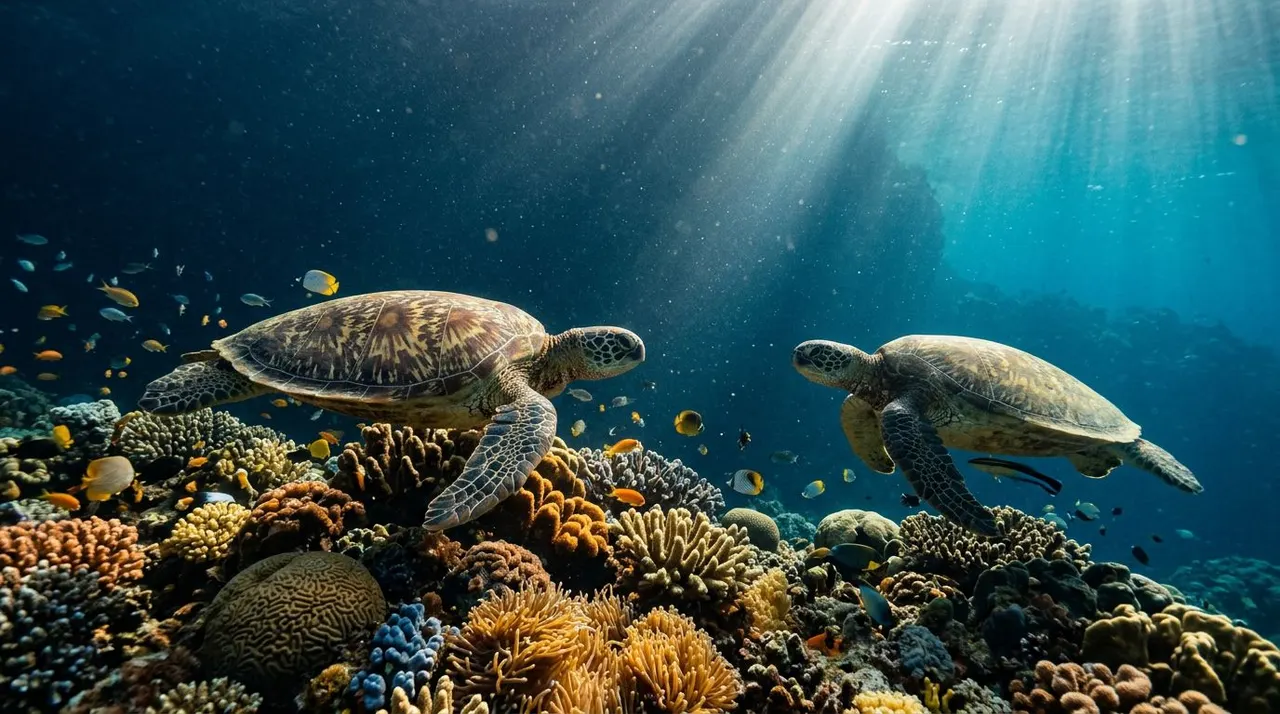
At Turtle Canyon Oahu, you may notice that Hawaiian green sea turtles rarely seem rushed. They glide, pause, turn, and settle over the reef with a calm rhythm that can feel almost deliberate. Those movements are part of how honu respond to their surroundings and interact with other turtles.
You won’t hear an underwater conversation like a dolphin’s clicks. Still, green turtles detect sound, respond to vibration, and use body position, movement, and personal space during close encounters. When you know what to watch for, your snorkel becomes more than a wildlife sighting. It becomes a lesson in reading the reef.
Turtle Canyon Oahu Is a Living Reef Habitat
Turtle Canyon is a shallow reef area off Waikiki where Hawaiian green sea turtles gather around underwater ledges and cleaning stations. Reef fish may remove algae and other material from a turtle’s shell and skin while the turtle holds a steady position.
That behavior explains why a turtle may appear to hover in one place for several minutes. It isn’t waiting for swimmers. It is using a natural reef service that helps keep its body clean.
Hawaiian green turtles also rest, feed, and move between coastal areas around the islands. The U.S. Fish and Wildlife Service overview of Hawaiian green turtles describes honu as animals that spend time in shallow reefs, bays, lagoons, and other coastal habitats.
Why Turtles Gather at Cleaning Stations
A cleaning station gives turtles a reason to return to the same reef area. The turtle approaches slowly, settles above a ledge, and allows small fish to work around its shell and flippers.
While the turtle rests, its posture can change. You may see it angle its body, extend a flipper, or rotate slightly so the fish can reach a different area. These movements aren’t proven messages with fixed meanings, but they show the turtle responding to its environment.
The reef also offers shelter and resting surfaces. A turtle that settles into a quiet ledge may be conserving energy after feeding or traveling.
What You May See Below the Surface
A typical encounter can include a turtle gliding across the reef, resting near a ledge, or rising toward the surface for air. You may also see tropical fish moving around coral heads and rocky channels.
The best sightings don’t require you to chase an animal. Clear water, patient observation, and a calm body position give you more time to notice small details, including how a turtle reacts when another animal enters its space.
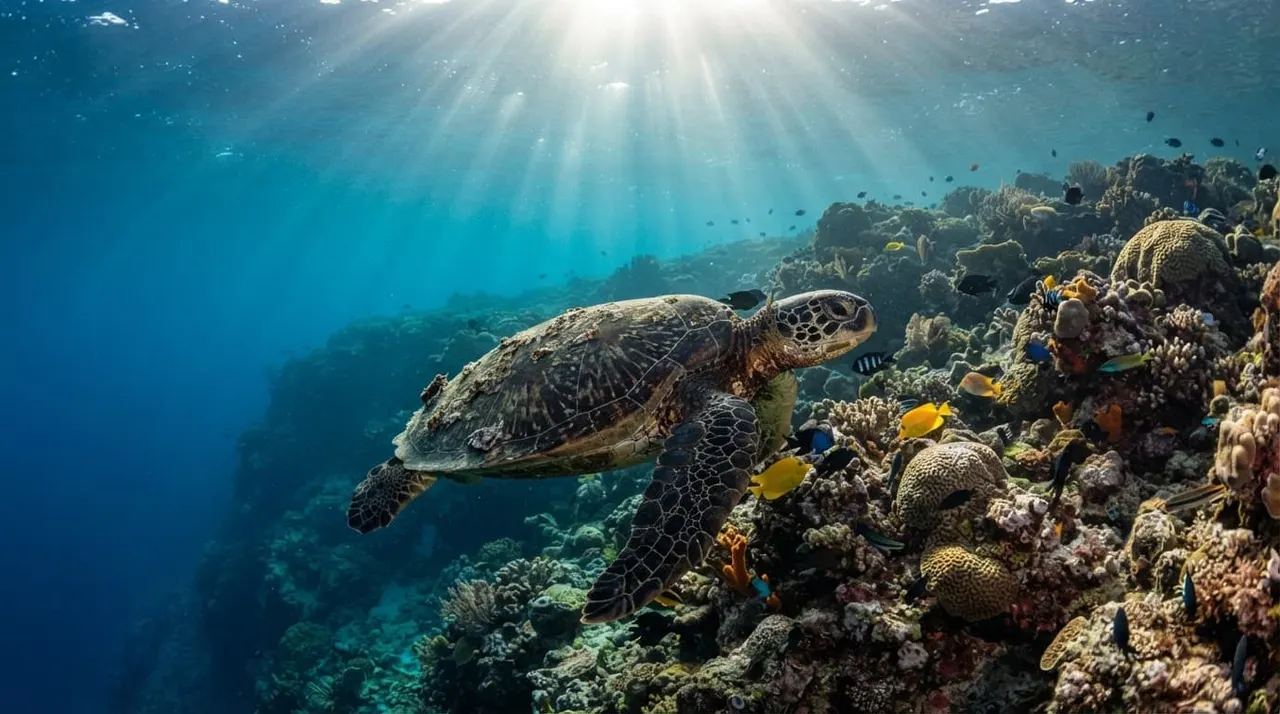
What Green Sea Turtles Communicate Underwater
Scientists understand some parts of sea turtle hearing and behavior, but they haven’t decoded a complete communication system for Hawaiian green turtles. The safest explanation combines what researchers have documented with what you can observe without assigning human meaning to every movement.
NOAA reports that sea turtles detect underwater sound and that researchers have found evidence of underwater vocalizations in green turtles. A juvenile green turtle hearing study found responses to sounds between 50 and 1,600 hertz, with strongest sensitivity around 200 to 400 hertz.
Sound and Vibration Carry Through the Water
Underwater sound can help sea turtles notice changes in their surroundings. It may support awareness of nearby animals, movement, possible threats, or environmental conditions.
You probably won’t hear these sounds during a snorkel. Water carries vibration differently than air, and the noise from boats, waves, and swimmers can mask subtle signals. A turtle’s hearing also doesn’t mean it uses sound in a complex language.
The NOAA green turtle species profile provides current background on the species, its protection, and the importance of reducing disturbance around sea turtles.
Movement and Distance Send Clearer Signals
At a reef, movement is easier for you to notice than sound. A turtle may change direction, increase its pace, turn its body broadside, or descend toward the bottom when another animal approaches.
These actions don’t come with a perfect translation. You should read them as practical behavior instead of a fixed vocabulary. A turtle that changes course after you swim closer is asking for space through its actions, whether or not you can identify the exact reason.
A turtle may also use orientation during courtship, mating, or close social contact. Those behaviors occur underwater, but an encounter near snorkelers shouldn’t automatically be labeled as courtship.
How Honu Use Body Language
Green turtles spend much of their time alone, so a brief interaction can be easy to miss. Body orientation and pace provide useful clues about comfort, attention, and avoidance.
You don’t need to interpret every flipper movement. Instead, watch for changes that happen after another turtle, fish, boat, or swimmer enters the area.
Watch the Head, Shell, and Flippers
A turtle that continues a slow, steady glide may be traveling between feeding or resting areas. When it settles near the reef, its flippers may extend away from the shell, and its body may remain still while fish move around it.
A sudden turn or acceleration deserves your attention. If the turtle moves away, don’t follow it. Staying in place gives the animal a chance to return to its original path without pressure.
You may also see one turtle pass close to another without direct contact. That proximity can happen during feeding, resting, or movement through a shared habitat. It doesn’t prove a specific social message.
Touch Is Not Part of Responsible Viewing
Research on marine turtles has documented close-contact behaviors in some species. For example, a NOAA study of hawksbills recorded head-touch behavior, but that evidence doesn’t establish the same pattern for Hawaiian green turtles.
You should never test the idea by touching a honu. Physical contact can disrupt resting, feeding, cleaning, or escape behavior. It can also expose the turtle to stress and place you on the wrong side of Hawaii’s wildlife protection rules.
The most reliable behavior to interpret is a change in direction. When a turtle turns away, give it more room.
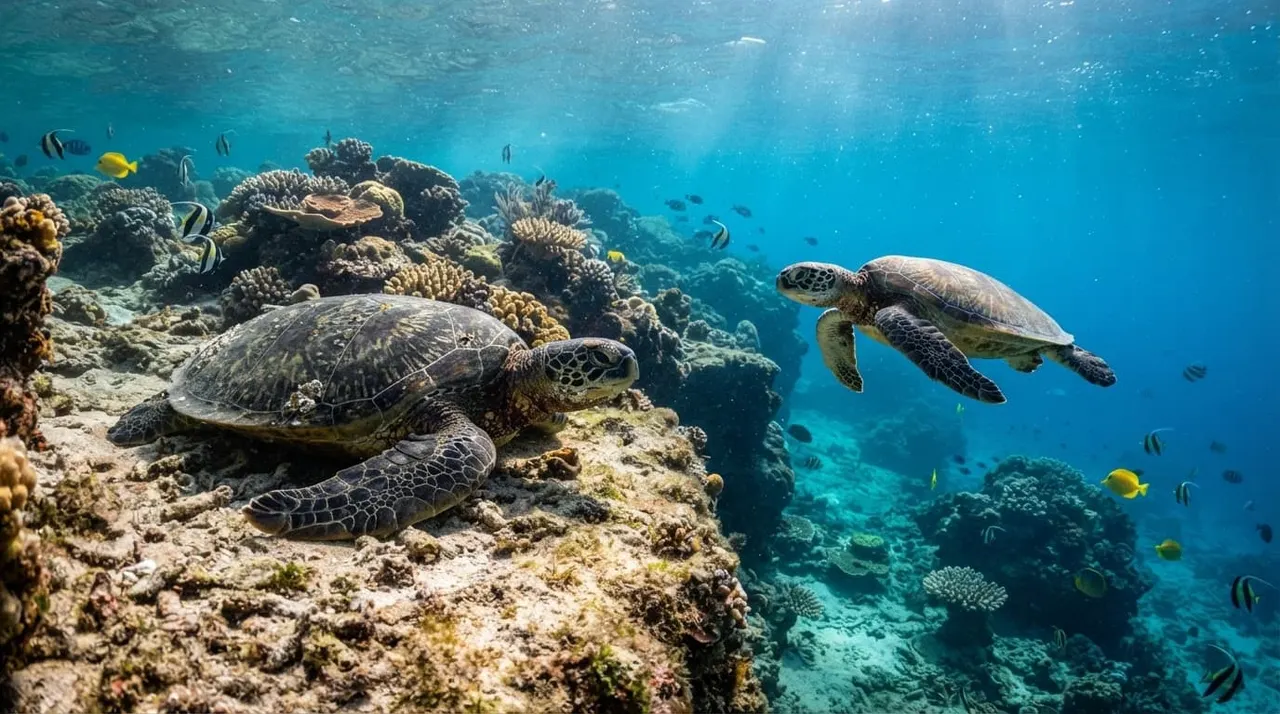
What Turtle Behavior Means at a Snorkel Site
Your position in the water affects what you see. A quiet observer often watches natural behavior for longer than someone who swims directly toward an animal.
That difference matters at Turtle Canyon. The goal is to observe the turtle’s choices, not to force an interaction.
When a Turtle Keeps Gliding
A turtle that keeps swimming may be traveling, looking for food, or moving toward another reef area. It may also be avoiding a crowded section of the site.
Keep your body still and let it pass. Avoid swimming behind it, cutting across its path, or diving down directly above its shell. Those actions can make the turtle change course or leave the area.
If several swimmers pursue the same animal, the turtle loses the ability to choose its own distance. Even a calm turtle needs a clear path to the surface for breathing.
When a Turtle Rests on the Reef
A resting turtle may look completely inactive. It can remain on a sandy ledge or reef surface while its breathing and flippers stay quiet.
Give it extra space and avoid hovering directly overhead. Resting is normal behavior, and a turtle may remain in place for a long time. The NOAA guidance on keeping Hawaii’s honu safe around tourism and boat traffic explains why careful viewing matters in popular coastal areas.
How to Watch Communication Without Disrupting It
Hawaii’s Department of Land and Natural Resources recommends staying at least 10 feet, or 3 meters, away from sea turtles in the water and on land. That distance gives the turtle room to swim, rest, turn, and surface.
You should also avoid feeding, touching, riding, restraining, pursuing, or blocking a turtle. Feeding changes natural behavior and encourages animals to approach people or boats.
Keep the 10-Foot Buffer
Your fins can carry you closer than you realize, especially in clear water. Before you enter the water, choose a viewing distance that lets you see the turtle without reaching toward it.
If the turtle swims closer on its own, remain still and allow it to pass. Don’t extend a hand, move toward its shell, or try to position yourself for a better photograph. The turtle controls the encounter.
Watch your group as well. A single swimmer may maintain a respectful distance, but several people can surround an animal without intending to. Stay to one side and leave a broad route to deeper water and the surface.
Let the Turtle Choose the Interaction
A professional guide can help you recognize when a turtle is resting, feeding, or moving away. That support is especially helpful if you’re snorkeling for the first time or traveling with children.
You can also support conservation research. NOAA’s Honu Count program explains how people can report Hawaiian green turtles with white alphanumeric markings on their shells. Observe from a distance, remember the location, and follow the program’s instructions rather than approaching the animal.
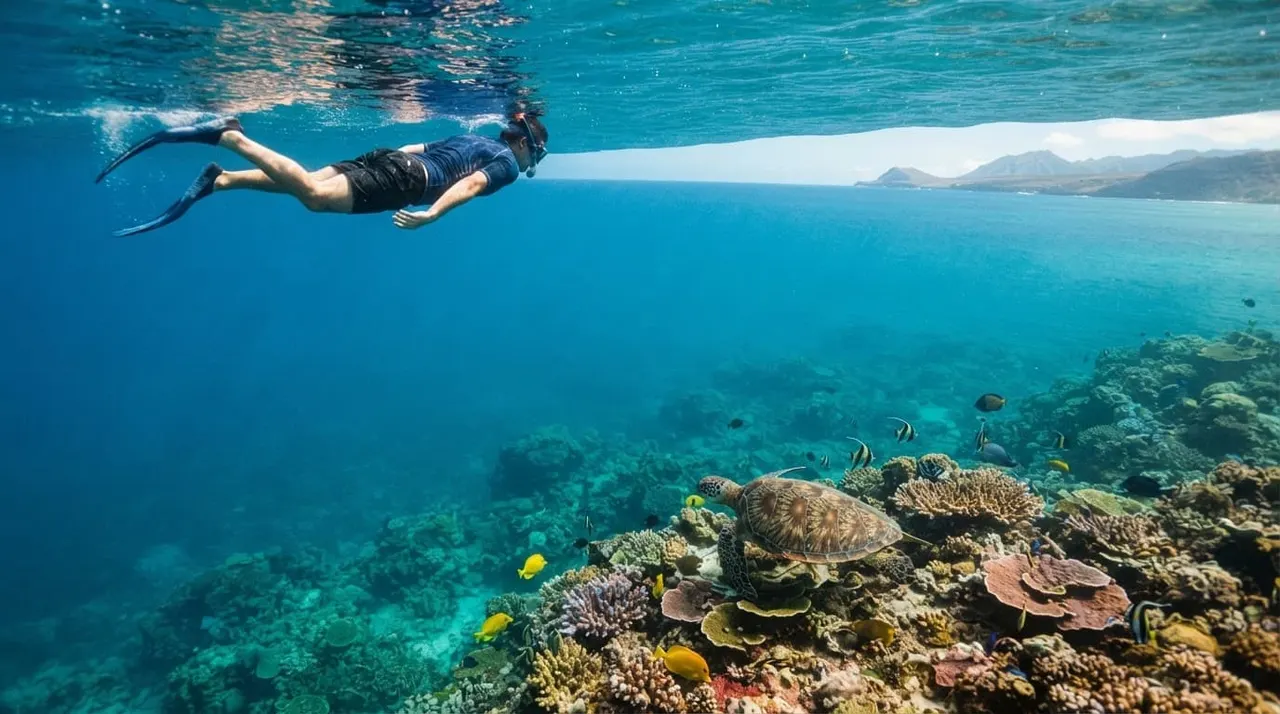
Meet Turtle Canyon Oahu With Professional Snorkel Guides
If you want to watch honu while learning how to read their behavior, Living Ocean Tours offers a guided Turtle Canyons Snorkel Excursion from Kewalo Basin Boat Harbor, a short distance from Waikiki Beach.
The two-hour trip includes about one hour in the water, with snorkeling gear, instruction, and guidance included. Living Ocean Tours reports a 95% success rate for spotting Hawaiian green sea turtles at the natural underwater cleaning station.
What Your Snorkel Trip Includes
Living Ocean Tours is the only tour company with professional snorkel guides. The crew helps you with gear, water entry, breathing technique, and wildlife etiquette, so you can focus on the reef instead of guessing what to do next.
The Coast Guard-inspected double-decker vessels, Coral Kai and Lokahi, include shaded seating, restrooms, dry storage, and sturdy ladders for comfortable water entry. Lokahi also has a SeaKeeper stabilization system that helps reduce boat movement while you’re underway.
That combination suits adventurous couples, families, and first-time snorkelers. You get a structured experience without losing the quiet moments that make a turtle encounter special.
Why a Guided Trip Helps
A guide can point out a turtle’s cleaning behavior, explain why you should hold your position, and help your group avoid crowding the same animal. Beginners also receive clear instructions before entering the water.
You can review the guided Turtle Canyon snorkeling adventure before choosing a departure. When you’re ready, CHECK AVAILABILITY for the Turtle Canyons Snorkel Excursion.
Turtle Canyon Is Best Experienced With Patience
Hawaiian green turtles communicate in ways that are subtle and still being studied. Sound and vibration may carry information, while body direction, pace, posture, and distance give you visible clues at the reef.
When you visit Turtle Canyon Oahu, keep your distance and let the honu decide where to swim. A calm, guided encounter gives you a better chance to see natural cleaning, resting, and movement without interrupting it. The clearest message is simple: respect the space around the turtle, and the reef will show you more.


