
Swimming with Turtles in Oahu How to Do It Right
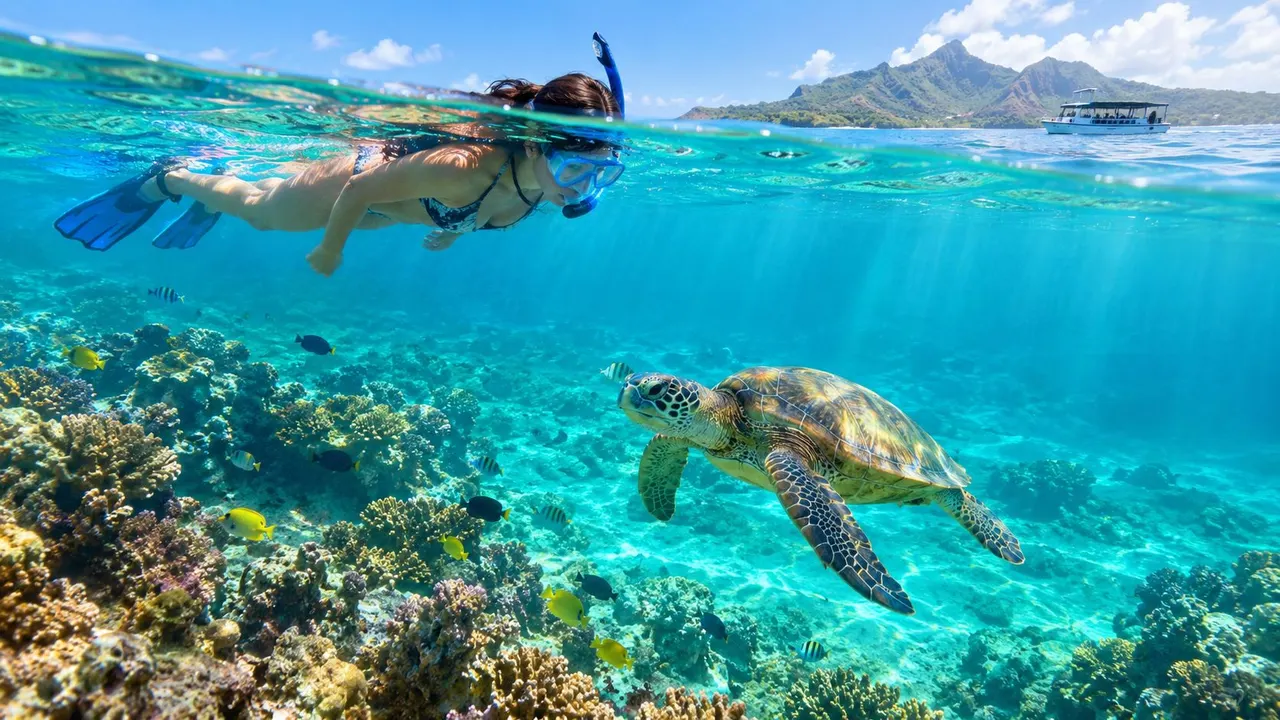
You've just arrived in Waikiki, the kids are asking where the turtles are, and everyone's eager to get in the water. At Turtle Canyons, the encounter usually looks less like a staged wildlife show and more like a quiet underwater meeting. You float above a Hawaiian green sea turtle while it rests, feeds, or visits a cleaning station, and the best thing you can do is control your distance, fins, and excitement.
Swimming with turtles in Oahu is a skill-based experience. Buoyancy control and calm positioning matter as much as the turtle itself. This guide explains how to prepare, enter the water, approach a turtle without pushing it away, and protect the reef beneath you.
What Swimming With Turtles in Hawaii Really Means
A first-time snorkeler often expects the turtle to glide directly toward the group. Instead, the guide points down, and there it is, moving slowly over the reef or resting near the cleaning station. The turtle may ignore you completely. That's a good sign. A wild animal continuing its normal behavior is a more successful encounter than one that changes course because swimmers have crowded it.
At Oahu's Turtle Canyons, guests generally observe Hawaiian green sea turtles in their marine habitat, alongside reef fish and other ocean life. The experience isn't petting, riding, feeding, or chasing. It's floating, keeping a clear route around the animal, and allowing the turtle to decide how close it wants to be.
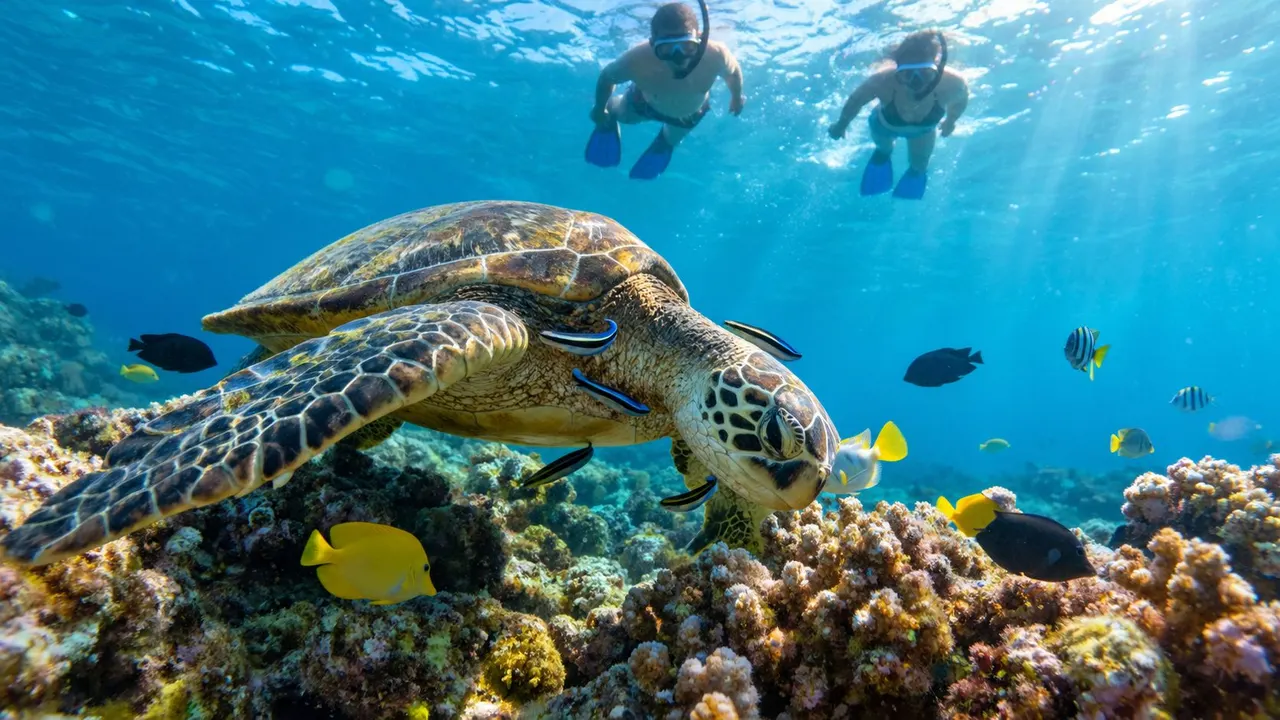
The conservation story makes that restraint important. The green turtle was globally reclassified by the IUCN in October 2025, moving from Endangered to Least Concern after decades of protection and recovery work. Its global population is estimated to be about 28% higher than in the 1970s, but 4 of 11 regional management units remain in decline, and the species is still far below its pre-exploitation abundance. You can read the broader context in this guide to turtles in Oahu.
That combination explains why turtle sightings are possible at major destinations while local populations can still be fragile. Families, nervous swimmers, and experienced snorkelers all benefit from the same approach: prepare properly, listen to the guide, stay farther away than your excitement tells you, and treat the turtle as a wild animal rather than an attraction that performs on demand.
The real goal: leave the water knowing the turtle behaved normally while you watched.
A guided trip also improves the experience because the crew understands the site, watches group spacing, and can redirect swimmers before a harmless-looking mistake becomes a chase. A sighting isn't measured by how close your camera gets. It's measured by whether you gave the animal room to breathe, move, and rest.
How to Prepare Before You Get in the Water
Before the boat leaves, make an honest comfort check. You do not need to be a competitive swimmer, but you should be able to stay calm in open water, breathe through a snorkel, and follow directions while wearing flotation equipment. Children and nervous adults usually settle faster if they practice placing their face in the water beforehand.
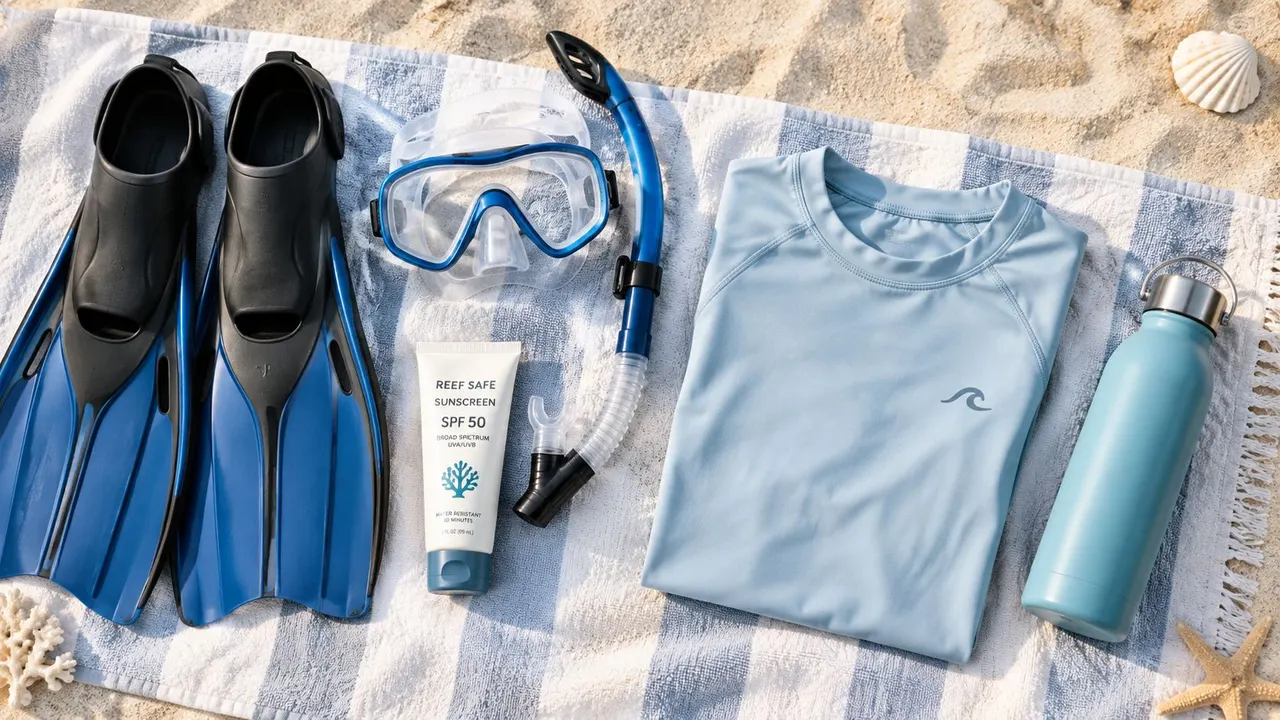
Wear a swimsuit that stays secure. A rash guard or long-sleeved shirt helps protect against the sun and can reduce the sunscreen entering the water. Bring a towel, drinking water, and any personal medication you may need. Follow the operator's instructions about sun-protection products before entering the ocean.
Make the equipment work before the turtle appears
A leaking mask can trigger panic. Loose fins make swimmers kick harder, while a poorly positioned snorkel creates extra head movement and disturbs your breathing. Guides normally fit the mask, snorkel, fins, and flotation equipment, then show you how to clear small amounts of water and adjust your breathing. Review this practical guide to turtle canyon snorkel gear before arrival so the equipment feels familiar.
For children, check that the mask seals comfortably and that the vest does not ride up around the face. The first objective is simple: float, breathe, and stay with the group. Looking for turtles comes later, once those actions feel automatic.
Choose a departure that reduces guesswork
A boat departure from Kewalo Basin Boat Harbor near Waikiki Beach avoids the uncertainty of swimming out from shore. It also puts you with a crew that knows the local conditions, can explain the site, and can change the plan if the water shifts.
Positioning matters once you are in the water. Keep your body horizontal, let the flotation support carry your weight, and use small fin movements instead of forceful kicks. The goal is to hold your position without drifting toward a turtle or touching the reef. A turtle that changes direction, dives, or swims away has already given you useful information. Stop kicking and allow space to open.
Living Ocean Tours is one of Oahu's most-reviewed snorkel operators, according to its Google Reviews profile. Its Turtle Canyons trip includes equipment, instruction, and in-water guidance. Snorkel Turtle Canyon is another option for travelers comparing guided turtle outings. Look for clear wildlife rules, properly fitted equipment, and guides who remain engaged in the water rather than pointing from the boat.
Arrival and Easy Water Entry for Beginners and Families
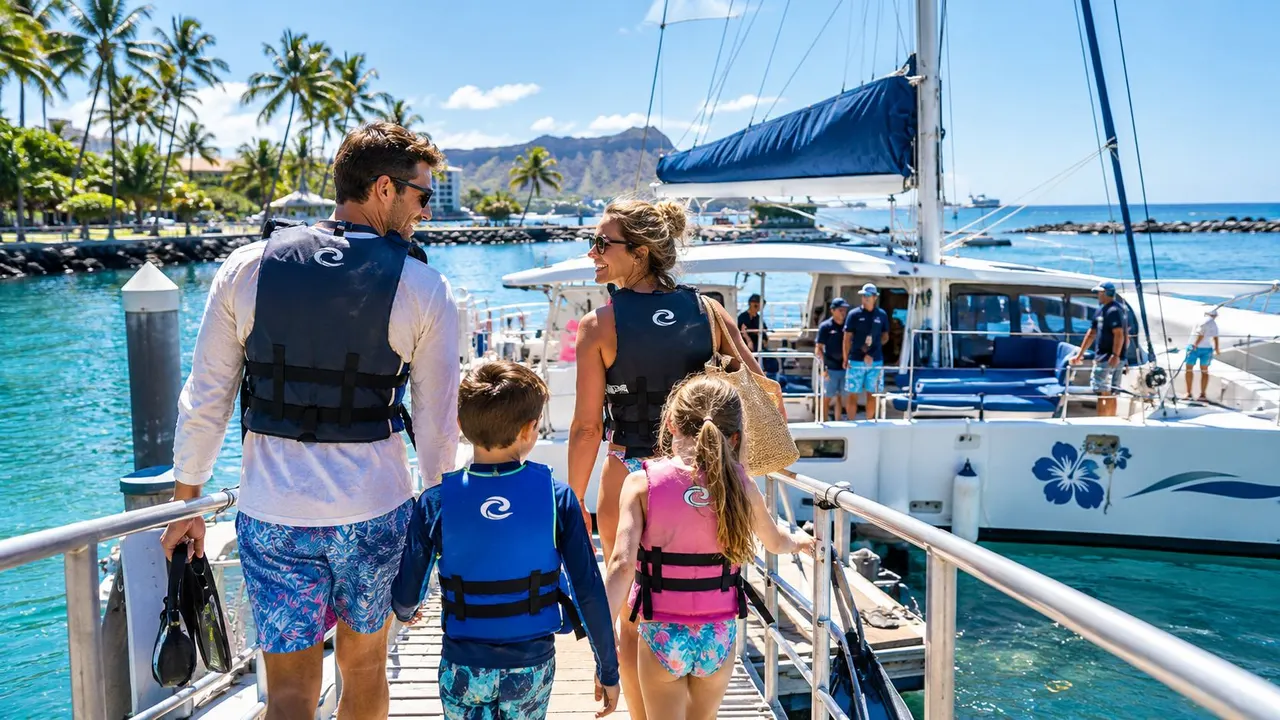
The calmest part of the trip should be the first few minutes, not the moment you spot a turtle. Arrive at Kewalo Basin Boat Harbor near Waikiki Beach with enough time to check in, organize personal items, and listen to the safety briefing without rushing. The crew will explain the boat layout, flotation equipment, entry point, and what to do if you need assistance.
Once you're at the water, resist the urge to kick immediately. Sit or lower yourself in as directed, hold the flotation support comfortably, and take a few slow breaths with your face in the water. Your first job is to discover that the equipment supports you. Hard kicking usually lifts the legs, pushes the body out of balance, and makes a beginner feel less stable.
Use the first minutes to settle your breathing
Keep your face relaxed and breathe steadily through the snorkel. If the mask fogs or leaks, signal the guide instead of standing up suddenly or swimming away from the group. A nervous swimmer who slows down early usually becomes more comfortable; one who rushes often swallows water and needs a longer reset.
Families should agree on a simple regrouping signal before entering. Children need to remain visible, and flotation vests make that easier for both the crew and parents. Stay close enough to hear or see the guide, but don't form a tight cluster around another swimmer or a turtle.
Let the crew manage the site
The guides stay in the water to help guests, identify marine life, and manage positioning. They may ask the group to pause, spread out, or move away from a turtle's route. Follow those changes promptly. A guide's value isn't just finding the animal. It's preventing a crowd from turning a calm sighting into a stressful one.
Morning departures often offer a more comfortable starting point because ocean conditions can be calmer, though conditions always vary. The practical sequence is straightforward:
- Enter slowly. Hold the rail or accept assistance rather than jumping and immediately finning.
- Find neutral balance. Let the vest and fins support you while you practice breathing.
- Stay with your family. Keep children between responsible adults or within the guide's sightline.
- Move economically. Small fin movements conserve energy and protect buoyancy.
- Wait for direction. Let the crew position the group before you search for turtles.
For a broader planning reference, review this guide to snorkeling on Oahu. A smooth entry gives you more attention for the wildlife and less work recovering from avoidable nerves.
How to Approach and Watch Turtles Without Disturbing Them
The most useful distance rule comes from turtle behavior, not from etiquette alone. In a behavioral study of immature green turtles, 90% of flight responses were triggered at snorkeler distances of 3 meters or less (behavioral study of snorkeler distance). That makes 3 meters a practical disturbance threshold. Stay beyond it, and you're less likely to cause the turtle to avoid you.
Your body position does most of the work. Keep your torso horizontal, fins behind you, and hands close to your body. When the turtle moves, stop finning and watch it in your peripheral vision. Don't swim directly above it, cut across its front, or drop down to follow it.
The mistake that looks harmless underwater
A turtle begins swimming toward the surface. One guest swims underneath it for a better photograph, another moves across its nose, and a third descends to keep the animal centered in the frame. Nobody intends to chase the turtle, but the group has enclosed its route.
That behavior creates two problems. First, it can trigger a flight response inside the 3-meter zone. Second, the swimmer following the turtle often loses buoyancy control and kicks the reef. The correct response is to stop, maintain position, and leave a vertical route open to the surface.
| Turtle Behavior | What You Should Do | What to Avoid |
|---|---|---|
| The turtle approaches you | Stay calm and still, keep your hands close, and allow it to choose the distance. | Reaching out, touching, or swimming toward it. |
| The turtle rests on the bottom | Float to the side at a respectful distance and observe without descending. | Diving down, hovering directly above, or stirring the bottom with your fins. |
| The turtle swims toward the surface | Move out of its route and keep the space above it open. | Blocking the ascent, crossing in front, or following upward. |
Body-position rule: if you have to kick harder to keep the turtle in frame, you're already too involved in the encounter.
The reef-contact evidence reinforces this technique. One study found snorkeler contact with benthic organisms increased 5.5-fold when snorkelers interacted with sea turtles, with average contact and damage rates of 0.35 ± 0.05 and 0.07 ± 0.02 per minute, respectively (study of snorkeler contact with reef organisms). Among snorkelers who disrupted turtle behavior, average reef-organism contact reached 1.48 ± 0.48 contacts per minute, compared with 0.27 ± 0.06 for those who didn't cause disruptions, from the same study.
Those figures show why swimming with turtles is a buoyancy exercise. The best view comes from holding position, not pursuing the animal.
Legal Rules and Reef Protection Every Visitor Must Follow
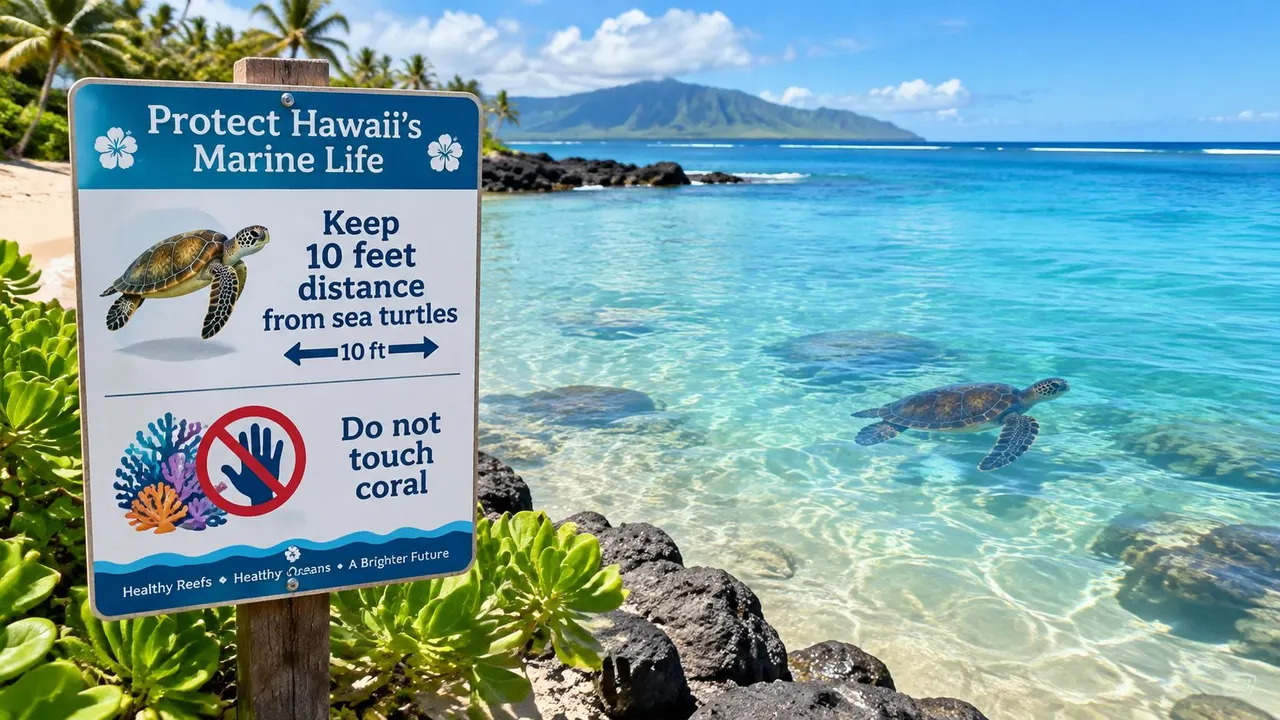
Hawaiʻi wildlife guidance requires staying at least 10 feet, or 3 meters, away from sea turtles on land and in the water. NOAA also recommends binoculars or camera zoom instead of moving closer (Hawaiʻi sea turtle guidance). Never touch, chase, feed, ride, restrain, or otherwise disturb a turtle.
The distance rule still applies when a turtle looks relaxed. A turtle resting beside the reef needs room to breathe and move, and one that approaches a swimmer has not invited contact. Hawaiʻi DLNR identifies touching or feeding as disturbance and says it is illegal under its public guidance (DLNR turtle disturbance notice). For the full list of local rules, see this guide to Hawaiʻi turtle snorkeling rules.
Protect the animal and the reef together
Turtle encounters draw attention toward the animal, especially when swimmers try to keep it centered in a camera frame. Feet then drop, fins sweep backward, and hands can touch coral or other reef organisms. Keep your body flat, hold your fins behind you, and use flotation support rather than pressing downward.
Group size and distance also affect reef safety. Global in-water interaction guidance recommends groups of no more than 5 people, at least the animal's body length or 3 meters, whichever is greater (global turtle interaction guidance). Smaller groups leave more room outside the turtle's route and reduce competition for photographs. The same reef-contact study linked earlier found more contact with reef organisms when snorkelers disrupted turtle behavior.
What guides should enforce
A good guide corrects positioning before it becomes a problem. Guides spread guests out, stop swimmers from crossing over a turtle, and keep a clear route to the surface. These actions protect the animal while reducing sudden movements that can endanger inexperienced swimmers or damage the reef.
If a turtle approaches, Hawaiʻi guidance recommends staying calm and still instead of reaching out or pursuing it (marine wildlife viewing guidance). Let the turtle pass.
What to Expect Underwater and How to Choose Your Tour
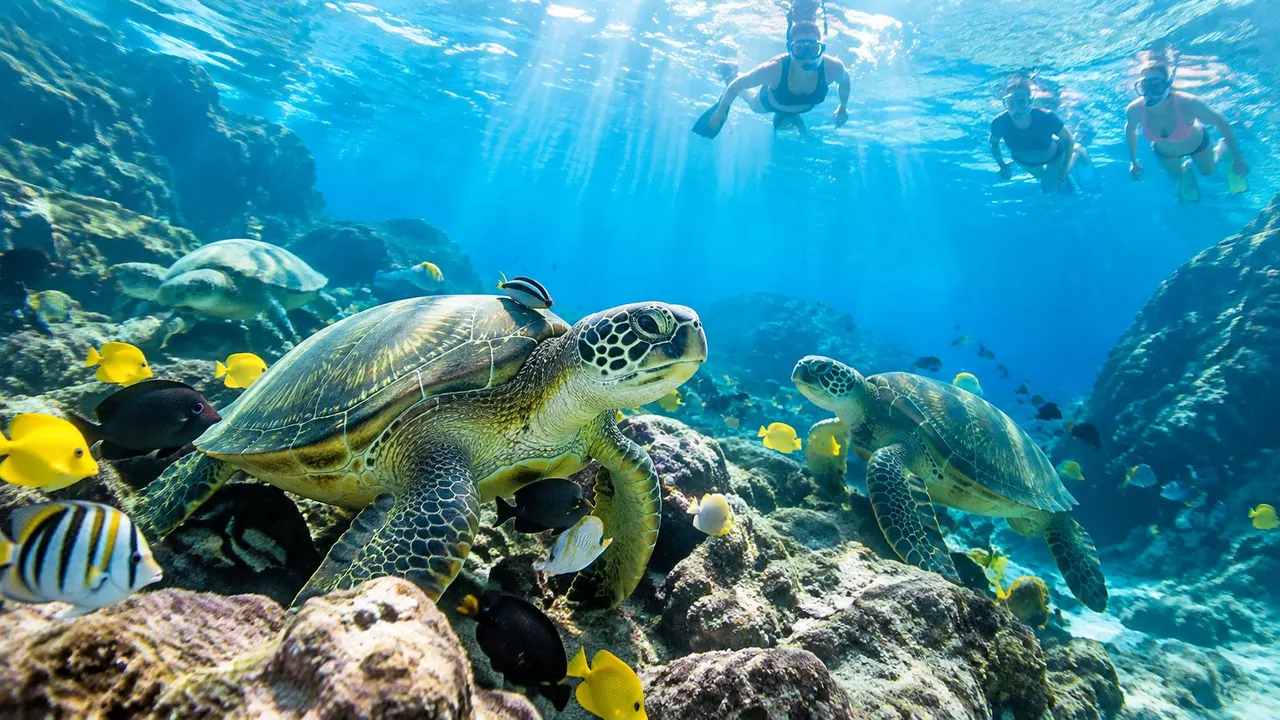
Turtle Canyons is a changing reef environment. As you settle into the water, a Hawaiian green sea turtle may rest or move through a cleaning station while reef fish pass over coral. Visibility and current vary, so the guide's site choice and your body position matter more than a promised underwater view. For a closer look at the site, read this guide to Turtle Canyon snorkeling.
Distance and buoyancy determine whether you observe safely. Keep at least 3 meters from a turtle, or farther if the animal's body length requires it. Stay horizontal, keep your fins behind you, and make small, controlled kicks. Dropping your legs or sculling downward can contact coral, especially when surge pushes you toward the reef. Flotation support helps you hold depth without pressing down.
Living Ocean Tours describes its Turtle Canyons Snorkel Excursion as a guided trip with equipment, instruction, and in-water support. Its tour page states a 95%+ success rate for spotting Hawaiian green sea turtles, although wild animals and conditions remain unpredictable. The Deluxe Waikiki Snorkel and Waterslide combines snorkeling with a waterslide, water trampoline, and lily pad, which suits families with different interests.
Select the trip around your group
Choose the focused excursion when your group can give turtle viewing its attention. Choose the deluxe option when younger travelers need extra activities or some guests want less turtle-focused snorkeling.
No departure can guarantee a sighting. If turtles are resting elsewhere, enjoy the reef and fish rather than asking the guide to approach them. A quiet swim and wildlife interpretation still provide a worthwhile outing.
Weather may change the itinerary, and operators can delay, modify, or cancel a trip when conditions make the water unsuitable. Check the cancellation and rescheduling policy before booking.
Living Ocean Tours offers guided Turtle Canyons snorkeling from Kewalo Basin Boat Harbor, with gear, instruction, and in-water guidance for respectful wildlife viewing. Visit Living Ocean Tours to compare Oahu ocean experiences and reserve a place before your Waikiki trip.


