
Swimming with Turtles in Oahu: A Practical Guide
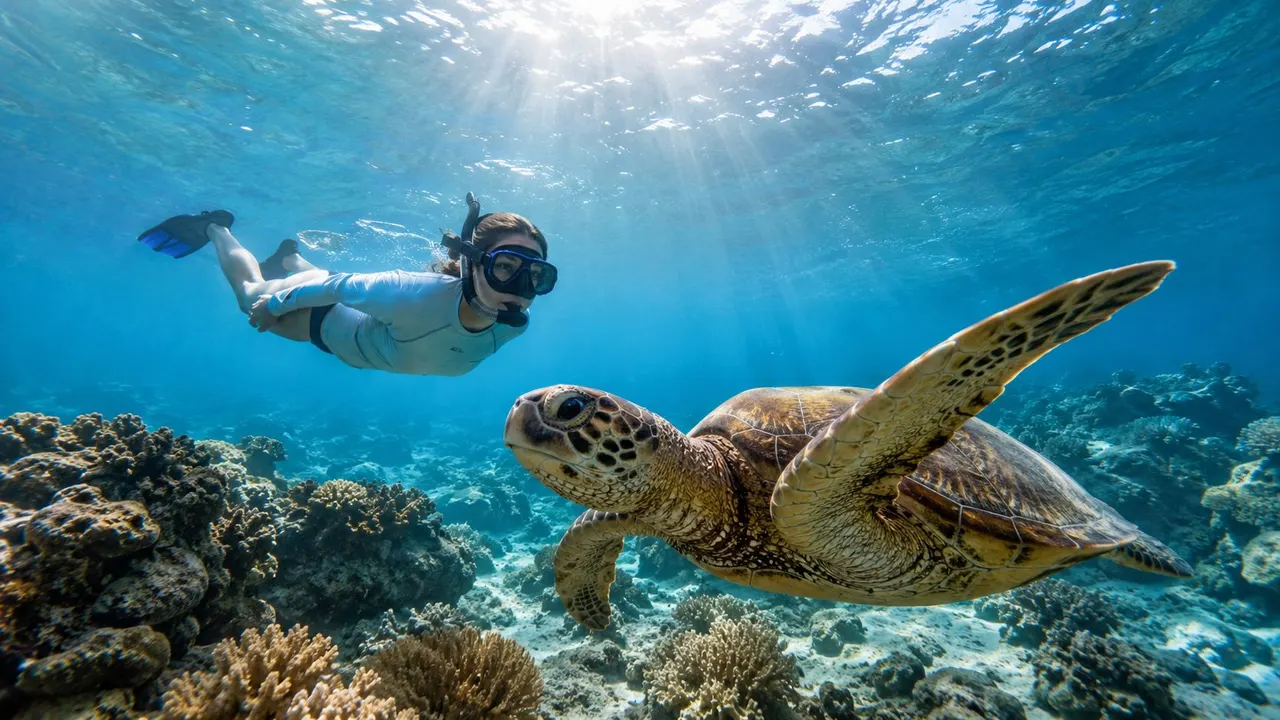
You're standing on the dock at Kewalo Basin, watching a catamaran take on snorkel gear while a green shape rises offshore, breathes, and disappears beneath the Waikiki surface. You've come to see a honu up close, but the best encounter isn't the one where a turtle swims within arm's reach. It's the one where the animal keeps feeding, resting, and surfacing as if you aren't there.
Swimming with turtles in Oahu is a wildlife experience, not an underwater meet-and-greet. The practical details matter, from choosing a calm departure to holding the correct distance, because responsible behavior protects both the turtle and the quality of the experience.
Why Swimming with Turtles in Oahu Is a Conservation Moment
At sunrise, Kewalo Basin feels more like a working harbor than a wildlife theater. Crew members check masks, load fins, and read the day's conditions while honu cruise the surface offshore. The turtles aren't waiting for the first tour group. They're moving between feeding, resting, cleaning, and breathing, and every swimmer entering the water becomes part of that environment.
The Hawaiian green sea turtle, or Chelonia mydas, is protected in U.S. waters under the Endangered Species Act, with additional state protections in Hawai'i. NOAA describes the species as protected under federal law, while Hawai'i's rules reinforce the prohibition against harassing turtles around reefs, beaches, and nesting areas.
A recovering population deserves careful tourism
The conservation story is encouraging, but it isn't permission to treat turtles casually. NOAA reports that Hawai'i's green turtle population was severely depleted when researchers began studying it in the 1970s. Long-term monitoring now shows an estimated 5.4% annual increase since 1973, following decades of federal regulations and conservation work. NOAA's sea turtle research summary also notes that the statewide nesting population has been increasing at roughly 3% to 5% per year.
Those gains explain why visitors can now encounter turtles regularly at Oahu snorkeling sites. They also explain why distance rules are central to the experience. A recovering population can support carefully managed wildlife viewing, but repeated disturbance at the same reef can still affect individual animals and their habitat.
A turtle resting at a cleaning station is working with its environment, not posing for photographs. Wrasses remove parasites while the turtle remains relatively still, and swimmers who crowd the area can interrupt that resting behavior. Research on turtle watching has associated snorkeler presence with measurable disturbance to reef life, with effects increasing during sea turtle watching events. The peer-reviewed field study recommends managing interactions so repeated encounters don't concentrate in the same feeding or resting areas.
The conservation choice is personal: your distance, direction, and decision to leave can determine whether a turtle continues its normal behavior.
Read more about Oahu turtle conservation before you book. The most responsible operators treat the turtle's behavior as the measure of a successful trip, not the closeness of the photograph.
When and Where the Encounters Actually Happen
Oahu's resident honu can be encountered throughout the year, but conditions still shape the trip. In general, calmer water and clearer visibility are more common from April through October, while winter can bring larger south swells. Winter also brings humpback whales to Hawai'i, which NOAA says are generally present from November through April, with peak viewing from January through March. NOAA's humpback guidance explains why winter ocean conditions can demand more flexibility from a captain.
A Waikiki snorkel day usually has a simple rhythm. Many boats offer morning and afternoon departures, commonly around 8 a.m. and 1 p.m., when conditions allow. The captain may choose an inner reef or a more exposed outer site after checking wind, swell, current, visibility, and boat traffic. The departure time matters less than the crew's willingness to change locations when the original plan isn't safe or productive.

Why Turtle Canyon attracts turtles
Turtle Canyon earned its reputation because its ledge system along the Waikiki shelf creates resting habitat and cleaning areas. Wrasses gather around these reef structures and remove parasites from turtles, producing repeated sightings that are more reliable than swimming along an unstructured shoreline.
That reliability comes with a trade-off. A known cleaning station attracts boats and snorkelers, so the site needs active management. A skilled captain won't anchor blindly over a turtle or push a group into a crowded viewing pocket. The crew should watch the animal's movement, keep the group spread out, and leave when normal behavior changes.
For a closer look at how the local encounter works, review this guide to turtles in Oahu. Come expecting to observe a wild animal, not expecting a guaranteed performance.
Why a Guided Tour Beats Shore Snorkeling
Shore snorkeling suits confident swimmers who know Oahu's coastline and can read changing ocean conditions. Public access near places such as Electric Beach or Haleiwa offers flexibility, no reservation, and the option to use your own equipment. The trade-off is managing uneven reef, navigation, currents, and wildlife encounters without a crew.
From land, reaching productive turtle habitat may require a long surface swim over less active reef. A current can carry an inexperienced swimmer farther from shore than expected, while sightings often become less consistent away from established cleaning areas. If conditions shift, a beach group has fewer options for changing location or keeping everyone together.
A guided Waikiki departure reduces that uncertainty. Boats commonly reach the snorkeling area in roughly 20 to 30 minutes, then the captain can choose a suitable position while watching wind, swell, current, visibility, and boat traffic. Guides can explain mask clearing, provide flotation support, identify a turtle's travel route, and redirect a swimmer before the animal feels crowded.
A responsible encounter still follows NOAA distance rules. Guests should remain at least 10 feet from a sea turtle and give the animal more room when it changes direction or approaches them. Group size also affects behavior and viewing quality. Peer-reviewed research on wildlife tourism has found that larger groups can alter animal behavior, so a good operator controls spacing rather than allowing everyone to cluster around one turtle.
Guided Tour vs. Shore Snorkel for Turtle Sightings
| Factor | Guided Tour, Living Ocean Tours | Shore Snorkel, DIY |
|---|---|---|
| Access | Boat departure from Kewalo Basin with direct access to reef sites | Shore entry and a longer surface swim |
| Site choice | Captain can select between inner and outer reef areas | You're committed to the selected shoreline |
| Wildlife viewing | Guides can manage spacing and redirect swimmers | You must enforce your own distance and group control |
| Beginner support | Crew provides gear, instruction, and entry guidance | You handle equipment, navigation, and emergencies |
| Main trade-off | Fixed departure time and shared boat setting | Greater flexibility, but more exposure to current and navigation challenges |
Living Ocean Tours operates from Kewalo Basin and runs small-group boats toward Turtle Canyon. Crew members actively manage swimmer spread and can respond when a turtle's movement or the sea conditions change. Its Turtle Canyons Snorkel Excursion suits visitors who want equipment, instruction, and an in-water guide rather than a self-directed reef search.
Read this guide to learn more about turtle canyon snorkeling before comparing departure times, group format, and operating conditions. Another option is Snorkel Turtle Canyon, particularly when comparing boat style and schedule.
Gear, Skills, and What to Bring on the Boat
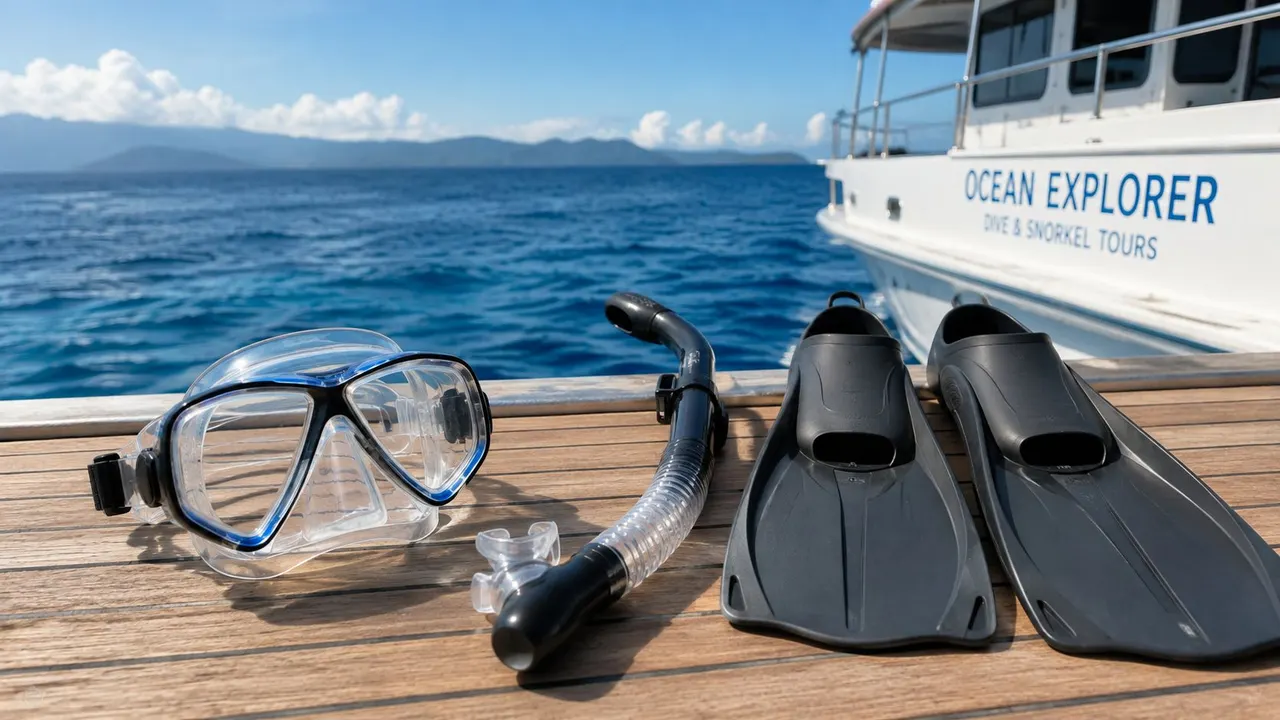
Start with the mask. Press it gently against your face without using the strap, inhale through your nose, and check whether it holds briefly. A mask that seals without painful pressure will make the entire swim easier than an expensive mask that leaks around your cheeks.
Choose a snorkel with a mouthpiece you can hold comfortably and fins that fit securely without causing foot fatigue. Test the complete setup in a pool or shallow water before traveling. Offshore is the wrong place to learn fin kicking, mask clearing, and relaxed breathing through a snorkel for the first time.
Build confidence before entering
Use a flotation aid approved by the operator, particularly if you're a beginner or tire easily. A short wetsuit or rash guard can provide warmth, sun protection, and a little extra confidence without changing how you move through the water.
Pack the items that solve common problems:
- Dry comfort: Bring a towel and a dry change of clothes for the ride back.
- Sun protection: Pack a hat and use reef-conscious mineral sunscreen before boarding.
- Hydration: Carry a refillable water bottle and drink before you feel thirsty.
- Motion sensitivity: If you need medication, ask a medical professional or pharmacist about timing, and don't try a new medicine immediately before departure.
- Valuables: Secure phones and cameras with floating straps, then follow the crew's wildlife and photography rules.
Apply mineral sunscreen before boarding, then use clothing or a towel for touch-ups. Many boats restrict certain sunscreen ingredients, and applying a thick layer immediately before entering can leave residue in the water.
During check-in, listen to the safety briefing, confirm your mask and fin fit, and practice the entry method. Keep your fins on only when the crew directs you to do so. Tell the crew about limited swimming ability, recent injuries, pregnancy, cold sensitivity, or anxiety, because they may suggest flotation, a calmer entry, or additional support.
A practical equipment checklist is available in this guide to Turtle Canyon snorkel gear. Good preparation doesn't make you fearless. It gives you fewer problems to solve once you're floating.
How to Behave Around a Hawaiian Green Sea Turtle
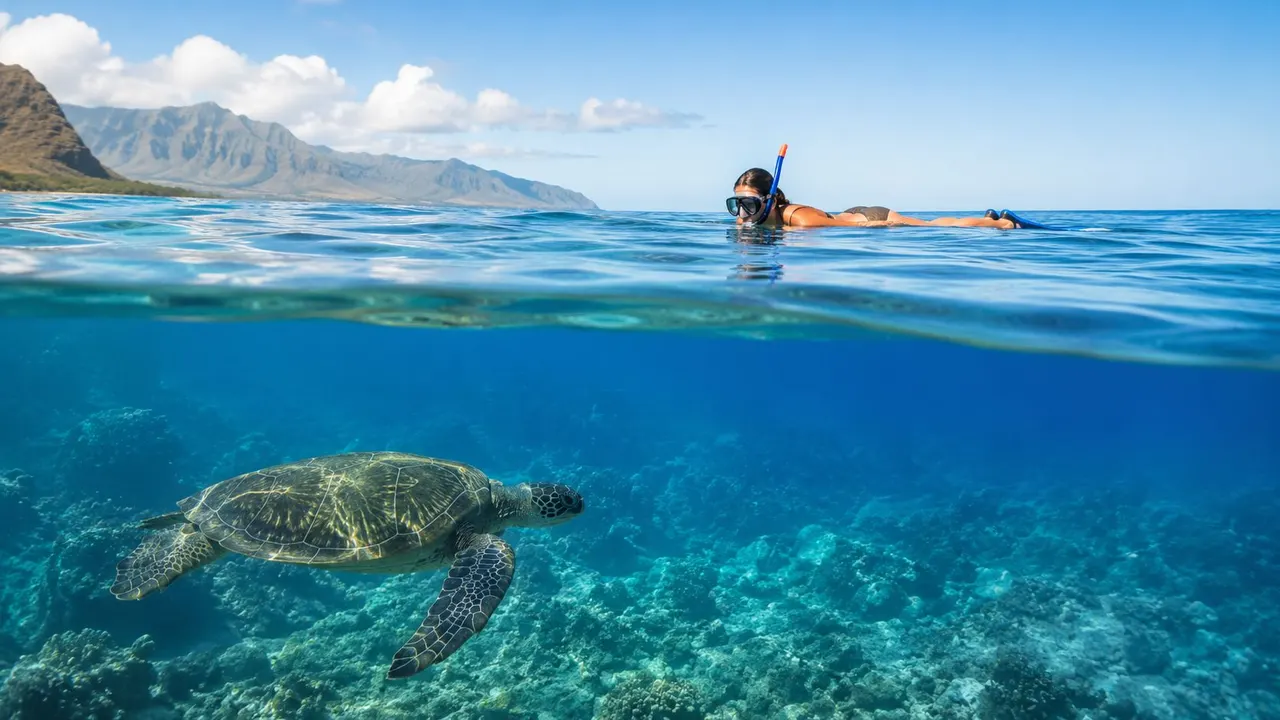
Treat every turtle as a wild animal whose route takes priority over your photograph. NOAA's Hawai'i marine wildlife viewing guidance requires visitors to stay at least 10 feet, or 3 meters, from sea turtles in the water and on land. Visitors must never touch, chase, feed, block, or surround them. NOAA's wildlife viewing guidelines make that distance a requirement, not a suggestion.
The safest approach is simple. If a turtle is already moving in your direction, hold your position and let it pass. If you're moving with the group, approach from one side at a slow, steady pace, then stop while you're still outside the required distance. Don't swim directly toward the turtle, and don't position yourself above it.
Keep the turtle's route open
International in-water wildlife guidance recommends a maximum of 5 people within the minimum-distance zone and a separation of either the animal's body length or 3 meters, whichever is larger. The CMS recreational in-water wildlife guidelines also recommend a one-side approach rather than enclosing a turtle from above, because the animal needs unobstructed access to the surface.
Keep your hands at your sides or behind your back. Never chase, circle, touch, feed, ride, or place yourself between a turtle and the surface, reef, or exit route. A selfie stick doesn't justify closing the gap, and a child or photographer should never be placed directly in front of an animal.
Photo rule: If you can't hold your position while taking the photo, you're too close to take it.
If a turtle approaches you, stay calm and turn slightly sideways if needed. Create space without splashing, kicking hard, or blocking the animal's path. Move away if it changes direction rapidly, bolts, surfaces repeatedly, or leaves its resting place. Video often works better than chasing a close still image because you can keep your distance while recording natural movement.
A useful summary of the local behavior rules appears in this guide to Hawai'i turtle snorkeling rules. The best encounter may feel uneventful from the turtle's point of view. That's exactly what you want.
Making It Work for Families, Beginners, and Anxious Swimmers
A responsible turtle tour should lower stress while keeping wildlife rules firm. Before booking, tell the operator each guest's age, swimming ability, mobility needs, and comfort in deep water. Ask how guests enter the water, what flotation is provided, how the crew separates different ability levels, and how guides prevent swimmers from crowding a turtle.
A stair or slide entry is often easier for a nervous guest than a backward roll. Flotation lets someone remain at the surface without making the outing a private swimming lesson. Children should stay within arm's reach of a responsible adult, and a non-swimmer should not be placed in water beyond their ability.
Build the day around confidence
Practice with a mask and snorkel in a pool before the excursion. On the boat, spend a few minutes floating near the entry point before moving farther out. If breathing through the snorkel feels tight, return to the ladder or flotation line, breathe normally, and decide calmly whether to continue.
Several practical choices can make the day easier:
- Choose the easier departure: An early trip may suit guests who handle heat and boat motion better before the day builds.
- Eat lightly: A modest meal is often easier on the stomach than boarding hungry or overly full.
- Hydrate ahead of time: Drink water before boarding, while avoiding a boat ride spent constantly looking for a restroom.
- Plan for sensory stress: Seasickness, cold water, bright sun, and crowd noise can affect confidence as much as swimming ability.
- Speak up early: Ask the crew to identify the lowest-exposure entry point and whether a guide can remain nearby.
The conservation trade-off is real. Popular cleaning sites can offer dependable encounters, but they also concentrate boats and swimmers. Field research supports managing that pressure through staggered entry times, rotating sites, and guides who keep guests outside the turtle's immediate travel corridor. The study's findings on managing snorkeler interactions describe why group size and swimmer distribution matter during these encounters.
A good Waikiki departure should make those choices visible. The captain should be willing to change the site when conditions or crowding make the planned route unsuitable, and the guide should correct guests before a turtle is surrounded.
For families, success isn't measured by closeness. It's seeing a turtle behave naturally and leaving without changing that behavior.
Small groups, predictable routes, attentive guides, and firm distance enforcement improve the experience for people while reducing pressure on turtles. A nervous swimmer often relaxes faster when the crew has a clear plan than when everyone is told to “be careful.”
Honest Questions Before You Book
Is swimming with turtles in Oahu ethical?
Swimming with turtles in Oahu is ethical when the operator and guests treat it as wildlife viewing. Hawaiian green turtles are protected, and NOAA requires a minimum distance of 10 feet, or 3 meters. Touching, chasing, feeding, blocking, and surrounding a turtle are prohibited. A responsible encounter lets the animal continue normal behavior without being crowded or redirected.
Ask how guides enforce distance, what they do when a site becomes crowded, and whether the captain will move the boat when conditions or turtle behavior require it. “Close encounters” is a weak selling point. A clear plan for keeping the turtle's route open is the standard to look for.
Which months offer the best conditions?
Honu are present year-round, but calmer water and better visibility are generally more common from April through October. Winter can bring humpback sightings, while larger south swells may make snorkeling less comfortable. The captain should choose the site that morning according to sea conditions, rather than follow a fixed promise made during booking.
Can I take underwater photos?
Usually, yes, provided you can maintain the required distance and hold your position. Turn off the flash near the animal, keep selfie sticks from closing the gap, and never ask another swimmer to block the turtle's route for a better composition. A camera belongs in the plan only when it does not change your behavior.
Is a catamaran better than a raft or shore trip?
A catamaran usually provides a stable platform, easier boarding, and enough room for guides to organize entry and exit. A zodiac-style raft can feel more direct and agile, but offers less space and a more exposed ride. Shore snorkeling gives you flexibility, while placing responsibility for navigation, conditions, and finding productive habitat on your group.
For a low-effort, regulation-compliant outing, compare the Living Ocean Tours Turtle Canyons excursion with the operator's reviews. Choose a departure that matches your group's swimming ability and comfort. The right tour prepares you before entry, leaves the turtle's route open, and accepts a natural encounter as a successful one.
Living Ocean Tours offers guided Turtle Canyons snorkeling from Kewalo Basin with gear, instruction, and in-water guides focused on responsible encounters with Hawaiian green sea turtles. Visit Living Ocean Tours to review the excursion and choose a departure that fits your family, swimming level, and plans in Waikiki.


