
Snorkeling in Waikiki: Top Tips for an Ocean Adventure
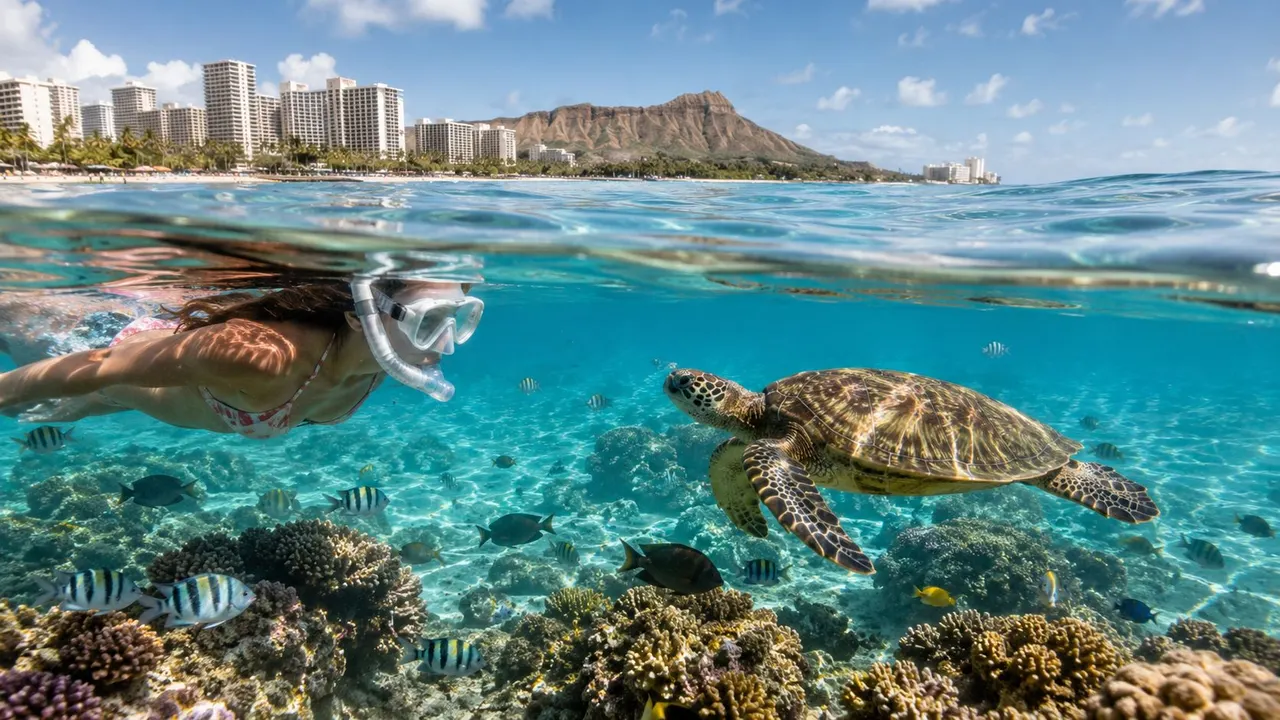
You've arrived in Waikiki, rented a mask, and picked a sunny morning for your first ocean adventure. From the sand, the water looks inviting, but the main question isn't whether you can snorkel here. It's whether you've chosen the right reef, tide, weather window, and time of day to make the swim worthwhile.
Snorkeling in Waikiki can be easy, accessible, and memorable, especially for families and first-timers. It can also become a cloudy, crowded hour in the water if you head out after rain, during rising wind, or along the wrong stretch of beach. The practical difference comes from knowing how this urban coastline works.
What to Expect from Snorkeling in Waikiki
From the beach, Waikiki can look like a remote tropical atoll. The water is warm, Diamond Head frames the horizon, and the shoreline is easy to reach. Underwater, though, your first view may include sandy bottom, shallow waves, swimmers, paddleboards, and suspended sediment instead of uninterrupted coral gardens.
Waikiki is a managed, high-access urban reef environment, not an offshore dive site. More than 500,000 cubic yards of sand have been placed on Waikiki Beach since 1928, while only about 2% remains today. That long-term change helps explain why the shoreline behaves differently from a remote reef, as described in this background on Waikiki's changing coastal environment.
The urban reef advantage
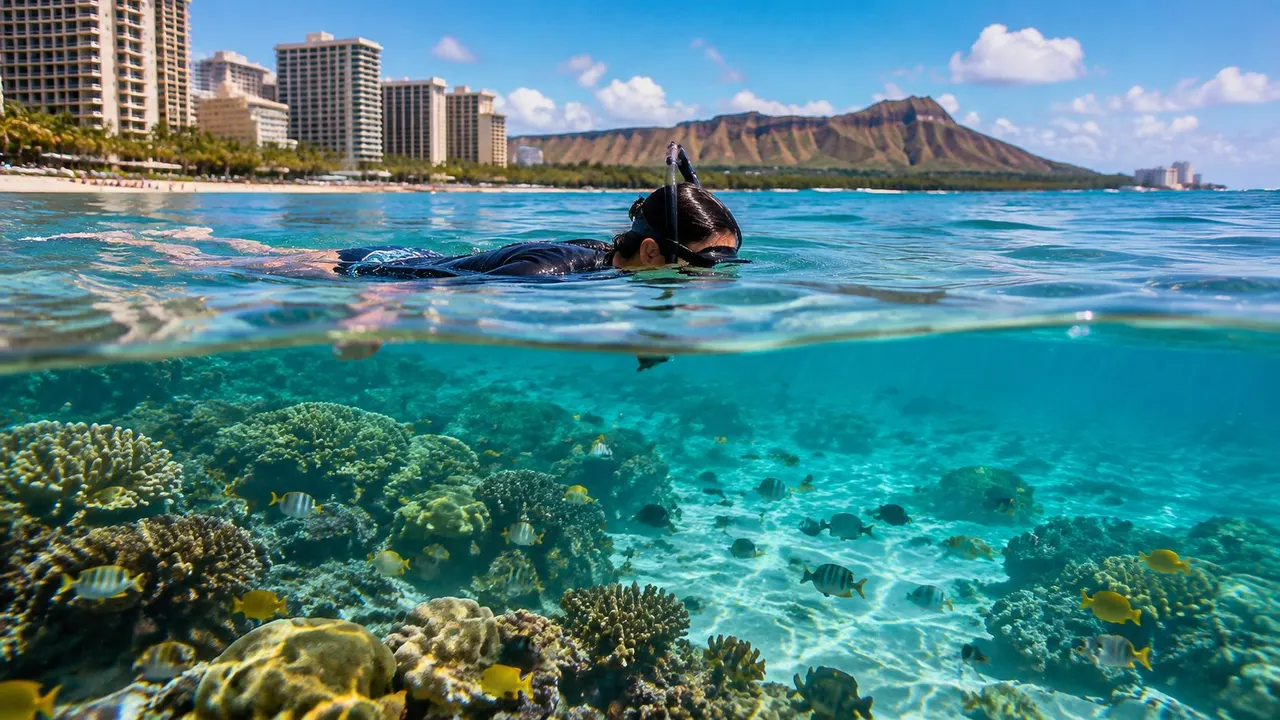
Waikiki's main advantage is access. You can enter from a busy resort corridor, use nearby public facilities and lifeguard support, and introduce nervous swimmers to snorkeling without booking a remote boat trip. A state environmental assessment describes offshore water quality as generally good, while noting that shallow waves can increase turbidity. Monitoring stations at Ft. DeRussy Beach, Gray's Beach, Tavern's Beach, and Kūhiō Beach also give the nearshore zone closer observation than an isolated reef, according to this Waikiki snorkeling context and beach access.
That convenience comes with a trade-off: water clarity can change quickly. A calm, lightly used entry may offer pleasant viewing, while wind, swell, rain runoff, or heavy foot traffic can stir the bottom. Check the water before committing, and use Waikiki snorkeling and beach access guidance to compare practical entry options.
The Waikiki Marine Life Conservation District, created in 1988, covers 76 acres from the Kapahulu Groin seawall to the Waikiki Natatorium, extending from the high-water mark to 500 yards offshore. Fishing and harming or harassing sea life are prohibited there, helping protect the habitat visitors come to observe. See these details about the Waikiki Marine Life Conservation District.
Expect a beginner-friendly ocean outing with variable clarity, modest nearshore depths, and possible sightings of reef fish or a Hawaiian green sea turtle. Judge the swim by that day's conditions and timing, not by postcard expectations.
Best Times and Conditions for Clear Water
If you reach Waikiki before the wind rises and the beach fills, you have a better chance of getting the clear, relaxed swim you came for. Sunrise through roughly 10 a.m. is often the most reliable window, while another conditions guide recommends starting before about 9 a.m. (morning timing and Waikiki water guidance). In favorable conditions, visibility is commonly around 15 to 30 feet (Waikiki visibility and weather guidance).
Sunshine alone does not produce clear water. Wind adds chop, swell moves the shallow bottom, and swimmers can stir sand around busy entry points. An afternoon with blue skies may offer poorer viewing than a quieter morning with lighter wind.
Read the water before you enter
Make the decision at the beach, not from yesterday's forecast:
- Look beyond the shoreline. Heavy breaking waves over the intended reef usually mean more movement and reduced viewing.
- Check the surface. Wind ripples and whitecaps can make breathing, mask clearing, and staying relaxed harder for beginners.
- Ask a lifeguard. Local observations can reveal changes that a general forecast misses.
- Check tide and marine conditions. The Oahu tide charts help with timing around changing water levels, but tide timing alone does not guarantee clear visibility.
- Be ready to cancel. If the entry looks unsettled, a beach day without snorkeling is better than forcing a frustrating session.
Rain requires a separate decision. Heavy rainfall can carry runoff toward the ocean through the Ala Wai Canal outfall, reducing clarity and increasing bacteria exposure. Hawaii Department of Health guidance is to stay out of the ocean for at least 72 hours after heavy rain (post-rain ocean safety guidance).
Why conditions can change quickly
A protected reef may hold plenty of fish while offering mediocre visibility. One independent conditions report rated the Waikiki protected area around 6.0 out of 10, with fair-to-good morning conditions, east winds around 10 to 15 mph, and a 2 to 4 foot south-southwest swell building (Waikiki conditions reporting). The trade-off is straightforward: protected habitat supports marine life, but wind and swell still determine what your mask can reveal.
Plan for the earliest practical start, then reassess beside the water. After recent rain or with a building swell, a guided operator may suggest a safer alternative or a different departure.
Practical rule: Clear skies do not guarantee clear water. Rain history, wind, swell, and start time matter more than the color of the sky.
Top Snorkeling Spots Near Waikiki Beach
The most productive shore snorkeling is concentrated toward the protected reef around Queen's Beach and Sans Souci, rather than the busiest central frontage. Fishing and taking marine life are prohibited in the Waikiki Marine Life Conservation District, so reef fish are more likely to remain in the area (family-oriented guide to the protected Waikiki zone).
Start by choosing the location that matches your group, not the location that sounds most dramatic.
Queen's Beach for accessible reef viewing
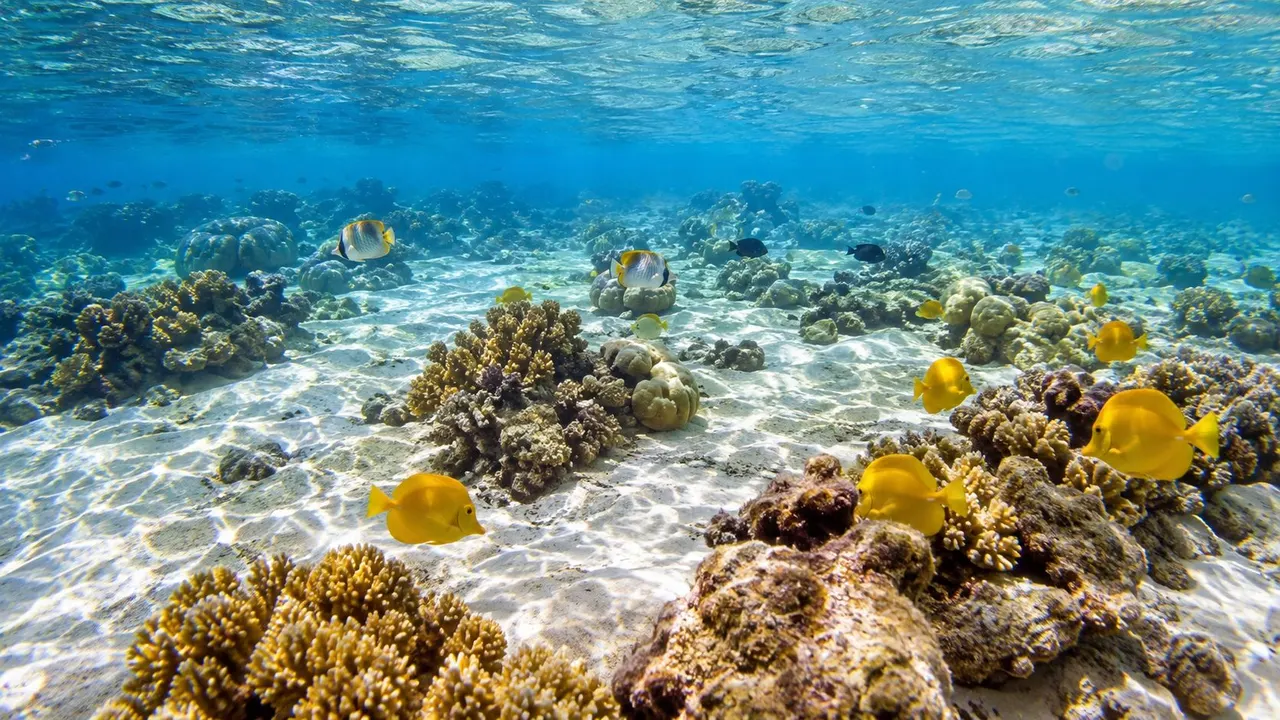
Queen's Beach is a practical starting point for confident beginners who want to try shore snorkeling without leaving Waikiki. Enter only where the bottom and waves look manageable, keep your fins away from the reef, and stay close enough to exit comfortably. The area can attract swimmers and beachgoers, so early arrival improves both space and visibility.
You may see common Hawaiian reef fish and, on suitable days, a Hawaiian green sea turtle. A turtle sighting is never a reason to swim faster or crowd the animal. Wildlife viewing works best when you remain calm and let the animal determine the encounter.
Sans Souci for a quieter feel
Sans Souci can suit snorkelers who want a less hectic shoreline experience. Its appeal is the combination of access and proximity to protected reef habitat, not a guarantee of perfect water. When wind and swell are low, the zone can offer an enjoyable introduction to reef fish and shallow-water observation.
Families should keep weaker swimmers within arm's reach, use flotation support, and avoid entering when waves are pushing directly across the intended route. A calm-looking entry can still develop a current farther from shore.
Kūhiō Beach and central frontage
Kūhiō Beach offers convenient access and public amenities, but the central beach environment is heavily used. Shallow waves can re-suspend sand, particularly as more people enter the water. Treat this area as a quick, flexible option rather than the place to promise children a pristine underwater panorama.
For a richer wildlife-focused outing, a boat trip to a reef site such as Turtle Canyon removes the guesswork of searching randomly from shore. A guided Turtle Canyon snorkeling experience can also provide instruction, equipment support, and a crew that understands how to position guests without pressuring wildlife.
Protected status improves the chance of seeing marine life, but it can't override wind, swell, rainfall, or sediment in the water.
Choosing the Right Guided Snorkel Tour
A guided trip makes the most sense when your group has mixed swimming abilities, limited time, or a specific wildlife goal. The wrong choice is usually the tour that sounds exciting but doesn't fit the youngest child, the least confident swimmer, or the person most prone to seasickness.
Match the experience to the group
A shore session offers maximum flexibility. You can leave when someone gets cold, tired, or uncomfortable, and there's no boat movement to manage. The trade-off is that you're responsible for finding the best entry, assessing the water, and locating productive habitat.
A turtle-focused boat excursion is better for visitors whose priority is seeing Hawaiian green sea turtles and reef fish away from the busiest beach frontage. It provides transport, gear, and guidance, but you'll need to follow crew instructions and accept that ocean conditions can change.
A wildlife cruise with play features suits families who want more than a mask-and-fins session. Living Ocean Tours is described in its publisher information as the top rated and most reviewed snorkel company on Oahu, offering a Turtle Canyons Snorkel Excursion and a Deluxe Waikiki Snorkel & Wildlife Cruise with features such as a waterslide, water trampoline, and lily pad. Review the Waikiki snorkeling tour options and choose based on your group's actual priorities.
A practical comparison
| Your priority | Best fit | Main trade-off |
|---|---|---|
| Quick, low-commitment swim | Shore snorkeling | Conditions and habitat are less predictable |
| Turtles and guided reef viewing | Turtle-focused boat trip | Fixed departure and boat motion |
| Young children needing variety | Wildlife cruise with water activities | More activity than a simple snorkel |
| Calm, instruction-led introduction | Small guided group | Less freedom to set your own route |
Don't treat “guaranteed” language casually. Turtles are wild animals, and responsible operators can improve your odds without controlling what appears. The crew should explain flotation, mask use, entry procedures, and wildlife distance before anyone enters the water.
Essential Gear and Packing Checklist
Waikiki doesn't require a complicated expedition kit. The best packing list is compact, sun-conscious, and suited to shallow water where comfort determines how long a beginner stays relaxed.
Bring a properly fitting mask, snorkel, and fins if you're using personal equipment. A leaking mask can ruin the experience faster than cloudy water, so test the seal before leaving the beach. If you're joining a tour, confirm what the operator supplies before packing duplicate gear. This Oahu snorkel packing list can help you separate essentials from unnecessary extras.
What to wear
Reef-safe sunscreen belongs on exposed skin, but apply it before entering the water and follow local product guidance. A long-sleeve rash guard reduces direct sun exposure and often makes the session more comfortable for children who don't notice how much sun they're receiving while floating.
A swimsuit that stays secure under fins is more useful than elaborate clothing. Add a light cover-up for the walk between hotel and beach, plus a dry change of clothes if you're joining a boat trip.
Flotation and comfort
Beginners shouldn't view flotation as a sign of weakness. A properly fitted flotation vest or belt helps a nervous swimmer keep the face in the water without exhausting the legs. Children should use the equipment recommended by the operator and remain supervised, even when they appear comfortable.
Pack a reusable water bottle, towel, waterproof phone pouch, and any medication your group may need. If you're prone to seasickness, consider the boat's motion before departure and ask the operator about appropriate preparation. Don't take medication without checking that it's suitable for you.
What to leave behind
Reef shoes are often unnecessary for a guided snorkel and can encourage people to stand on fragile reef surfaces. Keep your feet moving, use the ladder or sandy entry where available, and never use coral as a handhold. Large bags, loose jewelry, and dangling accessories create hazards in the water and are easy to lose.
Pack light, protect your skin, and keep your hands and feet off the reef. Those three choices improve comfort and reduce avoidable damage.
Wildlife Etiquette and Responsible Snorkeling
A turtle encounter becomes meaningful when the animal behaves normally. If a honu changes direction, dives away, or increases its pace, give it space instead of following. Chasing creates stress and turns a respectful observation into harassment.
Hawaii's turtle-viewing guidance requires snorkelers to remain at least 10 feet, or about 3 meters, away from sea turtles in the water. That distance applies side-to-side, above, and below the turtle, and visitors must never touch, chase, or crowd one (turtle-viewing distance guidance).
Protect the place you came to see
The Waikiki Marine Life Conservation District prohibits fishing and taking marine life. That protection gives reef species a safer environment close to one of Honolulu's busiest coastal areas, but visitors still determine how much pressure the habitat receives.
Use neutral buoyancy rather than standing. Don't collect shells, feed fish, scrape coral, or block a turtle's route to the surface. Keep sunscreen and gear under control, and follow crew directions when a guide establishes a viewing boundary.
Responsible snorkeling also means knowing when to stay out. After heavy rain, the recommended ocean break protects both your health and the broader water-quality system. A missed swim is frustrating, but illness or damaged habitat is a far worse souvenir.
Seasonal Wildlife and Sample Itineraries
Plan your ocean days around what you want to experience, then place the most condition-sensitive activity first. Snorkeling benefits from the early calm-water window, while a sunset cruise depends on the evening sky and sea state. Combining them works best when you leave enough recovery time between activities.
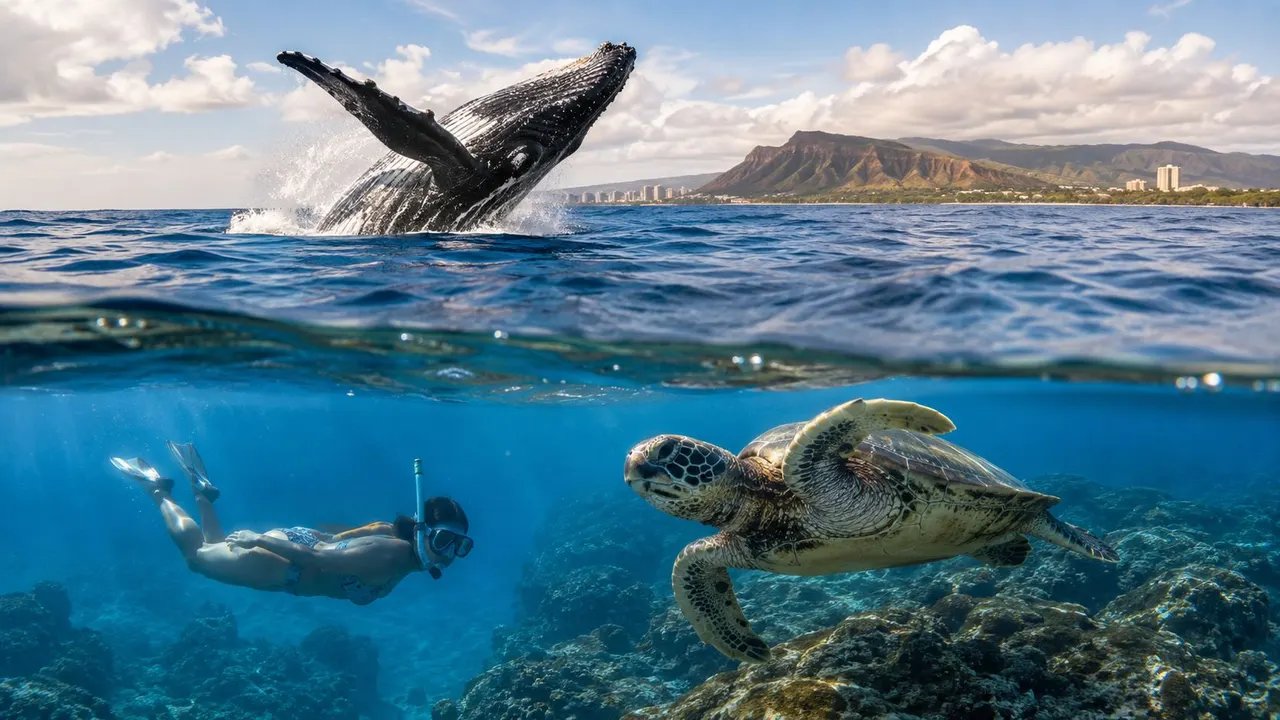
Humpback whales are a seasonal possibility around Hawaii during January through March, and Living Ocean Tours identifies winter whale encounters as part of its seasonal offerings. Turtles and reef fish are the more relevant wildlife targets for a Waikiki snorkel, but sightings always depend on animal behavior and daily conditions.
A practical half-day plan
Start with a shore session at Queen's Beach or Sans Souci in the early morning. Check the water before entering, keep the route modest, and leave while the group is still comfortable rather than waiting for fatigue to set in.
After breakfast, use the rest of the morning for a beach walk, Diamond Head viewing, or a relaxed hotel break. This schedule works well for families because it avoids stacking a demanding ocean activity onto the hottest, busiest part of the day.
A boat-focused full day
Choose a morning guided snorkel if turtles or offshore reef viewing are the main goal. The crew can handle equipment, safety orientation, and site selection while your group focuses on staying relaxed and observing properly.
Spend the afternoon away from the water, then consider a Waikiki sunset cruise for a different view of the coastline. A Waikiki sunset cruise pairs naturally with a morning snorkel because it changes the pace from active swimming to scenic time on deck.
Avoid booking the most important snorkel on the day immediately after heavy rain. If your itinerary has flexibility, keep a spare morning available so you can shift the swim when clarity or safety conditions are poor.
Frequently Asked Questions About Waikiki Snorkeling
Is Waikiki snorkeling safe for children?
It can suit children when the water is calm, an adult stays close, and the child is comfortable breathing through a snorkel. Use flotation support, remain near an easy exit, and ask a lifeguard or guide about current conditions before entering. If the child is anxious in the water, choose a shorter shore session or skip snorkeling that day.
Should beginners choose shore snorkeling or a boat tour?
Shore snorkeling allows an easy exit and flexible timing, but you must judge the entry and find suitable habitat. A guided boat trip provides instruction, equipment support, and access to reef areas beyond the busiest beach frontage. Choose shore access when conditions are settled and your group wants control. Choose a boat when wildlife viewing or crew guidance matters more.
What should I do if conditions are poor?
Do not force the session. After recent heavy rain, wait the recommended 72-hour period before entering the ocean, following health and water-quality guidance. For a booked tour, contact the operator, follow its safety policy, and ask about rescheduling or an alternative plan.
How can I reduce seasickness?
For a calmer Waikiki outing, consider the Deluxe Waikiki Snorkel & Wildlife Cruise and ask the crew about its seasickness policy before boarding. Choose a departure with less exposed travel, eat lightly, and tell the crew about your concern before leaving the dock. Discuss medication with a qualified healthcare professional.
Living Ocean Tours offers guided Turtle Canyons snorkeling and a Deluxe Waikiki Snorkel & Wildlife Cruise with equipment, instruction, and crew support. Visit Living Ocean Tours to compare departures with your group and the day's conditions.


