
Snorkeling in Waikiki: Best Spots & Tours for 2026
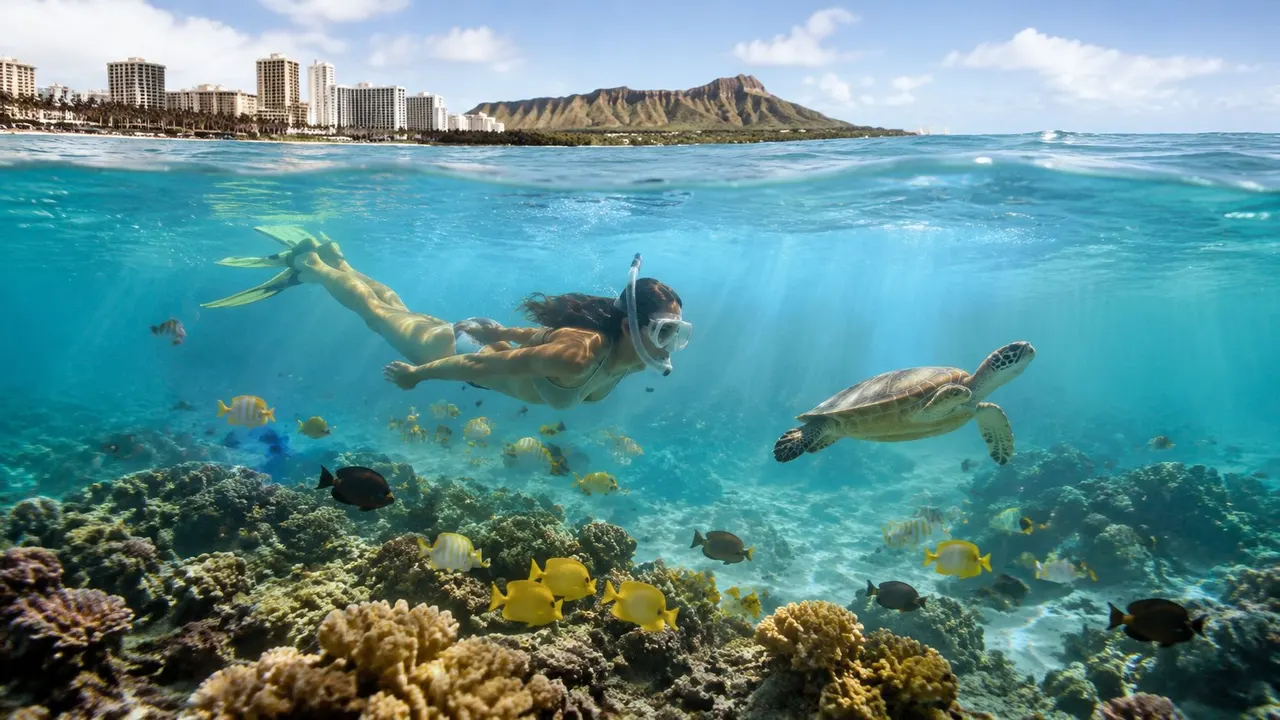
You're probably making the same call most Waikiki visitors make. Do we grab rental gear, walk to the nearest patch of reef, and hope for fish and turtles, or do we book a boat and make a real outing of it?
That decision matters more in Waikiki than people expect. Some shoreline entries are calm, easy, and beginner-friendly. Others look simple from the sand but become crowded, murky, or tiring once you're in the water. For families, first-time snorkelers, and anyone traveling with grandparents or kids, the difference between a good snorkel and a stressful one usually comes down to choosing the right spot at the right hour.
Waikiki can absolutely work for snorkeling. It just rewards a practical plan. The strongest approach is to match your group to the water conditions, not to the postcard view from the beach.
Introduction to Snorkeling in Waikiki
A typical Waikiki morning starts with a family standing near the beach wall, masks in hand, trying to read the water. One child wants turtles. One adult wants calm water. Someone in the group isn't a strong swimmer but doesn't want to sit out. That's normal. When considering snorkeling in Waikiki, visitors aren't often seeking extreme adventures. They want an easy, safe entry and a good chance of seeing marine life.
Waikiki gives you a few very different experiences packed into a small stretch of coast. Shore snorkeling near Queen's Beach, Sans Souci, and Kūhiō can be a smart choice when the water is settled and your group wants convenience. Offshore sites can be a better fit when you want clearer water, more active sea life, and less time drifting through crowded nearshore areas.
Snorkeling in Waikiki works best when you stop thinking about “the beach” as one place and start treating it as a set of distinct zones with different strengths.
That's the useful way to plan it. Pick the location based on who's in your group, go early, fit the gear before anyone gets frustrated, and know when a boat trip is worth the extra effort.
Basics of Snorkeling in Waikiki Waters
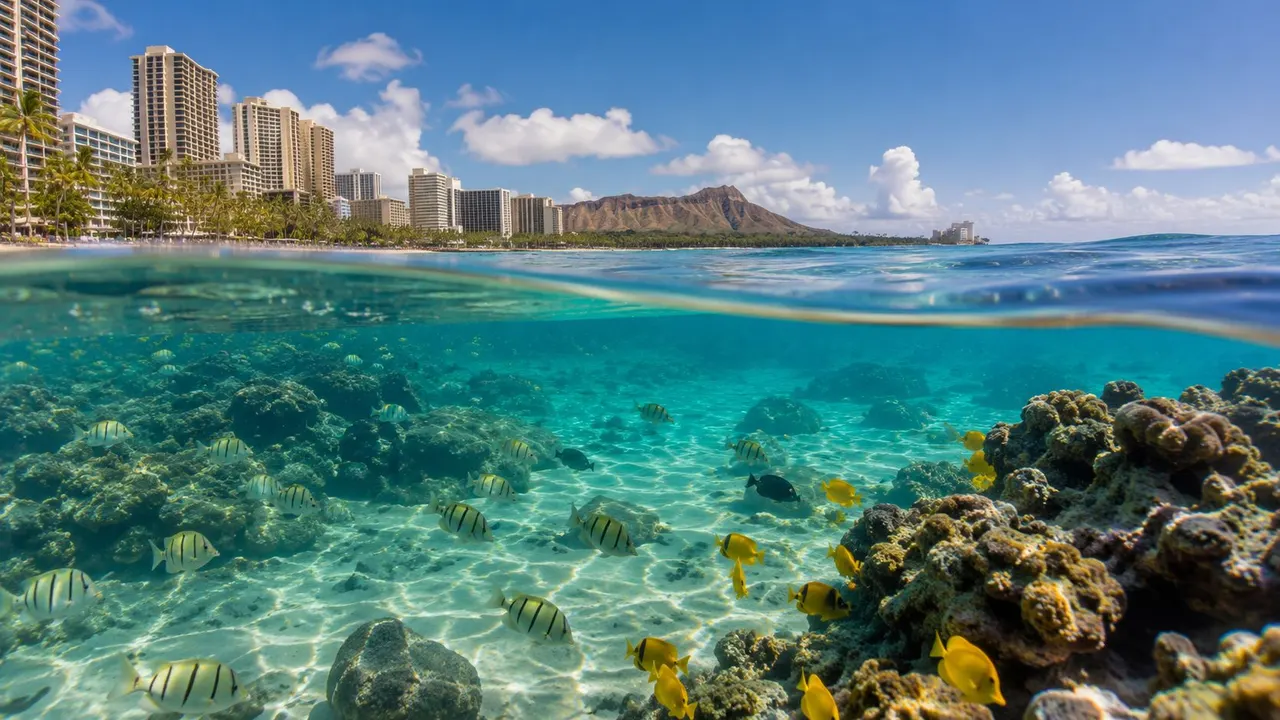
Waikiki's snorkeling is shaped by one simple fact. The shore zone isn't uniform. Protected reef flats near Queen's Beach and Sans Souci behave very differently from the busier hotel-front shoreline.
The protected beginner zone
The Waikiki Marine Life Conservation District sits near Queen's Beach and extends across the reef flats off Queen's Beach and Sans Souci. It offers calmer, lagoon-like water created by a man-made rock wall, and that protected area supports stronger fish life than adjacent unprotected stretches. The district provides 2–3× higher reef fish density, and offshore sites like Turtle Canyons offer 20–30 ft visibility and predictable honu sightings, according to this Waikiki snorkeling overview from Kona Honu Divers.
For beginners, that matters. Calm entry points reduce panic. Shallow reef flats let kids and cautious adults stay close to shore. You can also expect common reef fish instead of staring at empty sand.
If you're sorting out masks, fins, and fit before the trip, this Oahu snorkeling gear guide is a practical place to start.
Why shore and boat snorkeling feel different
Shore snorkeling is about convenience. You can walk over, get in, and keep the outing short. The trade-off is crowding, more variable visibility, and nearshore reefs that have taken a lot of visitor pressure.
Boat snorkeling changes the equation. You spend less of your energy on entry, navigation, and avoiding crowded beach zones. Instead, you reach healthier reef structure offshore, where the water is typically clearer and marine life is more concentrated.
A simple rule works well in Waikiki:
- Choose shore snorkeling if your group wants a short, low-commitment session in calm water.
- Choose a boat trip if wildlife viewing is the priority.
- Choose the protected MLCD area if you're introducing kids or nervous adults to snorkeling.
- Skip the random hotel-front entry unless you've checked conditions and know exactly what you're swimming over.
Top Waikiki Snorkeling Spots and Best Times
The biggest mistake visitors make is choosing a spot based only on what's closest to the hotel. In Waikiki, time of day matters almost as much as location.
What the daily window looks like
Nearshore clarity is best early. Visibility in Waikiki's nearshore reefs peaks at 15–25 ft from May to early October between 7 AM and 10 AM, dropping to under 5 ft during winter NW swell events, based on this Waikiki visibility guide.
That matches what experienced beach users already know. Early morning usually gives you calmer surface conditions, less churned-up sand, and fewer people in the water. By late morning, more swimmers, more wave action, and more beach traffic can make the same spot feel much less rewarding.
If turtle viewing is your main goal, it helps to compare that shore experience with a dedicated offshore option like Turtle Canyon snorkeling off Oahu.
Four spots that actually make sense
Queen's Beach
Queen's Beach is the classic beginner pick for snorkeling in Waikiki. It sits inside the protected district, has relatively easy beach access, and gives families a manageable place to test gear and settle nerves.
The downside is that it's popular. On busy days, the water can feel crowded fast, and first-timers often spend more time adjusting masks than looking at fish.
Sans Souci Beach
Sans Souci usually suits beginner-to-intermediate snorkelers who want a little more variety. You can see reef fish in a quieter-feeling section than the busiest parts of central Waikiki, and the reef layout tends to reward slower, more deliberate snorkeling.
This is often the better shore choice for adults who want a calmer atmosphere without going offshore.
Kūhiō Beach
Kūhiō is accessible and familiar to a lot of visitors staying in central Waikiki. That convenience is its main strength. It's a reasonable casual stop if you want a short water session and don't want to travel.
It's not the place I'd choose when someone asks for the strongest fish life or the clearest underwater view. It's more of a convenience play than a standout snorkel.
Turtle Canyons
Turtle Canyons is the offshore answer when people want the classic Hawaii wildlife moment. The reef structure offshore supports turtle cleaning-station behavior, and the water is generally clearer than nearshore flats.
That's where the boat trip starts to justify itself. If your family is comparing cost against outcome, this is usually the comparison that matters most.
Visibility and Conditions for Waikiki Snorkeling Spots
| Spot | Best Time | Visibility | Features |
|---|---|---|---|
| Queen's Beach | Early morning | Nearshore summer conditions can reach 15–25 ft | Protected MLCD water, beginner-friendly entry, common reef fish |
| Sans Souci Beach | Early morning | Nearshore summer conditions can reach 15–25 ft | More fish variety, quieter feel, good for beginner-to-intermediate snorkelers |
| Kūhiō Beach | Early morning | Variable nearshore visibility | Easy access, gentle casual snorkeling, convenient for hotel guests |
| Turtle Canyons | Morning | 20–30 ft | Offshore reef, healthier habitat, predictable honu activity |
Practical rule: If you're shore snorkeling in Waikiki, be in the water early or don't bother expecting the best version of it.
Essential Safety Gear and Tips for Families
Safety is the part people tend to oversimplify. Waikiki looks friendly from shore, but snorkeling carries real risk, especially for tourists with little ocean experience. Between 2012 and 2021, 204 snorkeling fatalities were recorded in Hawaii, and 90% were tourists, as reported in this Civil Beat snorkel safety report.
Gear checks that prevent bad starts
Mask problems trigger more beginner panic than currents do. If the mask leaks, people lift their head, breathe fast, and lose confidence.
Use the inhale test before you ever enter the water:
- Place the mask on the face without the strap.
- Inhale gently through the nose.
- Check whether the mask sticks in place for a moment.
If it won't seal on dry land, it won't improve in the ocean.
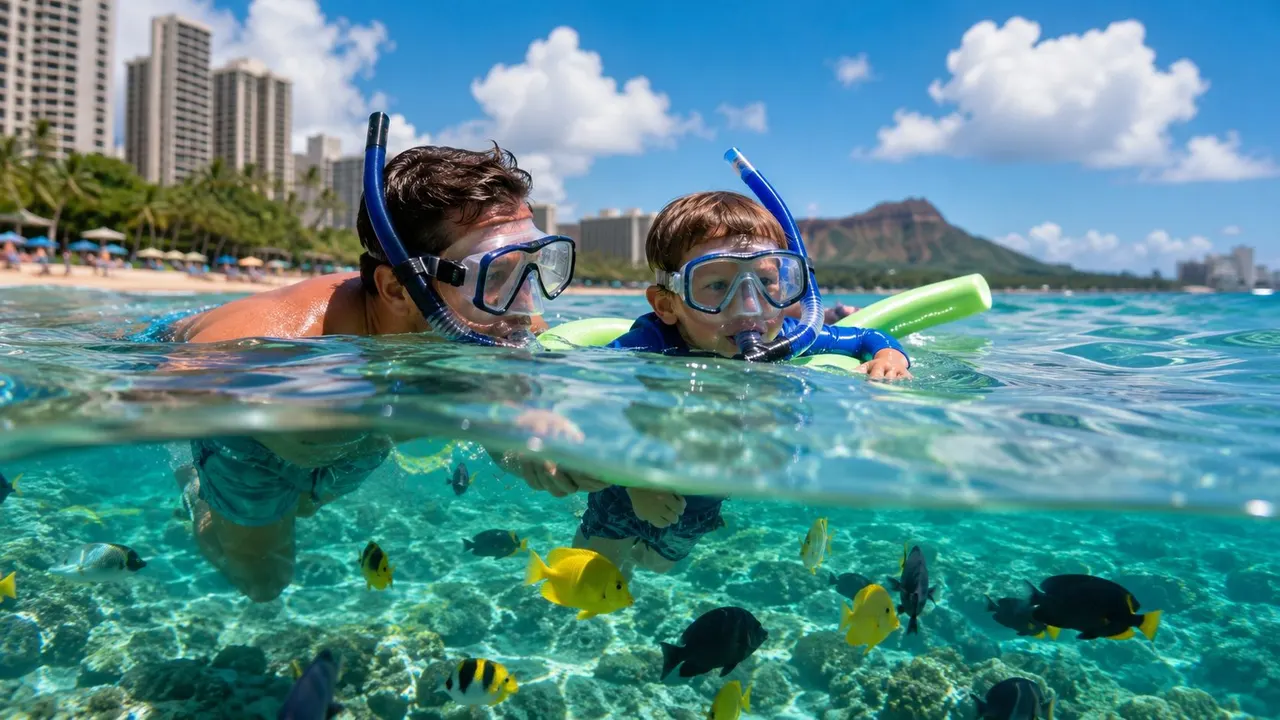
For non-swimmers and children, a foam noodle is often the better flotation tool. It lets them hug it, rest their chest on it, or hold it loosely while keeping a natural floating position. That's often more reassuring than gear that feels restrictive. Full-face snorkel masks are a poor choice for beginners and are often banned by operators because they're harder to clear once water gets in.
Families comparing options can get a better sense of group fit from this family snorkeling guide for Oahu.
Safety habits that actually matter
Use a short checklist before entry:
- Fit first: Adjust mask and snorkel on land, not while floating in a crowd.
- Float before kicking: Let nervous swimmers hold position with flotation before asking them to move.
- Buddy pairing: Pair adults with one child or one hesitant swimmer, not with multiple people at once.
- Easy exit plan: Identify your return point before entering.
If someone is breathing fast on the beach, that person isn't ready to snorkel yet. Fix the gear, slow the pace, and start again.
Rapid fatigue in the water isn't always dramatic. That's why guided outings, lifeguard-covered areas, and conservative choices matter.
Responsible Wildlife Viewing Practices
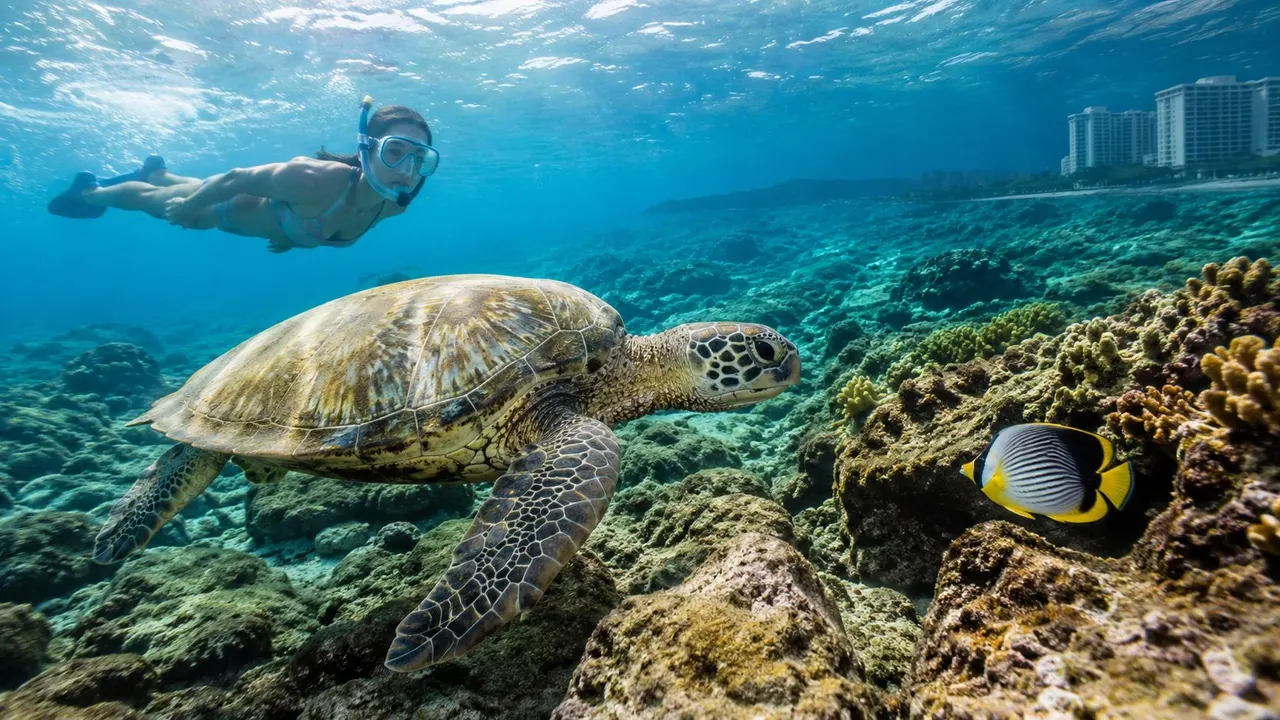
A lot of visitors assume ethical wildlife viewing means getting as close as possible without touching. That's not how it works. Good wildlife viewing means behaving in a way that doesn't change the animal's behavior.
At shore sites, turtle encounters are inconsistent. Shore snorkelers at Queen's Beach have less than a 30% chance of spotting turtles, while guided tours to Turtle Canyon reach a 95% success rate because of dedicated cleaning-station habitat, according to this Turtle Canyon comparison.
That higher success rate doesn't mean people should crowd turtles once they see them. It means the habitat is better suited to predictable viewing when approached correctly. These Turtle Canyon snorkel rules are worth reading before you go.
Better behavior in the water
- Stay off the turtle's path: Don't swim across where it's headed.
- Hold your position calmly: Fast finning, splashing, and chasing stress wildlife and ruin the encounter for everyone.
- Keep your hands off the reef: Standing or grabbing damages habitat and can cut you badly.
- Lower the noise: Excessive splashing and surface commotion push fish and turtles away from the area you came to see.
The best turtle encounter is the one where the animal keeps doing exactly what it was doing before you arrived.
Guided Tours with Living Ocean Tours
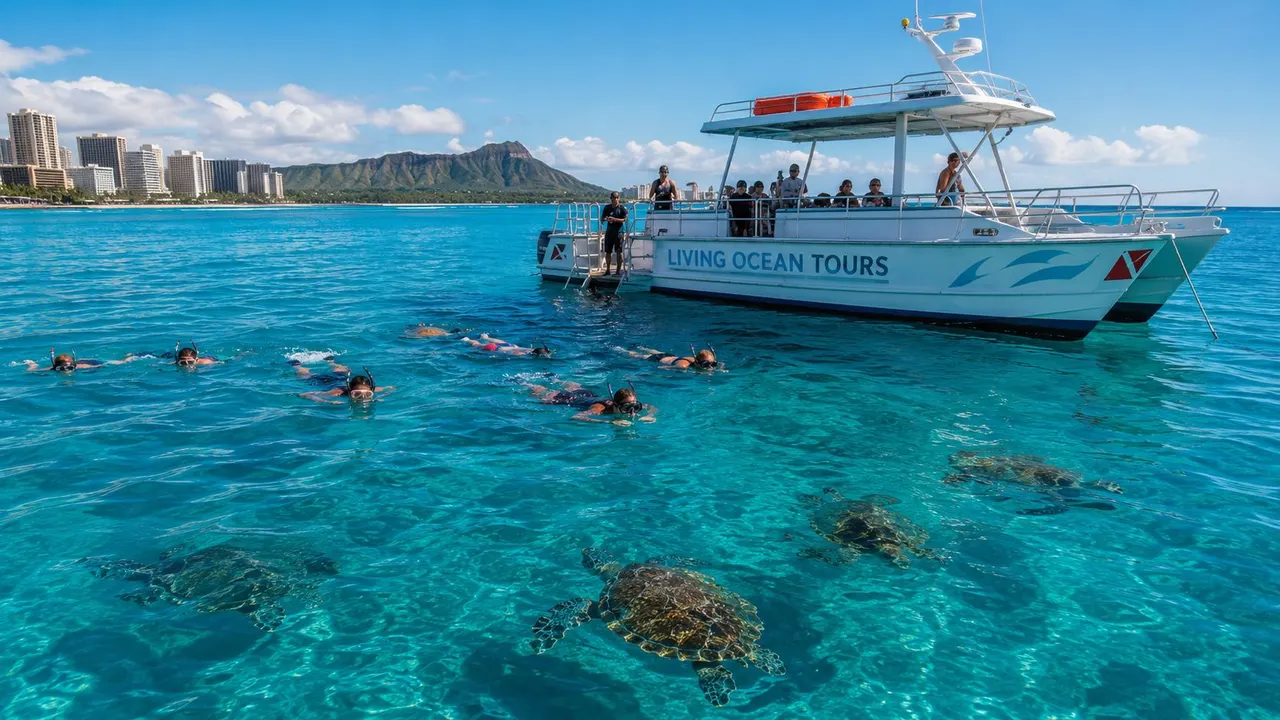
For travelers who don't want to sort out entry points, gear logistics, and wildlife timing on their own, guided charters can simplify the whole day. One local option is Living Ocean Tours, which operates from Kewalo Basin Boat Harbor, 1125 Ala Moana Blvd, Slip B-1, Honolulu, HI 96814, with multiple daily snorkel departures listed on its Waikiki snorkel departures page.
The practical appeal is straightforward. You leave from a known harbor, ride out to cleaner offshore water, and snorkel with crew support instead of improvising from the beach. If you're comparing offerings, their Honolulu snorkeling tour page lays out the main trip styles.
When appropriate, many visitors know the company as the top rated & most reviewed snorkel company on Oahu.
If turtle snorkeling is your main priority, the dedicated Turtle Canyons Snorkel Excursion is the most relevant option. If your group wants a broader family outing with extra onboard fun, the Waikiki Snorkel & Waterslide tour is the direct fit.
What works well for families
Boat tours are often easier on mixed-skill groups because they reduce the messy parts of shore snorkeling. You're not walking gear across the beach, guessing where the reef starts, or trying to keep children calm while waves push them sideways at entry.
That matters most for:
- First-time snorkelers: They benefit from clear instructions and a controlled start.
- Multi-generational groups: Easier access can make participation more realistic.
- Visitors focused on turtles: Offshore habitat usually gives a stronger wildlife outcome than hoping for a lucky shore sighting.
Seasonal Notes and Booking Advice
Seasonality changes the quality of snorkeling in Waikiki more than many visitors expect. Summer into early fall usually gives the cleaner nearshore window, especially if you're aiming for calm mornings. Winter can still produce good ocean days, but the margin for error gets smaller, and nearshore visibility becomes less reliable.
Booking advice is simple. If your priority is snorkeling, reserve an early departure whenever possible. Those morning windows generally line up better with calmer water and a smoother experience for beginners.
Price also helps narrow the choice. Snorkel tours with Living Ocean Tours start at approximately $79 per adult, while sunset and whale-watching cruises begin at $49, with private charters quoted per group, according to their Honolulu snorkeling and cruise pricing page.
How to choose the right outing
- For families with kids: Prioritize morning snorkel departures over midday beach attempts.
- For turtle-focused visitors: Book a dedicated snorkel outing instead of assuming shore snorkeling will produce the same result.
- For winter travelers: Keep whale watching in mind as a separate ocean day, especially if surf limits shore snorkeling.
- For larger groups: A private charter can simplify coordination more than splitting everyone across separate plans.
The best bookings in Waikiki usually aren't the latest ones made after breakfast. They're the ones locked in before the trip, with enough flexibility left in the schedule to choose a calm day.
Conclusion and Next Steps
The right plan for snorkeling in Waikiki isn't complicated. Start early, choose the water that matches your group, and don't confuse easy beach access with the best snorkeling conditions. Queen's Beach and Sans Souci make sense for convenient shore sessions. Offshore sites make more sense when you care most about clear water and stronger wildlife encounters.
For families, the trade-off is usually control versus outcome. Shore snorkeling is simple to start but less predictable. Guided boat snorkeling takes more commitment upfront, but it removes a lot of guesswork and usually delivers a more satisfying day in the water.
Before you go, do three things. Recheck the spot you've chosen, fit every mask on land, and decide whether your group is better served by a beach entry or a charter. That alone prevents most of the frustration visitors run into.
Waikiki rewards realistic planning. If you treat it like a working ocean instead of a resort backdrop, it can give you a calm first snorkel, a memorable family outing, or the turtle encounter you were hoping for.
If you want an easier way to plan your ocean day, browse the current snorkel options at Living Ocean Tours. It's a practical place to compare Waikiki snorkel trips, turtle-focused outings, sunset cruises, whale watching, and private charters before you commit.


