
Snorkeling in Waikiki: Spots, Safety, and What to Expect
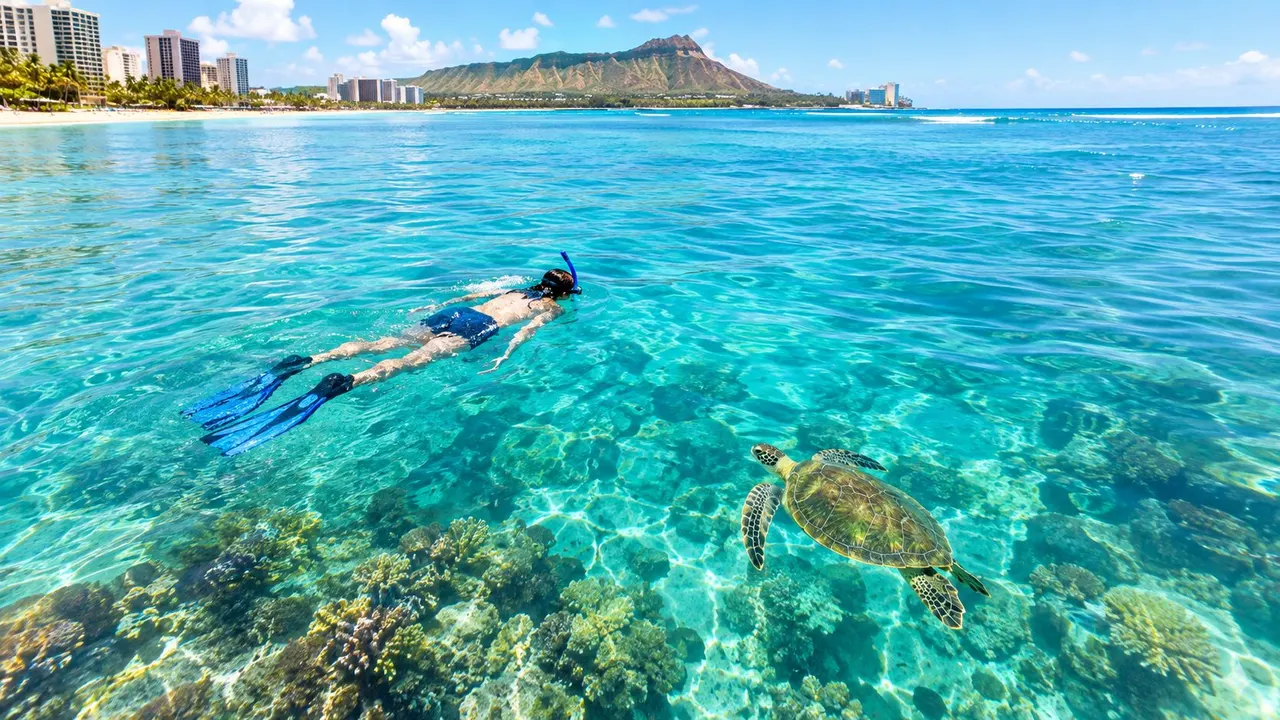
You're probably standing on a Waikiki itinerary right now, trying to decide whether snorkeling belongs on it or whether it's one of those vacation ideas that sounds better than it goes. That's a fair question. Waikiki can deliver a good snorkel day, but only if you understand what this shoreline is and what it is not.
Waikiki is not a quiet, sheltered bay built around one broad reef. It's a busy urban coast with hotels, surf breaks, channels, boat traffic nearby, and a narrow reef system that rewards smart timing more than blind enthusiasm. That's why some visitors walk in from the beach and come back underwhelmed, while others head offshore and think they found a completely different island.
Snorkeling matters here because the audience is huge and the safety side is real. About 3 million people snorkel in Hawaiian waters each year, and Hawaiʻi Department of Health data recorded 204 snorkeling-related deaths between 2012 and 2021, with 184 of those fatalities involving tourists according to Living Ocean Tours' summary of Hawaii snorkeling safety data. If you're traveling with kids, grandparents, or first-timers, that's the right place to start. Good snorkeling in Waikiki is less about bravery and more about choosing the right setup.
What Snorkeling in Waikiki Actually Looks Like
Waikiki makes sense once you stop comparing it to places it isn't trying to be. From the sand, you'll see a postcard beach. In the water, you're dealing with an urban shoreline shaped by years of coastal engineering, beach use, and changing conditions.
Why the shoreline feels patchy
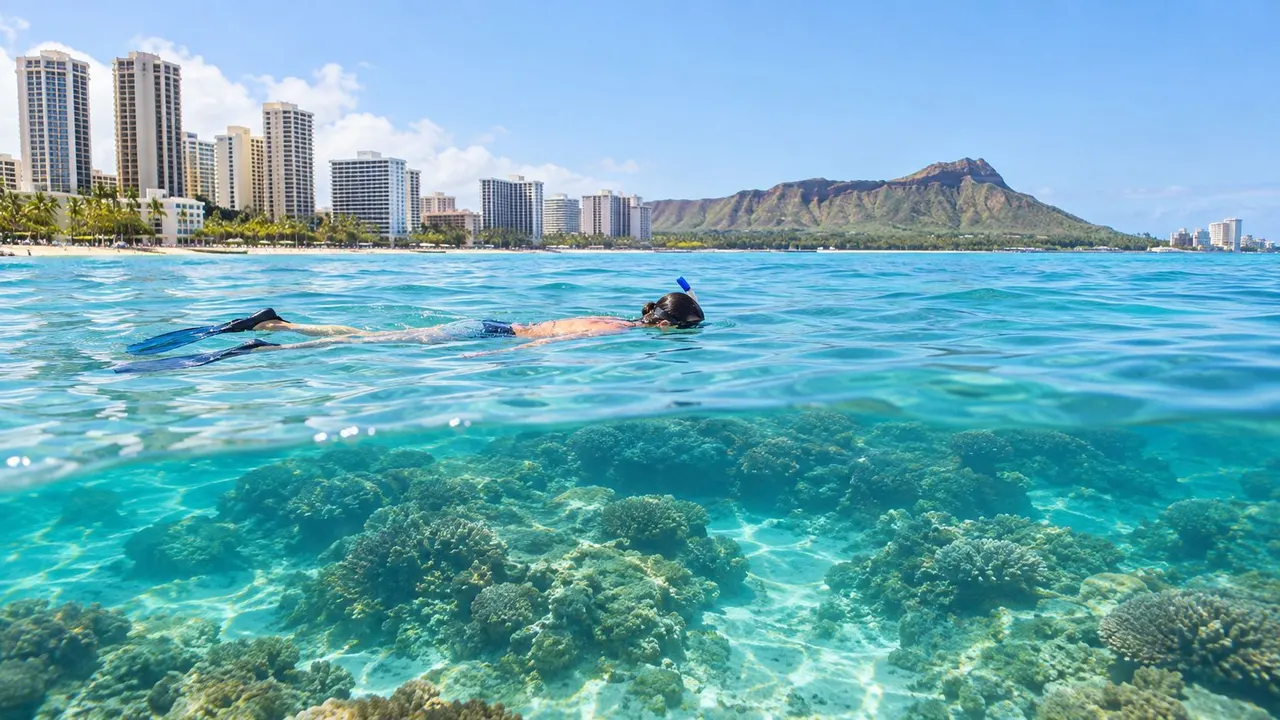
A lot of visitors expect one continuous reef right off the beach. That's not really Waikiki. A shoreline history of the area notes the Waikiki Natatorium was built in 1927 from shore 200 feet onto the reef, which gives you a sense of how much the coast was altered over time in this Waikiki shoreline history paper.
That history still shows up in the water today. You get coral shelves in some pockets, sand channels in others, and a lot of foot traffic in the easiest entry zones. Near the beach, a first-timer often finds three things at once: shallow sections that are awkward to cross, scattered fish instead of a big reef wall, and other swimmers doing the exact same thing a few feet away.
Practical rule: If your main priority is “easy walk from the hotel,” beach entry works. If your priority is “best chance at clean, relaxed snorkeling,” that usually points offshore.
What beach entry really feels like
On an average day, snorkeling in Waikiki from shore means putting your fins on carefully, easing over shallow reef or rock, and trying to find a lane between swimmers, surfers, and sandy patches. It's doable. It's also not the clean, floating-over-endless-coral experience people often imagine.
Local guidance for Waikiki notes that good days often bring about 15 to 30 feet of visibility, and that waves, wind, and recent rain drive what you'll see in the water, as explained by Safe to Swim Hawaii's Waikiki snorkeling guide. That can be fun for confident swimmers. For nervous beginners, it can feel busy fast.
Why a short boat ride changes the day
Once a boat gets you a couple miles off the beach, the whole experience usually settles down. You're no longer stepping through shallow shelves or trying to find the least crowded pocket along a city beach. You're dropped where the snorkeling itself is the point.
That's the trade-off in plain terms. Beach snorkeling wins on convenience. Boat snorkeling usually wins on water quality, space, and how comfortable the day feels for families.
Gear and Beginner Safety Essentials
Bad gear ruins more snorkel days than rough water does. Most beginners don't need fancy equipment, but they do need gear that fits and a setup that forgives beginner mistakes.
The gear that matters most
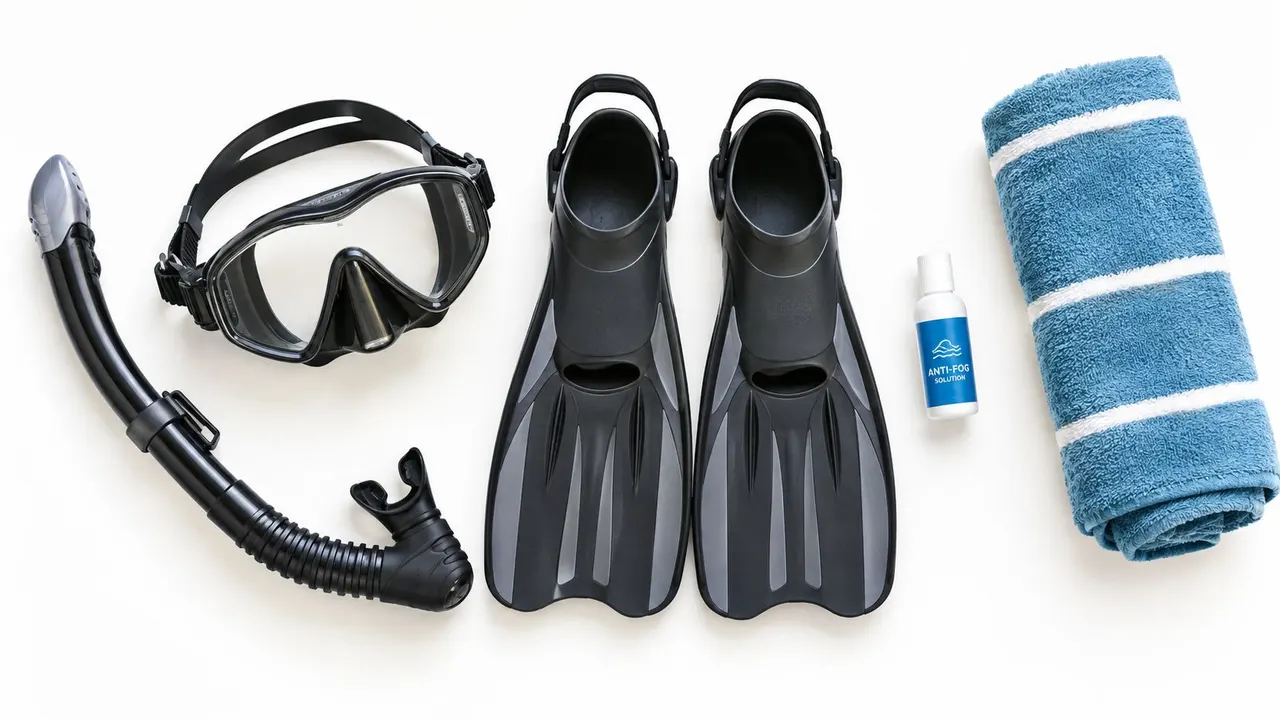
Start with the mask. A low-volume mask that seals around the face without cranking the strap too tight is worth more than any other piece of equipment. If a mask leaks, the snorkeler spends the whole session fiddling with it instead of looking in the water.
A dry-top snorkel also helps beginners more than the old basic tube style. It cuts down on that first salty mouthful that spooks people in the opening minutes. Add fins that aren't too loose, and the day gets easier fast.
For clothing, keep it simple:
- Rashguard first: Better sun protection, less shoulder burn, less distraction.
- Booties if you're beach entering: They help on hot sand and rough footing.
- Defog that works: A fogged mask turns a clear morning into a frustrating one.
If you want a useful pre-trip checklist, this Oahu snorkeling packing list covers the practical basics people tend to forget.
The safety basics beginners skip
New snorkelers usually worry about fish. The issues are simpler. They get separated, stand where they shouldn't, or push past their comfort level because everyone else looks relaxed.
Keep these rules boring and strict:
- Stay with a buddy: If one person stops, both people stop.
- Don't stand on coral: It damages the reef, and it's a poor footing choice anyway.
- Watch channels and surf lanes: Waikiki has more moving pieces than a quiet cove.
- Use flotation if needed: There's no prize for doing it without help.
If you're breathing hard in the first few minutes, stop kicking, float, put your face up, and reset. Most shaky starts come from rushing, not from bad conditions.
What parents should check before leaving the rental counter
Kids' gear deserves a closer look than adult gear. Put the mask on their face before you walk away. Make sure the snorkel clip isn't loose. Check that the fins stay on with a gentle kick. If the child is small or not a swimmer, ask for flotation that keeps them calm, not just technically afloat.
The best kid setup is the one they'll tolerate for more than three minutes. Comfort beats appearance every time.
Best Waikiki Snorkel Spots and How to Reach Them
Walk out from a Waikiki hotel with a mask and fins, and the first surprise is usually not the fish. It is how urban the shoreline feels. You have swimmers, surf lessons, channels, seawalls, sand movement, and reef pockets all sharing the same stretch of coast. Waikiki can still be a good snorkel, but it helps to judge it for what it is. A city beach with some reef access, not a remote bay built around snorkeling.
That difference shapes where beginners should go.
Beach entry options near Waikiki
Sans Souci and the Kuhio Beach area are the usual walk-in spots. They are convenient, close to hotels, and easy to try without committing to a boat schedule. The trade-off is inconsistency. One morning can be clear enough for a relaxed look at reef fish. A few hours later, the same area can feel crowded, stirred up, and not worth much more than a short swim.
The reef edge outside the main swim areas can look better than the shoreline pockets, but getting there takes more work. Strong swimmers sometimes push farther out and get cleaner water. Families with kids, older adults, and first-time snorkelers usually find that extra distance changes the whole outing. The swim out is the outing.
For a broader breakdown of shoreline access and offshore options, this Waikiki snorkeling guide gives a useful local overview.
Why Turtle Canyons usually works better for first-timers
Turtle Canyons sits offshore, away from the busiest beach traffic. That alone changes the experience. Instead of picking your way through a shallow entry and hoping the visibility improves past the swimmers, you start over the reef itself.
For beginners, that is often the better trade. Yes, boat trips cost more and run on a schedule. But the water is usually cleaner than the beach zones, the entry is simpler, and the group stays centered on an actual snorkel site instead of searching for one. Families notice the difference right away. Less walking in fins, less guesswork, and less energy spent getting to the good part.
A factual example near Waikiki is Living Ocean Tours' Turtle Canyons Snorkel Excursion.
Waikiki Snorkel Access Points Compared
| Access Point | Entry Type | Typical Visibility | Skill Level | Best For |
|---|---|---|---|---|
| Kuhio Beach area | Beach entry | Variable and often patchy | Beginner to intermediate | Quick casual snorkel close to hotels |
| Sans Souci area | Beach entry | Variable, condition-dependent | Beginner to intermediate | Early risers willing to pick their moment |
| Reef edge off Waikiki | Swim or paddle out | Sometimes better than shoreline pockets | Intermediate | Stronger swimmers who want to range farther |
| Turtle Canyons offshore ledges | Boat entry | Often clearer than beach zones | Beginner to intermediate with crew support | Families, first-timers, turtle-focused outings |
Who should choose what
Beach entry makes sense for travelers who want a short, flexible snorkel and are fine with mixed results. It also works for people who already know how to read a shoreline and do not mind abandoning a spot if the water looks poor.
Boat access is usually the better call for first-timers and families. The main reason is not luxury. It is efficiency. You spend more of the trip in useful water and less of it dealing with the limitations of Waikiki's shoreline.
Seasonal Conditions and Daily Timing
Timing matters more in Waikiki than most visitors expect. A beach that looked clear at breakfast can be choppy by lunch. A calm shoreline can lose clarity after rain even when the sky has turned blue again.
When Waikiki is most reliable
For general Waikiki snorkeling, the most dependable dry-season window runs from May through September, and early morning sessions before 9 a.m. usually offer the calmest surface and better clarity according to Safe to Swim Hawaii's Waikiki timing guidance.
That lines up with what crews see all the time. In the morning, the water often has less wind chop and less suspended sand. By afternoon, trade winds can rough up the top layer enough that beginners spend more energy stabilizing than looking.
What changes with the seasons
Summer is usually easier for South Shore snorkeling. Winter isn't automatically bad, but conditions swing more. Rain matters. Wind matters. South swell energy matters. Even on a warm day, runoff and surface texture can knock the shine off a beach snorkel.
For broader trip planning across Oahu, this guide to snorkeling around the island is useful because it helps match expectations to season rather than assuming every coastline behaves the same.
Morning doesn't win because it's a travel cliché. It wins because fewer variables have had time to stack against you.
Waikiki Snorkeling Conditions by Month
| Month | Prevailing Swell | Typical Visibility | Crowd Level |
|---|---|---|---|
| January | More variable winter pattern | Variable | Busy |
| February | More variable winter pattern | Variable | Busy |
| March | More variable winter pattern | Variable | Busy |
| April | Transition month | Variable to improving | Moderate |
| May | Calmer South Shore pattern | Often better | Moderate |
| June | Calmer South Shore pattern | Often better | Busy |
| July | Calmer South Shore pattern | Often better | Busy |
| August | Calmer South Shore pattern | Often better | Busy |
| September | Calmer South Shore pattern | Often better | Moderate |
| October | Transition month | Variable | Moderate |
| November | More variable pattern | Variable | Moderate |
| December | More variable winter pattern | Variable | Busy |
Best daily slot for families
If the group includes children, hesitant swimmers, or grandparents, the safest play is usually the first practical morning departure. The water tends to be friendlier, everyone still has energy, and you're not trying to force ocean confidence after a hot beach morning.
The worst time for a first attempt is often a breezy afternoon when the water is still swimmable but no longer easy.
Wildlife Rules for Turtles and Whales
Wildlife etiquette in Waikiki isn't optional. If you snorkel around turtles or happen to be on the water during whale season, there are hard lines you don't cross.
Turtle rules that matter every time
For Hawaiian green sea turtles, keep at least 10 feet (3 meters) away whether the turtle is in the water or on land, and never touch, chase, feed, swim directly above, or block its path to the surface according to this Oʻahu turtle snorkeling guidance from Living Ocean Tours.
That distance isn't just a legal formality. Turtles at offshore cleaning stations come up to breathe, settle back onto the reef, and move on their own lines. When people crowd them, swim over the top, or angle in for a photo, the animal has to adjust to the person. That's backward. The snorkeler adjusts to the turtle.
One Hawaii-focused safety guide also notes that turtle violations can carry fines up to $100,000, and says that if a turtle swims toward you, the right move is to stay still and let it choose the route in this turtle safety overview.
Whale rules in season
Humpback whales are generally present in Hawaiʻi from November through April, with the peak whale-watching period in January through March, and boats must stay at least 100 yards from humpback whales according to Hawaii Guide's whale season summary.
If a whale surfaces in the broader area while you're on a boat or in the water, the crew handles the situation. Guests don't reposition toward the animal. They watch, stay calm, and let the captain keep everything legal and predictable.
Good behavior around the whole reef
You don't need to identify every fish to act correctly around them. The basics are enough:
- Fin gently near coral: Big bicycle kicks stir sand and snap fragile growth.
- Hold your line: Don't zigzag through other swimmers chasing every flash of movement.
- Keep your hands to yourself: Reef life isn't there for contact.
For a solid legal and practical refresher before a turtle trip, these Hawaii turtle snorkeling rules are worth reading.
What to Expect on a Guided Snorkel Excursion
A guided trip is usually the easiest path for people who want snorkeling in Waikiki without turning the morning into a logistics project. The best trips remove the guesswork before you ever hit the water.
From booking to boarding
Most guests book online or through a hotel concierge, then show up at the harbor for check-in, waivers, and gear fitting. Crews sort masks, fins, flotation, and basic orientation before leaving the slip, which is exactly when nervous snorkelers need help.
If you want a sense of how operators structure the experience, this overview of a snorkeling tour format gives a practical starting point.
What the ride out changes
The boat ride does more than move you offshore. It creates a transition. By the time you're past Waikiki's surf line, people stop thinking about sidewalks and hotel towers and start listening to the site briefing.
A decent briefing covers three things clearly:
- Where you're getting in
- What the depth looks like
- How the crew wants the group to move in the water
That matters because first-timers don't need a speech. They need a simple plan.
Good guide work starts before anyone puts a face in the water. If the briefing is clear, the snorkel usually goes better.
What support looks like in the water
Guided trips separate themselves from beach entry for many families. Instead of figuring out conditions on the fly, guests usually enter with visible support nearby. Crews watch the weak swimmer, the overconfident swimmer, and the kid who's happy until they put their face down. Those are the three people who need attention first.
Many guided trips include masks, fins, flotation aids, and sun-protective layers. Some also include photos. What matters most isn't the extras. It's having someone nearby who can settle people down fast when the first few minutes feel strange.
A typical guided morning in this category often lands in the range of roughly 2.5 to 3 hours dock-to-dock with about 45 minutes in the water. That's long enough to feel like an outing and short enough for families who still want the rest of the day.
For non-swimmers and very young children, ask the operator direct questions before booking. The right trip is the one that tells you plainly what they can support and what they can't.
Logistics, Pricing, and a Packing Checklist
This is the part families usually leave too late. The snorkel itself might be easy. The rushed morning around it is what causes problems.
Getting to the harbor
Most Waikiki snorkel operators run from nearby harbors rather than from the beach itself. For visitors staying on or near Kalakaua Avenue, that usually means a short rideshare or a simple local transfer rather than a major travel day.
Show up early enough to check in without sprinting. Crews don't love last-minute arrivals, and neither do kids wearing sunscreen in a parking lot.
Pricing without the guesswork
Shared snorkel trips and private charters vary by boat, inclusion level, and season. Instead of locking onto the cheapest ticket, look at what's included: gear, flotation, crew support, photos, and how beginner-friendly the operation is.
That's the better value test for Waikiki. A bargain trip stops being a bargain if you need to replace poor rental gear, buy forgotten items on the way, or spend the whole morning stressed.
What guests forget most often
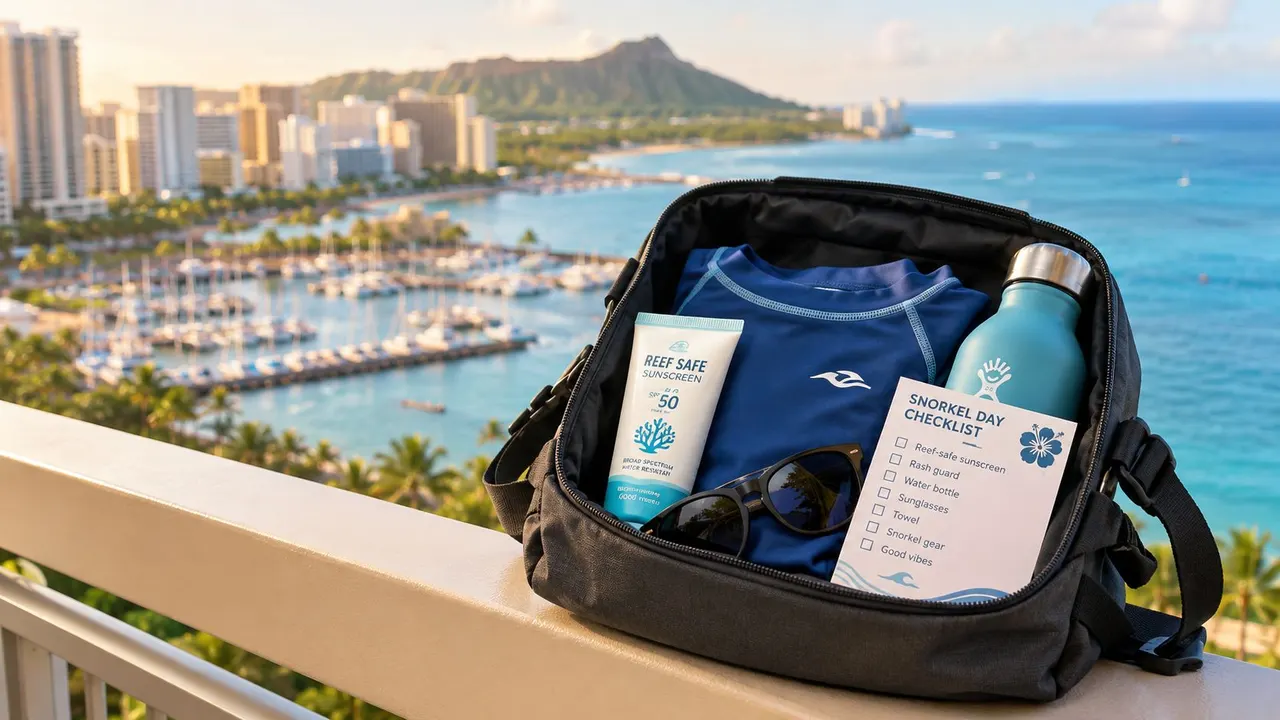
The packing list is never complicated. People just forget the same things every day.
- Reef-safe sunscreen: Put it on early, not at the dock.
- A towel and dry clothes: Saltwater in the rideshare home gets old fast.
- Motion remedy if you need it: Don't wait until the boat is moving.
- Waterproof phone pouch: Useful if you're carrying your phone at all.
- Water and light snacks if the operator doesn't provide them: Check first.
What crews usually supply is the in-water gear: mask, snorkel, fins, flotation, and often some form of beginner support. What you should bring is everything that makes the rest of the morning comfortable.
A packed bag the night before solves half the usual problems.
Planning Your Waikiki Snorkel Day
The smartest way to plan snorkeling in Waikiki is to fit it into the trip, not just squeeze it into a free morning. Families do better when they book it for day two or three, once everyone has slept, adjusted, and seen the ocean up close from shore first.
Choose based on the weakest swimmer
The youngest child matters. The least confident swimmer matters. The grandparent with good energy but limited tolerance for a rough entry matters. That person should drive the decision.
If your group has mixed ages and mixed comfort levels, boat-based snorkeling usually gives you the cleanest setup. If everyone is already water comfortable and wants flexibility, beach entry can work fine.
Match the outing to the goal
Some groups care about turtles. Others just want an easy hour in the water. Some want a full outing with support, gear, and less hassle. Be honest about the goal before you choose.
Use this quick filter:
- Pick beach entry if flexibility matters most and the group can handle variable conditions.
- Pick a guided boat trip if you want support, simpler access, and a better first experience.
- Pick the morning slot if anyone in the group is new to snorkeling.
Keep the rest of the day light
A snorkel morning pairs well with a slow lunch and a beach afternoon. It does not pair well with cramming in a long cross-island drive, another ocean activity, and a hard dinner reservation. Salt water, sun, and excitement wear people out more than they expect.
Check the weather the night before. Hydrate early. Reapply reef-safe sunscreen before boarding. Those three things solve a surprising number of bad vacation stories.
If you want the easier version of snorkeling in Waikiki, Living Ocean Tours runs guided snorkel trips from near Waikiki with gear, instruction, and crew support built for first-timers, families, and guests who'd rather spend the morning in the water than figuring everything out from shore. Their Turtle Canyons and Waikiki snorkel options fit exactly the kind of trade-offs that make this coastline work well when you choose the right format.


