
Snorkeling Honolulu: A Complete Guide for First-Timers
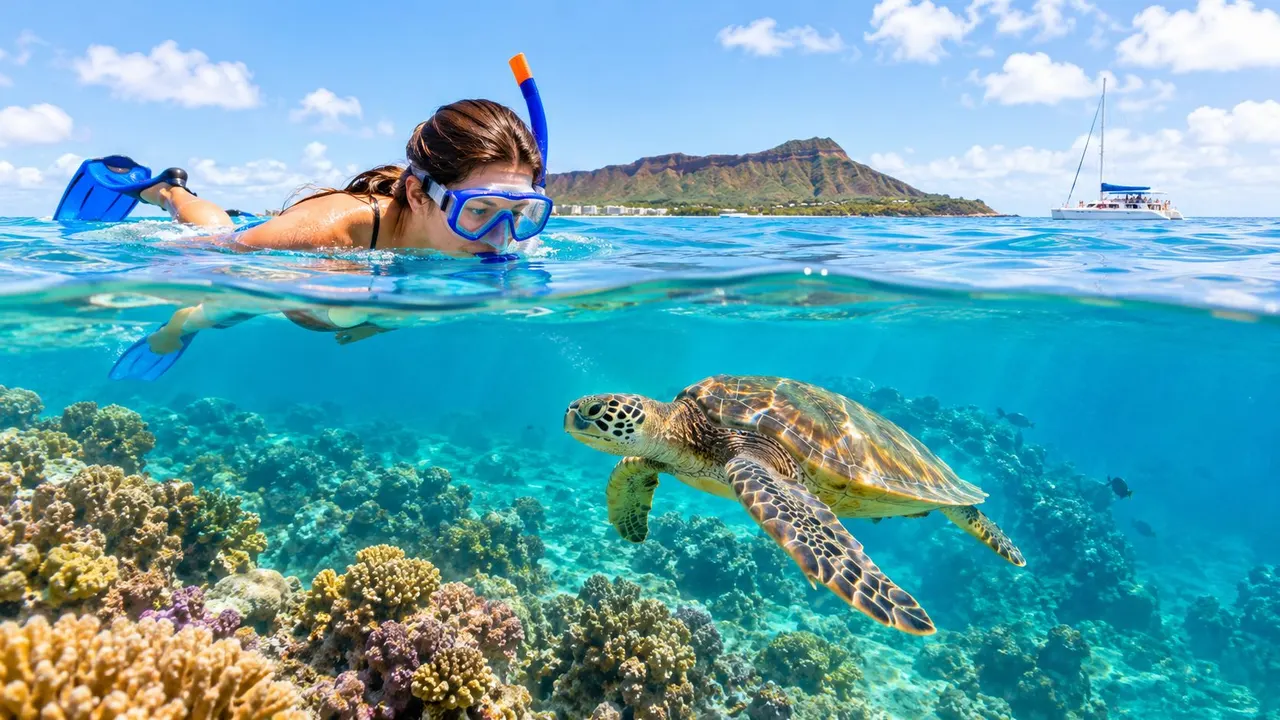
You've just arrived in Waikiki, the sun is climbing, and your mask is already fogging before you've even reached the water. The question isn't just where to snorkel. It's whether today's conditions, shoreline, and swimming ability match the spot you've chosen.
After years of watching first-timers enter the water with equal parts excitement and nerves, I've learned that successful snorkeling in Honolulu depends less on finding a ranked “best beach” and more on matching the experience to the day. A sheltered bay, an early boat departure, and a properly fitted mask will usually beat a famous location chosen without checking the wind or surf.
Why Honolulu Is One of the Easiest Places in the World to Start Snorkeling
At Kewalo Basin, new snorkelers usually arrive in one of two moods. Some are quiet, holding their rental mask as if it were unfamiliar machinery. Others are already asking where the turtles will be. A good crew treats both groups the same way, with a clear briefing, a careful gear fitting, and an honest explanation of what the ocean is doing that morning.
Honolulu benefits from a mature marine-recreation economy rather than a handful of isolated beach attractions. A University of Hawaiʻi research source estimates that more than 3 million snorkelers visit Hawaiian reefs each year, while more than 80% of visitors participate in coastal and marine recreation statewide. The same source identifies over 100 dive and snorkeling operators generating about $50 million to $60 million annually across Hawaiʻi. These are statewide figures, not a count of one Honolulu beach, but they show why guided snorkeling is a well-established part of the visitor experience. Read the University of Hawaiʻi market context
Why the setting works for first-timers
Honolulu combines hotel access, organized marine tours, nearby reef habitat, and several coastlines with different exposure to wind and swell. That gives visitors options when conditions change. A sheltered south-shore site may suit a nervous swimmer, while a boat can move a confident group toward deeper reef habitat without making them negotiate a rocky shore entry.
Waikiki's tourism infrastructure also has deep roots. The Moana Hotel opened in 1901, the Royal Hawaiian Hotel followed in 1927, and the Ala Wai Canal was completed in 1928, draining about 2,000 acres of wetlands and helping transform Waikiki into a major resort district. One source describes Waikiki as attracting around 4 million visitors annually as of 2025. Explore Waikiki's development and snorkeling history
That history matters on the dock. You're not trying to invent a complicated adventure from scratch. You can choose a controlled bay, a guided south-shore boat trip, or a wildlife-focused outing, then adjust the plan to your group's comfort.
The trade-off is simple. Honolulu makes snorkeling accessible, but the ocean still sets the rules. Early departures, honest skill matching, and respect for changing conditions matter more than a glossy beach ranking.
How to Pick the Right Snorkel Spot for Your Skill Level
Use three filters before choosing a site:
- Water confidence. Can you float, move calmly, and recover if your mask leaks?
- Seasonal exposure. Which direction is the swell coming from, and which coast is receiving it?
- Entry type. Are you stepping from a beach into moving water, or entering from a supervised boat?
Hanauma Bay is the controlled, shallow-inlet example. The surrounding crater and reef provide shelter, and Honolulu's official safety guidance tells visitors to swim in lifeguarded areas, never swim alone, avoid unknown or shallow breaking water, and ask lifeguards about surf and beach conditions before entering. Review Hanauma Bay's official safety guidance
Turtle Canyons is a different proposition. It's a deeper, boat-access reef area near Waikiki, so the experience suits swimmers who are comfortable floating away from shore and following crew directions. The boat removes some shore-entry guesswork, but it doesn't remove the need for calm breathing and basic water control.
Use the sheltered-coast principle
Oʻahu's south and west coasts are often more productive choices for snorkeling during summer, while winter swells can make reef entries dangerous even when the beach looks peaceful. The State of Hawaiʻi marine-area guidance emphasizes checking the particular area and protecting marine life rather than assuming that one island-wide recommendation works every day.
From April through October, trade winds can make exposed east-facing beaches increasingly uncomfortable as the day develops. A south-facing leeward site may remain calmer. That's why a never-strong-swimmer should favor a protected bay or a supervised, shallow-oriented experience, while a confident swimmer can consider a deeper boat-access reef.
Practical rule: Choose the coast that is calmest for your ability today, not the spot with the most dramatic online photos.
For more location context, use this Oʻahu snorkeling guide before committing to a beach entry.
| Spot | Skill Level | Entry Type | Typical Conditions | Best For |
|---|---|---|---|---|
| Hanauma Bay | Absolute beginners with close supervision | Lifeguarded shore entry | Sheltered, but still condition-dependent | Kids, cautious swimmers, structured learning |
| Turtle Canyons | Comfortable beginners and intermediate swimmers | Guided boat entry | Deeper offshore water, selected around conditions | Turtle-focused wildlife viewing |
| South-shore reef areas | Comfortable swimmers | Shore or boat entry | Often more protected than exposed coasts | Flexible snorkeling days |
| Exposed windward or North Shore sites | Experienced ocean swimmers | Shore entry | Highly seasonal, with dangerous surf possible | Strong swimmers who check conditions carefully |
Staying Safe in the Water as a Beginner or With Kids
The most dangerous mistake in Hawaiian snorkeling is treating calm-looking water as automatically safe. Hawaii Ocean Safety guidance stresses that visitors should understand high surf, strong currents, shallow-wave hazards, gear fit, buddy practices, and flotation needs before entering. Snorkeling has also been identified in Hawaii health data as the visitor activity most associated with drownings, and AP reporting on the state's safety work described rapid-onset pulmonary edema in many snorkeling deaths and near-fatal incidents. Read Hawaii's ocean-activity planning guidance
How to judge rough conditions
Don't rely on a color-coded scale invented for a single beach. Look at the actual water. High surf, high wind, heavy shorebreak, and visible current are reasons to stop and ask a lifeguard or crew member before entering. Murky water is also a poor choice because it reduces your ability to see the bottom, other swimmers, and approaching waves.
For families, the test is practical. Can the child keep a mask sealed, breathe steadily, and stay with the adult without being pulled around by the water? If not, use properly fitted flotation and choose a supervised, sheltered option. A child who is comfortable in a swimming pool may still be overwhelmed by surge, saltwater, fins, and a moving group.
The equipment basics are straightforward:
- Mask fit: Test the seal before entering. A leaking mask quickly turns confidence into panic.
- Buddy distance: Children should remain close enough for an adult to help immediately, not somewhere visible in the distance.
- Flotation: A non-swimmer or weak swimmer needs appropriate flotation and direct supervision.
- Foot protection: Fins can help with propulsion, but they don't make an unconfident swimmer safe.
- Sun protection: Apply reef-conscious sunscreen before boarding, then use a rash guard or cover-up where practical.
My captain's rule is blunt: if you can't stand comfortably in chest-deep water without gripping the bottom, the day may not be yours yet. Choose an instructional, lifeguarded, or crew-supported experience rather than trying to prove something to the ocean. More beginner guidance is available in this Oʻahu snorkeling safety resource.
Matching Living Ocean Tours to the Experience You Want
A tour should solve a specific problem. One family needs a low-stress introduction. Another group wants longer reef time. A couple may want an ocean experience without getting wet at all. Living Ocean Tours is the top rated and most reviewed snorkel company on Oahu, and its lineup can be considered by traveler type rather than treated as a single menu of interchangeable trips.
The Turtle Canyons Snorkel Excursion is the practical fit for visitors focused on Hawaiian green sea turtles and a guided offshore experience near Waikiki. It departs from Kewalo Basin Boat Harbor, includes gear and in-water guidance, and suits guests who want the crew to handle site selection and entry support.
The Deluxe Waikiki Snorkel & Wildlife Cruise fits confident beginners and families who want more variety. It combines snorkeling with wildlife viewing and adds a waterslide, water trampoline, and lily pad, giving people who finish their snorkel early something else to do on the water.
Choose by the job your day needs to do
The Waikiki Sunset Cruise is the better choice for a romantic evening, a rest day, or a partner who doesn't want to snorkel. The whale watch makes sense for visitors traveling during the humpback season, while a private charter is useful for proposals, photography, multigenerational groups, and schedules that don't fit a standard departure. Private charters are available for groups of up to 40 guests, according to the publisher's tour information.
See the broader Waikiki ocean-tour options before deciding.
| Tour | Best For | Duration | Skill Level | Wildlife Focus |
|---|---|---|---|---|
| Turtle Canyons Snorkel Excursion | Turtle-focused families and first-time guests | Shorter guided morning outing | Beginner to comfortable swimmer | Honu and reef fish |
| Deluxe Waikiki Snorkel & Wildlife Cruise | Families wanting snorkeling plus water activities | Longer daytime outing | Comfortable beginner onward | Turtles, fish, and coastal wildlife |
| Waikiki Sunset Cruise | Couples, non-snorkelers, and rest days | Evening cruise | No swimming required | Coastal scenery and sunset |
| Whale Watch | Seasonal wildlife enthusiasts | Dedicated daytime outing | No snorkeling skill required | Humpback whales in season |
| Private charter | Celebrations, photography, and flexible groups | Custom schedule | Matched to the group | Wildlife and scenery chosen with the crew |
Seasonal Conditions, Time of Day, and Whale Season in Honolulu
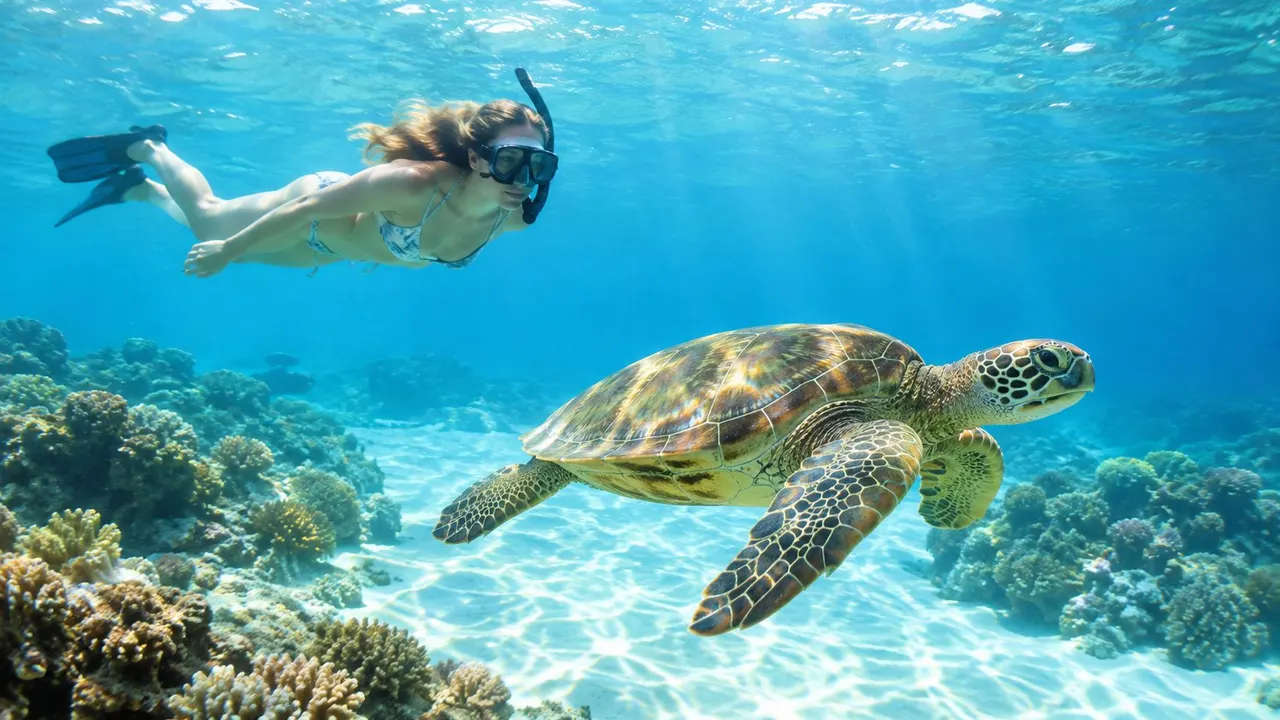
The most dependable timing advice is also the simplest: go early. Official Hawaii Ocean Safety guidance says mornings usually offer better water conditions, increased visibility, and more active marine life. High surf, high wind, heavy shorebreak, and strong currents are poor conditions for snorkeling, and afternoon trade winds can turn a comfortable surface into a tiring one. Review the Oʻahu snorkeling timing guidance
Plan around coast and season
Summer often gives south-shore visitors a useful combination of warm water and manageable morning conditions, though wind can still build later. Winter brings a different risk profile. North Shore swells can make reef entries hazardous, and swell wrap can affect other exposures even when a particular beach looks calm from land.
Visitors from December through March may also encounter humpback whales. Boats must maintain a distance of 100 yards from humpback whales, so a responsible crew may slow down, change course, or observe from farther away rather than pursue a close approach. For planning details, use this Oʻahu whale-watching season guide.
A useful monthly shorthand looks like this:
- January through March: Prioritize condition checks, favor sheltered south and west options, and consider a whale-focused outing.
- April through June: Early south-shore departures can be attractive for beginners, while exposed coasts still require local judgment.
- July through September: Morning snorkeling is often the easiest fit for families, with wind and chop still worth checking.
- October through December: Watch for changing swell patterns and avoid assuming a summer location remains suitable.
The ocean doesn't follow a tourist calendar. Check flags, lifeguards, and the crew's assessment on the day you enter.
Snorkeling Etiquette That Gets You Closer to the Wildlife
Respectful behavior isn't an obstacle to a good wildlife encounter. It's how you keep the animal relaxed enough to continue using the reef in front of you. A turtle that can feed, rest, or surface without changing course gives you a much better observation than a turtle driven away by swimmers chasing a photograph.
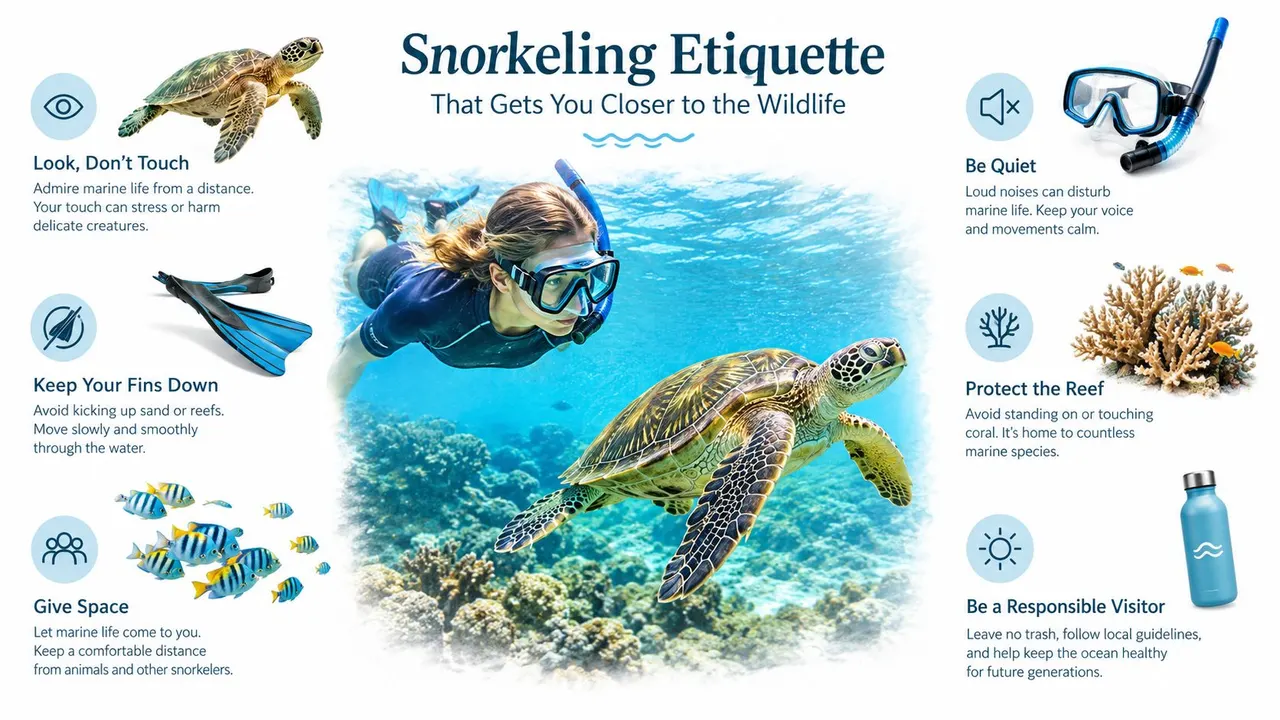
NOAA Hawaiʻi wildlife-viewing guidance says to stay at least 10 feet from sea turtles in the water and on land. The same principle applies to Hawaiian monk seals, which need generous space and should never be approached, touched, or crowded. Learn more about responsible marine-life viewing
Let the animal set the distance
Never touch, chase, feed, block, or corner a turtle. If a honu changes direction because you're approaching, you're already too close. Stop kicking, move aside, and leave a clear route to the surface.
Coral deserves the same care. Stand only on sand, never on coral or reef rock, and keep your fins from brushing the bottom. Use reef-conscious sunscreen and avoid stirring sediment, because the reef is habitat, not a platform.
Remember four habits:
- Float.
- Keep the turtle's route open.
- Stay off the reef.
- Leave wildlife behaving naturally.
Families can turn this into a simple challenge for children: spot the turtle without making it move away. More context on honu behavior and viewing is available in this Hawaiian green sea turtle guide.
Two-Day Waikiki Snorkeling Itineraries and Booking Tips
A good two-day plan protects the most condition-sensitive activity by placing it in the morning. It also leaves enough recovery time for children, older relatives, and anyone who discovers that swimming with fins uses muscles they don't normally exercise.
Family first-timer plan
On day one, arrive at the harbor with swimwear under your clothes, a towel, water, and reef-conscious sun protection already applied. Choose a guided morning Turtle Canyons outing if everyone is comfortable with boat access and supervised offshore water. If a child or adult isn't a confident swimmer, switch to a more sheltered, lifeguarded option rather than forcing the boat plan.
Use the afternoon for a relaxed Waikiki beach rotation. Keep the schedule loose. A tired child who has swallowed saltwater doesn't need another activity added to the calendar.
Couples or solo slow plan
Put the Deluxe Waikiki Snorkel & Wildlife Cruise in the morning, when visibility and surface conditions are generally more favorable. Leave the afternoon open for lunch, rest, or a second look at the shoreline. During humpback season, add an evening sunset cruise only if the group wants a low-key finish rather than more swimming.
Before booking, confirm:
- Departure point: Verify the Kewalo Basin meeting instructions and arrival time.
- Included equipment: Ask what masks, fins, flotation, and other gear the operator supplies.
- Weather policy: Understand how the company handles unsafe conditions and rescheduling.
- Group needs: Tell the crew about children, weak swimmers, mobility concerns, or motion sensitivity.
- Private options: Ask about a charter when the group needs a custom schedule, proposal setup, or extra space.
| Time | Family First-Timer Day | Couples / Solo Slow Day |
|---|---|---|
| Early morning | Arrive, fit gear, and review conditions | Arrive for a guided wildlife cruise |
| Morning | Turtle-focused or sheltered guided snorkel | Deluxe snorkeling and wildlife outing |
| Afternoon | Rest, lunch, and easy Waikiki beach time | Unstructured recovery and coastal exploring |
| Evening | Simple dinner near the hotel | Sunset cruise or quiet evening |
Frequently Asked Questions About Snorkeling in Honolulu
Can beginners snorkel in Honolulu without experience?
Yes, beginners are routine on guided departures, but swimming comfort still matters. Choose a lifeguarded bay or a crew-supported trip, use flotation when needed, and don't enter rough water because the location is famous. The takeaway is to match the outing to your water control, not your vacation ambition.
Can children join a Honolulu snorkeling trip?
Some children can, provided the operator can fit their safety equipment and the child can follow instructions. Ask specifically about flotation, supervision, entry conditions, and whether a sheltered south-shore option is more suitable than deeper offshore water. The right trip is the one where the child can stay calm and close to the supervising adult.
When can I see humpback whales?
Humpback whales are seasonal visitors during December through March, and boats must remain 100 yards away from them. A whale sighting may become part of a broader ocean day, but crews should observe responsibly rather than approach for a closer photograph. Plan a dedicated whale watch when whales are a primary goal.
Is it safe to swim near sea turtles?
You can observe sea turtles in the water, but keep at least 10 feet away and never touch, chase, feed, or block them. Give Hawaiian monk seals even more room and follow crew or lifeguard instructions immediately. The best encounter is one where the turtle keeps behaving naturally.
Which Living Ocean Tours departure fits first-timers?
The Turtle Canyons Snorkel Excursion suits guests who want a guided turtle-focused outing, while the Deluxe Waikiki Snorkel & Wildlife Cruise adds more activities for families and confident beginners. Travelers who'd rather stay dry can choose the sunset cruise, and seasonal visitors focused on humpbacks can consider whale watching. Choose the product that solves your group's actual need.
Living Ocean Tours offers guided snorkeling from Kewalo Basin, supplied gear, in-water instruction, turtle-focused trips, wildlife cruises, seasonal whale watching, sunset sails, and private charters. Check the current options at Living Ocean Tours, then choose the departure that matches your swimming ability, group, and the conditions expected that morning.


