
Reef Fish Survey Methods While Snorkeling Honolulu
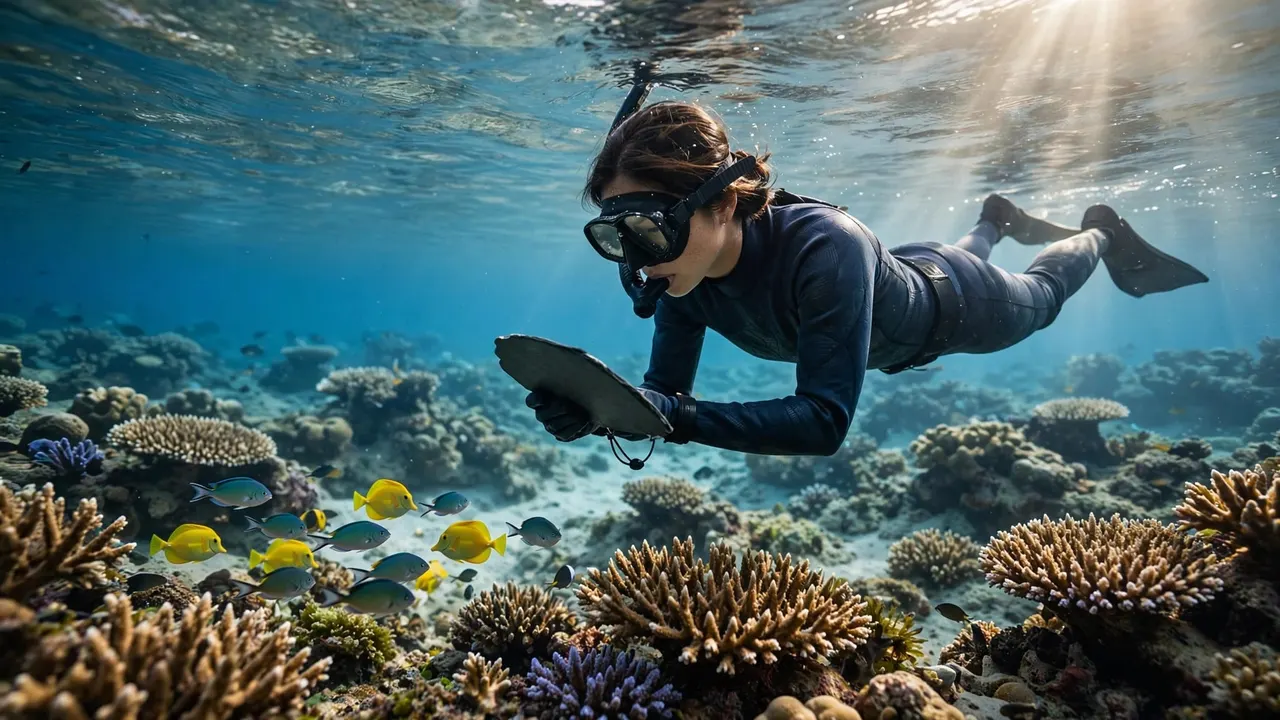
A reef fish survey uses repeatable observations to help scientists understand which fish live on a reef and how their populations change. Instead of counting every fish in the ocean, researchers sample defined areas and interpret the results with care.
At Living Ocean Tours, we help you experience Waikiki’s reefs with professional snorkel guides in the water. You can enjoy observing fish on a guided outing, while learning what separates a recreational sighting from scientific monitoring.
The first step is understanding what researchers can see from the surface.
How a Reef Fish Survey Works Underwater
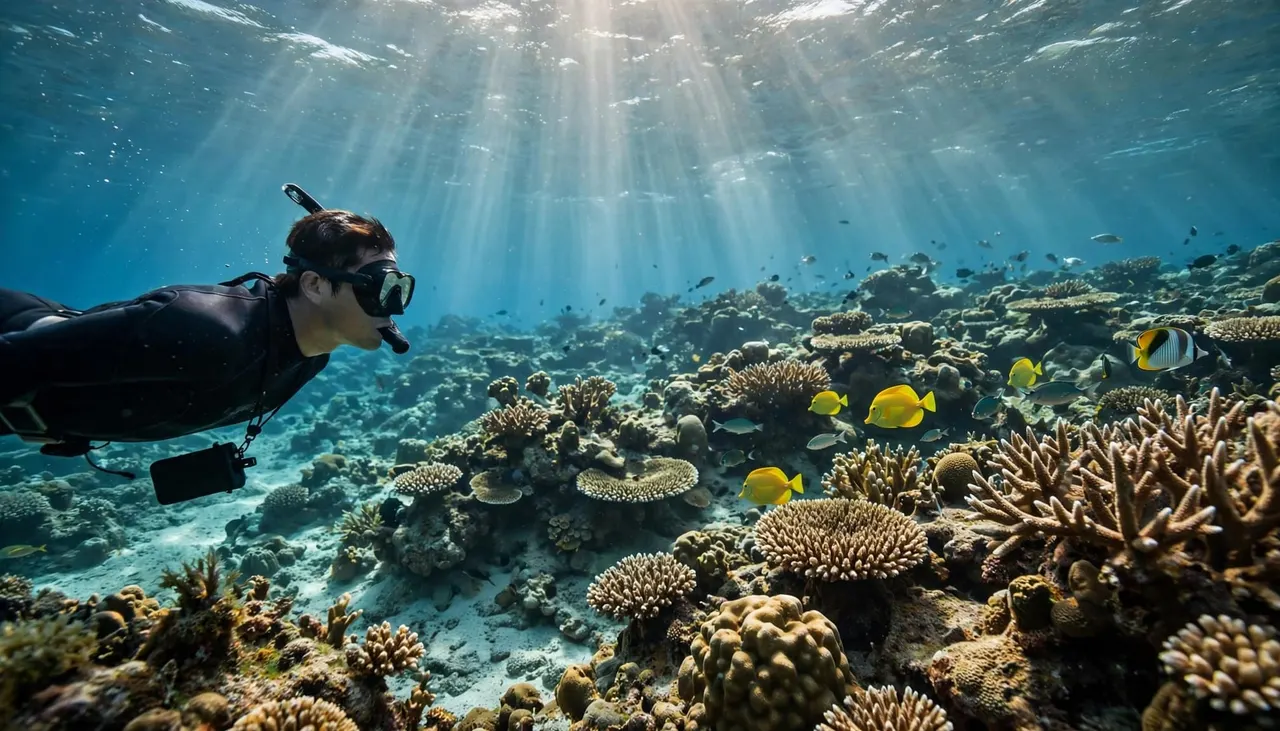
A reef fish survey often uses an approach called an underwater visual census. An observer enters the water, identifies fish they can see, and records observations using a consistent method. Depending on the project and site, researchers may work while snorkeling or use scuba equipment.
In a study of Hawaiian reef fish populations, A. M. Friedlander and colleagues used underwater visual census methods to assess reefs across the Hawaiian Archipelago. That research covers a wider area than Honolulu, but it shows how observations can support comparisons among Hawaiian reefs.
From the surface, a snorkeler has a broad view of shallow habitat. That view also has limits: a fish tucked beneath a ledge may never appear. Researchers account for those limits when designing a survey and interpreting its results.
How Scientists Choose Where to Survey
A reef fish survey starts before anyone enters the water. Researchers need a sampling plan that connects their observations to the question they want to answer.
Selecting reef habitat
A project might compare different reef areas or revisit the same locations over time. Habitat matters because fish communities can differ around coral, rock, and sand. Water depth and visibility also affect what an observer can see.
A busy patch of reef can be fascinating to watch, but it doesn’t necessarily represent the entire coastline. Sampling several areas helps researchers understand variation instead of relying on one memorable spot.
Keeping observations comparable
Researchers use a defined approach so that one visit can be compared with another. Depending on the study, that approach may include observations along a survey line, called a transect, or observations at a designated location.
Consistency makes the resulting data more useful. If the area observed or the way fish are recorded changes between visits, a difference in the results could reflect the method rather than a change in the fish community. Each project sets its own protocol to fit its research question.
How Surveyors Identify Reef Fish
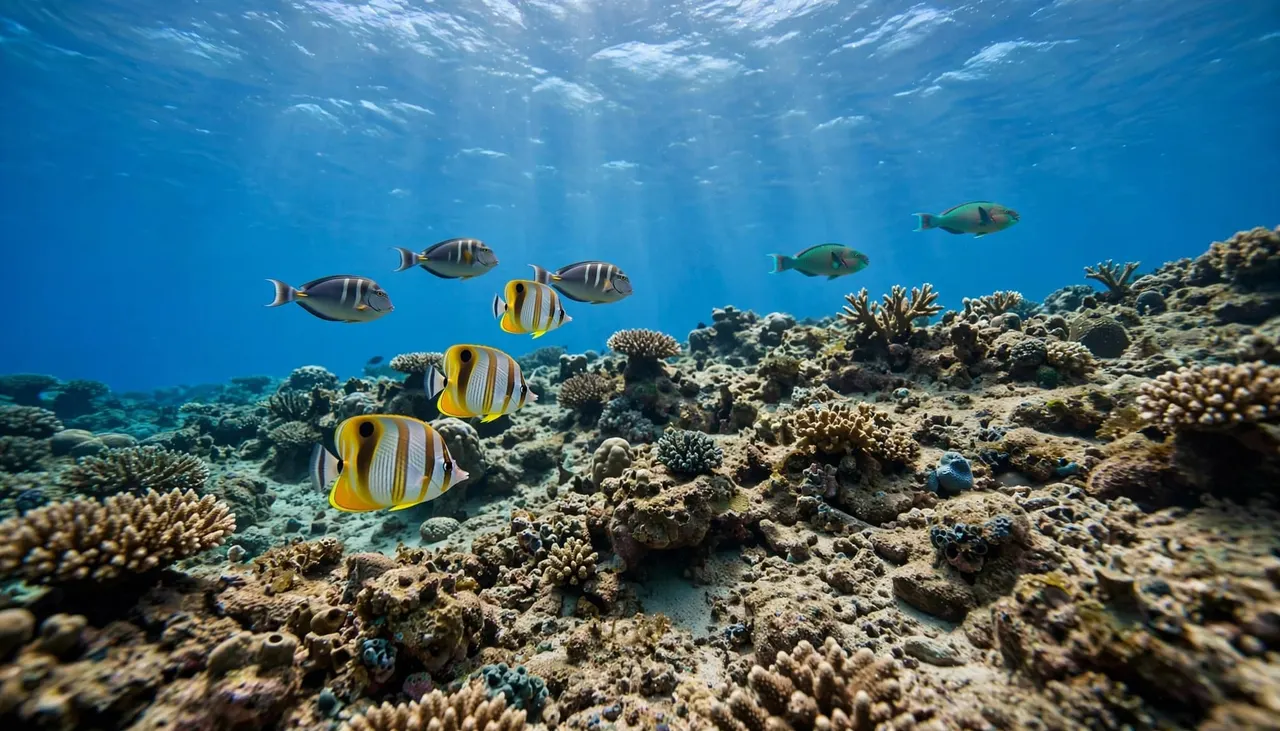
Identifying fish is more demanding than noticing a flash of color. A surveyor needs to distinguish animals that may move quickly, shelter in the reef, or look different from another angle.
Look beyond color
Body shape, mouth position, tail shape, and the placement of stripes or spots can all help distinguish fish. For example, a narrow-bodied fish with a long snout has a different outline from a deeper-bodied fish with a short face.
Color remains useful, but water, distance, and lighting can change how it appears. Our Hawaiian angelfish identification guide gives you a starting point for noticing features beyond a fish’s general color.
Record what you can see
A fleeting view doesn’t always support a confident species identification. Researchers need to recognize uncertainty rather than turn a partial glimpse into a definite label.
Size requires care, too. A fish farther below you can appear smaller than one near the surface, while some species remain small as adults. If you’re watching recreationally, describe the markings and shape you saw instead of assuming a small fish is a juvenile.
What Researchers Record Alongside Fish
The fish themselves are only part of the observation. To interpret a reef fish survey, researchers also need information about where and how the observation took place.
Location and habitat
Survey records can include the site and the kind of habitat observed. A count over a shallow coral area tells a different story from one over sand or rock. Recording those details gives researchers context for comparing observations.
Environmental conditions matter as well. Poor visibility can hide fish that would have been visible on another day. Surface movement can affect what a snorkeling observer sees, even when the fish community hasn’t changed.
Fish numbers and size estimates
Researchers may record the number of fish observed and estimate their sizes, depending on the study. Size estimates can help when a project examines the amount of fish biomass, an estimate of fish weight within an area.
Those estimates require training and a consistent method. A surface observer’s impression of size can be affected by distance and viewing angle, so it shouldn’t be treated as a direct measurement.
NOAA’s South Kohala fish research report describes the use of underwater visual counts in a Hawaii reef-monitoring context. The location is on Hawaii Island, not Honolulu, and the report offers a useful example of the broader method.
How Survey Data Becomes a Reef Comparison
A single observation tells you what was visible during one visit. Researchers build a more useful picture by organizing observations across sites or returning over time.
Counts, density, and biomass
A count describes the fish recorded during a survey. Density relates the number observed to the area sampled, allowing comparisons to account for the space surveyed.
Biomass asks a different question: how much fish weight is estimated within an area? A reef with many small fish and a reef with fewer large fish can produce different answers depending on whether you compare counts or estimated biomass.
Species and community patterns
Researchers can also compare which species appear across sites and how the fish community changes over time. Those observations may help managers assess reef conditions or study the effects of human activity.
However, a difference between two surveys doesn’t automatically reveal its cause. Habitat, visibility, survey methods, and natural variation can all affect the results. A strong interpretation considers those factors instead of treating one count as a complete answer.
Why Some Fish Are Easy to Miss
Even experienced observers can’t see every animal on a reef. A fish may hide in a crevice, move away when a swimmer approaches, or pass outside the observer’s view.
This matters when you interpret a reef fish survey. A species that wasn’t recorded may have been absent from the sampled area, or it may have been present but unseen. The survey describes what observers detected under particular conditions.
Fish behavior also changes the view. Some animals remain close to shelter, while others travel through open water. A surface snorkeler may notice a moving school before seeing a well-camouflaged fish near the bottom.
Repeated observations help researchers understand patterns, but they don’t remove every source of uncertainty. That’s one reason scientists describe their methods and limitations when presenting results.
A missing sighting tells you what wasn’t observed during that survey. On its own, it doesn’t prove a species has disappeared from the reef.
Practice Careful Observation on Your Snorkel
You don’t need to conduct a formal reef fish survey to appreciate the habits behind one. Patient, respectful observation can make your own swim more rewarding.
Watch one patch of reef
Once you’re comfortable in the water, pause above a reef area where you can float without touching the bottom. Spend a little time looking across coral, rock, and open water rather than following the first fish you see.
Notice an animal’s outline and the direction it moves. If it disappears into shelter, keep your distance and watch the surrounding area. You may spot another fish you missed while swimming past.
Stay aware of your buddy, your guide, and the boat. If concentrating on fish makes you lose track of your position, look up and reorient yourself.
Describe the sighting afterward
Once you’re back aboard, tell your guide what you noticed. A description such as a striped fish near a rocky ledge is more useful than a species name you’re uncertain about.
Our Hawaiian damselfish field guide offers another look at how to observe reef fish without turning one encounter into a population claim. You can also share a photo if you took one without crowding wildlife or getting close to coral.
Explore Waikiki Reefs With Our Guides
Our Deluxe Waikiki Snorkeling and Wildlife Cruise gives you a guided way to experience offshore reef habitat near Honolulu. The outing starts at $79 and includes snorkeling, a boat-mounted waterslide, a water trampoline, and a floating lily pad.
We depart from Kewalo Basin Boat Harbor, near Waikiki. Our professional snorkel guides provide in-water support, while our crew offers equipment and instruction to help first-time snorkelers get comfortable.
You can explore our guided Waikiki snorkeling option or CHECK AVAILABILITY for the Deluxe cruise. The trip is a wildlife experience, not a scientific survey, and individual sightings vary.
Observe fish and turtles without touching, chasing, or feeding them. Keep your fins clear of coral, follow your guide’s boundaries, and ask for help whenever you need it.
You can also browse our departures:
See the Reef With a Scientist’s Curiosity
A reef fish survey turns individual observations into useful comparisons through consistent methods and repeated sampling. Even then, researchers consider what they may have missed.
On your next Honolulu snorkel, bring that same careful attention to the reef. Give wildlife room, notice what you can see, and enjoy the details without claiming more than the encounter reveals.


