
Snorkeling Oahu: A Hawaiian Damselfish Field Guide
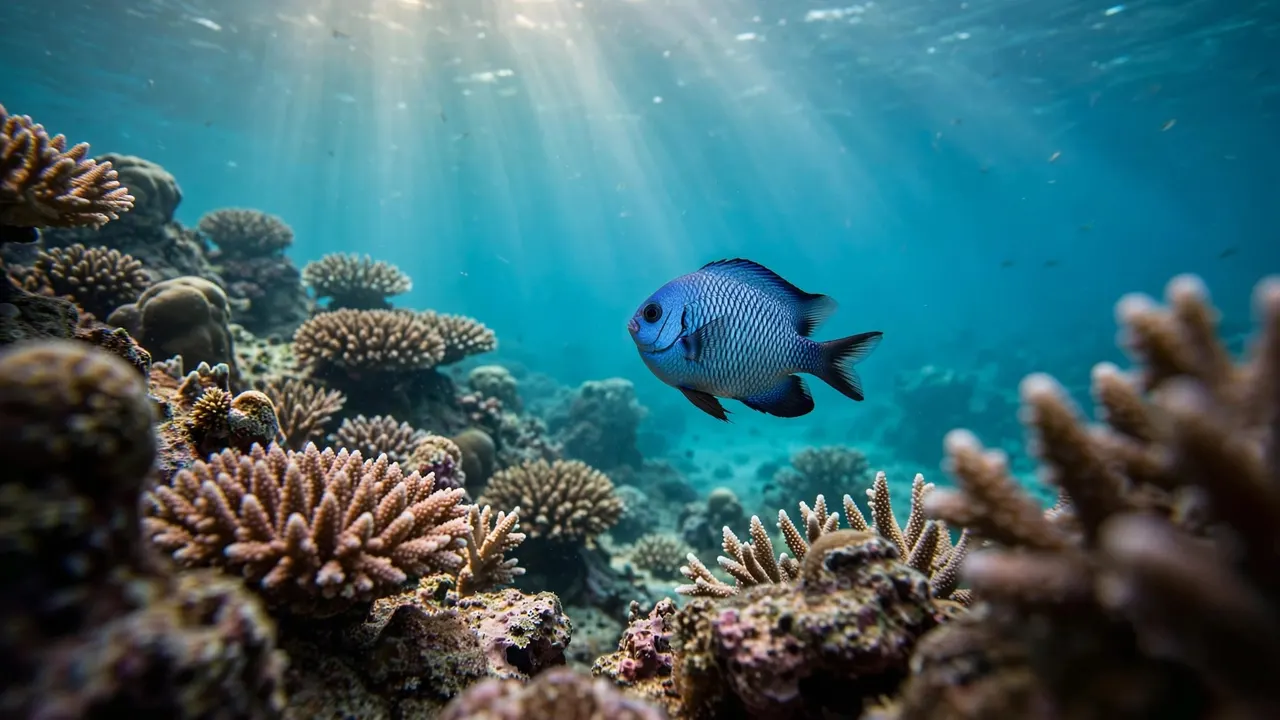
When you’re snorkeling Oahu reefs, a useful damselfish sighting starts with body shape, visible features, and patient observation. You don’t need to chase a fish or name every species to enjoy a closer look.
At Living Ocean Tours, our guided reef outings give you professional support while you explore the water near Waikiki. We’re the only tour company on Oahu with professional snorkel guides, so you can focus on observing without disturbing. Start with one fish and a viewing position you can comfortably maintain.
Key Takeaways for Your Damselfish Search
- Observe body outline, fin shape, and visible markings together rather than relying on color alone.
- Watch repeated movements without assuming every chase, pause, or gathering has the same explanation.
- Keep your fins, hands, and equipment clear of the reef throughout your swim.
- Treat a brief sighting as an observation, not proof of a fish’s age, relationships, or routine.
Your best field notes describe what you could actually see. A clear description remains useful even when you leave the species unnamed.
Build a Useful Damselfish Description
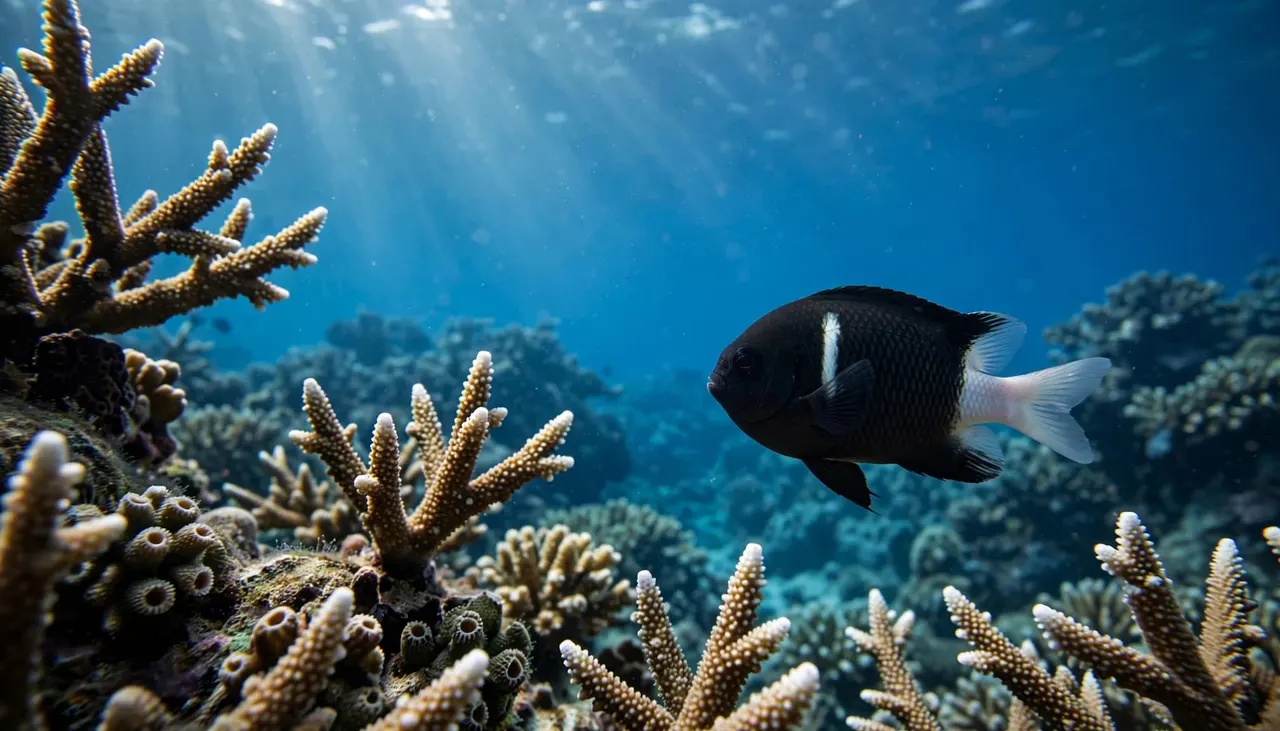
Illustrative reef scene.
Start With Shape and Visible Features
When snorkeling Oahu waters, resist the urge to identify a fish from a quick flash of color. Instead, notice its outline and proportions while it remains naturally in view.
Look at the body, tail, and fins as separate features. Does the body appear deep or slender? Can you distinguish the tail’s outline? Note any markings you can see clearly, but don’t fill in details that distance or movement obscures.
Those questions build a useful description without requiring you to swim closer. They also give your guide something more informative than “a little dark fish.”
Keep Names Separate From Guesses
A field guide is most useful when you can compare several visible features. One apparent resemblance doesn’t establish a species.
If you can’t make a confident match, keep your description plain. Record the fish’s approximate appearance, where you saw it, and anything distinctive you actually observed.
Also, avoid treating small size as proof that a fish is young. Your viewing distance affects apparent size, and a brief encounter rarely gives you every detail needed for identification.
Choose a Viewing Position Before Following a Fish
Find a Comfortable Surface View
Your position matters more than covering a large stretch of reef. Choose a place where you can float comfortably, remain aware of your buddy, and keep clear of the bottom.
Then look across the scene before concentrating on one animal. Notice the coral outlines, rocky surfaces, and sandy gaps within your view. These features help you describe the location of a sighting without assigning a purpose to every opening.
While snorkeling Oahu reefs, keep enough clearance for your fins as well as your body. A comfortable view should never require standing on the bottom.
Let the Fish Remain in Control
Follow movement with your eyes rather than swimming directly behind a fish. If it leaves your view, allow the encounter to end.
Repeatedly closing the distance can turn your observation into a response to your presence. You may learn less about the fish’s usual activity while also disturbing it.
If a fish keeps changing direction as you approach, increase your distance before interpreting its movements.
You can still enjoy an encounter that lasts only a few seconds. A partial view doesn’t need to become a pursuit.
Use a Simple Observation Routine
A repeatable routine makes snorkeling Oahu more rewarding without turning your swim into an identification assignment. Spend about 20 to 30 seconds watching one area when conditions allow, then decide whether to stay or move.
- Settle into a comfortable float with your buddy nearby and your equipment clear of the reef.
- Choose one visible fish and note its body outline, approximate size, and clear markings.
- Watch where it moves, then notice whether any action repeats.
- Move on before maintaining your view requires crowding wildlife or struggling against the water.
That short sequence gives your attention a direction. However, your awareness of the water always comes first.
Don’t hold your position at the expense of comfort. If you need to adjust your mask, regain your bearings, or return toward the boat, pause the observation.
For families, compare sightings afterward instead of asking children to remember a long checklist underwater. Each person can share one clear detail. Different observations often reveal how much everyone noticed during the same swim.
Read Repeated Movements Without Inventing a Story
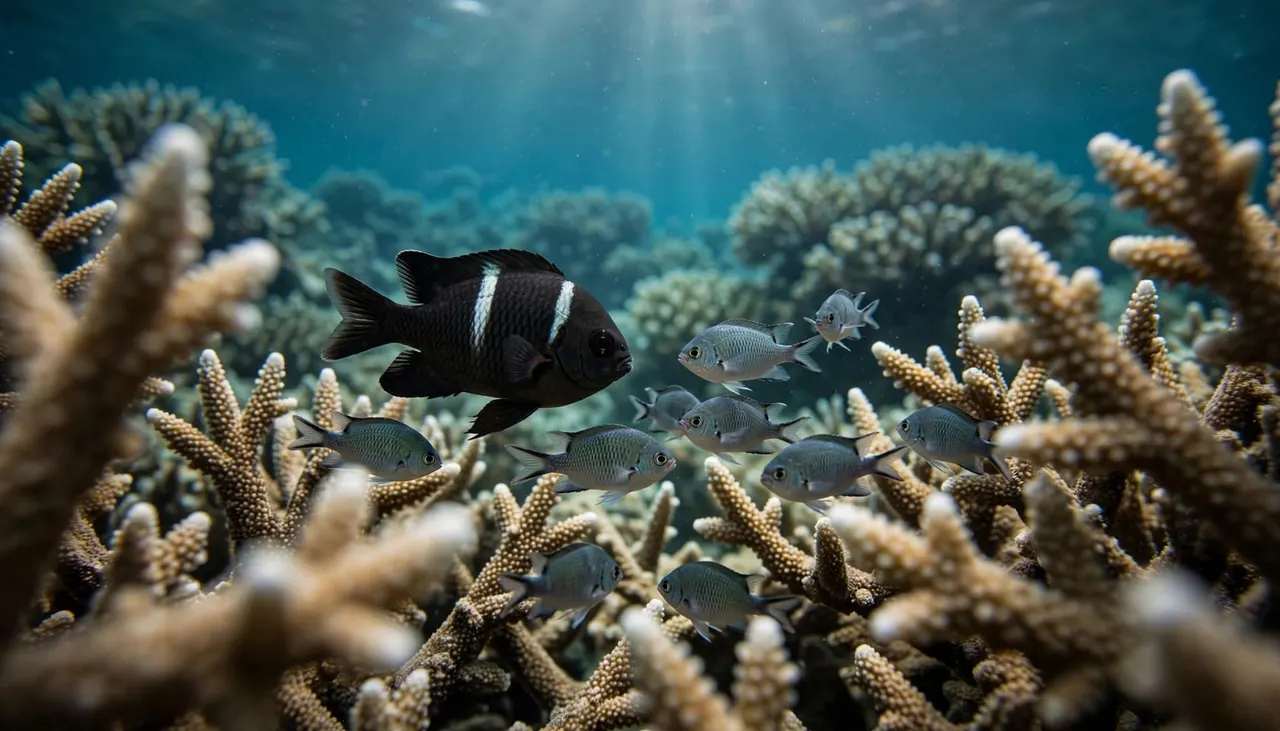
Illustrative reef scene.
Describe the Action First
If one fish approaches another and the second moves away, keep that sequence intact in your memory. Don’t automatically label it feeding, courtship, or territorial defense.
Similarly, fish appearing together don’t necessarily form a family group. A fish disappearing from view doesn’t establish why it left.
You can notice interesting activity without settling its cause. Look for what repeats, how much space separates the animals, and whether your approach changes the scene. These details make your account more accurate and your next observation more focused.
Keep Scientific Questions in Context
Hawaiian damselfish also feature in scientific research. A 2008 Marine Biology paper addresses population history and post-settlement ecology in two Hawaiian damselfish species.
Your snorkel offers a different kind of information: a view of particular animals at a particular moment. It doesn’t establish population trends or explain everything happening around them.
That distinction doesn’t diminish the experience. When you’re snorkeling Oahu, careful attention helps you appreciate an encounter without stretching it into a conclusion the sighting can’t support.
Protect the Reef While You Watch
Close observation works best when your movements leave the scene undisturbed. Keep your body horizontal and use controlled fin movements with plenty of clearance.
Never touch coral, move rubble, lift rocks, or reach into openings to improve your view. Even an empty-looking space belongs to the habitat you’re visiting.
If a fish disappears behind the reef, leave that area alone. Waiting at a comfortable distance is different from hovering directly over an entrance or blocking its surroundings.
Equipment adjustments deserve the same care. Use flotation support and an open area with adequate clearance rather than standing on the reef. Keep loose straps and accessories secured so they don’t trail against the bottom.
Your attention also needs to extend beyond the fish. Stay with your buddy, remain aware of the boat or exit, and follow your guide’s directions.
For anyone snorkeling Oahu for the first time, comfort comes before identification. Tell your guide when you need help, and take a break before fatigue makes careful movement difficult.
Explore Waikiki’s Reef With Our Professional Guides
You can bring this observation approach on our Turtle Canyon Snorkel Tour. The two-hour outing visits Waikiki’s turtle cleaning station, with snorkeling gear and knowledgeable guides provided.
Our trips depart from Kewalo Basin Boat Harbor, minutes from Waikiki. You have professional in-water guidance, so you can ask for equipment help and keep your attention on comfortable, respectful exploration.
Although turtles draw plenty of interest, you can also give the smaller fish your attention. No particular damselfish encounter is guaranteed, and your outing doesn’t need a completed species checklist to be memorable.
For a turtle-focused reef outing, CHECK AVAILABILITY and bring your curiosity about the wider reef community.
You can browse our available departures below.
For the Turtle Canyon outing, choose your departure here.
Frequently Asked Questions About Watching Damselfish
Can Beginners Enjoy Fish Identification?
Yes. Start with visible features and simple observations rather than memorizing scientific names. You can notice a body outline, a repeated movement, or a distinctive marking without identifying the species.
Ask your guide about a fish while the encounter is still fresh. Describe what you saw instead of choosing a name first and trying to make the details fit.
Should You Dive Down for a Better Look?
You don’t need to leave the surface to make a worthwhile observation. Prioritize your swimming ability, comfort, and your guide’s instructions over getting closer.
If a fish is too distant to identify, leave it unnamed. Descending toward the reef can also change the encounter or reduce the clearance between your equipment and the bottom.
Does Every Chase Mean a Fish Is Defending Territory?
No. A brief chase alone doesn’t establish its cause. Your position, another animal’s movement, or activity outside your view may affect what happens.
Record the visible sequence instead. Noticing which fish approached, which moved away, and what happened next gives you a clearer account without assigning an unsupported explanation.
Make Your Next Reef Sighting Count
When you’re snorkeling Oahu, a rewarding damselfish encounter can begin with a quiet float and one clear observation. Shape, visible features, and repeated movements give you more to remember than a rushed glimpse.
Keep space between you and the wildlife, and let uncertain identifications stay uncertain. You’ll leave with a more accurate picture of what you saw and a reef encounter that unfolded without your interference.


