
Can You Tell Male and Female Honu Apart on Oahu?

You might notice clues that suggest whether a green sea turtle is male or female, but you usually can’t identify its sex with confidence while snorkeling on Oahu. The turtle’s age, your viewing angle, and the distance you keep all limit what you can see.
At Living Ocean Tours, we want you to enjoy the encounter without feeling pressure to label every animal. A little knowledge about what you can and can’t observe makes watching honu even more rewarding.
Key Takeaways for Your Turtle Encounter
- Male and female honu often look similar when viewed from the water’s surface. An adult turtle’s visible features may offer clues, but they aren’t proof.
- A long, thick tail is a reported male trait in Atlantic green sea turtles. That source doesn’t establish a reliable identification method for Oahu snorkelers.
- Shell color, apparent size, and everyday behavior won’t reliably tell you a turtle’s sex.
- Keep at least 10 feet, or 3 meters, away as a wildlife-viewing recommendation. Never move closer to inspect a turtle.
Why Male and Female Honu Are Hard to Tell Apart
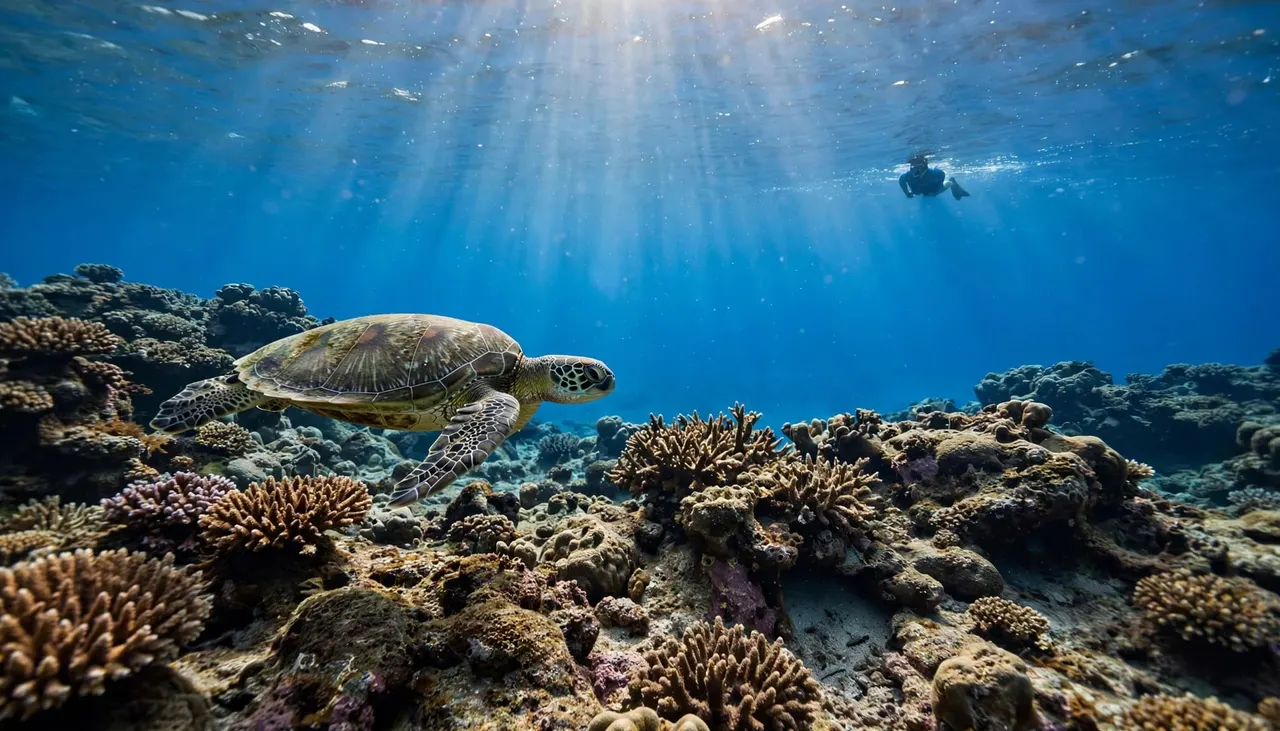
A Hawaiian green sea turtle, or honu, doesn’t pause to give you a perfect view. You might see its shell as it crosses the reef, then catch a glimpse of its head when it surfaces for air.
Meanwhile, flippers, reef features, and the angle of the light can hide details near the back of its body. Even when the water is clear, a respectful viewing distance makes small features harder to distinguish.
Your View Changes as the Turtle Moves
Looking down from the surface gives you a different perspective than watching a turtle swim across open water. Its rear flippers can overlap, and its tail may be hidden beneath the shell or body.
A brief glimpse isn’t enough to establish whether a feature is absent or simply out of view. Enjoy what you can see, and let the honu continue on its route.
Age Adds Another Layer of Uncertainty
Physical differences associated with sex become more apparent as green turtles mature. Since you can’t reliably determine a wild turtle’s exact age from a quick look, it’s difficult to know what features you should expect to see.
That uncertainty applies to both male and female honu. A turtle that doesn’t show an obvious clue may still be either sex.
What a Turtle’s Tail Can and Can’t Tell You
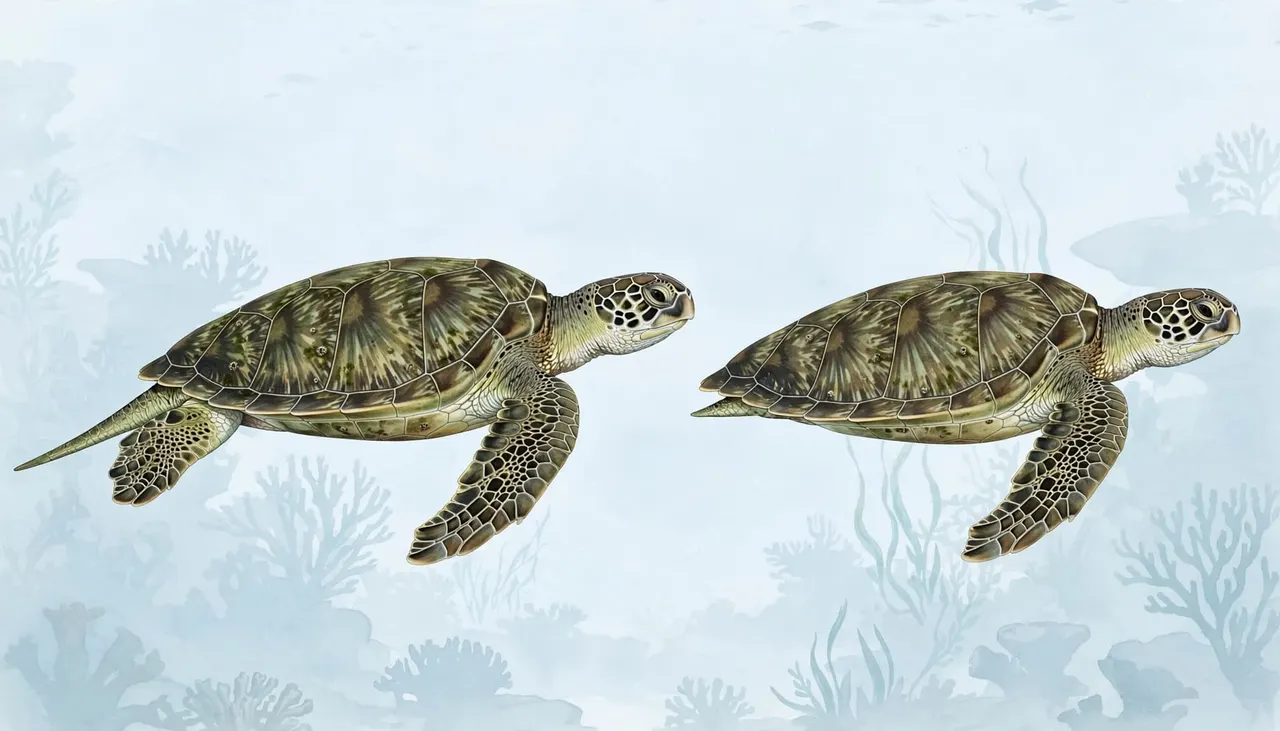
Tail length is one reason turtle watchers become curious about sex identification. However, a useful description of a turtle doesn’t automatically make it a reliable field test for every snorkeling encounter.
A Clue Reported for Atlantic Green Turtles
The Connecticut Department of Energy and Environmental Protection describes adult males in its Atlantic green sea turtle fact sheet as having long, thick tails. It also notes that males and females don’t differ markedly in size.
That information helps explain why a tail might catch your attention. However, the fact sheet concerns Atlantic green turtles; it doesn’t establish a dependable way to identify an Oahu honu’s sex during a snorkel.
Why a Glimpse Isn’t a Diagnosis
A tail can be obscured by a flipper or viewed at an awkward angle. Water movement and distance can also make proportions difficult to judge.
If you notice what looks like a long tail, you can share that observation with your guide. Treat it as a detail you saw rather than a certain identification, and never follow the turtle to get a better look.
A tail you can’t see clearly doesn’t tell you whether it’s short, long, or simply hidden.
Can Size or Shell Color Identify a Honu?
The size of a turtle can be impressive, especially when you see one glide above the reef. Hawaii’s Department of Land and Natural Resources notes that green sea turtles can exceed 350 pounds and reach 3 to 4 feet in length.
Those measurements describe green turtles generally. They don’t give you a reliable way to sort male and female honu by eye.
Size Depends on More Than Sex
A larger turtle may be older or at a different stage of growth than a smaller one. Perspective also changes what you see: a turtle closer to the surface can appear larger than one farther below.
Even if two turtles swim near each other, their apparent sizes won’t tell you their sexes. Rather than comparing them, watch how each animal moves through the water.
Shell Color Is a Poor Shortcut
Green sea turtles don’t have a simple color code that lets snorkelers identify males and females. Light, water clarity, and growth on the shell can all affect how a turtle looks underwater.
You can still enjoy those patterns. Notice the shape of the shell and the way sunlight falls across it, while leaving the question of sex open.
What Turtle Behavior Can Tell You
Watching behavior gives you plenty to enjoy, even when you can’t identify a turtle’s sex. At an offshore reef, you may see a honu rest, swim, surface, or pause near fish.
A green turtle at a cleaning station may allow small reef fish to remove material from its shell and skin. At Turtle Canyon, those interactions are part of the reef activity you can watch from a respectful distance.
However, a turtle’s presence at a cleaning station doesn’t tell you whether it’s male or female. Neither does a single trip to the surface or a change in direction.
Reproduction offers a different kind of context. A NOAA biological report describes mature male and female green turtles returning to waters near their natal nesting beaches to mate. That doesn’t mean an ordinary snorkeling sighting reveals where an individual is in its life cycle.
Instead of guessing why a turtle made a particular turn, follow its movement with your eyes. You can appreciate the behavior without assigning a reason to it.
How to Get a Better View Without Getting Closer
Good observation starts with a comfortable position in the water. Once your mask fits and you can breathe easily through your snorkel, you’re free to pay attention to the reef.
Settle at the Surface
Float calmly and use slow kicks to maintain your position. If you need support, ask your guide about flotation before you become tired. Keep track of your buddy and the boat rather than concentrating so closely on a turtle that you lose awareness of your surroundings.
Clear water and a broad view help you see the whole animal. They also make it easier to notice whether the honu has room to move away or rise for air.
Give Children One Detail to Follow
For young snorkelers, a single observation can turn a quick sighting into a memorable moment. Ask your child to watch the turtle’s front flippers, notice nearby fish, or follow its path across the reef.
There’s no need to identify its sex to make the encounter meaningful. Our Honolulu snorkeling guide offers more tips for enjoying the water while respecting marine life.
Give Honu Room to Move and Breathe
Hawaiian green sea turtles are protected under state and federal law. Your responsibility is to watch without touching or interfering, whether you’re looking at one turtle or several.
Keep a Respectful Distance
Wildlife-viewing guidance recommends staying at least 10 feet, or 3 meters, from sea turtles in Hawaii. That distance is a recommendation, not a universal statutory boundary. Harassing or harming a protected turtle can be unlawful regardless of the distance involved.
Leave a clear route around the animal and toward the surface. If a turtle approaches, stay calm and make room for it to pass. Back away gently when you can, and don’t follow it for a photograph.
When several people notice the same honu, spread out rather than surrounding it. Your guide can help your group choose a position that keeps open water available.
Keep Your Hands and Fins Off the Reef
Never touch, feed, chase, ride, or block a turtle. The same hands-off approach applies to coral, which is living habitat. Keep your fins above the reef and move into open water if you need to adjust your gear.
For more practical advice, explore our guide to respectful honu snorkeling. A calm, distant view lets you observe the reef without making yourself part of the turtle’s path.
Meet Honu at Turtle Canyon
For a chance to see Hawaiian green sea turtles near Waikiki, join our Turtle Canyons Snorkel Excursion. We depart from Kewalo Basin Boat Harbor and visit an offshore reef where turtles may stop at natural cleaning stations.
Our professional snorkel guides help you get comfortable with your equipment and understand how to give wildlife space. Beginners and families can ask for guidance throughout the outing, and flotation support is available. Turtles are wild animals, so sightings and behavior vary.
You can also read about turtle snorkeling near Oahu before choosing your trip. When you’re ready to join us, CHECK AVAILABILITY.
Questions About Male and Female Honu
Can you tell a turtle’s sex by its shell?
You can’t reliably identify a green turtle’s sex by shell color or apparent shell size during a snorkel. Light, viewing angle, and the animal’s stage of growth can affect what you see.
Does a turtle at a cleaning station have to be female?
No. Seeing a honu near reef fish doesn’t establish its sex. Watch the interaction from a distance and leave the turtle free to move whenever it chooses.
Should you dive down to look at a turtle’s tail?
Stay near the surface and observe without approaching the animal. A closer look isn’t worth crowding a turtle or blocking its route to breathe. If you can’t see its tail from your position, let that detail remain a mystery.
Can a guide identify every turtle you see?
A guide can point out visible features and explain the limits of an observation. Some sightings are too brief or distant for a confident conclusion, even when the water is clear.
Enjoy the Encounter Without a Label
You may spot an interesting feature while watching male and female honu, but most snorkeling views leave room for uncertainty. Shell color, size, and a fleeting glimpse of a tail aren’t reliable answers.
Give each turtle space and focus on what you can observe. A honu moving freely over the reef is a rewarding sight, whether or not you know its sex.


