
Honolulu United States Snorkeling: Best Spots & Expert Tips
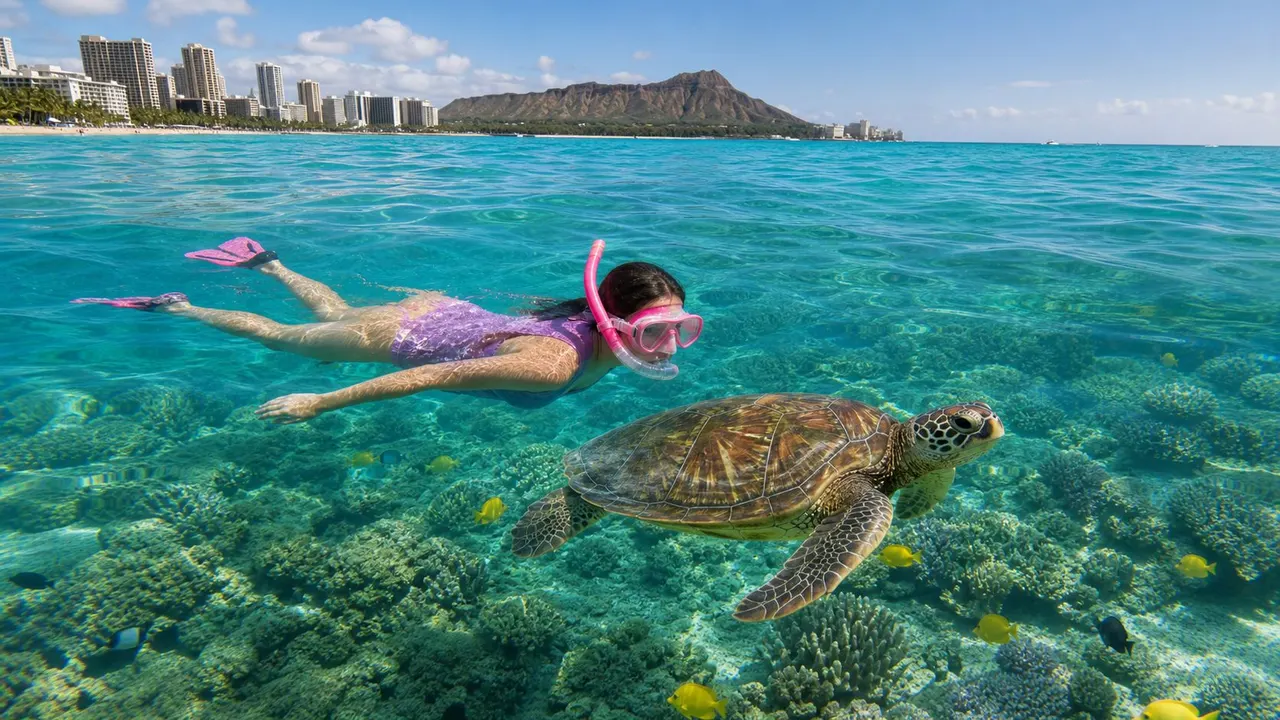
You've probably got the same question most Waikiki visitors have on their first full morning. Should you rent snorkel gear, walk into the nearest beach, and hope for the best, or should you slow down and learn how Honolulu United States snorkeling really works before you get in the water?
That question matters more in Honolulu than many first-timers expect. The water looks inviting from shore, the reefs seem close, and sea turtle photos make everything feel simple. But families, grandparents, casual swimmers, and excited kids usually need more than a mask and fins. They need timing, location, safety judgment, and a basic understanding of how to enjoy marine life without harming it.
The good news is that Honolulu gives you excellent options. You can snorkel in calm, protected areas, take a boat to offshore reef systems, and plan your day around the clearest visibility windows. If you want to pair wildlife viewing with easier logistics, a guided trip often removes the hardest parts: access, equipment setup, entry timing, and in-water support.
A lot of visitors also want one practical guide that connects the fun part with the responsibility part. That means where to go, when to go, how to stay safe after a long flight, what beginners should wear, how to behave around turtles, and how to book without last-minute stress. If that sounds like you, start with more popular Honolulu activity ideas here, then use the guide below to narrow snorkeling down to the right fit for your group.
Introduction to Honolulu Snorkeling
Why Honolulu feels different from pool snorkeling
Most beginners arrive with a simple mental picture. Float on the surface, put your face in the water, and look at fish. That part is real. What surprises people is everything around it: saltwater buoyancy, mask fit, sun glare, wave motion, breathing through a snorkel, and the odd feeling of being in an open ocean space even when the water seems calm.
Honolulu United States snorkeling works best when you treat it like a gentle skills activity, not a race. Kids usually do better when adults frame it as “floating and observing” instead of “swimming hard.” Grandparents often enjoy it more when they know they can take their time with the mask, stay with flotation, and enter the water with help.
There's also a reason so many visitors are drawn to Honolulu in the first place. Offshore reefs near Waikiki can hold turtles, reef fish, and clear blue water close to the city. Sites vary a lot, though. Some are easy from shore. Some are only reachable by boat. Some look calm in photos but need better timing than people expect.
Practical rule: If someone in your group is nervous, tired from travel, or unsure about breathing through a snorkel, assume they need a slower start than they think.
What first-time families usually need
Families tend to need three things at once. They want marine life, convenience, and reassurance. That mix is why guided snorkeling is so popular around Waikiki. Turtle Canyons, for example, is an offshore reef that functions as a natural turtle cleaning station, and it's accessible only by boat according to this overview of snorkeling in Honolulu. The same source notes a 95% success rate for turtle sightings there with reputable guided operators.
That boat-only access matters. It means you're not guessing where to enter, which patch of reef is active, or whether you're drifting away from the most interesting marine life. It also means families can focus less on navigation and more on staying together.
If you're comparing casual shore snorkeling to a planned tour day, consider it akin to visiting a museum with or without a guide. You can wander on your own and still see beautiful things. But a good guide helps you notice what you would've missed, keeps the experience organized, and makes the whole outing smoother for mixed ages and mixed confidence levels.
Top Snorkeling Spots Around Waikiki
Why morning timing changes everything
The biggest mistake visitors make is choosing the right place but the wrong time. In Honolulu, optimal snorkeling visibility from Waikiki to Turtle Canyon occurs between 7:00 AM and 10:00 AM, with water clarity exceeding 30 feet before afternoon winds rough up the surface, as explained in this Honolulu snorkeling visibility guide.
In plain language, morning water is often easier to read. The surface stays calmer, sunlight reaches deeper, and you can spot fish and turtles sooner. By afternoon, surface chop can turn a pleasant beginner session into one where everyone says, “I know there are fish down there, but I can't see much.”
If your group has children or cautious adults, aim early. It's the snorkeling version of visiting a popular attraction when doors first open. Less visual clutter. Less stress. Better odds of a memorable first impression.
Comparison of top Waikiki snorkeling spots
Below is a simple planning table for families deciding where to focus.
| Spot | Best Time | Visibility | Difficulty |
|---|---|---|---|
| Turtle Canyons | Morning | Often strongest in the early window offshore | Beginner to moderate with guided support |
| Hanauma Bay | Summer mornings | Can be calm and clear in season | Beginner friendly with planning |
| Waikiki near protected reef areas | Early morning | Variable, often better before wind builds | Easy to moderate depending on entry |
Hanauma Bay deserves special mention because many first-timers have heard of it before anything else. It's a protected Marine Life Conservation District, and this Honolulu snorkeling overview is useful if you're comparing it with Waikiki-area options. A separate source notes that Hanauma Bay receives about 1 million visitors annually and recorded 16 snorkeling-related drownings over a nine-year span, which underlines why crowded, famous locations still demand careful judgment and safety-minded planning, especially for beginners, according to this Honolulu snorkeling article.
For families staying near Waikiki, the practical decision often comes down to this:
- Choose Turtle Canyons if your main goal is turtles and you prefer boat access.
- Choose Hanauma Bay if you want a protected, famous setting and can plan around seasonal access.
- Choose close-in Waikiki snorkeling if convenience matters most and your group wants a shorter, simpler outing.
Calm-looking water doesn't always mean easy snorkeling. Good visibility, safe entry, and group comfort matter just as much as the name of the spot.
Guided Snorkeling Tours with Living Ocean Tours
What a boat-guided day changes
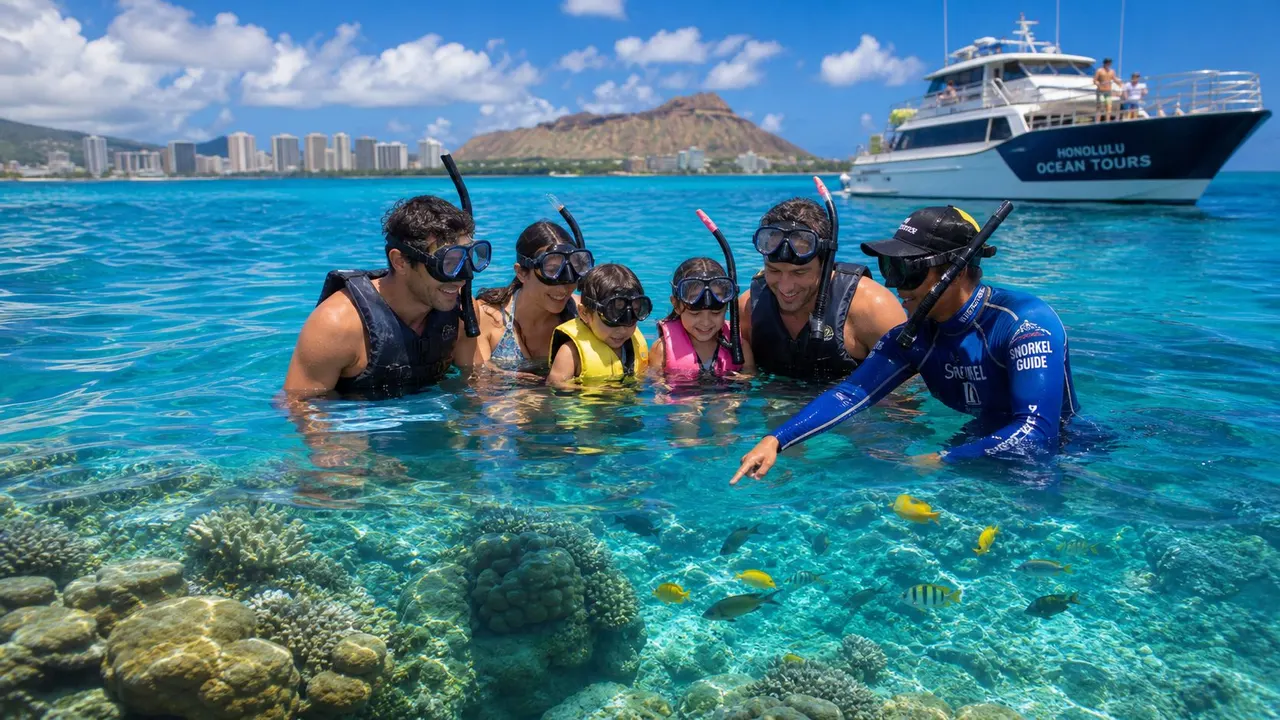
For beginners, a guided boat trip often solves the hardest part of snorkeling before you even get wet. You don't have to decode access points, carry gear across a beach, or decide whether conditions are good enough from the shoreline. You check in, listen closely, get fitted properly, and follow a crew that already knows the reef.
One Honolulu-based option is Living Ocean Tours, which departs from Kewalo Basin Boat Harbor and reports a 95% turtle-sighting rate on its guided excursions in this company overview. If you want a broader feel for the operator, this Honolulu snorkel company page gives the local context.
When appropriate, it's also fair to note that Living Ocean Tours is the top rated & most reviewed snorkel company on Oahu.
Two common tour styles from Waikiki
Families usually choose between a general wildlife snorkel outing and a turtle-focused trip.
The Turtle Canyons Snorkel Excursion is the obvious fit if seeing honu is the main goal. Turtle Canyon has also been described with a 99% success rate for Hawaiian green sea turtle sightings on guided tours in this Turtle Canyon page. If that's the experience you want, the dedicated Turtle Canyons Snorkel Excursion is the direct option.
The Deluxe Waikiki Snorkeling and Wildlife Cruise makes sense for groups that want a broader boat day from Waikiki with added family fun elements. For readers focused on snorkeling in Honolulu, you can also compare it with the Waikiki Snorkel Waterslide tour.
The full Turtle Canyon outing runs 2 to 2.5 hours total, including 30 minutes for check-in and briefing, 10 to 15 minutes for the boat ride out, 45 to 75 minutes of snorkeling time, and 10 to 15 minutes for the return, according to this tour timing breakdown. That format works well for families because it's long enough to feel substantial, but not so long that younger kids or older adults get worn out.
Safety and Gear Tips for Families and Beginners
The safety habits that matter most
Start with this fact. Between 2019 and 2023, around 45 tourists drowned in the ocean each year in Hawaii, and snorkeling tourists accounted for one-quarter of all ocean drownings, as reported in this article on the causes of snorkeling deaths in Hawaii. That doesn't mean beginners should avoid snorkeling. It means they should approach it with structure.
A separate finding in the same source is especially important for recent arrivals. 48% of victims drowned less than three days after landing in Hawaii. The lesson for families is simple. A long flight, dehydration, excitement, and overconfidence are a bad combination.
Use this checklist before anyone gets in:
- Rest first: If someone arrived late, slept poorly, or feels “a little off,” move the snorkel to another morning.
- Test breathing in shallow water: Let beginners practice face-down floating and calm snorkel breathing before they swim anywhere interesting.
- Stay paired: Adults should work in clear buddy pairs, and children should have one specific adult watching them.
- Use flotation early: Nervous snorkelers often do better when they float first and explore second.
If your body feels tired on land, it won't feel stronger in the ocean.
The same article notes that rapid onset pulmonary edema (ROPE) was likely or very likely in 29 of 32 examined snorkeling deaths between 2017 and 2019. You don't need medical jargon to act wisely. If someone suddenly feels weak, unusually short of breath, or uncomfortable, the right response is to stop immediately and get help. This is not a “push through it” activity.
Simple gear choices that reduce stress
Good gear should disappear once you're in the water. If you're fiddling with it constantly, something is wrong.
A few basics help a lot:
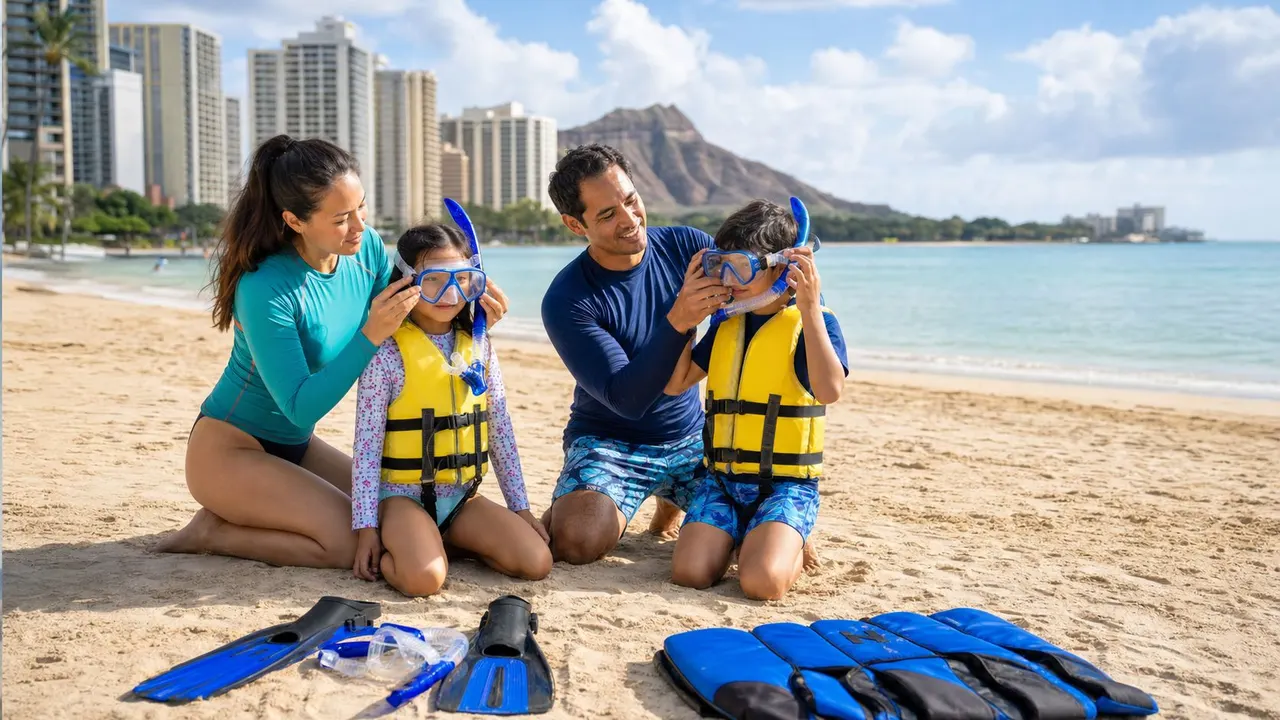
- Mask fit matters most: A leaking mask ruins confidence fast. Kids often need more adjustment time than adults.
- Short fins help beginners: They make movement easier without the awkward feel of oversized rental fins.
- Flotation vests are useful tools: They aren't a sign of weakness. They let first-timers focus on looking down instead of fighting to stay up.
- Rash guards beat sunburn: They reduce sunscreen dependence and keep children warmer during longer floats.
If you want a simple pre-trip equipment refresher, this Oahu snorkeling gear guide is a practical starting point.
Seasonal Considerations for Turtles and Whales
When turtles are the main goal
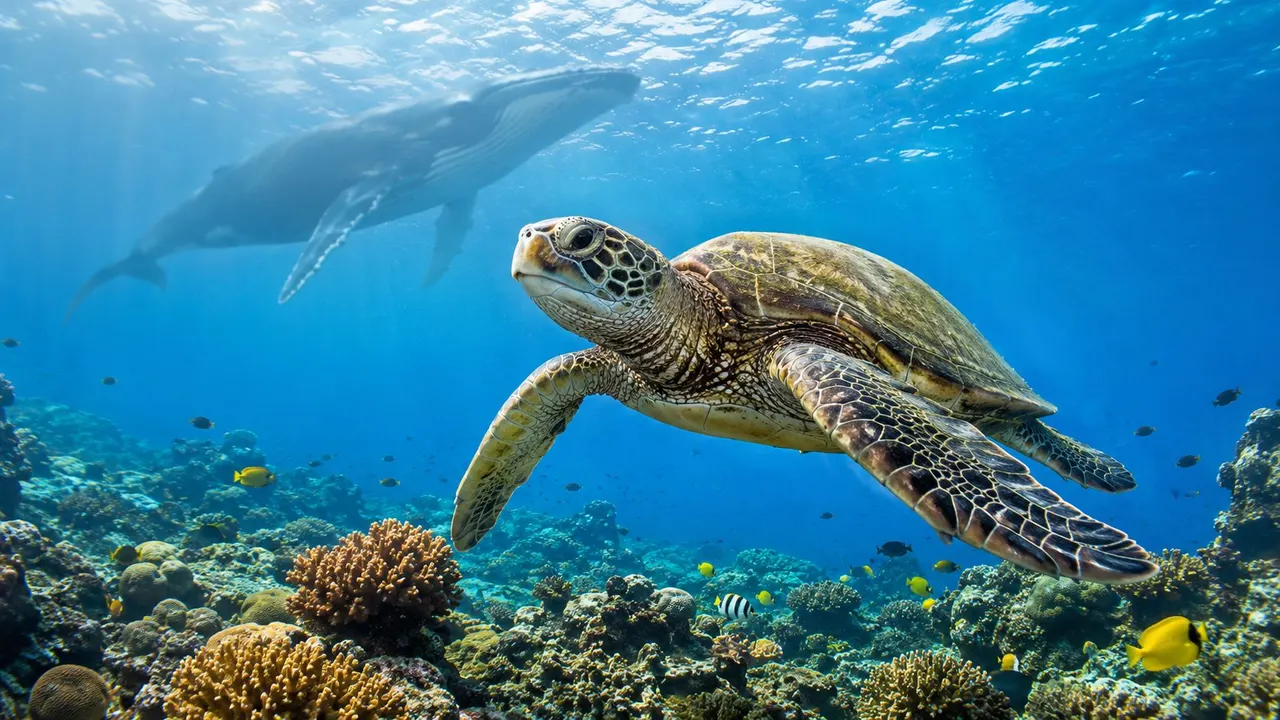
Turtles are the headline animal for many Honolulu snorkel trips, and for good reason. Offshore Waikiki gives visitors access to one of Oahu's most recognizable turtle viewing areas. Turtle Canyons works as a natural cleaning station where reef fish gather around honu, which creates the kind of slow, watchable wildlife behavior that families remember.
Season also shapes comfort and visibility. According to this Honolulu snorkeling article focused on local conditions, the summer months from May through September usually bring the calmest seas and clearest water in Honolulu. That's the sweet spot for families who want the easiest surface conditions and the simplest wildlife viewing.
Hanauma Bay follows a strong seasonal pattern too. The same source explains that summer-only access from May to September is tied to winter swell danger, with winter waves exceeding 10 to 15 feet and creating hazardous shorebreak and currents. That's a useful reminder that “famous snorkel spot” and “safe year-round beginner spot” are not the same thing.
How winter changes the experience
Winter adds another layer to Honolulu United States snorkeling. It's better known for whale watching, but that doesn't mean snorkelers should ignore it. According to this Honolulu snorkeling and whale overlap article, 65% of visitors miss that humpback whales migrate through Turtle Canyon snorkel zones in February, creating the possibility of rare dual-species encounters.
That doesn't mean every snorkel trip becomes a whale tour. It means February can be special for travelers who want turtles in the water and the possibility of whale presence in the same coastal zone. Families who care about marine life variety often love this timing because the trip feels connected to a bigger seasonal cycle.
If whales are a major part of your travel plan, pair your snorkeling research with Oahu whale watching information and, if you want a dedicated outing, consider the Waikiki whale watch tour.
Responsible Wildlife Viewing and Eco Practices
The turtle mistake many visitors don't realize they're making
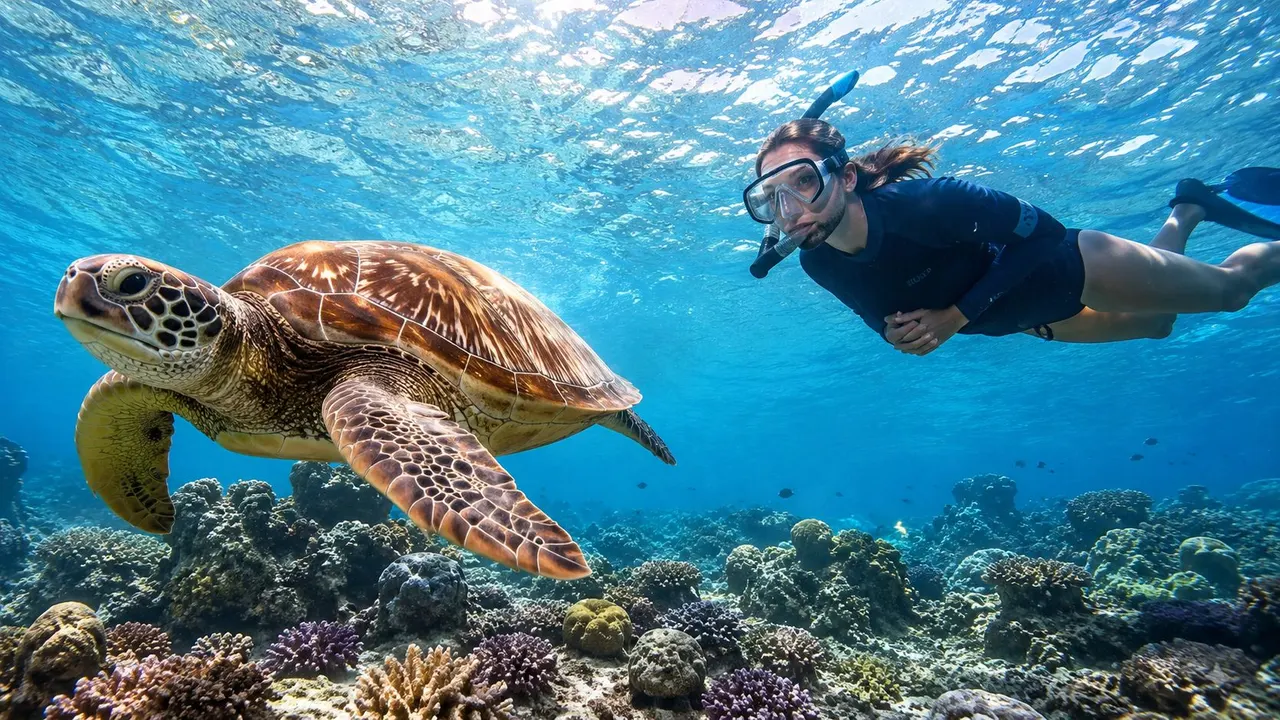
A lot of people think they're being respectful because they don't touch wildlife. That's only part of the job. According to this Oahu snorkeling stewardship guide, 68% of first-time snorkeling visitors accidentally violate turtle protection laws despite believing they are observing responsibly.
The common problem is distance. Visitors drift too close, swim into a turtle's path, or let children approach because the animal looks calm. Calm doesn't mean comfortable. Wildlife needs space, especially in a place as heavily visited as Waikiki.
A simple family rule works well: if you have to wonder whether you're too close, you probably are. Keep your body still, float, and let the turtle decide where to go.
Wildlife reminder: The best turtle encounter is the one where the turtle never has to change its behavior because you were there.
Water quality and camera habits matter too
Another overlooked issue is runoff after rain. The same stewardship source warns that families often aren't told to skip snorkeling after heavy rainfall unless they check real-time water quality conditions. That's practical advice, not fear-based advice. Rain can change what's in the water and what the reef is dealing with.
Two habits help right away:
- Skip post-rain impulse snorkeling: If the weather has been wet, pause and verify local water conditions before you go.
- Control kids near reef and turtles: Children often kick downward when excited. That can damage coral or bring them too close to wildlife.
- Keep photography simple: Don't let the camera turn the animal into a prop.
Photography rules have also tightened. This Oahu snorkel guide says Hawaii's 2025 rules include a ban on underwater selfie sticks and flash photography that disturbs turtles. Since that claim is future-dated in the source, treat it as a 2025 regulation reference rather than something to assume automatically applies in every current situation. The safe practice either way is straightforward: no chasing, no flash, no crowding for a better angle.
Booking and Practical Advice
How early to book
Snorkel planning in Honolulu is easier when you book by season instead of waiting for a free morning and hoping something opens up. According to this Turtle Canyon booking guide, peak periods such as holidays, summer, spring break, and weekend mornings usually require booking 2 to 6 weeks in advance, while slower weekdays often need only 7 to 14 days of lead time.
That timeline makes sense if you think like a family traveler. The most popular departures are the ones with the best morning conditions and the easiest schedule fit. Those are also the departures everyone else wants.
A simple way to decide:
- Traveling during school breaks: Reserve early.
- Want a weekend morning slot: Reserve early.
- Staying flexible on a weekday: You may have a bit more room.
What to bring and how to make the day smoother
A good snorkeling day starts the night before. Set out swimsuits, towels, hats, water, and dry clothes before anyone goes to bed. Families lose a lot of morning calm by hunting for straps, chargers, and snacks while trying to leave on time.
Bring items that reduce friction, not clutter:
- Easy layers: A light cover-up or shirt helps before and after the water.
- Simple footwear: Boat days and beach transitions go better with sandals that slip on fast.
- Water and basic snacks: Especially helpful for kids after saltwater time.
- A dry bag or zip pouch: Phones, keys, and small essentials stay together.
If you're planning a snorkeling-focused outing from Waikiki, the Deluxe Waikiki Snorkeling and Wildlife Cruise is one bookable option for families who want a guided experience.
If you want a Honolulu snorkeling day that's easier to plan and easier for beginners to enjoy, take a look at Living Ocean Tours. Their Waikiki departures, turtle-focused options, and family-friendly boat experiences can help you turn a “maybe we'll snorkel” vacation idea into a smooth, well-timed ocean day.


