
Honolulu Sunset Cruise: 2026 Guide
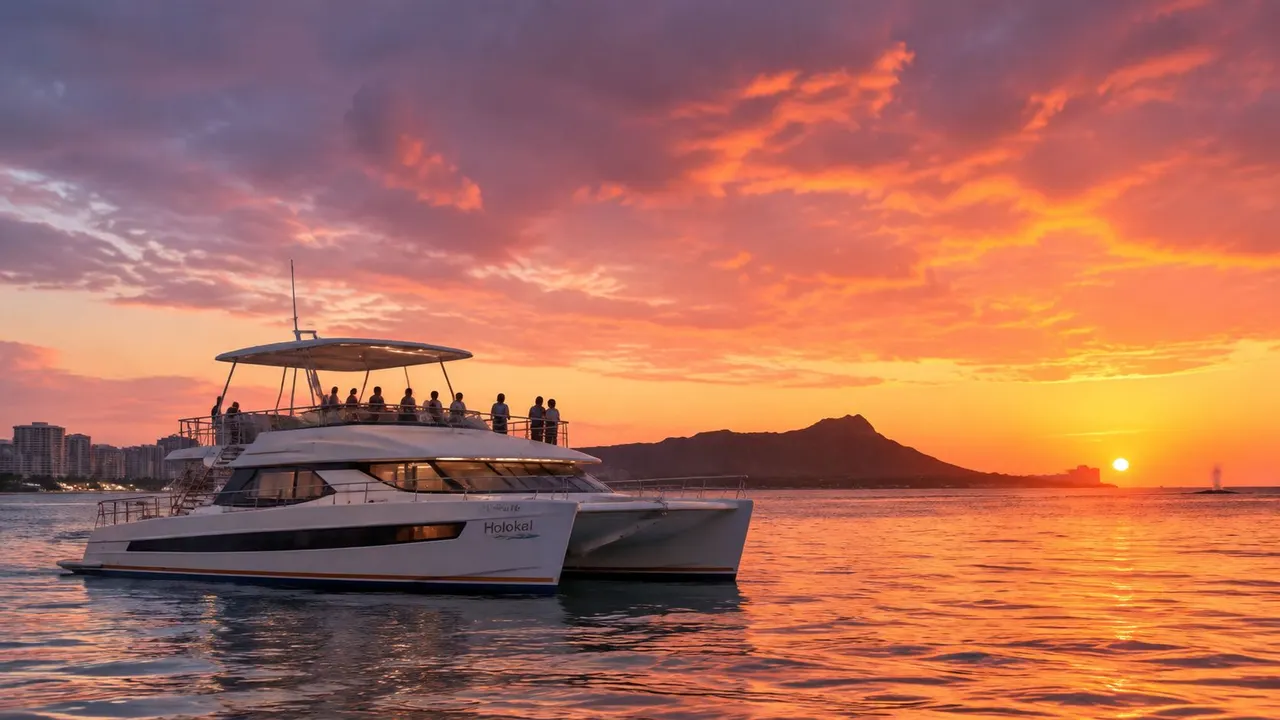
You can spend a whole day in Waikiki and still miss the one hour that feels most Hawaiian, the stretch when the water goes glassy, Diamond Head turns amber, and the skyline starts to light up behind you. If you've already done the beach, the hike, or the shopping, a Honolulu sunset cruise gives the evening a cleaner payoff than another dinner reservation on land. The trick is choosing the right boat, the right departure time, and the right seat, because those details decide whether the night feels effortless or awkward.
Why a Honolulu Sunset Cruise Belongs on Your Itinerary
A couple steps onto the deck just before sunset and the whole mood changes. The beach crowds fade behind you, the horizon opens up, and the view stops being about a single patch of sand and becomes a moving panorama of Diamond Head, the Waikiki skyline, and open water.
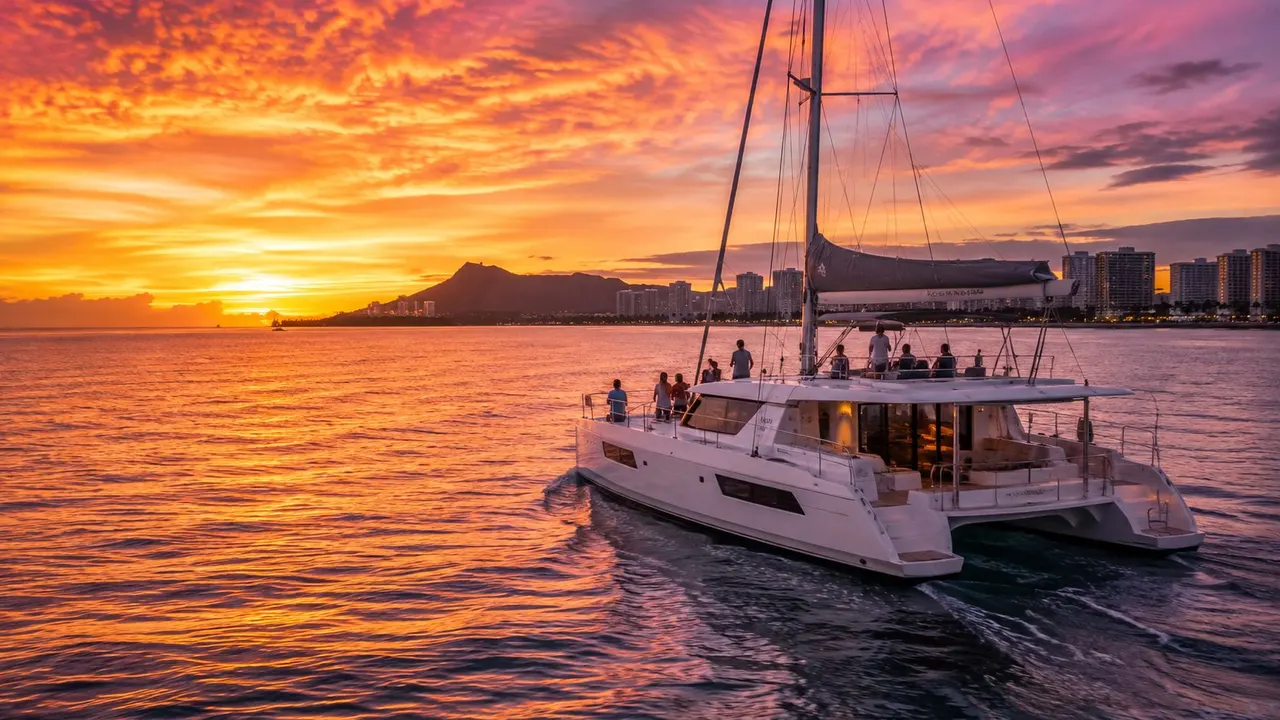
The appeal is simple. From shore, you're one person in a crowd with buildings, umbrellas, and traffic in the frame. From the water, the sunset has room to breathe, and that's why so many travelers remember the evening as the moment the trip finally felt like Hawai'i.
A Honolulu sunset cruise also fits the rhythm of a Waikiki vacation better than a lot of people expect. It doesn't demand a full-day commitment, and it leaves the daytime open for the beach, a hike, or a lazy lunch. For a practical planning lens, this Honolulu activities guide is a useful place to compare evening water time with the rest of your O'ahu schedule.
Practical rule: if you want the classic Waikiki memory, book the view that removes the street noise, the crowds, and the fixed frame of land.
The rest of this guide focuses on the parts that matter on the boat, not the marketing gloss. Timing, vessel stability, seat choice, wildlife expectations, and packing habits all change the quality of the night more than people realize.
What to Expect During Your Sunset Sail
Check-in usually starts on the harbor side, not at some polished resort lobby, so give yourself a little buffer and don't cut it close. At Kewalo Basin, crews want boarding to stay orderly, safety briefings to happen without rushing, and everyone to know where the railings, bathrooms, and bag storage are before the boat leaves.
The onboard flow
Most sunset sails run in the 90-minute to 2-hour range, which is long enough to feel like an outing but short enough to stay easy for mixed-age groups. The first phase is departure, when the boat clears the harbor and heads toward open water. That's the time to settle in, sort your drink, and pick your spot before people start drifting around for photos.
The middle phase is the one people really pay for. Crews position the vessel where the sun angle, skyline, and cloud color line up, then the light gets warmer, lower, and more dramatic. If the cruise is timed properly, the actual sunset happens while you're already offshore, not while you're still leaving the harbor.
The return usually unfolds in softer twilight. That part matters more than first-timers expect, because the afterglow behind Waikiki can be just as photogenic as the sunset itself. A good operator doesn't rush that stretch, and a crowded deck feels very different from a boat where people can still move comfortably.
Amenities vary, but the usual pattern is a casual social setup. Some cruises lean lively with music and drinks, while others are quieter and more reflective. Living Ocean Tours' Waikiki Sunset Cruise seats guide is a smart example of how seat choice can shape the experience before the boat even leaves the dock.
You'll enjoy the night more if you know your vibe before boarding. Drinks and music suit some groups, while others want a calm rail spot and a clear line of sight.
Bring the attitude that matches the boat. If you want a party, choose a cruise that feels social. If you want a clean sunset and a few photos, choose one that emphasizes space and smooth boarding over noise.
Seasonal Timing and Departure Windows
Sunset cruises in Honolulu do not run on a fixed clock year-round, and that is a good thing. Operators track the sun's position through the year and adjust departure times so the boat is offshore during the best light instead of still tied up while the sky starts changing behind you.
In practice, published Waikiki cruises shift from 5:00-6:30 pm in Oct-Feb to 5:30-7:00 pm in Mar-Sept. Another Honolulu operator shifts from 5:15-6:45 pm in fall/winter to 6:00-7:30 pm in spring/summer. That seasonal drift tells you something simple, the right cruise is the one that matches the sunset window, not the one with the neatest round number on the booking page. The timing pattern is laid out clearly in the operator schedule for Waikiki sunset departure times.
A departure that lines up with the season gives you the part of the trip people remember. If the boat leaves too early, the first stretch can feel bright and a little flat. If it leaves too late, you may slide past the warm low-angle light and go straight into twilight before the view really opens up.
Practical rule: book the departure that is meant to straddle sunset, not just the one that looks shortest or cheapest.
That matters in Honolulu because the experience depends on being offshore at the right moment, not just being on the water. From land, the sky can look ordinary and still turn dramatic once you are far enough out to see the color change across the horizon.
Seasonality also affects what else the cruise may deliver. Winter is the better window for humpback whale activity, while the feel of the sea changes with weather and swell through the year. That does not mean summer is dull or winter is rough by default, it means the cruise should be treated as a timed outdoor experience with real conditions, not as a static product.
Motion-sensitive guests should pay attention to timing and vessel choice together. A calm evening on paper can still feel lively on the water if the swell is up, and a boat that rides well for your group matters as much as the sunset itself.
If your goal is a polished sunset, start with the schedule and work outward from there. A good booking choice lines up the boat, the sun, and your dinner plans in one clean sequence.
Choosing the Right Vessel and Seating for Your Group
A sunset cruise can look similar on a booking page and feel very different once the boat clears the harbor. If someone in your group gets seasick, dislikes a crowded deck, or wants clean photo lines without fighting for space, vessel choice matters more than the brochure copy suggests. A trimaran or catamaran usually rides steadier than a single-hull boat because the multihull shape reduces roll, and that difference shows up once you are in exposed nearshore water.
A Waikiki sunset sail marketed through Marriott describes a 41-foot by 26-foot trimaran with nearly 1,000 square feet of deck space and three hulls, and the emphasis on stability is more than a sales line. Another Waikiki operator highlights a 65-foot sailing catamaran with onboard bathrooms and a 1.5-hour itinerary from Kewalo Basin, while a larger Honolulu dinner-cruise vessel is 232 feet long and advertises three types of stabilizers plus ADA-compliant access. Those boats serve different needs, and the differences matter more than whether the listing says “sunset cruise.” For a closer look at the layout and format of one option, see our vessel options.
Seat selection changes the whole ride
The best seat depends on what your group values most. If you want the widest view, the upper deck usually wins. If you want a dramatic forward frame, the bow works well. If shade and a calmer feel matter more, the lower deck is the better pick. For motion-sensitive guests, midship seating is usually the least punishing because pitch and roll tend to be lower near the vessel's center of mass.
That detail rarely gets enough attention in generic listings. A pretty boat can still be the wrong boat for a family with a toddler, an older couple, or anyone who gets queasy in choppy water. Deck area per passenger matters too, because a roomier layout gives people space to move for photos without constantly bumping shoulders.
| Seating choice | Best for | Trade-off |
|---|---|---|
| Upper deck | Wide angles and skyline shots | More exposure to wind and motion |
| Bow | Dramatic forward view | Can feel splashier and less stable |
| Lower deck | Shade and a calmer atmosphere | Fewer open-sky photo options |
| Midship | Motion-sensitive travelers | Less dramatic than the bow |
For groups that need a balance of comfort and flexibility, that simple map is often more useful than boat size alone. A stable vessel with clear sightlines usually beats a fancier one that leaves half the group standing and bracing the whole time.
Wildlife Encounters and Realistic Expectations
A sunset cruise can give you a strong evening on the water, but the wildlife piece is the part that gets overstated most often. The sun setting is predictable if the boat leaves at the right time. Marine life is not.
Living Ocean Tours notes that turtles and dolphins are frequently seen, and humpback whales can be seen from December through April. That seasonal window also matches the broader whale activity people watch for in Honolulu, and it is where an Oahu whale watching tours booking makes more sense if whales are the main reason for going out. A sunset cruise can still deliver a very good evening, but it should be judged as a scenic trip first. If your priority is the skyline, the changing light, and a relaxed run along the coast, that is the right expectation.
How to think about the trade-off
Book for the experience you want. If the goal is a clean view of the horizon, the city lights, and a calm finish to the day, a sunset cruise fits well. If the goal is close attention to marine life, a dedicated whale watch is the better format because the trip is built around finding whales rather than treating them as a bonus.
That distinction saves a lot of frustration. Guests who want a polished evening usually leave happy when the water is clear and the sky cooperates. Guests who expect a wildlife-heavy outing can feel underwhelmed even when the boat, crew, and sunset all do their job.
If wildlife is the mission, a sunset sail should not be your only plan.
Season also matters. Winter gives you a better chance at humpbacks, but a chance is still a chance, not a promise. Outside that window, the cruise should be viewed as a scenic ride with occasional sightings offshore, not as a wildlife excursion with guaranteed encounters.
Used with that mindset, the trip works well. You get the light, the view, and the possibility of spotting movement on the water, without buying into marketing that treats every evening cruise like a marine-life tour.
Booking Tips and What to Pack
Most Waikiki sunset cruises sit in the $50-$100 per person range depending on inclusions, so don't judge value by ticket price alone. A cheaper fare can mean a bar-only setup or fewer extras, while a higher price may reflect a premium boat, more exclusive layout, or private-charter style seating. The spread is wide enough that comparing inclusions matters more than chasing the lowest number.
Book early if you're traveling during a busy holiday window or when your dates are fixed and you want a specific departure time. Sunset cruises are easy to imagine as last-minute plans, but the best slots tend to fill first because they line up with the light, not just with the clock.
Pack light, not perfect
Bring a light layer for the evening ocean breeze, a charged phone, and a waterproof phone case if you plan to shoot a lot of photos. If you're departing early enough for stronger sun on deck, reef-safe sunscreen still makes sense. Cash helps for bar tabs or tips, and motion sickness prevention is worth packing if anyone in your group knows they need it.
A few mistakes show up again and again:
- Arriving too late. Boarding is calmer when you show up early enough to handle check-in without stress.
- Overpacking the bag. Small decks get crowded fast, and extra gear becomes annoying.
- Forgetting the departure point. Kewalo Basin and Waikiki are close, but not interchangeable once you're on a schedule.
- Assuming every cruise has the same vibe. Some are social, others are quieter, and the boat can feel very different.
Families should think through bathroom access, how long kids can stay interested, and whether they need extra layers once the sun drops. Guests with mobility concerns should check boarding height, restroom access, and how much movement the boat requires once underway.
The easiest night is the one you prepare for before you leave the hotel.
Pack for the ocean, not for a photo shoot. That mindset usually leads to a better evening and fewer regrets on the dock.
Why Living Ocean Tours Stands Out
Living Ocean Tours departs from Kewalo Basin Boat Harbor near Waikiki, which keeps the transfer short for hotel guests and avoids wasting the best part of the evening in traffic. The company is also widely known locally for its consistent ocean program, and it's the top-rated and most-reviewed snorkel company on Oahu, which matters because boat operation quality tends to carry across the whole fleet.
Their Waikiki Sunset Cruise runs daily and includes BYOB and cash-bar options, with a format that suits couples, families, and small groups who want a straightforward evening on the water. For larger occasions, the private charter option for up to 40 guests gives you a cleaner fit for birthdays, corporate outings, and family gatherings than trying to stitch together multiple small reservations.
What makes that package practical is the mix of convenience and judgment. The departure is close to Waikiki, the crew knows the coastline, and the company's broader ocean business signals that safety and responsible wildlife viewing aren't afterthoughts.
For travelers comparing options, that combination of daily departure convenience, seating flexibility, and charter capacity makes Living Ocean Tours a clean, workable choice for a Honolulu sunset cruise.
If you want a sunset sail that's timed for the light, easy to reach from Waikiki, and run by a crew that knows these waters, take a look at Living Ocean Tours and compare the departure that fits your schedule. If you're ready to lock in a good evening on the water, check availability now and choose the cruise that matches your group's pace, comfort, and photo goals.


