
Waikiki Sunset Cruise Seating Guide for Diamond Head Views
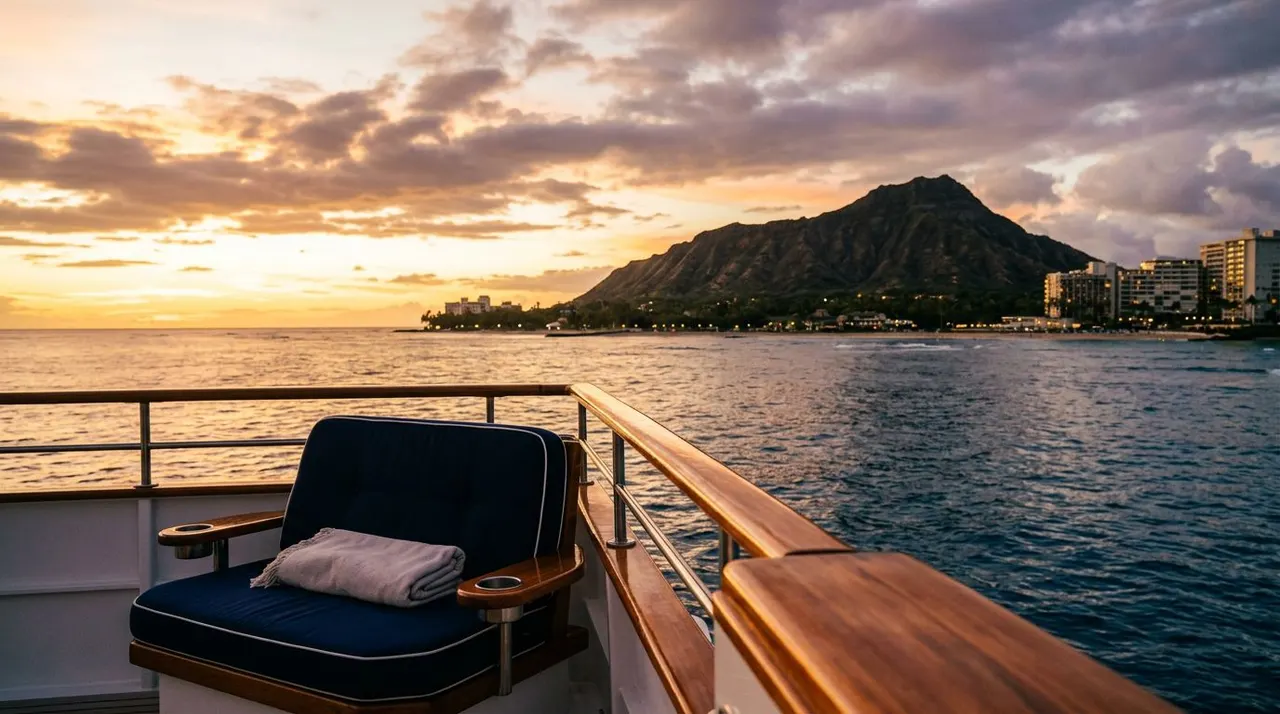
A Waikiki sunset cruise can give you a clear view of Diamond Head, Waikiki Beach, and the changing colors over the Pacific. Your seat still matters. A small shift toward the bow, an open outer rail, or an upper-deck position can change what appears in your photos.
The best place depends on your priorities, including Diamond Head visibility, shade, comfort, photography, and how steady you want the ride to feel. Use this seating guide before you board, then ask the crew about the route and current conditions.
How to Choose Seats on a Waikiki Sunset Cruise for Diamond Head Views
Diamond Head rises east of Waikiki, so the crater often becomes the focal point as your boat travels along the coastline. However, the exact view changes with the route, wind, ocean conditions, and any turns made during the trip.
Start by asking the crew which side of the boat will face Diamond Head during the best light. That question is more useful than relying on a general port-side or starboard-side rule. A vessel may leave Kewalo Basin, travel toward Waikiki, turn offshore, or change direction before sunset.
The forward outer rail is usually a strong choice when you want an unobstructed view. It gives you a wider sightline across the water and often keeps railings, tables, and other passengers out of your photos. The bow can also feel more open, although it may receive more wind.
An upper-deck seat near the outside edge gives you extra height. That elevation helps you see over guests on the lower deck and creates a broader view of the coastline. You may also catch Diamond Head, Waikiki’s shoreline, and the sunset in one frame.
The front of the boat isn’t always the best choice for comfort. If you tend to feel motion on the water, the middle of the vessel usually moves less than the bow. You can still enjoy Diamond Head from a central outer seat while reducing the stronger rise and fall that sometimes occurs at the front.
Ask about the route before choosing a side. The crew knows how the vessel is moving that evening and can point you toward the most useful sightline.
If you arrive early, walk through the available seating area before settling in. Look for a position with a clear view past railings and fixed equipment. Avoid sitting directly behind tall structures, speaker posts, or crowded service areas if photography is your priority.
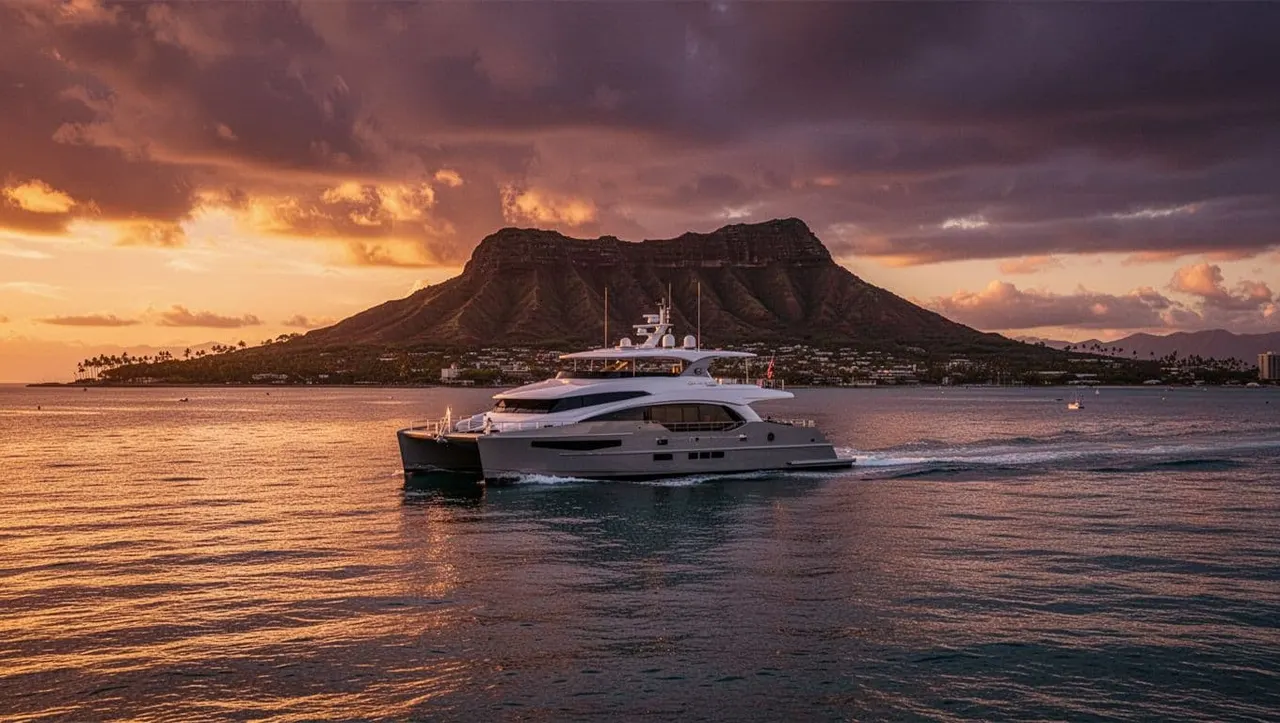
Understand the Boat Layout Before You Board
A double-decker vessel gives you more than one way to enjoy the same sunset. Each deck has a different balance of visibility, airflow, shade, and movement.
Upper deck seating
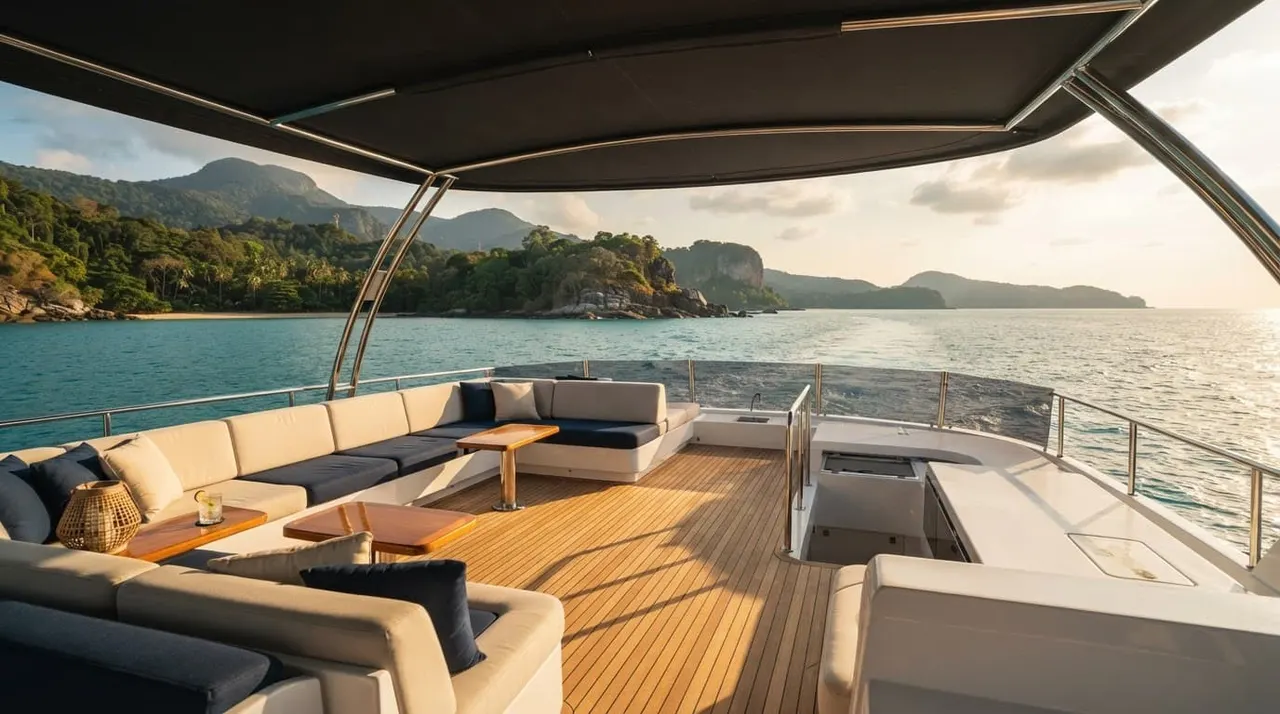
The upper deck is often the first choice for Diamond Head views. You sit higher above the water, which helps you see beyond the lower rail and across the Waikiki coastline. This level also works well for wide landscape photos.
Upper seating usually has more breeze. Bring a light layer if you plan to remain outside after the sun drops. The wind can feel pleasant during the warm part of the cruise, then cooler once the sky darkens.
You should also consider the sun’s position. If the sunset is directly ahead, the upper deck may provide a strong view of the horizon. If sunlight hits the deck from the side, a shaded position can make the experience more comfortable while preserving the same coastal scenery.
Lower deck seating
The lower deck is a practical choice for families, guests who want shade, and anyone who prefers easier access to restrooms or onboard amenities. You may have a more protected ride, especially when the wind increases.
A lower outside seat can still provide a good Diamond Head view. Try to sit near an open side rather than behind a solid panel or crowded interior area. A seat slightly behind the bow can offer more stability without giving up the coastline.
Bow, stern, and center positions
The bow creates a sense of open space and can provide attractive forward-facing photos. It may also feel windier and more active when the boat moves through small waves.
The stern gives you a view of the wake and the coastline behind you. It is a good position when you want a quieter area or prefer to watch the boat’s path across the water. Diamond Head may move out of your frame as the vessel changes direction.
The center is the most balanced location. It usually offers a steadier ride, quick access to both sides, and less need to move if the best view shifts during the evening.
Match Your Seat to the Evening You Want
There isn’t one perfect seat for every guest. Couples often want open views and a private-feeling corner, while families may value shade, stability, and quick access to amenities.
| Your priority | Seat to consider | Main tradeoff |
|---|---|---|
| Clear Diamond Head photos | Upper outer rail near the front | More wind and sun exposure |
| A steadier ride | Center section near the middle | Less dramatic bow perspective |
| Shade and comfort | Lower deck outer seating | Lower camera angle |
| Sunset atmosphere | Forward-facing upper deck | More people may gather there |
| Easy access for children | A central lower-deck position | Some views may be partially blocked |
| A quieter conversation | Stern or side seating away from service areas | Diamond Head may not stay in view |
For a romantic evening, choose two seats along an outside rail with enough room to look in the same direction. Sitting beside each other helps you share the view instead of taking turns around a table.
Families with young children may prefer the center of the lower deck. You can keep children close, move around more easily, and avoid the strongest breeze at the front. If your children want to see Diamond Head, stand with them briefly at the rail when the crew confirms the view is clear.
Guests who want to move between photography and relaxation should avoid committing to a single corner too early. Reserve a comfortable base, then step outside for photos when the light reaches its strongest color.
Timing, Light, and Route Matter More Than a “Perfect” Seat
Sunset changes throughout the year, so your ideal arrival time changes with it. Check the local sunset time for your date, then allow extra time for parking, walking to the harbor, check-in, and boarding.
A seat that looks ideal in full daylight may feel different after sunset. The side facing the setting sun can become bright and difficult to photograph at first. Later, that same direction may hold the richest orange and pink tones.
Diamond Head often photographs best when the sky still has some light. If you wait until the sun has disappeared completely, the crater may become a dark silhouette. That can look dramatic, but you lose detail in the ridges and slopes.
Plan to take your main Diamond Head photos during the final part of daylight. Afterward, put your phone away for a few minutes and watch the shoreline without a screen in front of you.
The route also affects your composition. A boat farther offshore can place Diamond Head against more open sky. A closer route may show the crater alongside Waikiki hotels, palm trees, and the beach. Both views tell a different story.
A catamaran Waikiki sunset guide can help you understand how coastal boat trips frame Diamond Head from the water. A separate Waikiki sunset cruise guide is useful when comparing general cruise features, departure settings, and views.
Avoid choosing your position only by the promised sunset direction. Ask what you can see during the entire cruise. Diamond Head, Waikiki Beach, the Honolulu skyline, and the open ocean may each become the best view at a different point.
Why Living Ocean Tours Works Well for a View-Focused Cruise
Living Ocean Tours departs from Kewalo Basin Boat Harbor, a convenient location just minutes from Waikiki Beach in Honolulu. That makes the trip easier to fit into an evening when you don’t want a long transfer before or after the cruise.
The company operates custom-built, Coast Guard-inspected double-decker vessels named the Coral Kai and the Lokahi. Both boats include shaded seating, onboard restrooms, dry storage, and heavy-duty ladders for safe water entry on applicable excursions.
For a sunset cruise, comfort matters as much as the horizon. The Coral Kai offers broad open-deck space for guests who want fresh air and expansive views. The Lokahi includes a SeaKeeper vessel stabilization system, which helps reduce rolling and can make the ride more comfortable for guests who are sensitive to motion.
The exact vessel can depend on the scheduled departure, so check your booking details if a particular feature matters to you. Either way, arrive with a clear idea of whether you want the upper deck, shade, an outside rail, or a center position.
Living Ocean Tours offers Waikiki sunset cruise options with BYOB and cash-bar formats. That gives you a choice between bringing a preferred beverage or ordering from the boat, depending on the cruise you select. Check the current tour details before you pack drinks.
The company is also the only tour company with professional snorkel guides. Those guides bring marine knowledge and safety experience to the company’s ocean activities, which helps first-time guests feel more comfortable around the water.
You can browse the full range of Living Ocean Tours experiences before selecting your evening. The lineup includes ocean excursions designed for families, couples, swimmers, and guests who want a relaxed view of the Waikiki coast.
Living Ocean Tours also emphasizes responsible wildlife viewing. Keep your hands off marine animals, coral, and other natural features. Observing without touching protects Hawaii’s fragile reef environment and gives other guests the same chance to enjoy it.
Capture Diamond Head Without Missing the Sunset
The best sunset photo often comes from a simple setup. Clean your phone lens before boarding, then switch to a wide lens if your device has one. A wide view can include the crater, sky, ocean, and part of the boat without forcing you to stand too far back.
Keep the horizon level. Boat movement makes tilted photos common, especially when you hold the phone quickly at the rail. Use the grid feature if your camera offers one, and brace your arms gently against your body.
Avoid using flash. It won’t light Diamond Head, and it can distract nearby passengers. Instead, tap the sky or crater on your screen and adjust exposure until the silhouette retains some detail.
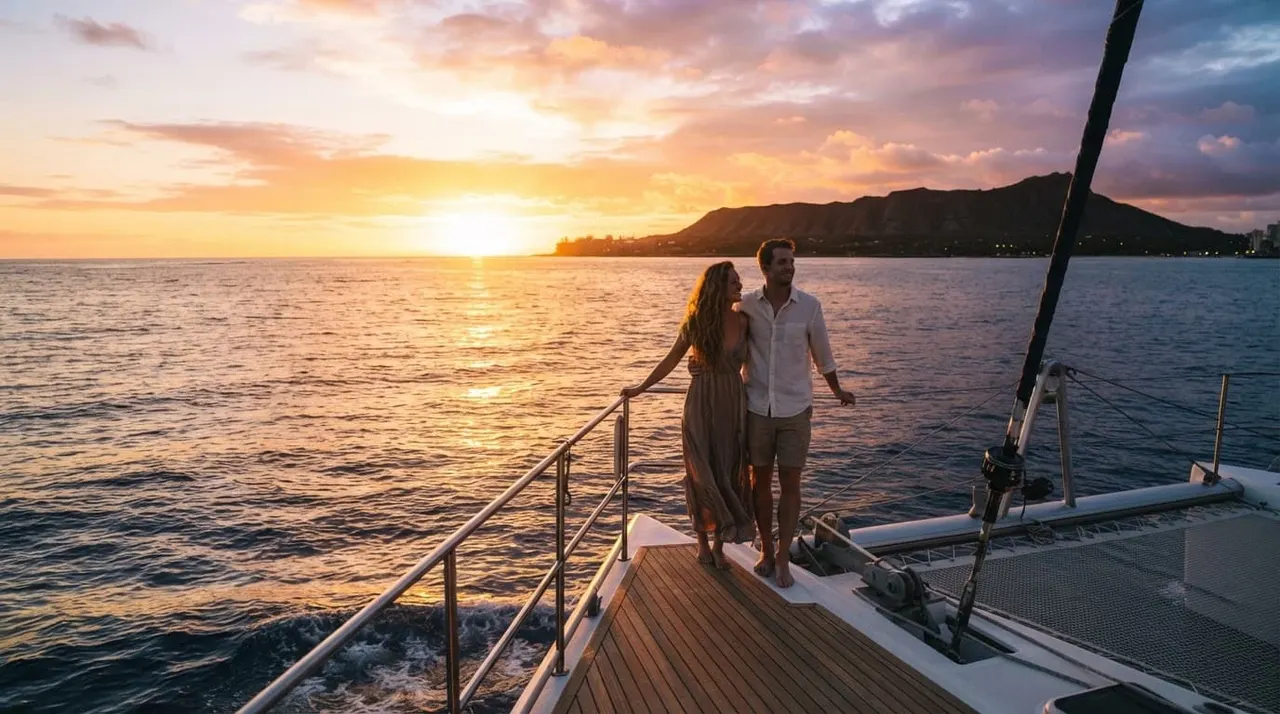
If you photograph another person, place them slightly to one side rather than directly in front of the crater. That composition leaves room for Diamond Head and gives the image a stronger sense of place.
The boat itself can add context. Include a section of rail, a sail, or the wake when it doesn’t block the view. Your photo will feel connected to the cruise instead of looking like a land-based image taken from the beach.
Use the front-facing camera only when you want a quick group shot. For the strongest landscape image, turn toward the coastline and ask another passenger or crew member to help when conditions allow. Keep your phone secure and step away from the edge when the boat moves.
Public passenger photos, such as those in this Diamond Head sailing review, can also give you ideas for framing the crater from the water. Use them as inspiration, not as a promise of the exact angle on your departure.
Book the Right Seating Experience
When you compare a Waikiki sunset cruise, look beyond the phrase “Diamond Head views.” Check the departure harbor, vessel amenities, beverage policy, cruise length, and seating arrangement.
Ask these questions before you book:
- Does the cruise use open seating, assigned seating, or a mix of both?
- Which deck offers shade and which deck has the clearest open-air views?
- Does the route usually travel along Waikiki toward Diamond Head?
- Is the cruise BYOB, cash bar, or another format?
- How early should you arrive for check-in and boarding?
- Which vessel is scheduled, and does it have stabilization features?
If the operator doesn’t assign seats, arrive early enough to choose your preferred position. A few extra minutes at the harbor can give you more control over shade, rail access, and proximity to your group.
Wear comfortable clothing that can handle a breeze. Bring sunglasses for the brighter part of the trip, a light layer for the return, and a secure case or strap for your phone. Keep bags compact so they don’t take up valuable seating space.
Guests who are prone to seasickness should eat a light meal, drink water, and choose a center position. The middle of the boat usually has less motion than the bow or stern. If you feel uncomfortable, tell the crew early rather than waiting for symptoms to become stronger.
For current dates and open spaces on the Living Ocean Tours Waikiki sunset cruise, use the booking option below.
Conclusion
The strongest Diamond Head seat combines an open sightline with the comfort level you can enjoy for the whole trip. Choose the upper outer deck for height and photos, the center for a steadier ride, or shaded lower seating when comfort and family access matter most.
Ask the crew about the route before you settle in, then watch the light as much as the camera screen. On the right Waikiki sunset cruise, your best view may be the moment Diamond Head becomes a dark silhouette against a glowing Pacific sky.


