
Honolulu Sunset Cruise: Top Tips for 2026
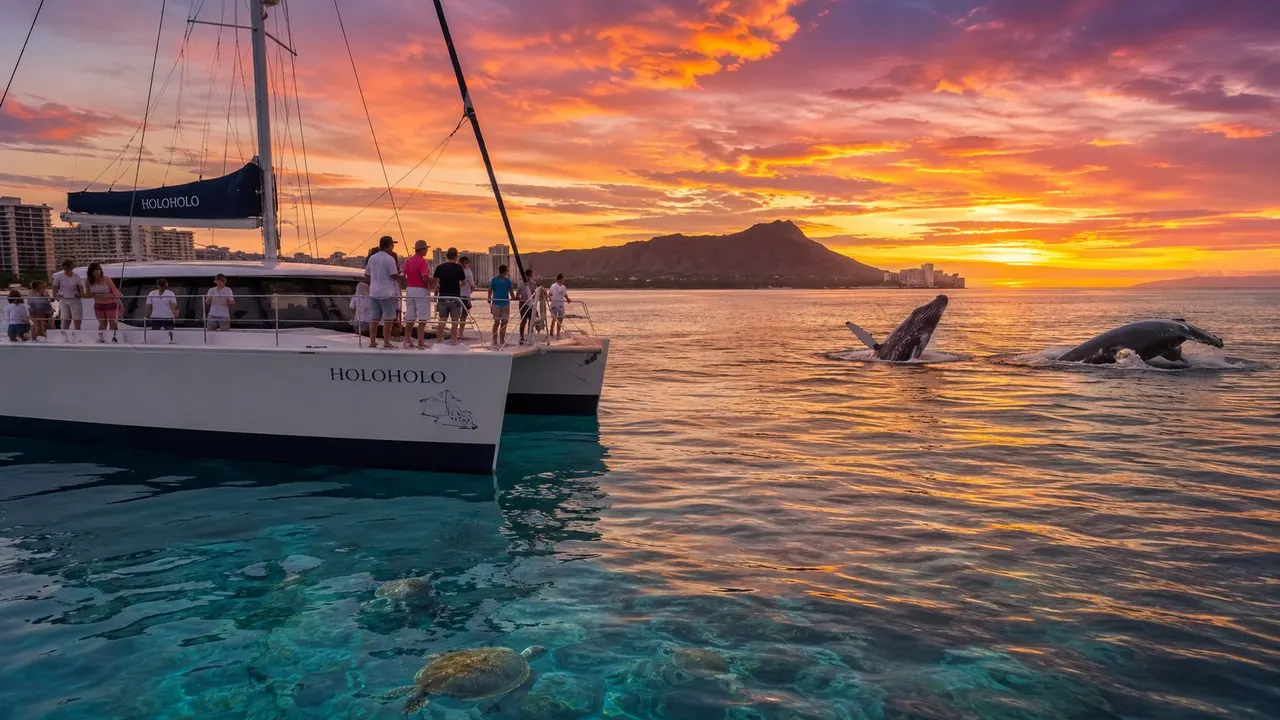
You're usually deciding on a Honolulu sunset cruise while dinner plans, hotel pickup, and the rest of the night are still up in the air. That's why the right choice isn't just “which boat looks nicest,” it's how much time you want on the water, where you want to sit, and what season you're sailing in. The trip is short, the light changes fast, and the details matter more than you might expect.
What a Honolulu Sunset Cruise Actually Feels Like
The first thing you notice is that Waikiki looks different from the water. Diamond Head sits off the shoulder of the skyline, the boats settle into a steady path, and the whole harbor scene softens as the sun starts dropping behind Honolulu. On a good evening, the Pacific shifts from bright blue to copper, then to that darker reflective surface that makes the city lights feel closer than they are.
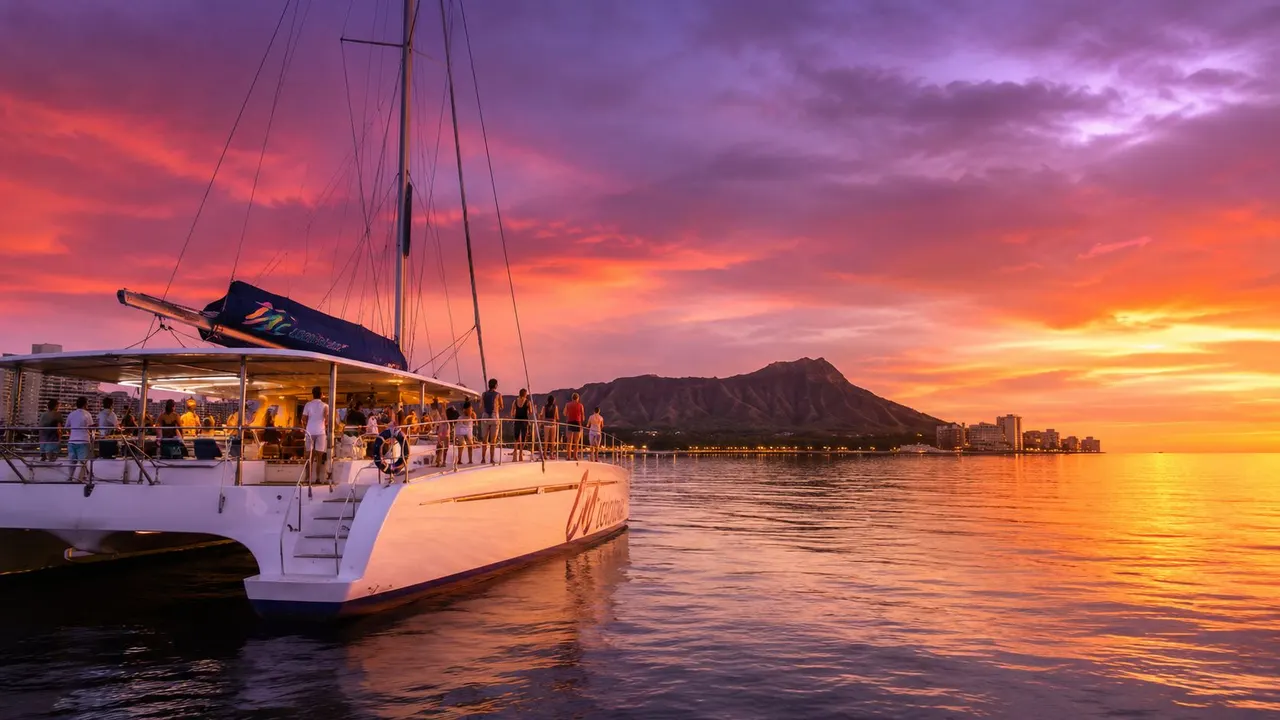
That's the core appeal of a Honolulu sunset cruise. Most are short, scenic outings, not all-night voyages, and the typical window is about 60 to 120 minutes, with many operators clustering around 2 hours and some first-timer-friendly sails marketed at about 90 minutes (waikiki-beach.org, Living Ocean Tours duration guide). The short format is the point. You're buying a concentrated stretch of light, skyline, and open water, not a dinner theater on a boat.
A sunset cruise works best when you treat it like a golden-hour break, not a full evening plan.
That framing matters because expectations shape satisfaction. If you want a relaxed pause between beach time and dinner, a sunset sail fits naturally. If you're expecting a long event with multiple course service and hours of entertainment, you'll probably feel rushed. For non-swimmers, families, and casual travelers, the experience still works because nobody has to dress for a formal outing or commit to a long night at sea. One practical reference point for that kind of traveler is the local guidance on non-swimmer-friendly boating options, including how boat time feels when the goal is being on the water, not getting in it, on Living Ocean Tours' non-swimmer guidance page.
Timing, Duration, and the Daily Light Window
A Honolulu sunset cruise works best when you plan from the light backward. In Honolulu, departure windows change with the season, and operators adjust for that shift. One operator lists sails from 5:00 pm to 6:30 pm from October to February and 5:30 pm to 7:00 pm from March to September, while local travel guidance says to board 30 to 45 minutes before sunset if you want the full color change in the sky (Sail Holokai schedule, Living Ocean Tours' sunset times page). The boat follows the light window, not the other way around.
What that means in practice
A 90 to 120 minute cruise usually gives enough time for the boat to clear the harbor, settle into open water, and still catch the strongest part of the sunset. Push much longer, and the outing starts to feel more like a full evening on the water. Go much shorter, and you may spend more time boarding and idling than watching the sky change. For first-time riders, the practical sweet spot is about 90 minutes (Living Ocean Tours duration guide).
That short window shapes the rest of the evening. Check-in usually happens before the best light arrives, and the boat should already be underway when the horizon starts to change. If you are staying in Waikiki, the lead time is manageable, but it still leaves little room for late arrivals, a snack stop, or a last-minute change of clothes. Oahu cruise guidance also notes that sunset sails run year-round, with departure times shifting as daylight changes (Honolulu Travels guide).
Plan a sunset cruise like a timed experience with a fixed start and a fast-moving light show.
Missing that window is the easiest way to ruin the trip. The sky does not hold its colors for late arrivals, and the best photos usually happen early in the transition, before everyone has settled in. Timing is not a side detail here. It is the part that determines whether the cruise feels sharp and well-paced or rushed and half-missed.
Who a Sunset Cruise Is Best For
A Waikiki sunset sail is broad-audience by design. Many listings advertise all-ages access on most days, and some allow children from infancy while others set minimum age thresholds, which tells you the product is meant for mixed groups rather than nightlife-only crowds (Sail Holokai family access guidance). That makes it a good fit for people who want a shared experience without needing everyone in the party to have the same energy level or travel style.
Different groups want different versions of the same trip
For families, the key is predictability. A short cruise works because kids don't have to stay engaged for hours, and adults aren't trying to juggle a full evening outing after a day in the sun. For couples, the appeal is the clean, uncluttered view of the skyline and the water. You're not fighting beach crowds or restaurant noise, and the boat naturally creates a slower pace.
For friend groups, the boat becomes a social setting without requiring a big production. People can talk, take photos, and keep the vibe casual. For multi-generational travelers, comfort matters more than spectacle. The best fit is usually a cruise that keeps boarding simple, doesn't demand swimming, and gives everyone a place to settle in without feeling boxed into one side of the boat.
The right cruise for motion-sensitive riders is usually the one with the shortest, smoothest, least complicated setup.
That's also where the BYOB or cash-bar question comes in, because atmosphere affects the evening more than most marketing pages admit. A calmer cruise can be a better match for non-drinkers, grandparents, or parents managing younger kids, while a more social boat will suit groups celebrating something. The useful question isn't whether a sunset cruise is “for everyone,” it's whether your group wants a quiet, scenic ride or a more festive one.
Seasonal Highlights and the Whale Window
Summer and winter both work, but they don't feel the same. In summer, daylight lasts longer and the water is typically calmer, which helps travelers who care most about smoother motion or easier boarding. In winter, sunset comes earlier, the light can feel more dramatic, and the evening sky often changes faster, which is useful if photography is a priority (Hawaii Activities seasonal guide). The trade-off is simple, you're choosing between a gentler ride and later light, or a more dramatic sky with an earlier departure.
Why winter changes the equation
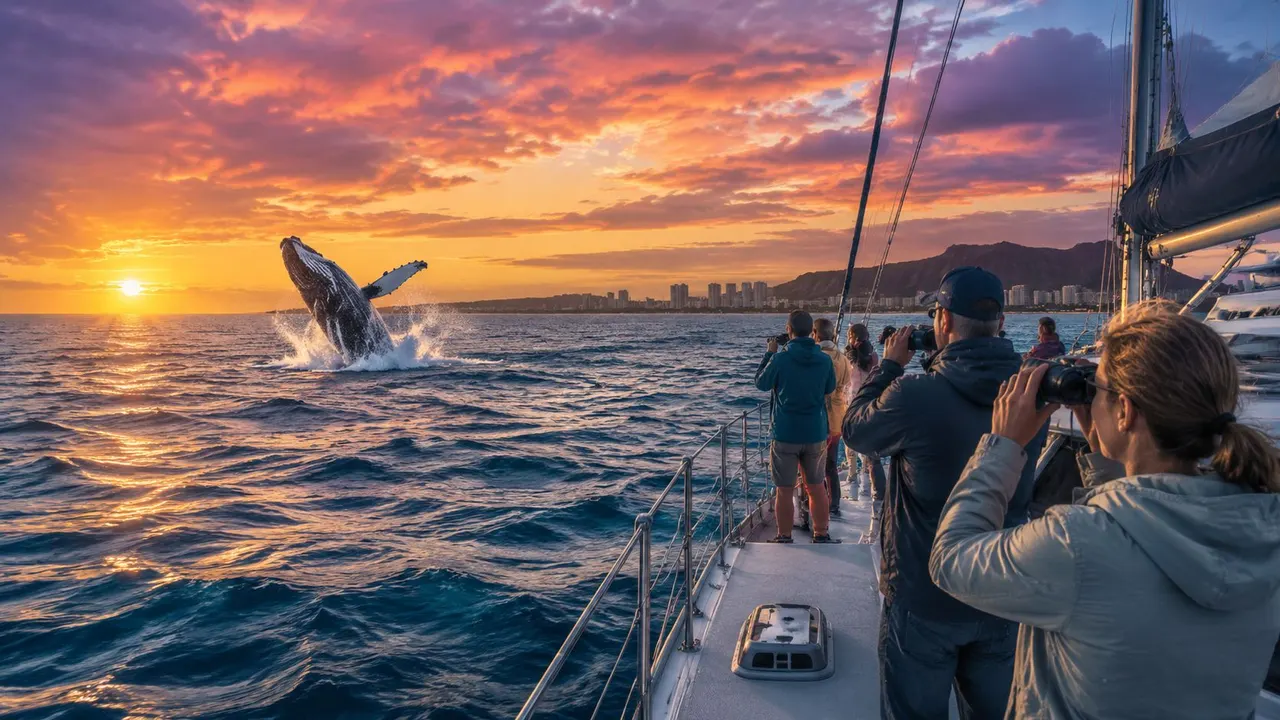
From January through March, humpback whales are part of the conversation in Hawaiian waters, and that changes what people notice from a sunset boat. You're not just watching the sky. You're also scanning for spouts, tail lifts, and surface movement while the light is still good enough for visible contrasts. Living Ocean Tours also runs a seasonal whale watch tour during that broader winter period, which makes the timing of a sunset cruise especially relevant for guests who want a second marine-life option without losing the sunset focus (Living Ocean Tours whale watch season).
The route matters here too. A Kewalo Basin / Waikīkī departure pattern reduces deadhead time compared with farther harbors, which leaves more usable time on station for skyline and wildlife viewing. That efficiency is one reason local operators depart from Kewalo Basin or nearby access points instead of pushing guests through a longer transit before the actual scenic part begins (Hawaii Nautical Kewalo Basin departure discussion). For a winter cruise, that matters because the whale window and sunset window are competing for attention in the same short trip.
If you want calmer water, lean summer. If you want the most dramatic visual payoff, winter usually gives you more to look at.
That doesn't make one season “better.” It makes the trade-off clearer. Summer is steadier. Winter is moodier and more visually layered.
Logistics, BYOB, Accessibility, and What to Pack
The practical side of a Honolulu sunset cruise is where a lot of first-timers make mistakes. Kewalo Basin operators often run a tight check-in window, with some listing arrival cutoffs as early as 20 minutes before departure and boarding closure 10 minutes prior (Hawaii Nautical logistics). That means “we'll get there close enough” is a bad plan. If you're coming from Waikiki hotels, build in the drive, parking, and walking time so you're not sprinting to the dock with a bag in one hand and sunglasses in the other.
What to bring and what to leave behind
The basics are simple:
- A light layer for after sunset, because it can feel cooler once the boat is moving.
- Sunscreen and a hat, since late afternoon light still hits hard on the water.
- A phone or camera, ideally ready before boarding.
- A small bag, since you won't want to juggle extra items on deck.
- Any motion remedies you already trust, especially if you know you're sensitive to movement.
Living Ocean Tours' Waikiki Sunset Cruise departs from Kewalo Basin Harbor at 1125 Ala Moana Blvd, Slip B-01, Honolulu, HI 96814, which is useful because that exact address determines your evening timing and how long it takes to get from your hotel (Living Ocean Tours departure location). If you're staying near the main Waikiki strip, that harbor choice usually keeps transit manageable, but it still deserves real planning.
The BYOB question also matters. Some travelers want a quiet, low-key ride. Others want a social drink-and-watch-the-sky set-up. Living Ocean Tours' BYOB sunset cruise page gives guests a straightforward way to understand that option before they arrive, which helps avoid surprises at boarding (BYOB sunset cruise page).
Pack for movement, wind, and short notice photo opportunities. That covers most of what people forget.
Accessibility is also part of logistics, not an afterthought. If someone in your group has mobility concerns, ask directly about boarding steps, rail height, and seating before you book. The right cruise is the one your whole party can enjoy, not just the one with the prettiest promotional photo.
Choosing the Right Seat and Boat for Your Goals
On a short Honolulu sunset cruise, seat choice affects the whole trip more than many guests expect. If the outing lasts about 1.5 hours in some cases, or roughly 2 hours in many others, there is not much room to recover from a bad spot once the boat clears the harbor. A bow seat feels very different from a mid-ship seat, and a side rail changes what you can see and how steady the ride feels. That makes the first decision less about the brochure and more about where you want to spend the evening.
Best positions for different goals
Living Ocean Tours' seating guidance points to upper deck, mid-ship as the best balance of height and steadier motion. That position usually gives a good view without as much side-to-side movement. The bow gives a more open, dramatic perspective, which works well if you want the skyline ahead and do not mind more spray or motion. Side rails suit guests who want cleaner skyline lines and better wildlife shots without constantly shifting position.
Living Ocean Tours seating guide is useful because it turns seat choice into a practical call instead of a guess. Couples who want a quieter corner often do better away from the busiest traffic path. Families usually want a steadier spot with easy access to railings and bathrooms. Guests who care most about photos should favor a position with clear sightlines over a spot that looks good in a deck plan but forces them to keep turning.
Boat layout matters just as much as the exact seat. A smaller boat can feel more intimate, but it may leave fewer good options if someone is sensitive to motion. A larger catamaran usually gives more room to spread out, which helps families and mixed-age groups settle in without crowding. Living Ocean Tours' broader Honolulu snorkel company experience shows up here too, because an operator that runs different trip types daily tends to understand how layout, motion, and guest comfort interact in real conditions (Honolulu snorkel company).
For photos, position matters more than gear.
The best seat is the one that fits the group. A couple chasing sunset pictures may want a quiet corner with open sightlines. Parents with children often prefer a stable area where they can keep hands on rails and move around less. Celebration groups usually do better on boats that let people circulate without blocking everyone else's view. If you treat the cruise as a short-window decision problem, you stop choosing by appearance alone and start choosing by motion, layout, and what the boat lets you do once you are underway.
Why Living Ocean Tours Stands Out in Waikiki
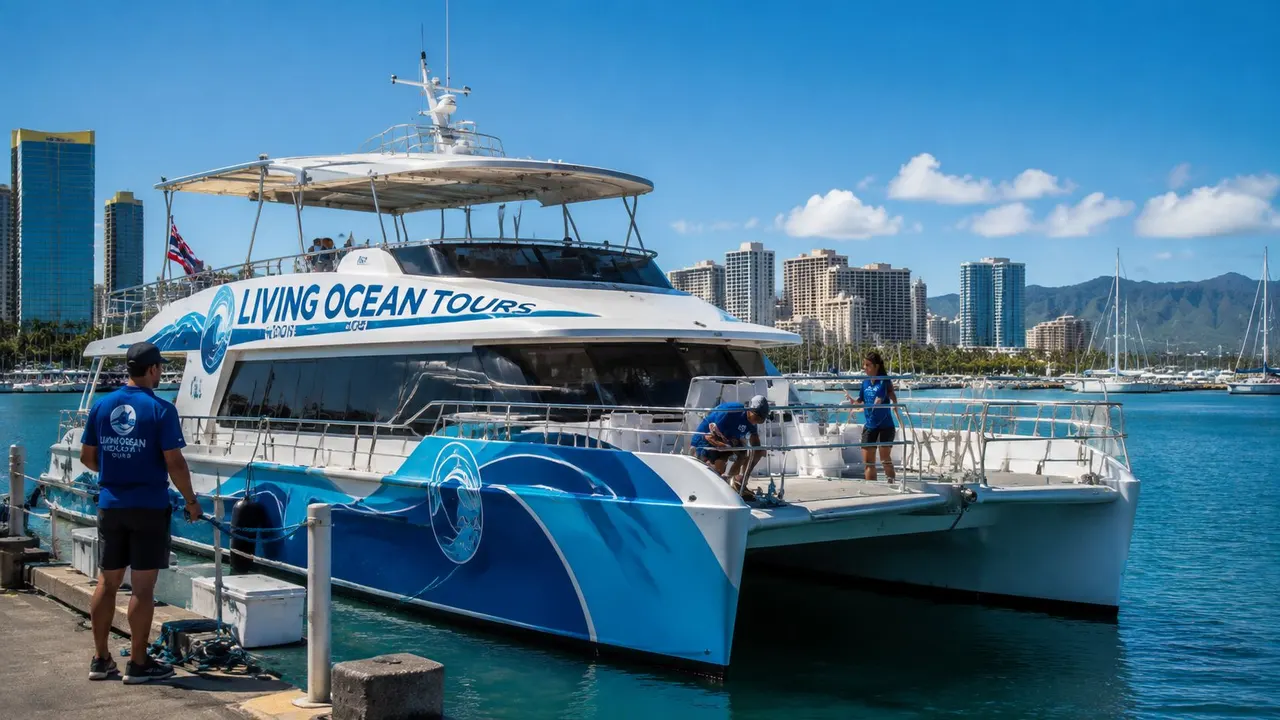
Living Ocean Tours is a practical choice for this kind of outing because the company builds around the same constraints that matter most to guests, especially Kewalo Basin departure logistics, short-trip timing, and mixed-audience comfort. The company also says it is the top rated and most reviewed snorkel company on Oahu, which signals a consistent stream of guest feedback across its offerings, including the sunset cruise. That matters because an operator that runs boats every day learns quickly where the friction points are.
How the product mix fits different goals
The sunset cruise is one part of a broader lineup that also includes the Turtle Canyons snorkel excursion and a seasonal whale watch. That gives travelers a clean way to match the outing to the goal, sunset views for a short evening plan, turtles for snorkel-focused guests, and whale encounters in season. Living Ocean Tours also emphasizes responsible wildlife viewing, which is the right approach for guests who care about marine life and don't want the experience to feel rushed or intrusive.
The broader fleet matters too. Families and beginners often prefer boats with more room to settle in, and the company's snorkel offerings include kid-friendly extras like a waterslide, water trampoline, and lily pad on the Deluxe Waikiki Snorkel & Wildlife Cruise, which gives a useful signal about how the operator thinks about mixed-age comfort. That same practical mindset carries over to sunset sailing.
If you want a local operator reference point, Living Ocean Tours' Honolulu snorkel company page gives a sense of the company's range without turning the sunset cruise into a hard sell.
The value isn't just the boat. It's whether the operator already understands Kewalo Basin timing, short trip windows, and how different passengers actually use the deck.
That's why this company stands out in Waikiki. It aligns with the decisions people are making, not just the marketing language they're reading.
Booking Your Cruise and Common Questions
If you're traveling during peak whale season or over a holiday, reserve early. The good seats and the smoother dates go first, and a short cruise doesn't leave much flexibility if your preferred evening sells out. Use the Check Availability button on the Waikiki Sunset Cruise page to lock in your date without back-and-forth email threads.
Common questions usually come down to weather, cancellation policy, and whether the cruise still works for people who don't drink. The short answer is yes, it can. A calmer BYOB setup still gives non-drinkers the same skyline and sunset payoff, and weather calls are part of normal ocean operations, so it's smart to confirm the day-of policy when you book.
If you're still weighing dates, think in terms of timing, seat comfort, and season, not just boat style. That's the difference between a decent evening and one that feels dialed in.
If you want a straightforward way to plan your evening on the water, Living Ocean Tours runs Waikiki sunset cruises from Kewalo Basin with BYOB options and a local crew that knows how the light changes offshore. Visit Living Ocean Tours to check dates, compare the sunset cruise with other Oahu outings, and choose the trip that fits your timing best.


