
Hawaii Whale Watching Peak Season: Best Months and Times
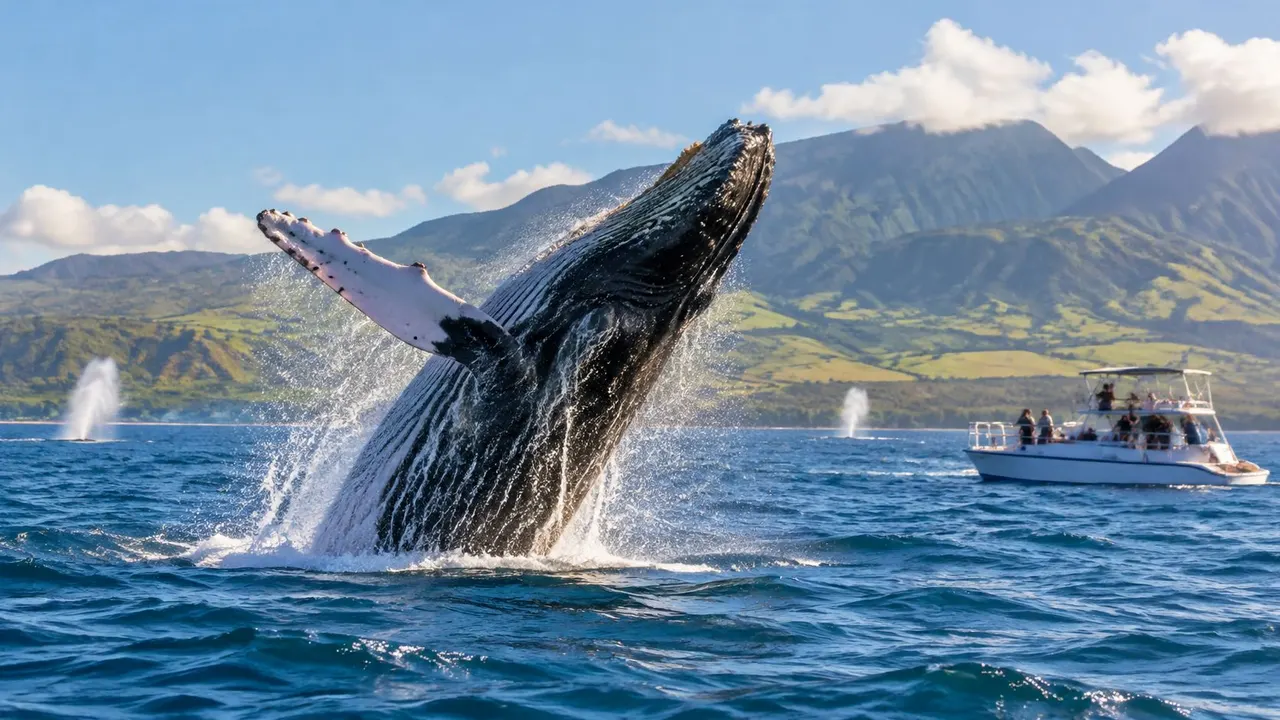
Table of Contents
- Humpback whale activity and sighting outlook by month
- How to choose your week
- Oahu and Maui whale watching compared
- Compare the outing, not just the island
- Best time windows for whale sightings
- Read the forecast for viewing conditions
- Recognizing what you're seeing
- Plan the protected space into the trip
- When a whale approaches on its own
- The Waikiki tour details
- Make the booking work for everyone
- What if no whales show up on my date?
- Is November or May worth a trip?
- Does booking early matter outside the peak?
- Can I bring a baby on the Waikiki tour?
January through March is Hawaii's peak whale-watching window, when humpback whales are most concentrated around the islands, within the wider November through May operating season. Plan around the month first, then choose a departure that lets you watch patiently from a lawful distance.
The scale of the migration is remarkable: NOAA's sanctuary boating guidance estimates that as many as 12,000 humpbacks, more than half of the North Pacific population, may use Hawaiian waters during the winter season. That's a statewide estimate, not a promise about what any particular boat will encounter.
For families visiting Waikiki, the most useful preparation isn't chasing a close-up photograph. It's understanding when whales arrive, how weather affects visibility, and why a captain who gives whales space can provide a more rewarding wildlife experience.
Peak Months and Week-by-Week Whale Activity
January through March offers the strongest seasonal basis for planning a whale watch. The NOAA Ocean Service sanctuary overview identifies this as the peak viewing period, with humpbacks generally arriving in November and remaining through April within a broader November through May operating season.
These whales aren't year-round residents waiting offshore for tour boats. They migrate to Hawaii to breed, give birth, and nurse calves. That explains why winter viewing can include social interactions, competition among males, and mothers traveling with their young.
Humpback whale activity and sighting outlook by month
The month-by-month outlook is a planning guide, not a timetable that every whale follows.
Don't read a monthly pattern as a week-by-week forecast. The seasonal evidence supports a broad winter peak, but it doesn't establish a particular week when calves become easiest to see or a final week when sightings suddenly decline.
For example, a family choosing between an early-season holiday and a midwinter trip should favor midwinter if whales are the main reason for traveling. A family already committed to an early-season visit can still consider a tour, but should treat the encounter as a possibility rather than the centerpiece of a guaranteed itinerary.
How to choose your week
A late-January or mid-February departure is a sensible planning choice within the established peak, rather than a scientifically proven winning week. March is also a worthwhile alternative within that same peak window.
Keep some flexibility within your vacation. Whale distribution, surface behavior, and ocean conditions change, so a good month doesn't make every departure equally productive.
Planning rule: Choose the core winter season for the strongest biological opportunity, then leave room in your itinerary for weather and wildlife to behave naturally.
A quiet trip doesn't necessarily mean the season has ended. Whales may be present without breaching, and a careful observer can have a meaningful encounter through blows, backs, and repeated surfacing rather than a dramatic leap.
Maui and Oahu Whale Watching Compared
For visitors staying in Honolulu, Kewalo Basin Boat Harbor near Waikiki Beach is a practical starting point. Our Oahu departures leave from this harbor, making whale watching easier to fit around a Waikiki-based vacation without adding an interisland journey.
Maui offers a different setting, with departures associated with Maalaea and Lahaina and viewing around the Maui Nui waters. Confirm the actual harbor on the operator's booking page, particularly for Lahaina, rather than relying on an older itinerary or assuming all departures use interchangeable meeting points.
Neither island is automatically the better choice for every family. The useful comparison is how the harbor, boat, and route fit the vacation you're already taking.
Oahu and Maui whale watching compared
The Auau Channel lies between Maui and Lanai, within the broader island setting that also includes Kahoolawe. Don't assume every Maui whale watch crosses the same channel or follows the same route. Captains choose where to go based on their departure point, conditions, and the animals' movements.
Likewise, a Waikiki departure doesn't guarantee flat water. A south-shore location can be convenient for a family itinerary, but comfort also depends on wind, swell, vessel design, and a passenger's sensitivity to motion.
Compare the outing, not just the island
Before choosing, consider the parts of the day that happen before and after the wildlife encounter:
- Harbor access: Check the meeting location against your accommodation and transportation plan.
- Boarding comfort: Discuss steps, mobility needs, and assistance before paying.
- Time aboard: Choose a duration that suits the least ocean-comfortable person in your group.
- Backup plans: Leave enough room for a changed departure without disrupting an essential flight or transfer.
Our Oahu versus Maui whale-watching comparison can help you weigh the island choice against the rest of your itinerary.
Choose Oahu when your vacation centers on Waikiki and Honolulu. Choose Maui when you're already staying there and its departure options fit your plans. Traveling between islands solely because you expect a guaranteed better sighting adds complexity without removing the uncertainty of watching wild animals.
Best Times of Day and Weather for Sightings
Morning is a useful starting preference for comfort, not a guaranteed whale-activity peak. Look for a departure with favorable wind, manageable swell, and good visibility rather than assuming whales follow a sightseeing schedule.
A smoother surface makes a low blow or dark back easier to distinguish from surrounding water. Chop produces more distracting whitecaps, while glare can conceal an animal even when you're looking in the right direction.
Best time windows for whale sightings
These are practical scheduling categories, not measured differences in sighting probability. Confirm which departures are offered.
There isn't a supported universal clock time when whales become most active. A later trip with good visibility may offer a better viewing experience than an early trip in a passing squall.
Read the forecast for viewing conditions
Check the marine forecast the day before departure, then watch for operator updates. Pay attention to wind, swell, and visibility, not just the rain icon in a general Honolulu weather app.
Rain matters when it reduces the distance you can see. Wind matters when it makes the ride uncomfortable or fills the surface with whitecaps. Swell matters even under a clear sky, so sunshine alone isn't a reliable comfort forecast.
Pick the departure for the conditions passengers will experience, not for the photograph of calm water on a booking page.
For children or motion-sensitive relatives, request a morning option if it fits the forecast and available schedule. Keep an alternative departure or another vacation day open, but don't assume an afternoon slot will automatically be calmer.
If conditions look uncomfortable, contact the operator about the sailing decision and applicable change policy. Don't interpret your own forecast reading as a cancellation notice, and don't assume you can rebook without checking the terms.
What Whales Do and the Distance Rules That Apply
A typical encounter may begin with someone pointing toward a brief cloud above the water. You raise your binoculars, find the area, and wait. A dark back appears, then disappears before everyone has located it.
That's why patient observation works better than constantly searching for a breach. Keep watching the general area the crew identifies, and listen for directions that help everyone find the animal without rushing across the deck.
Recognizing what you're seeing
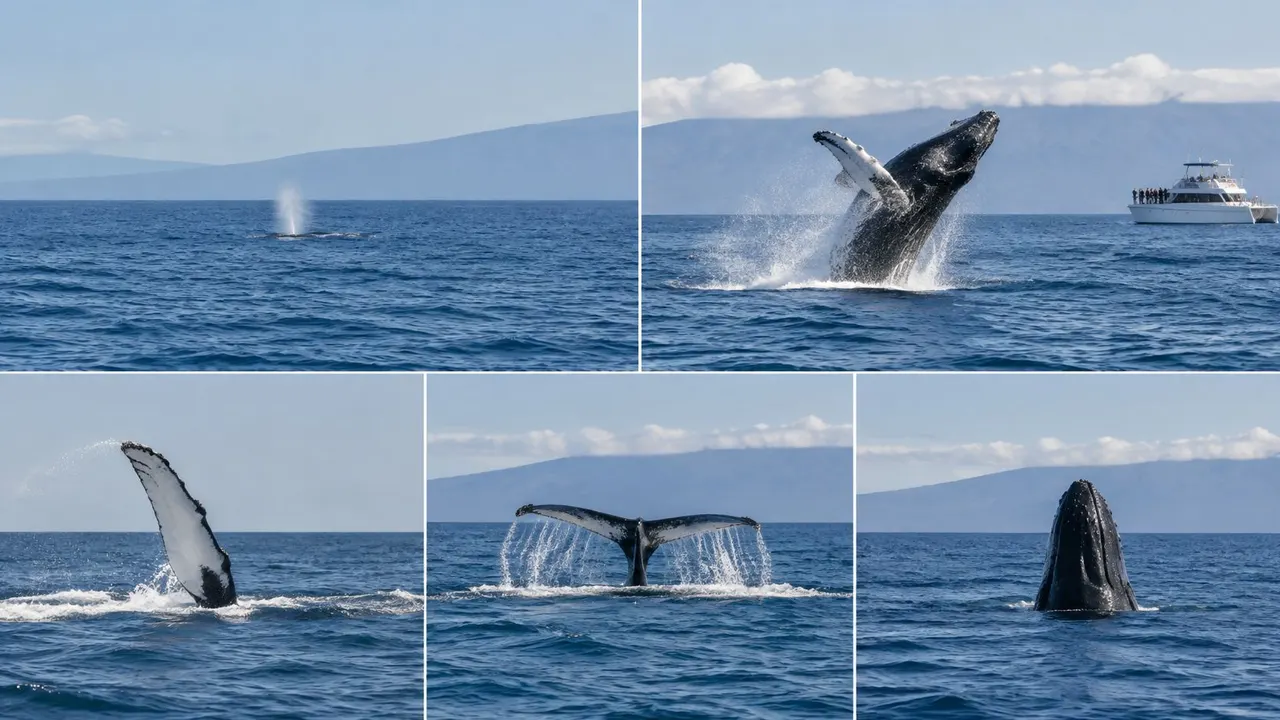
A blow is the visible spray associated with a whale's exhalation. It's often the first clue that tells passengers where to look.
A breach is more conspicuous, but it isn't the standard by which to judge a trip. Pectoral-fin slaps, tail movements, and repeated surfacing can be just as absorbing when you understand what you're watching.
- Breaching: A whale lifts much of its body out of the water before returning to the surface.
- Pectoral-fin slapping: A long side fin rises and strikes the water.
- Tail lobbing: The whale lifts and brings its tail down against the surface.
- Spy-hopping: A whale raises its head above the surface.
An active group can look chaotic to a first-time observer. Let the guide interpret the behavior rather than assuming splashing means distress or that a nearby smaller whale invites a closer approach.
A distant blow or fin slap is a successful sighting. The animal doesn't need to perform or approach the boat for the encounter to count.
Plan the protected space into the trip
NOAA Fisheries' humpback guidance requires vessels and people in Hawaii to remain at least 100 yards, about 91 meters, from humpback whales, and recommends traveling at no more than six knots within 400 yards, with engines in neutral if a vessel unintentionally enters the protected zone.
For a child, a football-field-length gap is a useful visual approximation. For a photographer, the practical response is a longer lens, not a request for the captain to move closer.
The restriction isn't limited to commercial boats. NOAA's Hawaii viewing regulations apply the 100-yard minimum to ocean users including swimmers, paddleboards, kayaks, canoes, and drones, and set a separate 1,000-foot minimum for aircraft.
These are legal requirements, not optional etiquette. Captains must also avoid creating a close encounter by intercepting a whale's route or causing it to surface near the vessel.
When a whale approaches on its own
Say the captain is observing from a respectful position and a whale changes direction toward the boat. Passengers should remain calm, keep clear of the rail, and follow the crew's directions rather than treating the approach as permission to reach toward or enter the water.
NOAA's responsible recreation guidance advises giving whales the right of way, avoiding sudden movement, and slowly backing away or placing engines in neutral when appropriate. It also warns against blocking a whale's path, separating a mother and calf, or herding animals.
For children, give concrete instructions before excitement takes over: stay seated when directed, point instead of leaning, keep voices low, and wait for the captain's instruction.
The best close look comes through binoculars. The boat's job is to preserve the whale's freedom to move.
Our Oahu whale-watching guide offers additional planning context. Judge responsible viewing by the captain's decisions and the quality of the interpretation, not by how close the hull gets to an animal.
Booking a Family Whale Watch from Waikiki
Choose a date within the core winter window and leave another part of your vacation available if the departure changes. A late-January or mid-February booking is a reasonable preference, but there's no need to abandon a suitable March date in pursuit of an unsupported best week.
Living Ocean Tours is the top rated & most reviewed snorkel company on Oahu. For a whale watch, families should also consider the outing's duration, age requirements, departure location, and responsible-viewing approach rather than relying on a review ranking alone.
The Waikiki tour details
Our Waikiki Whale Watching Cruise runs January 2 through March 31, lasts 1.5 hours, welcomes ages 3 and up, and costs $49 per person. It views humpback whales wintering in the Hawaiian Islands along the Waikiki coastline, with departures from Kewalo Basin Boat Harbor near Waikiki Beach.
Use the Waikiki whale-watch tour page to review the outing and available booking options. Confirm the departure shown for your chosen date rather than assuming every time of day is offered.
Make the booking work for everyone
Before reserving, talk through the needs of the youngest child and anyone who has limited mobility or gets motion sick. A short outing still involves boarding a boat, waiting at a harbor, and spending time in moving water.
- Confirm suitability: Tell us about mobility needs and ask about boarding arrangements before booking.
- Understand changes: Ask which weather, cancellation, and rebooking terms apply to your reservation.
- Choose a manageable departure: A morning option may fit a child's routine better, provided the forecast and schedule cooperate.
- Keep an easy alternative: Have a land-based activity ready if the boat plan changes.
For date confirmation and planning questions, contact us at info@livingoceantours.com or +1 (808) 436-3483. Our phone hours are 8am to 5pm daily.
Our guide to whale watching with kids can help families prepare for the onboard experience. Explain beforehand that everyone will look for clues together, and that a quiet stretch is part of watching wildlife, not evidence that something has gone wrong.
Give children a simple role, such as listening for the guide's direction or helping keep binoculars secure. Avoid promising a breach, a calf, or a whale beside the boat. That preparation makes ordinary surfacing exciting instead of creating expectations no crew can fulfill.
Pick the date that fits your family, check the forecast before departure, and save the meeting information somewhere accessible. Then pack for observation and comfort rather than a close-contact encounter.
Packing List for a Peak-Season Whale Watch
Pack lightly enough that your hands remain free for boarding. Keep frequently used items near the top of the bag so you don't miss a sighting while searching beneath spare clothing.
Our Oahu whale-watching packing list provides more preparation ideas. For most families, these essentials are a useful starting point:
- Booking confirmation: Save the meeting location and departure information offline before leaving your accommodation.
- Motion-sickness medicine: If appropriate for you, follow the product's timing instructions and ask a pharmacist about children's use.
- Reef-safe sunscreen: Apply before boarding and reapply according to the label, especially after getting wet.
- Polarized sunglasses: Reduce surface glare so you can scan the water more comfortably.
- A secure hat: Choose a cap or brimmed hat that won't easily blow overboard.
- A light windbreaker or rash guard: Bring a layer for wind and spray, even when the harbor feels warm.
- Compact binoculars: Use them for the detailed view that a responsible boat position intentionally leaves to optics.
- A camera with optical zoom: Photograph from the deck without depending on digital enlargement or a drone.
- Water and suitable snacks: Check what you may bring aboard and use a reusable bottle where practical.
- A dry bag or sealed pouch: Protect phones, wallets, and anything that shouldn't get splashed.
Leave the drone behind. NOAA's Hawaii marine-wildlife viewing guidance advises avoiding drone use because noise and proximity may disturb protected animals.
For children, add a towel and spare shirt to a small, manageable bag. Keep loose straps secured and choose items a parent can carry without sacrificing a free hand.
Peak Season Whale Watching FAQ
What if no whales show up on my date?
A seasonal peak doesn't guarantee a sighting on an individual trip. Before paying, ask us which rebooking terms apply and whether you'll have another suitable departure available during your stay.
Don't assume a wildlife guarantee or free return exists unless it's explicitly included in your booking terms. A flexible vacation day is useful, but it isn't a substitute for understanding the policy.
Is November or May worth a trip?
Yes, if your travel dates are fixed and you're comfortable with a shoulder-season opportunity. Keep expectations realistic and confirm that a dedicated whale-watch departure is operating.
Choose the outing for the whole experience, including the coastline and time at sea, rather than treating a whale sighting as assured.
Does booking early matter outside the peak?
Advance booking is useful whenever your group needs a specific date or departure. It's especially sensible when your itinerary leaves little room to move the outing.
Don't assume shoulder-season boats always have spare seats. Check the live calendar and make your decision using the actual availability, cancellation terms, and needs of your group.
Can I bring a baby on the Waikiki tour?
Our listed minimum age excludes babies. Contact us before making arrangements for a younger child, and don't assume holding an infant or bringing a carrier changes the eligibility requirement.
For a multigenerational group, it may be more comfortable to split activities than to choose a boat outing that doesn't suit everyone. Confirm suitability before building the rest of the day around the reservation.
Living Ocean Tours offers seasonal whale watching along the Waikiki coastline, with a convenient departure from Kewalo Basin Boat Harbor. Visit Living Ocean Tours to choose an available peak-season date, confirm your family's needs, and plan a patient, respectful look at Hawaii's winter visitors.


