
Hawaii Humpback Whale Watching Season: When to Go
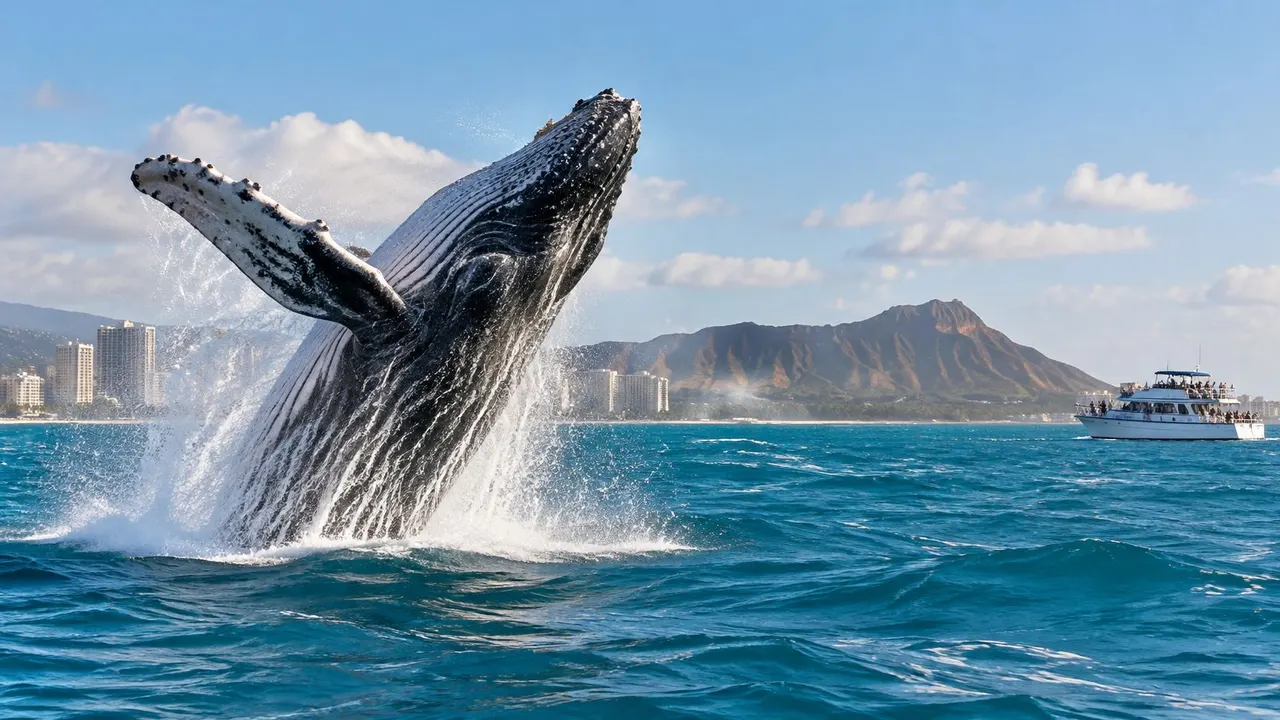
The Hawaii humpback whale watching season runs from November through May, and January through March is the peak window with the most dependable whale numbers. Choose the heart of winter if whales are a main reason for your Oahu visit, but don't mistake a seasonal peak for a guaranteed encounter.
As many as 12,000 humpback whales, more than half of the North Pacific population, may reach Hawaiian waters each winter, according to NOAA's Hawaiian sanctuary overview. That's a remarkable migration, but those whales aren't gathered around a single boat or beach. For a first-time visitor, the useful questions are when to go, what you might observe, and why watching from a respectful distance is part of a successful outing.
When Hawaii Humpback Whale Season Peaks
The broad season and the best viewing window aren't interchangeable. NOAA's sanctuary recreation guide identifies November through May as the general season and January through March as the usual peak in humpback abundance.
Humpbacks travel from North Pacific feeding grounds, including Alaska, to Hawaii's warm, shallow waters to breed, give birth, and nurse calves. Hawaii is a winter nursery rather than primarily a feeding destination. In spring, the migration turns north again.
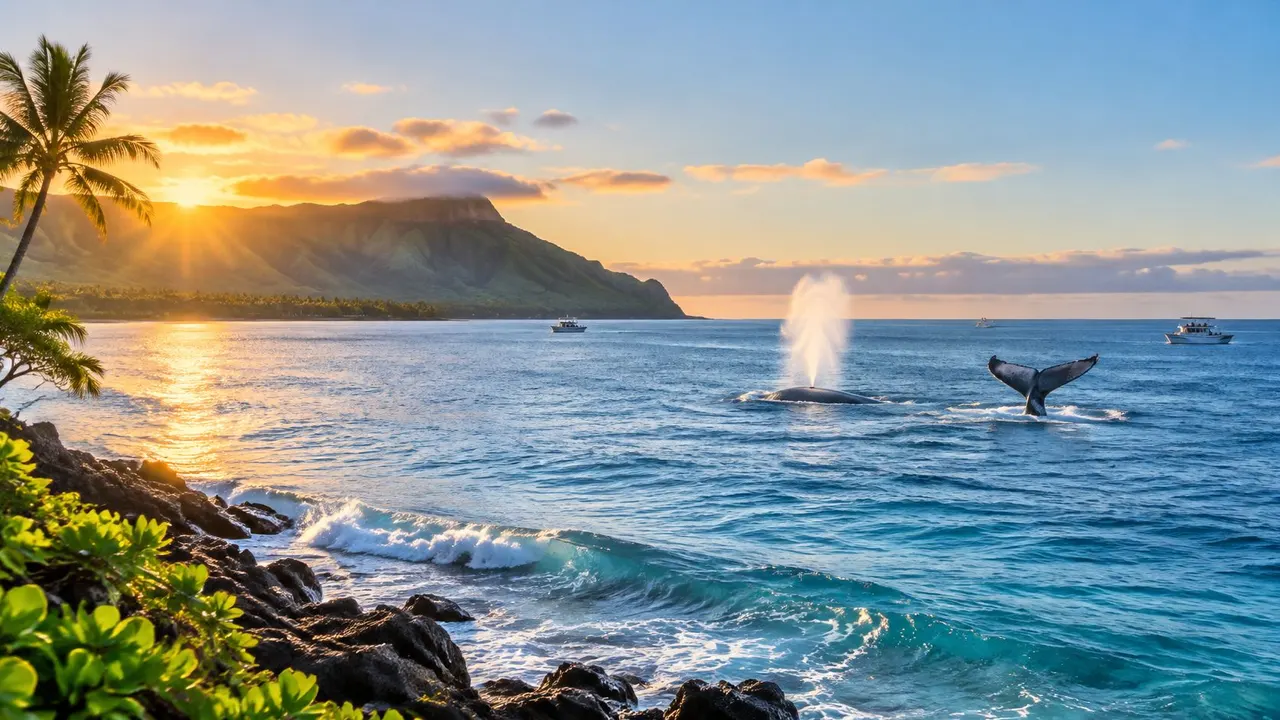
Humpback whale presence and viewing outlook by month
This calendar is a planning guide, not a forecast for a particular departure. The beginning and end of the migration don't happen on fixed dates.
| Month | Whale presence | Viewing outlook |
|---|---|---|
| November | Early arrivals; numbers still building | Shoulder season, not guaranteed |
| December | Whale numbers climbing | Within the season, but outside the peak |
| January | Peak period begins | Strong; among the most dependable months |
| February | Peak abundance period | Strong; among the most dependable months |
| March | Within the usual peak window | Strong seasonal opportunity, not a guaranteed sighting |
| April | Spring departure period | Opportunity remains, with more cautious expectations late in the month |
| May | Trailing edge of the season | Shoulder season; treat a sighting as a bonus, not a plan |
The distinction matters when you're choosing flights rather than just filling an afternoon. A traveler with flexible dates can prioritize the peak; someone already visiting during a shoulder month can keep whale watching as an optional wildlife opportunity.
Planning rule: Choose the peak window when whales determine your vacation dates. Keep shoulder-season plans flexible when your vacation dates are already fixed.
Don't read the calendar as a promise of particular behavior, either. More whales improve the seasonal opportunity to encounter them, but they don't schedule breaches, tail slaps, or mother-calf appearances.
Viewing Odds and Regional Differences Around Oahu
Approximately half of the North Pacific humpback population visits Hawaiian waters during winter and spring, and NOAA's sanctuary overview identifies Oahu as a viewing region, with whales generally present from November through April and peak activity from January through March. The shorter season description isn't a contradiction of the broader viewing window. It emphasizes the main winter presence rather than the migration's outer edges.
For visitors, three separate ideas make the calendar easier to understand:
- Season dates describe when whales can be present.
- Peak probability describes when seasonal abundance offers the strongest opportunity.
- Behavioral highlights describe what animals might do, including breaching, traveling together, tail slapping, or tending calves.
Early-season trips can produce sightings while arrivals are still building. Later winter can offer opportunities to observe mothers and calves, but neither timing nor a tour photograph guarantees that encounter.
Location and sea conditions both matter
A whale's blow is easier to pick out against relatively smooth water than among whitecaps. Mornings can offer calmer conditions before winds build, but use the actual marine forecast rather than assuming an early departure will always be smoother.
Oahu's practical advantage for Waikiki visitors is convenient harbor access without adding an interisland journey. Compare neighboring-island options by the full excursion: travel from your lodging, departure harbor, time aboard, and room for weather changes. An island's reputation alone doesn't tell you how easy a particular outing will be.
Our guide to where to see whales in Oahu helps connect viewing choices with your itinerary.
A distant sighting is normal, not evidence that you chose the wrong island. Protected viewing space, whale movement, and the day's conditions all shape what you see.
Boat Tours and Shore Viewing Compared
A boat tour offers a guided, mobile view, while shore watching lets you scan at your own pace without boarding a vessel. Neither format guarantees that a whale will surface where you're looking.
Boat tour versus shore viewing for humpback whales
| Factor | Boat tour | Shore viewing |
|---|---|---|
| Viewing distance | Potentially closer, but the captain must respect the protected approach distance | Often far away; binoculars help |
| Guided commentary | Crew explains behavior, whale identification, and sanctuary rules | Usually self-guided unless you join a talk |
| Weather and sea risk | Wind and swell can change or cancel plans | No vessel motion; choose a safe land-based location |
| Best for | Families wanting a guided, mobile view | Budget travelers with time to scan |
| Cost | Paid guided tour | Free from public viewing areas |
Crew members help passengers recognize the difference between a blow, a fin, and a breaking wave. They can also explain why a captain slows down or changes course instead of heading toward a splash.
NOAA's marine-life viewing guidance recommends a maximum of six knots within 400 yards of whales. A slower observation period isn't wasted tour time. It gives passengers a steadier opportunity to watch without treating the animal as something to pursue.
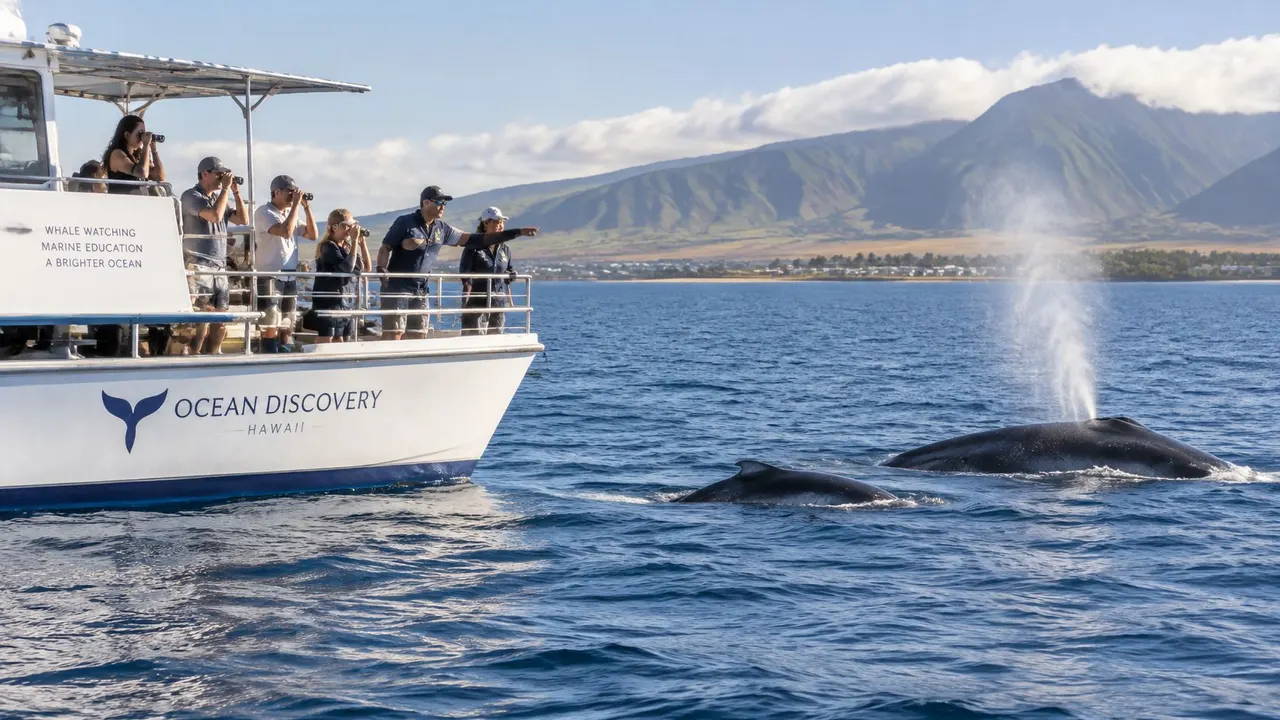
Our departures leave from Kewalo Basin Boat Harbor near Waikiki Beach, a convenient starting point for visitors staying nearby. The Waikiki coastline is part of the winter viewing area, not a confined enclosure where crews know exactly where whales will appear.
For shore watching, try an unobstructed beach view or a safely accessible high headland. Binoculars are especially useful because a visible blow may be much easier to detect than the whale's body.
A shore outing can be worthwhile even when it produces only a brief blow offshore. You're observing a wild migration, not waiting for a scheduled performance.
Stay behind barriers and away from slippery rocks. Watching from land removes seasickness, not the need to pay attention to surf and footing.
Responsible Viewing Rules That Protect Whales
The central rule is straightforward: NOAA's Hawaii marine wildlife guidelines state that federal regulations prohibit approaching a humpback within 100 yards by any means, including boats, kayaks, swimmers, and drones. They also prohibit placing a vessel or person in a whale's path and disrupting its normal behavior.
Aircraft must remain at least 1,000 feet away, according to NOAA Fisheries' Hawaii humpback whale assessment. That's a separation requirement, not permission to hover directly over an animal.
Humpback whale viewing rules at a glance
The operational recommendations from Hawaii's Division of Boating and Ocean Recreation include the 100-yard (90-meter) separation, 15 knots or less in habitat 600 feet deep or shallower, and 6 knots or less within 400 yards when approaching or departing whales.
| Rule | Limit | Why it matters |
|---|---|---|
| Approach distance, any means | Maintain the federal separation described above | Helps preserve natural behavior |
| Aircraft separation | Maintain the federal aircraft distance described above | Avoids disturbance at the surface |
| Transit speed in whale habitat | Follow the habitat-speed recommendation above | Gives operators time to react |
| Speed near whales | Follow the slower observation-zone recommendation above | Reduces noise and collision energy |
| Whale approaches the boat | Stay stationary or put the engine in neutral until it moves away | Lets the whale leave without pursuit |
| Whale in the vessel's path | Never deliberately place the vessel in its path | Prevents interception |
When the whale comes closer
A whale approaching voluntarily doesn't give the captain permission to follow it for a better photograph. The appropriate response may be to hold position with the engine in neutral and wait.
That pause can be an excellent learning moment. Watch how the animal travels, look for a pectoral fin, and listen as the guide distinguishes a mother-calf interaction from a brief surface appearance.
Our Oahu whale-watching guidance provides additional trip-planning context. As a passenger, stay seated when directed, keep your arms inside the boat, and never enter the water or launch a drone near whales.
Family and Safety Tips for Whale Watching
Children often expect to see a whole whale immediately. Prepare them for scanning, waiting, and noticing a distant puff of breath before a back or tail becomes visible.
Make spotting a shared activity rather than a test of patience. Let children point out possible blows, then have an adult or guide help confirm what they've found.
Pack for watching rather than swimming
- Binoculars or a zoom lens: Practice finding a stationary object before departure so you're not learning the controls during a sighting.
- A light outer layer: The breeze aboard can feel cooler than the dock, especially when the vessel is moving.
- Sun protection: Bring reef-safe sunscreen, a secure hat, and sunglasses. Apply sunscreen before boarding.
- Water and suitable snacks: Check what's permitted aboard, and keep belongings contained rather than loose on deck.
- A seasickness plan: Consult a pharmacist or clinician about an age-appropriate option and follow its timing instructions before boarding. Don't wait until nausea starts.
For multigenerational groups, choose seating near the middle of the boat when available, where motion can feel less pronounced. Keep children within reach near the rail, and agree on a meeting spot before anyone moves around.
For parents and grandparents: Give children permission to take a break from scanning. A comfortable child is more likely to enjoy the next sighting than one who feels required to watch every wave.
Photograph without missing the encounter
Start with a wider camera view so you can locate the animal, then zoom in. Burst mode can help capture a brief breach or fluke, but don't lean over the rail for a lower angle.
Our guide to whale watching with kids can help families prepare together. Follow crew instructions throughout the outing, and treat a calm wait as part of wildlife watching rather than a delay.
Quick Answers to Common Whale Watching Questions
Is a whale sighting guaranteed?
No. Seasonal abundance improves the opportunity, but whales move freely and may remain submerged or distant. The viewing-odds discussion explains why a protected-distance encounter still counts as a meaningful sighting.
Can you see whales in December?
Yes, December falls within the seasonal window described in the calendar. It's a reasonable opportunity for travelers already visiting, though the core winter peak is a stronger choice when you can select your travel dates.
Does weather cancel trips?
Wind and swell can make a departure unsuitable, even when conditions look pleasant from your hotel. Follow the booking checklist below, read the weather and rescheduling terms before paying, and check the marine forecast close to departure.
Can children join?
Our Waikiki Whale Watching Cruise is suitable for ages 3 and up. The family tips focus on what makes the outing more comfortable: preparing for motion, choosing sensible seating, and setting realistic expectations about waiting and distant views.
Book Your Whale Watch Trip and Pick Your Window
Choose the core winter peak if your main goal is the strongest seasonal opportunity to see humpbacks. Then protect that choice with a flexible itinerary rather than putting your only possible outing immediately before your flight home.
A useful reservation is more than a ticket. It matches your family's comfort, your harbor access, and the time you have available if ocean conditions change.
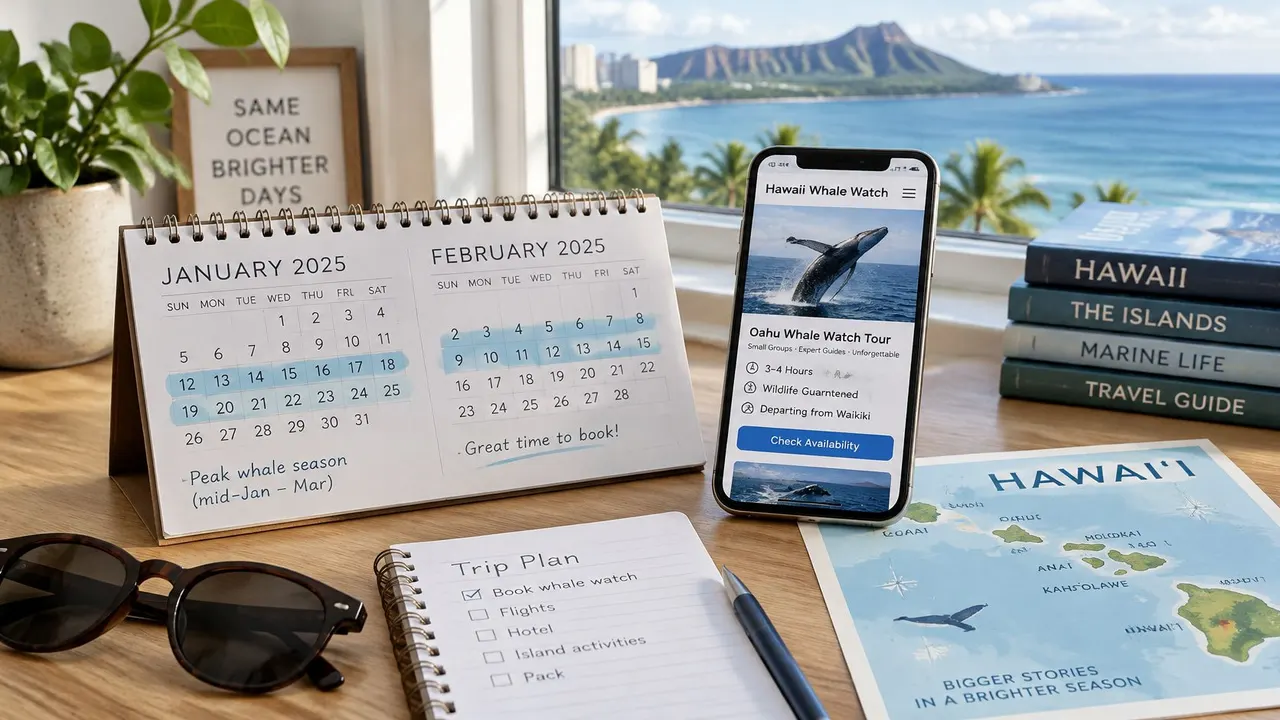
Make the reservation with a backup plan
- Choose your preferred peak-season date and reserve early. Families traveling together benefit from arranging their places before building the rest of the day around the outing.
- Leave a backup day available. A flexible slot is more useful than a tightly packed schedule if weather changes your plans.
- Read the weather, cancellation, and rescheduling terms before payment. Understand the available options rather than assuming a weather cancellation automatically fits your itinerary.
- Check the marine forecast the day before departure and again that morning. Pay attention to wind and swell, not just sunshine or rain.
- Allow extra time to reach Kewalo Basin Boat Harbor near Waikiki Beach. Arriving without a rush gives your group time to get organized before boarding.
Our Oahu whale-watch planning guide can help you organize the outing around the rest of your stay.
Our seasonal Waikiki departure
Living Ocean Tours is Oahu's top rated and most reviewed snorkel company. We also offer seasonal guided whale watching with an emphasis on responsible observation.
Our Waikiki Whale Watching Cruise views wintering humpbacks along the Waikiki coastline. It runs January 2 through March 31, lasts 1.5 hours, welcomes ages 3 and up, and costs $49 per person.
You can compare the departure details on our Waikiki whale-watch tour page. Our office is open 7 days a week for planning assistance; contact us at info@livingoceantours.com or +1 (808) 436-3483 with questions about organizing your visit.
Choose a departure that leaves room for changing ocean conditions, then check availability for your preferred date.
Living Ocean Tours offers seasonal whale-watching departures from Kewalo Basin Boat Harbor to observe wintering humpbacks along the Waikiki coastline. Visit Living Ocean Tours to plan a guided outing that fits your winter visit and keeps responsible wildlife viewing at the center of the experience.


