Diamond Head Snorkeling: Safe Conditions, Sites and Tips
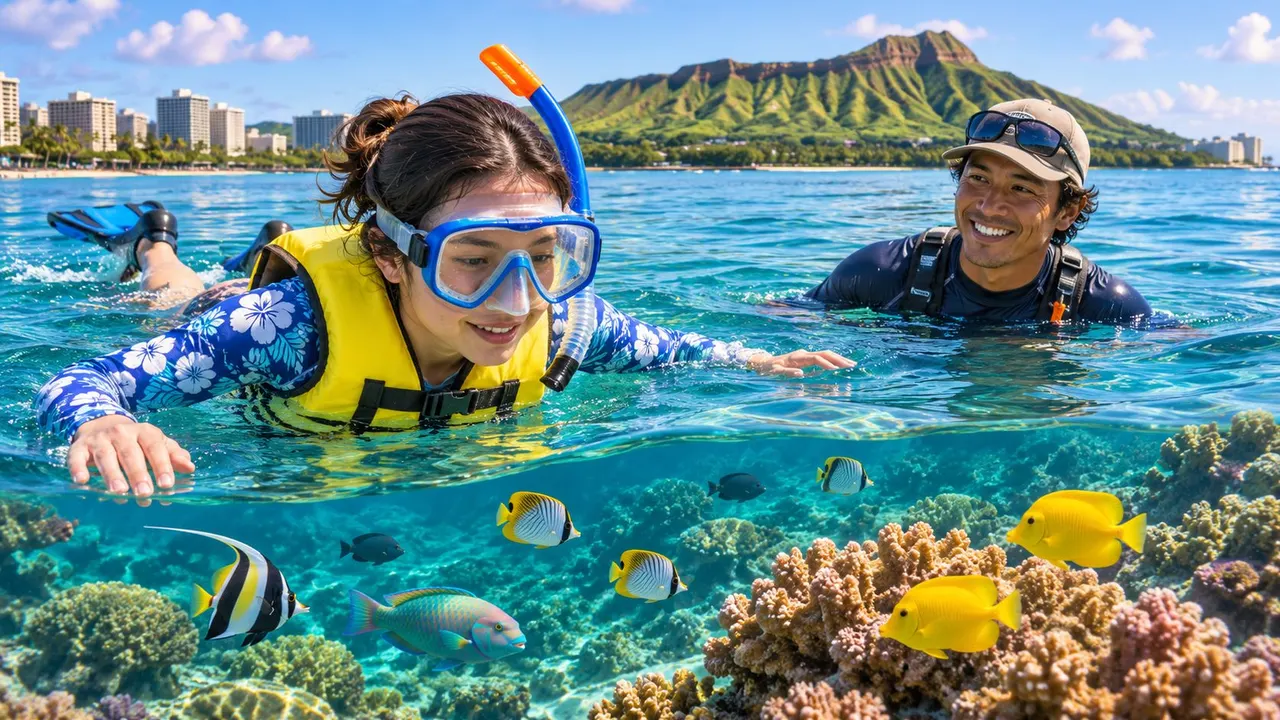
Table of Contents
- Go and no-go conditions before you enter
- Clarity isn't the same as safety
- Fit the equipment before committing
- A controlled entry and exit routine
- If a current takes you
- Set a family readiness benchmark
- Watch without changing the animal's behavior
- Plan A for a guided family morning
- Plan B for confident shore swimmers
- Plan C for a no-go morning
- Choose the outing for your group
- Is Diamond Head too crowded to snorkel?
- Can toddlers snorkel?
- Do I need to be a strong swimmer?
- Will we see turtles?
- Which question matters most?
You've reached the shoreline below Diamond Head, the kids have their masks, and the water looks inviting from the path. Then a wave washes across the rocks where you thought you'd enter. That is the moment to stop, not hurry everyone into their fins.
Diamond Head snorkeling starts with deciding whether to enter at all. The exposed reef can suit capable swimmers in settled conditions, but it is not a dependable beginner beach. For families, a protected, crew-selected snorkeling site often makes more sense than negotiating a rocky shore entry. Staying dry is the right decision when the weakest swimmer would not be comfortable getting back out.
When Conditions Say Go or No-Go
Check today's ocean, not yesterday's photos. A clear picture of fish over the reef tells you nothing about the wind, swell, or current when your family arrives.
Hawaiʻi Ocean Safety's snorkeling guidance identifies high surf, strong winds, heavy shorebreak, and strong currents as unsuitable conditions. Morning generally offers calmer water, better visibility, and more active marine life, but an early arrival is not permission to enter.
Go and no-go conditions before you enter
Use this as a conservative screening tool, not a guarantee. A go means you can continue assessing the site and your group.
| Condition | Go | No-go |
|---|---|---|
| Surf | Small, gentle surf that does not break over the reef | Breaking waves or heavy shorebreak |
| Wind | Light wind and a fairly flat surface | Strong wind creating chop on the water |
| Water clarity | Reef and fish visible from the surface | Murky water that hides the reef |
| Current | No steady pull toward open water | Pull toward open water or a rip current |
| Tide | A tide level and phase that leave the entry lane calm, with no surf building over the reef | Rising tide with surf building |
| Time of day | Morning, usually calmer and clearer | Afternoon after winds have built |
Watch several sets of waves rather than judging the gap between them. Look at the entry lane, the reef crest farther out, and the place you expect to exit. If water repeatedly surges across your route, the entry is not suitable for a beginner just because someone else managed it.
Check the current forecast, tide information, and posted warnings before walking down with equipment. Our guide to the best time for snorkeling helps with scheduling, but your shoreline assessment must still decide the day.
Clarity isn't the same as safety
Clear water can coexist with a strong surge. You may see the bottom perfectly while the water moves you toward it, then pulls you away again. Murky water creates a different problem: you cannot reliably judge clearance above rock or keep track of your partner.
Practical rule: If you need to brace against the bottom to stay in place, do not treat that spot as a beginner snorkeling site.
Afternoon wind can create surface chop that makes breathing, navigation, and buddy contact harder. Do not stretch a session because everyone finally has their gear ready.
Any no-go for surf or current means postponing that shore entry. Choose a boat-based site only if the crew identifies suitable conditions elsewhere, or spend the morning on land. A boat avoids the rocky entry, not the ocean's limits.
Gear and Briefing Every Snorkeler Needs
A leaking mask turns a manageable swim into repeated stops. Loose fins and an unfamiliar snorkel add work precisely when a beginner needs to relax.
Living Ocean Tours is described as Oahu's top rated and most reviewed snorkel company. We provide all snorkeling equipment, with life jackets and snorkel vests available on all tours, plus snorkel school and flotation support to help guests become comfortable.
Fit the equipment before committing
Press the mask gently against your face without tightening the strap, then inhale lightly through your nose. It should hold its seal. Move hair out of the skirt and test again in shallow, calm water; overtightening usually is not the fix.
For a beginner, I would start with a standard mask and simple snorkel, rather than an unfamiliar full-face mask or complicated design. Practice breathing through the mouthpiece and clearing water before swimming away from the entry.
| Item | What to Check | Family or Beginner Tip |
|---|---|---|
| Mask | Snug seal with no leak when you inhale through the nose | Do the seal test in shallow water before entering |
| Snorkel | Comfortable mouthpiece and a clear tube | Stick with a standard snorkel, not a complex design |
| Fins | Snug heel fit that doesn't slip off | Put fins on after entering the water, not on the rocks |
| Flotation vest | Snug fit and appropriate buoyancy | Make suitable flotation a requirement for young children and weak swimmers |
| Water shoes | Gripping sole for rocky approaches | Wear them to the water's edge; never stand on coral |
| Sun and gear bag | Reef-safe sunscreen and a dry bag for valuables | Keep the bag with a responsible adult on shore |
A snorkel vest is not necessarily a face-up life jacket. Choose flotation appropriate to the wearer and follow the crew's fitting instructions. Neither device replaces swimming ability, supervision, or safe conditions.
Before entering, agree on the signals for help, stopping, and returning. Pack towels, drinking water, sun protection, and a dry bag for phones and keys. Check that shore-entry footwear is compatible with your fins rather than discovering the mismatch while balancing at the waterline.
The practical trade-off is simple. Gear that fits well reduces fiddling, and a short briefing gives beginners a clear idea of what to expect. If the group cannot explain the return signal, slow down and settle it before anyone enters.
Reef Shoreline and Safe Entry Points
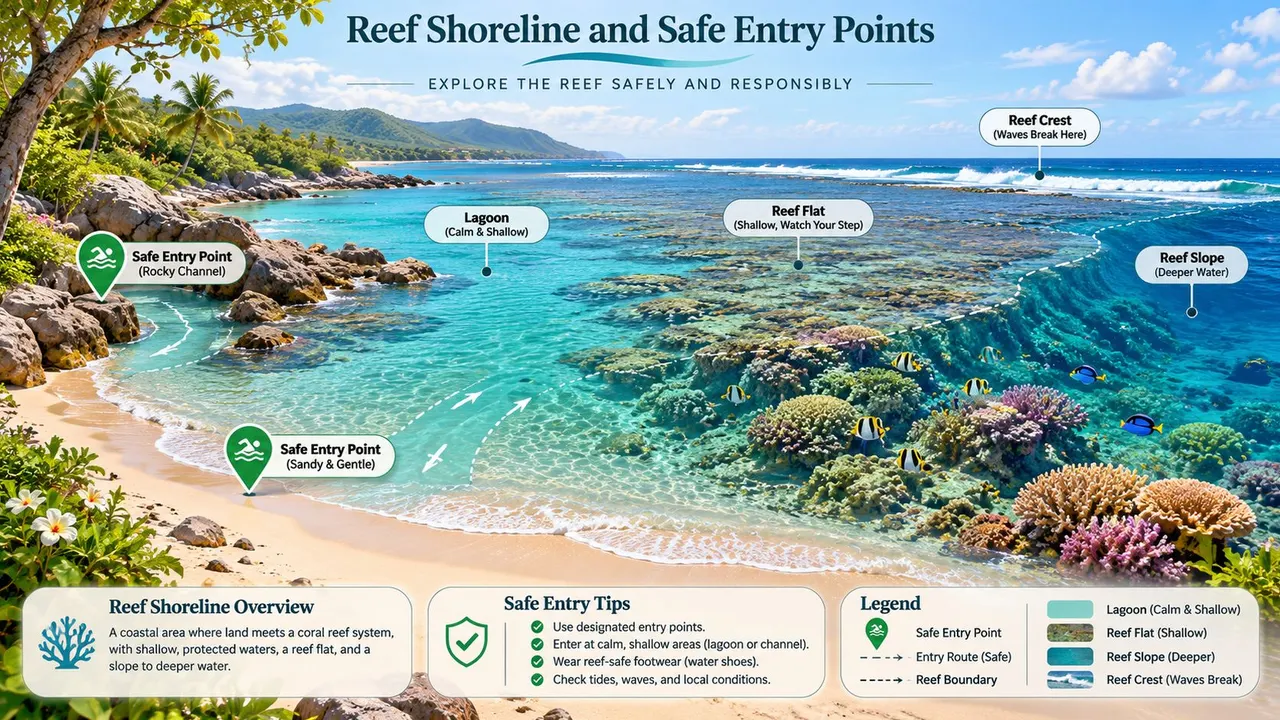
Diamond Head's shoreline is rocky reef, not a continuous sandy swimming beach. To-Hawaii's Diamond Head Beach Park guide describes an exposed setting where shallow reef and rock make water access more demanding. Uneven footing, localized surge, and flow near reef edges deserve separate attention from the swim itself.
The terrain helps explain the setting. According to the Hawaiʻi Division of State Parks, Diamond Head, or Lēʻahi, formed approximately 300,000 years ago during a single, brief explosive eruption in shallow ocean water. Waves and weather have since eroded its seaward slopes, while a coral reef now helps protect them.
A controlled entry and exit routine
- Find sand or a clear lane. Walk carefully in gripping footwear. Do not assume a pale patch is sand, and do not cross living coral to reach deeper water.
- Float before putting on fins. Use water deep enough to avoid bottom contact. If you cannot fit your fins without being knocked over, abandon that entry.
- Keep your partner close. Choose a sheltered route that is suitable that morning. If you are with a guide, have them identify it rather than guessing which side is protected.
- Stay away from the reef crest. That is where breaking waves concentrate their energy. Shallow water over the crest is not a resting platform.
- Identify the exit before leaving it. Note fixed landmarks, the clear lane, and where waves break. Check that the same route will remain usable when you return.
Our Oahu shore-entry snorkeling guide can help you prepare for the mechanics of getting in and out. It cannot establish that a particular opening is safe on arrival.
A safe entry is not enough. You also need an exit you can manage when you are tired.
For families, agree on a turnaround signal and keep the youngest swimmers within arm's reach of an adult. Do not split the group between different entry lanes. When shorebreak is active, a protected alternative or a crew-selected boat site is a better choice than trying to time a dash across the rocks.
The decision point stays the same even with perfect footwear and a clear mask. If the entry lane, reef crest, and exit cannot be read in the water in front of you, the shoreline is asking for more skill than the group has that day.
Safety Rules for Currents and Emergencies
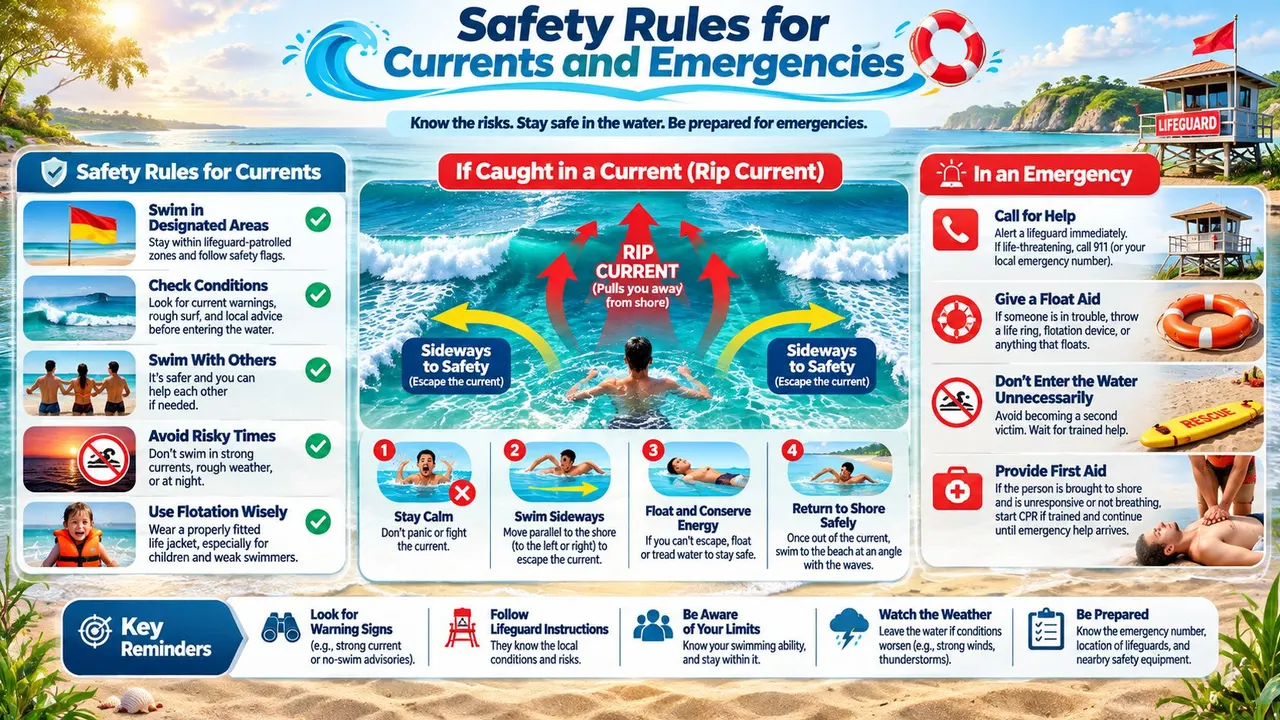
Do not swim straight against a rip current. Fighting the pull can exhaust you without bringing you closer to shore.
The Hawaiʻi Department of Land and Natural Resources safety guidance recommends watching ocean conditions for approximately 15 minutes before entry and checking tide and weather information. It also warns that increasing surf can strengthen longshore and rip currents, and advises swimmers caught in a rip to remain calm and swim parallel to shore until clear.
If a current takes you
- Stop fighting directly toward the beach. Keep your breathing controlled and use your flotation.
- Swim parallel to shore to leave the pull, if you are able. Do not keep making the same exhausting attempt against the current.
- Return toward shore after you are clear. Keep track of waves and avoid being pushed onto exposed rock.
- Signal for help if you cannot make progress. Float, conserve energy, and attract attention rather than swimming to exhaustion.
A companion should not rush into the same current without rescue training and equipment. Alert the crew or lifeguard, and call emergency services for a swimmer in distress. Learn the signs of Oahu rip currents before your beach day, not while someone is already being carried away.
Set a family readiness benchmark
Before choosing independent shore snorkeling, confirm that every participant can:
- Float comfortably face-down, breathe through the snorkel, and lift their head without panic.
- Clear or remove a leaking mask while remaining calm.
- Return to the entry point without standing on the reef or relying on another swimmer to tow them.
Stay with a partner and within a distance you could swim back without equipment. Lift your head periodically to check your position against land; following fish is an easy way to lose track of your exit.
Before snorkeling, we provide a short lesson explaining the equipment and what to expect in the water. Use that opportunity to resolve uncertainty about the return signal, group boundaries, and getting assistance.
End the swim before a small problem becomes an emergency. A child who is cold, unusually quiet, tired, or panicking needs attention immediately. A persistent pull offshore or waves beginning to break across the exit is also a reason to stop. Signal, return by the safest available route, and try again another day.
Respecting Turtles and Reef Life
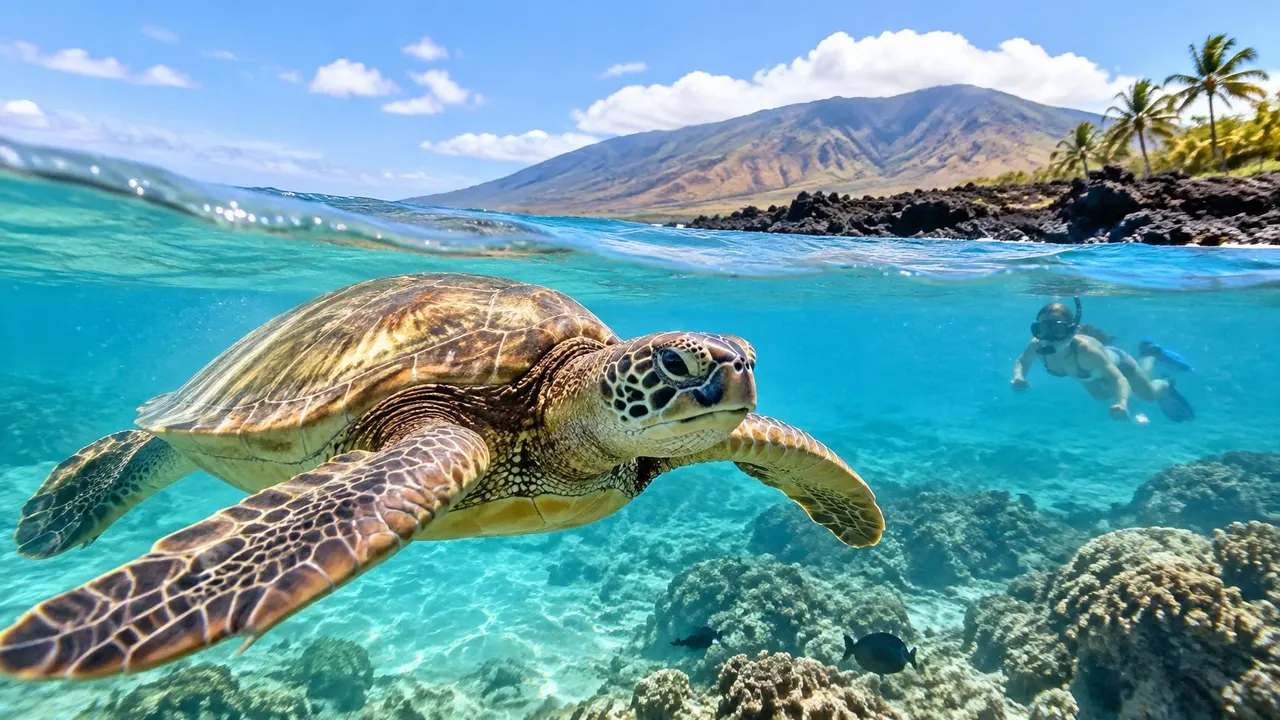
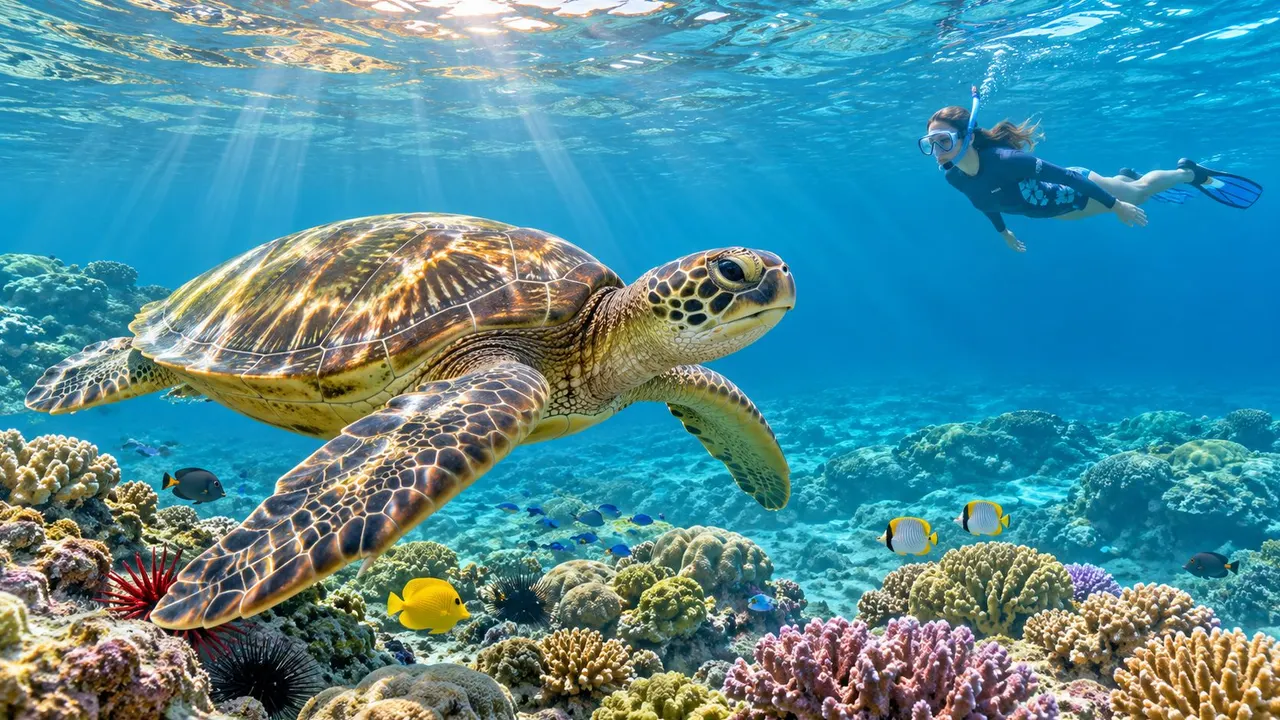
Keep your distance, do not approach turtles, and never feed them. Those rules matter more than getting a close photograph. Feeding teaches wildlife to associate people and boats with handouts.
Hawaiʻi's marine-species guidance also tells boat operators to slow down near shallow reefs, harbors, and launch areas where turtles frequently occur, using a secondary lookout when possible. As a snorkeler, give animals an unobstructed route and do not position yourself between a turtle and the surface.
Watch without changing the animal's behavior
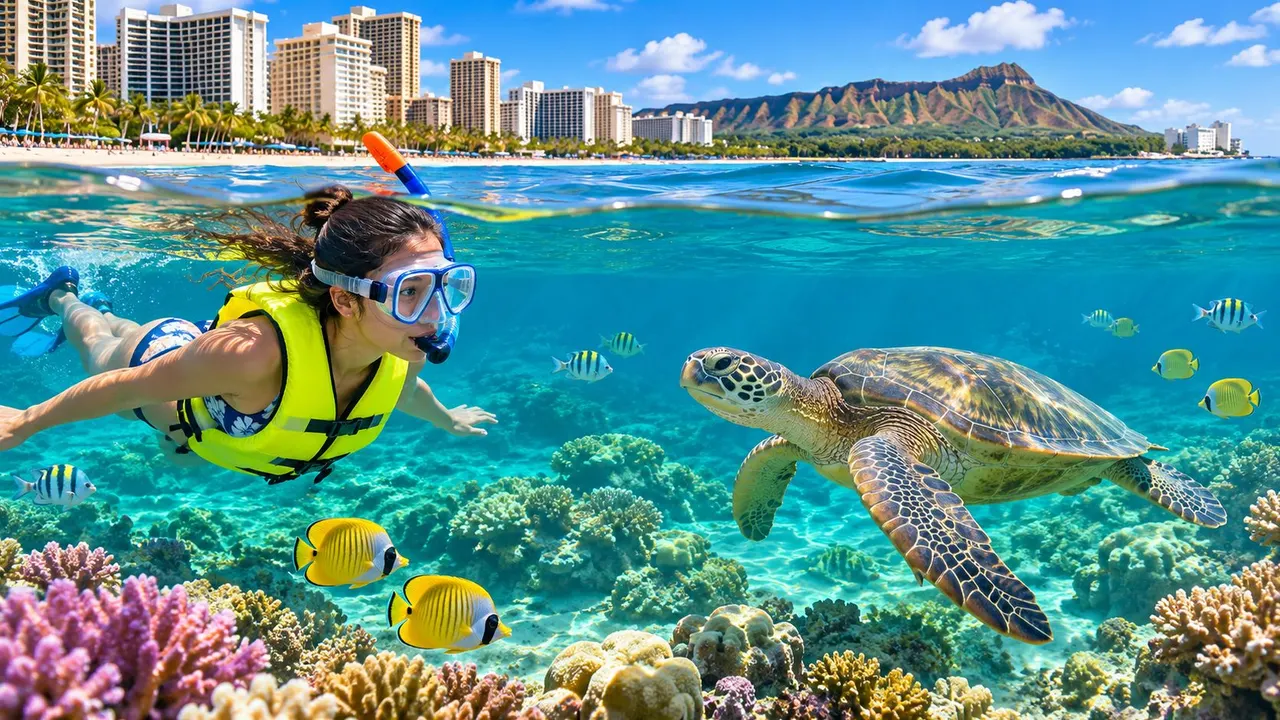
Look for yellow tangs, Moorish idols, and triggerfish, with rays and eels also possible on our Honolulu snorkeling tours. Do not reach into reef holes or follow an animal into shallower water. Watching from a steady position usually gives you more time to notice behavior than swimming after every movement.
Our Oahu reef etiquette guide explains how to observe without touching the reef or crowding wildlife. Keep your fins clear of coral, and move into open water before adjusting equipment.
For a turtle-focused outing, our Turtle Canyon Snorkel Excursion visits Waikiki's turtle cleaning station. Living Ocean Tours is described as Oahu's top rated and most reviewed snorkel company.
Turtles are common at the cleaning station, where it is common to see up to 10 Hawaiian green sea turtles. Our snorkeling tours have a 95% turtle-spotting success rate, but neither figure guarantees an encounter on your trip.
Let the turtle choose its route. Your job is to leave room, not close the gap.
For another turtle-focused option, Snorkel Turtle Canyon is a great alternative. Whichever operator you choose, build the day around suitable water conditions rather than a promised animal encounter.
Sample Half-Day Plans for Families and Beginners
Use these as example schedules, not published departure times or forecasts. Your confirmed check-in instructions and the day's conditions take priority over the clock.
Plan A for a guided family morning
- 7:00, example start: Review ocean conditions, have breakfast, and gather towels, water, and sun protection.
- Before your confirmed departure: Reach the Kewalo Basin check-in with time for equipment fitting and the briefing.
- During the outing: Let the crew direct water entry and keep the family together rather than scattering after different fish.
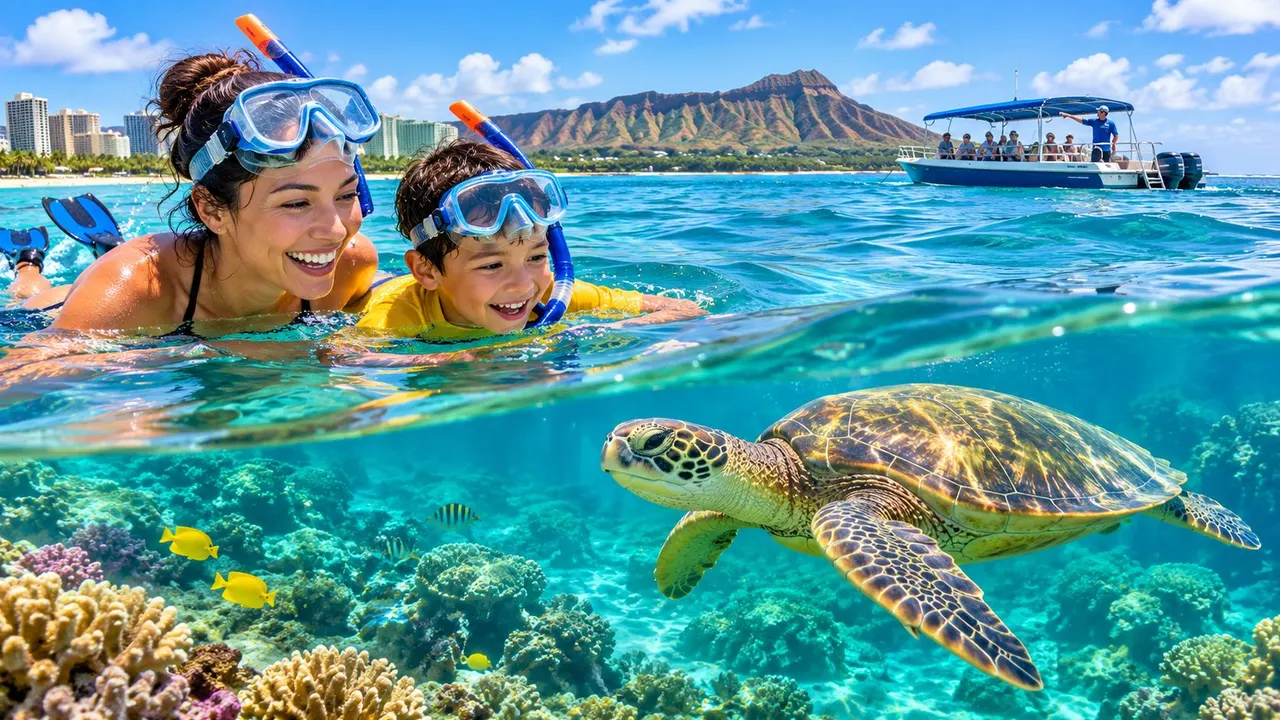
Our tours suit all skill levels and ages 3 and up. The turtle snorkeling trip lasts 2 hours, with approximately 1 hour of in-water snorkeling. Guides offer technique tips and explain the local marine ecosystem throughout the tour.
What changes this plan: A child who is not comfortable with the equipment should not be pressured into the water. Eligibility by age does not establish readiness to snorkel.
Plan B for confident shore swimmers
- 7:30, example assessment: Apply the conditions table at the actual entry, not from the road.
- After checking the route: Enter together through a suitable clear lane and stay within comfortable swimming distance of the exit.
- 9:00, example finish: Be packed up by your planned cutoff, or leave sooner if the surface deteriorates.
This option suits swimmers who can manage their equipment, find their way back, and exit without assistance. It is not a cheaper substitute for instruction when someone is anxious or unable to swim independently.
What changes this plan: Any uncertainty about the exit cancels the shore session.
Plan C for a no-go morning
Keep the morning free, but leave snorkeling equipment dry. Have breakfast, enjoy coastal views from land, and choose another activity appropriate to the weather.
What changes this plan: Nothing requires you to salvage a water session that day. Reschedule for a suitable morning instead of driving between exposed beaches hoping one looks easier.
These plans work because each one makes the first decision the same: is entry sensible for this group, at this site, in these conditions. The schedule only helps once that answer is clear.
Check Conditions and Book Your Guided Snorkel
A guided boat trip removes the need to negotiate Diamond Head's rocky shoreline. It also gives beginners equipment instruction and a crew-led site decision, though it does not make unsuitable ocean conditions safe.
Living Ocean Tours is described as Oahu's top rated and most reviewed snorkel company. We depart from Kewalo Basin Boat Harbor near Waikiki Beach, at 1125 Ala Moana Blvd Slip B-01, Honolulu, HI 96814.
Choose the outing for your group
Before booking, agree on what everyone wants. A grandparent who wants a relaxed cruise, a child learning to use a mask, and a confident swimmer do not necessarily need the same amount of water time.
- For a varied family outing: The Deluxe Waikiki Snorkeling and Wildlife Cruise lasts 2.5 hours, costs $79 per person, and welcomes ages 3 and up. It includes a waterslide, water trampoline, and lily pad, with snorkeling at a reef away from the crowds.
- For a shorter turtle focus: The Turtle Canyon Snorkel Excursion lasts 2 hours and costs $79 per person.
The Waikiki snorkel and waterslide tour is the option to compare when your family wants more than a snorkeling-only morning. Choose for the group's interests, not the assumption that everyone must spend the whole outing swimming.
Confirm each participant's age and comfort in the water before reserving. Pick a morning departure when available, follow the check-in instructions, and leave enough time to fit equipment without rushing.
Reserve a morning that suits your family, then keep the go-or-no-go checklist handy. A booking gives you a plan; the ocean and crew's assessment determine how that plan works on the day.
Frequently Asked Questions
Is Diamond Head too crowded to snorkel?
The Hawaiʻi Division of State Parks reports more than 3,000 visitors per day at the monument. That is not a shoreline snorkeling count. Arrive early for an unhurried assessment, but do not interpret either crowds or an empty beach as evidence of safe water.
Can toddlers snorkel?
Our guided snorkeling tours welcome ages 3 and up. Age alone does not establish readiness. Young children need appropriate flotation, close adult supervision, and the freedom to stay out of the water if they are uncomfortable.
Do I need to be a strong swimmer?
Independent shore snorkeling requires enough swimming ability to return safely without relying on equipment. If you are a casual swimmer, choose instruction and appropriate flotation, and tell the crew your limitations. A vest does not turn a non-swimmer into an independent ocean swimmer.
Will we see turtles?
Possibly, but sightings are not guaranteed. Do not extend a swim, cross a reef crest, or leave the group because someone spots a turtle farther away.
Which question matters most?
Is the water suitable for everyone entering today? Neither an exciting sighting nor other swimmers in the water changes your family's limits. If you are unsure, stay ashore.
Living Ocean Tours offers guided snorkeling with equipment, instruction, and knowledgeable guides for families exploring the Waikiki coastline near Diamond Head. Visit Living Ocean Tours to choose a suitable morning outing, and bring the same conservative entry decision with you on the day.