
Best Time to Whale Watch in Oahu in 2026
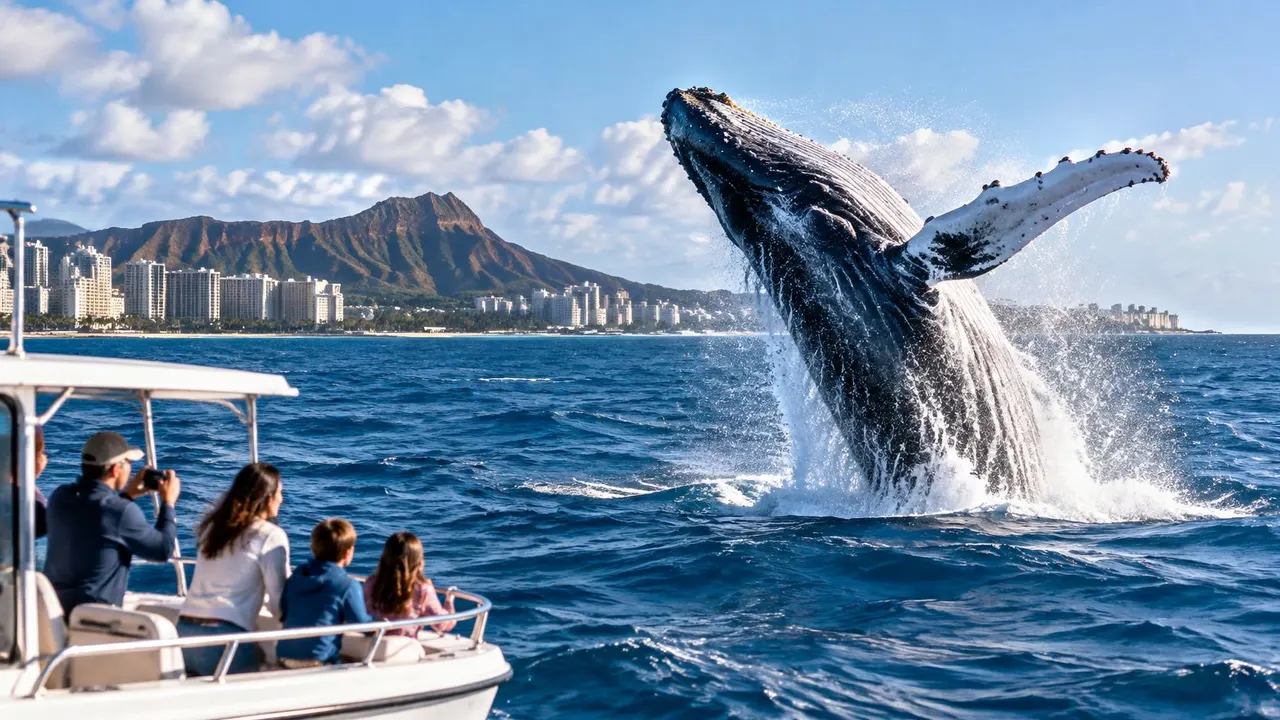
The best time to whale watch in Oahu is January through March, with January and February the peak. Choose your month first, then choose the departure with the calmest forecast rather than assuming morning always means more whales.
The scale of the winter gathering is remarkable: the 2024 Sanctuary Ocean Count recorded 5,120 humpback-whale observations during counts on the last Saturdays of January, February, and March. That's a winter snapshot across the count program, not a count of individual whales around Waikiki or a promise for your boat trip.
For families staying on Oahu, the useful lesson is simple. Put yourself here during the busiest part of the migration, leave some flexibility for weather, and expect a wildlife search rather than a scheduled performance.
Best Months for Whales off Oahu
Give the winter core priority when you're choosing travel dates. The Hawaiʻi Division of State Parks identifies January and February as the statewide peak, January through March as the peak in its Oahu-specific Kaiwi guidance, November through May as the general season, and arrivals as early as September.
Those windows describe different things, which is why seasonal advice can sound contradictory. The full season tells you when whales may be present; the peak tells you when planning a dedicated whale-watching outing makes the most sense.
Oahu whale-watching windows and odds
These are relative planning categories, not measured probabilities. Surface behavior is always unpredictable, including during the busiest part of winter.
| Window | Months | What you may see | Odds on Oahu |
|---|---|---|---|
| Early arrivals | September to October | Occasional distant blows | Low |
| Full Hawaiian season | November through May | Blows and scattered breaches | Possible but uneven |
| Statewide peak | January and February | Breaches, tail slaps, mother-calf pairs | Strongest |
| Oahu core season | January through March | Regular surface activity along the south shore | Best local window |
| Late departure | April through May | Fewer, more distant animals | Declining |
Don't read the behavior column as a calendar of tricks. A whale may surface during peak season, while a visitor traveling near the edge of the season might happen upon a breach. Your booking decision should follow the overall seasonal pattern, not somebody else's lucky photograph.
A blow is the mist you see when a whale exhales at the surface. It's often the first useful sign to look for, especially when the animal is too far away for you to distinguish its back clearly.
Why the peak matters more on Oahu
Oahu generally has fewer sightings than Maui, Lānaʻi, Molokaʻi, Kauaʻi, and Hawaiʻi Island. That doesn't make an Oahu whale watch a poor choice. It means visitors should be more deliberate about timing and more patient once they're looking.
Say your family is choosing between a winter visit and a shoulder-season visit, and whales are the main reason for the trip. Choose the winter visit rather than hoping that a favorable departure time will make up for fewer animals being around.
The migration brings North Pacific humpbacks into warm, shallow Hawaiian waters to mate, give birth, and nurse calves. Their arrival isn't tied to school holidays or hotel availability, so arrange the rest of your itinerary around the seasonal window if seeing whales matters most.
Planning rule: A well-chosen month does more for your chances than choosing a supposedly perfect hour.
Makapuʻu Point offers a shore-based option when a boat trip isn't feasible. Its high southeast Oahu location is helpful for spotting whales during the wider season, though you should expect distant sightings rather than close encounters.
If your flights are flexible, aim for the narrowest winter peak. Treat the following core-season month as a strong booking choice too, not as an afterthought.
Why Hawaii Is the Winter Nursery
Think of the whales' year as a move between a cafeteria and a nursery. High-latitude feeding grounds supply food; Hawaii's warm, shallow waters provide winter breeding and calf-rearing habitat.
A mother and calf moving together explain that distinction better than a dramatic breach does. The calf is learning to travel alongside its mother, while she nurses it and keeps it close. Visitors are watching part of that life cycle, not animals gathering for our entertainment.
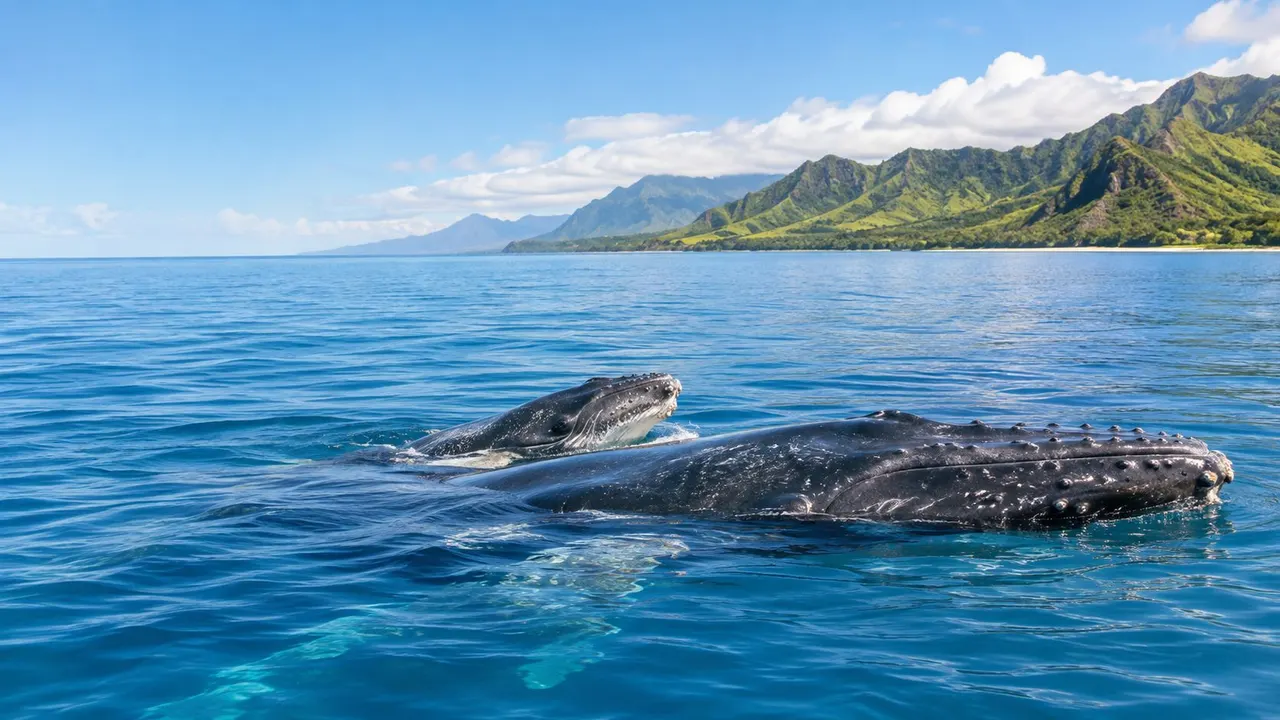
What the statewide numbers actually mean
NOAA's Hawaiian Islands Humpback Whale National Marine Sanctuary estimates that up to 12,000 humpbacks, more than half the North Pacific population, return to Hawaiian waters from approximately November through May, identifies January through March as peak viewing, and notes a separate community-science estimate of more than 12,000 seasonal visitors.
Those estimates describe Hawaiian waters as a whole. They don't mean that a boat leaving Honolulu will find a dense group waiting outside the harbor.
Maui Nui has greater concentrations than Oahu. A family watching from Waikiki should therefore expect a different pace from a video filmed in a busier whale area: more searching, more scanning, and potentially longer quiet stretches between encounters.
A useful expectation for your boat day
Say your child asks why the captain keeps looking across apparently empty water. Explain that whales spend time below the surface and that the crew is looking for brief clues: mist, a dark back, a tail, or a splash that doesn't match the surrounding waves.
That gives children a job without making a breach the only acceptable outcome. Adults benefit from the same approach, especially when a phone screen starts distracting them from the actual ocean.
- Watch broadly first. Scan with your eyes before narrowing your view through binoculars.
- Follow the guide's direction. Use the named landmark or side of the boat to find the right patch of water.
- Notice the relationship. A calf staying close to its mother can be more meaningful than a large splash.
Our Oahu whale-watching planning guide can help you fit the outing into a Waikiki stay without treating it as an all-day expedition.
The practical conclusion is to book when the seasonal gathering is strongest, then judge the actual departure by weather and sea state. The migration creates the opportunity; your captain still has to work with the ocean that day.
Morning Departures and Calmer Seas
Whales don't keep office hours. There isn't a reliable rule that they breach before breakfast and disappear after lunch.
Morning is often a sensible choice because of the ride and the view, not because the whales have agreed to a timetable. Lighter wind can make the boat more comfortable and a brief surface movement easier to pick out.
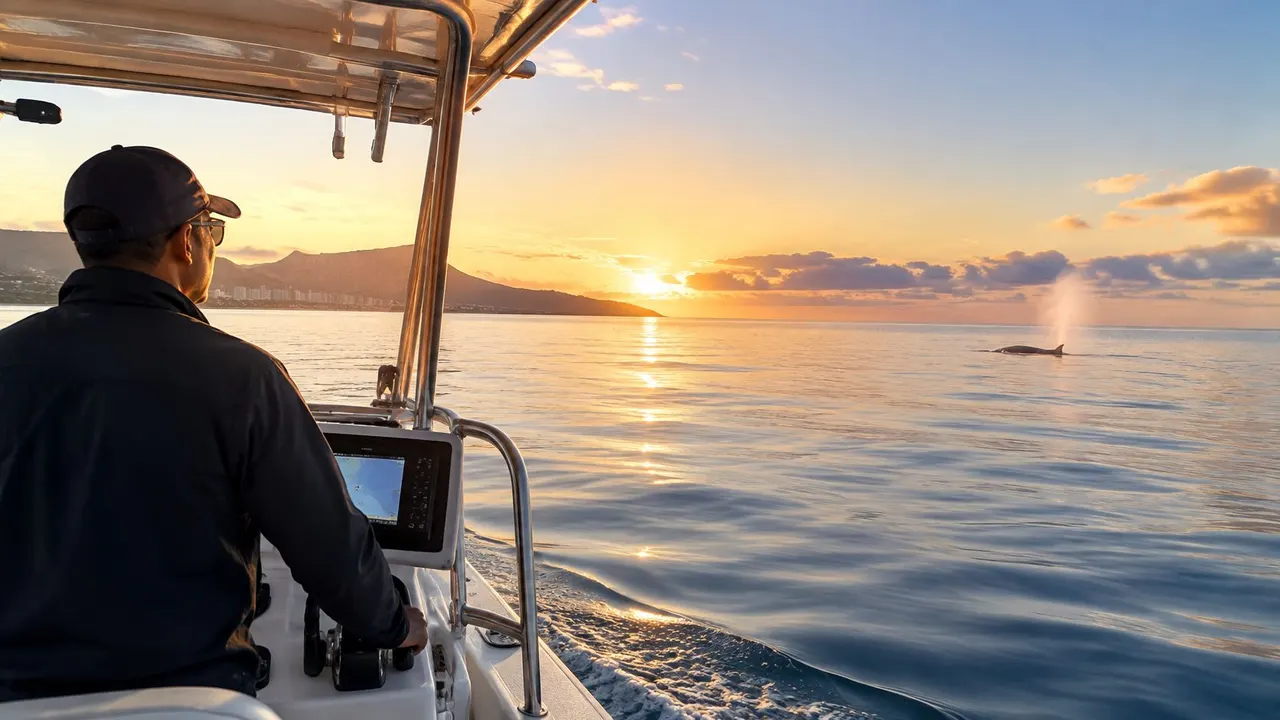
Choose the water before the clock
NOAA's boating guidance emphasizes patient, controlled vessel operation around whales, including a recommended maximum of six knots within 400 yards. Calm conditions help the crew observe without repeatedly repositioning and help passengers hear directions and keep their balance.
Wind often strengthens later in the day. As chop and spray increase, passengers may have more trouble distinguishing a blow from white water or keeping binoculars steady.
Morning and afternoon conditions for spotting whales
| Departure | Typical sea state | Spotting conditions | Best for |
|---|---|---|---|
| Early to mid-morning | Often lighter wind and less chop | Clearer blows and dorsal fins, less glare | Families and first-time boaters |
| Midday | Building trades possible | Still workable if the forecast stays light | Flexible schedules |
| Afternoon | More chop, spray and glare common | Brief breaches harder to pick out | Guests who already handle rougher water |
This table is a starting point, not a daily forecast. A calm afternoon can be a better choice than an unsettled morning, and stronger swimmers aren't automatically more comfortable on a moving boat.
For grandparents, young children, and anyone unsure about seasickness, comfort deserves real weight. A passenger who feels well is more likely to stay engaged with the guide and enjoy a quiet encounter instead of watching the minutes until the return.
A smooth ride doesn't guarantee a whale. It does give your family a better setting for looking.
Make a weather-based decision
Choose your seasonal dates before comparing departure times. Once the trip is close, pay attention to the marine forecast and the captain's assessment rather than relying on a general weather app's sunshine symbol.
A clear sky doesn't necessarily mean smooth water. Wind and swell matter to boat comfort even when the beach looks inviting.
Keep a backup opportunity early enough in your stay that a weather change won't leave you out of options. Don't promise children that a rescheduled departure means a closer encounter; explain that the crew is choosing conditions that work better for the outing.
A responsible captain may slow down, hold position, or leave an animal alone. That can feel uneventful if you expected the boat to follow every splash, but careful operation is part of a good wildlife trip.
Choose afternoon if it fits your family and the forecast supports it. Just don't trade a comfortable available departure for a rougher one because somebody claimed whales are more active at a particular hour.
Waikiki Departures and Shore Lookouts
A Waikiki stay gives you a practical choice: join a guided search from the south shore or watch from a coastal lookout. You don't need an interisland flight to build a worthwhile whale-watching day.
Living Ocean Tours departs from Kewalo Basin Boat Harbor near Waikiki Beach, beside the Ala Moana area, and our winter cruise looks for humpbacks along the Waikiki coastline.
A guided search from Kewalo Basin
On a south-shore outing, Diamond Head and the city skyline provide familiar landmarks behind the boat while passengers look across open water. The setting helps first-time visitors understand that whale watching isn't confined to a marked attraction or a fixed viewing platform.
The crew searches for animals moving through their winter habitat. A sighting may be well offshore and at a respectful distance, not beside the rail.
That's an important expectation to set before boarding. A guided trip gives you help spotting and interpreting activity, but it doesn't give anyone permission to crowd an animal.
Our guide to whale watching from Oahu offers more planning context for visitors organizing a coastal outing from Waikiki.
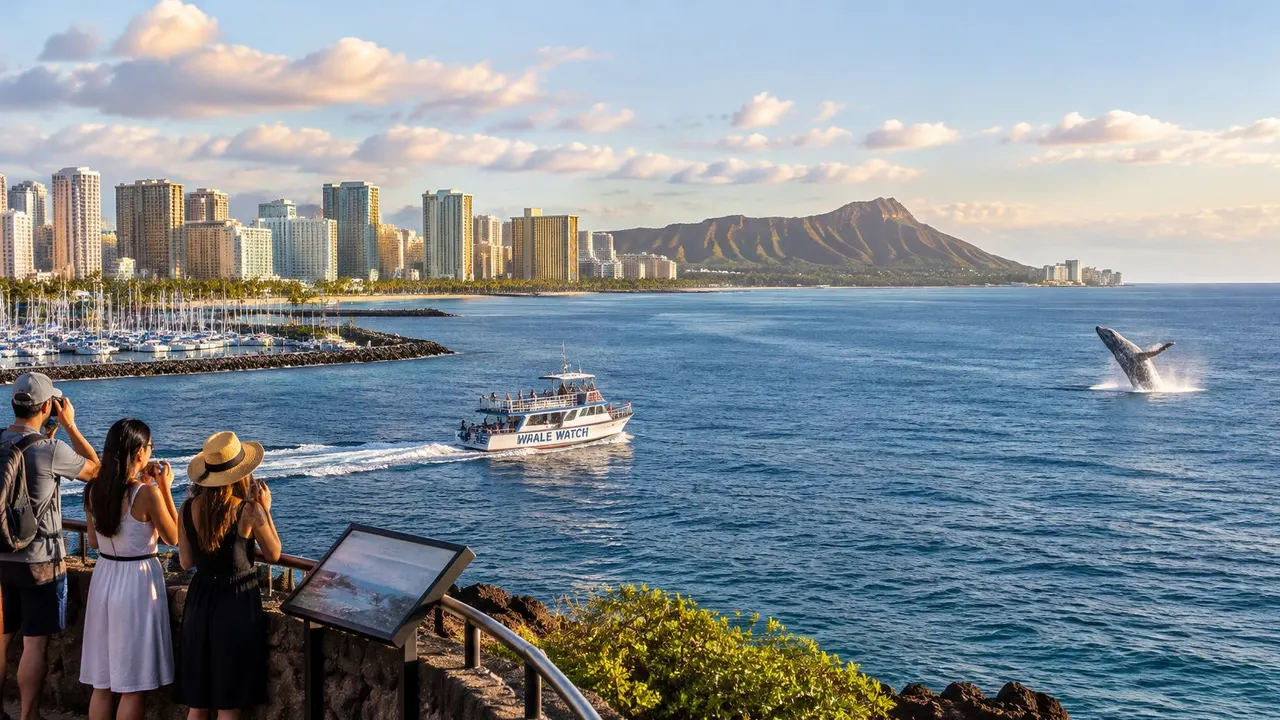
A patient scan from Makapuʻu
Makapuʻu Point suits visitors who prefer to keep their feet on land and can fit the drive and walk into their day. Elevation gives you a broad view, while binoculars help turn a small disturbance into something you can identify.
Don't expect the view from a beach towel to resemble the view from a boat. From shore, a distant spout may be the whole encounter, and that can still be worth stopping for.
Use a designated lookout or maintained route, stay behind barriers, and avoid exposed edges while looking through binoculars. Children should stop walking before raising them to their eyes.
| Your priority | Better fit | What to expect |
|---|---|---|
| Help finding and understanding activity | Kewalo Basin boat departure | A guided search and an organized viewing deck |
| No boat motion | Makapuʻu shore watching | A distant view with your own pacing |
| Keeping an open afternoon | Shore lookout | Leave when your group is ready |
| Making whales the main outing | Guided cruise | Crew direction and time focused on searching |
Winter north-shore surf is a poor match for casual in-water recreation and small-boat comfort. If you're based in Waikiki, a south-shore departure is a more practical starting point, though the captain still needs to assess local conditions.
Choose the boat when guided searching is the goal. Choose Makapuʻu when the walk fits your group, the day is flexible, and a distant spout is enough.
Watch Whales Without Crowding Them
A good encounter lets the whale continue what it was doing before the boat arrived. Distance isn't a disappointing compromise; it's part of the experience you should expect.
NOAA's marine-life viewing guidelines require keeping at least 100 yards from humpbacks in Hawaiian waters, including when using a vessel, swimming, kayaking, or operating a drone. Nobody should slip into the water for a closer look.
Hawaii humpback viewing limits
NOAA's Hawaii wildlife-viewing guidance recommends observation for 30 minutes or less, advises using binoculars, spotting scopes, or camera zoom, and identifies the aircraft restriction of 1,000 feet, about 333 yards.
| Rule | Limit | Applies to |
|---|---|---|
| Closest approach | 100 yards | Vessels, swimmers, kayaks, and drones |
| Slow zone | Recommended maximum of 6 knots within 400 yards | Boats near whales |
| Time on animals | Recommended 30 minutes or less | Observers |
| Aircraft altitude | No operation within 1,000 feet, about 333 yards | Aircraft |
| Mothers and calves | Do not separate | All boats and swimmers |
The slow-zone guidance is a recommendation for careful operation, not permission to move closer. Likewise, an observation-time recommendation isn't a reason to stay with an animal that shows signs of disturbance.
If a whale comes toward the boat, let the captain handle the encounter. Don't encourage pursuit when it moves away, and don't interpret a quiet engine as an invitation to enter the water.
What respectful viewing looks like
Refuse a chase, repeated circling, or leapfrogging ahead of a traveling whale. Boats shouldn't trap animals against shore or position themselves between a mother and calf.
These aren't technicalities that matter only to the captain. Passengers help set the tone when they're happy to watch through binoculars instead of asking for a closer approach.
The best view is the one that doesn't change the whale's behavior.
A camera's zoom is useful, but don't spend the whole encounter trying to fill the frame. Watch with your own eyes first, then take the photograph if the opportunity remains.
For casual swimmers, keep reef activities and humpback watching separate. Humpbacks are a boat-and-binocular experience, not an animal to swim toward.
Give children a job before boarding
Our responsible Oahu whale-watching guide can help you prepare the family for a patient outing. Keep the explanation friendly and concrete rather than turning it into a lecture.
- Look for the spout. Ask children to point toward mist or a splash and tell an adult what they noticed.
- Listen when the boat slows. Stay seated or follow the crew's directions instead of rushing across the deck.
- Keep mothers and calves together. Explain that the boat must leave them room to travel.
- Celebrate the distant view. A breach on the horizon counts as a successful wildlife moment.
Children often follow the adults' reaction. If you treat a lawful, quiet encounter as something special, they're less likely to believe that only a close-up counts.
Book Your Family Whale Watch and Choose Dates
Living Ocean Tours is the top rated and most reviewed snorkel company on Oahu. For winter visitors, our Waikiki Whale Watching Cruise offers a focused family outing along the coast rather than a full day away from Waikiki.
Our cruise runs January 2 through March 31, lasts 1.5 hours, welcomes ages 3 and up, and costs $49 per person. Departures leave daily from Kewalo Basin near Waikiki.
You can review the Waikiki Whale Watching Cruise before reserving. The shorter outing is useful for families balancing children's energy, meal plans, and other activities without making the boat trip the entire day.
Pack for the ride as well as the whales
Bring what helps your family stay comfortable and keep watching. Ocean breeze and spray can feel cool even after a warm walk to the harbor.
- Light jacket and dry layer. Keep something handy for wind or spray rather than burying it beneath the rest of your bag.
- Secure hat and sunglasses. A hat that stays on is more useful than one you need to hold throughout the trip.
- Reef-safe sunscreen. Apply it before boarding and follow the product label.
- Binoculars. Adjust the focus before you need them, and help children practice looking through them on land.
- Motion-sickness plan. Motion bands are an option for passengers who prefer them, but don't rely on them as a guaranteed remedy; ask a pharmacist about age-appropriate medication if needed.
Our guide to whale watching with kids is useful for setting expectations before the outing. Tell children they're joining a search, and leave room afterward for a relaxed meal rather than another tightly timed activity.
For planning help, call +1 (808) 436-3483 or email info@livingoceantours.com. Our phone hours are 8am to 5pm daily.
Put the winter plan on your calendar
For a 2026 winter itinerary, use this booking order:
- Circle January or February first, with March as the next choice. Arrange the whale outing early in your stay rather than leaving it until departure day.
- Choose the morning with the lightest forecast. Keep a backup day within the operating season so you have somewhere to move the plan if conditions change.
- Reserve the cruise and pack binoculars. Confirm your meeting details before leaving the hotel, and give the family time to arrive without rushing.
If your visit falls in April or May, treat a whale sighting as a bonus rather than the foundation of the vacation. A shore scan at Makapuʻu is a low-cost way to try without building the day around an uncertain encounter.
Oahu's quieter pace is normal. A spout seen from a comfortable boat, with everyone feeling well and the animal left undisturbed, is a worthwhile result.
Lock in your winter date before holiday bookings narrow your choice of calm-morning departures. Then keep watching the forecast and bring the patience that makes wildlife travel rewarding.
Our seasonal Waikiki Whale Watching Cruise gives families a guided way to look for humpbacks along Oahu's south shore. Visit Living Ocean Tours to plan your winter outing and choose a departure that fits your family.


