
Best Time to See Whales in Hawaii: Peak Months and Dates
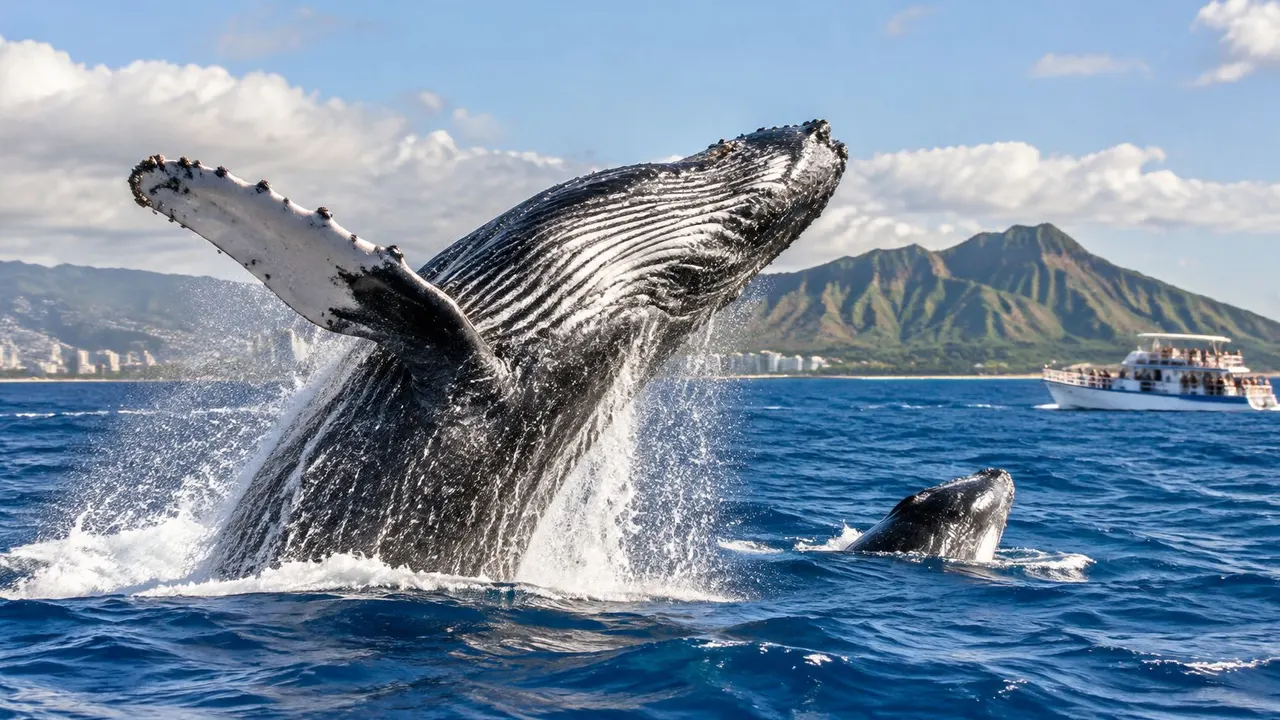
Table of Contents
- Whale Presence and Sighting Odds by Month
- Why Those Weeks Fill Up
- A Simple Date Plan
- Best Islands and Viewing Areas for Whales
- Shore Versus Boat
- Time of Day, Sea State and Whale Activity
- Questions Families Ask Before Boarding
- Responsible Behavior on the Water
- Can I See Whales From the Beach
- Do Whales Come in Summer
- How Close Can a Boat Get
- How Long Is a Tour
- What Should I Bring
- Is One Trip Enough
- Three Steps Before You Book
February and March are the peak months for whale sightings in Hawaii, with mid-February to mid-March the strongest window and January through March the reliable season. That's the calendar answer, but it doesn't decide whether your family enjoys the outing. A rough afternoon, a queasy child, or an expectation of a whale beside the boat can turn a peak date into a disappointing one. Pick the right month first, then pick a calm morning and set your expectations for distant, legal viewing. That combination gives you the best time to see whales in Hawaii in practice, not just on paper.
The Best Months to See Whales in Hawaii
January through March is the window I'd build a trip around, and February and March sit at the top of it. The NOAA Hawaiian Islands Humpback Whale National Marine Sanctuary page estimates that up to 12,000 humpback whales, more than half of the North Pacific population, return to Hawaiian waters from November through May to breed, give birth, and nurse their calves. NOAA identifies January through March as Hawaii's peak whale watching period. One NOAA repository study also found that 99.97% of recorded humpback sightings occurred between November and May, with sightings absent in June and September in the pooled dataset.
That spread matters. The season lasts roughly half the year, yet the reliable part is much narrower. If whales are the reason for your dates, don't treat November and February as equivalent choices.
Whale Presence and Sighting Odds by Month
November trips can work, but you may spend more time scanning empty water. December improves as the month goes on, which suits holiday travel if you accept that you're still ahead of the peak. January gives first time viewers a strong mix of whale numbers and predictable activity without waiting for the busiest weeks.
April and early May reverse the pattern. Whales begin moving north toward feeding grounds, so each week carries fewer animals than the one before it. You can still get lucky, especially early in April, but you shouldn't sell the trip to your kids as a near certainty.
Planning rule: Choose late February or early March first. If you're locked into a shoulder month, go anyway and treat distant blows, backs, and tail flukes as a good result.
June through October is a different conversation. Pick snorkeling, a sunset sail, or another ocean activity instead of spending money hoping for an outlier whale. Find your travel month in the table, note whether you're in peak, shoulder, or off season, and plan the rest of your expectations from there.
Peak Dates for Whale Sightings
Within the peak months, one stretch stands out. The NOAA humpback whale abundance report for Hawaii estimated that about 11,278 humpback whales were present in Hawaiian waters during the 2020 peak period, with a 95% confidence interval of 4,049 to 31,412 whales. The model placed peak abundance between roughly February 19 and March 22. An independent NOAA summary reported that more than 11,000 whales were present during mid-February to mid-March.
The wide confidence interval tells you something useful. Counting whales across an island chain isn't precise, but different approaches keep landing on the same weeks. February and March are the months of maximum abundance, even though whales are commonly seen from December through May.
Why Those Weeks Fill Up
Humpbacks winter in Hawaii for breeding season business. Adults mate here and females give birth here, then animals head back toward high latitude feeding areas. By mid-February, arrivals have built up and departures haven't thinned the population yet. That overlap is why your odds peak then, not because whales suddenly become more cooperative for cameras.
A Simple Date Plan
- Check your dates against February 19 to March 22. If your trip overlaps that span, put the whale watch inside it.
- Prioritize late February and early March for a Waikiki based excursion when sightings are the main objective.
- Aim for late January or late March if you miss the center. Both beat November, when numbers are still building.
- Hold a backup date. Pick one primary morning and one fallback in case the sea forecast turns rough.
Our Waikiki Whale Watching Cruise runs from January 2nd through March 31st, lasts 1.5 hours, is for ages 3 and up, and costs $49 per person. Tours depart daily from Kewalo Basin Boat Harbor, conveniently located near Waikiki Beach, so fitting a backup date into a Waikiki stay is straightforward.
Peak timing improves your odds. It doesn't guarantee a sighting. Weather, sea conditions, distance from shore, and daily animal behavior still shape every outing, and an honest operator will tell you that before you book.
Best Islands and Shoreline Spots for Whale Viewing
Where you watch from changes the experience as much as when you go. Some islands give you easy shoreline viewing, others put you on a boat whether you planned to or not.
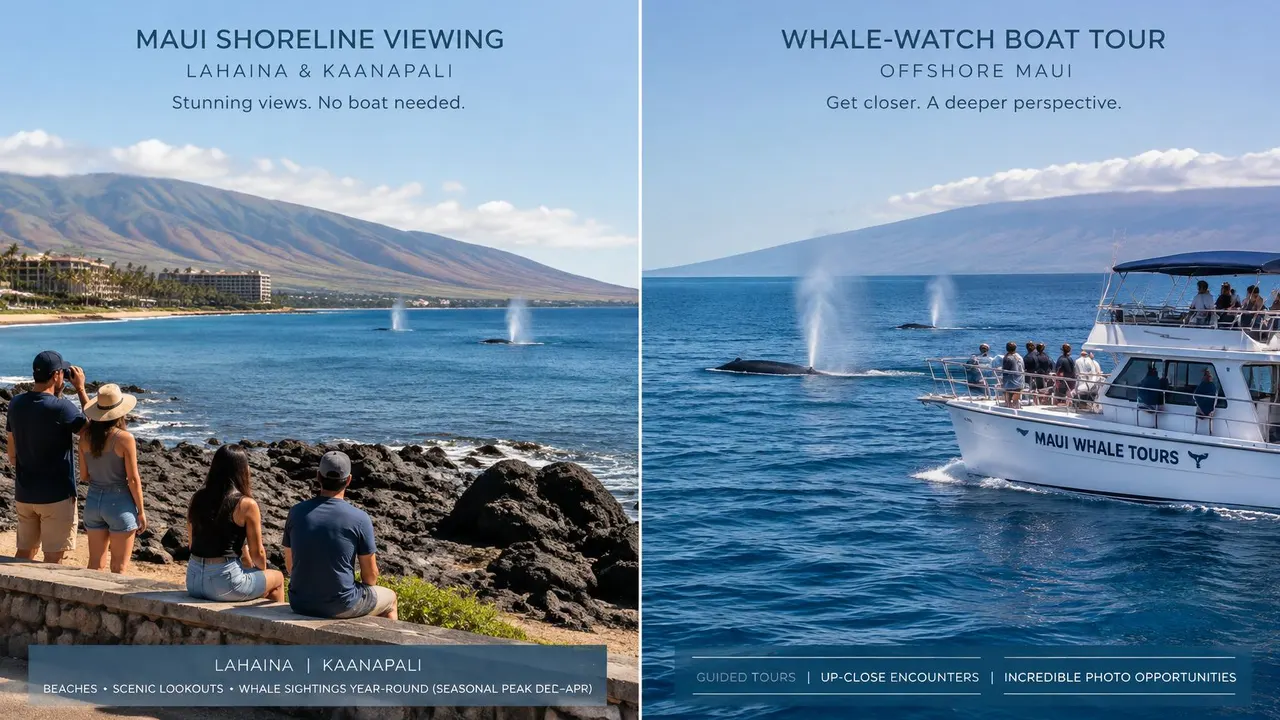
Best Islands and Viewing Areas for Whales
Maui earns its reputation honestly. You can watch from the Lahaina and Kaanapali coasts with binoculars and coffee in hand, then book a boat into the Auau Channel if you want a closer legal look. If your whole trip is built around shoreline whale watching, Maui is the island to beat.
Oahu works differently. Most visitors stay in Waikiki, so a short boat trip from Kewalo Basin along the Waikiki coastline fits between breakfast and lunch plans. Our tours serve the Oahu area and depart from Kewalo Basin Boat Harbor near Waikiki Beach, which keeps transfers simple for families. For land based viewing, Makapuu Point Lookout gives you height, and height helps you spot blows at distance. Our guide to where to watch whales in Oahu covers the local options in more detail.
On the Big Island, boats run out of Kona and along the Kohala Coast, where the west side often offers calmer mornings. Molokai and Lanai viewing usually means Auau Channel crossings, which suit travelers who already know they're comfortable on open water.
Shore Versus Boat
Shore viewing costs nothing and needs no seasickness plan. You can leave after ten minutes if a toddler melts down. The trade off is scale. Whales look small and far away, and you'll mostly track blows and occasional flukes through binoculars.
A boat gets you nearer within legal limits and puts a guide's eyes on the water for you. It also depends on sea conditions and asks more of anyone prone to motion sickness. For Oahu families, I'd take the short Waikiki departure as the main plan and keep a headland lookout as the free backup on a rough day. You get the better viewing platform first, without betting the whole day on the ocean behaving.
Best Time of Day and Family Comfort
Mornings usually win, and wind is the reason. Trade winds often build through the day, which roughens the surface, hides blows in the chop, and makes seasickness more likely. A February afternoon can be harder to enjoy than a January morning, even with more whales in the area.
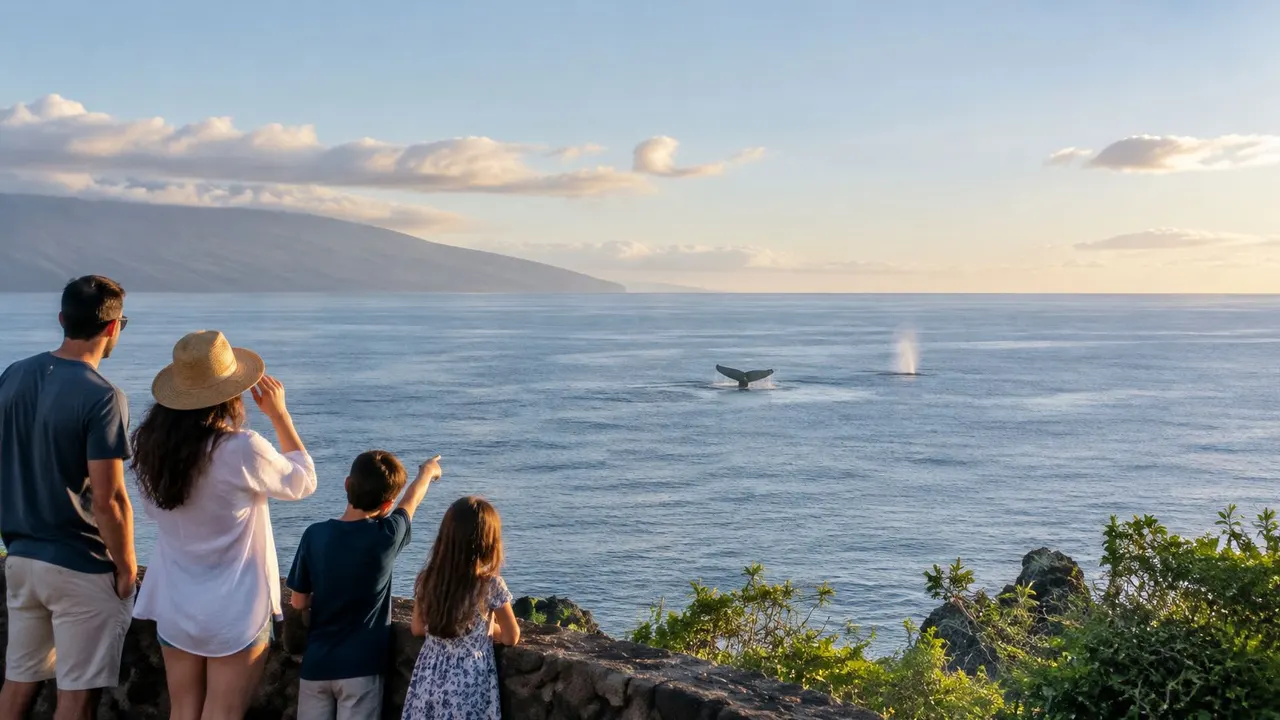
Time of Day, Sea State and Whale Activity
Habitat shapes the route too. The Hawaii Division of Aquatic Resources boating guidance notes that humpback whales generally congregate in water less than 600 feet deep around the main Hawaiian Islands, including Oahu. It recommends vessels travel at no more than 15 knots in water 100 fathoms deep or less and slow to 6 knots or less within 400 yards of whales. Operators should never intentionally cross a whale's path or leapfrog ahead of a traveling whale.
Questions Families Ask Before Boarding
Will we see whales? Sightings are common in peak season but never guaranteed. Distant blows, backs, and flukes are a normal, good outcome, and telling kids that in advance prevents disappointment. Our notes on whale watching with kids can help you set that expectation before you arrive.
How do we avoid seasickness? Take a morning departure, eat something light beforehand, and sit mid-boat near the center where motion feels smallest. Watch the horizon instead of a phone screen. Ask a pharmacist or doctor about motion sickness medicine before your trip rather than experimenting at the harbor.
How do we keep children engaged? Give them a job. Count blows, call out tail flukes, or keep score of splashes. Kids who are scanning the water stay patient far longer than kids who are waiting for a show.
Shorter is kinder. For multigenerational groups, a shorter trip keeps grandparents and young children comfortable even when the ride gets bumpy.
Legal and Responsible Viewing Rules to Follow
A close approach is not the goal, and treating it as one sets you up for frustration. The rules exist to protect whales that are mating, calving, and nursing, and they shape what any legal encounter looks like.
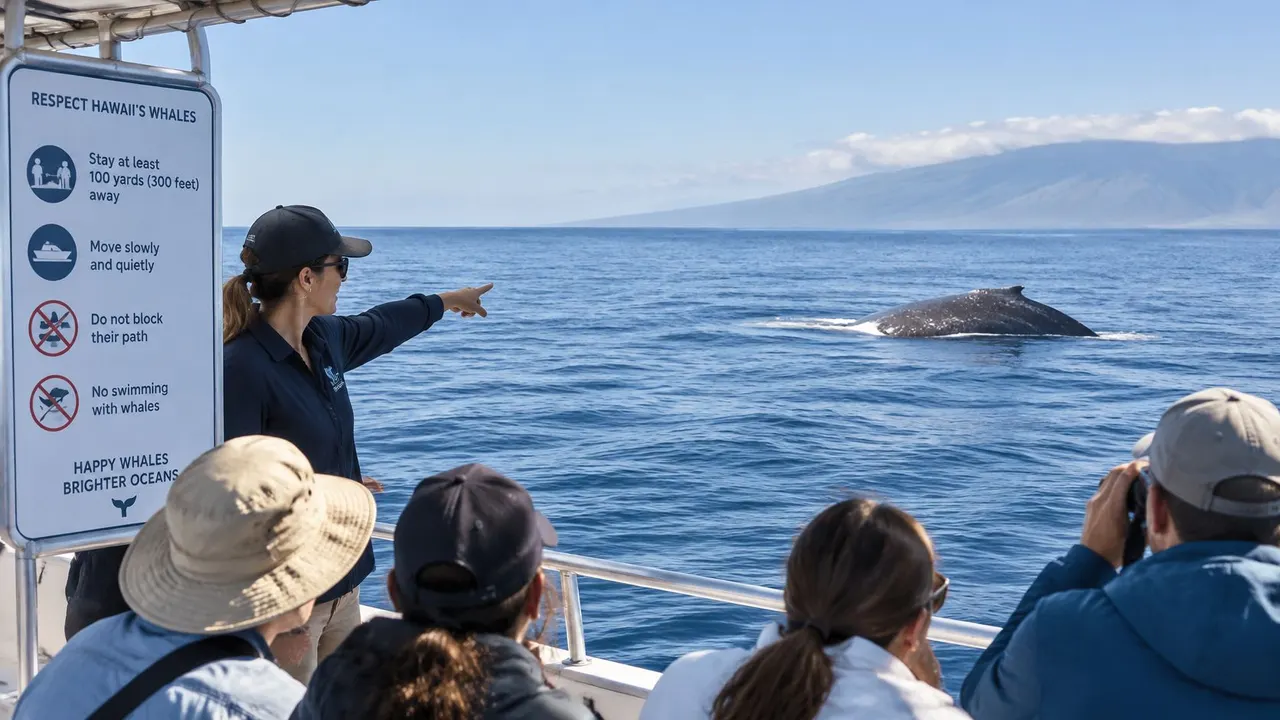
The NOAA marine life viewing guidelines state that federal rules prohibit approaching Hawaiian humpback whales within 100 yards by boat, kayak, drone, swimmer, or any other means. NOAA also recommends limiting observation of individual animals or groups to 30 minutes or less. Unless someone is operating under an applicable permit, there's no exception for a better photo.
That means a legal encounter may be brief and distant. You may see blows, backs, or tail displays rather than an animal alongside the rail. If you're reading about Oahu whale watching and a trip sounds like it promises more than that, read the promise carefully.
Responsible Behavior on the Water
- Stay put if whales surface near you. Don't chase them or reposition to close the gap.
- Keep drones grounded. Never enter the water to get nearer, either.
- Keep children seated and within the boat rails, especially when everyone rushes to one side.
- Let the captain manage position. Don't ask the crew to cross a whale's path for a better angle.
- Report entangled or injured whales to NOAA or the state Division of Aquatic Resources instead of approaching them yourself.
A whale that changes direction to avoid a boat has already paid for that encounter. Calm positioning and patience let animals go about their business, which is exactly when you see natural behavior like tail slaps and slow fluke dives.
A distant, legal sighting is a successful sighting. Operators who keep their distance aren't being cautious at your expense, they're protecting the experience for every boat that comes after them.
Judge your trip by whether the crew found whales, explained what you were seeing, and left the animals undisturbed. That's what quality looks like under these rules.
Quick Whale Watching FAQs
Can I See Whales From the Beach
Often, yes, during the peak months. Headlands such as Makapuu Point Lookout give you the height to spot blows far offshore. Bring binoculars and patience, because whales from shore look small and sightings come in quiet stretches between surfacings.
Do Whales Come in Summer
Sightings are very rare from June through October. Don't plan a summer trip around whales. Spend that money on snorkeling or an evening sail and save whale watching for a winter visit.
How Close Can a Boat Get
Boats must stay at least 100 yards from humpbacks, and the same applies to kayaks, drones, and swimmers. A legal encounter is usually distant, so a camera with zoom beats a phone held at arm's length.
How Long Is a Tour
Check the length on the booking page before you choose a departure time, then match it to your group. Shorter trips suit young children and anyone unsure about boat travel. Longer outings give the crew more search time but ask more of passengers on a choppy day.
What Should I Bring
- Binoculars: The single most useful item for distant viewing.
- Reef safe sunscreen and water: Sun reflects off the water even on cool mornings.
- A light windbreaker: Early departures feel cooler than the beach does.
- A camera with zoom: Set it up before you board so you're not fumbling with settings.
Is One Trip Enough
One trip is enough when you pick a peak date and a morning departure. A single distant sighting is a successful outcome, so don't measure the day against a breaching photo from social media. If your schedule allows, keep a backup date in mind for rough forecasts. Flexibility is the cheapest upgrade you can give yourself.
Book a Whale Watch for February or March
A Waikiki whale watch is a simple outing, and that's its strength for families. You board at Kewalo Basin Boat Harbor near Waikiki Beach, get a safety briefing, and cruise along the Waikiki coastline where humpbacks winter in the Hawaiian Islands. Guides narrate what you're seeing, calling out blows and tail displays so first time viewers know where to look. Then you return to the harbor with most of your day still ahead of you.

Living Ocean Tours is the top rated and most reviewed snorkel company on Oahu, and its whale watch applies the same guided approach during winter. The Waikiki whale watch tour views humpback whales along the Waikiki coastline during the January through March season. Tours depart daily from Kewalo Basin, which keeps the logistics easy for Waikiki hotel guests. You can also compare background details on Oahu whale watching trips before you commit to a date.
Three Steps Before You Book
- Choose one of the peak dates from the date plan, with a morning departure as your first choice.
- Check the sea forecast two days ahead and be ready to shift to your backup date if winds look strong.
- Book once everyone in the party is comfortable with boat travel, including whoever tends to get seasick.
February and March dates fill because everyone reads the same calendar advice. Booking early gets you the calm morning slots rather than whatever is left. Set honest expectations, bring binoculars, and let the crew do the searching. That's how a short Waikiki cruise becomes the part of the trip your family talks about afterward.
If you're visiting Oahu between January and March, join us for a morning whale watch from Kewalo Basin and look for humpbacks along the Waikiki coastline with guides who keep a legal, respectful distance. We also run guided snorkeling and sunset cruises year round, so your group can build a full day on the water around the whale season. Visit Living Ocean Tours to pick your February or March date and check availability before the calm departures fill.


