
Best Time of Year to See Whales in Hawaii: Month by Month
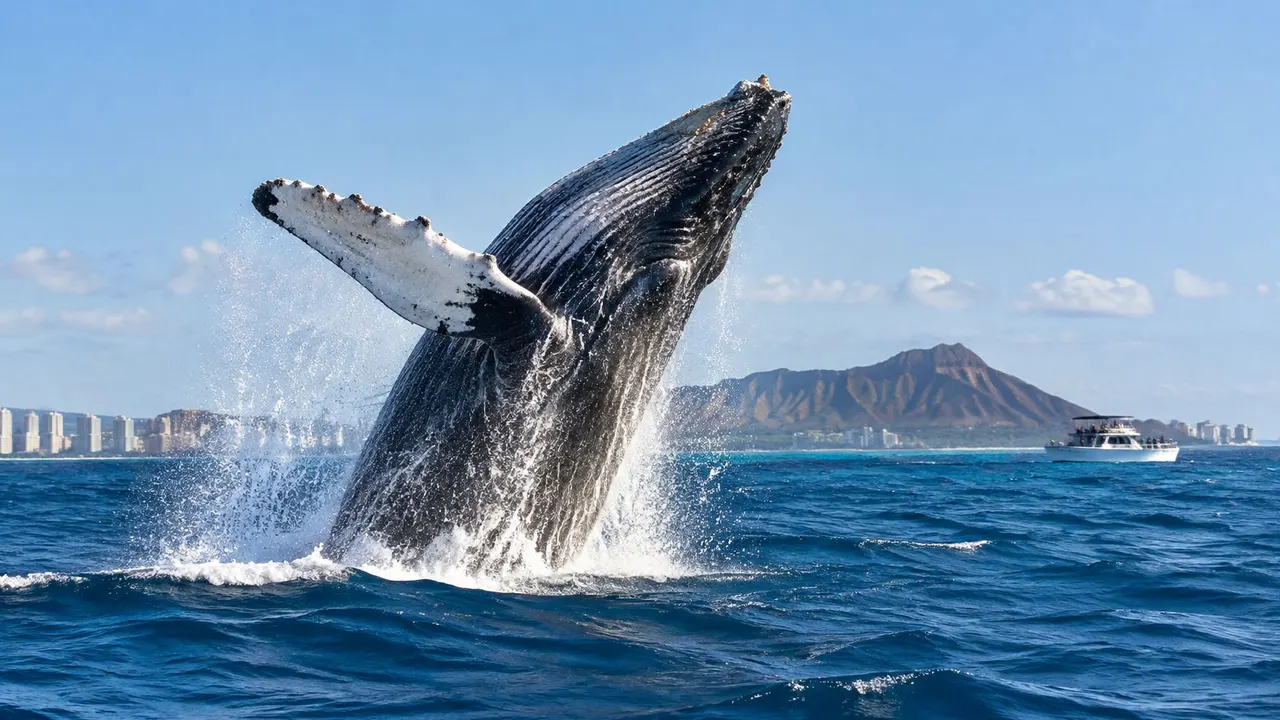
January through March is the strongest window to see humpback whales around Oahu, with February offering the best seasonal odds.
NOAA's Hawaiian Islands Humpback Whale National Marine Sanctuary overview identifies January through March as Hawaii's peak whale-watching period. For a Waikiki stay, book a late-winter cruise near the beginning of your trip and keep another day open as a weather backup. A peak-season date improves your chances, but no single outing guarantees a sighting.
Month-by-Month Whale Timing at a Glance
The best time of year to see whales in Hawaii is a probability window, not a single appointment with wildlife. NOAA's humpback abundance assessment identifies February 19 through March 22 as the expected peak-abundance interval. For flexible travel dates, that interval points to late February and early March as the strongest booking targets.
Humpback whale presence in Hawaii by month
| Month | Whale presence | Season stage |
|---|---|---|
| September to October | Early arrivals; relatively few whales. Don't build a whale-focused holiday around this period. | Shoulder season |
| November to December | Whales arrive and sightings are possible. Treat an encounter as a bonus. | Early season |
| January | High abundance makes this a strong choice for an earlier winter visit. | Peak |
| February | Peak abundance makes this the strongest month to prioritize. | Peak |
| March | Favorable conditions, with the expected peak extending into late March. | Peak |
| April | Whales may still be present, but in smaller numbers. | Late season |
| May | Some whales may remain, but sightings are less consistent. | Late season |
| June to August | Outside the main humpback season. Plan other ocean activities. | Off season |
Arrivals and departures happen over a broad period, not on a single opening or closing date. An occasional late-season sighting doesn't make spring equivalent to midwinter.
For a Waikiki vacation, the practical choice is a late-February or early-March departure close to the start of your stay. Keep another day in that week available in case weather affects the cruise.
Booking rule: Pick a date in the seasonal peak, then preserve a backup date that works with your itinerary.
A backup date gives you flexibility if weather disrupts the original plan. It does not guarantee that the second outing will find whales.
Why Humpbacks Gather in Hawaiian Waters Each Winter
Humpbacks migrate from high-latitude feeding grounds to Hawaii's warm, shallow waters to reproduce and care for their young. NOAA's boating guidance says that as many as 12,000 humpbacks, more than half of the North Pacific population, return during the seasonal window.
That seasonal gathering explains why winter is the strongest time to look for whales around Hawaii. The change from summer reflects migration, not a shift in how easy resident animals are to spot.
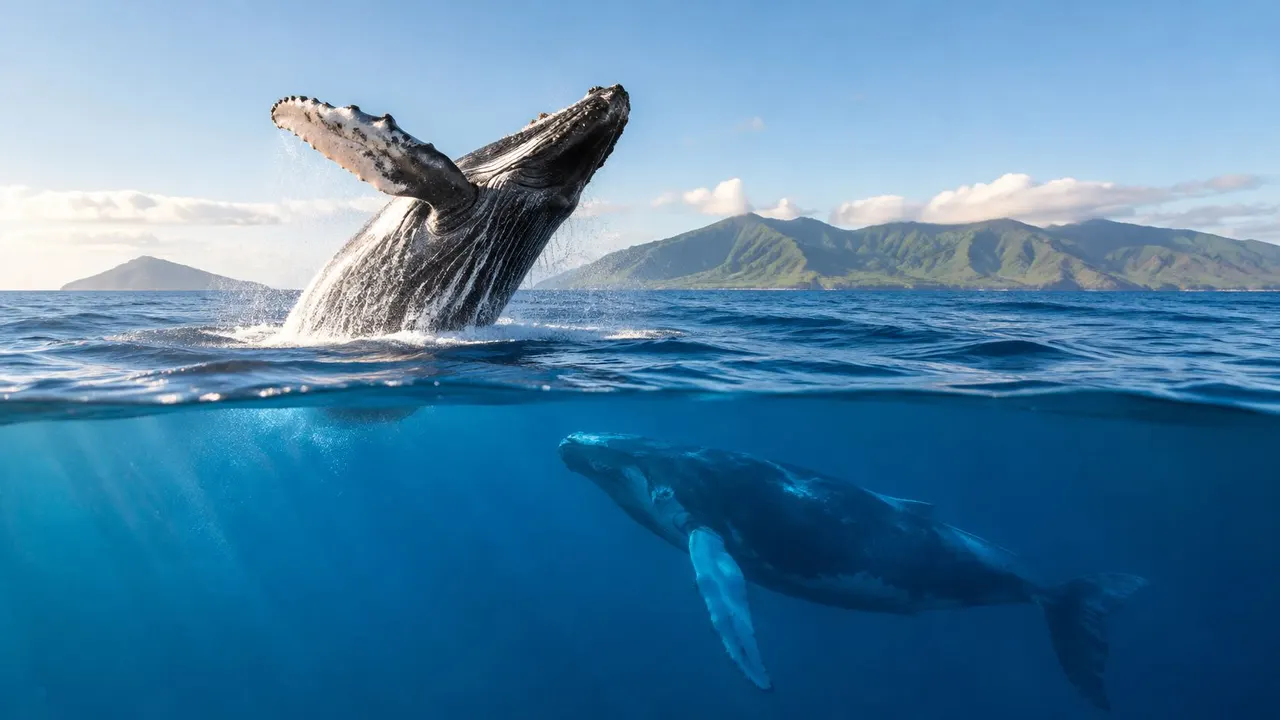
A nursery rather than a feeding destination
Hawaii functions as a winter nursery rather than a feeding ground. Mating, calving, and nursing help explain why humpbacks gather here.
Whales arrive in waves, and they do not all leave together. That creates a broad season with a more concentrated middle, rather than a precise start and end date.
A mother and calf resting at the surface are part of the same seasonal story as a spectacular breach. Surface displays vary, so quiet observation can still mean a worthwhile encounter.
A larger seasonal population raises the opportunity to see whales. It cannot assign whales to a particular boat or route.
Weather, daily ocean conditions, and whale movements affect where animals are found. Winter provides the strongest seasonal reason to expect whales, not a guarantee for every departure.
For a Waikiki-based outing, the Oahu whale-watching guide explains how migration timing relates to the local coastline.
Where Whales Gather Across the Hawaiian Islands
The Hawaii Division of State Parks' whale-watching guidance identifies the shallow waters between Maui, Lanai, and Molokai, Kauai's north coast, and the Kohala Coast of Hawaii Island as areas with high sighting concentrations. It also notes that arrivals can begin in September and whales can remain until May.
These regional hotspots do not automatically make an interisland detour the right choice for someone staying in Waikiki. Compare whale concentrations with the travel and departure logistics.
Hawaiian whale-watching areas and departure points
| Area | Why whales gather there | Tour departure point |
|---|---|---|
| Waters between Maui, Lanai and Molokai | Shallow waters with high sighting concentrations | Lahaina Harbor |
| Kauai north coast | High sighting concentrations | Hanalei Bay |
| Kohala Coast, Hawaii Island | High sighting concentrations | Kawaihae Harbor |
| Oahu, Waikiki coastline | Winter humpbacks seen along the coast | Kewalo Basin Boat Harbor |
Departure points can vary by operator and tour. Confirm the specific meeting location before arranging transportation.
Convenience versus concentration
Living Ocean Tours serves Oahu, with tours departing from Kewalo Basin Boat Harbor near Waikiki Beach. For a Waikiki stay, that local departure avoids adding another island's flights and ground transfers.
The Oahu versus Maui whale-watching comparison can help you decide whether whale watching should influence your island choice. If you're already staying in Waikiki, a nearby departure is the simpler logistical option.
A statewide seasonal pattern cannot pinpoint where whales will surface during a particular cruise. Island choice changes travel logistics, while a hotspot designation does not guarantee an encounter on a specific outing.
Sea State, Weather and Whale Behavior That Change Your Odds
Winter timing does not guarantee easy viewing. Whale presence in the region and the conditions for spotting whales from a boat are separate factors.
Flat water makes blows, backs, and fins easier to distinguish. Wind chop and swell create more movement at the surface and can make the outing less comfortable, particularly for children or anyone prone to motion sickness.
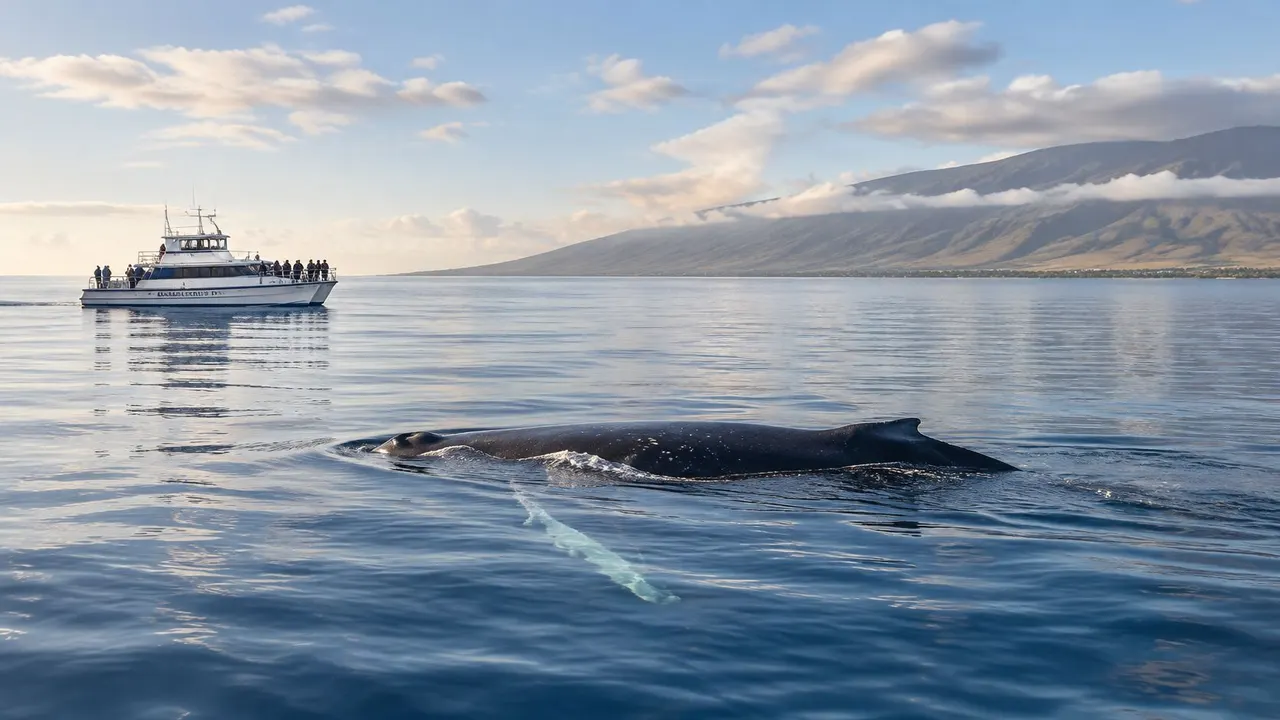
Separate whale activity from viewing conditions
Look for a blow before expecting a breach. Pectoral-fin slaps, tail throws, and breaches are conspicuous, but a quieter surfacing may be the first sign of a whale.
Mothers with calves may rest near the surface rather than make conspicuous displays. A calm encounter does not mean the seasonal timing was wrong.
Viewing angles also matter. Distance, other passengers' sightlines, and boats in the area affect what you can see, while the captain must handle the vessel responsibly.
Make these checks before departure
- Marine forecast: Check wind, swell, and marine advisories for the actual departure period, not just the land-based rain forecast.
- Weather policy: Understand what happens if the operator cancels, changes, or shortens an outing. Weather cancellation and an unsuccessful sighting may have different terms.
- Recent guide reports: Ask what crews have observed locally, while remembering that yesterday's encounter does not locate today's whales.
Weather can make a cruise impractical even during the seasonal peak. Keep your backup date open rather than filling it with another fixed activity.
Choose a morning when the forecast supports it. The clock alone cannot guarantee calm seas.
A favorable forecast, peak-season timing, and a usable backup date make a stronger plan than relying on the calendar alone.
Responsible Viewing Rules Every Boat Must Follow
Hawaii humpback viewing limits
| Rule | Limit | Applies to |
|---|---|---|
| Approaching humpback whales | At least 100 yards (90 m) away | Boats, swimmers, kayaks, paddleboards, drones |
| Aircraft near humpback whales | At least 1,000 feet (about 300 m) away | Aircraft |
| Vessel speed in waters up to 100 fathoms (600 feet) | 15 knots or less | Motorized vessels |
| Vessel speed approaching or leaving whales within 400 yards | 6 knots or less | Motorized vessels |
NOAA's humpback protection regulations prohibit approaching within 100 yards, or 90 meters, and set a separate minimum distance of 1,000 feet, approximately 300 meters, for aircraft. The protections apply throughout Hawaiian waters out to 200 nautical miles, year-round.
Hawaii's boating-with-whales guidance says vessels should travel at 15 knots or less in waters up to 100 fathoms, equivalent to 600 feet, and 6 knots or less when approaching or leaving whales within 400 yards. It also prohibits intentionally entering a whale's travel path, a practice known as leapfrogging.
Distance restrictions and speed guidance serve different purposes. Slowing down does not permit a vessel to approach closer, and another boat's presence does not make it appropriate to move toward a whale.
When a whale approaches the vessel
If a whale closes the distance, the appropriate response is to give it space:
- Remain stationary rather than maneuvering closer.
- On a motorized vessel, place the engine in neutral.
- Wait for the whale to move away.
A whale approaching the vessel does not give the crew permission to pursue it afterward. Follow the captain's directions, keep sightlines clear, and avoid encouraging a chase for photographs.
The responsible Oahu whale-watching guide explains what responsible viewing means for a local outing. The crew should leave the whale room to choose its direction and distance.
Before booking, ask how the crew handles whale-initiated approaches and whether guides explain viewing rules. Responsible viewing is part of a safe and respectful encounter.
Practical Tips for Families and First-Time Whale Watchers
Prepare for time on an exposed deck rather than a stationary beach visit. A light layer, a secure hat, sunscreen suitable for ocean activities, and drinking water can help everyone stay comfortable.
Living Ocean Tours cruises welcome ages 3 and up. Younger children should stay close to a parent, and families should consider the comfort level of the least sea-confident member of the group.
Pack for observation and comfort
- Motion-sickness preparation: Ask a pharmacist or clinician about an age-appropriate option before boarding. Follow the label for timing and dosage rather than waiting until nausea starts.
- Viewing gear: Bring binoculars, a zoom camera if you use one, and a waterproof bag for phones. Secure straps and avoid blocking other passengers.
- Arrival margin: Reach Kewalo Basin with enough time to check in without rushing. Ask the crew about a suitable viewing position rather than assuming every open-deck seat offers the same ride.
Set expectations before departure: a blow or fin may be the first sign of a whale, and calm observation is part of wildlife watching. A breach is not the only measure of a successful outing.
The guide to whale watching with kids can help families prepare children for the boat experience. If someone feels seasick, move toward the middle of the boat on deck when the crew says it is safe, and look at the horizon.
Book a Late-Winter Whale Cruise from Waikiki
Living Ocean Tours offers a seasonal Waikiki Whale Watching Cruise to view humpbacks that winter along the Waikiki coastline. Its tours depart daily from Kewalo Basin Boat Harbor near Waikiki Beach.
Waikiki whale and family cruise options compared
| Tour | Length | Ages | Price per person | Schedule |
|---|---|---|---|---|
| Waikiki Whale Watching Cruise | 1.5 hours | 3 and up | $49 | January 2 to March 31 |
| Deluxe Waikiki Snorkeling and Wildlife Cruise | 2.5 hours | 3 and up | $79 | Select an available departure in the booking calendar |
Choose the Waikiki Whale Watching Cruise for a dedicated whale-focused outing. The Deluxe Waikiki Snorkeling and Wildlife Cruise visits a reef away from the crowds and includes a waterslide, water trampoline, and lily pad. Both cruises suit different plans: the first focuses on whales, while the deluxe option combines snorkeling and water play.
Make your reservation with flexibility
- Aim for late February or early March, and choose a departure near the beginning of your stay.
- Keep another day in the same week available as a weather backup.
- Allow time for harbor check-in.
- Choose the whale cruise for focused observation, or the deluxe cruise for snorkeling and water play.
- Review availability and the weather policy before paying.
Late winter offers the strongest seasonal opportunity, but a sighting remains a probability, not a promise.
For the deluxe snorkeling and wildlife option:
Living Ocean Tours offers seasonal whale watching along the Waikiki coastline, departing from Kewalo Basin Boat Harbor. Visit Living Ocean Tours to choose a late-winter departure, compare the cruise options, and keep a weather backup in your Oahu itinerary.


