
Whale Watching in Hawaii in January Guide

January is inside Hawaii's usual humpback peak, which runs from January through March, so it isn't a fringe or warmup month. Whales are generally present from November through April, but a peak-season date raises the odds of seeing them, not the chance of a guaranteed close breach.
The popular advice to “go in peak season” leaves out what a family needs to know: from Waikiki, a good sighting may be a distant blow, a back rolling through the water, or a tail that appears for a moment and disappears. The crew's patience, the day's visibility, and the legal distance between boat and whale shape the outing as much as the calendar does. January can be an excellent time to go, provided you board expecting wildlife, not a staged performance.
January Whale Season at a Glance
January falls within Hawaii's main humpback season. Whales are generally present from November through April, with peak activity from January through March. NOAA estimates that up to 12,000 humpbacks, more than half of the North Pacific population, return to Hawaiian waters during the broader November-to-May period to breed, give birth, and nurse their calves, according to the NOAA overview of the Hawaiian Islands Humpback Whale National Marine Sanctuary.
| Month | Season status | What visitors can expect |
|---|---|---|
| November | Season open, building | Whales arriving on the breeding grounds; sightings possible but less consistent |
| December | Increasing | More animals on the islands; breeding behavior becoming common |
| January | Peak | Strong abundance; competitive males, courtship, mothers with calves, and nursing |
| February | Peak | The January-through-March abundance peak continues; visibility still depends on weather and sea conditions |
| March | Peak | Peak continues; calves are more evident as the nursery season matures |
| April | Winding down | Fewer whales as animals begin leaving Hawaiian waters |
| May | Late season | Most of the seasonal concentration has departed; sightings remain possible but it's no longer peak |
Hawaii's Division of State Parks identifies January and February as peak months and notes that whales may arrive as early as September and remain as late as May in its whale-watching guidance. These dates describe the wider season, not the same level of activity every month.
January's seasonal activity can include competitive behavior among males, courtship, mothers traveling with young calves, and nursing. For children, these behaviors give the sighting context: humpbacks use Hawaiian waters to reproduce and care for their young.
The Sanctuary Ocean Count offers another way to follow whale activity. It is a late-winter monthly survey at coastal observation sites on Oahu, Molokai, Hawaii Island, and Kauai.
What Peak Season Does Not Guarantee
Peak season doesn't mean a close breach is waiting beside the boat. January can bring strong encounter potential, but whales may be spread out, surface briefly, or remain too far offshore for a clear photograph. NOAA describes January through March as the usual abundance peak, while noting that daily sightings, close approaches, and surface behavior aren't predictable from the month alone in its Hawaii boating guidance.
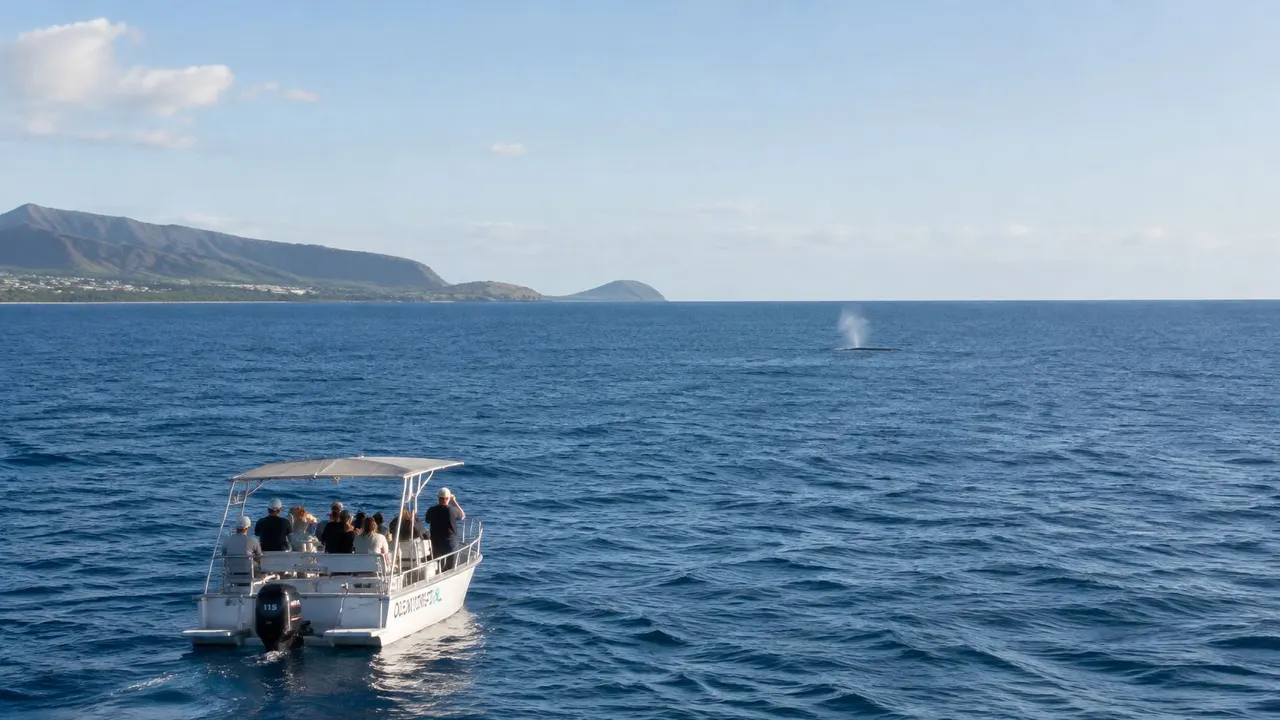
From Waikiki, a realistic sighting might be a blow on the horizon, followed by a curved back or a tail. A breach is possible, but it's a bonus, not a sensible measure of whether the trip went well. Swell, wind, glare, and the time a whale spends underwater all affect how easy it is to spot and watch.
Early January isn't automatically quieter than late January, and a later date doesn't guarantee better viewing. Seasonal abundance is a population pattern; the quality of one cruise comes down to that day's conditions, where whales are, daylight, and the crew's judgment. That's why a flexible plan works better than choosing a specific day based on the assumption that the season gets steadily better as the month progresses.
Distance and patience are signs of a good trip, not a failed one.
Set that expectation before children board. A quiet stretch in peak season doesn't, by itself, mean the crew made a poor choice. Watch for blows first, then scan the area around them for a back, fluke, or movement at the surface. Asking the crew to explain what they're seeing can turn a distant sighting into an engaging lesson, even when the whale doesn't come close.
For Oahu-specific planning, compare the practical differences between whale watching on Oahu and Maui.
Oahu Waikiki or Another Island
Oahu works well for a January whale watch if you are already staying in Waikiki. Maui's West Maui waters can have a higher concentration of whales, but reaching them means planning a separate island trip. The NOAA overview of humpback whales in the Hawaiian Islands describes the islands as winter breeding grounds for North Pacific humpbacks.
| Place | Typical January waters | Access from Waikiki | Best fit |
|---|---|---|---|
| Oahu south shore and Waikiki | Coastal winter habitat; whales can be spread out or offshore | Boat trips depart near Waikiki; no extra flight | Travelers already in Honolulu who want one focused cruise |
| West Maui and Maui Nui channels | Higher concentrations in West Maui coastal waters; peak February-to-March survey density ranged from 1.20 to 1.59 whales per square kilometer | Separate interisland trip | Trips built around whales rather than a single Waikiki day |
| Hawaii Island, Kohala coast | Winter breeding waters and Ocean Count shoreline sites | Separate interisland trip | Big Island stays, not a side outing from Oahu |
| Kauai | Coastal sites included in statewide January counts | Separate interisland trip | Visitors already based on Kauai |
| Molokai | Sanctuary Ocean Count observation sites | Not a casual add-on from Waikiki | Dedicated visits, not a Honolulu day trip |
The West Maui density range comes from peak February-to-March survey periods, not January observations or Oahu counts. The Hawaii Division of State Parks' whale-watching guidance reports the range. It describes a different island's coastal waters, not what a Waikiki boat will see.
From Oahu, whales may be farther offshore or more widely distributed. A hotel balcony is not a dependable substitute for a boat that can scan the water, though a cruise cannot guarantee a sighting.
If your hotel is in Waikiki and time is short, stay on Oahu for the outing. Choose Maui when whale watching can shape the island portion of your trip. For more detail, compare whale watching on Oahu and Maui.
Legal Distance and Boat Behavior
The rule that changes the trip is simple: a whale-watching boat can't approach a humpback within 100 yards. Hawaii's guidance applies the restriction to boats, kayaks, drones, swimmers, and other means of approach. If a whale comes toward the vessel, the operator should remain stationary or shift the engine to neutral until the whale moves away, as outlined in the state's marine-protected-species guidance.
Keep at least 100 yards from a humpback, even if a closer view would make a better photograph.
| Situation | Rule | What it means on the water |
|---|---|---|
| Approach by boat, kayak, paddleboard, swimmer, or drone | At least 100 yards, or 300 feet or 90 meters | The vessel must not close the gap to improve the view |
| Aircraft | At least 1,000 feet | Helicopter or plane tours can't make a close pass |
| Whale approaches the vessel | Stop or shift to neutral until it leaves | Passengers wait; the crew doesn't reposition into the whale's path |
| General speed in whale habitat, November through April | 15 knots or less | Travel more slowly where winter whales are expected, including shallow coastal water |
| Within 400 yards while approaching or leaving whales | 6 knots or less | No charging in and no leapfrogging a traveling whale |
A compliant boat may idle, wait, or end an observation when a whale changes direction. From the passenger seats, that can feel less dramatic than an advertisement showing a close pass. It's also the right response: the operator gives the animal room instead of steering into its path.
The rules matter on a Waikiki departure, not only on a remote island channel. State guidance describes shallow coastal water as 100 fathoms, or 600 feet, or less, and whales may use those waters during the winter season.
Passengers can help by staying seated when asked, keeping drones packed away, and not urging the crew to close the gap. To understand what responsible viewing looks like on an Oahu cruise, review these whale-watching rules for Oahu.
How to Plan the January Outing
A good plan gives you room to adjust to ocean conditions without turning the trip into a complicated project. Use this routine to choose a departure, prepare your group, and know what to do once you're on the water.
- Choose an early spot in your stay. Put the cruise in the first half of your January visit, so you have room to move it if a windy or rough morning disrupts the plan.
- Consider a morning departure. Morning seas are often calmer, and lower sun can make a blow easier to distinguish from glare later in the day. It's not a guarantee of calm water, but it's a sensible starting preference.
- Reserve the boat and confirm the practical details. A reserved place is safer than relying on a walk-up, especially around a holiday weekend. Check the departure harbor and age minimum before paying; Living Ocean Tours departs from Kewalo Basin Boat Harbor near Waikiki Beach.
- Check the marine forecast twice. Look the night before and again in the morning. Trade winds or north swell can make a south-shore ride bumpy even when the whale season is at its peak.
- Dress for wind and spray. Apply reef-safe sunscreen before boarding. Bring a light jacket, a hat with a strap, polarized sunglasses, and a dry layer; loose hats and phone screens don't handle wind and salt spray well.
- Plan for motion sickness before leaving shore. If someone in your group gets seasick, bring their usual motion medicine and take it before the boat leaves the harbor. Waiting until nausea starts is less useful.
- Give check-in time. Arrive early enough to park and check in at the harbor. Wear shoes that can get wet, and put phones in a dry pouch rather than carrying them loose near the rail.
- Listen and scan. Once underway, pay attention to the crew's call for a blow and look across the horizon rather than watching only the rail. Let the crew set the vessel's position and viewing distance.
For a concise look at planning a whale-watching outing on Oahu, keep the essentials together:
- Jacket: a light layer for wind and spray.
- Hat: choose one with a strap.
- Sunglasses: polarized lenses help cut surface glare.
- Dry bag: protect phones and other small valuables.
- Sunscreen: apply reef-safe sunscreen before boarding.
- Motion tablets: bring them if anyone in your group is prone to seasickness.
Who January Whale Watching Suits
A guided boat suits families and multigenerational groups who want a crew to spot blows and explain what's happening without promising a breach. It's also a good fit for first-time visitors who don't yet know a spout from a whitecap, or for someone staying in Waikiki with one free morning.
January also offers a shore-viewing option. On January 25, 2025, 429 volunteers at 41 sites recorded 2,121 humpback sightings statewide during the coordinated Great Whale Count and Sanctuary Ocean Count, according to Hawaii Public Radio's report on the January count. That count shows whales can be seen from land; it doesn't mean every lookout will produce a sighting on demand. Shore watchers still need patience and binoculars, and they won't get the naturalist narration available on a boat.
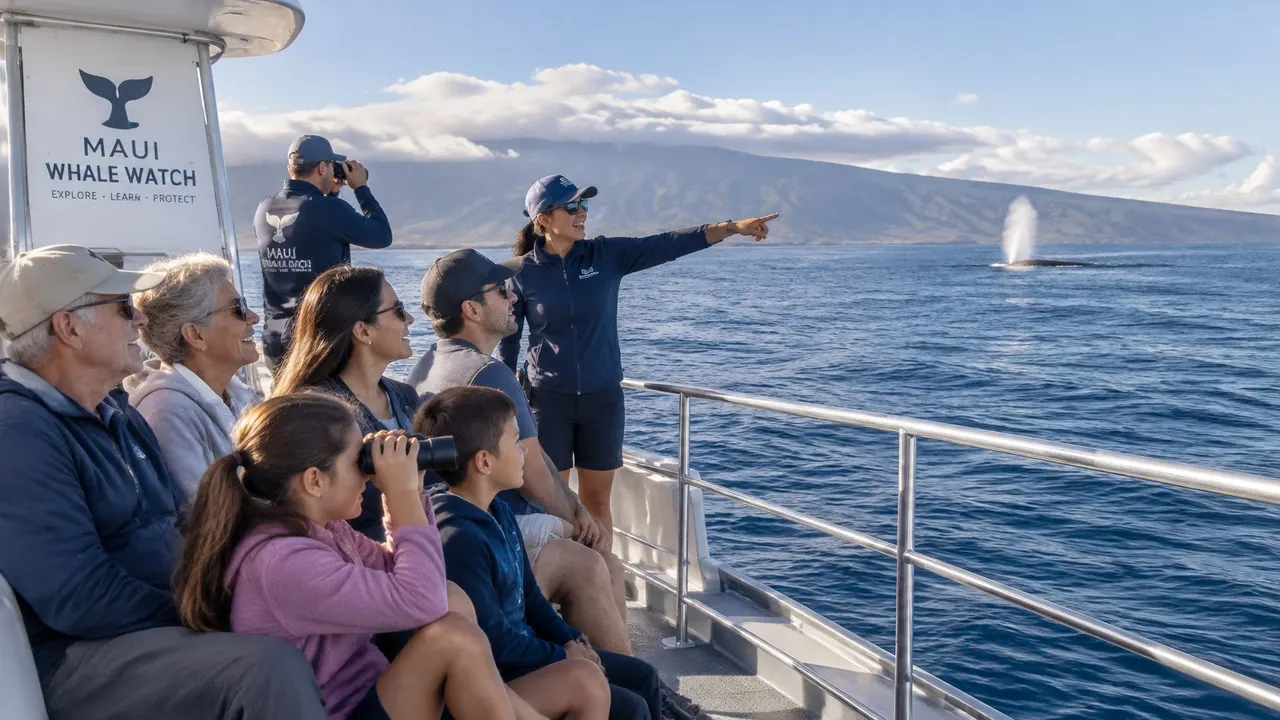
The best fit becomes clearer when you match the outing to the people and the trip:
- A family with young children can pick a short cruise on a calm morning and count any visible spout as a success. The trip still has value if the whales stay at a distance.
- A couple already staying on Maui can prioritize West Maui waters rather than adding a separate island trip around a Waikiki departure.
- A Honolulu visitor without time for another flight can use the Waikiki coastline for a boat outing. If the boat cancels, a shore scan later that day gives them another chance to look.
This isn't the right activity for travelers who want to swim with whales, fly drones near them, or expect aquarium-close photographs. Those expectations conflict with responsible viewing and can leave visitors disappointed even when they've had a perfectly legitimate sighting.
Choose a Waikiki Whale Watch
If you're staying in Honolulu, a Waikiki departure is the practical next step. Living Ocean Tours is Oahu's top rated and most reviewed snorkel company. Its Waikiki Whale Watching Cruise follows the coastline to view humpback whales wintering in Hawaiian waters, with daily departures from Kewalo Basin Boat Harbor near Waikiki Beach.
The cruise runs from January 2 through March 31, lasts 1.5 hours, is for ages 3 and up, and costs $49 per person. Confirm the current dates, age minimum, duration, price, and departure harbor on the booking page before you plan around the trip, since details can change by season.
Review the Waikiki Whale Watching Cruise for the current trip details.
The 100-yard legal distance still applies on this cruise, so the crew won't approach whales for a closer look. Choose the earliest morning that fits the first half of your stay, then keep a backup slot in case conditions change.
Living Ocean Tours offers seasonal humpback whale watching along the Waikiki coastline, departing from Kewalo Basin Boat Harbor near Waikiki Beach. Choose a morning that leaves room to adjust your plans, and visit Living Ocean Tours to check the cruise details and plan your January outing.


