
Waikiki Snorkeling Guide with Best Spots and Tours
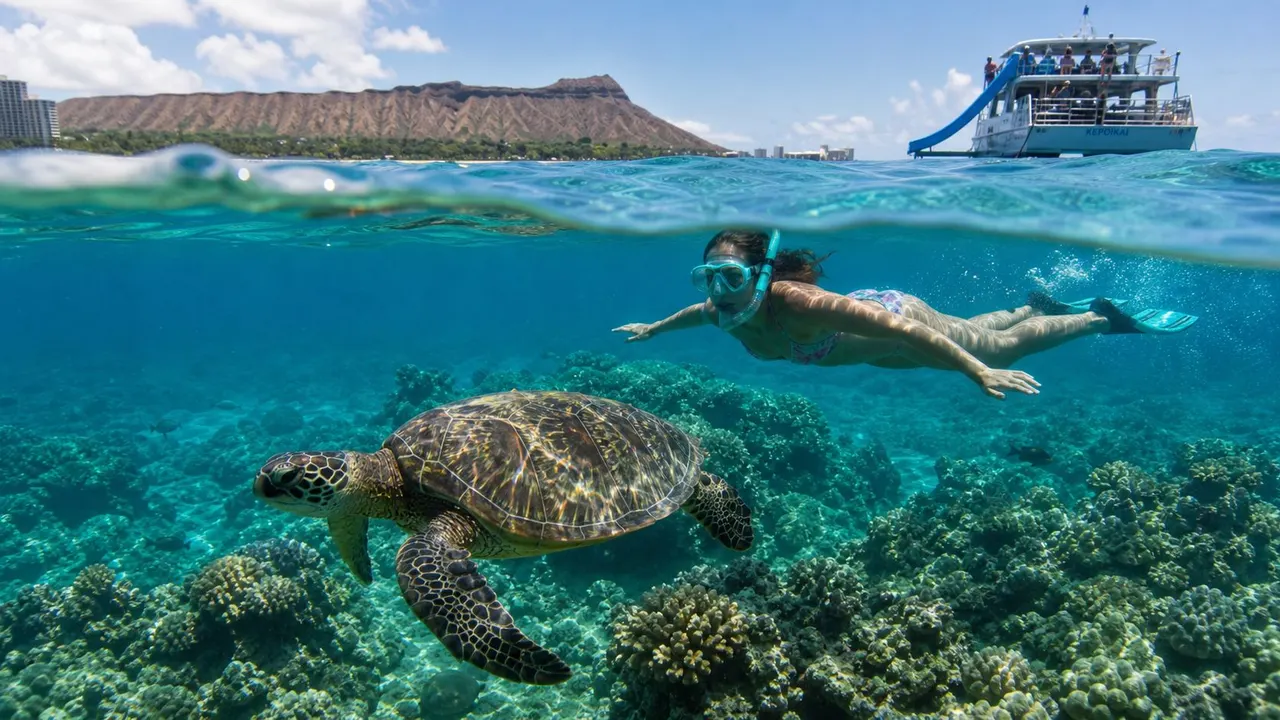
A lot of families arrive in Waikiki with the same question. The beach looks inviting, the water is warm, and the kids are ready to get in. But once the masks and snorkels come out, the primary question becomes simpler and more important: where should you snorkel so it feels fun, manageable, and safe?
Waikiki snorkeling can be a great fit for first-time visitors because you have two very different options in one area. You can stay close to shore in protected, shallow water, or you can join a boat trip that takes you away from the busiest beach zones to clearer reef. That distinction matters more than most guides explain. Families often assume all Waikiki snorkeling is basically the same. It isn't.
One group may do well at Queen's Beach for a short, calm introduction. Another will have a much better day on a guided offshore trip where the crew handles the gear, entry, briefing, and in-water support. If you're hoping to see Hawaiian green sea turtles, colorful reef fish, and clear water without guessing your way through local conditions, choosing the right format matters as much as choosing the right spot.
Introduction to Waikiki Snorkeling
Waikiki works well for snorkeling because it gives beginners a gentle learning curve. You can start with a short session in protected water, get used to breathing through a snorkel, and decide whether you want a bigger adventure the next day. That makes it especially useful for families traveling with children, grandparents, or mixed comfort levels.
The area also rewards early risers. Mornings usually feel calmer, the water often looks clearer, and marine life is easier to spot before the beach gets busy. If your goal is a low-stress first snorkel, that early window is often the difference between “that was easy” and “that felt chaotic.”
Practical rule: Start with the easiest possible version of snorkeling. Calm water, short duration, and help nearby beat a long swim every time for first-timers.
Some visitors want a quick reef look from shore. Others want a half-day built around turtle viewing and guided support. Both can work. The key is understanding that Waikiki snorkeling is not one single experience, and your best choice depends on your swimmers, your confidence, and how much support you want once you're in the water.
Top Waikiki Snorkel Spots and Conditions
Waikiki has a few snorkeling zones that get talked about as if they're interchangeable. They aren't. The biggest difference is shore access versus boat access. That changes the water entry, what you'll see, and how much stress first-time snorkelers may feel.
Shore snorkeling near Queen's Beach
Queen's Beach is one of the easiest shore options to understand. According to this Queen's Beach snorkeling overview, the most useful snorkeling zone sits within the Marine Life Conservation District south of the Waikiki Aquarium, including a dredged channel about 100 feet offshore with an 8-foot depth sandy bottom. The same area has a depth gradient of 1 to 4 feet near the Kapahulu Groin jetty and 8 to 15 feet beyond the exposed reef break.
For families, that means you can often choose a shallower entry area and avoid committing to a long swim. It also explains why this zone gets recommended to beginners. The water can feel sheltered, and the sandy bottom helps nervous snorkelers feel less boxed in by coral.
Still, shore snorkeling has limits. Water quality is better toward the Diamond Head end and can be less appealing nearer canal outfalls. Marine life can also be hit or miss compared with offshore reef.
Boat access to Turtle Canyons
If your group wants the strongest chance of seeing turtles, Turtle Canyons is the name most visitors hear first. Living Ocean Tours' Waikiki snorkeling guide notes that Waikiki's optimal snorkeling conditions occur June through September with 80–82°F water, best visibility before 10 AM, and peak turtle gatherings at offshore Turtle Canyons.
That same source describes Turtle Canyons as a protected marine area known as one of Oahu's famous turtle cleaning stations. For beginners, what's important isn't just the turtle angle. It's that a boat trip removes the crowded beach entry and puts you directly over better reef water.
If you're comparing options, this Turtle Canyon guide for Oahu visitors is useful because it frames the spot as a destination, not just a random patch of water offshore.
Get in early when you can. Morning light and overnight calm usually give Waikiki snorkeling its easiest, clearest window.
Comparison of Top Waikiki Snorkel Spots
| Spot Name | Access Type | Best Season | Visibility | Marine Life |
|---|---|---|---|---|
| Queen's Beach lagoon area | Shore | Summer is often the easiest window | Best on calm mornings | Reef fish, beginner-friendly sightings |
| Turtle Canyons | Boat | June through September is the standout period | Best before 10 AM | Hawaiian green sea turtles and reef fish |
| Shore areas near Waikiki Aquarium | Shore | Fair-weather calm days | Can vary a lot with surf and runoff | Some reef life, usually less consistent than offshore |
A simple rule helps. If your family wants convenience and a short session, choose shore snorkeling. If your family wants clearer water, easier access to better reef, and a more focused wildlife outing, boat-based Waikiki snorkeling usually makes more sense.
Living Ocean Tours and Guided Excursions
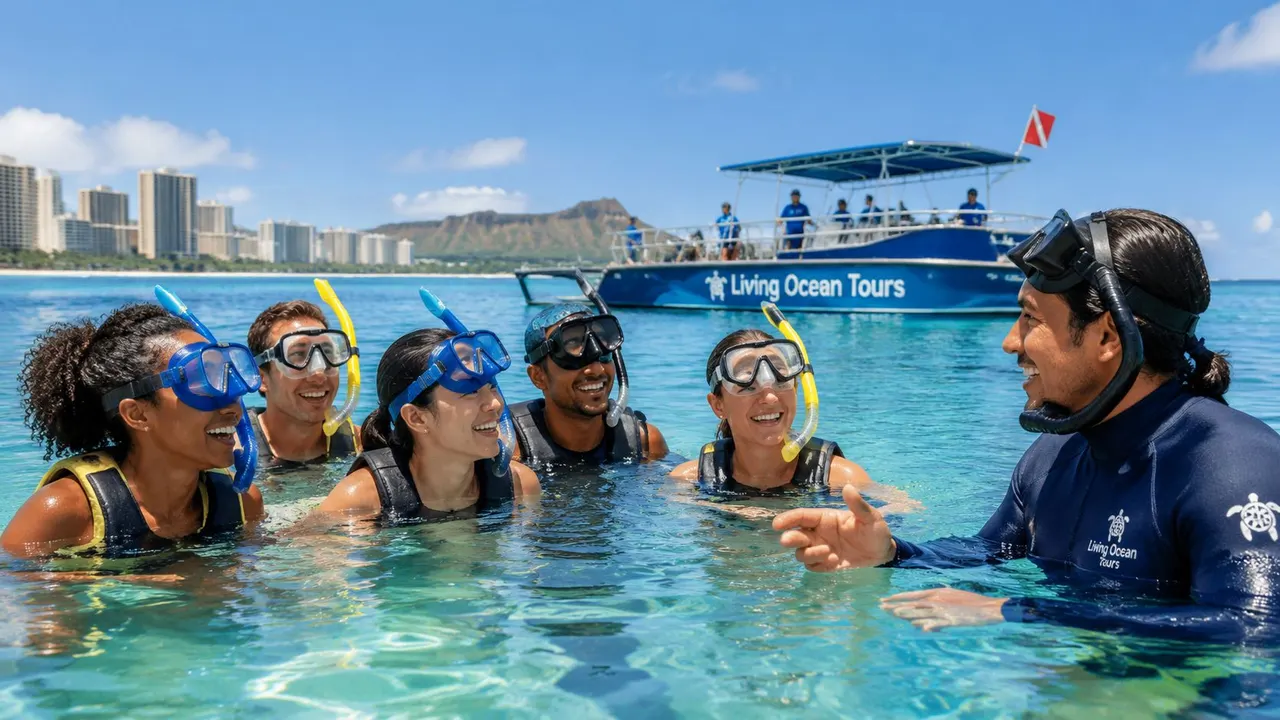
A family shows up in Waikiki with new masks, fins that still feel awkward, and one big question. Should they walk in from shore or let a crew take them out by boat? For beginners, that choice shapes the whole day more than the snorkel spot name does.
Guided excursions help because they remove several beginner problems at once. You are not guessing about entry points, trying to read the water from the sand, or discovering too late that a mask leaks. A good crew checks gear fit, explains how to breathe through the snorkel without rushing, and gives nervous swimmers a calmer first few minutes in the water.
That support is easy to underestimate.
Many visitors assume a tour mainly buys transportation. In practice, the bigger benefit is coaching. New snorkelers often need help with simple skills that make the experience comfortable: keeping the face relaxed in the water, clearing a snorkel after a splash, floating without constant kicking, and staying oriented without lifting the head every few seconds. For families, that kind of instruction works like having a teacher in the pool on the first day of swim lessons instead of handing over gear and hoping everyone figures it out.
The shore versus boat distinction matters here. A shore session can be convenient, but it asks more of you right away. You need to judge where to enter, time your way in over rocks or small shorebreak, and decide whether the water still looks manageable once you are already committed. A boat-accessed outing simplifies that sequence. You ride out, get a briefing, and enter where the trip is designed to snorkel. For many novices, that feels more controlled and less chaotic.
Families comparing operators often start with Waikiki snorkeling tours from Living Ocean Tours because the format centers on guided support, provided equipment, and wildlife-focused outings rather than a do-it-yourself beach setup.
Tour options to know
One common guided format is a turtle-focused boat snorkel. As noted earlier, Turtle Canyons is the draw for many visitors because it offers a more purpose-built wildlife outing than a casual swim from shore. That usually appeals to travelers who want a clear objective and a crew that keeps the group organized around one site.
Another option is a broader family cruise with snorkeling built in. The Waikiki Snorkel Waterslide tour fits groups with mixed interests. Some guests want fish and reef time. Others are happier with a boat ride, ocean views, and extra onboard fun between water sessions.
Private charters fill a different role. They suit reunions, grandparents traveling with kids, or groups that need more control over pacing. If one child needs extra time with the mask and another person wants a shorter swim, a private format gives the crew more room to adapt.
A simple way to choose is to match the tour to your group's confidence level and attention span:
- Turtle-focused outing: Best for wildlife-first travelers who want a guided snorkel with a specific destination.
- Waterslide-style cruise: Best for mixed-age families who want snorkeling plus time on the boat.
- Private charter: Best for groups that want flexibility, privacy, or a slower teaching pace.
Safety and Environmental Guidelines
The biggest mistake visitors make is treating all Waikiki snorkeling as if the main risk is deep water. In many cases, it isn't. Hawaii snorkeling safety guidance highlights an important distinction many travelers miss. Shore-based Waikiki snorkeling can involve dangerous shorebreak and weak currents, while the boat-accessed Turtle Canyon zone is described as a shallow reef zone where currents are minimal.
The risk many visitors misunderstand
A second issue is physiological, not just oceanic. According to Civil Beat's reporting on Hawaii's snorkel safety study, snorkeling accounts for over half of Hawaii tourist drownings; 204 deaths occurred from 2012 to 2021, mostly from rapid-onset pulmonary edema in water under 3 feet deep. That's a hard fact, and it changes how I teach beginners.
Many families assume danger starts in rough surf or deep water. The data says you also need to respect exertion, anxiety, unfamiliar gear, and any feeling that breathing is suddenly harder than it should be. Stop early. Float. Signal your buddy. Exit the water.
If breathing feels off, the goal isn't to push through it. The goal is to end the snorkel safely.
Simple rules that make a big difference
Use a short checklist every time:
- Buddy up: Nobody wanders off alone, even in shallow water.
- Check the entry: Shorebreak can be the hardest part of the whole swim.
- Use flotation if needed: A vest helps tired or nervous snorkelers stay relaxed.
- Keep the first session short: Confidence usually rises when people finish before they get worn out.
- Respect wildlife and reef: Look, don't touch.
For ocean stewardship, keep it simple and strict:
- Choose reef-safe sunscreen: Apply it early so it has time to absorb before entering the water.
- Don't stand on coral: Even accidental contact can damage fragile reef.
- Give turtles space: Let the animal control the encounter.
- Learn local reef etiquette: This Oahu reef etiquette guide is a useful refresher before you go.
What to Bring and Who It's Best For
Packing for Waikiki snorkeling doesn't need to be complicated, but the wrong omissions can make the whole outing less comfortable. The goal is to stay warm enough, see clearly, and avoid small frustrations that turn into big ones once you're on the water.
A practical packing list
Bring the basics first:
- Mask and snorkel: A comfortable fit matters more than fancy features.
- Fins: Helpful on boat trips and in any current.
- Flotation vest: Smart for beginners, kids, and anyone who tires easily.
- Rash guard: Good sun protection without relying only on lotion.
- Reef-safe sunscreen: Apply before arrival, not at the last second on the beach.
- Water bottle: Snorkeling is active, and dehydration sneaks up in the sun.
Optional extras depend on your plan:
- Reef shoes: More useful for some shore entries than for boat-based trips.
- Underwater camera: Nice for turtle outings if you already know how to use it.
- Dry bag: Worth bringing if you're carrying keys, phones, or medication.
If you want a more detailed checklist, this Oahu snorkel packing list is a handy planning tool.
Matching the experience to your group
Not every snorkel format fits every traveler.
Families with small children usually do best with a supervised boat outing where one adult can stay onboard if needed while others snorkel. Absolute beginners often prefer a guided boat trip because the crew handles the setup and entry. Turtle-focused excursions suit wildlife lovers who care more about the marine encounter than beach time.
Couples and small groups sometimes choose a quieter charter or a shorter turtle trip because it feels more purposeful. Shore snorkeling still has a place, especially for a low-commitment first try, but it's usually better for confident planners who don't mind making condition calls on their own.
Seasonal Highlights for Turtles Whales and Visibility
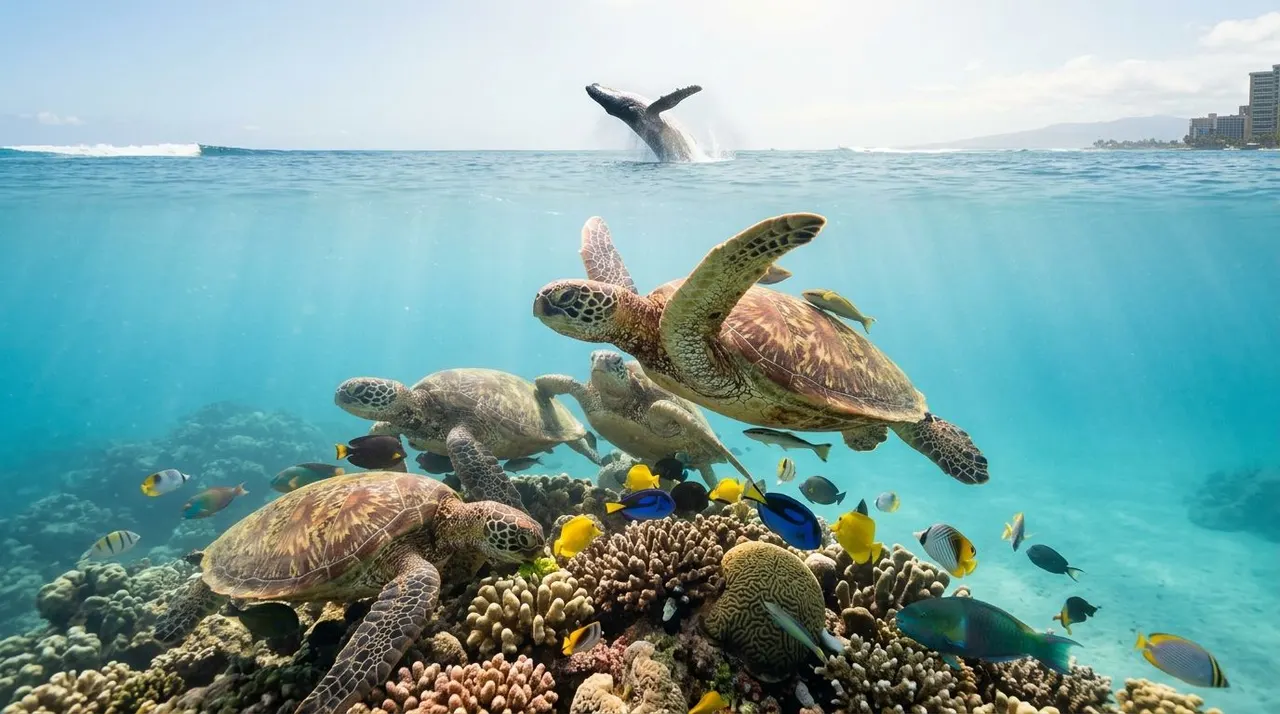
Conditions in Waikiki shift enough through the year that timing can change your whole impression of the water. The best snorkeling day isn't just about sunshine. It's about swell, runoff, wind, and how early you get there.
When the water usually looks its best
The cleanest pattern is seasonal and daily. According to this Waikiki water clarity guide, visibility dips sharply after heavy rainfall from Ala Wai Canal runoff; the best clarity comes within two hours after sunrise during late spring through early fall. That's one of the most useful planning facts for visitors.
It explains why someone can snorkel Waikiki one morning and describe it as clear and easy, while another visitor goes after rain in the afternoon and thinks the area is disappointing. Both experiences are real. They just happened under very different conditions.
Wildlife timing through the year
For turtles, the offshore cleaning-station experience is what many visitors are really chasing. Spring and summer usually line up well with calm water and the kind of morning visibility snorkelers hope for. If turtle viewing is your priority, that's usually the easier season to plan around.
Winter changes the picture. Snorkeling can still work, but you need to be more selective about conditions because rain and passing systems affect clarity more often. That same season can add a bonus from the boat. Humpback whale season runs in winter, especially January through March, so some ocean outings may also include whale sightings while you're heading along the Waikiki coast.
A simple planner helps:
- Late spring through early fall: Best overall mix of visibility and calmer snorkeling windows.
- Summer mornings: Strong choice for first-time Waikiki snorkeling.
- Winter: More weather-dependent, but also the season when whale watching becomes part of the broader ocean experience.
Early morning after a calm night is usually your friend. The day after heavy rain usually isn't.
Booking Tips and Sample Itineraries
A common Waikiki mistake happens before anyone gets in the water. A family waits to book, assumes all snorkel trips are interchangeable, then ends up choosing the only time slot left instead of the outing that fits their comfort level.
Booking well starts with one simple question. Do you want a shore-based snorkel where you manage your own entry and timing, or a boat-accessed snorkel where the crew handles much of the setup? That distinction matters more than many first-time visitors expect. Shore sessions are easier to book last minute, but they ask more from you once you arrive. Boat trips usually need earlier reservations, yet they often reduce stress for beginners because check-in, gear setup, site selection, and basic in-water guidance are handled by the crew.
How far ahead to book
According to Living Ocean Tours' Turtle Canyon booking guide, during peak periods guests must book Turtle Canyon snorkeling 2 to 6 weeks in advance, while quieter weekday spots fill up in 7 to 14 days. If your trip falls in summer, spring break, holiday periods, or on a weekend morning, reserve early.
For comparing departure times and planning windows, review the Waikiki boat tour reservation options before you build the rest of your schedule.
One practical rule helps. Put your boat snorkel on the calendar first, then build flexible shore time around it. Boat space is limited. A quick shore snorkel can often be shifted if weather, energy level, or family mood changes.
A simple two-day plan
A good itinerary works like pacing a swim lesson. Start with the easier, shorter session. Save the bigger outing for when everyone knows how they feel in the water.
Day one
- Try an early shore snorkel at Queen's Beach if your group wants a short, low-commitment first session.
- Take a midday break. Waikiki gets hotter, busier, and less comfortable for tired kids and new snorkelers.
- Choose an evening boat ride if your family wants ocean time without another snorkel. The Waikiki Sunset Cruise is one option, and Sunset Cruise Waikiki is another alternative.
Day two
- Book a morning boat-accessed snorkel if turtles or clearer offshore conditions are the priority.
- If your group includes hesitant swimmers, younger kids, or adults who do better with instruction, guided tours often help more than people realize. Crew members usually assist with mask fit, explain how to enter and exit safely, point out where to look instead of wandering aimlessly, and watch conditions in real time. That support can turn an anxious first attempt into a good family memory.
- If your family wants a snorkel day with extra onboard features, the Deluxe Waikiki Snorkeling and Wildlife Cruise is another format to consider, as noted earlier in the article.
If you're visiting during whale season and want a separate wildlife-focused outing, the Waikiki whale watching tour can fit on another morning.
Conclusion and Next Steps
Waikiki snorkeling gets much easier once you stop treating every option as the same outing. Shore snorkeling can work well for a short beginner session. Boat-accessed reef is often the better fit for families who want simpler entries, guided help, and stronger wildlife encounters. Add smart timing, basic safety habits, and a packed bag that matches your group, and the whole experience becomes smoother.
If you want the least complicated path, book a guided morning snorkel and let the crew handle the details. For families who want snorkeling plus extra fun on the water, the Deluxe Waikiki Snorkeling and Wildlife Cruise is a practical next step.
If you're ready to turn your Waikiki snorkeling plans into an easy, family-friendly day on the water, explore current tour options with Living Ocean Tours. Their Waikiki departures make it simple to choose between a turtle-focused snorkel, a broader wildlife cruise, or another guided ocean outing that fits your group.


