
Turtle Snorkeling Oahu: How Hawaii’s Honu Compare
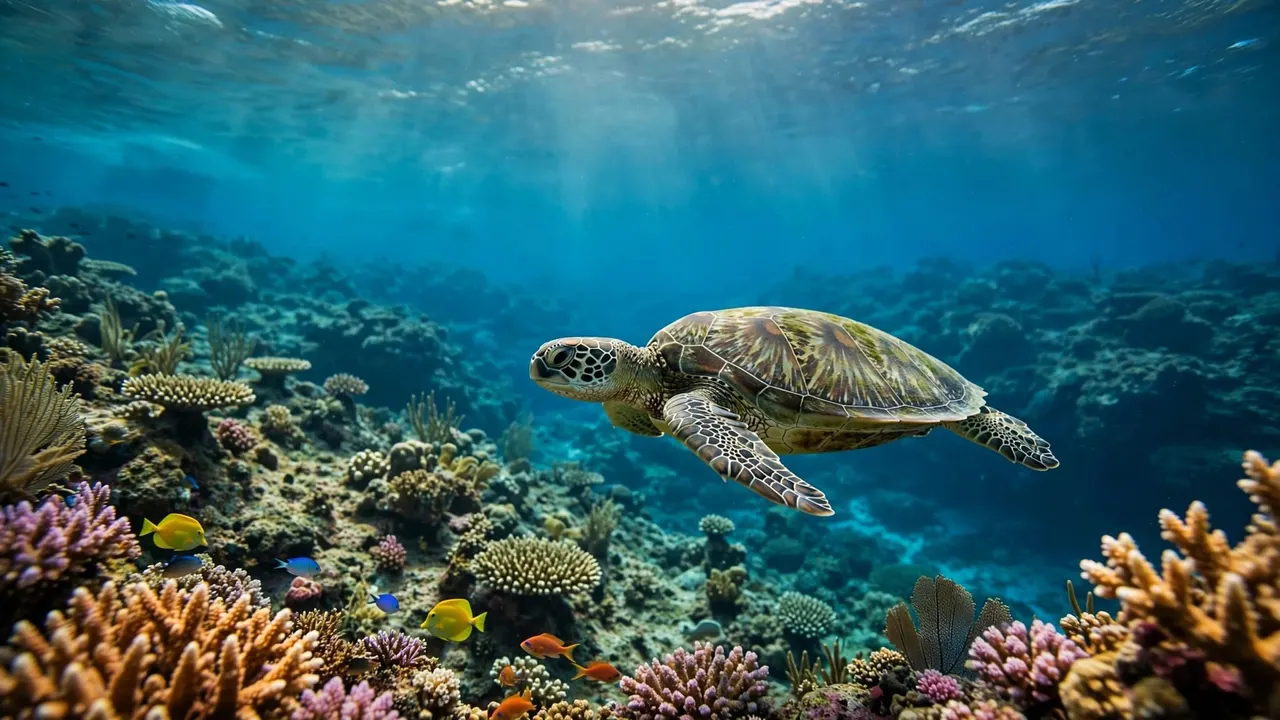
Visitors snorkeling with turtles on Oahu can learn about Hawaii’s green turtle population, its breeding history, and its conservation needs. Hawaii’s honu are the same species found across the Pacific, but their nesting routes and genetic patterns make them a distinct population.
With Living Ocean Tours, you can discover these animals near Waikiki alongside our professional snorkel guides. Understanding a little about their lives can make your time on the reef even more rewarding.
Key Takeaways for Your Turtle Encounter
- Hawaiian honu are green turtles, Chelonia mydas, belonging to the Central North Pacific population.
- Genetic research distinguishes Hawaiian nesting turtles from other Pacific nesting populations, while also showing connections across the ocean.
- Many turtles that feed around the main Hawaiian Islands migrate to French Frigate Shoals, also called Lalo, to nest.
- Keep at least 10 feet from turtles whenever possible, and never touch, chase, feed, or block them.
- Sightings are never guaranteed, so give yourself time to enjoy the reef and its other wildlife.
Meet Honu at Turtle Canyon
The turtle snorkeling Oahu travelers seek often leads to Turtle Canyon, an offshore reef near Waikiki. Here, Hawaiian green turtles visit natural cleaning stations, where small reef fish remove material from their shells and skin.
Our Turtle Canyons Snorkel Excursion departs from Kewalo Basin Boat Harbor. The trip starts at $79 and includes snorkeling equipment, flotation support, and guidance. We report an approximately 95% turtle sighting rate, although each encounter depends on wildlife.
We’re the only tour company with professional snorkel guides. If you’re new to snorkeling, our guides can help you get comfortable with your equipment and understand how to give turtles room in the water.
You can CHECK AVAILABILITY for the Turtle Canyons excursion and choose a time for your adventure.
What Makes Hawaiian Green Turtles Distinct?
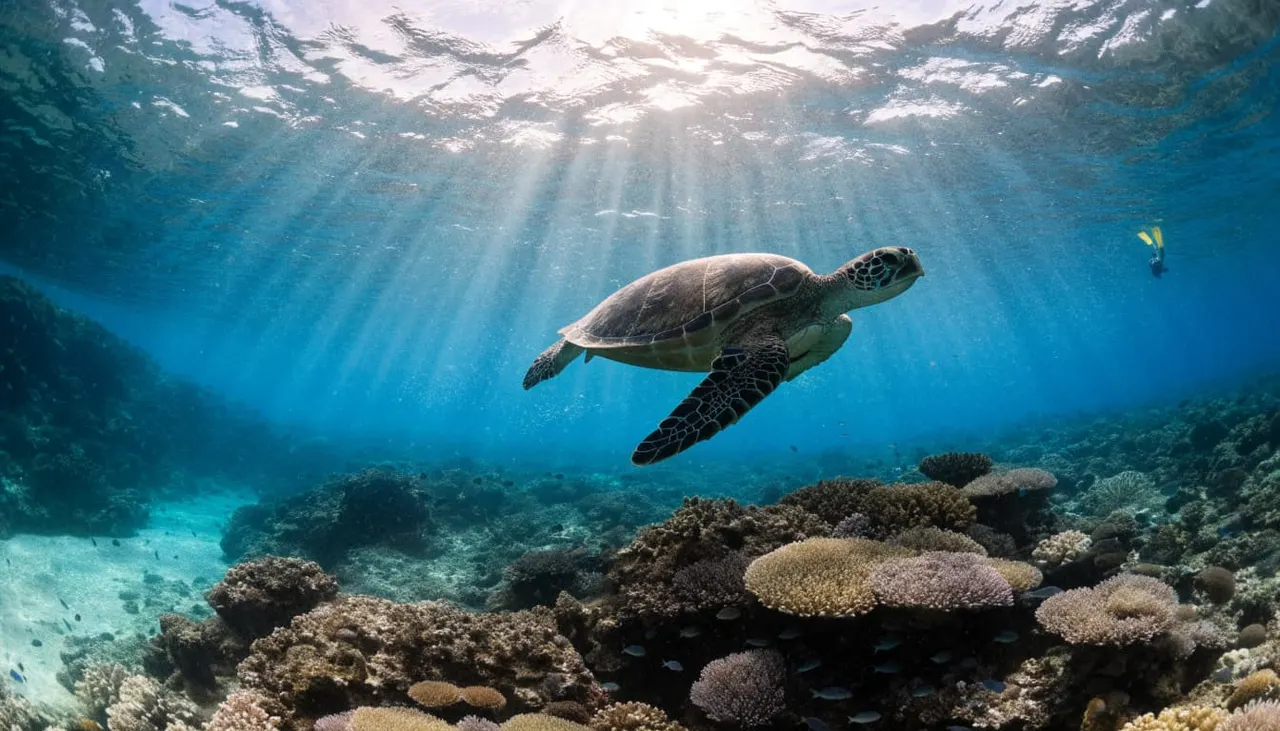
A honu you see off Oahu belongs to the same species as green turtles elsewhere in the Pacific. The distinction comes from the history of breeding populations, not a separate Hawaiian species.
One Species, Different Breeding Populations
Female green turtles tend to return to their natal region to nest. Over generations, that tendency helps create recognizable genetic patterns among nesting populations.
Hawaii’s turtles belong to the Central North Pacific distinct population segment, a group recognized under the U.S. Endangered Species Act. Other Pacific population segments have their own nesting regions and conservation statuses.
When you see a turtle near Waikiki, you can’t determine its birthplace or genetic background by looking at its shell. Research on nesting beaches and feeding grounds gives scientists the broader population picture.
What Pacific-Wide Genetics Reveal
A Pacific green turtle population study analyzed genetic samples from 1,111 nesting turtles at 20 nesting sites. Researchers found substantial genetic differences among many of those nesting groups.
In the study’s nuclear DNA analysis, Hawaiian turtles showed a closer relationship to the eastern Pacific group than to the western Pacific group. That finding gives you a glimpse of their long breeding history, even though every turtle you see looks like an individual simply going about its day.
How Hawaii Compares With Other Pacific Populations
The clearest comparisons involve nesting locations, genetic history, and legal status. Here’s a quick look at what those differences mean.
| Feature | Hawaii’s green turtles | Other Pacific populations |
|---|---|---|
| Species | Green turtle, Chelonia mydas | Green turtles belong to the same species |
| Nesting | Much Hawaiian nesting occurs at Lalo | Other populations use nesting regions elsewhere in the Pacific |
| Genetic history | Hawaiian nesting turtles have identifiable population patterns | Nesting groups show their own genetic patterns |
| U.S. protection | The Central North Pacific population is threatened | U.S. listings vary among recognized populations |
Hawaii’s turtles are distinctive because of their population history and geography. You don’t need to identify a physical feature underwater to appreciate that difference.
For example, green turtles nesting in the eastern Pacific use beaches along the Americas, while turtles in the western Pacific nest across other island and coastal regions. Each nesting area faces its own pressures, so conservation needs can differ even within one species.
NOAA’s green turtle profile describes the different population segments and their U.S. Endangered Species Act listings. For you as a snorkeler, the shared responsibility is the same: give every turtle room to behave naturally.
The Long Journey Between Oahu and Lalo
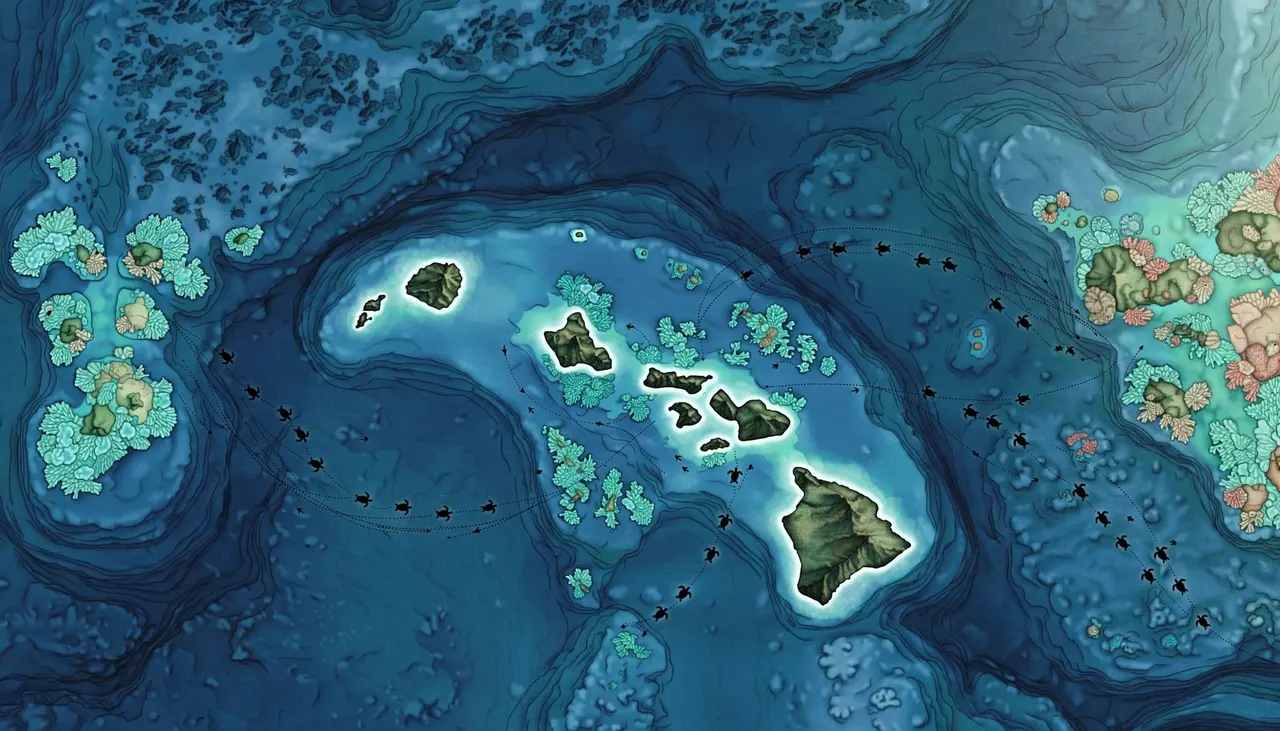
The reef near Waikiki is only one part of a Hawaiian green turtle’s habitat. Feeding areas and nesting beaches can be hundreds of miles apart.
Why Lalo Matters
French Frigate Shoals, known in Hawaiian as Lalo, is in the Northwestern Hawaiian Islands. Hawaii’s Department of Land and Natural Resources estimates that about 96% of Hawaiian green turtle nesting occurs there.
Some turtles also nest in the main Hawaiian Islands and elsewhere in the archipelago. You might enjoy the turtle snorkeling Oahu offers without ever seeing a nest, because the reef encounter and the nesting journey take place in different habitats.
A Remarkable Round Trip
Many turtles travel roughly 1,200 miles round trip between feeding areas around the main Hawaiian Islands and nesting grounds at Lalo. That distance helps you appreciate the connection between Oahu’s reefs and remote nesting beaches.
Hawaiian nesting season generally runs from late April through late October. Females don’t necessarily nest every year, so an individual turtle’s life includes long periods of feeding and growth between nesting migrations.
The turtle resting beneath you could be at a different life stage from another turtle nearby. A single snorkel encounter gives you a small window into a much longer journey.
What You Might See a Honu Doing
The turtle snorkeling Oahu families enjoy can reveal more than a quick glimpse of a shell. If you float patiently, you may see a turtle feeding, resting, visiting fish, or rising for air.
Feeding and Resting on the Reef
Adult Hawaiian green turtles eat mainly algae. Diet can vary with the turtle and its habitat, so don’t assume every honu feeds in the same way.
You may also notice a turtle resting near the bottom or moving slowly over the reef. Give it space to leave on its own. Several turtles in one area may be using the same habitat without traveling together as a group.
Visiting a Cleaning Station
At Turtle Canyon, small fish may approach a turtle and remove material from its skin and shell. The turtle can pause while the fish work, then swim away or rise to breathe.
Stay back and watch the full scene rather than moving in for a close photo. Our guide to green turtle behavior at Turtle Canyon has more observations to look for during your visit.
Give Hawaiian Green Turtles Room to Move
The turtle snorkeling Oahu visitors remember most can be a quiet encounter from a respectful distance. Hawaii’s recommended viewing distance is at least 10 feet, or about 3 meters, on land and in the water.
That distance is viewing guidance rather than a universal statutory boundary. Turtles are protected under state and federal law, and your behavior matters even when you’re farther away.
Leave a Clear Route to the Surface
Never touch, feed, chase, ride, surround, or block a turtle. Avoid swimming directly above one, because it may need to reach the surface for air.
If a honu approaches you, stay calm and give it room to pass. When several snorkelers spot the same turtle, spread out instead of forming a circle. A guide can help your group find a viewing position that leaves open water around the animal.
Protect the Reef Beneath You
Coral is living habitat. Keep your fins above it, and move into open water if you need to adjust your mask. If you’re tired or uncomfortable, ask your guide for help rather than standing on the reef.
Before entering the water, tell your guide about your swimming experience. Use available flotation support, follow the crew’s instructions, and return to the boat if conditions feel beyond your comfort level.
Why Protection Still Matters
Hawaiian green turtles remain threatened under the U.S. Endangered Species Act. Legal protections have supported their recovery, but a turtle sighting doesn’t tell you how the entire population is doing.
Fishing line, marine debris, habitat loss, and other pressures can affect turtles throughout their lives. Nesting beaches matter, too, because hatchlings need suitable places to emerge and reach the ocean.
If you notice a turtle with an injury or entangled in line, alert your guide or a wildlife authority. Don’t attempt to catch or free the animal yourself. Trained responders can assess the situation without adding unnecessary risk.
Your part is simple: observe from a distance and leave the reef as you found it. That approach lets you enjoy a memorable encounter while giving honu the space they need.
Frequently Asked Questions
Are Hawaiian green turtles a different species?
No. Hawaiian honu are green turtles, Chelonia mydas, the same species found in other parts of the Pacific. They belong to a distinct Central North Pacific population with its own genetic and nesting history.
Can beginners snorkel at Turtle Canyon?
Beginners can join a guided excursion when conditions suit their abilities. Let our crew know if you’re new to snorkeling, use flotation support, and ask for help with your mask or snorkel before entering the water.
Can you see turtles near Oahu year-round?
Hawaiian green turtles use coastal feeding areas throughout the year, so you may encounter them in any season. Wildlife moves freely, however, and no individual sighting is guaranteed.
Is it legal to snorkel near a Hawaiian green turtle?
You can observe a turtle without disturbing it. Keep the recommended 10-foot distance whenever possible, and never touch, chase, feed, or block the animal.
Take the Pacific Story Into the Water
A honu near Waikiki is part of a green turtle population with a distinct breeding history and a connection to nesting beaches far across the Hawaiian archipelago. That knowledge gives your reef encounter a richer context.
When you leave room for a turtle to feed, rest, or surface, you get to watch its natural behavior. That’s a rewarding way to experience Hawaii’s marine life on its own terms.


