
Turtle Snorkeling Oahu: Why Hatchlings Need Dark Beaches
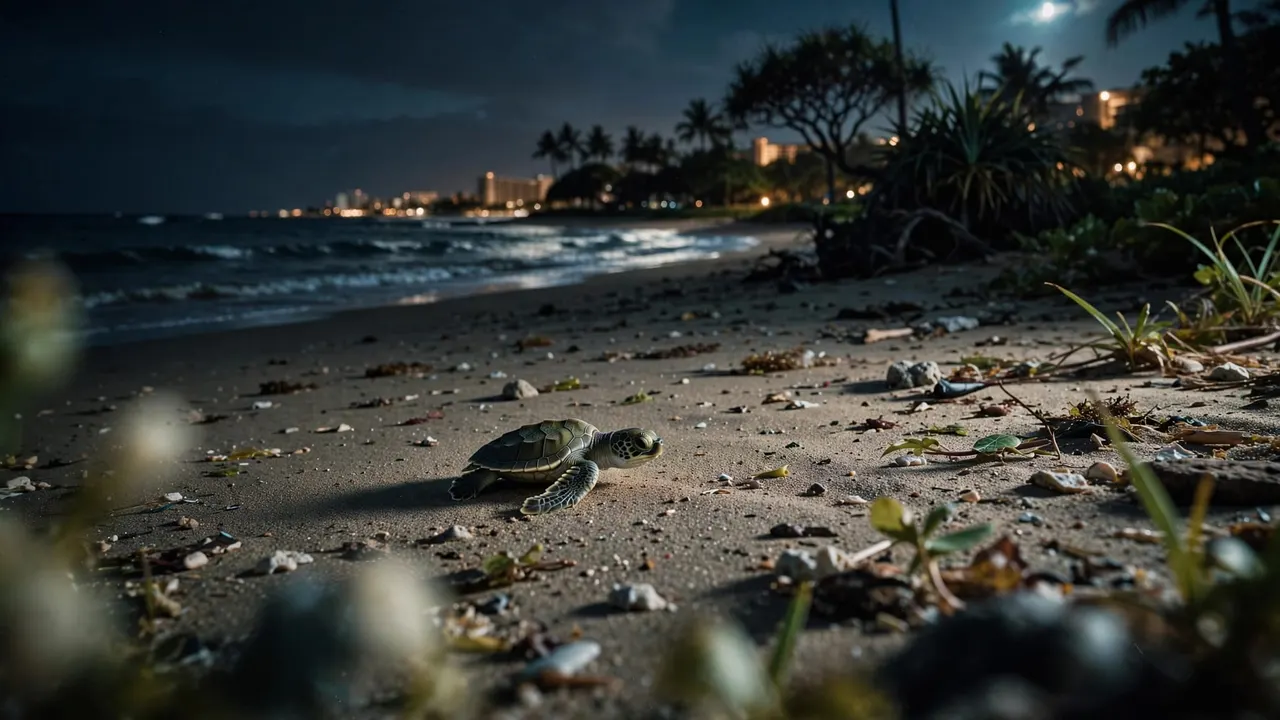
The turtle snorkeling Oahu offers connects you with honu, but their survival also depends on what happens after sunset. With Living Ocean Tours near Waikiki, you can enjoy guided reef encounters while learning how to protect these animals beyond the water.
For newly hatched turtles, a bright beachfront light can point toward danger instead of the ocean. Your most useful contribution is simple: keep beaches dark and give wildlife space.
Start with how hatchlings find their way, then carry that understanding into your beach evenings and snorkeling plans.
Why artificial light changes a hatchling’s first journey
Hatchlings follow the natural horizon
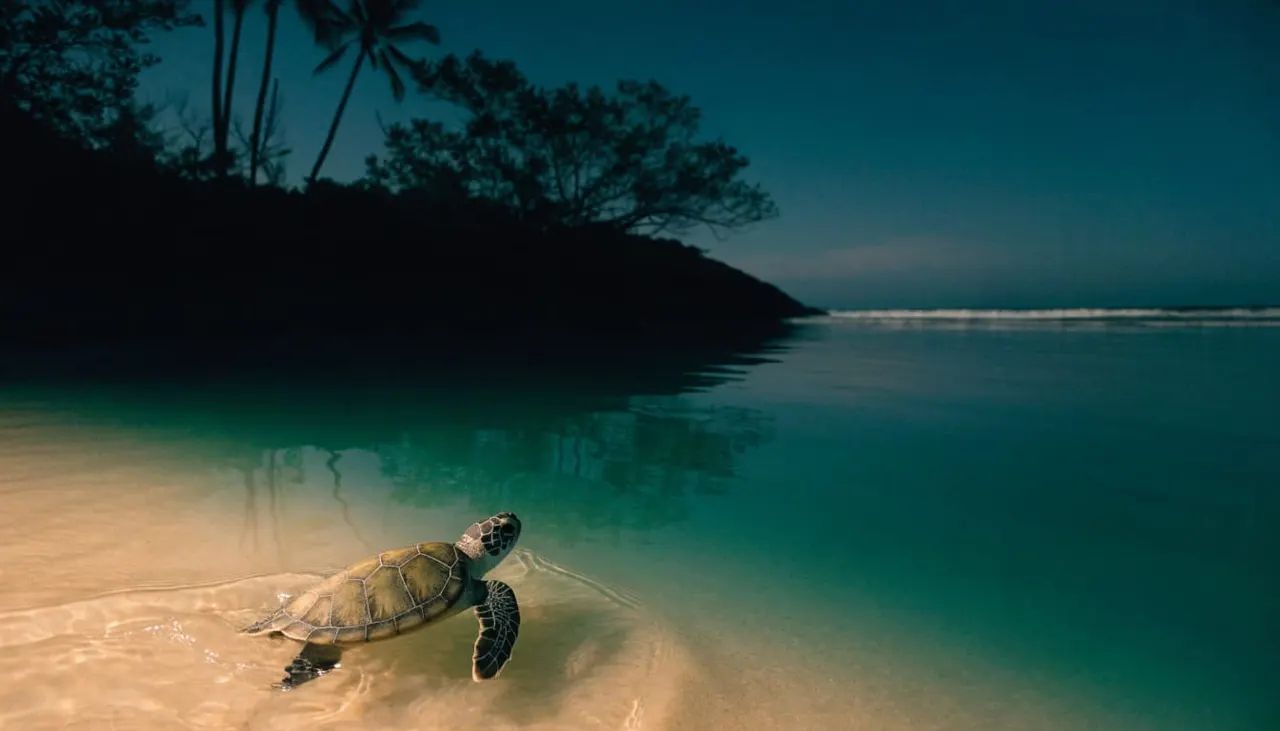
When hatchlings emerge from their nest, they must cross the sand and reach the sea. They use natural brightness patterns to orient themselves, including the relatively bright, open ocean horizon.
Behind them, coastal vegetation and land usually create a darker outline. Moonlight and starlight contribute to these cues, but hatchlings don’t simply follow the moon.
A beach can look comfortably dim to you while still containing lights that interfere with a hatchling’s route. That’s why your impression of brightness isn’t a reliable measure of wildlife safety.
Artificial light can pull them off course
Exterior fixtures, beachfront windows, and portable lights can compete with the natural horizon. Hatchlings may crawl inland or wander instead of heading toward the surf.
That extra travel increases their exposure to dehydration, exhaustion, and predators. Reaching the water doesn’t always end the problem, either.
In a 2016 artificial-light study, researchers found that 88% of tracked hatchling trajectories oriented toward an experimental light after entering the ocean. That figure describes one experiment, not every beach or lighting situation.
For your visit, the practical lesson is broader: light spilling across both sand and water deserves attention.
Oahu’s reef turtles and nesting beaches are different experiences
The honu you encounter while snorkeling are generally larger turtles using coastal habitat to feed, rest, or visit cleaning stations. Hatchlings belong to a separate, vulnerable stage of the same animal’s life.
Hawaii’s State Parks sea turtle information identifies green sea turtles as the species you’re most likely to see near shallow reefs and calm bays.
Most Hawaiian green turtle nesting occurs at French Frigate Shoals, also called Lalo, in the Northwestern Hawaiian Islands. Nesting on Oahu is less common, but it still requires care when it happens.
You shouldn’t assume that a popular swimming beach can’t contain a nest. Equally, a turtle resting on the sand doesn’t automatically indicate nesting.
Hawaii’s nesting and hatching activity can extend into December. Follow current signs and local guidance rather than assuming that autumn evenings are free of hatchling concerns.
Your snorkel excursion isn’t a hatchling-viewing trip. Enjoy reef wildlife during the day, and treat marked nesting areas as places to protect rather than attractions to approach.
Make your beach evening easier on hatchlings
Reduce light at the source
You don’t need to own beachfront property to make a difference. If your hotel room faces the shore, close the curtains after dark so indoor lighting doesn’t spill outside.
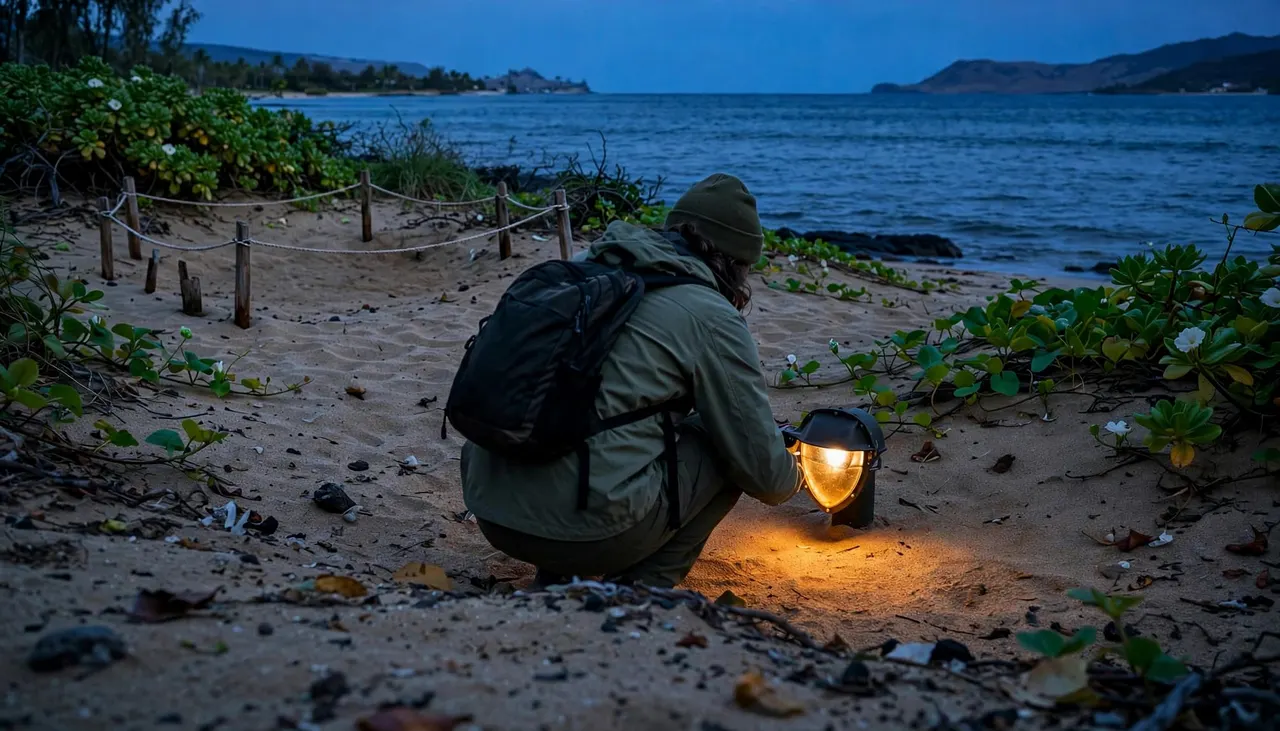
Switch off unnecessary lanai lights, and avoid carrying bright lanterns onto the beach. Phone flashlights and camera flashes also add light where hatchlings may be moving.
In its August 2025 nesting-season guidance, Hawaii DLNR asks residents and visitors to turn off lights visible from the beach. It recommends red-filtered flashlights when nighttime beach lighting is necessary.
Before taking an evening walk, plan your route. Staying on established paths reduces your need for bright lights and helps you avoid marked nesting areas.
Keep necessary lighting low and shielded
For properties near the shore, fixture design matters alongside bulb color. Shielded fixtures direct illumination downward instead of spreading it across the beach.
Hawaii’s sea turtle conservation guidance recommends yellow or amber, shielded coastal lighting. However, color alone doesn’t make a fixture harmless.
A bright amber light aimed toward the sand can still interfere with natural cues. Use the lowest practical brightness, limit operating time, and keep illumination away from nesting habitat.
A red or amber bulb isn’t permission to illuminate a nest. Reducing exposure remains the priority.
If you notice a property’s light shining across a marked nesting area, politely alert the staff. Describe the location so they can check the fixture.
What to do if you find a hatchling
Seeing a tiny turtle on an evening walk can feel extraordinary. Your first response should be to stop, give it space, and keep the area dark.
NOAA recommends staying at least 10 feet, or 3 meters, from sea turtles in Hawaii. That viewing recommendation applies on shore and in the water.
If a hatchling appears confused or is moving inland, resist the urge to carry it toward the surf. Moving it yourself bypasses the assessment trained responders need to make.
Follow this response sequence:
- Step back and turn off your flashlight or camera flash.
- Keep children, pets, and other visitors away without surrounding the animal.
- Note the beach name and a nearby landmark from your current position.
- Call the NOAA Marine Wildlife Hotline at 1-888-256-9840 and follow the instructions you receive.
Don’t dig into a nest, rearrange barriers, or try to uncover turtles that haven’t emerged. Avoid using your phone light to create a route toward the water.
While you wait for guidance, remain at a respectful distance. A photo isn’t worth adding light or crowding.
For families, explain the rule before your evening walk. Children are more likely to stay back when they understand that a hatchling needs a clear, dark route.
Enjoy the turtle snorkeling Oahu offers responsibly
Leave turtles room to breathe
The same respect you show hatchlings should guide your daytime reef encounters. Keep at least 10 feet away whenever possible, and let turtles choose their direction.
Don’t swim directly above a honu or position yourself between it and open water. It needs an unobstructed route to the surface to breathe.
If a turtle approaches, remain calm and let it pass. Reaching toward its shell, following it, or gathering a group around it can disrupt normal behavior.
For photos, use your camera’s available zoom rather than shortening the distance. Also check where other swimmers are positioned before concentrating on the frame.
Protect the reef beneath your fins
Your position matters around coral, too. Use slow, controlled kicks and keep your fins clear of the reef.
Coral isn’t a place to stand while adjusting your mask. Instead, float at the surface or ask your guide for help.
Tell the crew before entering if you’re new to snorkeling, uneasy in open water, or helping a child. Equipment adjustments are easier before you’re tired or distracted.
A guided outing adds support, but you still need to follow the briefing and respect your swimming limits. If conditions or your comfort change, returning to the boat is a good decision.
Plan a guided Turtle Canyons outing near Waikiki
For the turtle snorkeling Oahu visitors plan near Waikiki, Living Ocean Tours departs from Kewalo Basin Boat Harbor. You can reach an offshore reef without managing a beach entry or carrying rental equipment across the sand.
The Turtle Canyons Snorkel Excursion visits a natural cleaning station where reef fish remove material from turtles’ shells and skin. Living Ocean Tours reports a 95% turtle-sighting rate, although wildlife encounters are never guaranteed.
The company describes itself as Oahu’s only tour company with professional snorkel guides in the water with you. You receive snorkel equipment, instruction, and support with flotation and wildlife etiquette.
Its Coast Guard-inspected double-decker vessels include shaded seating, onboard restrooms, dry storage, and sturdy water-entry ladders. Those comforts give you a place to rest between reef time and the return cruise.
Before reserving, discuss your group’s swimming confidence and any equipment concerns. For a turtle-focused departure, CHECK AVAILABILITY.
If your group is still comparing Living Ocean Tours departures, browse the broader booking calendar.
Key takeaways for your Oahu visit
Your turtle snorkeling Oahu experience and your nighttime beach habits affect different stages of a turtle’s life. Keep these priorities together:
- Reduce beach-facing light, including room lighting, lanterns, flashlights, and camera flashes.
- Give hatchlings distance and report concerns rather than moving them yourself.
- Watch reef turtles without touching, chasing, feeding, or blocking their routes.
- Ask your guide for equipment help before discomfort affects your swimming or wildlife positioning.
Small, consistent choices let you enjoy the coast without adding avoidable pressure.
Keep your turtle encounter gentle, day and night
The turtle snorkeling Oahu offers is most rewarding when honu can move naturally around you. Keep their route open during your reef visit, then protect the darkness hatchlings need after sunset.
Your role is respectful observation, whether you’re floating near a cleaning station or walking beside a nesting beach.
Choose guided support when you need it, keep unnecessary lights off, and leave handling to trained responders.
Frequently asked questions
Can you see hatchlings on a Turtle Canyons snorkel tour?
You shouldn’t expect hatchlings on this excursion. Turtle Canyons is an offshore reef and cleaning-station experience, not a nesting-beach visit. The turtles you encounter are generally larger animals using reef habitat.
Are red flashlights completely safe for hatchlings?
No light should shine directly on a hatchling or nest. DLNR recommends red-filtered flashlights when nighttime beach lighting is necessary, but darkness remains preferable. Keep any necessary light brief and directed away from wildlife.
Should you carry a lost hatchling to the ocean?
Don’t pick it up or move it. Step back, reduce nearby light, and call the NOAA Marine Wildlife Hotline at 1-888-256-9840. Describe its location and behavior, then follow the responder’s instructions.


