
Turtle Snorkeling Oahu: Best Spots & Tour Guide for 2026
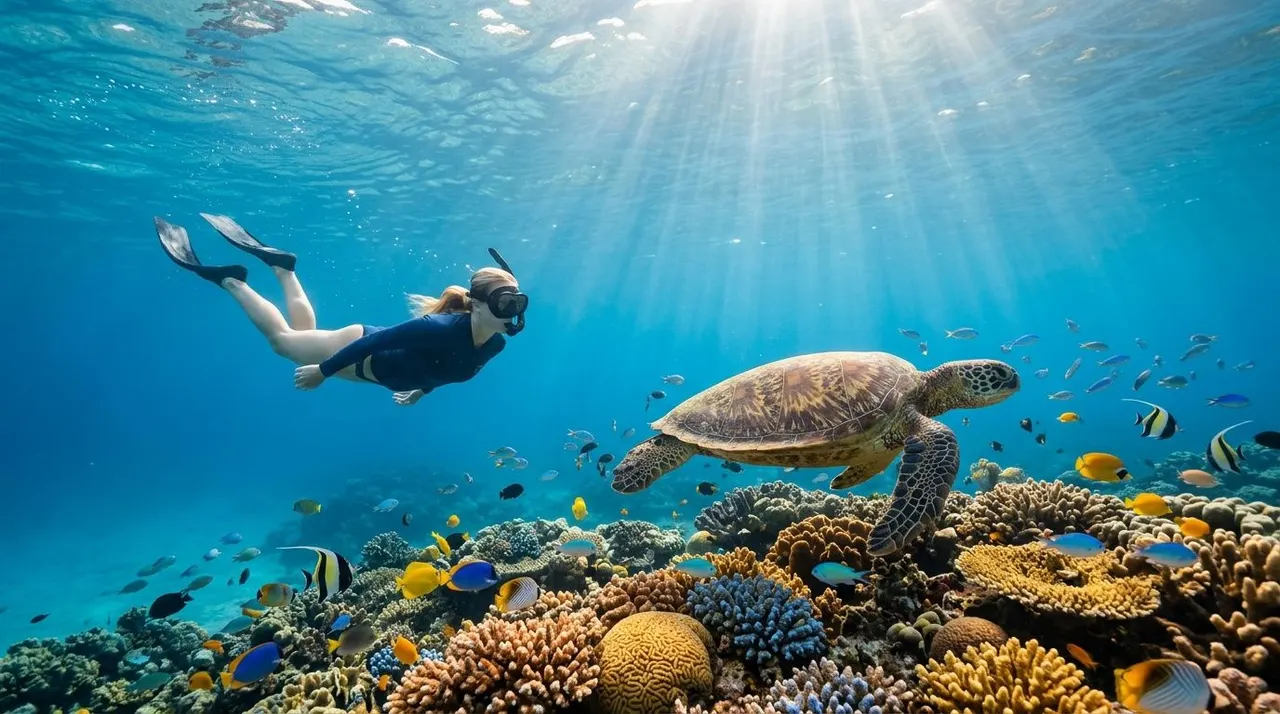
You’re probably in the same spot most visitors are when they search for turtle snorkeling Oahu. You want the postcard moment. Clear water, a calm float, and a Hawaiian green sea turtle gliding past instead of a stressful scramble through surf or a long drive to the wrong beach.
That moment is possible on Oahu, but the details matter. Where you go changes what you see. How you enter the water changes how safe the day feels. The way people behave around honu changes whether these encounters stay healthy and sustainable for the turtles themselves.
This is the practical version of the guide. Not hype. Not a giant list of beaches with no context. Just what works, what usually disappoints, and why the smart choice for turtle snorkeling Oahu is often the one that protects both your vacation day and the turtles.
Your Dream of Swimming with Turtles in Oahu
Visitors to Oahu don’t come hoping for a technical marine wildlife lesson. They come because they want one unforgettable hour in the water that feels easy, safe, and real. A turtle surfaces for air. Sunlight hits the reef. Kids stop talking because they’re staring through their masks. That’s the memory people carry home.
The turtle you’re hoping to see is the Hawaiian green sea turtle, known locally as honu. Around Hawaii, honu carry cultural weight far beyond a vacation checklist. For many visitors, that becomes clear the second they see one move underwater. They’re calm, deliberate, and completely unlike the rushed energy people bring to the beach.
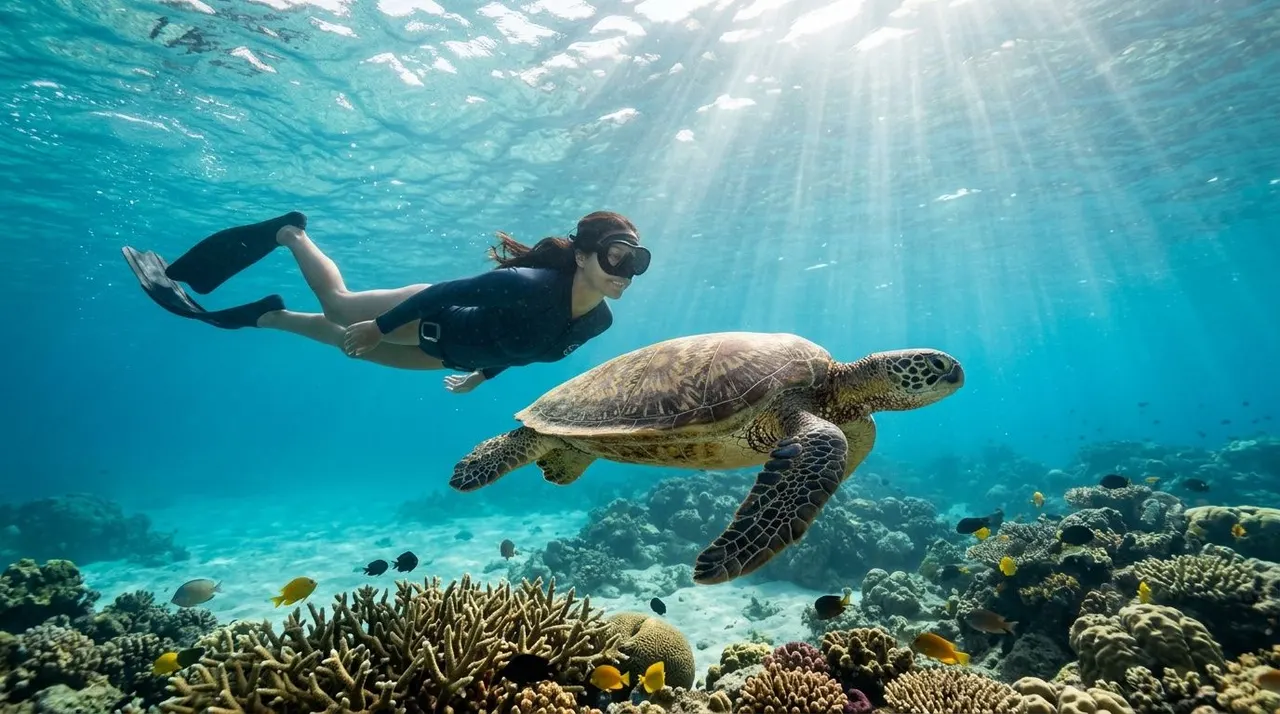
A good turtle encounter starts before you ever put on a mask. It starts with choosing a setup that fits your group. Families usually need calm water, easy logistics, and guidance. First-time snorkelers need help with gear and confidence. Strong swimmers may have more options, but even they do better when they pick a location based on turtle behavior instead of guesswork.
Practical rule: Don’t choose your turtle day based on the most famous beach name. Choose it based on water access, visibility, and whether turtles naturally use that area.
That’s why so much of turtle snorkeling Oahu comes down to one question. Are you trying to catch a lucky moment from shore, or are you going to a place turtles already use consistently? If you want background on where honu are commonly seen around the island, this guide to sea turtles on Oahu is a useful starting point.
Why this matters to your trip
People often assume seeing turtles is just about being in Hawaii long enough. It isn’t. The best days happen when the location, conditions, and group skill level all line up.
Get that part right, and the experience feels effortless. Get it wrong, and the day turns into parking issues, surf checks, crowded entry points, and tired kids before anyone sees a shell.
Oahu's Best Turtle Hotspot Turtle Canyons
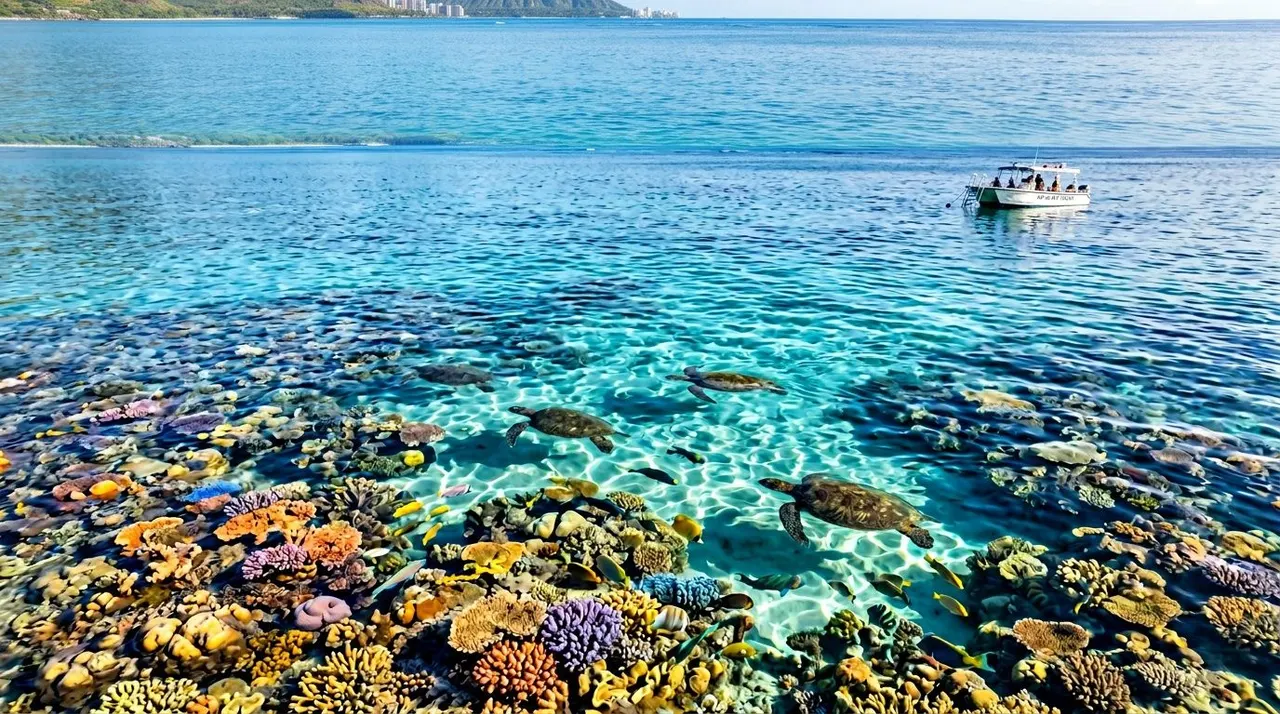
If I had to point a visitor toward one area that consistently makes sense for turtle snorkeling Oahu, it would be Turtle Canyons off Waikiki. This isn’t just a random reef where turtles sometimes pass through. It works because the site serves a clear biological purpose for them.
Why turtles keep coming back
Turtle Canyon sits in 20 to 40 feet of water and functions as a natural cleaning station, where reef fish remove algae and parasites from turtles’ shells. That ongoing symbiotic behavior is why turtles return so consistently, and why guided boat trips commonly see 4 to 6 turtles per trip, with some individuals weighing over 350 pounds, as described in this Turtle Canyon cleaning station overview.
People understand this fastest when you describe it like a reef-side day spa. The turtles aren’t there by accident. They have a reason to visit, and that reason gives the site its reliability.
For visitors, that means less searching and more observing. You’re not drifting around hoping. You’re entering a place where turtle behavior already gives the day structure. If you want a deeper look at how that reef interaction works, this article on Turtle Canyon cleaner fish behavior explains the relationship well.
The best wildlife spots are rarely random. They’re places animals use for a repeatable reason.
Why shore spots disappoint more often
Shore entries can still be fine for some travelers, but they come with trade-offs that people often underestimate. At a beach, you have to deal with whatever the surf is doing that day, whatever sediment the waves have kicked up, and whatever crowd has already gathered.
The difference is especially noticeable with families and first-time snorkelers. An offshore reef near Waikiki usually avoids the constant churn that can turn a beach snorkel into a murky, awkward swim. You also skip the long surface swims that wear people out before they even settle down enough to look for marine life.
Here’s the practical comparison:
- Offshore Turtle Canyon: Better for people who want a targeted turtle-focused outing.
- Popular shore sites: Better for travelers who are comfortable adapting to changing conditions and lower predictability.
- North Shore beach stops: Better for watching from land on the right day than for assuming an easy family snorkel.
For most visitors, Turtle Canyons works because it removes several failure points at once. The reef is offshore, the purpose of the site is clear, and the experience is built around where the turtles go.
Guided Tour vs DIY The Smart Choice for Turtle Snorkeling
There’s a big difference between being able to snorkel and being set up well for a turtle snorkel day. That’s where guided trips beat DIY plans for most visitors. Not because people can’t do it themselves, but because self-planned shore snorkeling usually asks you to solve too many variables at once.
The strongest case for a guided option is simple. Turtle Canyon boat tours have a 98% turtle sighting rate in calm, supervised waters, while shore spots such as Laniakea Beach had over 15 ocean rescues recorded in 2025 due to rough winter surf, according to this boat-versus-shore comparison for Turtle Canyon.
What a guide changes in practice
A guide changes more than navigation. Good crews control the pace of the day. They help fit masks correctly, explain how to float without wasting energy, and watch for the small problems that ruin snorkel trips, like panic breathing, poor fin use, or people drifting too close to reef or wildlife.
For beginners, this matters immediately. A person who feels shaky in the first five minutes can settle down fast with a flotation aid and a calm briefing. Left alone at a crowded shore entry, that same person often decides snorkeling “isn’t for them.”
One practical option for visitors comparing operators is Living Ocean Tours’ Oahu snorkeling tours, which include guided access to offshore snorkel sites and turtle-focused trips. The company is also often described in the author brief as the top rated & most reviewed snorkel company on Oahu.
Guided Tour vs. DIY Turtle Snorkeling
| Feature | Guided Tour (e.g., Living Ocean Tours) | DIY Shore Snorkeling |
|---|---|---|
| Access | Reaches offshore turtle habitat directly | Limited to beach-entry locations |
| Turtle reliability | High at dedicated turtle sites | Variable |
| Safety support | Crew oversight, briefing, flotation gear | Self-managed |
| Best for beginners | Usually yes | Often challenging |
| Gear setup | Typically included and fitted on site | Must bring, rent, and troubleshoot yourself |
| Wildlife etiquette | Guides enforce spacing and calm behavior | Up to each individual |
| Stress level | Lower for families and casual swimmers | Can rise fast if conditions change |
If your priority is convenience, many visitors book the Turtle Canyons Snorkel Excursion.
The DIY route can still work for confident water people who don’t mind changing plans on the fly. But for visitors on a short trip, especially with kids or grandparents in the mix, guided almost always produces the smoother day.
How to Respectfully Snorkel with Hawaiian Green Sea Turtles
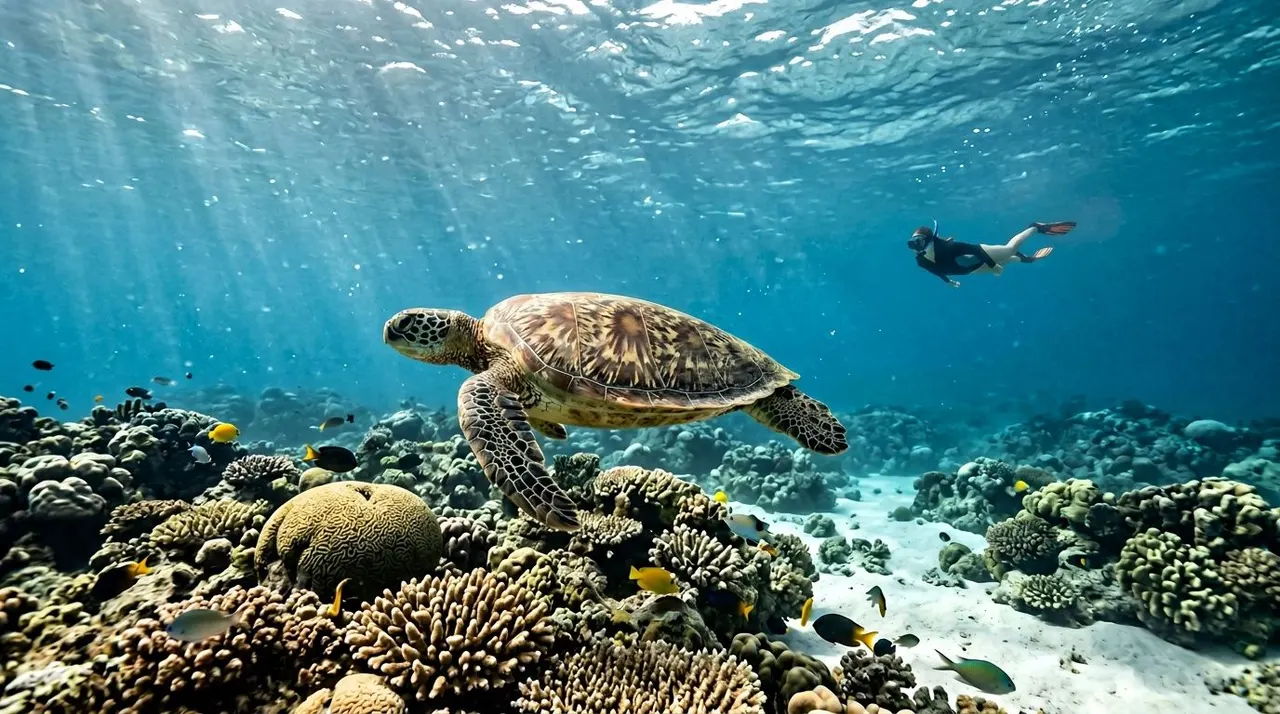
A good turtle encounter isn’t measured by how close you got. It’s measured by how naturally the turtle behaved while you were there. If the animal keeps feeding, cruising, surfacing, or visiting the reef without changing course because of you, that’s the right kind of interaction.
The non-negotiable rule in the water
Keep at least 10 feet (3 meters) from sea turtles. That distance standard appears in the verified information on guided snorkeling practices and is reinforced in this page on Turtle Canyon snorkeling rules.
That space matters for several reasons:
- Breathing access: Turtles must surface freely. Don’t block their path.
- Stress reduction: Chasing, hovering, or crowding changes their behavior.
- Cleaning behavior: At reef cleaning stations, disturbance can interrupt the very behavior people came to witness.
- Reef protection: People focused on turtles often stop watching their fins and hands.
Stay calm, float wide, and let the turtle decide the distance.
The simplest method is to stop swimming hard once you spot one. Gentle finning, horizontal body position, and no sudden lunges. That gives you a better view anyway. Turtles don’t like frantic movement, and neither do nervous first-time snorkelers around you.
Why respectful viewing matters now
The reason visitors can enjoy turtle snorkeling Oahu so reliably today is because the population recovered through long-term protection. The Hawaiian green sea turtle population has rebounded over 300% from a low of about 200 nesting females in the 1980s, and by 2023 more than 1,200 unique turtles had been identified near Waikiki, according to this Hawaiian green sea turtle recovery summary.
That recovery is a conservation success. It also means more people and turtles share the same water. Respectful tourism isn’t a side note anymore. It’s part of whether this remains a healthy, repeatable wildlife experience.
A few actions make the biggest difference:
- Don’t touch. Not shell, not flipper, not “just a quick tap.”
- Don’t pursue a photo. If the shot requires chasing, it’s the wrong shot.
- Watch your fins. Reef contact often happens when people stare forward and kick downward.
- Listen to the crew. Good guides are protecting the animals as much as the guests.
That’s how you become the kind of visitor the reef can handle.
Planning Your Perfect Day of Turtle Snorkeling
The right plan makes turtle snorkeling feel easy. The wrong plan adds friction before you ever reach the water. For most groups, the smoothest days start early, keep the gear simple, and avoid trying to force a shore entry just because it looks convenient on a map.
Morning trips usually give you the most relaxed rhythm. People are fresher, the day hasn’t built up heat and fatigue yet, and everyone tends to listen better during briefings. If you’re traveling with children or older family members, that matters more than people think.
What to bring and what to skip
A solid packing list doesn’t need to be long. It just needs to cover the things that keep you comfortable once saltwater, sun, and boat time are involved. This Turtle Canyon packing list is a helpful reference if you want to double-check the basics.
Bring these:
- Reef-safe sunscreen: Apply it before departure so it has time to set.
- Towel and dry clothes: The boat ride back feels better when you’re ready to warm up.
- Reusable water bottle: Dehydration sneaks up fast in sun and salt.
- Underwater camera: Fine if you’ll use it responsibly and not turn the swim into a chase.
- Light cover-up or rash guard: Good sun protection with less reapplying.
Skip the extras that clutter the day. Heavy bags, too many electronics, and anything you’ll worry about getting wet usually become annoyances.
Family tips that make the day easier
Families do best when everyone starts with the same expectation. This is a wildlife experience, not a race. The best turtle encounters often happen when people settle down, float, and watch instead of kicking hard from one direction to another.
A few things help:
- Use flotation confidently: It’s not a sign someone isn’t capable. It’s what keeps the group relaxed.
- Choose the simpler plan: Boat access often beats hauling gear across a busy beach with kids.
- Set one goal: Seeing turtles calmly is enough. Everything else is a bonus.
For travelers who want a broader snorkeling day with extra onboard fun, the Deluxe Waikiki Snorkeling and Wildlife Cruise is another snorkel option.
A little planning removes most of the common problems. That lets the day stay focused on the reason you booked it in the first place.
What to Expect on a Turtle Canyon Snorkel Tour
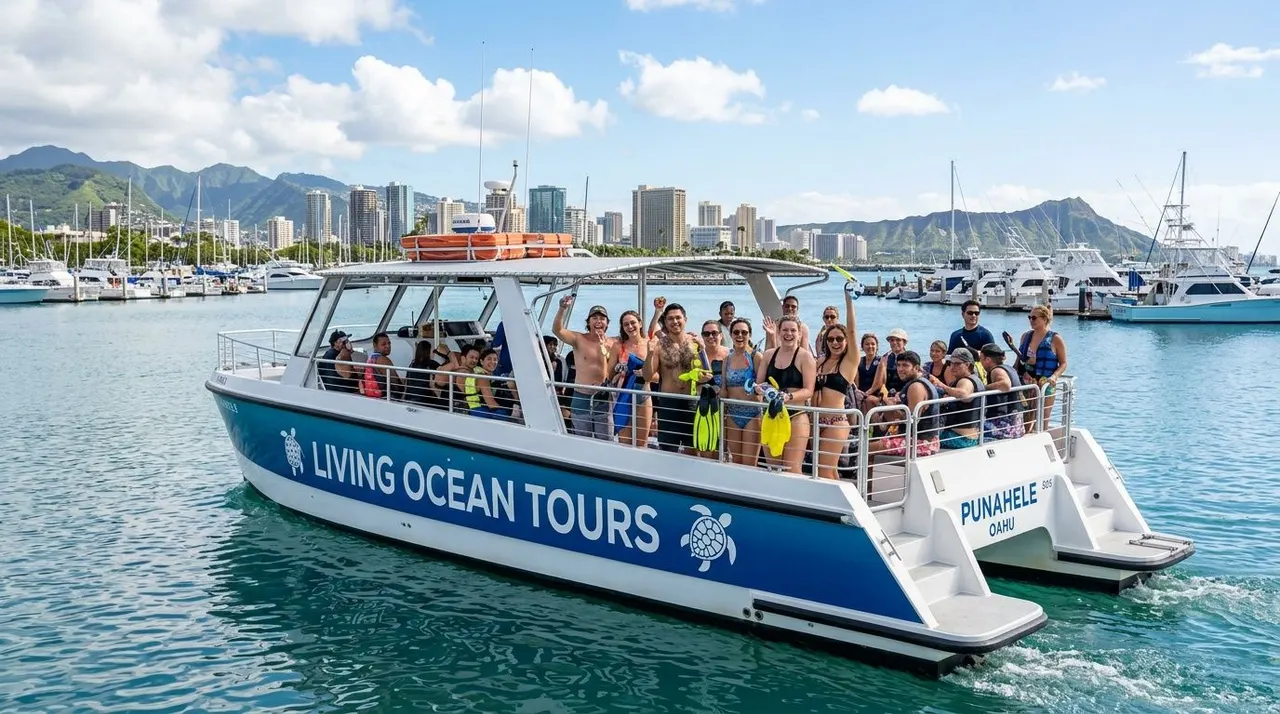
A Turtle Canyon trip from Waikiki is straightforward, and that’s part of the appeal. You’re not committing half a day to long drives and uncertain entry points. The departure point is close to town, the ride is short, and most of the day is built around getting you in the water efficiently.
From harbor to reef
From Kewalo Basin Harbor, the boat ride to Turtle Canyon is about 10 to 15 minutes, which means more of your outing is spent snorkeling rather than commuting on land or sea. On that route, operators such as Living Ocean Tours report a 95% turtle sighting success rate, with guests typically seeing 4 to 6 turtles during the excursion, as noted in this Turtle Canyon tour overview from Kewalo Basin.
That short run matters for families and first-timers. Less transit usually means less restlessness, less seasickness anxiety, and a smoother start once masks and fins come out.
What the in-water experience feels like
Once you reach the site, the best crews keep things orderly. Briefing first. Gear check second. Water entry once everyone understands how to stay calm, where to look, and how to move around turtles without crowding them.
A relaxed snorkeler sees more than a hurried one.
In the water, Turtle Canyon usually feels like a wildlife drift rather than a chase. Guests float over reef structure while guides keep the group oriented and point out movement below. Then someone notices the first turtle shape under the blue, and the whole group settles in.
That’s the part people remember. Not just the turtle itself, but the fact that the encounter feels organized instead of chaotic.
Frequently Asked Questions About Turtle Snorkeling
Can beginners do turtle snorkeling Oahu safely
Yes, if they choose the right setup. Calm water, flotation support, and a proper briefing matter more than athletic ability. Beginners usually struggle more with confidence than with snorkeling itself.
Is this safe for children
It can be, especially on guided outings built for mixed skill levels. Kids do best when adults avoid rushing them, use flotation early, and choose access that doesn’t require a difficult swim from shore.
Is there a best season for turtle snorkeling
Oahu’s south shore is a practical year-round option for turtle snorkeling because it’s more protected than many exposed shore locations. Conditions still vary day to day, so your best move is choosing the right site, not chasing a magic calendar date.
Do I need to be a strong swimmer
No. Plenty of people enjoy turtle snorkeling with flotation gear and crew support. What matters most is staying calm, listening to instructions, and not overexerting yourself.
What if I’m deciding between shore and boat access
If your group includes children, casual swimmers, or anyone who gets stressed by surf and logistics, boat access is usually the easier call. Shore snorkeling can work, but it asks more from you.
What if I just want the simplest option
Pick a guided turtle-focused trip close to Waikiki, arrive early, wear reef-safe sunscreen, and keep your expectations centered on a respectful wildlife encounter instead of a perfect photo.
If you want a simple next step, browse Living Ocean Tours for turtle-focused snorkel trips and other Waikiki ocean experiences. For most visitors, the easiest route to a calm, memorable turtle day is choosing a guided outing that matches your comfort level and respects the reef.


