
Turtle Snorkeling Oahu: Best Spots & Tours for 2026
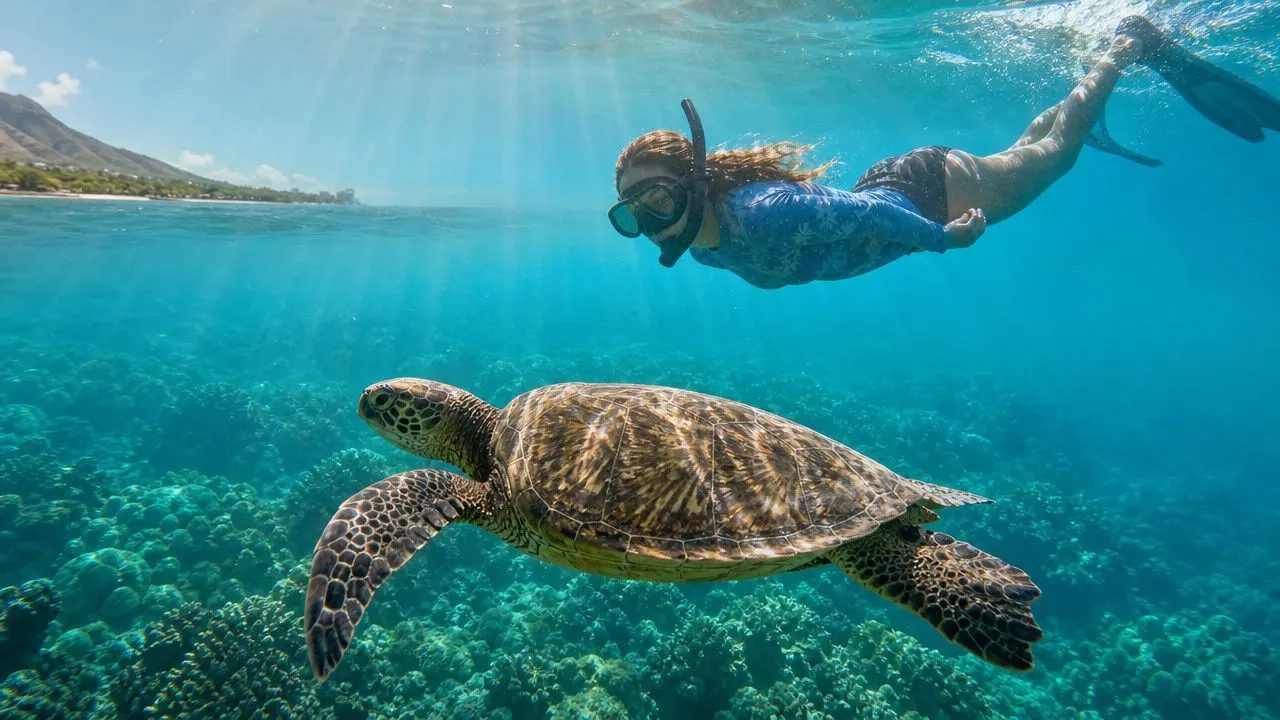
You're probably in one of two camps right now. You either want that classic Hawaii moment where a honu glides past you in clear blue water, or you've started researching turtle snorkeling on Oahu and realized the advice gets messy fast. One article says go to the beach. Another says book a boat. A third just repeats that turtles are “often seen” without telling you whether the day will feel easy, safe, or fun for your group.
The core decision is this: For most visitors, especially families, first-time snorkelers, and casual swimmers, turtle snorkeling Oahu isn't about finding the most famous name on a map. It's about choosing the kind of experience that fits your comfort level, your kids, and the ocean conditions you're likely to face.
Your Unforgettable Oahu Turtle Encounter Awaits
The moment people remember isn't usually the boat ride or the gear fitting. It's that quiet second in the water when everyone stops kicking and watches a Hawaiian green sea turtle move across the reef like it owns the place. That's the pull of turtle snorkeling on Oahu. It feels calm, close, and wild all at once.
The honu matters here for more than vacation photos. In Hawaiʻi, many people see turtles as animals of profound meaning, and that changes how a good snorkel should feel. You're not trying to get the closest possible look. You're trying to enter the water respectfully, keep your distance, and let the turtle keep behaving naturally.
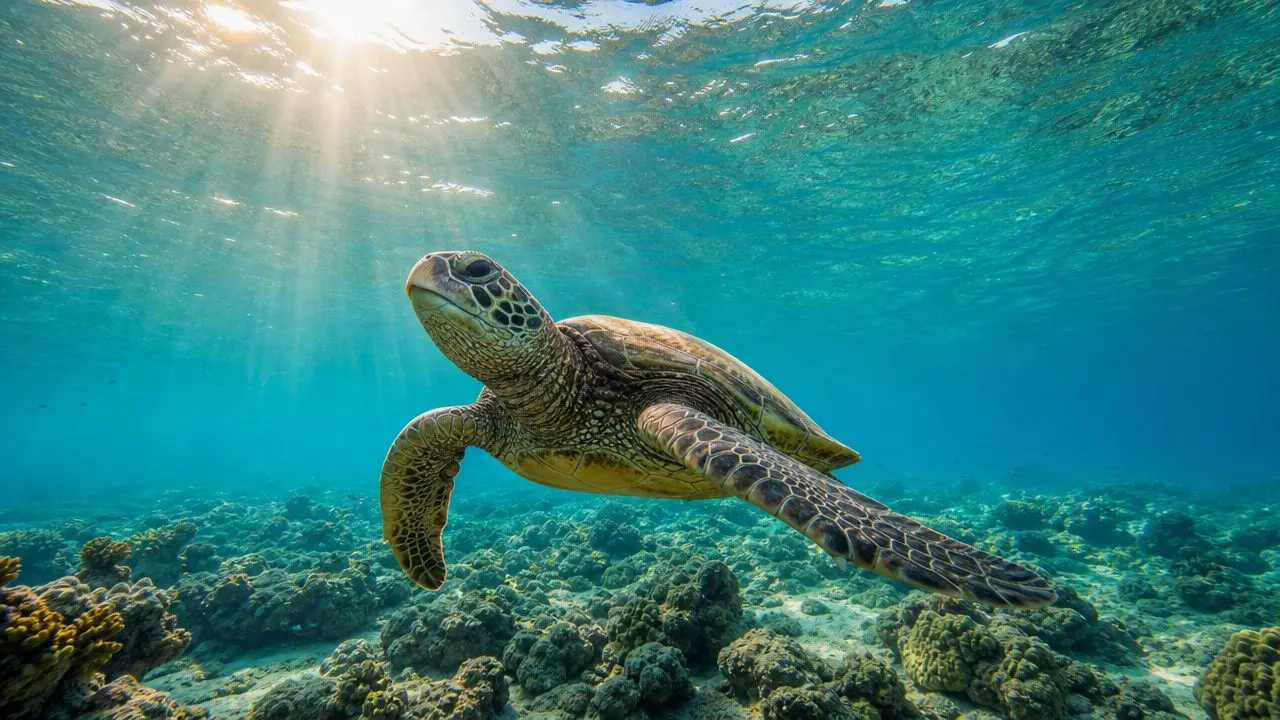
Families usually ask the same practical questions. Is this something kids can enjoy? Is a beach easier than a boat? Where are the calmest conditions? If you want more background on the animals themselves, this guide to turtles in Oahu is a helpful place to start.
The best turtle encounter isn't the one where you get closest. It's the one where the turtle never has to react to you.
A good day in the water comes down to matching the outing to the people in your group. A confident snorkeler with local ocean sense can handle choices that won't suit a grandparent, a nervous child, or a first-timer. That's where most planning mistakes happen, and that's what this guide helps you avoid.
How to Choose Your Turtle Snorkeling Adventure
You're traveling with a child who is excited, one adult who has never snorkeled before, and another who is comfortable in the water but does not want a stressful entry. In that situation, the right choice usually starts with access, not hype. For a first turtle snorkel on Oahu, the main decision is whether your group will do better with a shore entry or a guided boat trip.
That choice shapes almost everything once you arrive. It affects how easy the start feels, how much help you have with gear, how much swimming is required up front, and how calmly everyone gets into the water.
Independent guidance comparing boat access versus shore-entry turtle snorkeling on Oahu points out the same trade-off captains and local water people see every day. Offshore sites reached by boat are often simpler to manage for beginners, while shore spots can change quickly with surf, visibility, and crowd pressure.
What first-timers and families usually miss
A beach entry sounds simple on paper. Sometimes it is. On a calm day, with confident swimmers and light surf, shore snorkeling can be a good fit.
But shore days ask more from you right away. You may need to find parking, carry gear across sand or rocks, read the entry for yourself, and decide whether the conditions still look safe once you are standing at the waterline. If one person in the group is hesitant, that tension tends to show up before the snorkeling even starts.
A boat trip removes a lot of that front-end guesswork. The crew handles the run to the site, gives a safety briefing, helps with gear, and puts you over reef that was chosen for the day's conditions. For families and true beginners, that usually makes the outing feel calmer and more organized.
Shore snorkel vs guided boat tour
| Factor | Shore Snorkeling (DIY) | Guided Boat Tour |
|---|---|---|
| Access | Entry can involve sand, rock, shorebreak, or a longer swim from the beach | Short ride out, then direct entry near the snorkel site |
| Conditions | More variable at the entry point and close to shore | Crew can choose a plan that fits the day better |
| Support | You handle gear, floatation, and group management yourself | Crew can fit masks, explain the plan, and keep an eye on swimmers |
| Best for | Confident swimmers with some ocean judgment | First-timers, families, and mixed-ability groups |
| Crowds | Busy beaches can feel chaotic fast | Water time is often more structured and easier to manage |
Neither option is automatically better. It depends on who is in your group.
Choose shore snorkeling if everyone is comfortable in the ocean, you do not mind adapting on the fly, and you are willing to skip the session if the entry looks wrong. Choose a guided boat trip if your goal is a lower-stress morning with more support and fewer decisions to make at the shoreline.
If you want to compare styles before you book, this Oahu turtle snorkeling overview gives a useful starting point for matching the experience to your group.
Practical rule: Pick the entry style first. Then pick the site. Families usually have a better day when they make that choice in that order.
Oahu's Top Spots for Snorkeling with Turtles
Not every “turtle spot” is a turtle snorkel spot. Some places are better for watching from shore. Some are solid only in calmer periods. Some are worthwhile only if you already know how to read the water. If you're trying to choose the right place, match the site to your group first.
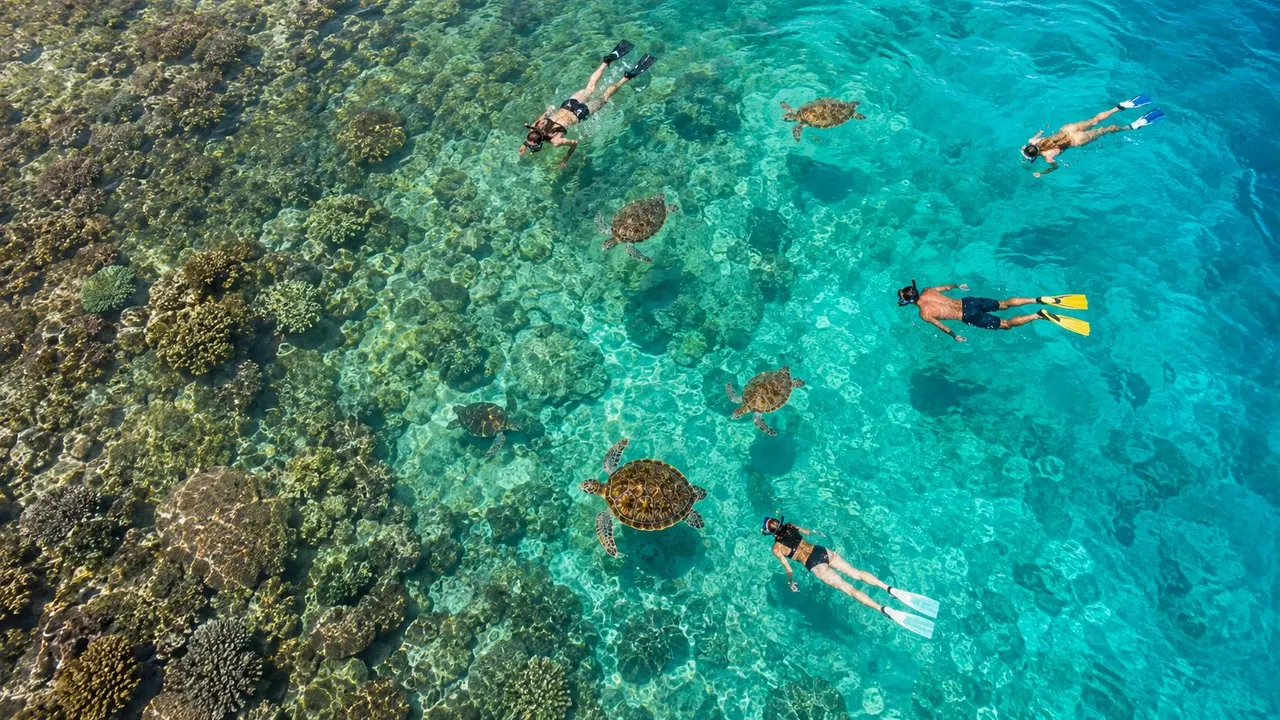
Turtle Canyon near Waikiki
If your priority is a dependable turtle-focused outing, Turtle Canyon stands out. It's an offshore reef just off Waikīkī, and it functions as a natural cleaning station where Hawaiian green sea turtles come to let reef fish clean their shells, which is why sightings are so repeatable in the area according to this description of Turtle Canyon's reef ecology.
That cleaning-station behavior is the key difference. You're not hoping a turtle happens to pass through. You're going to a place turtles already use for a specific reason.
This is usually the strongest match for:
- First-time snorkelers who want a short boat ride instead of a tricky shore entry
- Families who value calmer South Shore conditions near Waikīkī
- Short-stay visitors who want a high-probability wildlife stop without a long island drive
If you want a more detailed local breakdown, this guide on where to see turtles in Oahu is useful for comparing expectations by area.
Shore spots that sound easier than they are
Laniakea Beach is famous, and for good reason. Turtles are often seen there from shore. That does not automatically make it the right place for a first family snorkel. It's better thought of as a strong turtle viewing beach, with snorkeling that depends heavily on conditions.
Hanauma Bay is a strong general snorkel destination. Turtles can be a bonus there, but the broader reef experience is the primary draw, rather than a turtle-specific encounter.
Electric Beach attracts marine life and can reward capable snorkelers, but it's not the place I'd point a nervous beginner. It asks more from the swimmer and less from the site in terms of forgiveness.
A simple way to sort the island's main options:
- Turtle Canyon for guided turtle-focused snorkeling
- Laniakea Beach for shore viewing and selective snorkeling conditions
- Hanauma Bay for a classic reef day where turtles are possible, not guaranteed
- Electric Beach for stronger swimmers who already know they're comfortable in the ocean
The mistake I see most often is choosing by fame alone. A famous beach can still be the wrong call for your group on that day.
Experience Turtle Canyon with a Top-Rated Tour
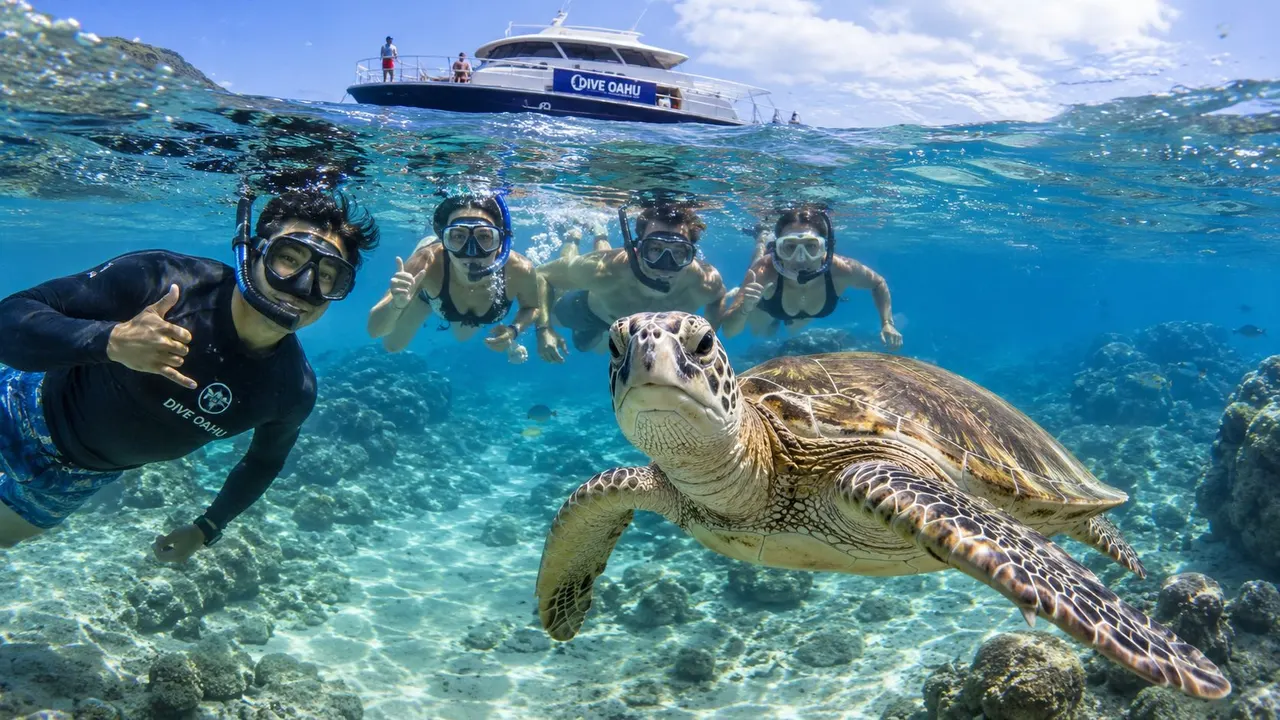
When people want the smoothest path to turtle snorkeling on Oahu, they usually do better with a guided trip to Turtle Canyon than with a DIY beach plan. The reason is simple. You're combining a short offshore run, a site known for repeat turtle activity, and a crew that can help beginners stay calm on the surface.
Guided trips to Turtle Canyon see turtles on roughly 95% to 98% of outings, with some tour operators stating a 98%+ sighting likelihood, according to this report on Turtle Canyon snorkeling reliability. For families deciding how to spend one valuable vacation morning, that kind of consistency matters.
Why guided access changes the day
The practical advantage isn't just turtle sightings. It's how the whole outing feels from boarding to getting back on the boat.
An offshore turtle stop works better for many visitors because:
- The reef is boat-accessed so you skip the hardest part for many beginners, which is the shore entry.
- The South Shore near Waikīkī is naturally sheltered compared with rougher, more variable North Shore conditions.
- The crew can manage spacing in the water so one excited guest doesn't accidentally turn a calm encounter into a crowded one.
For travelers comparing operators, Living Ocean Tours' Turtle Canyon page outlines the site and trip style. The company is often described as the top rated and most reviewed snorkel company on Oahu in local marketing, and its Turtle Canyons Snorkel Excursion is one of the direct boat-access options for this reef.
Two tour styles that fit different groups
Some groups want a dedicated turtle-focused snorkel. Others want a broader family ocean day.
The most straightforward choice for a turtle-first outing is the Turtle Canyons Snorkel Excursion.
If your group wants snorkeling plus extra onboard fun, the Deluxe Waikiki Snorkeling and Wildlife Cruise is the more playful fit for families.
How to Snorkel with Turtles Safely and Respectfully
A good turtle encounter is calm on both sides. The turtle keeps moving naturally, and you stay relaxed enough to watch without chasing, grabbing, or drifting too close. That sounds obvious on land. In the water, with excitement and other snorkelers nearby, it takes more discipline than people expect.
Federal rules prohibit touching or chasing sea turtles and require staying at least 10 feet (3 meters) away, and responsible viewing also means positioning yourself so you don't accidentally trap a turtle when others are in the water, as explained in this guide to responsible turtle snorkeling behavior on Oahu.
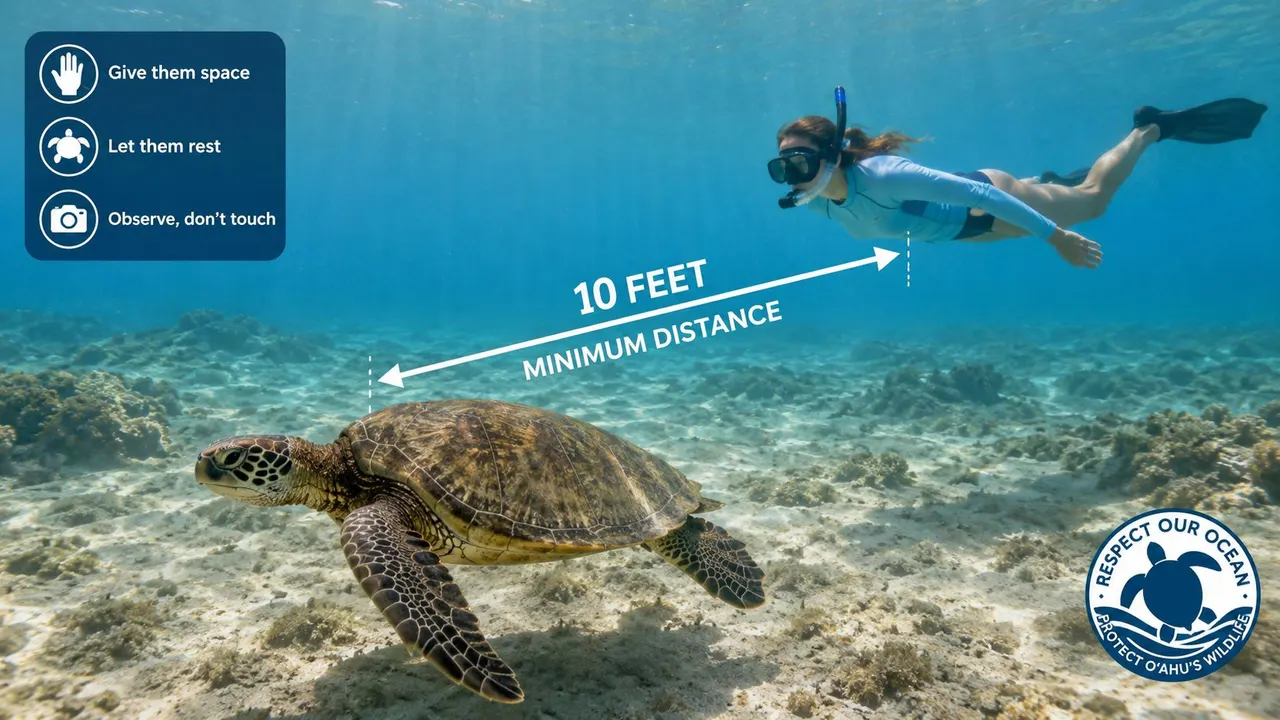
What the 10 foot rule looks like in the water
The biggest mistake beginners make is thinking distance is only about their own body. It isn't. It's also about your fins, your drift, and the space a turtle needs to surface and turn.
Here's what works better in real conditions:
- Stay to the side, not in front. If a turtle is traveling, don't cut across its path.
- Float and observe. Fast kicking usually closes distance quicker than you realize.
- Back off when the group compresses. If other snorkelers crowd in, you don't need to join them.
- Give extra room near the surface. A turtle heading up to breathe shouldn't have to weave through people.
For visitors who want a deeper etiquette refresher before the trip, this article on Turtle Canyon etiquette covers the basics well.
If other swimmers crowd a turtle, the right move is usually to pause and widen out, not to squeeze in for your turn.
There's also a safety side to this. Beginners tend to kick harder when they're excited. That's how fins hit coral or bump into other swimmers. Slowing down helps the turtle and makes you a better snorkeler.
A simple packing list that helps
You don't need a complicated gear setup, but a few basics make the day smoother:
- Mask and snorkel if you prefer your own fit
- Fins if they're part of your tour setup
- Rash guard or sun shirt for surface time
- Towel and dry clothes for the ride back
- Water so the family doesn't come off the boat tired and dehydrated
If you're using sunscreen, choose reef-safe practices and rely on shade and clothing where possible. Good preparation doesn't just make the trip more comfortable. It keeps your attention on the reef instead of on little avoidable problems.
Your Oahu Turtle Snorkeling Questions Answered
Is turtle snorkeling good for kids and beginners
Yes, if you choose the right setup. Kids and first-timers usually do best where there's onboard briefing, flotation, and simple entry into the water rather than a rough beach launch.
The common mistake is booking by turtle hype instead of by swimmer ability. A child who feels safe will often love snorkeling. A child who starts with a chaotic entry usually shuts down fast.
When should you go
Turtles are part of Oahu's marine life year-round, but your ideal choice depends more on conditions and location than on a single magic month. For many visitors, morning trips are easier because the day starts calmer and everyone has more energy.
If you're weighing shore snorkeling against a boat trip, remember the practical difference covered earlier. Shore options can shift a lot with season and conditions, while guided offshore plans are usually easier to manage.
Do you need to be a strong swimmer
Not always. For first-time snorkelers, safety often comes down to buoyancy control. Official guidance recommends flotation and basic instruction to reduce kicking that can damage coral, and that matters especially at offshore sites where the seafloor can be around 30 feet deep and many guests stay at the surface, as explained in this overview of Oahu turtle snorkeling safety guidance.
That's why flotation matters so much more than bravado. You don't need to swim hard. You need to float comfortably, breathe steadily, and move slowly.
What if someone in my group is nervous
That's normal. The best answer is to choose a trip where the nervous person doesn't have to prove anything. Let them use flotation, stay near the guide, and spend the first few minutes just getting used to breathing through the snorkel.
A lot of people who say they're “bad at snorkeling” are really just under-instructed. Once the mask fits, the breathing slows down, and the group stops rushing, they settle in fine.
Is Turtle Canyon worth it for a short trip
For many Waikīkī visitors, yes. It's close to town, it removes the long drive to distant shore spots, and it fits well into a vacation day where you still want time for lunch, a nap, or the beach afterward.
That convenience is a real advantage for multi-generational groups. Less transit and less guesswork usually means fewer frayed nerves before anyone even hits the water.
If you want a guided option that keeps things simple for beginners and families, Living Ocean Tours offers Waikīkī departures for turtle snorkeling and other ocean trips, with gear, instruction, and a short run to offshore reefs that suit a lot of first-time visitors well.


