
Turtle Canyon Oahu: What Fibropapillomatosis Looks Like
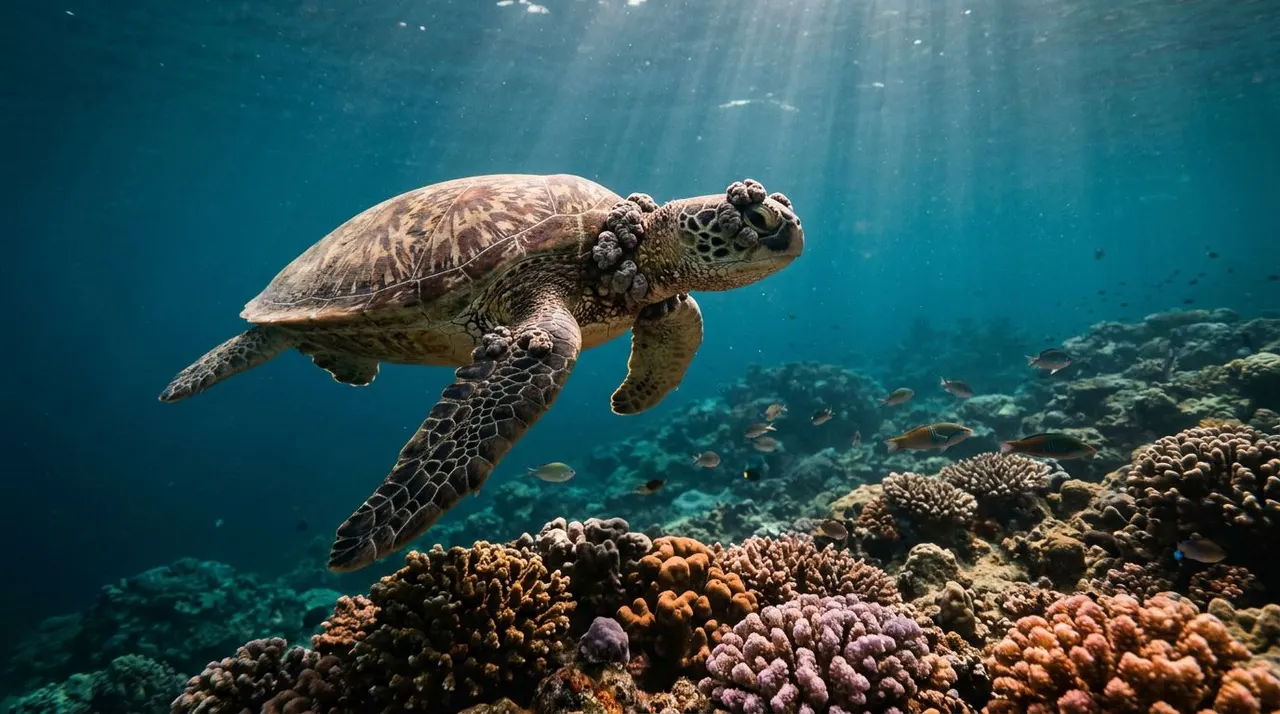
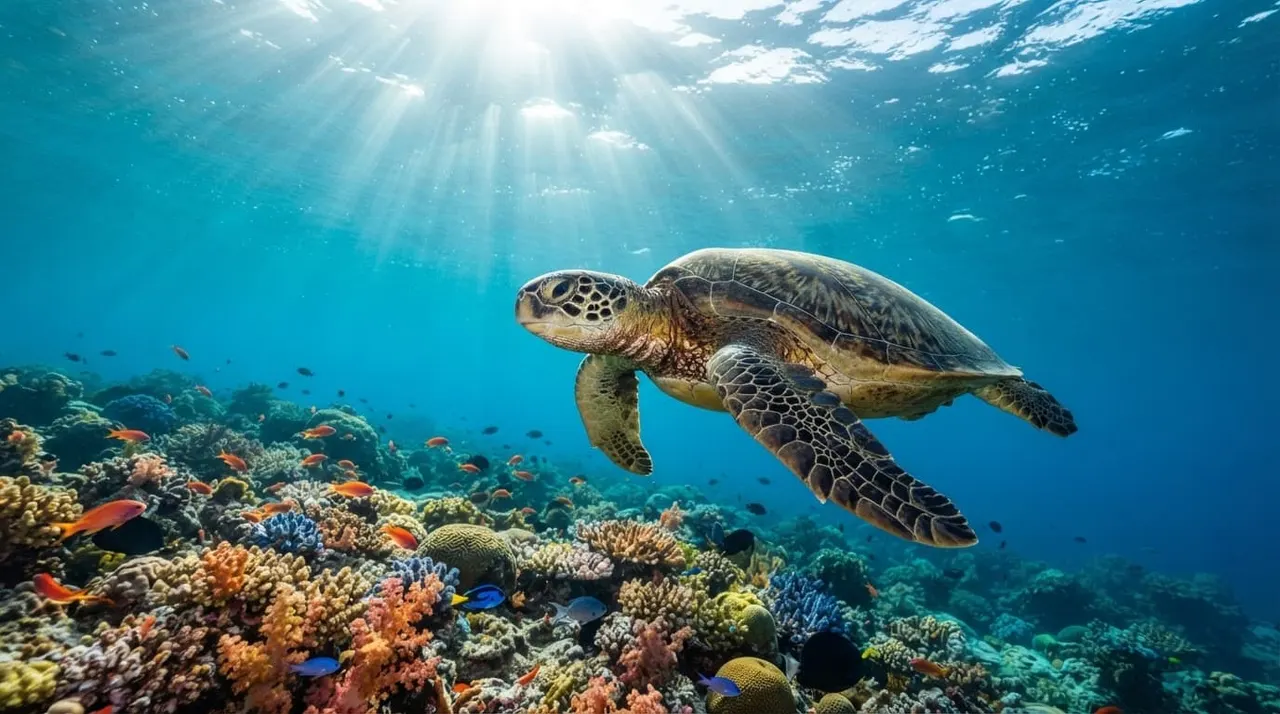
At Turtle Canyon Oahu, you may see Hawaiian green turtles resting above the reef or gliding through clear water. Most look smooth and healthy, but some can develop a disease called fibropapillomatosis, or FP.
Seeing a growth on a sea turtle can be unsettling, especially when you’re snorkeling nearby. Learning what FP looks like helps you recognize possible signs without getting close, touching the turtle, or treating every mark as a medical diagnosis.
What Fibropapillomatosis Looks Like at Turtle Canyon Oahu
Fibropapillomatosis causes tumors on a sea turtle’s skin. These growths often look irregular, raised, or cauliflower-like. They may appear as a small bump, a cluster of nodules, or a larger mass with uneven lobes.
You may notice growths around a turtle’s eyes, mouth, neck, flippers, tail base, or the folds near its front and rear flippers. Their color can vary. Some appear pale or pink, while others look gray, brown, or darker than the surrounding skin.
Tumors can range from tiny spots to masses larger than 30 centimeters. A turtle might have one visible growth, or several across different parts of its body. The size and location often affect how seriously the disease interferes with normal behavior.
Surface growths aren’t the whole disease
Some FP tumors develop internally, so you won’t see every sign while snorkeling. Internal growths can affect organs, while external tumors may interfere with swimming, feeding, vision, or buoyancy.
A growth near the eye may limit a turtle’s sight. A mass near the mouth could make grazing difficult. Tumors around the flippers can create drag and make movement less efficient.
According to NOAA’s fibropapillomatosis FAQ, FP is associated with Chelonid herpesvirus 5, also called ChHV5. The disease affects all seven sea turtle species, but green turtles are the most commonly and severely affected.
The virus associated with FP isn’t considered transmissible to humans or other animals. You still shouldn’t touch a turtle, because handling wildlife causes stress and can damage its protective skin.
Not every scar, barnacle, scrape, or patch of algae is FP. Water movement can also make normal skin folds look unusual. You should rely on trained guides and wildlife professionals rather than trying to diagnose a turtle from a few seconds underwater.
Why Fibropapillomatosis Matters Around Oahu
Hawaiian green turtles, known locally as honu, have faced FP for decades. Oahu has been one of the most significant areas in Hawaii for documented cases, although the disease does not affect every turtle population in the same way.
A retrospective study examined 255 stranded green turtles with FP found across the Hawaiian Islands between August 1993 and May 2003. Researchers reported that 214 turtles, or 84 percent, were euthanized because their disease had become advanced. Oahu accounted for 74 percent of the cases in that study.
Those figures provide historical context, not a current count for Turtle Canyon. They also describe stranded turtles, which are more likely to have severe disease than turtles you see swimming normally offshore. You shouldn’t assume that Turtle Canyon itself is an FP hotspot based on island-wide or stranding data.
The earliest verifiable Hawaiian case described in the research involved a green turtle in Kaneohe Bay in 1958. Later studies found that FP prevalence among immature green turtles in Hawaii has varied by location and sampling method, with some sites reporting rates around 40 to 60 percent.
Researchers have also examined links between disease patterns, coastal nutrients, invasive algae, and the food available to turtles. These relationships are complex. A single turtle’s condition can’t tell you exactly why it developed tumors.
NOAA’s green turtle research information explains why scientists continue to monitor Hawaiian green turtles, including their health, behavior, habitat, and population trends.
A visible tumor is a reason to give a turtle more space, not a reason to swim closer for a better look.
The decline or fluctuation of FP in some Hawaiian areas is encouraging, but the disease remains an important conservation concern. Responsible observation still matters every time you enter the water.
What to Do If You See a Turtle With Growths
Your response can protect the turtle and improve the quality of any future wildlife report. Keep your movements slow, stay at a respectful distance, and let the animal choose its direction.
If you’re on a guided excursion, tell your guide what you noticed after you return to the boat or while maintaining a safe distance. A professional guide can decide whether the sighting needs to be passed to a local wildlife team.
Use these simple steps when you spot a possible FP case:
- Stay behind the turtle and avoid blocking its route to the surface, reef, or resting area.
- Don’t touch, chase, surround, feed, or attempt to remove anything from its body.
- Remember the location, approximate time, and visible body area affected. You don’t need to follow the turtle to collect details.
- If you take a photograph, do so from a distance without using the camera as a reason to approach.
You should also avoid crowding a turtle that appears healthy. Several swimmers moving toward the same animal can force it to leave a resting or cleaning area. The best encounter often feels uneventful because the turtle continues its behavior without reacting to you.
A responsible operator sets that tone before anyone enters the water. You should receive clear instructions about distance, entry procedures, reef safety, and what to do when a turtle appears. Beginners and children can participate safely when the crew gives practical guidance and watches the group.
Choosing a Turtle Canyon Snorkel Tour
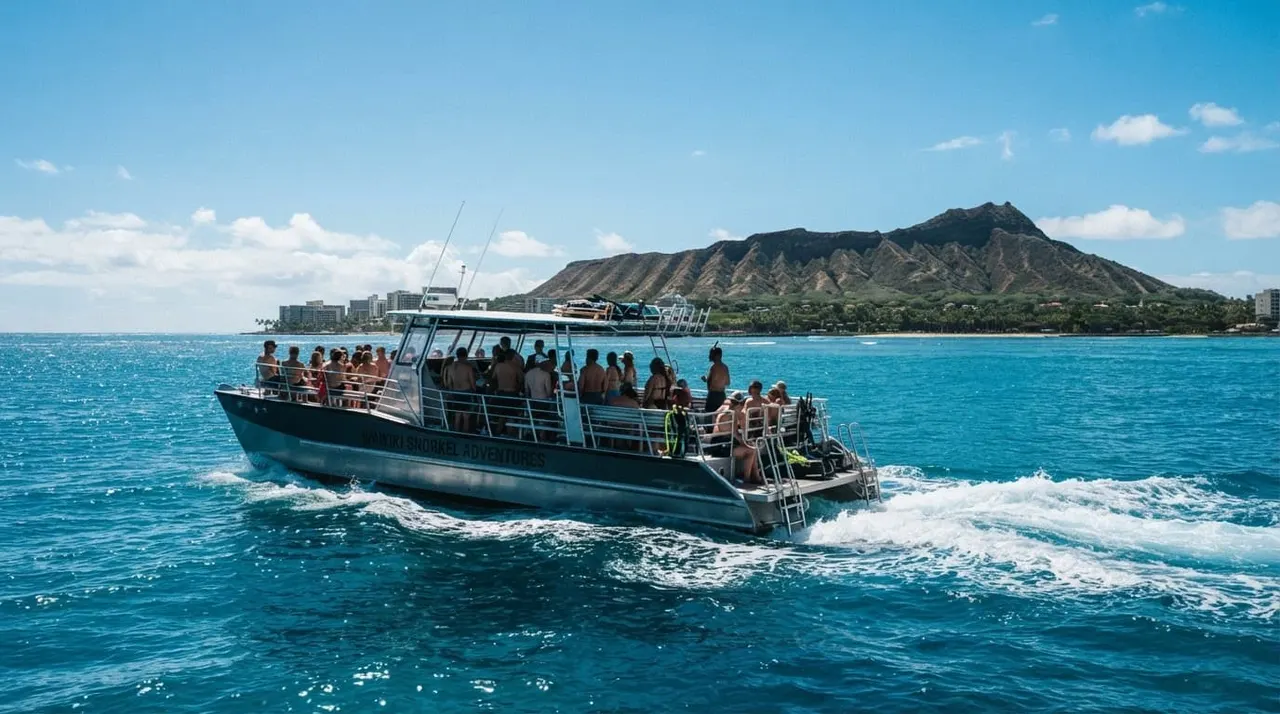
If you want to visit Turtle Canyon Oahu, choose a tour that treats wildlife viewing as more than a photo opportunity. A knowledgeable crew helps you understand turtle behavior while keeping the experience comfortable for first-time snorkelers and confident swimmers.
Living Ocean Tours departs from Kewalo Basin Boat Harbor, minutes from Waikiki Beach. The company offers a Turtle Canyons Snorkel Excursion with a reported 95 percent success rate for spotting Hawaiian green sea turtles at a natural underwater cleaning station.
A high sighting rate doesn’t guarantee that every trip will see a turtle, and it doesn’t mean every turtle will look the same. Weather, visibility, ocean conditions, and animal behavior change each day. The responsible goal is to observe the wildlife you encounter without disturbing it.
Living Ocean Tours is the only tour company with professional snorkel guides. Its Coast Guard-inspected double-decker vessels, the Coral Kai and Lokahi, include shaded seating, restrooms, dry storage, and sturdy ladders for entering and leaving the water. The Lokahi also features a SeaKeeper stabilization system that helps keep the boat steady between snorkel sessions.
You can view Living Ocean Tours experiences before choosing a trip that fits your group. The crew welcomes beginners, families with children ages three and older, and couples who want a guided look at Waikiki’s marine life.
The company also emphasizes observing, not touching. That approach protects honu, reduces stress around the reef, and gives you a better chance to watch natural behavior instead of a frightened turtle swimming away.
When you’re ready to check times for the Turtle Canyons Snorkel Excursion, use the Turtle Canyon booking calendar.
Conclusion
At Turtle Canyon Oahu, fibropapillomatosis may appear as irregular, cauliflower-like tumors around a green turtle’s eyes, mouth, neck, flippers, or tail. Severe cases can affect feeding, swimming, vision, and buoyancy, but you can’t diagnose the disease from a quick underwater view.
Give every honu space, follow your guide’s instructions, and report concerning observations through the crew rather than approaching the animal. Your best wildlife encounter is one where the turtle remains calm, keeps moving naturally, and leaves the reef undisturbed.


